

Kyoto in March Travel Guide: Plums, Sakura & Spring Festivals
Plan Kyoto in March with real weather data, a plum-to-sakura bloom calendar, and festival dates for Kitano Odori and the Kyoto Antique Fair.
On this page
Last updated September 2026. Kyoto in March moves from quiet plum-blossom mornings in the first two weeks to a crowded rush toward peak cherry blossoms in the last week. Average highs run 13 to 16°C (55 to 60°F), so the week you choose changes the trip more than the month does.
Why Visit Kyoto in March
March rewards visitors willing to work around Kyoto's mood swings. Plum trees at Kitano Tenmangu typically peak from late February into early March, drawing far fewer visitors than the sakura crowds that follow. By the third week, the atmosphere flips. Lantern-lit evenings, geiko performances, and the first cherry blossoms pull in domestic tourists from across the country. Kyoto's temple density is part of the draw. The city holds roughly 1,600 Buddhist temples and 400 Shinto shrines, more than enough to fill a March week without repeating a single stop. For context on how the whole country trends this month, the Japan in March: Weather, Cherry Blossoms, and Travel Guide guide covers the broader picture. The Best Time To Visit Japan: A Seasonal & Monthly Travel Guide guide compares all four seasons side by side.
Kyoto Weather in March: What to Pack
Kyoto's March weather splits into two halves. Daytime highs run 13 to 16°C (55 to 60°F), while overnight lows drop to 4 to 7°C (39 to 45°F). These are seasonal norms tracked by the Japan Meteorological Agency. Mornings and evenings still call for a real coat, but midday sun on a clear day can feel warm enough for just a sweater. Rain becomes more common as the month goes on, a shift away from January and February's drier cold. Pack layers you can add and remove throughout the day, and check the Japan Packing List: Seasonal & Essential Travel Guide before you go for a fuller rundown of what belongs in the bag.
- Light waterproof jacket for spring showers
- A layerable sweater or fleece for 4 to 7°C mornings
- Comfortable, broken-in walking shoes for temple approaches and gravel paths
- A collapsible umbrella for scattered afternoon rain
The Bloom Calendar: Plum Blossoms vs Cherry Blossoms
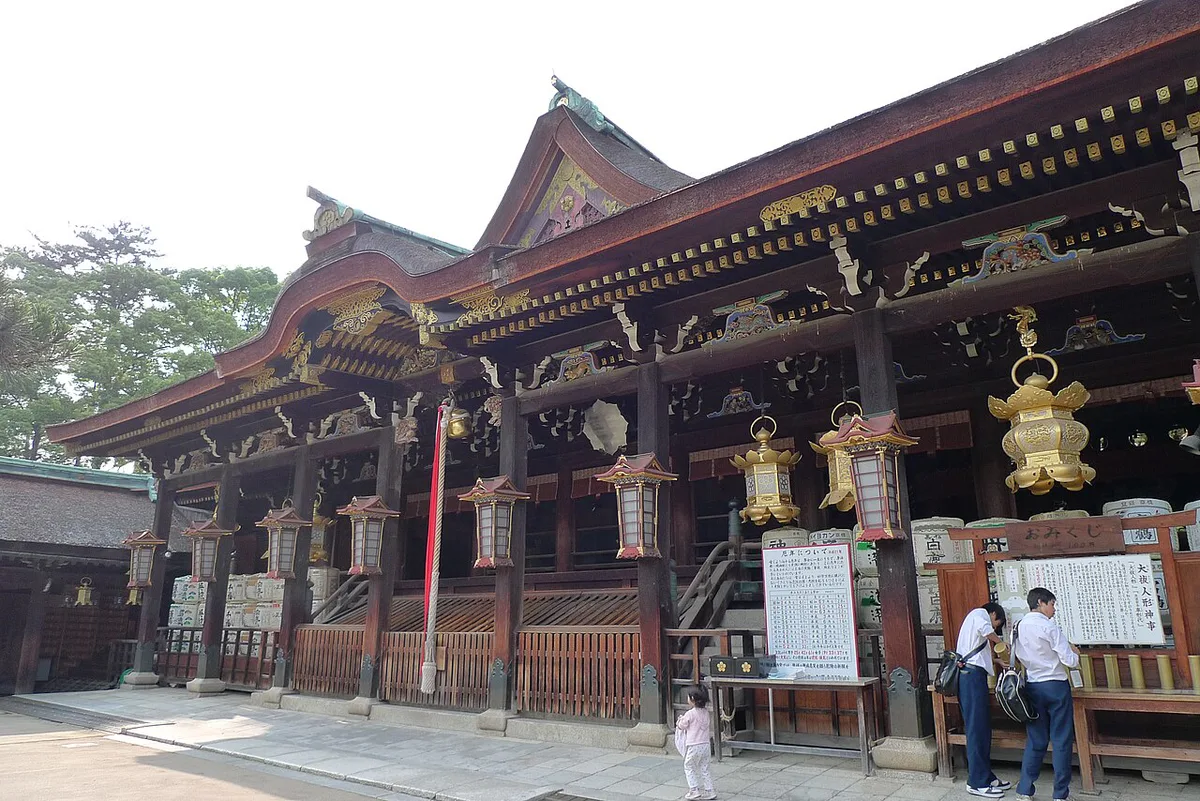
Early March belongs to plum blossoms, or ume. Kitano Tenmangu's plum grove is typically at its best from late February into early March, with pink and white blooms framing the shrine's wooden buildings. Jonan-gu is a quieter alternative for the same flowers. Cherry blossoms tell a different story. Recent early-projection forecasts point to blossoms opening around March 21 to 24. Peak bloom is expected roughly March 29 to April 1, though exact dates shift with the year's temperatures. Photographers who want blooms without crowds tend to favor the plum weeks. The trade-off is a smaller, calmer show instead of Kyoto's signature pink canopy. For deeper bloom-by-bloom detail, the 11 Best Places and Tips for Kyoto Cherry Blossoms (2026) breaks down specific parks and tree counts for the back half of the month. Nationally, the cherry blossom season in Japan guide tracks how the bloom line moves north after Kyoto.
Top Kyoto Festivals in March
March's festival calendar runs from quiet doll rituals to full geiko performances. Hina Matsuri festivities on March 3 include a Kyoto version at Shimogamo Shrine, where organizers float paper dolls down a sacred stream in a ritual called Nagashibina. Kitano Odori runs March 20 through April 2 in the Kamishichiken district, Kyoto's oldest geisha area. Geiko and maiko perform indoors, in an intimate theater rather than a street procession. Higashiyama Hanatouro brings a different kind of evening event to the same season. Thousands of lanterns light the Higashiyama district, tracing a route between Shoren-in and Kiyomizu-dera while temples along the way extend their hours. The Kyoto Antique Fair is the largest antique event in western Japan. More than 350 dealer stalls fill Kyoto Pulse Plaza, typically over three days in the back half of the month. Seiryu-e, the Blue Dragon Festival, brings a dragon procession to Kiyomizu-dera on March 15 to mark the temple's guardian deity.
| Date | Festival | Location |
|---|---|---|
| March 3 | Hina Matsuri & Nagashibina | Shimogamo Shrine |
| March 3 | Hiina Matsuri | Ichihime Shrine |
| March 14 | Kyokusui no En | Kitano Tenmangu |
| March 15 | Seiryu-e (Blue Dragon Festival) | Kiyomizu-dera |
| March 20 – April 2 | Kitano Odori | Kamishichiken |
| March 27 – 29 | Kyoto Antique Fair | Kyoto Pulse Plaza |
| March 29 | Hanezu Odori | Zuishin-in Temple |
Early March vs Late March: Which Week to Book
Early March and late March are close to two different trips inside one month. The first two weeks favor plum blossoms, thinner crowds, and hotel rates that are still easy to book close to departure. Late March adds cherry blossoms, Kitano Odori performances, and the Kyoto Antique Fair, but rooms in central districts fill up fast. Book accommodation for the last week of March 4 to 6 months ahead if the itinerary is fixed to specific dates. Travelers chasing the plum-to-quiet combination should target the first two weeks. Those chasing sakura and festival energy should accept bigger crowds as part of the trade-off.
| Factor | First Two Weeks (Mar 1–14) | Last Week (Mar 20–31) |
|---|---|---|
| Blooms | Plum blossoms at Kitano Tenmangu and Jonan-gu | Cherry blossoms opening around Mar 21–24, peak near Mar 29–Apr 1 |
| Crowds | Light, mostly domestic day-trippers | Heavy, overlapping with Kitano Odori |
| Hotel booking | Available with short notice | Best booked 4 to 6 months ahead |
| Signature events | Hina Matsuri (Mar 3), Kyokusui no En (Mar 14) | Kitano Odori (Mar 20–Apr 2), Kyoto Antique Fair (Mar 27–29) |
Where to Go: Arashiyama, Philosopher's Path, and Fushimi
Arashiyama's bamboo grove draws tour buses by mid-morning, so arrive by 7:30 AM or after 5:00 PM to walk it without a crowd. A local bus from central Kyoto to Arashiyama takes about 40 minutes. Past the main grove, Otagi Nenbutsu-ji holds roughly 1,200 hand-carved stone statues, each with its own expression. It sees a fraction of the foot traffic that Tenryu-ji and the bamboo path get. Fushimi Inari's lower torii gates get crowded through midday. Paths thin out considerably above the first few hundred meters of climb. A late-afternoon visit near sunset trades some light for real breathing room. Kamishichiken, the district hosting Kitano Odori, offers a quieter, more residential alternative to Gion's crowds if seeing geiko and maiko performing is the goal rather than street-spotting them. Philosopher's Path is worth checking toward the very end of March, once the canal-side cherry trees along it start opening.
What to Eat in Kyoto in March
March menus lean toward transition-season comfort food. Oden, a simmered stew of vegetables, tofu, and fish cakes, stays on menus through the chilly first half of the month. Tofu-based kaiseki courses showcase the season's produce separately. Masugataya, a lunch counter, pairs udon with saba sushi and draws a steady local crowd, so a visit outside the noon rush avoids the longest wait. Okakita is a similar udon stop worth timing the same way. For something after dinner, Bungalow pours craft beer in a small-plates setting, and Cafe Independants keeps a rotating beer and dessert menu near downtown. Strawberry-themed sweets show up in bakery windows as a seasonal marker of the shift toward spring. Nishiki Market, Kyoto's main covered food market, is worth a walk-through for skewered seafood and mochi stalls even outside a sit-down meal.
What Kyoto in March Costs
Kyoto in March does not have a single price tag. Costs shift with which week travelers choose. Small-group tours offer one useful benchmark for spending, shown below. Hotel rates follow the same early-versus-late split as everything else in March. Rooms in central Kyoto cost less and stay available with short notice through the first two weeks of the month. The same rooms during the last week, when Kitano Odori overlaps with the season's first cherry blossoms, are worth booking 4 to 6 months ahead to lock in a reasonable rate. For current entrance fees at specific temples and shrines, check each site's official page directly, since fees are adjusted periodically.
Full-day tours cost ¥40,100 per person during late March cherry-blossom peak (March 29–April 1) and Kitano Odori (March 20–April 2).
- Arashiyama temples-and-river cruise (full day, small group): ¥40,100 per person
- Fushimi Inari walking tour (hidden paths and sake village): ¥26,400 per person
- Daimonji mountain and temple walk (half day): ¥23,800 per person
Logistics: Getting Around and Avoiding Crowds
Kyoto's central grid makes cycling one of the most efficient ways to cover temple-heavy neighborhoods, and bike rentals are common near Kyoto Station. City buses cover more ground but slow down considerably once sakura season pulls in extra riders during the last week of the month. Many temples stop admitting visitors before their posted closing time, often 30 minutes early around 4:00 or 4:30 PM. Treat that as the real cutoff, not the closing hour listed. Trying to fit too many temples into one day is the most common planning mistake. Three well-chosen stops beat six rushed ones. First-time visitors coordinating a wider trip can check the Japan Travel Guide: Plan Your Trip with Expert Tips & Itineraries for baseline logistics before narrowing in on Kyoto specifics. For month-by-month country data beyond Kyoto, the Japan Weather by Month: Best Time to Visit & Packing Guide page lines up every region side by side. Many trips pair Kyoto with a few days in Osaka in March: Weather, Sakura Dates, and Travel Tips. Others extend north to Tokyo in March: Weather, Cherry Blossoms & Event Guide (2026-2027) for a bookend to the same bloom season. Osaka's own trees are worth tracking separately through the Cherry Blossom Season In Osaka Travel Guide guide. Tokyo's bloom timing, covered in the 11 Best Spots and Timing Tips for Tokyo Cherry Blossoms 2026, tracks on a similar timeline to Kyoto's.
Temples close by 4:00 or 4:30 PM daily, limiting visits to three well-chosen stops despite Kyoto's 1,600 temples and 400 shrines.
Explore Fushimi’s Sake District Before or After Fushimi Inari
Fushimi is more than the torii-gate approach to Fushimi Inari. The district is one of Japan’s historic sake-producing areas, with canals, white-walled breweries, and sake shops around Fushimi-Momoyama and Chushojima stations. March’s cool weather makes this a pleasant walking add-on before the warmer blossom crowds arrive.
Start at the Gekkeikan Okura Sake Museum to see traditional brewing tools and learn why Fushimi’s soft groundwater suits sake production. Then walk the nearby Horikawa River canal area and choose a tasting at a brewery shop where available. Bring identification if you plan to sample alcohol.
- Use Keihan’s Fushimi-Momoyama or Chushojima stations for the brewery district.
- Visit Fushimi Inari early, then continue south or return later for the sake area.
- Check museum and brewery-shop opening days before traveling, especially around event dates.
This pairing creates a fuller Fushimi day and avoids treating the shrine as a single rushed stop.
Frequently Asked Questions
Is March a good time to visit Kyoto?
March works well if travel dates are flexible enough to pick a specific week. Early March offers quieter temples and plum blossoms at spots like Kitano Tenmangu. Late March adds cherry blossoms and festivals such as Kitano Odori, along with the year's heaviest March crowds.
What is the weather like in Kyoto in March?
Daytime highs typically run 13 to 16°C (55 to 60°F), with overnight lows near 4 to 7°C (39 to 45°F). These are typical seasonal patterns, not a guarantee for any specific week. Mornings and evenings still need a real coat, even as afternoons warm up. Rain becomes more frequent than in January or February, so a light waterproof layer is worth packing.
When do cherry blossoms bloom in Kyoto in March?
Recent early-season projections point to blossoms opening around March 21 to 24. Peak bloom is typically expected roughly March 29 through April 1, though exact timing shifts with spring temperatures each year. Popular early-blooming spots include Maruyama Park and Philosopher's Path. Kyoto Gyoen and Kiyomizu-dera also open early most years.
What should you pack for Kyoto in March?
Pack layers that work for a cool morning and a mild afternoon, since daytime highs near 13 to 16°C can feel very different from 4 to 7°C mornings. A packable rain layer covers the season's increasing spring showers. Comfortable walking shoes matter most on temple approaches with steps and gravel paths. The Japan Packing List: Seasonal & Essential Travel Guide covers the fuller list, including layering pieces for other regions.
Is early March or late March better for visiting Kyoto?
Early March suits travelers who want plum blossoms, quieter temples, and hotels that don't need to be booked months ahead. Late March suits travelers chasing cherry blossoms and festival energy, including Kitano Odori and the Kyoto Antique Fair. Hotel rooms in central districts should be booked 4 to 6 months ahead for that week. Neither week is objectively better. The choice comes down to whether quiet or bloom season matters more.
What festivals happen in Kyoto in March?
March's festival lineup runs from quiet doll ceremonies to full geisha performances. Hina Matsuri and Nagashibina take place on March 3 at Shimogamo Shrine. Kyokusui no En follows on March 14 at Kitano Tenmangu, and Seiryu-e follows the next day at Kiyomizu-dera. Kitano Odori runs March 20 through April 2, and the Kyoto Antique Fair typically fills Kyoto Pulse Plaza around March 27 to 29.
Free: The Kyoto Essentials guide
Top things to do, where to stay, a perfect day plan, getting around, and the best time to go — a Kyoto mini-guide you can take offline.
You might also like


Continue reading
More guides you'll find useful


