

10 Best Ways to Experience Nikko Tours: A Complete Travel Guide
Discover the best Nikko tours, from guided day trips from Tokyo to self-guided itineraries. Includes Toshogu Shrine, Kegon Falls, and hidden pottery villages.
On this page
Nikko stands as a stunning blend of ancient architecture and breathtaking natural beauty in the Japanese mountains. Many travelers seek out Nikko tours to simplify the journey from Tokyo's busy streets. This destination offers everything from gold-leaf shrines to thundering waterfalls and serene highland forests. Planning your visit requires choosing between structured guided experiences and flexible independent exploration.
Guided excursions provide deep historical context that you might miss when walking alone through the temple complexes. Local experts share stories about the Tokugawa Shogunate and the spiritual significance of the surrounding peaks. Whether you want a private car or a group bus, the right tour makes the logistics seamless. This guide explores the best ways to experience the region's diverse cultural and natural landscapes.
Top-Rated Guided Nikko Tours from Tokyo
Guided tours offer a stress-free way to explore the mountain scenery and ancient temples. Many travelers choose small-group options to avoid the logistical hurdles of public transport. Professional guides provide deep context about the Tokugawa Shogunate during the journey. You will often find these tours departing directly from major Tokyo hubs like Shinjuku or Asakusa.
Small group tours typically include round-trip transport from Tokyo, entry fees for major shrines, and lunch at local restaurants serving traditional yuba dishes. Early morning departures — usually 07:30 from Asakusa — ensure you arrive before the largest crowds reach the main gates. Prices run 12,000–15,000 yen per person for a standard 10–12 hour day, making them competitive with the cost of transport plus entry tickets paid separately.
Private car tours cost considerably more (60,000 yen and up for a group of up to six) but allow you to set your own pace. Your guide can book hidden cafes, extend time at scenic viewpoints, and navigate the complex bus systems in the Okunikko area on your behalf. For families or those with limited mobility, a private vehicle eliminates hours of waiting at crowded transit stops.
Half-day walking tours focused solely on the shrine complex are also available for travelers who arrive by train and want context without committing to a full-day package. These typically run three to four hours and cost around 4,000–6,000 yen per person including a local guide and a small group cap of eight.
Guided vs. Self-Guided: Which Works for You?
Depart Tokyo on the 07:30 Limited Express from Tobu Asakusa Station to reach Nikko by 09:20. Buy the Toshogu ticket and your bus pass at the Tourist Information Centre inside Tobu-Nikko Station before boarding the bus — this skips the shrine ticket queue and saves 20–30 minutes on arrival.
The honest answer depends on three factors: your budget, your tolerance for logistics, and how much you already know about Shinto and Buddhist temple architecture. A guided tour removes every friction point — passes, bus stop numbers, ticket queues — but locks you into someone else's schedule. A self-guided trip saves 5,000–8,000 yen per person but demands careful planning, especially in autumn when buses run behind schedule.
Guided tours win on historical depth. Without a guide, the difference between Rinnoji Temple's gold-lacquered Sanbutsudo, the ornate carvings of Toshogu Shrine, and the quieter Futarasan-jinja Shrine can blur into a single loop of temple gates. A local expert explains why Tokugawa Ieyasu was enshrined here rather than in Kyoto and why every lantern on the cedar avenue was donated by a feudal lord.
Self-guided trips win on flexibility. You can linger at Ryuzu Falls long after the group buses have left, eat lunch on your own timetable, and skip the attractions that interest you least. They also work better for return visitors who already know the shrine complex and want to spend most of their time hiking in Okunikko.
First-timers, especially those visiting during peak autumn foliage (late October to early November), typically get more value from a guided tour purely because crowd management and pre-purchased tickets save significant time. Repeat visitors or travelers who have done similar UNESCO heritage sites in Japan often prefer the freedom of going solo.
The "Greedy Nikko" Tour: A Comprehensive One-Day Route
The Greedy Nikko route is designed for travelers who refuse to compromise between nature and history. It starts at JR Utsunomiya Station rather than Asakusa, which is the single most important logistical decision of the whole day. Meeting your guide in Utsunomiya puts you ahead of the primary tourist wave arriving on the Tobu Limited Express from central Tokyo by 45 minutes or more.
The route begins with a drive along the cedar avenue to Nikko — a 35-kilometer corridor of Japanese cryptomeria trees that holds a Guinness World Record as the longest tree-lined avenue on earth. This peaceful start sets the mood before the day accelerates. From there, the itinerary climbs the 48 hairpin bends of the Iroha-zaka slope to reach the highlands.
In the highland area, the sequence matters: Yutaki Waterfall first (where the Yukawa River begins its descent from Lake Yunoko), then Ryuzu Falls (Dragon Head Waterfall, best in early October for foliage), then Kegon Falls at Lake Chuzenji. Many guides also include a stop at the Italian Embassy Villa Memorial Park on the lakeside, an underrated spot that most group tours skip entirely.
The Toshogu Shrine complex comes last, in the late afternoon after the large coach groups have thinned out. Entry is 1,300 yen per person. Ending the day here rather than starting with it is the route's key insight: the crowds peak between 10:00 and 13:00, so arriving after 15:00 gives you a noticeably quieter experience. The tour finishes back at Utsunomiya Station, often by 18:00–19:00.
Free Guided Walking Tours of Nikko's World Heritage Sites
Budget-conscious travelers can take advantage of local volunteer guide services in the city. These passionate locals offer walks through the UNESCO World Heritage shrine complex and typically meet groups near the main entrance of Rinnoji Temple. They provide insights into the architecture and spiritual history of the sacred site that you would not find in any English guidebook.
Free tours often focus on specific areas like the Shiunkaku Hall or the Sanbutsudo — the triple-Buddha hall that photography is not permitted inside. Guides explain the intricate carvings, including the famous three wise monkeys and the Sleeping Cat (Nemuri Neko), and the meaning behind the colorful temple paintings. While the service is free, a sincere thank you or a small cash tip is appreciated.
Walking tours help you notice small details that large bus groups consistently overlook. You might learn about the hidden symbols woven into the Toshogu Shrine's ornate gates or hear the story behind a particular stone lantern donated by a feudal lord. These sessions usually last between 90 minutes and two hours and cap at small groups, so arrive early near the tourist information center at Tobu-Nikko Station to secure a slot.
Self-Guided Nikko Itinerary: A Step-by-Step Plan
| Tour Type | Cost per Person | Duration | Best For |
|---|---|---|---|
| Small group guided tour (Tokyo departure) | ¥12,000–¥15,000 | 10–12 hours | First-timers wanting context and transport sorted |
| Private car tour (up to 6 people) | ¥60,000+ total | Full day | Families, limited mobility, custom pace |
| Half-day walking tour (shrine only) | ¥4,000–¥6,000 | 3–4 hours | Travelers arriving independently by train |
| Free volunteer guide walk | Free (tip welcome) | 90–120 min | Budget travelers; cap at small groups |
| Self-guided (train + All Area Pass) | ~¥4,780 transport + entries | 10–12 hours | Repeat visitors, flexible pace |
During late October peak foliage weekends, buses to Okunikko can run 20–40 minutes behind schedule due to Iroha-zaka traffic. Aim to be on the Iroha-zaka bus before 10:00 or after 14:00 to avoid delays that compress the afternoon schedule.
Independent travelers should aim to board the 07:30 Limited Express from Tobu Asakusa Station. Knowing how to get to Nikko from Tokyo is the first step for success. The express costs 2,700 yen one way and delivers you to Tobu-Nikko Station by approximately 09:20. This timing is important — arriving by 09:30 lets you purchase shrine tickets and a bus pass before the mid-morning rush.
At the Tourist Information Centre inside the station, buy the Chuzenji Onsen Free Pass (2,000 yen) before doing anything else. It covers unlimited bus rides from Stop 1 to Stop 31, which includes Shinkyo Bridge, the shrine complex, and Kegon Falls. A single one-way ride to Kegon Falls costs 1,150 yen, so the pass pays for itself on two trips. You can also pre-purchase Toshogu Shrine tickets here to skip the queue at the gate.
Take Bus Stop 2B to Stop 7 (Shinkyo) by 09:30, photograph the bridge, then walk up through the stone stairways into the temple complex. Spend 90–120 minutes covering Rinnoji Temple (400 yen for the Sanbutsudo), Toshogu Shrine (1,300 yen), Futarasan-jinja Shrine (free), and the cedar path toward Kanmangafuchi Gorge if time allows. Plan lunch at Nikko Coffee on Goyoteidori — a renovated machiya serving pork black curry and seasonal kakigori (shaved ice). Dining options in Nikko are genuinely sparse, and Nikko Coffee stands out as the single best midday stop in the central area.
Catch Bus Stop 9 at around 13:00 for the 30-minute ride up the Iroha-zaka to Kegon Falls (Stop 26). Add the Akechidaira Ropeway on the upward journey for panoramic views of the valley — it is only accessible heading up, not down. Return by 15:30 at the latest to catch the express back to Asakusa by 18:00.
Must-See Attractions: Toshogu Shrine and Shinkyo Bridge
The Nikko Toshogu Shrine is the undisputed centerpiece of the region's historical sites. This shrine serves as the final resting place for the great shogun Tokugawa Ieyasu, who unified Japan and founded the shogunate that ushered in more than 250 years of relative peace. Visitors pay 1,300 yen to access the main inner grounds, with over a dozen elaborately decorated buildings spread across a lush cedar forest. The carvings of the three wise monkeys and the Imagined Elephants are the most photographed details, but take time to look at the moss-covered stone lanterns donated by lords from across the country.
Shinkyo Bridge marks the entrance to the sacred mountain area with its bright vermilion arches spanning the Daiya River. Technically part of Futarasan Shrine, it is considered one of Japan's most beautiful bridges. Photographers gather here to capture the contrast between the red lacquerwork and the deep green forest. Crossing the bridge costs 300 yen, which most visitors find worthwhile for the elevated view back toward the mountains.
The Futarasan-jinja Shrine sits nearby and offers a noticeably quieter atmosphere. It is dedicated to the deities of Mount Nantai, Mount Nyoho, and Mount Taro — the three most sacred peaks in Nikko. Ancient cedar trees surround the buildings, and the shrine is significantly older than Toshogu, dating its origins to 767 CE. Taiyuin Temple, the mausoleum of Tokugawa Iemitsu, is a short walk further and is frequently overlooked by visitors who run out of energy after Toshogu.
Walking between these sites is easy thanks to well-marked paths and clear bilingual signage. Wear comfortable shoes — the terrain includes many stone steps and uneven ground, and the full circuit from Shinkyo Bridge to the Taiyuin Temple gate covers roughly 3 kilometers on foot.
Nature and Outdoors: Kegon Falls and Lake Chuzenji
Kegon Falls drops 97 meters and ranks among Japan's three most celebrated waterfalls alongside Nachi (Wakayama) and Fukuroda (Ibaraki). A free observation platform gives a full-width view from across the gorge. A paid elevator descends 100 meters to a lower deck for a close-up encounter with the spray — the 550 yen ticket is worth it in autumn when the surrounding trees turn brilliant orange and red. (This mention already has href so skip.)
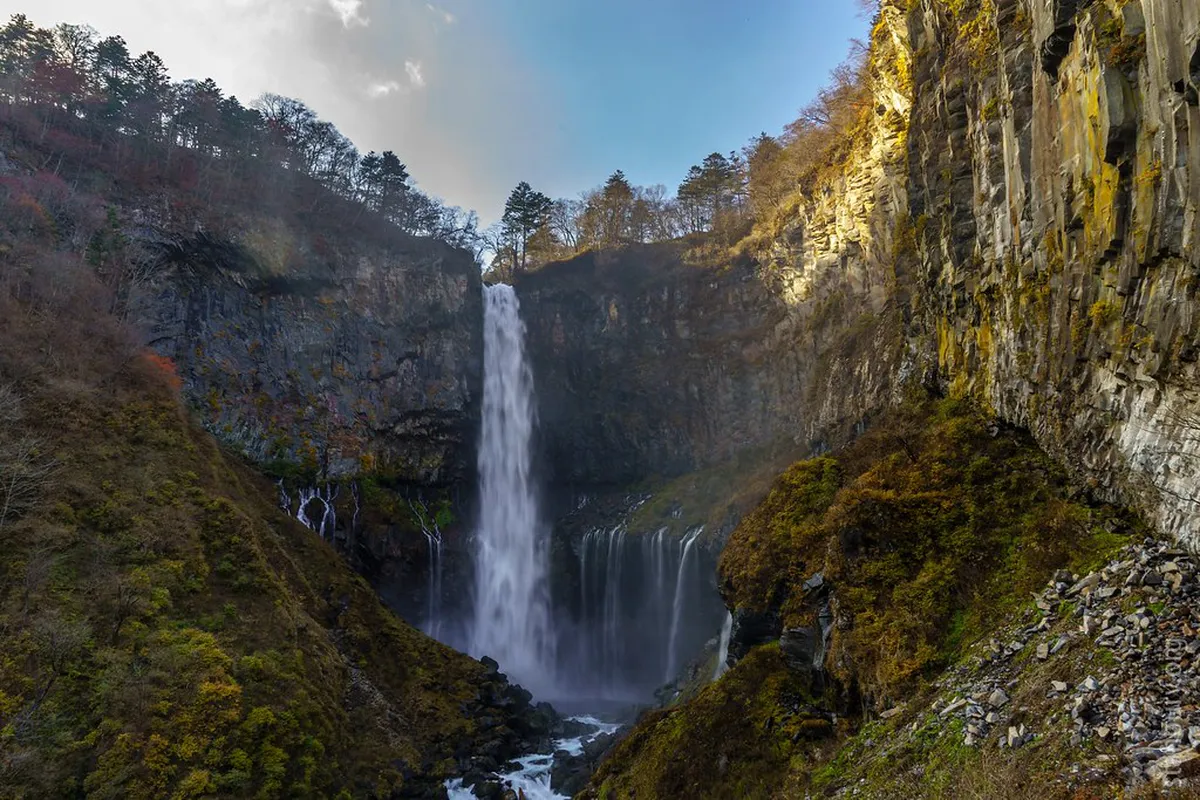
Lake Chuzenji sits at the foot of Mount Nantai and offers scenic boat cruises and flat walking paths along the shore. The Italian Embassy Villa Memorial Park on the northern lakefront is an unexpected highlight: the 1928 villa was built by Italian architect Antonio Raymond and combines European and Japanese architectural elements. It is quiet, free to enter the grounds, and almost entirely absent from standard day-trip itineraries.
The Akechidaira Ropeway provides the most famous panoramic view of the entire valley. From the top, you see both Kegon Falls and Lake Chuzenji in a single frame. Note that it is only accessible on the upward journey of the one-way mountain road system — plan your bus route to include it on the way up, not the return. The Senjogahara Marshlands further into Okunikko offer flat boardwalk trails through wetland scenery with Mount Nantai as a backdrop, ideal for hikers with a second day.
Ryuzu Falls (Dragon Head Waterfall) deserves its own stop on the bus route between Kegon and Yumoto Onsen. The waterfall splits around a rock in a shape that resembles a dragon's head, and there is a small cafe directly overlooking the water — one of the best views in all of Nikko National Park. It is not covered by the standard Chuzenji Onsen Free Pass, adding 320 yen each way by cash.
Cultural Deep-Dive: Mashiko Pottery and Saimyoji Temple
Mashiko pottery village offers one of the most rewarding detours in the broader Tochigi region. This town became a global center for ceramics primarily through the influence of Hamada Shoji, the National Living Treasure who championed mingei (folk craft) pottery in the 20th century. The Mashiko Museum of Ceramic Art displays his original kilns and a sweeping collection of his work alongside pieces by Bernard Leach, the British potter who collaborated with him extensively. Many local shops sell authentic Mashiko ware at prices well below what you would pay in Tokyo.
Saimyoji Temple stands on a hill above the pottery town and most visitors walk straight past it. It houses a famous statue known as the Laughing King of Hell — an unusually joyful depiction of Enma, the Buddhist deity who judges the dead, carved with an expression that catches most visitors off guard. The temple grounds hold ancient structures in various states of mossy, atmospheric decay and feel entirely different from the polished, tourist-facing shrine complex in central Nikko.
Reaching Mashiko requires a separate journey — approximately 60 minutes from JR Utsunomiya Station by local bus or 90 minutes from Tobu-Nikko Station by transfer. It is best treated as a second-day add-on rather than part of a standard day trip. Many local workshops offer hands-on pottery classes for around 2,000–3,500 yen, and reservations the night before are usually sufficient outside peak season.
Hidden Gems: Nasu Heisei-no-mori Forest and Highland Walks
Nasu Heisei-no-mori Forest is a former imperial villa estate that opened to the public and now offers some of the most peaceful walking in the entire national park region. The forest requires a ropeway ride to the upper observation points on Chausudake Mountain (the ninth station), where on clear days you see the full Nasu volcanic range stretching across the horizon. Visitor numbers here are a fraction of what you encounter at Kegon Falls or the shrine complex.
There are no restaurants anywhere on the Nasu forest site, so packing a convenience store lunch before you go is not optional — it is the only practical choice. Buy food in Utsunomiya or Nasu town before heading into the forest. Trails range from easy boardwalks to steeper climbs toward the volcanic crater area. The landscape shifts dramatically with the seasons: deep green in summer, spectacular reds and yellows in October, snow-covered and very quiet from December through March.
En route, stop at Sesshoseki — the "Killing Stone" — a volcanic rock formation in the caldera area associated with an old Japanese folk legend about a nine-tailed fox. The stone itself cracked apart in 2022, which the tour guide community in Utsunomiya has noted adds a fresh layer to the story for visitors in 2026. Access to Nasu is easiest by rental car from Utsunomiya or via a private guided tour; public bus connections exist but run infrequently outside summer weekends.
Logistics: How to Use the Nikko Pass and JR Lines
Choosing the right transit pass saves meaningful money. Check the Official Nikko Pass Information (Tobu Railway) for current 2026 pricing. The World Heritage Pass (1,600 yen) covers only the train from Tobu Asakusa Station to Tobu-Nikko Station and local buses in the central shrine area. The Chuzenji Onsen Free Pass (2,000 yen, bus only) is the better buy if you are arriving by JR and just need the local bus network. If you want both train and unlimited buses, the All Area Pass (4,400 yen) covers everything from Asakusa to Yumoto Onsen.
JR Pass holders take the Shinkansen from Tokyo or Ueno to JR Utsunomiya Station (about 50 minutes), then transfer to the local JR Nikko Line (45 minutes, 760 yen, not covered by the pass). This route arrives at JR Nikko Station rather than Tobu-Nikko Station — a five-minute walk apart. JR travelers should buy a separate bus pass at the station; the Tobu passes are not available on the JR side but the same local buses accept IC cards and cash.
Local buses use a numbered stop system with English displays at the front. Tap your IC card (Suica, Pasmo) when entering and exiting. During peak autumn weeks — particularly the second and third weekends of October — buses to Okunikko can run 20–40 minutes behind schedule due to Iroha-zaka traffic. Factor in an extra hour when planning your afternoon if you are visiting between late October and mid-November.
The Iroha-zaka is the critical bottleneck. This 10-kilometer one-way road with 48 hairpin bends is the only route up to Lake Chuzenji. In peak autumn foliage season, the inbound lane backs up significantly from around 09:00 to 13:00. Tour buses with early morning departures from Tokyo beat the worst of it. Self-guided travelers should aim to be on the Iroha-zaka bus before 10:00 or after 14:00 to avoid extended delays that compress the afternoon schedule.
Where to Stay: Best Accommodations for Multi-Day Tours
Staying overnight transforms the trip. The central shrine area falls quiet after 17:00 when day-trippers leave, giving you the cedar avenues and stone lanterns entirely to yourself in the early morning. Our guide on where to stay in Nikko covers options across all price ranges. The Nikko Station Hotel Classic is the most convenient western-style option, located steps from JR Nikko Station with indoor and outdoor hot spring baths on-site — useful after a day of walking.
Lakeside ryokans at Chuzenji sit at 1,270 meters elevation, which means cooler nights even in summer and dramatically better autumn foliage views than in the town below. Many include dinner and breakfast with mountain trout, local vegetables, and kaiseki-style presentation. Book these well in advance for any October weekend — they fill months ahead during peak foliage season.
For an onsen town atmosphere, Kinugawa Onsen is the best choice in the region. The Tobu Nikko Line connects it directly to Tobu-Nikko Station in about 40 minutes. Hotel Shirakawa Yunokura is a well-managed ryokan with riverside views and outdoor hot spring baths; book with dinner and breakfast included because restaurant options in the town itself are limited. Staying at Kinugawa adds a full second day for the Mashiko pottery village side trip or a deeper Okunikko hike.
Frequently Asked Questions
Is a guided tour of Nikko worth it compared to going solo?
A guided tour is highly worth it for those who want deep historical context without logistical stress. Guides handle all transportation and ticket purchases, which is helpful during crowded seasons. If you prefer a flexible pace, a self-guided Nikko itinerary might suit you better.
How do I get from Tokyo to Nikko using the JR Pass?
You can take the Shinkansen from Tokyo or Ueno Station to JR Utsunomiya Station. From there, transfer to the local JR Nikko Line for a 45-minute ride. While the trains are covered, you must pay separately for the local buses once you arrive.
What is the best time of year for a Nikko nature tour?
The best time for nature is late October to early November for the vibrant autumn foliage. Spring in late April offers beautiful cherry blossoms and fresh greenery. Winter is quiet and snowy, but some higher mountain trails may be closed for safety.
Can you see both the temples and the waterfalls in one day?
Yes, you can see both if you start your day in Tokyo before 8:00 AM. Spend the morning at the UNESCO shrines and the afternoon at Kegon Falls. Using the Nikko All Area Pass makes this busy schedule much easier to manage.
For related Nikko deep-dives, see our Nikko temples and shrines and Nikko travel guide guides.
For related Nikko deep-dives, see our Nikko day trip from Tokyo and how to get to Nikko from Tokyo guides.
Nikko offers a unique combination of spiritual history and mountain beauty that few places can match. Choosing between guided Nikko tours and independent travel depends on your personal style and budget. Both options provide a memorable look at one of Japan's most sacred and scenic regions. The golden shrines and thundering waterfalls will leave a lasting impression on every visitor.
Plan your logistics early to make the most of your time in the national park. Whether you walk the cedar avenues or soak in a lakeside onsen, the experience is rewarding. Prepare for a day of wonder as you explore the legacy of the shoguns and nature. Enjoy your journey to this spectacular World Heritage destination in the heart of Japan.
Free: The Nikko Essentials guide
Top things to do, where to stay, a perfect day plan, getting around, and the best time to go — a Nikko mini-guide you can take offline.
You might also like


Continue reading
More guides you'll find useful


