Nozawa Onsen Fire Festival Guide: Dates, Rules & Stay Requirements
Plan your trip to the Nozawa fire festival on January 15: the overnight-stay entry rule, the three-day schedule, and what to wear near the flames.
On this page
Last updated September 2026. Every January 15, the Nozawa fire festival brings men in two unlucky age groups to Nozawa Onsen, Nagano, to defend a beech-log shrine from torch-bearing villagers. Since 2023, entry to the evening ceremony has required an overnight booking inside the village, a rule this guide explains alongside the full three-day schedule and what to wear near open flame.
What Is the Nozawa Fire Festival?
Officially called the Nozawa Onsen Dosojin Matsuri (野沢温泉の道祖神祭り), the event centers on dosojin, guardian deities of roads and village boundaries. In Nozawa Onsen, they're represented as a carved male-and-female pair rather than the stone markers common elsewhere in central Japan. Villagers pray to the dosojin for a good harvest, family health, and safe marriages. It also honors any boy born in the village during the past year. Japan's national tourism office credits the deities with warding off illness and misfortune in local folk belief. Government recognition adds another layer, since the matsuri holds status as an Important Intangible Folk Cultural Property. Nagano runs a full winter calendar of these traditions, cataloged in the region's festivals and events guide. Another date worth building a trip around is the Nagano Binzuru Festival.
When Is the Nozawa Fire Festival, and Who Can Attend?
January 15 is fixed every year regardless of the weekday, so the next fire ceremony falls on January 15, 2027. Preparations begin two days earlier, on January 13. Since the 2023 season, access to the evening fire ceremony has been restricted to Nozawa Onsen residents and travelers with a confirmed overnight booking inside the village. Day visitors can still watch the daytime preparations on January 13 and 14, plus the daytime hours of January 15. Only the nighttime arena is roped off to non-guests. Confirm exact current-year timing with the Nozawa Onsen Tourist Association before locking in travel dates. For the wider run of Nagano's winter dates, check the Nagano festivals month-by-month calendar. Pair the trip with seasonal notes from the Best Time To Visit Nagano: A Seasonal Travel Guide guide.
Evening fire ceremony attendance requires overnight lodging that books 6 to 12 months ahead, forcing festival planners to commit nearly a year in advance.
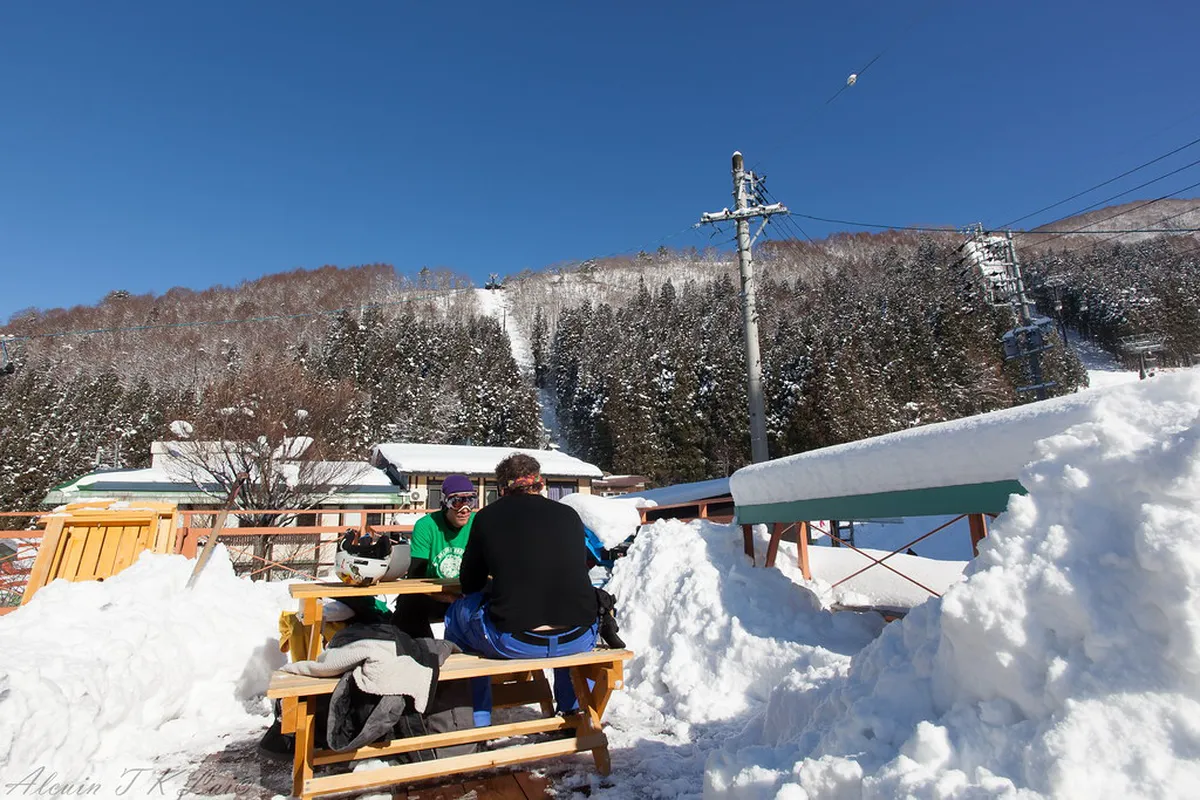
- Overnight guests inside Nozawa Onsen village: full access to the evening fire ceremony
- Day-trippers from Nagano City, Hakuba, or elsewhere: daytime preparations only, no arena entry after dark
- Village residents: full access as hosts and organizers
Getting to Nozawa Onsen: Trains and Buses
Hokuriku Shinkansen service connects Tokyo Station to Iiyama Station in about 1 hour 40 minutes. Iiyama is the standard rail gateway for the festival. From Iiyama Station, the Nozawa Onsen Liner bus covers the final leg in roughly 25 to 30 minutes for a ¥600 fare. An alternative route runs by local train to Togari Nozawa Onsen Station on the JR Iiyama Line, followed by a 10-minute taxi into the village. Direct winter buses also run from Osaka, Kyoto, and Nagoya into Nozawa Onsen, useful if the festival anchors a longer Kansai-to-Nagano loop. A private Nagano Snow shuttle connects Tokyo's airports and Shinjuku Station directly to the village, though that ride runs about six hours. Local transit specifics, including current bus schedules, are covered in the Getting Around Nagano: Your Ultimate Transport Guide guide. Go Nagano's prefecture tourism site also tracks winter transit changes worth checking before booking.
Tokyo-to-Nozawa via Hokuriku Shinkansen and bus totals roughly 1 hour 40 minutes plus 25 to 30 minutes, enabling same-day arrivals before the 7 p.m. to 11 p.m. ceremony.
- Tokyo Station to Iiyama Station: Hokuriku Shinkansen, about 1 hour 40 minutes
- Iiyama Station to Nozawa Onsen: Nozawa Onsen Liner bus, about 25 to 30 minutes, ¥600
- Togari Nozawa Onsen Station to the village: about a 10-minute taxi ride
- Shinjuku Station or Tokyo's airports to Nozawa Onsen: direct Nagano Snow shuttle, about 6 hours
The Three-Day Dosojin Matsuri Schedule
Preparation stretches across three days, though most visitors only see the final night. Materials come together months earlier. Villagers gather beech logs from the communal forest in mid-September. A felling ceremony follows in mid-October, when the group prays to the mountain deity for safety before any tree is cut. On January 13, villagers haul two sacred beech logs down from the Hikage ski area, starting with a short race between the 25- and 42-year-old age groups around 1 p.m. January 14 is largely construction. Close to 100 villagers assemble the shaden, a structure built without a single nail or piece of wire. Organizers ban alcohol once construction starts, since the work is dangerous and runs under a master carpenter's direction. Work continues into the night and finishes around midday on the 15th, just hours before the fire ceremony begins. Exact timing shifts slightly year to year, so treat 7 p.m. to 11 p.m. as the practical window to plan around.

| Time | What Happens on January 15 |
|---|---|
| 7:00 PM | The sacred fire is carried from the Kono residence to the festival grounds |
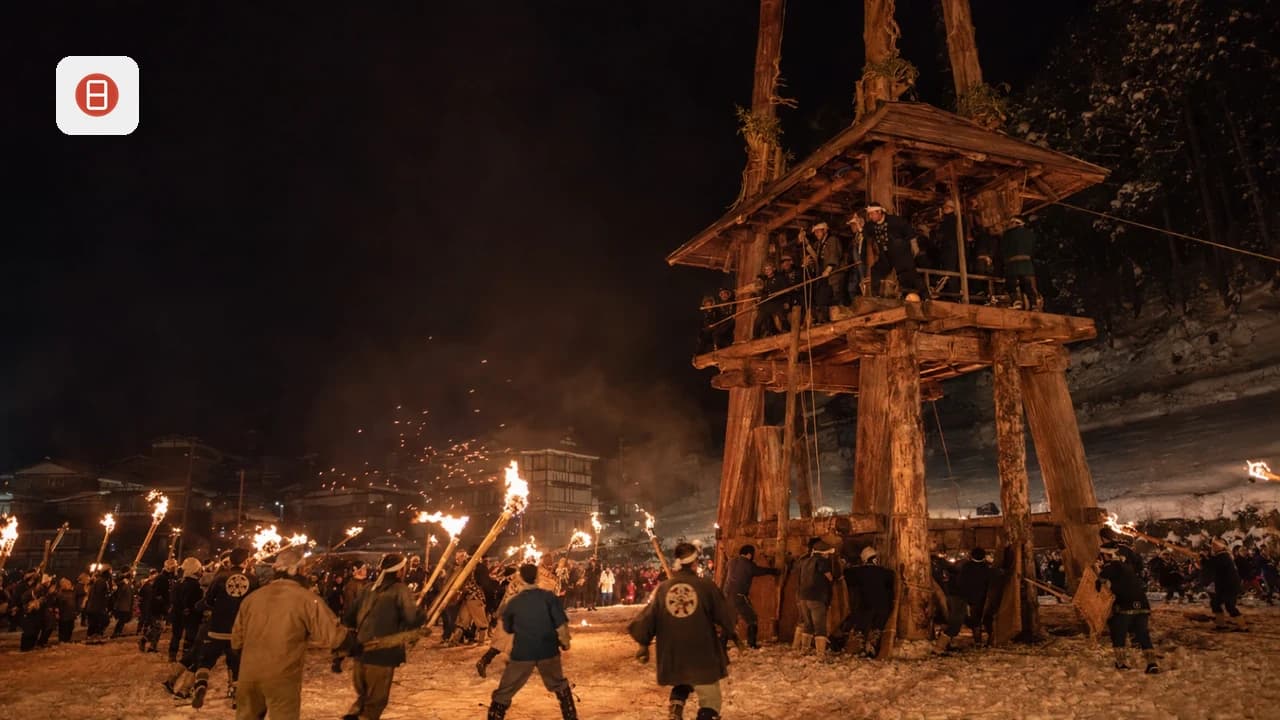
| 8:00 PM | Torch-bearing villagers attack the shaden while the 25- and 42-year-old defenders hold their ground |
| 10:00 PM | The shaden is set alight, and the embers are watched until around 11:00 PM |
Inside the Fire Ceremony: Yakudoshi, the Shaden, and the Battle
Japanese folk belief marks ages 25 and 42 as unlucky years for men. This belief shapes the festival's two central roles. Forty-two-year-olds take the top of the shaden and chant to the dosojin. Twenty-five-year-olds guard its base, while men aged 41 and 43 ring the perimeter to shield the crowd. Five beech logs, each about 18 meters long and 30 centimeters thick, are felled the previous October. They're stored at the Hikage ski area until villagers haul them into the village on January 13. A priest from Kosuge Shrine blesses the finished shaden, and the Nozawagumi Soudai, the village's traditional caretaker organization, oversees the entire ritual. Families who welcomed a baby boy during the past year build a hatsu-tōrō lantern standing more than 9 meters tall. It's carried in procession before joining the shaden in the fire. Attackers proceed in a set order. Nozawagumi Soudai committee members try first, followed by hatsu-tōrō families and the village's children. Adult villagers join only afterward, in force. That pine-branch battle typically runs about 90 minutes, with defenders beating back flames until the 42-year-olds call an end to the fight.
Survival Guide: What to Wear and How to Behave
Embers travel further than expected, so skip down jackets, fleece, and anything nylon or Gore-Tex, since synthetic fabric melts and scorches fast. Wear old wool sweaters or cotton layers instead, and expect soot on your clothes by the end of the night. Anyone combining the trip with skiing should pack a separate old layer just for the festival, saving ski-grade shells for lift days covered in the 10 Best Things to Do in Nagano in Winter (2026). Stay behind the roped-off area at all times, since only the 42-year-old participants are permitted to climb the shaden. Sake handed out at the festival is a ritual offering, not an open bar, so accept it respectfully rather than treating it as free alcohol. Do not take pieces of the shrine or lanterns as souvenirs, since these objects carry meaning for specific families and the community. Expect dense crowds near the roped-off line, plus strong lens flare once the shaden is fully alight. A lower vantage point earlier in the evening usually works better than pushing forward during the peak of the battle.
- No entering the roped-off arena unless you are a participant or resident
- No throwing objects, chanting, or drinking inside the arena
- No climbing the shaden except for the 42-year-old participants
- No souvenir-taking from the shrine, lanterns, or festival grounds
Where to Stay for the Nozawa Fire Festival
Lodging inside Nozawa Onsen for the night of January 15 often books out 6 to 12 months ahead. That's well before most travelers start planning a Japan winter trip. Commuting in from Nagano City or Hakuba for just the evening does not work, since the overnight-guest rule is checked at the arena entrance. If the village is fully booked, Togari Onsen and Madarao are the nearest fallback bases. Neither guarantees late transport back after the shaden burns around 10 p.m. Japan Cheapo's coverage of the event names Chouchinya and Lodge Matsuya as centrally located, moderately priced options that sell out early. Broader Nagano lodging strategy, including how far ahead to book during peak winter weeks, is covered in the Where To Stay In Nagano: 9 Best Areas & Accommodations (2026) guide.
Combine the Trip with the Rest of Nagano's Winter Season
This fire ceremony only fills a few hours on the 15th, so most travelers build it into a longer Nagano winter loop. Nagano City sits within reach by the same rail corridor, and its Zenkoji Temple runs its own festivals and ceremonies through the winter season. Add a day for other 11 Best Things to Do in Nagano, Japan (2026 Guide) before or after the festival. A full Nagano Itinerary: Your 3-Day Alpine & Cultural Guide guide helps slot everything into a workable route. Matsumoto's own events calendar runs deep into winter too, and it sits on the way back toward central Honshu. Travelers extending north on the Hokuriku Shinkansen can check Kanazawa's festivals and events, since the same line that reaches Iiyama continues toward Kanazawa. Skiers often loop in Shiga Kogen or Hakuba on the same trip, since regional shuttles already connect those resorts to Nozawa Onsen.
Frequently Asked Questions
When is the Nozawa Fire Festival?
This festival always falls on January 15, so the next edition lands on January 15, 2027. Preparations begin two days earlier, on January 13, when villagers haul the sacred beech trees down from Hikage.
Can day-trippers watch the Nozawa Fire Festival?
Not the evening fire ceremony. Since 2023, that part of the event has been limited to village residents and guests with a confirmed overnight booking inside Nozawa Onsen. Daytime preparations on January 13 and 14, plus the daytime hours of January 15, stay open to any visitor.
How do you get to Nozawa Onsen for the festival?
Take the Hokuriku Shinkansen from Tokyo Station to Iiyama Station, a ride of about 1 hour 40 minutes. From Iiyama Station, the Nozawa Onsen Liner bus covers the rest of the trip in around 25 to 30 minutes.
What should you wear to the Nozawa Fire Festival?
Avoid down jackets, fleece, and other synthetic or nylon shells, since drifting embers can melt or scorch them. Wear old wool sweaters, cotton layers, or clothing you don't mind losing, and expect soot by the end of the night.
Is the free sake at the festival really free to anyone?
Sake is poured as a ritual offering tied to the festival, not an open bar for visitors. Accept a cup if it's offered, and stay well behind the roped-off area. Treat the pour as part of the ceremony, not a souvenir photo op.
How far in advance should you book accommodation for the festival?
Lodging inside Nozawa Onsen for the night of January 15 often fills 6 to 12 months ahead. If the village is booked out, nearby Togari Onsen or Madarao are alternatives. Neither guarantees late-night transport back after the shaden burns.
Free guide: Japan's Hidden Gems
12 under-the-radar places beyond Tokyo & Kyoto — with the best season to visit each and a local tip you won't find in the guidebooks.
You might also like

Continue reading
More guides you'll find useful