Nippon Domannaka Festival 2026 Guide: Domatsuri in Nagoya
Plan the 2026 Nippon Domannaka Festival in Nagoya: August dates, Hisaya Odori Park venues, subway access, and how to join the Souodori dance.
On this page
Last updated September 2026. Known locally as Domatsuri, the Nippon Domannaka Festival turns central Nagoya into a stage for roughly 200 dance teams and 20,000 performers every late August. Founded in 1999 by a handful of Nagoya college students, it now ranks as the largest dance festival in the Chubu region. This guide covers the 2026 summer dates, the November Tele Domatsuri broadcast, and how to handle Nagoya's August heat without missing the Final Contest.
What Is the Nippon Domannaka Festival (Domatsuri)?
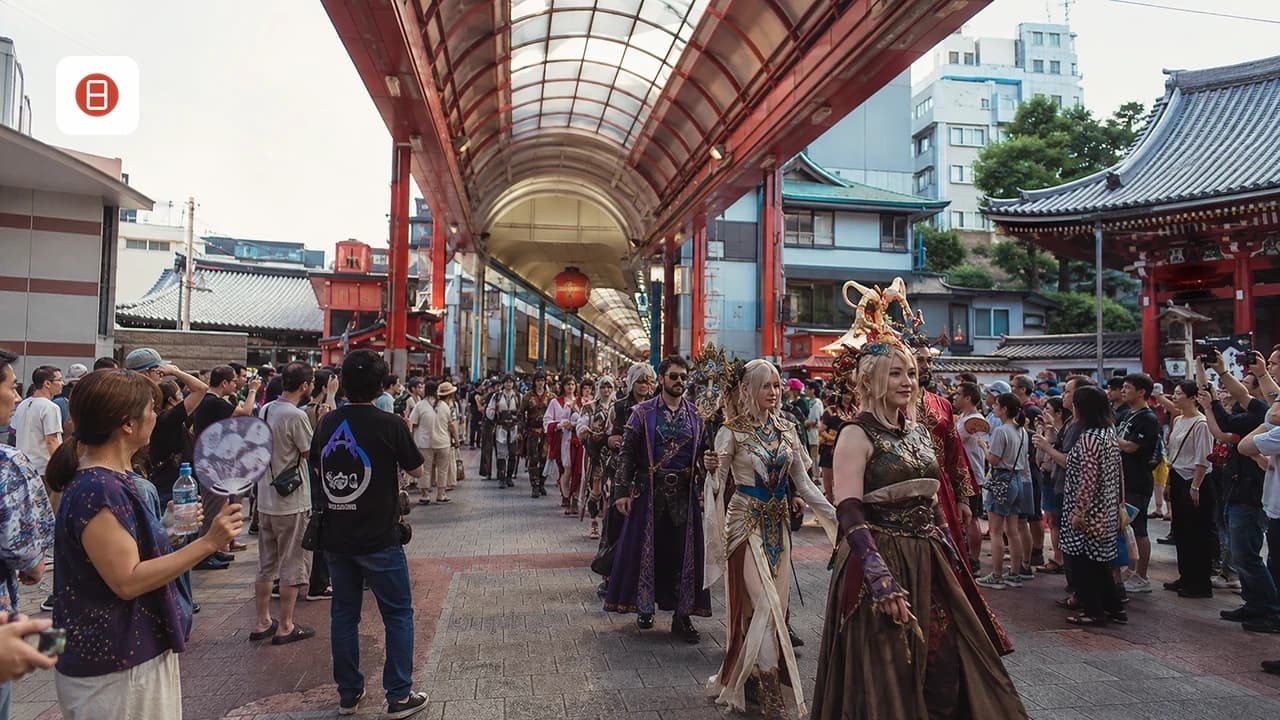
Domatsuri is short for Nippon Domannaka Matsuri, the largest dance festival in the Chubu region, according to the official festival site. Domannaka means right in the middle, a reference to Nagoya's position near the geographic center of Japan. Teams perform in a yosakoi-inspired style, pairing modern choreography with music built around each region's own sound. Every team builds its music around a local folk melody, and every dancer carries a naruko, a small wooden clapper, under the festival's long-standing rules. Team rosters range widely, from high-school dance clubs and college groups to professional troupes and neighborhood associations, all competing under those same rules. Nagoya's festival calendar runs from spring through autumn, and Domatsuri anchors the late-summer stretch of it. A separate, costume-focused event, the World Cosplay Summit, also lands in Nagoya each summer, drawing a different crowd.
- 1999: festival founded with 26 teams and about 1,500 dancers
- 2026: 28th edition, with roughly 200 teams and 20,000 dancers taking part
- Attendance: an estimated 2 million spectators across the full festival period
2026 Dates: Summer Domatsuri vs. Autumn Tele Domatsuri
Nagoya's 28th Nippon Domannaka Festival runs its summer dates Friday, August 28 through Sunday, August 30, 2026, with performances at Hisaya Odori Park and other venues across Nagoya City. Doors open Friday from 4:30pm to 9:00pm, then both Saturday and Sunday run 9:00am to 9:00pm. Tele Domatsuri, the autumn edition, began in 2020 during the pandemic as an online-only substitute and has run every year since. It streams recorded team performances online from Wednesday, November 25 through Friday, November 27, 2026. It then moves in person to Moricoro Park, the Expo 2005 Aichi Commemorative Park in Nagakute, for Saturday, November 28 and Sunday, November 29, 2026. Choose summer for the full street energy and the Final Contest, or autumn for a calmer, hybrid version of the same festival.
Friday's 4:30pm start avoids Nagoya's hottest afternoon hours, offering a strategic heat-management advantage over full-day Saturday and Sunday schedules.
| Edition | 2026 Dates | Format | Main Location |
|---|---|---|---|
| Summer Domatsuri | Aug 28-30 | Live street and stage performances | Hisaya Odori Park + 16 city venues |
| Tele Domatsuri (broadcast) | Nov 25-27 | Recorded team videos streamed online | YouTube |
| Tele Domatsuri (real-life) | Nov 28-29 | In-person outdoor performances | Moricoro Park, Nagakute |
What to See and Do: Souodori, the Final Contest, and Regional Booths
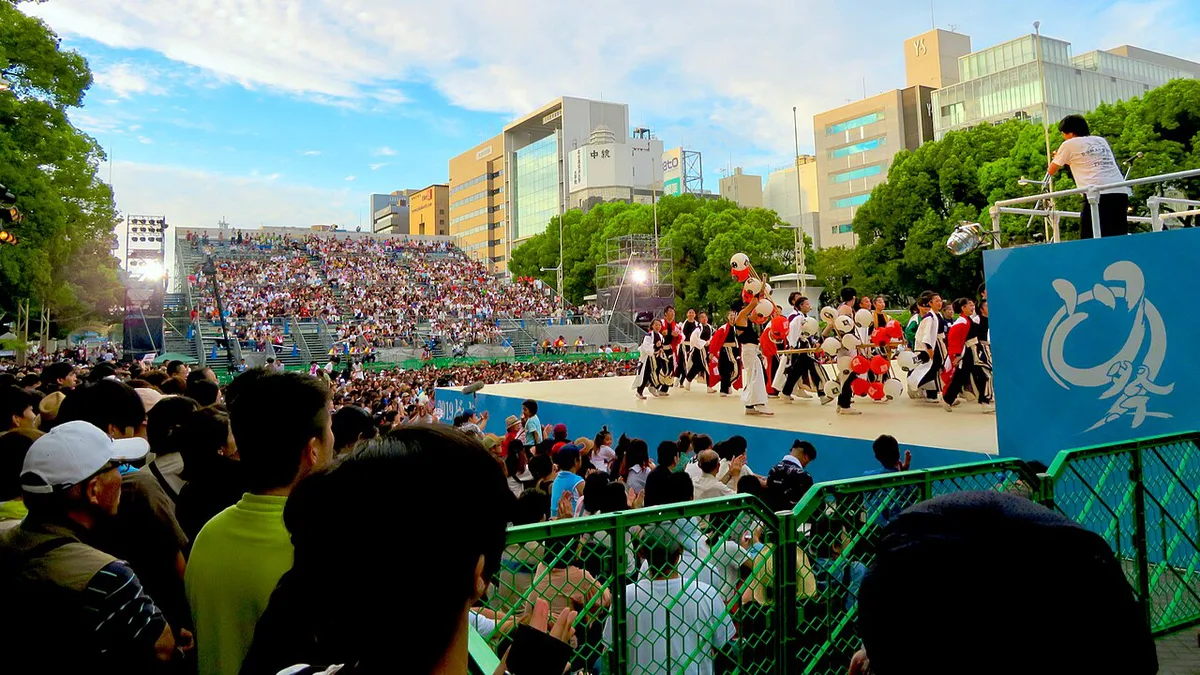
Souodori is the festival's open invitation. Spectators join the dancers in one mass dance, regardless of nationality or experience, according to the official Domatsuri site. Choreography exists for the Souodori music, but organizers stress that knowing the steps is not required. Anyone can move to the rhythm and take part. All roughly 200 teams perform somewhere across the festival's venues, but only a fraction of routines advance to Sunday's headline show. Judges award the Domatsuri Grand Prix during the Final Contest on the evening of August 30, closing out the summer weekend. Team rosters typically include callers, banner-bearers, flag-wavers, and musicians alongside the dancers themselves, so a single team's performance blends far more than choreography alone. Teams also staff PR booths with regional specialty food and craft displays from their home prefectures. Performances split into two formats: stage-style routines at a fixed venue, and parade-style teams that follow a music vehicle down the street. Edion Hisaya Plaza inside Hisaya Odori Park hosts the main stage, while venues like the Osu Shopping District lean toward a moving parade atmosphere.
Where to Watch: Hisaya Odori Park and the 16 City Venues
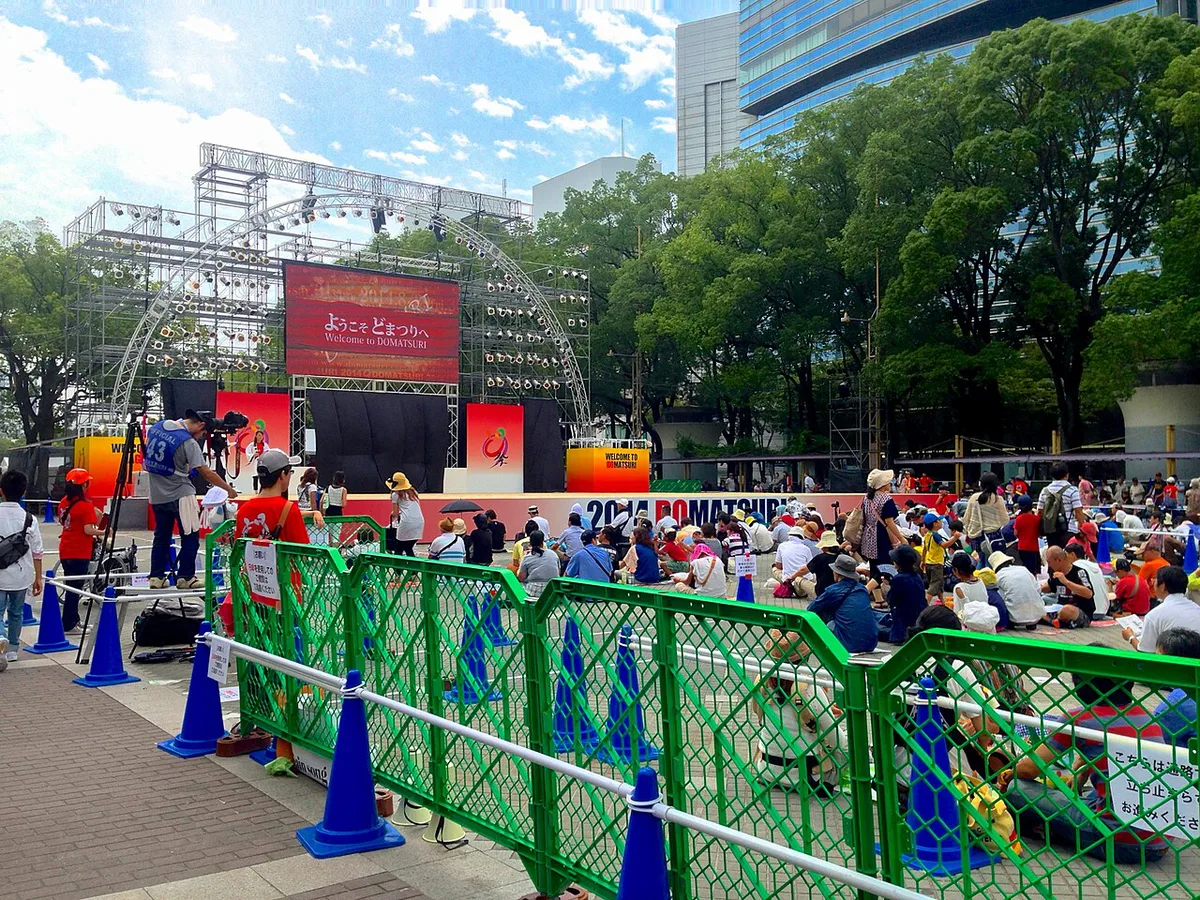
Hisaya Odori Park's Edion Plaza anchors the festival as its main stage and the site of the Final Contest. Sixteen venues around Nagoya City host performances in 2026, spreading the festival into neighborhood plazas, temple grounds, and streets closed off for the occasion. Hisaya Odori Park sits inside Nagoya's Sakae district, close to many of the city's top attractions. Smaller venues tend to draw thinner crowds than the main stage, so they suit visitors who want to watch performances up close.
- Hisaya Odori Park / Edion Hisaya Plaza: main stage, Final Contest venue
- Osu Shopping District: parade-style teams, closer street-level viewing
- Neighborhood plazas and temple grounds: smaller stage-style sets across the 16 venues
Costs and Tickets
General standing room throughout the festival grounds costs nothing. Edion Hisaya Plaza's main stage also offers reserved paid seating for the busiest sets; check the official Domatsuri site for current-year pricing and availability. Domatsuri fits naturally alongside Nagoya's other free things to do, since most of the festival costs nothing beyond transit and food. Budget separately for regional snacks at the team PR booths, which are priced individually by each vendor. Reserved seating sells out for the Sunday Final Contest in a typical year, so book early if you want a guaranteed spot rather than relying on the free viewing area.
Festival attendance is free, but accommodation costs range from ¥3,200 capsule rooms to ¥5,000 standard hotels near the main venue.
Getting There: Subway Stations and Parking
Yaba-cho Station on the Meijo Subway Line sits about a one-minute walk from the main venue, according to the Japan Travel tourism guide. Sakae Station, served by the Higashiyama and Meijo lines, is roughly three minutes away on foot. Hisaya-odori Station, on the Meijo and Sakura-dori lines, sits about 0.2 miles from the park entrance. Drivers can use the Angel Park parking lot, though its south entrance stays closed during the festival. Nishikibashi Interchange on the Nagoya Expressway is about five minutes from the venue by car. Traffic restrictions apply around every venue on event days, and Me~guru loop bus stops can shift, so confirm routing on the official site before heading out. Walking between venues is often faster than waiting for a subway car during peak Saturday and Sunday crowds. For same-day questions, the festival's cultural foundation takes calls at 052-241-4333, weekdays from 9:00am to 6:00pm. Citywide transit basics appear in the Nagoya transit guide.
Where to Stay
Sakae puts you within walking distance of Hisaya Odori Park and most Domatsuri venues. HOTEL MYSTAYS Nagoya Sakae, about 0.6 miles from the main stage, lists rooms from ¥3,900. Nagoya Station trades a short subway ride for easier access to the Shinkansen and airport buses. Nine Hours Nagoya Station, roughly 1.4 miles out, lists capsule-style rooms from ¥3,200, while Smile Hotel Nagoya Shinkansenguchi, about 1.7 miles from the main stage, lists rooms from ¥5,000. For a full neighborhood breakdown, see the Nagoya accommodation guide.
Local Pro Tips: Beating the Heat and Avoiding Crowds
Nagoya's official city guide posts heatstroke warnings every summer. Late August sits at the peak of the region's humidity, so pace yourself between venues. Oasis21, a glass-roofed plaza a few minutes from Hisaya Odori Park in Sakae, offers shaded space to cool down between performances. Morning sets and the evening blocks after 5:00pm tend to draw smaller crowds than midday performances. Friday's shorter 4:30pm to 9:00pm window is generally calmer than the full-day Saturday and Sunday schedules. Parade-style venues like Osu offer closer sightlines for photography than the ticketed main stage. For a broader seasonal comparison, see when to visit Nagoya. Sunday evening's Final Contest, on August 30, draws the festival's largest crowds. Arrive at Hisaya Odori Park well before the evening program starts if you lack reserved seating. Venues like Osu see lighter, more relaxed crowds if the main stage feels too packed.
What to Pack for a Hot Festival Day
Nagoya's late-August heat and humidity make packing choices matter as much as scheduling. A refillable water bottle keeps you from relying on festival-area vending machines all day. Light, breathable clothing and a hat or umbrella cut down on direct sun exposure between venues. Comfortable walking shoes help on parade routes and the longer stretches between the 16 venues. A portable fan or cooling towel, common in Japan during summer festivals, helps during the midday lull. Cash in small denominations speeds up food purchases at the team PR booths.
- Refillable water bottle
- Hat, umbrella, or other sun protection
- Comfortable walking shoes for parade routes
- Portable fan or cooling towel
- Small-denomination cash for PR booth food
Nearby Attractions to Pair With Domatsuri
Nagoya Castle, one of the city's signature landmarks, sits a short subway ride from Sakae. See the Nagoya Castle guide for hours and access. Osu Kannon Temple and its surrounding shopping arcades make an easy stop between festival sets, inside the same central district as Hisaya Odori Park. Oasis21's glass-roofed plaza doubles as a sightseeing stop and a shaded rest point on hot festival days. If travel dates land closer to autumn, the Atsuta Matsuri offers a more traditional shrine festival by contrast. It's held at Atsuta Jingu, a Shinto shrine in Nagoya. Nagoya also hosts the Nagoya Matsuri, a separate festival covered in its own guide. Check the official Nagoya Festival site for current-year dates. Each of these stops sits within a short subway ride of Sakae, so an extra half-day easily fits around the festival schedule. Travelers building a longer trip can check how many days to plan for the city. Mapping day-by-day stops is easier with the Nagoya Itinerary 2026: Plan Your Perfect 3 to 5 Day Trip. Those continuing on to the Kansai region can compare dates against Kyoto's festival calendar. Osaka's event listings cover the same window for a Kansai side trip.
Frequently Asked Questions
When is the Nippon Domannaka Festival in 2026?
Summer dates run Friday, August 28 through Sunday, August 30, 2026, mainly at Hisaya Odori Park and other Nagoya City venues. Autumn's Tele Domatsuri follows, with online broadcasts November 25-27 and in-person performances at Moricoro Park on November 28-29, 2026.
Is the Nippon Domannaka Festival free to attend?
General standing room throughout the festival grounds costs nothing. Reserved paid seating is also available at the Edion Hisaya Plaza main stage; check the official Domatsuri site for current pricing.
Can visitors join the dancing?
Yes. Souodori is the festival's mass audience dance, open to spectators of any nationality or skill level. Choreography exists for the music, but organizers say knowing the steps in advance is not required. Newcomers can simply move to the rhythm alongside the crowd.
How do you get to the main festival venue?
Yaba-cho Station on the Meijo Subway Line is about a one-minute walk from the main venue. Sakae Station, served by the Higashiyama and Meijo lines, is roughly three minutes away on foot.
What's the best way to handle the August heat at Domatsuri?
Morning and early-evening blocks tend to run cooler than midday sets. Build in breaks at shaded or air-conditioned spots like Oasis21 near Hisaya Odori Park. Carry water throughout the day, since Nagoya's late-August humidity is significant.
What is Tele Domatsuri?
Tele Domatsuri is the autumn extension of the festival, born in 2020 during the pandemic as an online-only broadcast. It has since grown into a hybrid format: three days of streamed performances followed by two in-person days at Moricoro Park. This series won a 2022 Japan Event Award from Japan's Ministry of Economy, Trade and Industry.
Do team performances happen at more than one venue?
Yes. Sixteen venues across Nagoya City host performances during the 2026 summer edition, from the Edion Hisaya Plaza main stage to smaller neighborhood plazas and closed-off streets. Parade-style teams typically appear at venues like the Osu Shopping District, while stage-style routines run at fixed-venue setups such as the main stage.
Free: The Nagoya Essentials guide
Top things to do, where to stay, a perfect day plan, getting around, and the best time to go — a Nagoya mini-guide you can take offline.
You might also like


Continue reading
More guides you'll find useful