Atsuta Festival 2026: Complete Guide to Nagoya's Atsuta Matsuri
Plan the Atsuta Festival at Atsuta Jingu with this 2026 guide: free entry, a 10 AM Shinto rite, 365-lantern floats, and fireworks over Jingu Park.
On this page
Last updated September 2026: the Atsuta Festival returns to Atsuta Jingu on June 5, the largest of the shrine's 70 annual festivals. Also known as Atsuta Matsuri or the Shobu Festival, it runs a 10:00 AM Shinto ceremony by day and free lantern floats with fireworks after dark. This guide covers the daytime rituals, the nighttime spectacle, and the transit routes into Atsuta-ku.
What Is the Atsuta Festival?
The Atsuta Festival takes place every June 5 at Atsuta Jingu in Nagoya's Atsuta-ku ward. Local guides count it as the largest of the shrine's 70 annual festivals. It also carries two other names: Atsuta Matsuri and the Shobu Festival. Locals treat June 5 as summer's unofficial start, since the day mixes formal Shinto rites with an evening of paper lanterns and fireworks. Admission to the shrine grounds is free, and the 2026 edition falls on its usual date, Friday, June 5.
- Date: June 5, 2026 (Friday), held annually
- Location: Atsuta Jingu, 1-1-1 Jingu, Atsuta-ku, Nagoya
- Cost: Free admission to shrine grounds and rituals
- Hours: Rituals from 10:00 AM; kento makiwara lit 18:00–21:00; fireworks approximately 19:40–20:30
Why Atsuta Jingu Shrine Matters
Atsuta Jingu ranks as Japan's second-most revered Shinto shrine, behind only the Ise Grand Shrine in neighboring Mie Prefecture. The shrine enshrines the sun goddess Amaterasu alongside the sacred sword Kusanagi-no-Tsurugi, one of Japan's three imperial treasures. That sword is never shown to the public, but the newer Kusanagi-kan museum on the grounds displays other historic swords instead. Atsuta Jingu itself dates back roughly 1,900 years, which is part of why the June 5 festival draws visitors well beyond Aichi Prefecture. Shrine grounds cover about 190,000 square meters of forest inside the city, rebuilt in 1893 in the Shinmei-zukuri style shared with Ise Shrine. A festival visit pairs well with Nagoya Castle on the same day. Round out the itinerary with other Nagoya attractions nearby.
Morning Schedule: Shinto Rites and Martial Arts
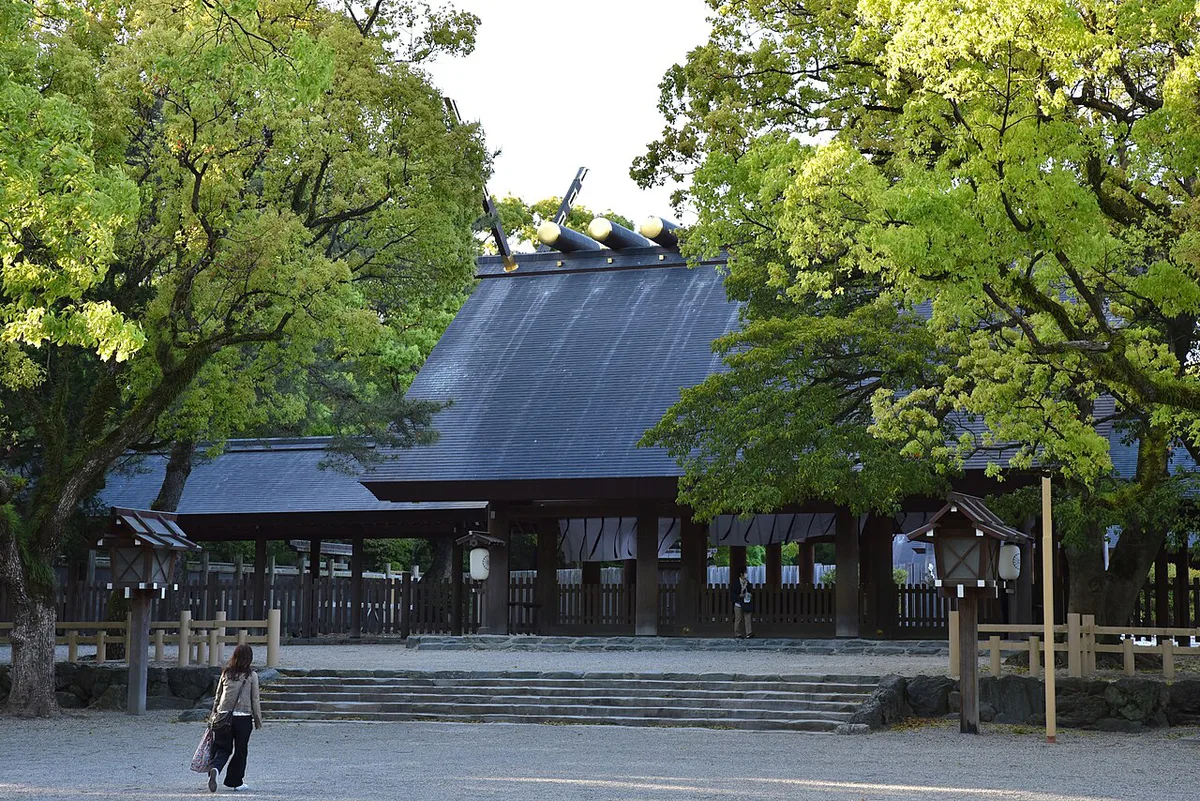
Rituals begin at 10:00 AM in front of Atsuta Jingu's main sanctuary. An Imperial envoy, sent by the Emperor, joins shrine priests for formal Shinto rites dedicated to the resident deities. Through the rest of the morning and early afternoon, priests and local groups perform martial arts as offerings to the shrine. Expect kyudo archery, kendo swordsmanship, and sumo demonstrations across the grounds. Street performers add to the atmosphere throughout the compound alongside these more formal displays. One highlight is Atsuta Kagura, a sacred dance set to flute and drum that has run at this shrine for close to 1,800 years. Mikoshi, the shrine's portable shrines, are carried through the surrounding grove during the day, and smaller child-sized kodomo-mikoshi often follow behind.
Evening Spectacle: Kento Makiwara Lanterns and Fireworks
As dusk falls, five kento makiwara floats appear at the shrine's three main entrances. Each dome-shaped float carries 365 individual lanterns, lighting up Atsuta Jingu's ancient grove from 18:00 to 21:00. Street vendors set up yatai stalls along the approach paths at the same time. The night closes with a fireworks display launched from Jingu Park, not from the shrine grounds themselves. More than 1,000 fireworks fire between roughly 19:40 and 20:30. If rain forces a postponement, the display typically shifts to June 6, so check the shrine's site close to your travel dates. For the clearest sightline, stand inside Jingu Park rather than near the shrine's main hall. Most of the shrine grove sits under tree cover, which blocks the view from there.
Where to Watch: Jingu Park vs. the Shrine Grove
The shrine's three entrances and Jingu Park serve different parts of the evening program, so plan around whichever matters more to you. This comparison breaks down what each spot offers before you settle on where to stand for the night.
Five floats each carry 365 individual lanterns (lit 18:00–21:00), while 1,000 fireworks launch 19:40–20:30 from Jingu Park. Decide your viewing spot based on the show you want most.
| Viewing Spot | Fireworks Sightline | Lantern Floats Visible | Getting There |
|---|---|---|---|
| Jingu Park | Clear, since fireworks launch from here | No, floats stay at the shrine entrances | Adjacent to the shrine, reachable from all three station approaches |
| Shrine entrances/grove | Blocked by trees in most spots | Yes, kento makiwara lit 18:00–21:00 | Walk in from Jingu-mae, Temma-cho, Nishi, or Atsuta stations |
Festival Food: Nagoya Meshi at the Yatai Stalls
Yatai food stalls line the approach paths for the length of the festival, mixing festival staples with a few Nagoya specialties worth seeking out. Stall food follows a similar pattern at other Nagoya events, and Nagoya's festival calendar rounds up where to find it next.
- Takoyaki – fried octopus balls
- Yakisoba – stir-fried noodles
- Kakigori – shaved ice
- Tamasen – fried egg pressed into a rice cracker
- Kishimen – flat noodles served at Atsuta Jingu year-round
- Misokatsu – pork cutlet topped with Nagoya's dark aka-miso
What to Wear and Pack for Festival Day
June in Nagoya means heat and humidity, so breathable clothing works better than anything heavy. Comfortable shoes matter too, since the day involves walking between the shrine's three entrances and Jingu Park for the fireworks. Many local visitors wear light cotton yukata for the evening portion, though this is optional for foreign travelers. Bring a hand fan or cooling towel, plus a refillable water bottle, since shade is limited once crowds fill the approach paths. Small cash works best at the yatai stalls, since not every vendor accepts cards.
Getting to Atsuta Jingu: Trains, Parking, and Where to Stay
Three rail lines put you within an 8-minute walk of the shrine gates. This table lists each option and its walking time from the platform. Atsuta Jingu also offers free parking, with 400 spaces for standard vehicles and 10 for buses. Reach the lot in about 8 minutes from either the Horita or Yobitsugi exit on the Nagoya Expressway. Festival organizers restrict lot access on the day itself, so Getting Around Nagoya: 10 Essential Transport Tips by train is the more reliable plan on June 5. For overnight stays, Kanayama and Sakae both sit a short ride from Atsuta-ku on the Meijo Line. Check 8 Best Areas and Tips for Where to Stay in Nagoya (2026) for details on both neighborhoods. Then fold the festival date into a Nagoya itinerary if you're building a longer trip. Still deciding on trip length? How Many Days in Nagoya: 3-Day Itinerary & Planning Tips covers how one festival day fits into a longer visit.
Free parking has 400 spaces, but attendance reaches 250,000, making trains far more practical for festival-day entry.
| Line | Station | Walk Time |
|---|---|---|
| Meitetsu Nagoya Line | Jingu-mae Station | 3 minutes |
| Meijo Subway Line | Atsuta Jingu Temma-cho / Atsuta Jingu Nishi | 7 minutes |
| JR Tokaido Main Line | Atsuta Station | 8 minutes |
Crowd and Heat Strategy: Avoiding Common Mistakes
June in Nagoya runs hot and humid, and standing outdoors from late afternoon through the 20:30 fireworks finale adds up fast. Carry water, and take breaks in the shaded groves around the shrine if the heat becomes an issue. Attendance regularly tops 250,000 across the day, with the heaviest crowds arriving for the evening lantern lighting. Aim to reach Jingu Park or the shrine's entrances by 5:00 PM if you want a clear view when the kento makiwara are lit at 18:00. Nagoya and the wider Aichi region are also hosting the 20th Asian Games Aichi-Nagoya 2026. If your visit overlaps with the Games calendar, book early-June accommodation well ahead.
Should You Time a Trip Around the Atsuta Festival?
The Atsuta Festival blends imperial ritual with free fireworks, making it one of Nagoya's better warm-weather picks. If you want a contrast, October's Nagoya Matsuri trades shrine ritual for a costumed procession of the city's three feudal lords through Sakae. Summer travelers chasing a different kind of crowd might prefer the World Cosplay Summit, another major Nagoya draw. Fans of dance and drumming should also look at the Nippon Domannaka Festival, Nagoya's yosakoi-style dance event. Because entry to the rituals and fireworks is free, the day fits into a broader look at 15 Best Free Things to Do in Nagoya (2026). For help matching the date to your trip, Best Time to Visit Nagoya 2026: 10 Seasonal Tips and Insights compares June with the rest of the year. Travelers building a wider Kansai loop can weigh the same weekend against Kyoto's festival calendar. A side trip to check Osaka's event calendar works the same way.

Frequently Asked Questions
When is the Atsuta Festival in 2026?
The Atsuta Festival takes place on June 5, 2026, a Friday, at Atsuta Jingu. Shinto rituals start at 10:00 AM, and the kento makiwara lanterns light up from 18:00 to 21:00. Fireworks run from about 19:40 to 20:30, with a rain-delay date of June 6 if the evening show gets postponed.
Is the Atsuta Festival free to attend?
Yes, admission to the shrine grounds and every festival ritual is free. Parking is also free, with 400 spaces for standard vehicles and 10 for buses, though the lot is often restricted on festival day. Public transport is the more dependable option for reaching Atsuta Jingu on June 5.
Where's the best place to watch the Atsuta Festival fireworks?
Jingu Park offers the clearest sightline, since the fireworks launch from there rather than from the shrine grounds. Tree cover across most of the shrine grove blocks sightlines closer to the main hall. Arrive by around 5:00 PM if you also want a good spot for the lantern lighting beforehand.
How do you get to Atsuta Jingu for the festival?
Three train lines serve the shrine within an 8-minute walk. Jingu-mae Station on the Meitetsu Nagoya Line is closest, at about 3 minutes on foot. Atsuta Jingu Temma-cho and Atsuta Jingu Nishi stations on the Meijo Subway Line both sit roughly 7 minutes away. JR Tokaido Main Line's Atsuta Station adds about an 8-minute walk.
How does the Atsuta Festival compare to Nagoya's other summer festivals?
Atsuta Festival rituals are more solemn than Nagoya's other big summer events, built around Shinto rites rather than a parade or dance competition. Travelers who want a costume-and-performance atmosphere instead might prefer the World Cosplay Summit, another major Nagoya draw. For a free, single-evening introduction to the city's shrine culture, the Atsuta Festival is hard to beat.
Do you need to wear a yukata to attend?
No, a yukata is optional. Many Japanese attendees wear light cotton kimono for the evening portion, but casual clothing works fine for visitors. Comfortable walking shoes matter more, since the day covers ground between the shrine's three entrances and Jingu Park.
Can you see both the morning rituals and the evening fireworks in one visit?
Yes, the full day runs from about 10:00 AM through the 8:30 PM fireworks finale, so an all-day visit covers both. Many travelers split the day into two visits instead. They watch the morning ceremony, take a break, then return by 5:00 PM for the lantern lighting.
Is the Atsuta Festival crowded, and should you book accommodation early?
Yes, attendance regularly tops 250,000 across the day, with the heaviest density near the shrine entrances after 5:00 PM. Book accommodation in Kanayama or Sakae well ahead of June 5. Travel volume may run higher in 2026 with the Asian Games Aichi-Nagoya nearby on the calendar.
Free: The Nagoya Essentials guide
Top things to do, where to stay, a perfect day plan, getting around, and the best time to go — a Nagoya mini-guide you can take offline.
You might also like


Continue reading
More guides you'll find useful