Sanno Matsuri Tokyo Guide: Hie Shrine's Grand Parade and 2028 Dates
Sanno Matsuri in Tokyo runs its full Jinko-sai grand parade only in even years. Get the 2026 recap, the 2028 outlook, viewing spots, and Hie Shrine logistics.
On this page
Last updated August 2026, this guide explains what Sanno Matsuri in Tokyo involves, from Hie Shrine rituals to the biennial grand parade. The 2026 edition's Jinko-sai parade already took place on June 12, so anyone reading this now is planning ahead for 2028. Hie Shrine still hosts smaller rituals every year near Akasaka and Nagatacho, so the festival is worth checking even in an off year.
What Is Sanno Matsuri in Tokyo?
Sanno Matsuri ranks among Edo's Three Great Festivals, alongside Kanda Matsuri and Fukagawa Matsuri. Hie Shrine hosts the event every June, and its full-scale Jinko-sai grand parade only runs in even-numbered years. Kanda Matsuri takes the odd-year slot instead, while Sanja Matsuri runs every single year. Sanno Matsuri also falls inside a packed stretch of Tokyo's summer festival calendar. For the wider picture, cross-check dates against the Tokyo events calendar before booking travel. Japan's national tourism agency also lists Sanno Matsuri among Tokyo's leading celebrations and ceremonies. The festival suits visitors who want Edo-period pageantry without Tokyo's largest crowds.
- Location: Hie Shrine, 2-10-5 Nagatacho, Chiyoda City, Tokyo
- Festival period: 11 days each June (2026 ran June 7–17)
- Grand parade (Jinko-sai): even-numbered years only, next in 2028
- Cost: free to watch
- Participants: roughly 500 to 550 people in traditional dress
The Jinko-sai Grand Parade: 2026 Recap and the Road to 2028
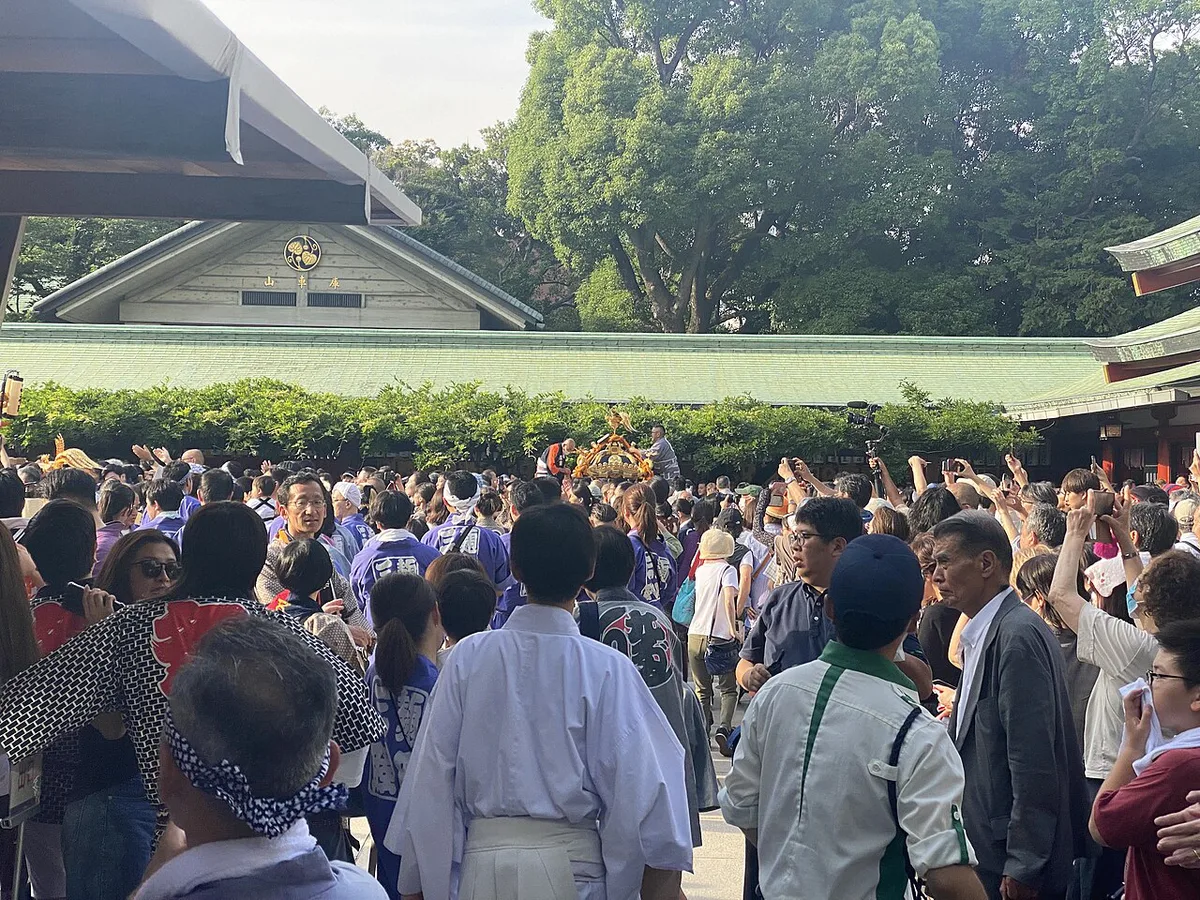
Sanno Matsuri's main event is the Jinko-sai grand parade, and it runs only in even-numbered years. In 2026 it took place on June 12, a Friday, departing Hie Shrine at 7:45 a.m. and running roughly ten hours. Because that edition has already happened, anyone reading this guide now is planning for the 2028 parade instead. Tokyo's official tourism site confirms the 2026 date has passed and lists 2028 as the next scheduled year. About 500 to 550 people join the procession in Heian-period costume, and three mikoshi topped with phoenix ornaments travel at its center. A float shaped like an elephant also appears; Chiyoda's tourism office ties its design to the name of the nearby Hanzomon Gate. The procession itself stretches about 300 meters, and the full route covers close to 2 km end to end. Only part of the route closes to traffic, so regular cars and buses still run alongside the procession in places. Around midday, the parade stops at the Imperial Palace's Sakashita-mon Gate for a formal ceremony. GO TOKYO describes this stop as a dignified ceremony, with prayers offered for the Imperial Palace and for peace in Tokyo. Chiyoda's tourism office also published a more detailed 2026 waypoint schedule, useful for judging how far the parade has moved by a given hour. Exact minute-by-minute timing shifts each edition, so treat these as planning estimates rather than a fixed schedule for 2028.
| Time | Stop | What Happens |
|---|---|---|
| 7:45 a.m. | Hie Shrine | Parade departs with roughly 500–550 participants |
| 10:00 a.m. | Near Yasukuni Shrine | Procession passes through en route to the palace |
| Around 12:00 p.m. | Imperial Palace, Sakashita-mon Gate | About a 30-minute ceremonial stop |
| 1:30 p.m. | Nihonbashi Hie Shrine | Roughly an hour's rest; only part of the procession fits inside |
| 3:15 p.m. | Ginza | Procession crosses near the Ginza clock tower |
| 5:00–6:00 p.m. | Hie Shrine | Parade returns and the day's events conclude |
- 11:05 a.m. — passes the National Theatre
- 1:05 p.m. — passes the Marunouchi Building
- 3:50 p.m. — reaches Kyobashi, 3-chome
- 4:55 p.m. — passes the Imperial Hotel
Best Places to Watch the Parade Route
Hie Shrine offers the most atmospheric view, but its approach draws the thickest crowds at departure and return. Climbing the 52 stone steps to Hie Shrine grounds gets crowded fast on parade days, so arrive early for a clear view. Marunouchi, near Tokyo Station, gives the strongest photo contrast, with Heian-period costumes framed against glass office towers. Nihonbashi and Ginza offer more breathing room, plus easy access to other Tokyo attractions for the rest of the day. The route also passes close to Nihonbashi Bridge itself, a short detour worth combining with a Ginza viewing stop. Office workers on lunch break often line the Ginza and Nihonbashi stretch of the route, especially when the parade falls on a weekday. On a Friday afternoon in 2026, that stretch stayed busy without feeling overwhelming, according to on-the-ground accounts, making it workable for visitors who dislike dense crowds.
To catch the departure at Hie Shrine and avoid the 52 stone step crowds, arrive well before 7:45 a.m., since the procession moves to the Imperial Palace by midday.
| Spot | Vibe | Crowds | Best For |
|---|---|---|---|
| Hie Shrine (start/finish) | Traditional, ceremonial | Very high | Departure rituals and the chinowa purification ring |
| Marunouchi / Tokyo Station | Modern contrast | High | Photos of costumes against glass towers |
| Nihonbashi / Ginza | Relaxed, shopping-adjacent | Moderate | Close-up mikoshi views and a lunch-break stop |
Off-Year Sanno Matsuri: What Still Happens in 2027
2027 is an odd-numbered year, so the full 500-person Jinko-sai grand parade does not run. Kanda Matsuri takes the spotlight that year instead, with its own grand parade through a different part of central Tokyo. Hie Shrine still holds its 11-day festival period, including the chinowa straw ring and smaller neighborhood processions. Visitors planning a 2027 trip around Sanno Matsuri specifically should expect shrine-based rituals rather than a citywide parade. The next full-scale parade after 2026 returns in 2028, following the same even-year pattern GO TOKYO documents.
Rituals and Events at Hie Shrine During Festival Week
Sanno Matsuri runs for 11 days each June, and most of that stretch happens at Hie Shrine itself, without the grand parade. The shrine sets up a large straw ring, called chinowa, and visitors walk through it in a figure-eight pattern as an act of purification. Tradition holds that walking through the ring clears away the past six months of misfortune. Traditional performances round out the week, including the Sanno Odori folk dance, which GO TOKYO says predates most of Japan's other summer bon odori events. Tea ceremonies also take place during the 11-day period, offering a quieter counterpoint to the parade's crowds. Food stalls set up on the shrine grounds through the week, based on visitor reports, though exact vendors change year to year. In 2026, satellite events on the Chiyoda tourism calendar included a Bon Odori lantern dance from June 13 to 15, plus mikoshi carried by local residents on June 14 from 9 a.m. to 3 p.m. Future editions likely follow a similar shape, though exact dates shift with the calendar. Fans of live drumming and street performances can also browse Tokyo's music festival lineup for more of the same energy.
History: Hie Shrine, the Tokugawa Shoguns, and the Even-Year Rule
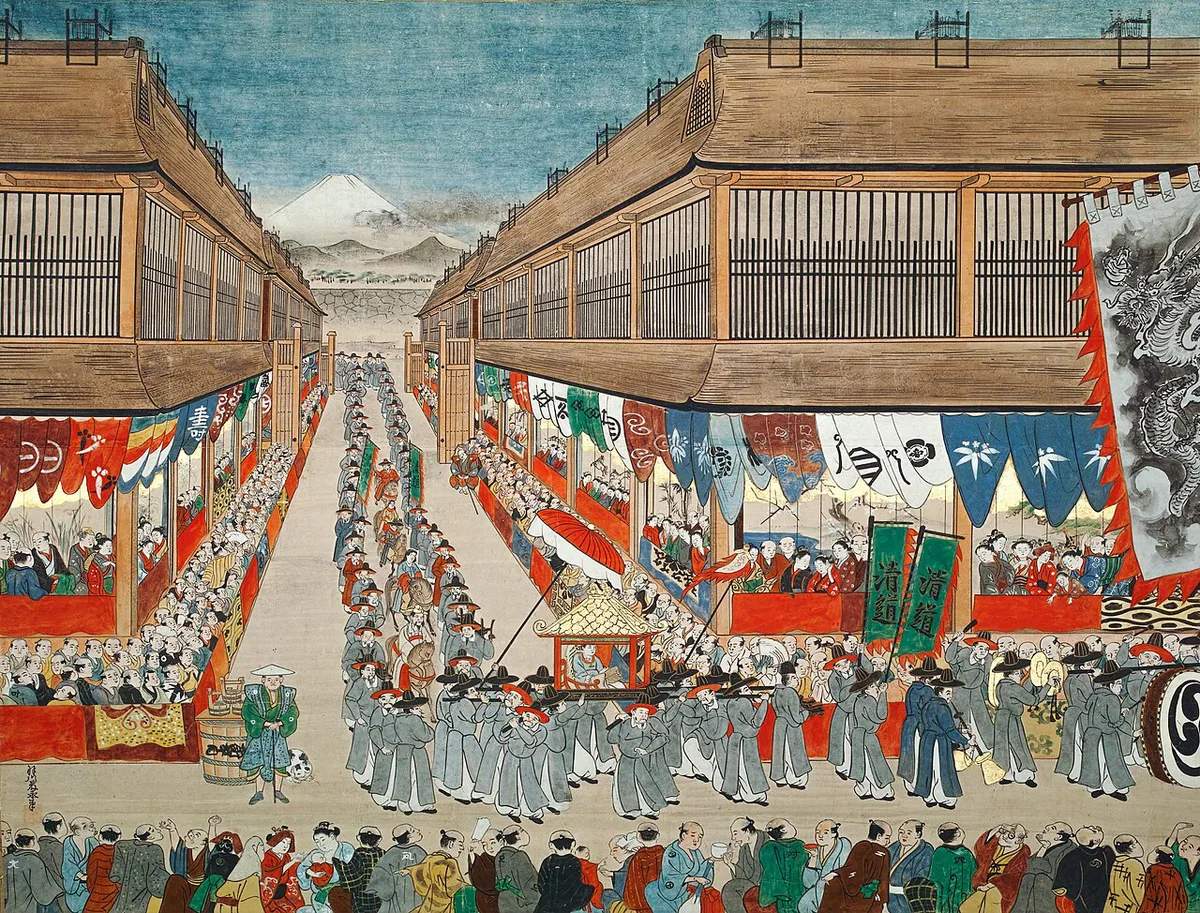
Hie Shrine's festival was once called the Tenka Festival, and GO TOKYO notes it grew once Tokugawa Iemitsu, the third Tokugawa shogun, began attending. During the Edo period, mikoshi and festival floats were allowed onto the grounds of Edo Castle, a privilege shared by only a handful of festivals. Hie Shrine is regarded as a guardian shrine of Tokyo, and between 1871 and 1946 it held one of the country's top official shrine rankings. After World War Two, occupation authorities dismantled that ranking system, and the emperor renounced the divine status the festival once helped reinforce. Even so, Hie Shrine still holds a prominent place among Tokyo shrines today, and its parade still stops at the Imperial Palace as a nod to that history. The even-year, odd-year split with Kanda Matsuri reportedly began as a way to settle disputes between the two festivals' organizers and avoid overtaxing Edo every year. Fukagawa Matsuri, the third of the trio, follows a different summer schedule and centers on a different shrine and neighborhood. Sanja Matsuri, by contrast, runs annually and keeps a livelier, less formal atmosphere than the modern Sanno Matsuri parade; see the Sanja Matsuri guide for that comparison.
Getting to Hie Shrine and Practical Logistics
Watching Sanno Matsuri costs nothing, whether at Hie Shrine or anywhere along the parade route. Three subway stations sit within a few minutes of the shrine. Ginza and Nihonbashi stations both sit directly on the parade's afternoon route, useful for viewers who only have time for one stop. June sits inside Tokyo's tsuyu rainy season, so pack a compact umbrella and expect high humidity even between showers. Check the best time to visit Tokyo guide before locking in a June trip. Anyone weighing spring instead can compare conditions in the cherry blossom season guide. Carry water too, since the grand-parade route runs roughly ten hours in warm, humid air.
- Akasaka Station, Exit 2, 3-minute walk (Tokyo Metro Chiyoda Line)
- Tameike-sanno Station, Exit 7, 3-minute walk (Tokyo Metro Ginza and Namboku lines)
- Kokkai-gijidomae Station, Exit 5, 5-minute walk (Tokyo Metro Chiyoda Line)
Where to Stay Near the Route
Akasaka and Nagatacho put travelers closest to Hie Shrine, the parade's start and finish point. Budget hotels in that area list rates from about ¥5,100 a night, based on nearby listings, up to roughly ¥8,100 for standard mid-range rooms. Tokyo Station and Marunouchi work well for travelers who prefer easier train access and a wider choice of dining after the parade passes through. Marunouchi also skews toward business and higher-end hotels, useful for combining the festival with a more comfortable stay. Either base works well, since Tokyo's subway network links both areas directly to Hie Shrine. Since the festival itself is free, pair the trip with more 15 Best Free Things to Do in Tokyo 2026 to round out the day.
Mistakes to Avoid When Planning Your Visit
A few planning errors show up often with this festival, and most trace back to the even/odd-year rule or timing.
Visitors coming in 2027 should expect shrine rituals rather than the full 500-person parade, which alternates with Kanda Matsuri's grand event to prevent festival overlap.
- Year confusion: showing up in an odd year like 2027 expecting the full 500-person parade, when only shrine rituals run that year
- The workday factor: the grand parade often falls on a weekday, and roads only partly close, so traffic still runs alongside it
- Bad timing at the shrine: arriving at Hie Shrine around midday misses the procession, since it is at the Imperial Palace stop then
- Assuming a paid ticket: no ticket exists, and no advance booking is needed to watch from any public spot along the route
Frequently Asked Questions
When is the next Sanno Matsuri grand parade?
The 2026 Jinko-sai grand parade already took place on June 12, so the next full parade is scheduled for 2028. Check GO TOKYO's event page closer to that date for the confirmed schedule.
Does Sanno Matsuri happen every year?
Yes, the 11-day festival period runs every June at Hie Shrine, including rituals and the chinowa purification ring. Only the full Jinko-sai grand parade skips odd-numbered years, when Kanda Matsuri holds its own grand event instead.
How much does it cost to watch Sanno Matsuri?
Watching the festival and the grand parade is free everywhere along the route. Budget hotels near Akasaka list rates from about ¥5,100 a night if the trip includes an overnight stay.
What is the closest train station to Hie Shrine?
Tameike-sanno Station's Exit 7 sits about a 3-minute walk away. Akasaka Station's Exit 2 and Kokkai-gijidomae Station's Exit 5 are both close alternatives.
What should visitors wear or bring in June?
June falls inside Tokyo's tsuyu rainy season, so a compact umbrella and light, breathable clothing help. Carry water too, since the grand parade route runs roughly ten hours.
Can mikoshi still be seen in an odd-numbered year?
Yes, smaller neighborhood processions and shrine rituals continue at Hie Shrine even without the full Jinko-sai grand parade. The next complete parade returns in 2028.
Is Sanno Matsuri the same as Sanja Matsuri?
No, they are different festivals. Sanja Matsuri runs every year, while Sanno Matsuri centers on Hie Shrine in Akasaka and Nagatacho, with its grand parade limited to even-numbered years. See the Sanja Matsuri guide for that event's details.
Are there food stalls at Sanno Matsuri?
Yes, food stalls and vendors set up on the Hie Shrine grounds during festival week. Exact vendors and hours vary by year, so treat specific offerings as subject to change.
Free: The Tokyo Essentials guide
Top things to do, where to stay, a perfect day plan, getting around, and the best time to go — a Tokyo mini-guide you can take offline.
You might also like


Continue reading
More guides you'll find useful