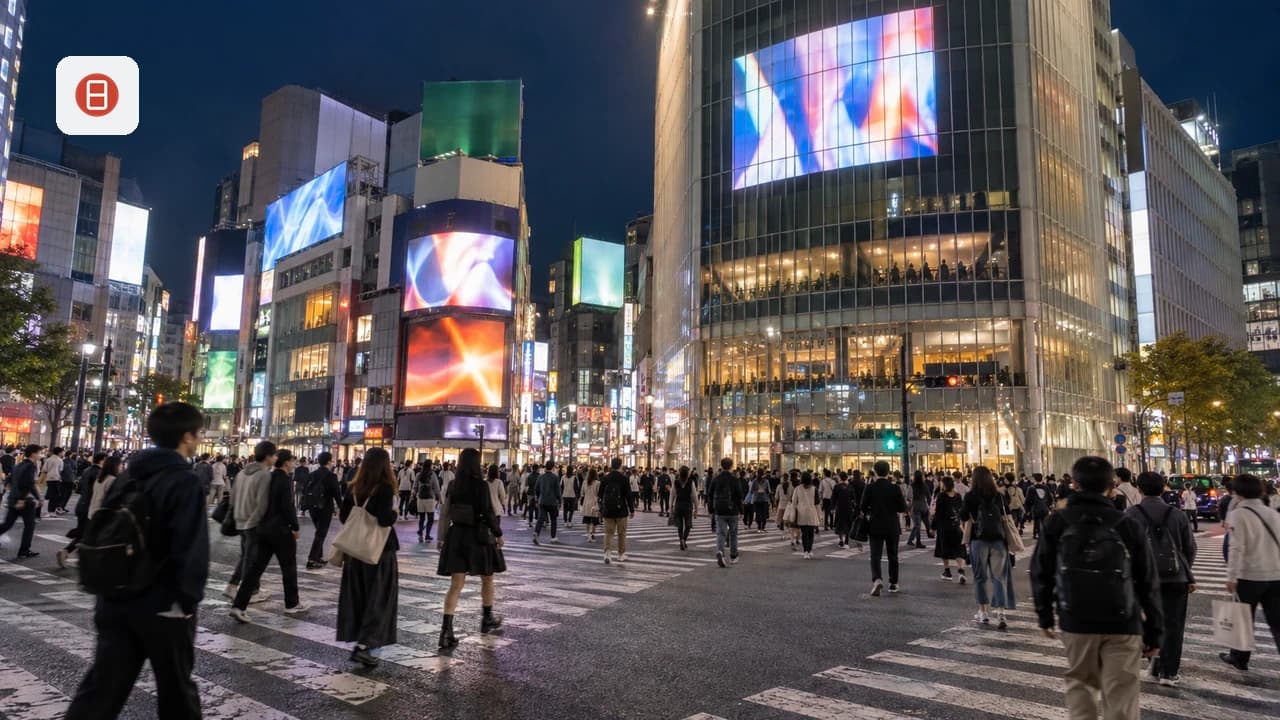
Sanja Matsuri Tokyo: 2026 Dates, Schedule, and Crowd Guide
Plan Sanja Matsuri Tokyo with 2026 dates, the day-by-day schedule, mikoshi facts, crowd tips, transit routes, and where to stay near Asakusa Shrine.
On this page
Last updated August 2026. Sanja Matsuri Tokyo packs Asakusa with an estimated 1.5 to 2 million visitors over three days every May. This guide covers the 2026 and 2027 schedule, the busiest viewing spots near Senso-ji Temple, and the quieter station to use on Sunday.
Sanja Matsuri Tokyo: Quick Facts at a Glance
Sanja Matsuri Tokyo is easiest to plan once a few basics are settled. The list below covers what the festival is, when it runs, and why Asakusa gets so crowded.
- What: One of Tokyo's Three Great Shinto Festivals, held to honor the three founders of Senso-ji Temple.
- When: The third full weekend in May, May 15 to 17 in 2026, and around May 21 in 2027.
- Where: Asakusa Shrine and the streets surrounding Senso-ji Temple in Taito City.
- Why it stands out: About 100 portable shrines, or mikoshi, and estimated attendance of 1.5 to 2 million people across the weekend.
- Cost: Entry is free; budget cash for food stalls and optional ticketed geisha performances.
What Is Sanja Matsuri in Tokyo? History and Significance
Sanja Matsuri traces back to a legend from the year 628. Two fishermen brothers, Hinokuma Hamanari and Hinokuma Takenari, found a statue of the Bodhisattva Kannon in the Sumida River. A local landlord, Hajino Nakatomo, heard about the discovery and converted the brothers to Buddhism. Together they enshrined the statue in what became Senso-ji Temple, and Asakusa Shrine now honors all three men as kami. The festival's name means roughly Three Shrine Festival, and older records also refer to it as Kannon Matsuri or Asakusa Matsuri. Shogun Tokugawa Iemitsu commissioned Asakusa Shrine in 1649, and that construction gave the festival its present three-day structure during the Edo period. Sanja Matsuri now ranks alongside Kanda Matsuri and the Sanno Matsuri as one of Tokyo's Three Great Shinto Festivals. Japan's official tourism site lists Sanja Matsuri among Tokyo's leading annual festivals.
2026 and 2027 Sanja Matsuri Dates and Timing
Sanja Matsuri always falls on the third full weekend in May, running Friday through Sunday. In 2026, the festival runs May 15 to 17; in 2027, it shifts to the weekend built around May 21. Mid-May arrives after cherry blossom season has ended. It also lands before Tokyo's summer fireworks festivals begin, so afternoons run warm and humid rather than cool. For the full year of festivals, check Tokyo's event calendar before booking flights.
As Sanja Matsuri 2026 falls May 15 to 17, reserve hotels 4 to 6 months in advance—by November or earlier—to secure neighborhood accommodation.
| Year | Dates | Days |
|---|---|---|
| 2026 | May 15–17 | Fri–Sun |
| 2027 | Around May 21 | Fri–Sun |
The Three-Day Schedule: Which Day Should You Attend?
Each day of Sanja Matsuri has a distinct rhythm, and picking the right one shapes the whole visit. Friday suits photographers and first-timers; Sunday suits visitors ready for a dense, high-energy crowd.
- Friday, the Grand Parade (Daigyoretsu): The procession sets off around 1:00 p.m. along Yanagi Street and Nakamise-dori to Asakusa Shrine, with geisha, city officials, and Binzasara dancers in Edo-period dress. Binzasara performances follow at 2:20 p.m. and 3:00 p.m.; this dance is a designated Intangible Folk Cultural Property that prays for a good harvest. Friday draws the smallest crowds of the three days.
- Saturday, the neighborhood mikoshi: Around 100 mikoshi from Asakusa's 44 districts depart Asakusa Shrine near 12:30 p.m., parade to Senso-ji for a blessing, then return to their own streets. Many neighborhoods also bring out smaller mikoshi carried by women and children. Saturday's atmosphere is community-focused and easier to navigate than Sunday.
- Sunday, Miyadashi and Miyairi: The three Asakusa Shrine mikoshi depart around 7:00 a.m. and are not back at the shrine until roughly 8:00 p.m. Spectators are kept behind Senso-ji's gates during the morning departure for safety. Geisha performances run 1:00 to 3:00 p.m. at the Asakusa Kenban, and a taiko drumming show typically follows in the afternoon.
Understanding the Mikoshi: Weight, Ritual, and the Bouncing Tradition
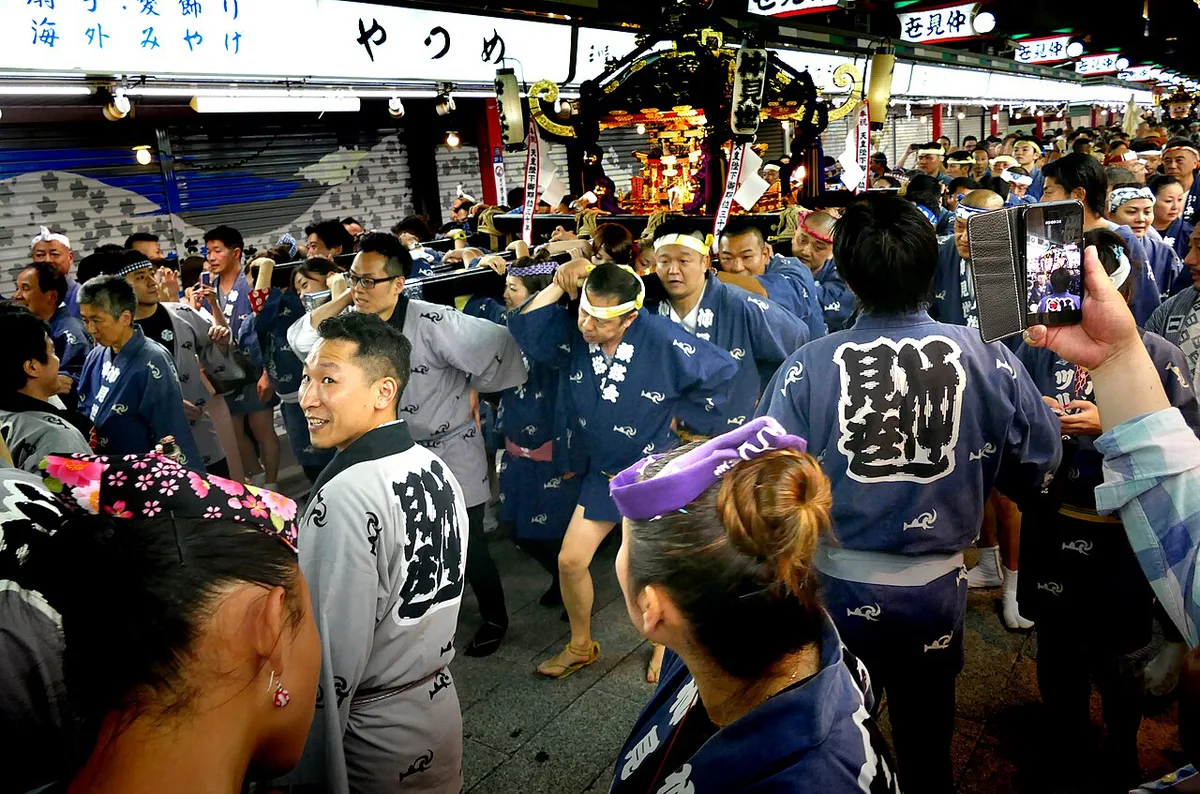
Every mikoshi carries a kami, or Shinto spirit, and the transfer happens before the crowds arrive. Asakusa Shrine's head priest moves the three enshrined spirits into their mikoshi around 7:00 a.m. on Thursday, opening small doors on each shrine that stay curtained from public view. The three main mikoshi are known individually as Ichinomiya, Ninomiya, and Sannomiya, and together they represent Asakusa Shrine touring the community it protects. Bearers shake and bounce the mikoshi as they carry it, a practice believed to intensify the kami's power and spread good luck to the neighborhood. Each of the three main mikoshi weighs about one ton and cost roughly ¥40 million to build. A team of about 40 people carries each shrine at a time, rotating so that around 500 people help move a single mikoshi across the day. A conductor typically stands on the carrying poles, shouting directions to keep the one-ton structure from colliding with shopfronts along the route.
Where to Watch: Crowd Hotspots and Quieter Viewing Spots
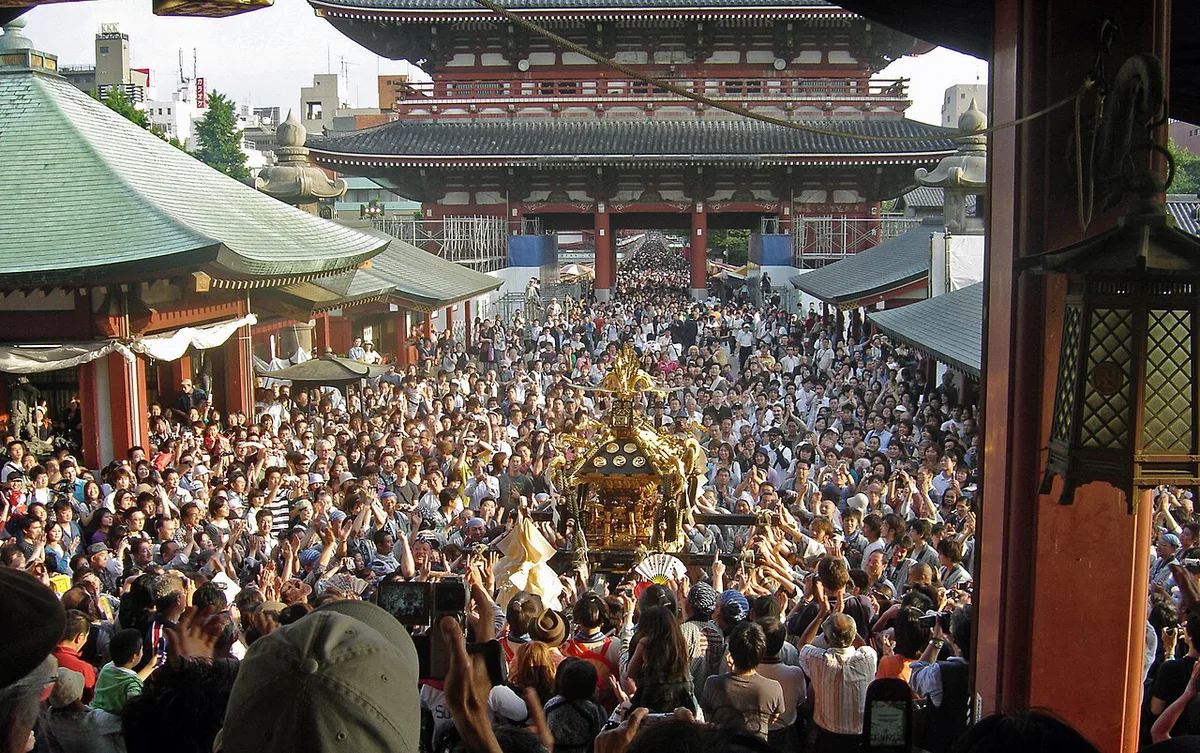
Crowd density at Sanja Matsuri varies enormously by street and by hour. Nakamise-dori and the plaza in front of Kaminarimon Gate get the thickest crowds, especially on Sunday morning when spectators are held back from Senso-ji's inner gates during the Miyadashi departure. Nakamise-dori itself runs between Kaminarimon Gate and Hozomon Gate and stays lined with food and souvenir stalls throughout the weekend, which is part of why it draws the heaviest congestion. Backstreets near Tawaramachi Station and the smaller lanes east of Asakusa Shrine carry noticeably lighter foot traffic, even while the mikoshi still pass through them later in the day. Following the mikoshi procession works too, and stepping off onto a quieter side street before rejoining the route further ahead is an easy way to reset without missing the parade entirely.
Survival Tips for the Crowds at Sanja Matsuri
Sanja Matsuri draws an estimated 1.5 to 2 million people to Asakusa across the weekend, so a little preparation goes a long way.
- Cash is king: bring ¥100 and ¥500 coins plus ¥1,000 notes, since most food stalls at Sanja Matsuri only take cash.
- Photography etiquette: shoot from the side of the street rather than stepping into a mikoshi's path, and never block the bearers' walking line.
- Heat and hydration: Mid-May afternoons near Senso-ji can feel like midsummer inside a dense crowd. Carry water, a hat, and sunscreen, and factor in Tokyo's shoulder-season weather when packing.
- Footwear: wear broken-in walking shoes, since covering Asakusa's backstreets on foot adds up over a full festival day.
- Sound and music: Flutes and taiko drums play throughout the weekend; visitors who enjoy the performance can also browse Tokyo's live music festivals for other dates.
The 'Wild' Side: Tattoos and Festival Culture at Sanja Matsuri
Sanja Matsuri has a reputation as Tokyo's rowdiest festival, and that reputation is earned. Traditional full-body tattoos are visible throughout the weekend, since some participants with ties to Yakuza culture openly display their body art during the festival. Some fundoshi-clad bearers even climb onto the mikoshi and try to knock rivals off during the busiest moments, though organizers officially prohibit the practice. None of this changes the festival's sacred core: the bouncing and shouting are part of a Shinto ritual meant to honor the three founders of Senso-ji, not simple spectacle. Visitors uncomfortable with tattoo culture can still enjoy the festival comfortably by focusing on Friday's parade and Saturday's neighborhood mikoshi, both of which lean family-friendly.
Getting to Asakusa: Transit Routes and the Tawaramachi Shortcut
Most Sanja Matsuri events cluster around Asakusa Shrine and Senso-ji Temple, both a short walk from Asakusa Station. The table below covers the fastest routes from Tokyo Station and Shinjuku Station. On Sunday, get off at Tawaramachi Station on the Ginza Line instead of Asakusa Station. It sits one stop closer to the mikoshi routes and skirts the worst of the pedestrian gridlock outside the main exits. During Sunday's peak crowds, walking from Ueno Station can beat waiting for a packed train, since the two neighborhoods sit close enough to cover on foot. Senso-ji Temple already ranks among Tokyo's top sights outside festival weekends, so expect steady foot traffic even before Sanja Matsuri begins.
Sunday's 7:00 a.m. mikoshi departure creates peak crowds at the main station; Tawaramachi Station, one stop closer to the routes, offers a way to avoid gridlock.
| From | Route | Time | Fare |
|---|---|---|---|
| Tokyo Station | JR Yamanote Line to Kanda, then Ginza Line to Asakusa | About 12 minutes total | About ¥340 |
| Shinjuku Station | JR Chuo Line to Kanda, then Ginza Line to Asakusa | About 20 minutes total | About ¥390 |
| Shinjuku Station (alt.) | Oedo Line via Bakuroyokoyama, then Asakusa Line | About 25 minutes | About ¥280 |
Where to Stay for Sanja Matsuri: Hotels and Booking Windows
Asakusa hotels sell out fast for Sanja Matsuri weekend. Properties like THE KANZASHI TOKYO ASAKUSA and HOTEL MYSTAYS Asakusa typically book out 4 to 6 months in advance for this specific weekend. THE KANZASHI TOKYO ASAKUSA refreshed its breakfast menu on March 1, 2026, and sits within walking distance of Kaminarimon Gate. Reserving early matters more than usual, since Sanja Matsuri weekend is one of the busiest hotel weekends of the year in the neighborhood. Visitors who miss the window can look at Ueno or Kuramae instead; both sit within walking distance of Asakusa Shrine but skip the noise directly outside the festival's busiest streets.
Common Mistakes to Avoid at Sanja Matsuri
A few avoidable mistakes ruin an otherwise well-planned trip to Sanja Matsuri. Skip these and the weekend runs far more smoothly. Sanja Matsuri also opens Tokyo's summer festival season, so treat these as lessons for the months ahead. Because entry is free, the festival also pairs naturally with other budget-friendly Tokyo activities nearby.
- Trying to enter Senso-ji's gates on Sunday morning: spectators are kept back during the Miyadashi departure for safety, so plan to watch from outside the gate instead.
- Skipping Friday because it looks quieter on paper: the Daigyoretsu parade and Binzasara dance are two of the festival's most photogenic, least crowded moments.
- Carrying only cards: most food stalls only accept cash, so bring ¥100 and ¥500 coins.
- Booking an Asakusa hotel last-minute: rooms in the neighborhood often fill 4 to 6 months ahead of the festival weekend.
- Standing directly in a mikoshi's path for a photo: bearers move fast and the shrines weigh about one ton, so shoot from the side of the street instead.
Frequently Asked Questions
What is Sanja Matsuri in Tokyo?
Sanja Matsuri is a three-day Shinto festival held every May in Asakusa. It honors the three men who founded Senso-ji Temple, and it centers on Asakusa Shrine next door.
When is Sanja Matsuri 2026?
Sanja Matsuri 2026 runs Friday, May 15 through Sunday, May 17. The festival always falls on the third full weekend in May, so 2027 shifts to the weekend anchored around May 21.
Which day of Sanja Matsuri is best for families?
Friday and Saturday suit families best, since the crowds are dense but manageable and the schedule is more relaxed. Sunday morning gets far more intense around the Miyadashi departure, though the atmosphere often calms by the afternoon once the mikoshi move into quieter backstreets.
How much does it cost to visit Sanja Matsuri?
Entry to Sanja Matsuri is free. Budget cash for food stalls instead, since most vendors only take yen coins and small notes rather than cards.
How do you get to Asakusa for Sanja Matsuri?
The fastest route from Tokyo Station is the JR Yamanote Line to Kanda, then the Ginza Line to Asakusa, for about ¥340 total. On Sunday, exit at Tawaramachi Station instead of Asakusa Station to avoid the worst of the crowd at the main exits.
What is the best subway line for Sanja Matsuri?
The Ginza Line serves Asakusa Station directly and also stops at Tawaramachi Station one stop away. Use Tawaramachi on Sunday to skip the heaviest pedestrian crowds around the main Asakusa Station exits.
What should visitors wear to Sanja Matsuri?
Comfortable, broken-in walking shoes matter most, since a full day covers long stretches of Asakusa on foot. Light, breathable clothing also helps, since late-May humidity near Senso-ji can feel like midsummer in a crowd.
Free: The Tokyo Essentials guide
Top things to do, where to stay, a perfect day plan, getting around, and the best time to go — a Tokyo mini-guide you can take offline.
You might also like


Continue reading
More guides you'll find useful