Takayama Festival Accommodation Guide: Best Areas & Booking Timeline
Find the right Takayama festival accommodation by neighborhood, from Sanmachi-Suji to Sakuramachi, plus the booking timeline for April and October dates.
On this page
Last updated September 2026, Takayama festival accommodation sells out faster than most first-time visitors expect. That's especially true for the two festival weekends that draw crowds into the old town's narrow streets each spring and autumn. Where you sleep determines how far you carry luggage through parade closures and how early you reach a good viewing spot for the yatai floats.
Where to Stay for the Takayama Festival: Quick Summary
Two festival weekends drive Takayama's accommodation calendar each year. Sannō Matsuri fills the spring dates, and Yahata Matsuri fills the autumn ones. Each draws crowds into a different half of the old town, so your best base changes depending on which one you're attending. Check Takayama's full festival lineup for exact dates before booking, then match your neighborhood to the route below.
- Attending the Spring Festival (April 14-15): choose Sanmachi-Suji or Central Takayama, both close to the Sannō Matsuri route in the southern old town.
- Attending the Autumn Festival (October 9-10): choose Sakuramachi or Central Takayama, both close to the Yahata Matsuri route near Sakurayama Hachimangu Shrine.
- Traveling with heavy luggage or arriving on a late train: book the Takayama Station area for the shortest walk from the platform.
- Visiting for the first time on a moderate budget: Central Takayama balances price against walking distance to both festival zones.
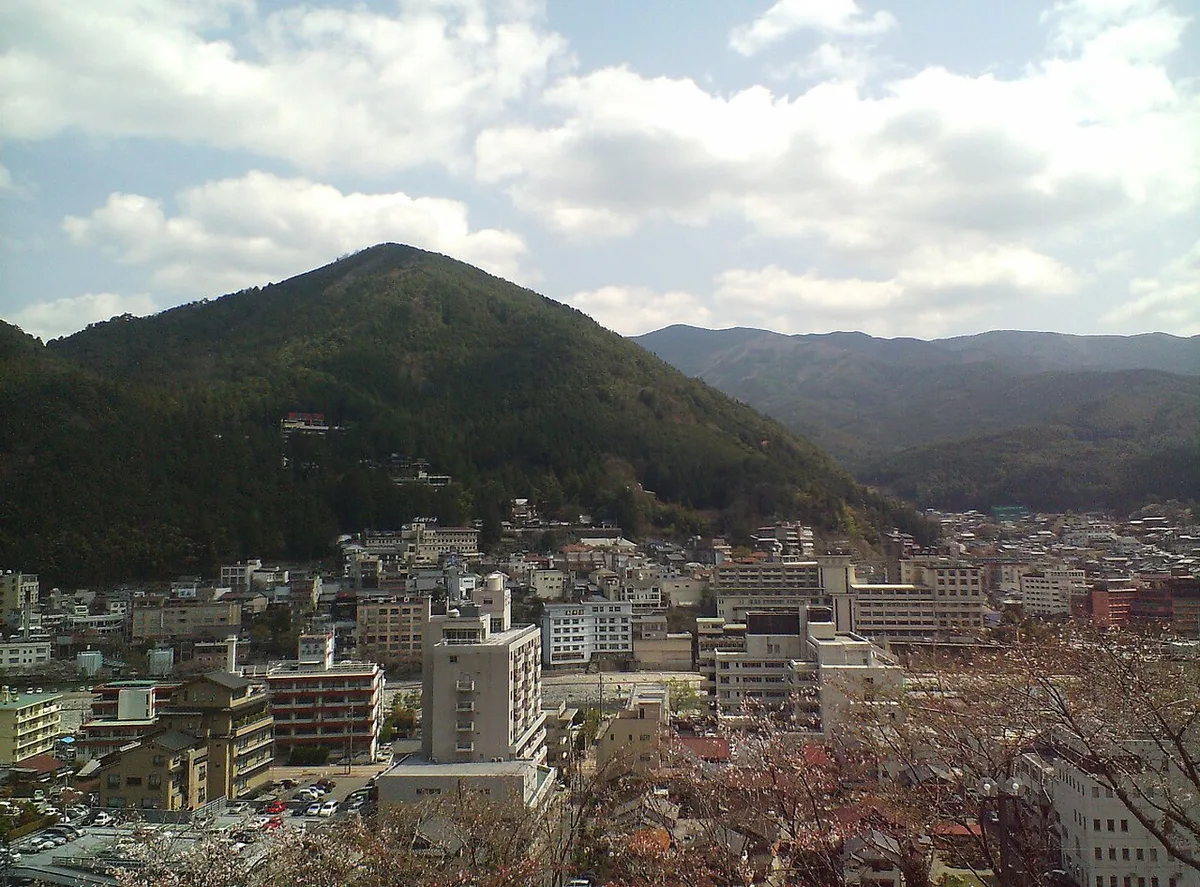
Takayama's Geography: Spring Festival vs Autumn Festival Zones
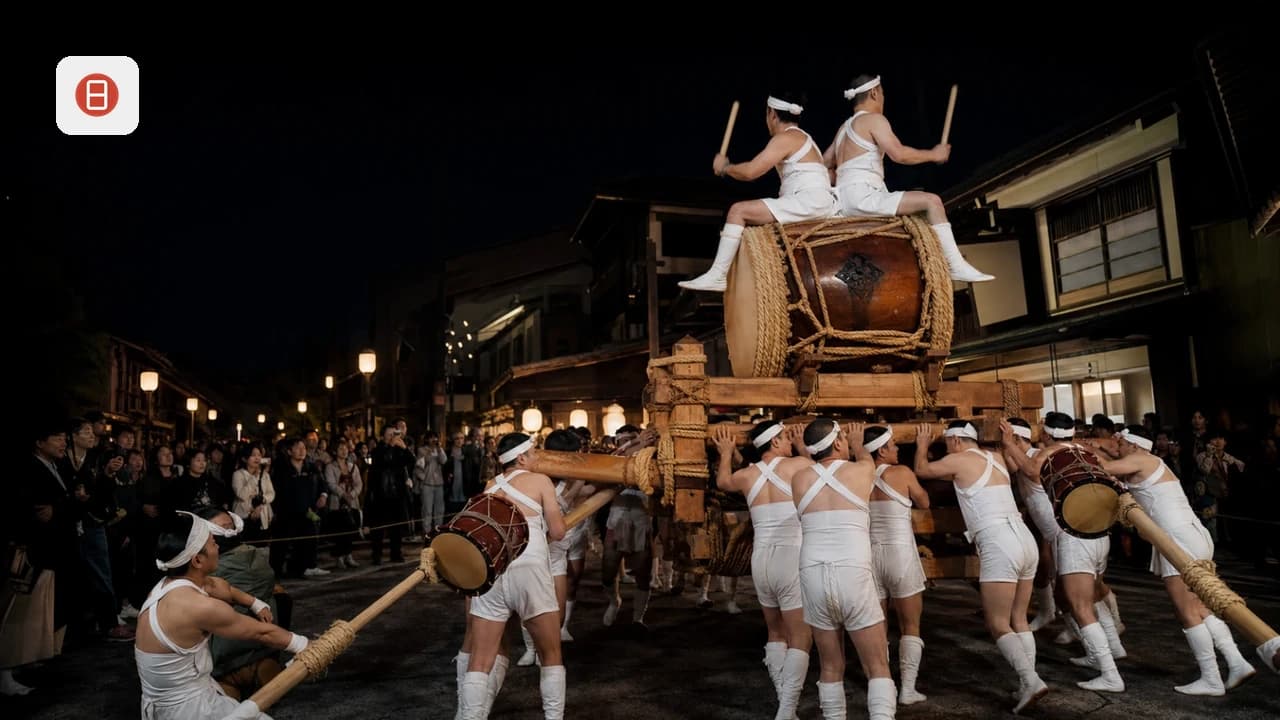
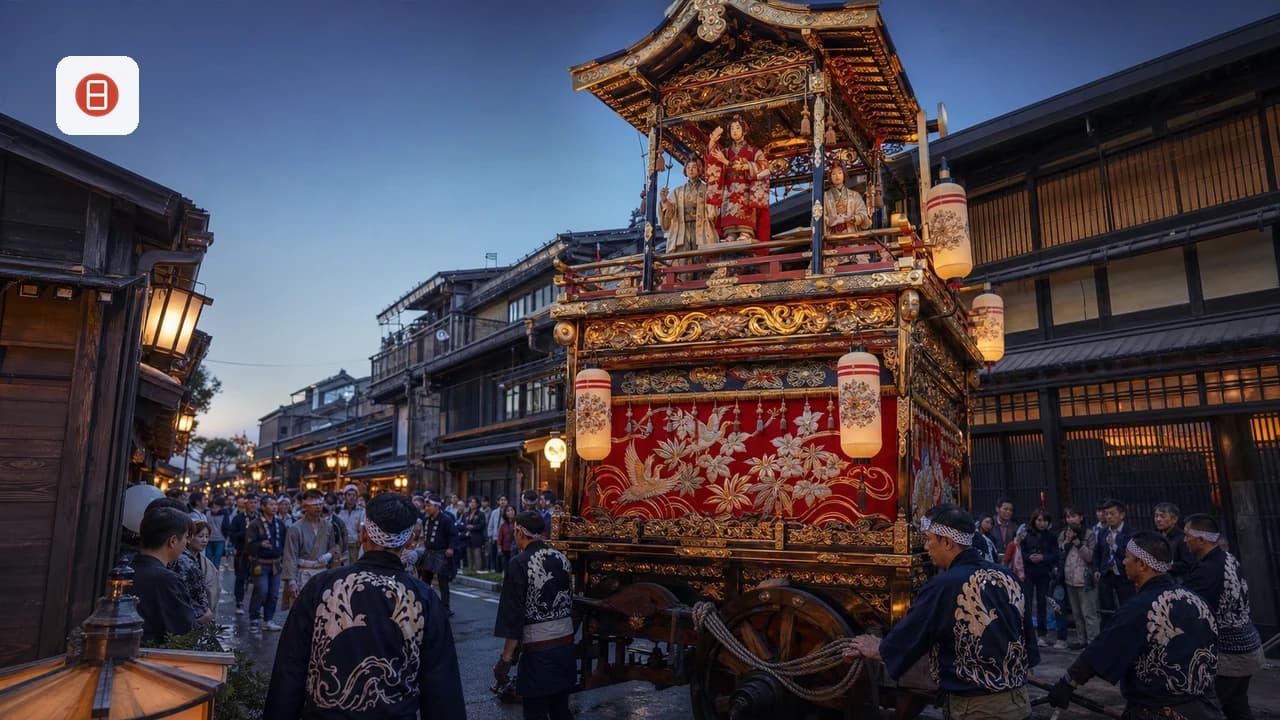
Takayama's two festivals occupy different ends of the old town, and that split should drive your choice of neighborhood. The Spring Festival route runs through the southern old town during Sannō Matsuri weekend, April 14-15. Yahata Matsuri, the Autumn Festival route, shifts north on October 9-10, passing close to Sakurayama Hachimangu Shrine. Parade timing updates each year via the Takayama City Tourist Association. Float schedules and exact dates appear on the month-by-month festival calendar. Every guide quotes the same 10-15 minute walk from Takayama Station to Sanmachi-Suji, and that baseline holds on an ordinary day. Parade-hour closures change the math. Streets narrow to foot traffic only, and crowds bottleneck at the Miyagawa River bridges. Treat the stretched version as the real distance on festival days, not the posted one, when deciding between Station-area convenience and Old Town access.
- Spring Festival (Sannō Matsuri), April 14-15: southern old town.
- Autumn Festival (Yahata Matsuri), October 9-10: northern old town, near Sakurayama Hachimangu Shrine.
- Station-to-Sanmachi-Suji walk: 10-15 minutes under normal conditions, longer during parade closures.
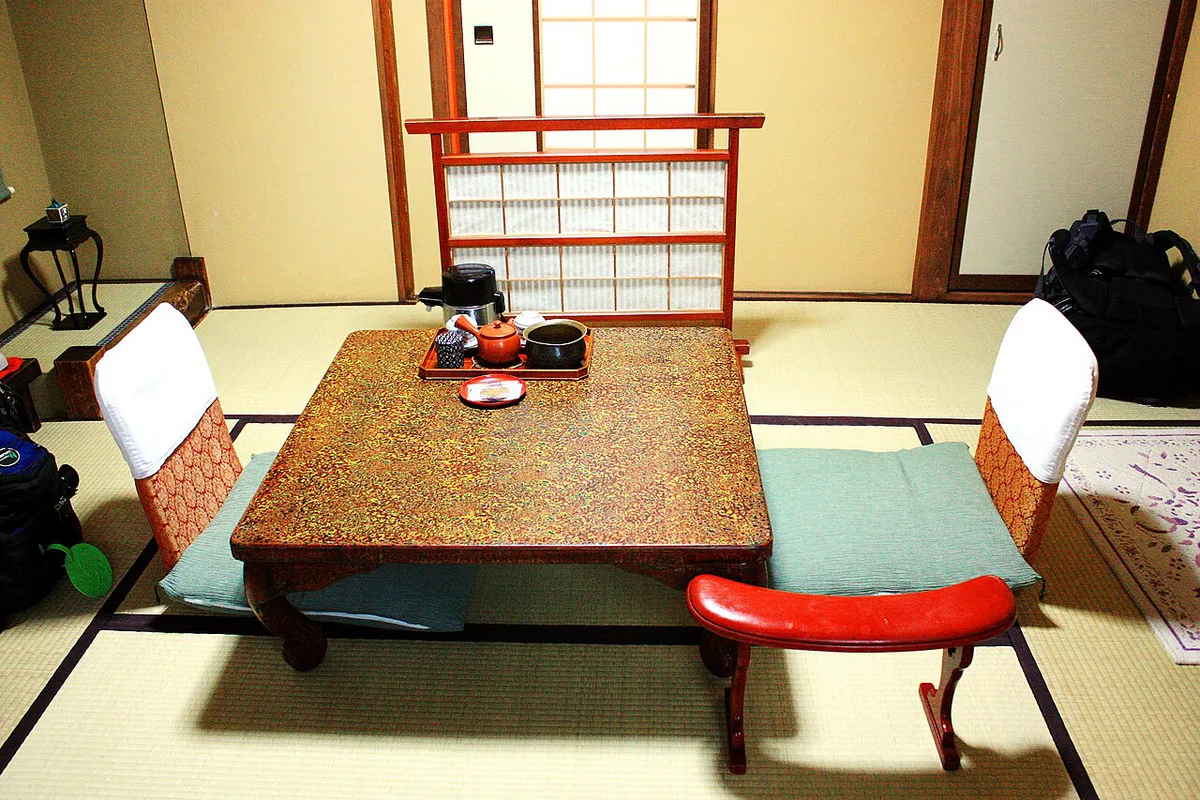
Best Areas for Takayama Festival Accommodation
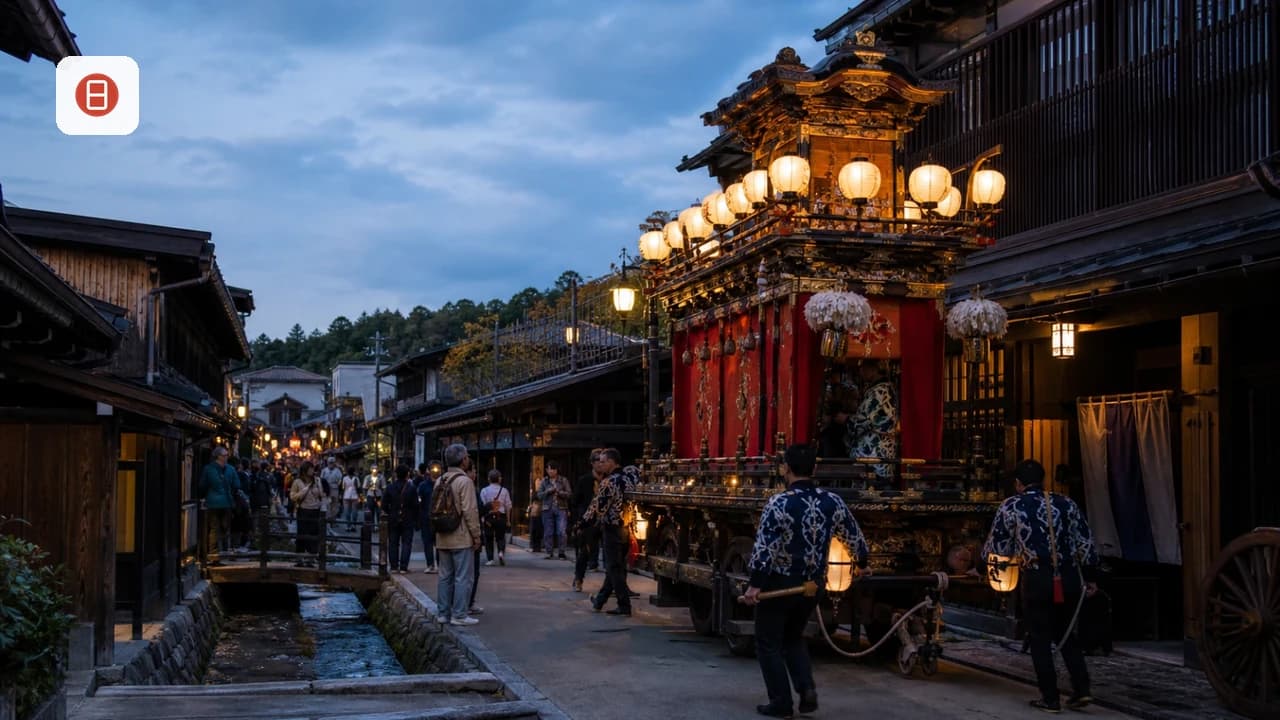
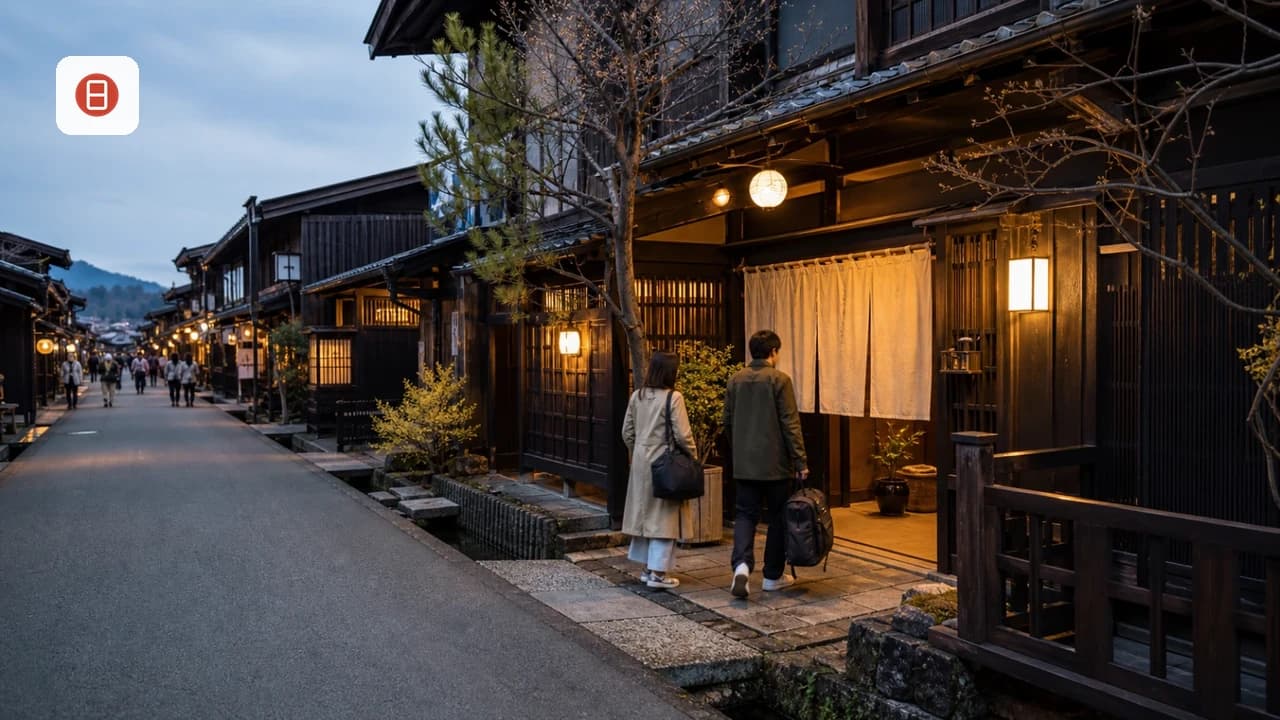
Four neighborhoods cover most Takayama festival accommodation, and each trades convenience against price and quiet. A broader Takayama lodging guide covers these same four areas for a typical, non-festival visit. Festival week changes the calculus, since crowds and road closures shrink or stretch the effective distance between each area and the parade route. Sanmachi-Suji puts you inside the festival grounds, with the lantern-lit Yomatsuri night festival a short walk from the door. Rooms here book first and cost the most of the four areas. Delivery vehicles cannot reach some ryokan during parade hours, so plan to carry luggage the last stretch on foot. This area overlaps much of the old town's sightseeing list, including the historic merchant houses along the Miyagawa River. Central Takayama sits on the west bank of the Miyagawa River, within walking distance of Takayama Jinya and the morning markets. It works as the default pick for a first festival visit, splitting the difference between Station-area practicality and Old Town access. Restaurant density here runs higher than in Sakuramachi, useful after a full day standing for the parade. The Station area holds Takayama's newer, higher-rise hotels and the Hida-wide bus terminal used for Shirakawa-go day trips. Expect roughly a 10-15 minute walk into Sanmachi-Suji on an ordinary day, and longer once parade closures start. Travelers arriving on a late limited express train gain the most from cutting that walk short. Sakuramachi sits north of Sanmachi-Suji, next to Sakurayama Hachimangu Shrine and the Takayama Matsuri Yatai Kaikan float exhibition hall. Four of the Autumn Festival's floats are stored in this district, close to the Yahata Matsuri route in October. It has fewer large hotels than Central Takayama, but its ryokans and rental houses suit travelers wanting a quieter base.
Spring festival concentrates in southern Sanmachi-Suji, while the Autumn Festival's 11 floats (with four stored in north Sakuramachi) concentrate in northern zones; neighborhood choice directly determines which festival's floats you'll see.
| Area | Vibe | Best Fit | Trade-off |
|---|---|---|---|
| Sanmachi-Suji | Edo-period streets inside the festival grounds | Highest budgets prioritizing atmosphere over quiet | Highest prices, heaviest crowds, limited vehicle access for luggage during parade hours |
| Central Takayama | Miyagawa riverside, near Takayama Jinya and the morning markets | First-time visitors wanting a balance of convenience and price | Can still be noisy on festival nights |
| Takayama Station | Modern hotels near the Hida-wide bus terminal | Heavy luggage or late arrivals on a limited express train | About a 10-15 minute walk to the festival core; less old-town character |
| Sakuramachi | Quiet, shrine-focused streets near Sakurayama Hachimangu | Autumn Festival attendees wanting a low-key stay | Fewer restaurants than Central Takayama |
Recommended Places to Stay for Festival Week
Festival-week options split roughly into traditional ryokan and Western-style hotels, with a few hybrid properties in between. None of the figures below should be read as fixed rates, since festival-week pricing moves with demand. Use the price bucket as a relative guide, then confirm the current rate directly with the property or a booking platform. For a broader list beyond festival week, see the wider hotel shortlist. The onsen factor matters more during festival week than on an ordinary visit, after hours spent standing along the parade route. Takayama Ouan and Koko Hotel both add rooftop or shared bathing facilities, worth weighing against a slightly longer walk from the Old Town. Groups wanting a full house instead of hotel rooms can look at whole-house rentals near the Miyagawa Morning Market. One option sits adjacent to the storehouse for one of the Autumn Festival's 11 floats and sleeps up to four guests across two beds and two futons.
| Property | Style | Area | Price Bucket | Notable Feature |
|---|---|---|---|---|
| Honjin Hiranoya Kachoan | Luxury ryokan | Central Takayama | Luxury | Steps from Takayama Jinya; futon service; Western and Japanese-style rooms |
| Takayama Ouan | Hybrid Western/ryokan | Takayama Station | Mid-range to luxury | Rooftop public and private onsen with valley views |
| Koko Hotel | Western hotel | Takayama Station | Mid-range | Free bicycle rentals; onsen; breakfast included |
| The Machiya Hotel | Western hotel with Japanese-style rooms | Central Takayama | Mid-range | About a 10-minute walk from Takayama Station; two bookable private onsens |
| K's House Takayama Oasis | Hostel-style ryokan | Takayama Station | Budget | Shared kitchen and laundry; dorm and private tatami rooms |
Festival Logistics: Getting to Takayama and Moving Around
Most trains from Tokyo, Kyoto, or Osaka to Takayama connect through Nagoya, the closest major city. Expect about 5 hours by Shinkansen and limited express train from Tokyo, against roughly 6 hours by direct bus. Buses cost less and skip the transfer, a reasonable trade for travelers carrying heavy luggage into festival crowds. From Takayama Station, plan the walk to Sanmachi-Suji at 10-15 minutes under normal conditions, and expect it to run longer once parade closures start. Build slack into your day-by-day trip plan for festival days rather than timing arrivals to the minute. Parade road closures also affect taxis. Cars cannot cross the closed sections of the old town while the procession is moving. A taxi called from inside Sanmachi-Suji during the parade may need to meet you outside the closure instead of at the door. Walking or a rental bicycle, free at some hotels including Koko Hotel, covers the same ground with fewer restrictions. Independent shops such as Hara Cycle Shop and Taguchi Rental Bicycle also rent bikes in town. Travelers arriving by car should confirm parking directly with their accommodation, since many old-town properties lack on-site spaces during peak festival dates.
Mistakes to Avoid When Booking Takayama Festival Accommodation
Four mistakes account for most last-minute Takayama festival accommodation scrambles, and all four are avoidable with enough lead time. If Takayama is fully booked for your dates, alternative bases still work. Hida-Furukawa runs its own Okoshi Daiko festival each spring, a short train ride away. Kanazawa's festival calendar runs on a separate schedule worth checking as a backup. Matsumoto's own festival schedule offers a third option within reach of the same rail line. Confirm current Hida-Furukawa festival dates via Hida City Tourism. Double-check main Takayama festival dates directly via the Hida Takayama official tourism site before finalizing any booking.
- Waiting past the booking window causes the most last-minute scrambles. Reserve festival-week dates six to twelve months ahead. Many ryokan reservation systems only open three to six months before the date, so track when each shortlisted property starts taking bookings and reserve that same day.
- Booking the wrong side of town is a common mismatch. Spring Festival travelers need the southern old town near the Sannō Matsuri route. Autumn Festival travelers need the north near Sakurayama Hachimangu Shrine.
- Overestimating taxi availability causes avoidable delays. Parade road closures block cars from the old town core while floats are moving. Budget walking time instead.
- Skipping the cancellation policy is a smaller but real risk. Compare each property's cancellation window before paying a non-refundable deposit. Festival-week travel plans can still shift.
Frequently Asked Questions
How far in advance should you book Takayama festival accommodation?
Book six to twelve months ahead for Spring Festival or Autumn Festival dates, especially for ryokan in Sanmachi-Suji and Sakuramachi. Many ryokan reservation systems only open three to six months before the date itself. Track when each shortlisted property starts taking reservations, then book on the day the window opens.
What's the difference between staying near the Spring Festival route and the Autumn Festival route?
Spring Festival dates, Sannō Matsuri, April 14-15, center on the southern old town. Autumn Festival dates, Yahata Matsuri, October 9-10, shift the action north, near Sakurayama Hachimangu Shrine. Sanmachi-Suji and Central Takayama suit spring dates, while Sakuramachi and Central Takayama suit autumn dates.
Is staying in Sanmachi-Suji worth the extra cost during festival week?
Sanmachi-Suji puts you inside the festival grounds, with the lantern-lit Yomatsuri night festival a short walk from the door. That access comes with the highest prices of Takayama's four areas and the heaviest crowds. Travelers who value quiet or a lower budget over ambient atmosphere generally do better in Central Takayama or the Station area.
How long is the walk from Takayama Station to the festival grounds?
Under normal conditions, the walk from Takayama Station to Sanmachi-Suji runs about 10 to 15 minutes. During parade hours, road closures and crowd density stretch that same walk well past its usual length. Budget extra time on festival days rather than timing an arrival to the minute.
What if Takayama accommodation is fully booked for your festival dates?
Compare cancellation windows on your shortlisted properties, since festival-week travel plans shift and rooms occasionally reopen. Hida-Furukawa's Okoshi Daiko festival runs each spring within a short train ride of Takayama, with its own separate lodging market. Kanazawa and Matsumoto also run festival calendars on different dates worth checking as a backup base.
Should you drive to Takayama for the festival?
Driving adds complexity during festival week, since many old-town accommodations lack on-site parking. Confirm parking directly with your property before arrival, and expect nearby lots to fill faster than usual on festival dates. Public transit or a rental bicycle covers the compact town center without the added logistics of parking near road closures.
Free: The Takayama Essentials guide
Top things to do, where to stay, a perfect day plan, getting around, and the best time to go — a Takayama mini-guide you can take offline.
You might also like


Continue reading
More guides you'll find useful