6 Best Takayama Festivals and Events to Plan Around in 2026
Plan Takayama festivals for 2026: Sanno Matsuri and Hachiman Matsuri dates, float and karakuri highlights, booking windows, and year-round float museums to visit anytime.
On this page
Last updated September 2026, this guide covers Takayama festivals for travelers deciding between the spring Sanno Matsuri and the autumn Hachiman Matsuri. Both dates draw nationwide crowds, so booking windows, rain contingencies, and backup bases matter as much as the parade schedule. If your trip dates miss both festivals, several year-round museums and winter illuminations still deliver the yatai float experience.
6 Best Takayama Festivals and Events
Takayama's festival calendar centers on two UNESCO-listed events, the spring Sanno Matsuri and the autumn Hachiman Matsuri, plus a handful of smaller festivals and year-round float exhibits that fill in the rest of the year. Six entries below cover both major dates, a nearby spring festival worth combining with a Takayama trip, and three ways to see real or replica floats outside festival season.
Spring features about a dozen yatai floats, while autumn has 11; the year-round Yatai Kaikan rotates four of the 11 autumn floats.
- Spring Takayama Festival (Sanno Matsuri)
- April 14 and 15 bring about a dozen yatai floats to Hie Shrine's southern old town, on display from 9:30 am.
- Karakuri puppet shows run twice daily, at 10:00 am and 2:00 pm. Each performance lasts about 50 minutes.
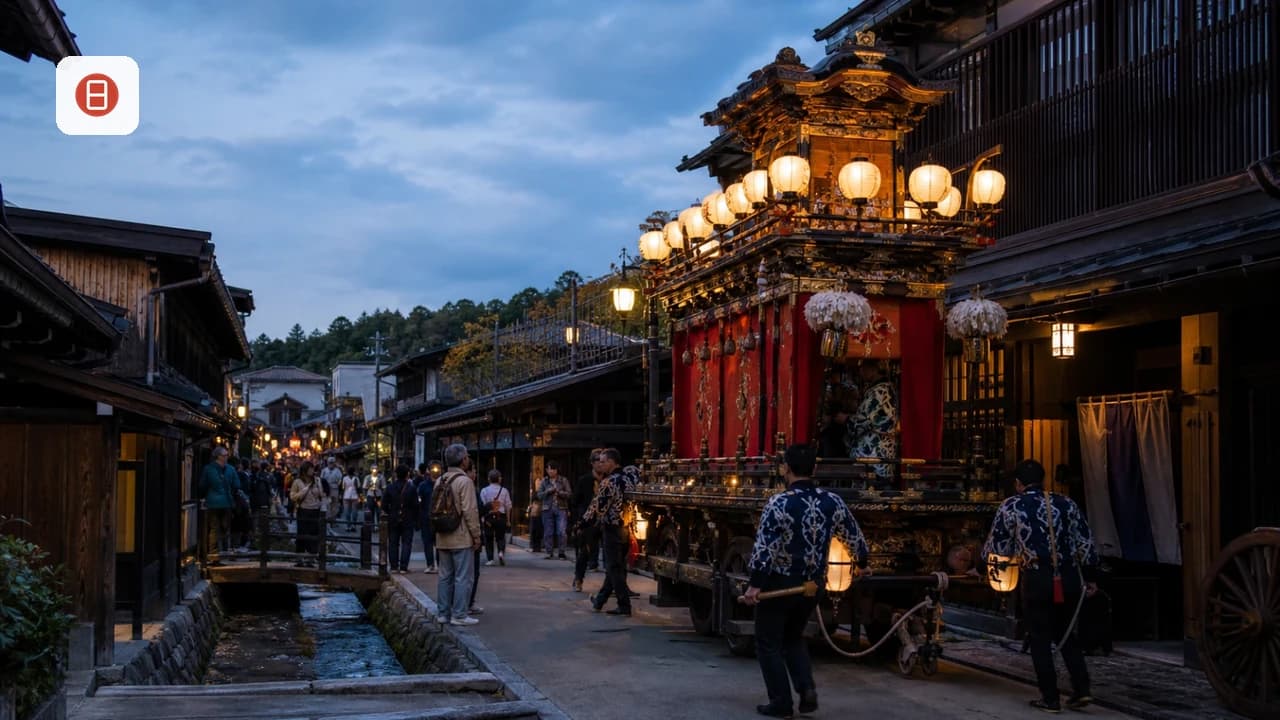
- Lantern-lit floats parade through the streets from roughly 6:00 pm to 8:30 pm on April 14. See hour-by-hour timing in the 2026 spring festival guide.
- Autumn Takayama Festival (Hachiman Matsuri)
- October 9 and 10 center on Sakurayama Hachiman Shrine in the northern old town, with 11 yatai floats on display.
- Float viewing runs 9:00 am to 4:00 pm on both days, extending to 5:00 pm on October 9. Full hour-by-hour logistics sit in the 2026 autumn festival guide.
- Karakuri performances differ by day. October 9 shows run at noon and 2:00 pm, and October 10 shows run at 11:00 am and 1:00 pm.
- Hida Furukawa Matsuri (Okoshi Daiko)
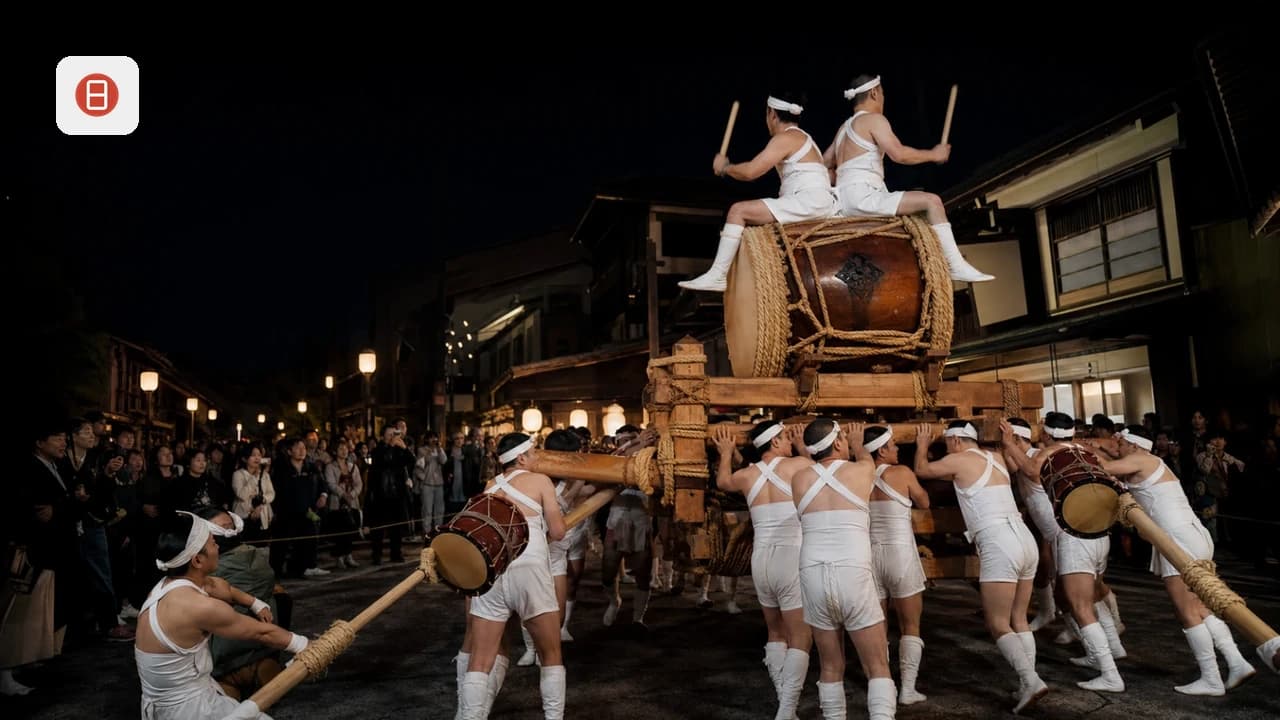
- Furukawa's Okoshi Daiko, known locally as the naked festival, takes place in April in Hida Furukawa, a separate town near Takayama.
- Loincloth-clad teams compete through the night to touch a suspended drum, a tradition Hida City Tourism documents in detail.
- Viewing spots and train access from Takayama sit in the Okoshi Daiko guide.
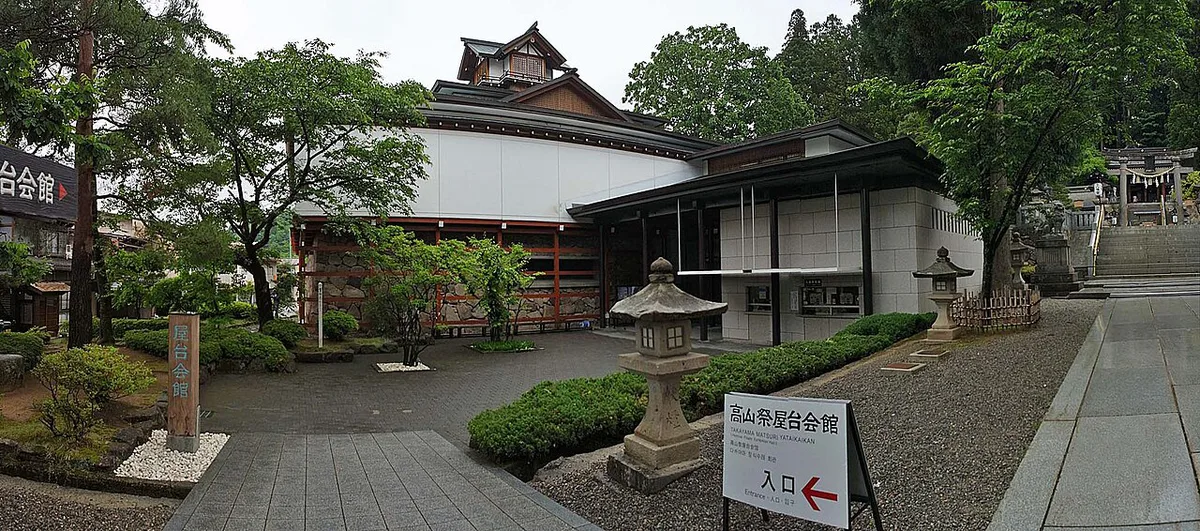
- Takayama Matsuri Yatai Kaikan
- This year-round hall sits in the northern old town, about a 15 to 20 minute walk from JR Takayama Station.
- It displays four of the 11 autumn floats at a time and rotates the lineup several times a year. Hours run 8:30 am to 5:00 pm from March through November, and 9:00 am to 4:30 pm from December through February.
- Admission runs about ¥840 at the most recently published rate. Confirm the current 2026 price with the Takayama City Tourist Association before visiting.
- Matsuri no Mori
- Matsuri no Mori is an underground museum built into a hillside outside central Takayama, displaying full-size replica yatai year-round.
- Robot-controlled karakuri puppets perform on a set schedule inside, previewing the mechanical dolls used on the real festival floats.
- Pair the visit with central old town stops from the Takayama attractions guide, since it sits a short drive from downtown.
- Hida no Sato Winter Illuminations
- Hida no Sato Folk Village runs winter illuminations after dark, lighting its thatched-roof farmhouses through the coldest months of the year.
- Local sake breweries open their cellars for seasonal tastings during the same winter window. Current dates sit in the winter festivals and illuminations guide.
- Pair the light displays with snow-season sightseeing from the Takayama winter snow guide if the Big Two festival dates do not fit your trip.
Spring Sanno Matsuri vs Autumn Hachiman Matsuri: Which Should You Plan Around?
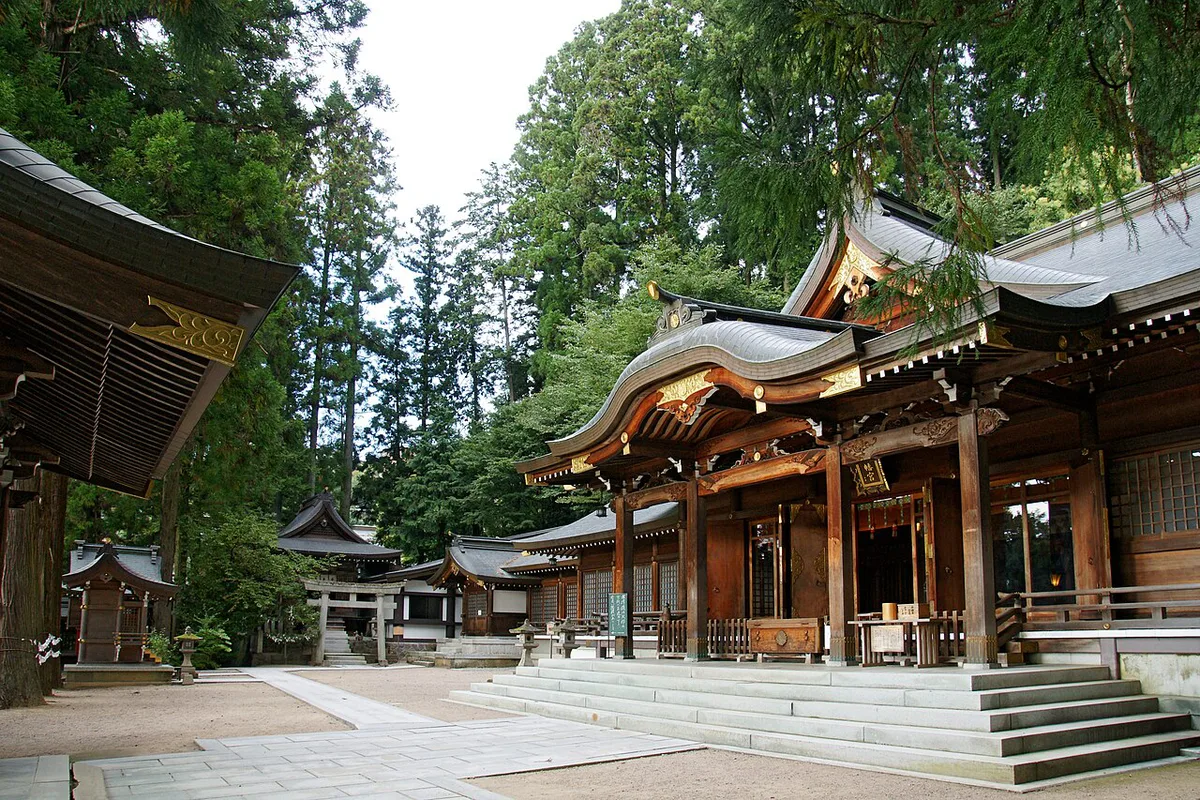
Spring and autumn editions of Takayama Matsuri share the same float-and-karakuri format but differ in setting and season. Hie Shrine anchors the spring event on the town's southern side, overlapping with cherry blossom season. Sakurayama Hachiman Shrine anchors the autumn event to the north, overlapping with peak foliage. Neither date is reliably quieter. Both can fall near national holidays depending on the year, so check exact 2026 weekday alignment in the month-by-month festival calendar before booking. Weather adds a real variable to each date. Spring in mid-April can still bring a late cold snap or rain system through the Hida mountains. Autumn in early October tends to run drier, though evenings turn cool fast once the sun sets. Atmosphere shifts with the season too: spring afternoons pair cherry blossoms with bright daytime crowds, and autumn evenings pair foliage with crisper light that favors photography. Viewing the floats displayed in the street costs nothing on either festival day. Other no-cost stops for the same trip sit in the free things to do guide. In our editorial assessment, the autumn edition tends to feel busier when foliage viewing overlaps with the festival weekend, though crowd levels vary year to year.
Spring shows run at 10:00 am and 2:00 pm on both days, but autumn karakuri times vary from noon and 2:00 pm on October 9 to 11:00 am and 1:00 pm on October 10.
| Detail | Spring Sanno Matsuri | Autumn Hachiman Matsuri |
|---|---|---|
| Dates | April 14–15 | October 9–10 |
| Shrine | Hie Shrine, southern old town | Sakurayama Hachiman Shrine, northern old town |
| Floats on display | About a dozen yatai | 11 yatai |
| Float viewing hours | 9:30 am–3:00 pm (4:00 pm on the 15th) | 9:00 am–4:00 pm (5:00 pm on the 9th) |
| Weather stability | Occasional late cold snaps or rain | Generally drier, cooler evenings |
| Seasonal pairing | Cherry blossom season | Autumn foliage season |
What Makes the Yatai Floats and Karakuri Puppets Worth Seeing
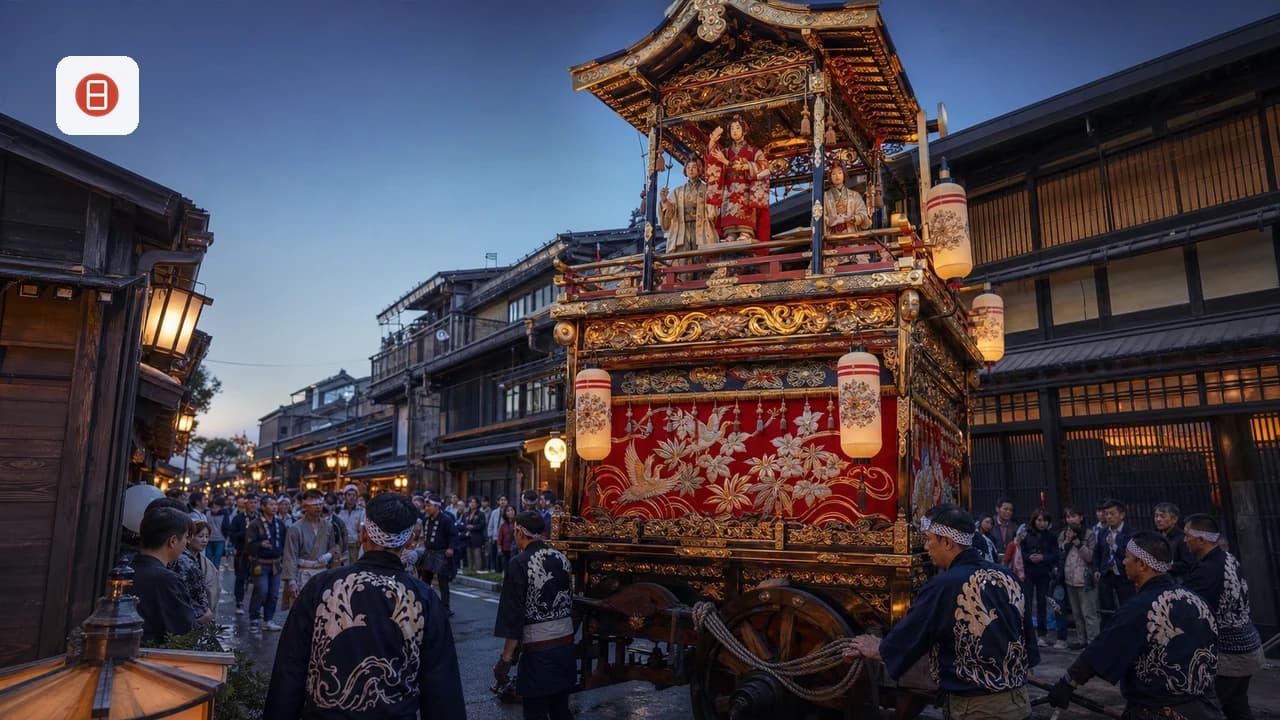
Each yatai float carries Edo-period woodcarving, gilded lacquer, and detailed metalwork built up through generations of restoration work. Carving and lacquer work extends beyond the visible exterior panels. Craftsmen finished hidden surfaces under the roof and behind interior panels with the same level of detail, work meant to be appreciated up close rather than from the street. The float style draws on Kyoto's Momoyama-period art traditions blended with early Edo-period techniques, carried forward by Takayama's carpentry and lacquer guilds. Some floats also carry karakuri ningyo, mechanical marionettes worked by hidden puppeteers from inside the float. Hotei Tai, one of the best-known floats, needs 9 puppeteers pulling 36 strings to animate its figures during a single performance. Watching a full show takes about 50 minutes, and both festivals run two showings per display day. Festival organizers describe the floats collectively as a moving museum, since Takayama's craft guilds built and maintain them across centuries rather than for a single event. Local Shinto tradition frames both festivals as prayers tied to the agricultural calendar: a harvest prayer in spring and a thanks-giving in autumn.
- Mikoshi procession
- Hie Shrine's kami leaves at 12:45 pm on April 14 and returns by 3:30 pm on April 15.
- This procession through town is the only time all year the deity leaves the shrine grounds.
- Yomatsuri evening lanterns
- Each float carries as many as 100 lit lanterns once dusk falls on the parade's first night.
- Lantern-lit floats move through the old town for two to three hours before the parade ends.
Is the Takayama Matsuri Worth the Detour From Kyoto or Osaka?
Takayama sits away from the Kyoto-Osaka corridor most first-time visitors follow, reached via the JR Hida Limited Express through Nagoya. Sanno Matsuri and Hachiman Matsuri are often grouped with Kyoto's Gion Matsuri and the Chichibu Yomatsuri as three of Japan's most celebrated float festivals, which explains the detour many travelers make. Attendance runs into the hundreds of thousands across the two festival days, so old town streets fill up fast even outside the evening parade hours. First-time visitors often ask whether the crowds are worth leaving the Kyoto-Osaka-Tokyo route for two days. The floats, karakuri performances, and evening lantern parade do not repeat anywhere else on a typical first Japan itinerary, which is the main case for the detour. Outside those two dates, Edo-period streets, morning markets, and Hida beef restaurants in the old town still fill a full day without a festival running. Cultural travelers focused on Shinto tradition and craftsmanship get a fuller picture pairing a festival date with the Yatai Kaikan or Matsuri no Mori, since both show the same floats without the festival crowd. Combine a festival date with nearby Hida Furukawa or Shirakawa-go to fill out a multi-day Gifu itinerary rather than a single rushed day.
Getting to Takayama and Where to Base Yourself for Festival Dates
JR's Hida Limited Express runs directly from Nagoya to Takayama Station, and festival-day trains sell out faster than the regular schedule. Central old town sits about 10 to 15 minutes on foot from the station. Both festival zones close to vehicle traffic on event days, so plan on walking once you arrive. Local transit may reroute around the closure, so budget extra walking time to reach lodging outside the immediate core. Regional buses to Shirakawa-go and other day-trip destinations depart from the Nohi Bus Center near the station. Book central Takayama lodging at least 6 months ahead of either festival date, since rooms near both shrines fill first. Neighborhood rankings by walking distance to both shrines sit in the festival lodging guide. Expect festival-week rates at central ryokans to run well above standard weekday pricing at the same property. Hida Furukawa and Gero Onsen typically price closer to standard rates even on festival weekends, and both work as train-connected backup bases. Compare year-round picks in the where to stay in Takayama guide. Vetted room options sit in the best hotels in Takayama guide. Build festival days into a longer trip with the Takayama Itinerary for First-Timers, which sequences old town time around the parade schedule. Shirakawa-go pairs naturally as a day trip before or after festival dates. Bus schedule details from Takayama sit in the Shirakawa-go attractions guide. Some travelers instead base in Kanazawa and day-trip in for the festival. Check the Kanazawa festivals calendar first to avoid date clashes with events there. Matsumoto works the same way for travelers coming from the Nagano side. Overlapping event dates worth checking sit in the Matsumoto events calendar.
Festival-Week Budget: What Changes Versus a Normal Takayama Trip
Lodging is the biggest line-item swing during festival week. Central ryokans and hotels typically raise rates well above standard weekday pricing for both April 14 to 15 and October 9 to 10, and many require multi-night minimum stays rather than a single festival-day booking. Hida Furukawa and Gero Onsen properties tend to hold closer to standard rates even on those same dates, which is the main financial argument for basing outside Takayama and training in. Train fares on the JR Hida Limited Express do not spike with demand, but seats sell out, so booking early protects the fare you would pay anyway rather than saving money outright. Reservations for central ryokans typically open online well before the 6-month mark travel advisors recommend, so setting a calendar reminder captures rooms before the premium sets in.
| Base town | Price vs standard rate | Getting to festival zone |
|---|---|---|
| Central Takayama | Highest, festival-week premium | Walk to both shrines |
| Hida Furukawa | Close to standard rate | Short train ride to Takayama |
| Gero Onsen | Close to standard rate | Train ride to Takayama |
| Toyama | Standard rate | Longer commute in for the day |
Visitor Mistakes to Avoid During Takayama Matsuri
Rain changes the schedule fast during Takayama Matsuri. Floats return to their storehouses when it rains, though storehouse doors stay open so the floats stay visible. Karakuri performances move inside the storehouses during rain rather than being canceled outright, so the puppet shows are more weather-resistant than the parade. Heavy rain can cancel the evening yomatsuri parade outright. Build a backup plan into festival-day plans rather than counting on the parade. Official festival details, including any last-minute schedule changes, are posted by Hida Takayama's tourism office. Check that page the morning of the parade if forecasts call for rain. Old town restaurants fill up or require reservations on both festival days, and walk-in options thin out fast after the evening parade starts. Booking a table before arrival, or eating outside the old town core, avoids a long wait after dark. Day-trippers based in Nagoya or Kanazawa should check the last JR Hida Limited Express departure before the evening parade ends. Missing that last train after an 8:30 pm parade finish can strand travelers without a same-night way back. Karakuri times are not identical across the two festivals or even across the two days of the autumn festival. Spring shows run at 10:00 am and 2:00 pm on both days, but autumn shows shift from noon and 2:00 pm on October 9 to 11:00 am and 1:00 pm on October 10. Confirm the exact schedule for your specific date rather than assuming the times you read for one festival apply to the other.
Photographing the Yomatsuri Evening Lantern Parade
Lanterns come on around dusk, roughly 6:00 pm on April 14 and 6:15 pm on October 9, giving photographers a short window before full dark. Arrive well before that window opens, since the pedestrian-only festival zone fills in fast near both shrines. Position near Hie Shrine for the spring parade route, or near Sakurayama Hachiman Shrine for the autumn route, since floats stage close to each shrine before moving out. Street-level shots work well from the old town's narrow lanes, where lantern light reflects off the wooden storefronts. Evening light disappears fast once lanterns take over, so set exposure before the parade starts moving rather than adjusting mid-parade.
Explore festivals and events in other cities
Frequently Asked Questions
When is the Takayama Matsuri in 2026?
Spring's Sanno Matsuri runs April 14 and 15, 2026, at Hie Shrine. Autumn's Hachiman Matsuri follows on October 9 and 10, 2026, at Sakurayama Hachiman Shrine.
Is the spring or autumn Takayama festival better?
Both share the same float and karakuri format, so the choice usually comes down to season and crowds. Spring pairs with cherry blossoms and about a dozen floats at Hie Shrine, while autumn pairs with foliage and 11 floats at Sakurayama Hachiman Shrine. In our editorial assessment, neither date is reliably quieter, since both can fall near national holidays.
Can you see the Takayama floats outside festival dates?
Yes. Takayama Matsuri Yatai Kaikan displays real floats year-round, rotating four of the 11 autumn floats on a set schedule. Matsuri no Mori adds full-size replica floats and robot-controlled karakuri puppets nearby. Confirm current hours before visiting, since museum schedules shift seasonally.
How far ahead should you book a hotel for Takayama Matsuri?
Book central Takayama lodging at least 6 months ahead of either festival date, since rooms near the old town sell out fast. If Takayama is full, Hida Furukawa and Gero Onsen both work as nearby, train-connected bases.
What happens to the Takayama festival if it rains?
Rain sends floats back into their storehouses, though the doors stay open so visitors can still see them. Heavy rain can cancel the evening yomatsuri parade outright. Keep a backup plan for that specific event.
Can you visit Takayama Matsuri as a day trip from Nagoya?
Yes, the JR Hida Limited Express connects Nagoya to Takayama directly, though the evening yomatsuri parade runs until about 8:30 pm. Check the last return departure before committing to a same-day trip, since missing it strands you overnight without a booked room.
How many floats appear at each Takayama festival?
Spring's Sanno Matsuri displays about a dozen yatai floats at Hie Shrine. Autumn's Hachiman Matsuri displays 11 floats at Sakurayama Hachiman Shrine, four of which also rotate through the year-round Yatai Kaikan display.
What are karakuri ningyo puppets?
Karakuri ningyo are mechanical marionettes built into select yatai floats, worked by puppeteers hidden inside using strings and push rods. The Hotei Tai float is one of the best-known examples, with 9 puppeteers pulling 36 strings to animate its figures. Performances run about 50 minutes and appear on a set schedule during both festivals.
How long does the evening yomatsuri parade last?
First-night parades run from around 6:00 pm to 8:30 pm in spring and about 6:15 pm to 8:30 pm in autumn. Each float carries as many as 100 lit lanterns during that window, and the show only happens on April 14 and October 9, not the second day of either festival.
Explore More Takayama and Hida Festival Guides
Plan around the float festivals, then use the calendar, lodging and winter guides to build the rest of the trip.
Signature Festivals
- Takayama attractions hub: tickets, hours & maps
- Takayama Spring Festival 2026 Guide: 10 Essential Planning Tips
- Takayama Autumn Festival 2026
- Hida Furukawa Festival Guide
Plan Your Visit
- Month-by-Month Festival & Travel Guide
- Takayama Festival Accommodation Guide
- Takayama Itinerary for First-Timers
Winter Events
- Illuminations, Festivals & Okuhida Guide
- Takayama in Winter Snow: 10 Essential Experiences & Guide
- Shirakawa-go Travel Guide
More Japan Festival Guides
Free: The Takayama Essentials guide
Top things to do, where to stay, a perfect day plan, getting around, and the best time to go — a Takayama mini-guide you can take offline.
You might also like


Continue reading
More guides you'll find useful