10 Best Free Things to Do in Takayama (2026 Guide)
Discover the best free things to do in Takayama, from the historic Sanmachi Suji district to the scenic Higashiyama walk. Plan your budget trip with our expert tips.
On this page
Takayama sits in the mountains of Gifu Prefecture and manages to be one of Japan's most rewarding cities for budget travelers. The preserved Edo-period streets, riverside markets, temple-lined walking trails, and viewpoints over the Japanese Alps all cost nothing to enter. This guide covers every major free attraction with practical logistics so you can plan a full day — or two — without spending a yen on admission. You can follow this our day-by-day itinerary to see how these free spots connect across a multi-day visit.
Most of these sites cluster within a 20-minute walk of JR Takayama Station, which means you never need a bus for the core circuit. We have verified all opening times and free-entry status for 2026. Where a paid option exists alongside a free alternative, we spell out the difference so you can decide what is worth your money.
Wander Through the Historic Sanmachi Suji District
Sanmachi Suji is the reason most people come to Takayama. The district consists of three parallel streets — Ichi-no-machi, Ni-no-machi, and San-no-machi — lined with dark wooden merchant townhouses that date back to the Edo period (1603–1868). Walking here is free, and the architecture alone justifies the trip. The buildings are still in use as sake breweries, craft shops, and small restaurants, so every facade tells a story about the city's trading past.
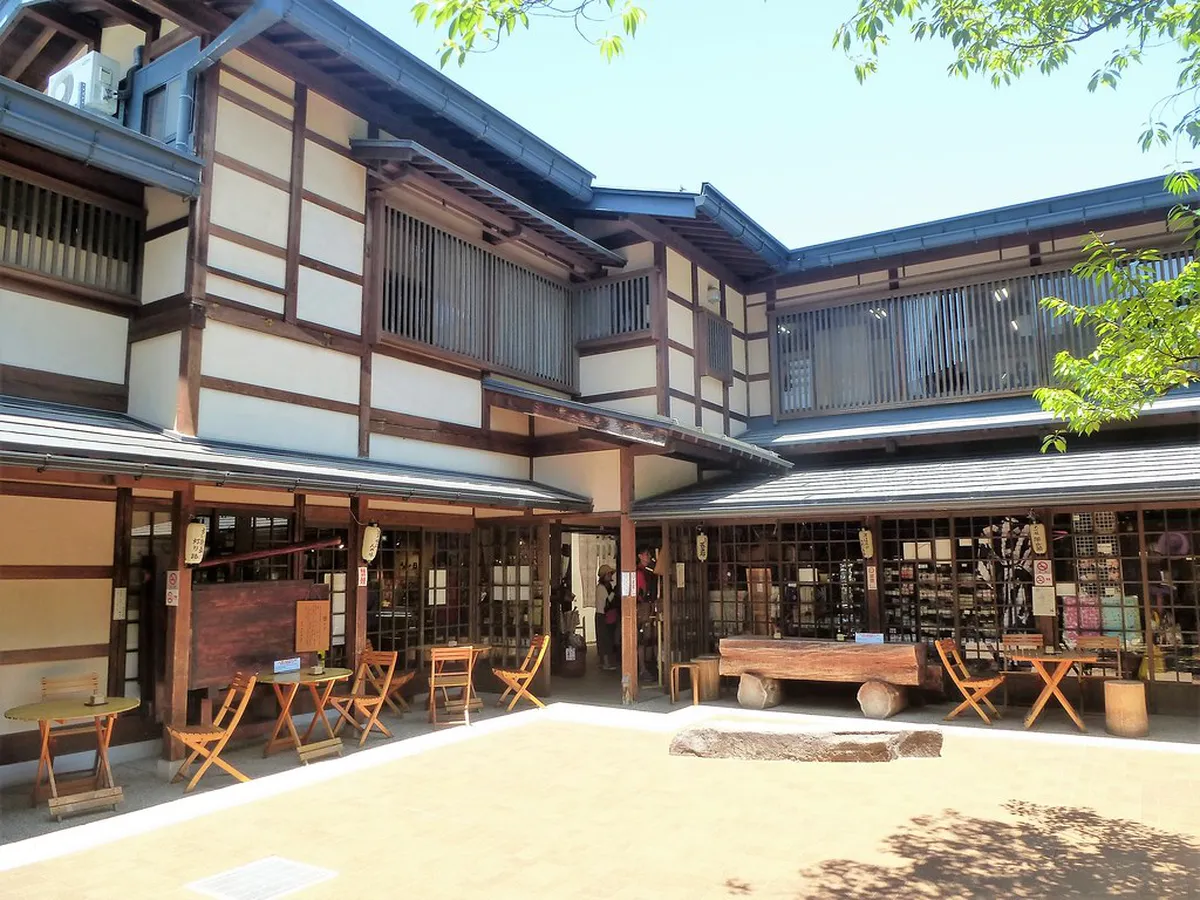
You can identify sake breweries by the sugidama — a ball of cedar needles hung above the entrance — which signals that a new batch has been pressed. Some breweries offer small free tastings in their front rooms, though there is no obligation. The best time to walk Sanmachi Suji is before 09:00, when the stone-paved lanes are quiet and the light is soft on the black-lacquered walls. By midday the main streets fill with tour groups, especially on weekends.
Storehouses for the famous festival floats (Yatai-gura) are scattered throughout the district. The wooden doors usually have narrow windows that let you glimpse the ornate floats stored inside — a completely free preview of what the paid Exhibition Hall displays. Check our Sanmachi Suji guide for a street-by-street breakdown of what you will find.
Hike the Scenic Higashiyama Walking Course
The Higashiyama Walking Course is a 3.5-kilometre trail that links Takayama's eastern temple district (Teramachi) with Shiroyama Park and the ruins of the former castle. The route passes more than a dozen temples and shrines, most of which charge nothing to enter their outer courtyards. The full loop takes about two hours at a relaxed pace. Start at the northern end near Higashiyama Hakusan Shrine — the oldest shrine in the city, dating to the eighth century — and walk south toward Shiroyama Park so you finish with a gentle downhill into the old town. For an official overview of the region's historic shrines, visit japan.travel, the Japan National Tourism Organization's guide to cultural sites.
The path includes short stair sections and some unpaved forest sections, so wear proper shoes. Autumn is the standout season: maple trees turn red and orange along the hillside from mid-October, and the colours frame the wooden temple gates perfectly. Spring brings cherry blossoms around the same trail in early April. Summer mornings are manageable, but the afternoon humidity in July and August can be heavy — start before 08:00 if you are visiting in summer.
A practical note on costs: most Buddhist temples along the route charge ¥300–¥500 to enter the inner precincts, but the exterior gardens and approach paths are free. Shinto shrines are uniformly free to enter. If your budget is truly zero, you can admire every structure from the path without paying. Always check the current weather conditions before heading out if rain is forecast, as some unpaved sections become slippery.
Experience the Vibrant Miyagawa Morning Market
The Miyagawa Morning Market stretches along the east bank of the Miyagawa River, starting just north of Kaji Bridge. It is free to enter and runs daily from 07:00 to noon (April through November) and 08:00 to noon from December through March. Around 40 to 50 stalls sell seasonal produce, pickled vegetables, local crafts, dried mushrooms, and various Hida-region specialties. The market has operated in some form for over 300 years and remains a genuine part of daily life rather than a purely tourist attraction.
Browsing costs nothing and several vendors offer unprompted samples — a sliver of pickled turnip here, a bite of rice cracker there. The etiquette is simple: accept the sample graciously, say a brief thank you (arigatou gozaimasu), and move on if you are not buying. Locals shop alongside tourists, and the pace is unhurried. The northern half of the market, past the main cluster of stalls, is quieter and offers good views down the river toward the Nakabashi Bridge.
For the best free experience, arrive at 07:30 when vendors are still setting up and the light on the river is ideal for photos. If you want to spend a little, a Hida beef croquette from a market stall runs around ¥190 and is worth every yen. Walking the full length of the market and back takes about 30 minutes at a browsing pace. The market also sits directly alongside some of the best free riverside photo spots in the city.
Visit the Free Takayama Museum of History and Art
The Takayama Museum of History and Art (Takayama-shi Kyōdo-kan) occupies a complex of restored Edo-period storehouses at 75 Kamiichinomachi, a 15-minute walk from the station. Admission is free for all visitors. The museum opens daily from 09:00 to 19:00, with the garden accessible from 07:00 to 21:00 — making the garden a useful quiet spot before or after the standard sightseeing circuit.
Inside, fourteen exhibition rooms cover local archaeology, traditional woodcarving, festival history, lacquerwork, and the agricultural traditions of the Hida mountain region. English-language panels accompany the main displays. The festival section is particularly good — it explains the construction and symbolism of the Takayama Matsuri floats in detail you will not find for free elsewhere in the city. Plan 45 minutes to an hour for a thorough visit.
The museum garden is a calm alternative to the busier Sanmachi Suji streets. A handful of stone lanterns and a small pond make it a worthwhile stop even if you skip the indoor galleries. Finding a free, high-quality museum in a major tourist city is unusual; this one is legitimately excellent. It is a solid rainy-day option and is rarely crowded even in peak season. Visit here after the morning market if you are following the expert local tips zero-yen day route.
Explore the Sakurayama Hachimangu Shrine
Sakurayama Hachimangu is the shrine that anchors the famous Takayama Autumn Festival (Hachiman Matsuri), held annually on 9 and 10 October. The festival — alongside the Spring Festival on 14 and 15 April — is one of the three most celebrated in Japan and has UNESCO World Heritage status as an Intangible Cultural Heritage. The shrine grounds are open 24 hours a day and free to enter at any time of year.
Even outside festival season the shrine is worth visiting. The main hall features intricate wood carvings on the gate pillars that showcase the Hida region's woodworking tradition, which produced many of Japan's finest carpenters during the Edo period. The forested approach path is quiet and shaded, making it pleasant even on warm afternoons. Sakurayama Hachimangu sits in the northern part of the old town, about a five-minute walk from the Miyagawa Morning Market.
Adjacent to the shrine is the Sakurayama Nikkokan museum, which contains scale models of Nikko Toshogu's famous architecture. This museum charges an entrance fee, but viewing it is optional — the shrine itself and its grounds are the draw. If you happen to be in Takayama during the festival dates, the streets around the shrine fill with yatai floats, hayashi music, and karakuri mechanical puppet performances. No ticket is needed to watch from the street.
Relax and Enjoy the Views in Shiroyama Park
Shiroyama Park sits on the forested hill directly east of the old town and was formerly the site of Takayama Castle, demolished in 1695 on the orders of the Tokugawa shogunate. The ruins consist of stone foundation walls and terraced earthworks rather than standing buildings, but the hilltop clearing offers clear views across the city and toward the peaks of the Japanese Alps on clear days. Entry is free and the park is open year-round.
The park connects naturally with the Higashiyama Walking Course, so most visitors reach it as the midpoint of that trail. If you want to visit independently, a paved road from the southern edge of the temple district leads up in about 15 minutes on foot. The cherry trees in the park bloom in early April, and autumn foliage peaks around late October. Both seasons bring more visitors than usual to this otherwise quiet spot.
Pack a picnic from the morning markets and eat at the stone walls near the summit — there are no vendors inside the park and no entry fee to worry about. Sunset from the higher viewpoints is excellent if the weather cooperates. Combine a morning walk up the hill with the Higashiyama temple loop for the most efficient use of a half-day.
Photograph the Iconic Nakabashi Red Bridge
The Nakabashi Bridge — a lacquered vermilion span over the Miyagawa River — is Takayama's most recognizable single image. It is a public bridge with no admission charge and is open at all hours. The bridge sits at the southern boundary of Sanmachi Suji, making it a natural starting or ending point for an old town walk. The best photography angles are from the riverside walkways looking up toward the bridge rather than standing on it.
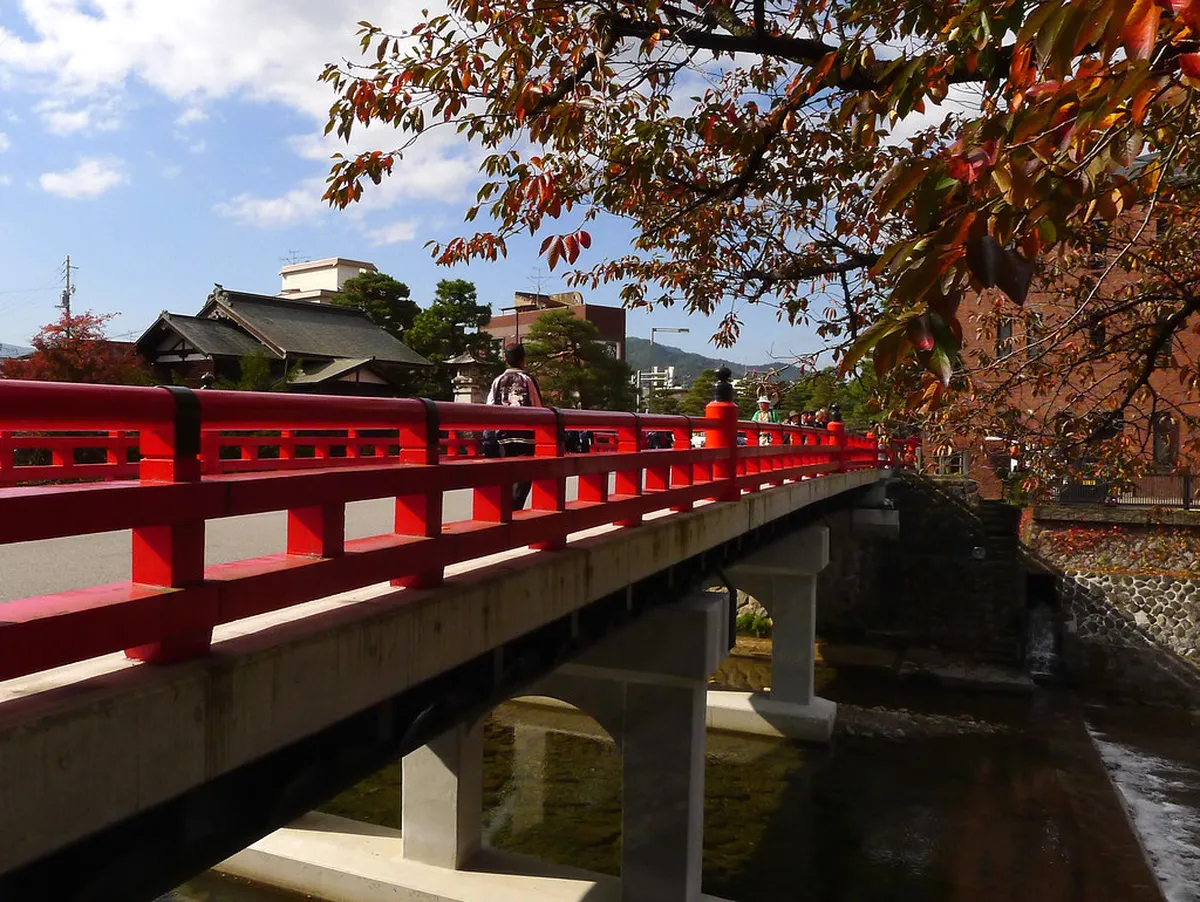
Lighting is best in the early morning when the sun strikes the red railing from low on the horizon. In late March and early April, cherry trees on the riverbank frame the bridge with pink blossoms. In autumn, the foliage from the adjacent trees adds orange and yellow to the scene. At night, the bridge is lit and reflects in the river, though the residential light pollution on the opposite bank can interfere with long-exposure shots.
The riverside path running north from the bridge passes the Miyagawa Morning Market stalls and connects to the Kaji Bridge further upstream. Walking this stretch in the morning gives you the market atmosphere plus the bridge photo in a single 30-minute loop. There is nowhere in Takayama where you can cover this much visual payoff for absolutely zero cost.
See the Ancient Ginkgo at Hida Kokubunji Temple
Hida Kokubunji is the oldest temple in Takayama, founded in 746 during the Nara period. The outer courtyard is free to enter and is home to a ginkgo tree estimated to be over 1,200 years old — one of the largest living things in the city. The tree stands roughly 37 metres tall and its trunk requires multiple people to encircle it. This is a genuinely ancient living monument that most visitors walk straight past on the way to the old town.
The pagoda on the grounds dates to the Muromachi period (14th–16th century) and is a designated Important Cultural Property. Viewing it from the courtyard costs nothing. The main hall interior involves a small admission fee, but the courtyard, the great tree, and the pagoda are the main reasons to stop here. The temple sits on Kokubunji-dori, about a five-minute walk from the train station, making it the easiest major free sight to fold into an arrival or departure day.
In mid-November the ginkgo turns a pure bright yellow and the fallen leaves carpet the ground around the base. Timing a visit for this window — typically between 10 and 20 November depending on the year — transforms a routine temple stop into something memorable. The tree's colour peak is slightly earlier than the maples on the Higashiyama trail, so you can catch both in a single week-long visit to the region.
Browse the Traditional Takayama Jinya Morning Market
The Jinyamae Morning Market operates in front of the Takayama Jinya historic government building on the west bank of the Miyagawa River, directly across from the Sanmachi Suji district. It is smaller than the Miyagawa market — roughly 20 to 30 stalls — and focuses primarily on vegetables, mountain herbs, dried goods, and a handful of souvenir items. Entry is free. Hours match the Miyagawa market: 07:00 to noon from April through November, and 08:00 to noon in winter.
The Jinya market is noticeably quieter and feels more local. Farmers from the surrounding Hida valleys sell produce here that reflects the mountain growing season: fresh sansai (wild foraged vegetables) in spring, sweet Hida corn in summer, mushrooms in autumn, and root vegetables through winter. This seasonal rotation is more visible here than at the larger Miyagawa market. If you want to understand what local cooks actually buy, this is the better market for it.
The Takayama Jinya building behind the market is the main draw for many visitors. It is the only surviving provincial government house from the Edo period still standing in Japan. Interior tours of the Jinya cost ¥430 per adult — worth it for history enthusiasts, but the exterior and the market in front of it are free. The building's tiled roof and timber facade are visible from the market stalls at no cost. Combine both morning markets in a single loop by crossing Nakabashi Bridge between them — the full route takes under an hour on foot.
Free Foot Baths and Quiet Spots Most Visitors Miss
Takayama sits on a network of geothermal springs, and the city has installed several public ashiyu (foot bath) pools at no charge. The most accessible is Sakura Ashinoyu, located about a 10-minute walk east of JR Takayama Station near the Higashiyama district entrance. You soak your feet in naturally warm spring water while sitting on a stone ledge — bring a small towel to dry off afterward. After two hours on the Higashiyama walking course, this is genuinely useful rather than just a novelty.
Two traditional merchant residences are also free and rarely appear in standard tourist itineraries. The Matsumoto Residence (125 Kamikawaharamachi) is one of the few buildings to survive the great fire of 1875 and offers a look at an authentic Edo-period merchant home. The Miyaji Family Residence (2-44 Oshinmachi) has a small garden from the early Meiji era. Both are open 09:00 to 16:30 on weekends and public holidays only, so check the calendar if you plan to visit. Free entry at both.
These spots do not appear in the major English-language travel guides, which tend to repeat the same cluster of Sanmachi Suji, Higashiyama, and the morning markets. If you have a second day in Takayama, the combination of a weekday morning foot bath after the walking course, followed by a weekend visit to the Matsumoto Residence, adds real depth without adding cost. They also give you an excuse to explore the quieter residential streets north and east of the main tourist zone.
How to Plan a Zero-Yen Day in Takayama
A genuinely cost-free day in Takayama in 2026 is achievable. Start at 07:00 at the Miyagawa Morning Market, walk the full length of the stalls, and cross Nakabashi Bridge to browse the Jinyamae Market on the west bank. This first hour covers two of the city's signature experiences and costs nothing. Bring a refillable water bottle — the market area has no free drinking water stations, but your accommodation will fill it for you before you leave.
| Time | Activity | Cost |
|---|---|---|
| 07:00–08:00 | Miyagawa & Jinyamae Morning Markets | Free |
| 08:00–09:00 | Hida Kokubunji Temple & ancient ginkgo | Free |
| 09:00–11:00 | Sanmachi Suji old town & Museum of History and Art | Free |
| 11:00–14:00 | Higashiyama Walking Course & Shiroyama Park | Free |
| 14:00–15:00 | Sakurayama Hachimangu Shrine | Free |
| 15:00+ | Sakura Ashinoyu foot bath & riverside rest | Free |
By 09:00, walk north to Hida Kokubunji Temple to see the ancient ginkgo, then continue into Sanmachi Suji for the Edo-period streetscape. The Museum of History and Art opens at 09:00 and slots in naturally here. Spend 45 minutes inside, then walk east to begin the Higashiyama Walking Course at around 11:00. Complete the loop through the temple district to Shiroyama Park and back down into the old town by early afternoon. Stop at Sakurayama Hachimangu Shrine on the way out of the Higashiyama area.
The afternoon is yours for the quieter spots — the Matsumoto Residence on weekends, or simply sitting by the river near the Nakabashi Bridge as the afternoon light changes. If your feet are protesting by 15:00, the Sakura Ashinoyu foot bath is a free recovery stop. Total walking distance for this day is roughly 8 to 10 kilometres. You will have covered the entire cultural core of Takayama without spending a single yen on admission. For cheap meals, look for convenience stores near the station or ramen shops one block off the main tourist streets, where bowl prices drop below ¥800.
Most Buddhist temples along the Higashiyama Walking Course charge ¥300–¥500 for interior access, but the exterior gardens, approach paths, and shrine grounds are completely free. You can experience the spiritual atmosphere and architectural beauty without paying any entrance fees.
Essential Logistics and Budget Tips for Takayama
Getting to Takayama is the biggest expense for most visitors. From Nagoya, the JR Hida Limited Express takes about 2.5 hours and costs around ¥5,500 without a rail pass. From Tokyo, the fastest route uses the Shinkansen to Nagoya then the JR Hida — roughly 4 hours total. Highway buses from Nagoya and Tokyo are slower but significantly cheaper if you book in advance. Once you arrive at the station, your feet handle everything in the central sightseeing zone. No local buses are needed for the free attractions covered in this guide.
Consider staying at the Takayama Green Hotel if you want a reliable mid-range base near the markets. For a more traditional feel, Hotel Wood Takayama combines modern rooms with a local aesthetic. Accommodation prices in Takayama roughly double during festival weeks (around 14–15 April and 9–10 October) and can triple for the best ryokan rooms. Booking four to six weeks out for a non-festival visit is usually sufficient to find reasonable rates.
Carry cash. The morning market stalls are cash-only, and many small eateries in the old town do not accept cards. Free Wi-Fi is available at the station and the tourist information office directly outside the station exit. The tourist office also stocks free printed walking maps in English that mark all the temples, shrines, and storehouses described in this guide. Pick one up before you start — it makes navigating the Higashiyama route significantly easier. Check the best areas to stay for a full breakdown of accommodation options by budget and neighborhood.
Frequently Asked Questions
Is the Takayama Museum of History and Art really free?
Yes, admission to the Takayama Museum of History and Art is completely free for all visitors. It is open daily from 9am to 7pm. The museum features fourteen rooms of local history and art within traditional storehouses.
How long does it take to walk the Higashiyama Walking Course?
The 3.5-kilometer trail usually takes about two hours to complete at a leisurely pace. This includes time to admire the many temples and shrines along the route. The path is free and open to the public year-round.
Can you see Takayama Festival floats without paying?
You can see the floats for free by visiting the tall storehouses (Yatai-gura) located throughout the city. While you cannot enter them, windows in the doors often allow a view of the floats. This is a great alternative to the paid exhibition hall.
Takayama is a rare destination where the best experiences do not come with a price tag. From the Edo-period merchant streets to the mountain trails lined with temples, the city rewards those who explore on foot and arrive with a plan. The zero-yen day route in this guide covers the full cultural circuit of the city without spending a single yen on admission. I hope it helps you make the most of your 2026 trip to the Japanese Alps. For the bigger picture, see our complete Takayama attractions guide.
Free: The Takayama Essentials guide
Top things to do, where to stay, a perfect day plan, getting around, and the best time to go — a Takayama mini-guide you can take offline.
You might also like



Continue reading
More guides you'll find useful