The Takayama Festival Floats Exhibition Hall (Yatai Kaikan) is the only place in Japan where you can stand next to the actual autumn festival floats year-round. Located on the grounds of Sakurayama Hachiman Shrine in the northern part of Takayama Old Town, the hall protects four of the city's eleven prized yatai and puts them within arm's reach of any visitor. This 2026 guide covers what to see, how to plan your timing, and how to get the most from your ticket.
What is the Takayama Festival Floats Exhibition Hall?
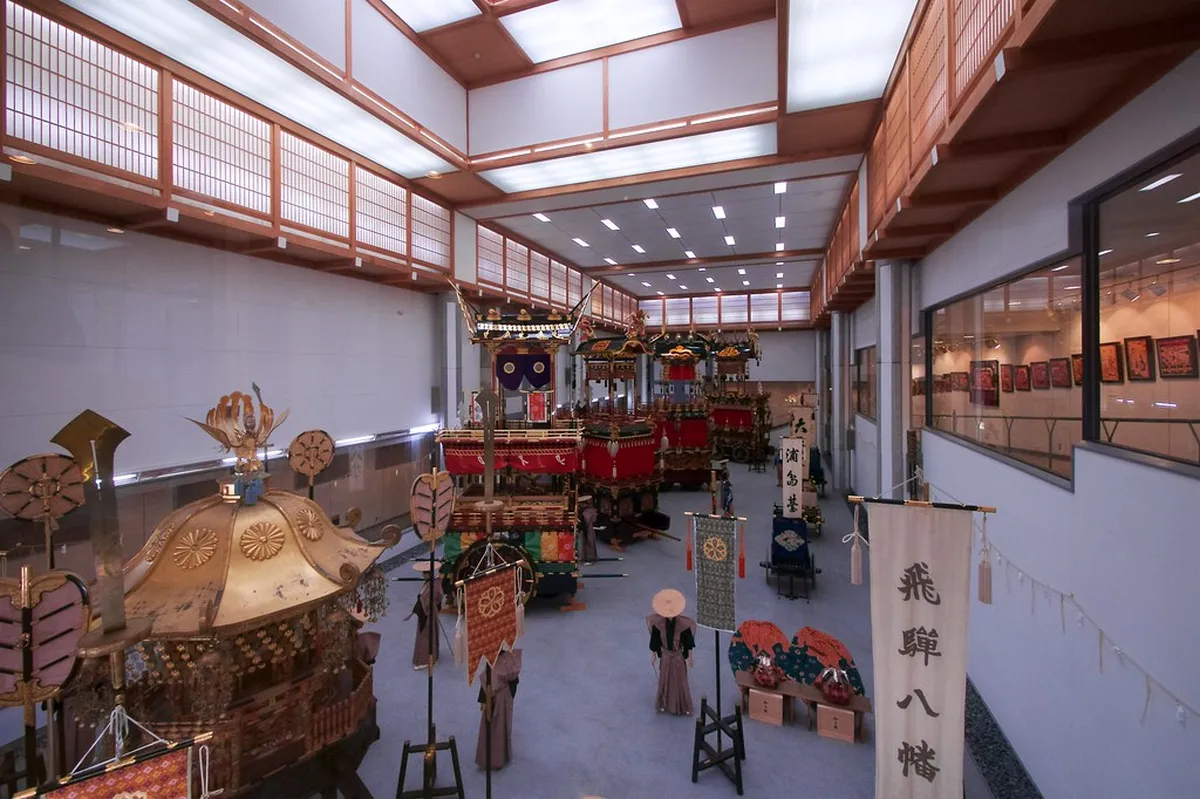
The Yatai Kaikan is a specialized museum dedicated to the floats used during the Hachiman Matsuri, Takayama's autumn festival held every October 9–10. It houses four of the eleven massive festival floats, rotating the display three times a year so that maintenance and rest are evenly distributed across the collection. These floats are designated Important Tangible Folk Cultural Properties by the Japanese government, making them some of the most significant preserved artifacts in the Gifu region.
Situated on the grounds of Sakurayama Hachiman Shrine, the hall provides a sacred and tranquil setting that the street crowds during the live festival cannot match. A large glass-walled display area lets you walk the full perimeter and view each float from multiple angles. The layout offers a much more intimate encounter than standing in the street during the October procession.
Each float stands several meters tall and weighs several tons. Advanced climate control protects the delicate lacquer, gold leaf, and aged silk from humidity and temperature swings. Educational panels throughout the hall identify each float by name, neighbourhood origin, and notable decorative features — context that deepens your appreciation of the whole collection.
History and UNESCO Significance of the Festival
The Takayama Festival traces its roots to the late 16th and early 17th centuries during the Edo Period. It began as a modest local event but expanded as the city's merchant class grew prosperous enough to fund increasingly ornate floats as displays of devotion and neighbourhood pride. The floats in the collection today date back several hundred years and still carry the lacquer and gold applied by Hida craftsmen of that era.
In 2016, the Takayama Festival was added to the UNESCO Intangible Cultural Heritage list. This recognition encompasses not just the physical floats but the traditional music, puppetry techniques, and community organisation that keep the event alive. The Yatai Kaikan plays a direct role in preserving those standards by maintaining the floats in museum-grade conditions between festival dates.
Travelers should note the important distinction between Takayama's two annual festivals. The Spring Festival (Sanno Matsuri) takes place April 14–15 at the Hie Shrine in the southern part of the city. The Autumn Festival (Hachiman Matsuri) occurs October 9–10 at Sakurayama Hachiman Shrine in the north. The Yatai Kaikan exclusively displays the autumn floats — if you are researching the spring floats, those are kept separately and shown at a different venue.
Highlight 1: Craftsmanship of the Yatai Floats
The yatai are often called moving museums because every surface is a deliberate artistic statement. Skilled artisans from the Hida region — historically known as Hida no Takumi — spent years perfecting the wood carvings that cover each structure. Mythical creatures, floral compositions, and historical scenes are etched into the dark wood, then accented with brilliant gold leaf that catches the museum lighting.
Beyond the carvings, each float features exquisite metalwork and heavy silk tapestries. Many of these fabrics were imported from Kyoto or abroad during the Edo Period, evidence of how well-connected Takayama's merchant families were. The wheels of the floats are also finished works, often carrying lacquered surfaces and complex structural joinery. Seeing these details up close makes it clear why moving one float through a street requires dozens of coordinated people.
Some floats reach up to 10 metres in height. The museum environment is one of the only settings in the world where you can stand directly beside them, trace the grain of the centuries-old wood with your eyes, and study the engineering that keeps such top-heavy towers stable. The panels explaining Hida joinery techniques — a style that uses no nails — add another dimension to what could otherwise be a purely visual experience.
Highlight 2: Live Karakuri Puppet Performances
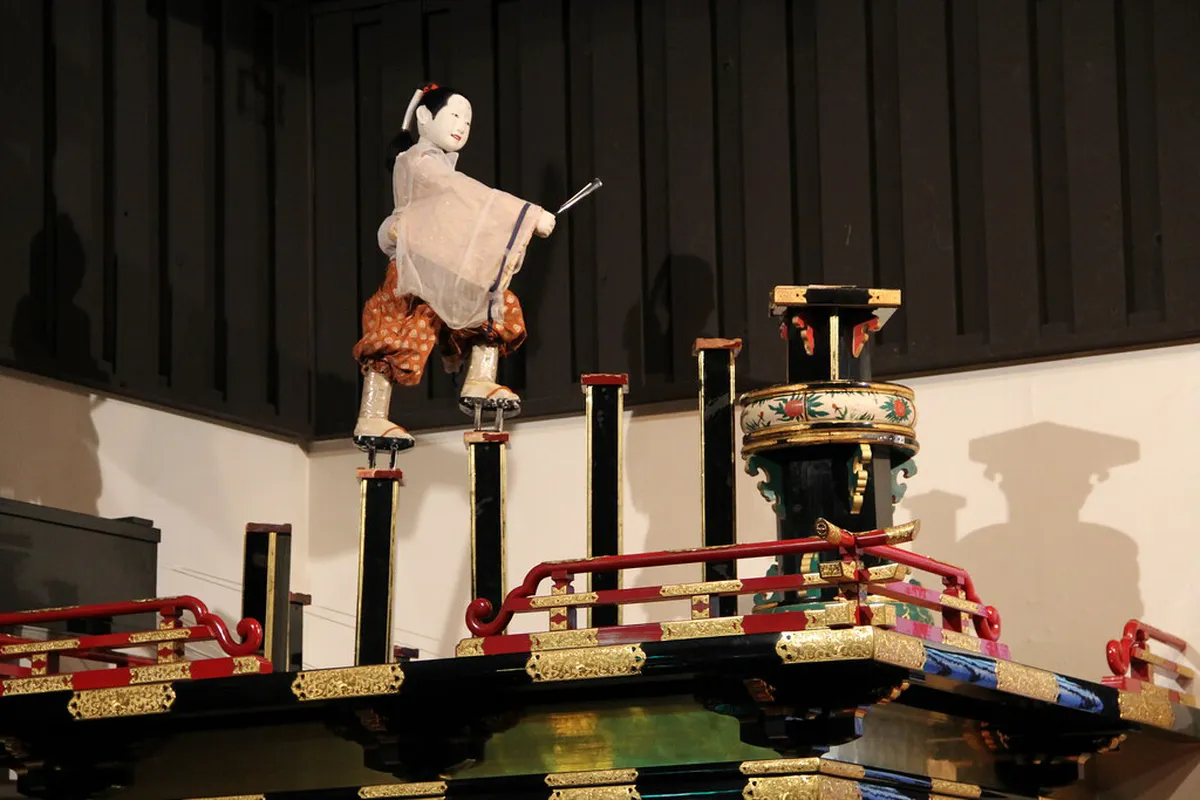
Karakuri ningyo — mechanical puppets operated by hidden string-and-pulley systems — are one of the most astonishing features of the Takayama floats. During the live festival they perform acrobatic routines on top of the moving yatai. Inside the Yatai Kaikan, high-definition videos capture these performances in close-up detail, showing the puppets pouring tea, writing calligraphy, and executing movements that look genuinely lifelike.
On certain days, live demonstrations take place inside the museum. The internal gears, levers, and silk threads are sometimes made visible during these sessions, letting you understand the mechanical genius of Edo-period craftsmen. Robotics historians often point to karakuri ningyo as a direct ancestor of modern Japanese precision engineering, and seeing the mechanism in person makes that lineage feel concrete rather than abstract.
Performance times vary and are not continuous — usually only two or three sessions run per day. Check the posted schedule on arrival to plan your visit around a live showing. If you miss it, the high-definition video installation in the hall covers all the major puppet sequences in detail and runs on a short loop throughout the day.
Essential Visitor Information: Tickets, Hours, and Access
Adult admission is 1,000 yen; children pay 500 yen. The ticket is a combined entry that covers both the Yatai Kaikan and the adjacent Sakurayama Nikkokan museum — two separate experiences for one price. Group discounts are available for larger parties; check the official tourism pages for current rates before you depart.
Opening hours are 09:00–17:00 from March through November and 09:00–16:30 from December through February. Last entry is 30 minutes before closing. Budget 45–60 minutes for the float hall and the puppet videos, plus extra time if you want to explore the Sakurayama Nikkokan and the shrine grounds.
| Period | Opening Hours | Adult Admission | Float Rotation |
|---|---|---|---|
| March–November | 09:00–17:00 | ¥1,000 (incl. Nikkokan) | Changes in Mar, Jul, Nov |
| December–February | 09:00–16:30 | ¥1,000 (incl. Nikkokan) | Changes in Nov (prior) |
| Children (all year) | Same as above | ¥500 | — |
Last entry is 30 minutes before closing. Arrive before 09:30 to have the float hall largely to yourself before tour buses from Nagoya and Osaka arrive mid-morning.
The hall is located at 178 Sakuramachi, a roughly 15–20 minute walk from JR Takayama Station. The scenic route through the old town makes the walk part of the experience. Local Sarubobo buses also stop near the shrine entrance if you prefer not to walk. Ramps and elevators serve visitors with limited mobility, and the main display area is spacious enough for wheelchairs to move freely between the floats.
Yatai Kaikan vs. Matsuri no Mori: Which to Visit?
Takayama has two float museums and most travelers only have time for one. The Yatai Kaikan, attached to Sakurayama Hachiman Shrine, displays four of the actual autumn festival floats — the same centuries-old objects that roll through the streets in October. The experience is intimate, the setting is sacred, and the combined ticket includes the Sakurayama Nikkokan next door.
Matsuri no Mori is located a short distance outside the city centre. It features large-scale replicas and a more theatrical, immersive show format. The replica floats are full-sized and dramatically lit, which appeals to visitors who want spectacle over authenticity. However, because the floats are reproductions, the connection to the actual festival tradition is more educational than emotional.
If you value historical authenticity, a quiet atmosphere, and proximity to the old town, choose the Yatai Kaikan. If you are traveling with children who respond better to theatrical presentation, or if you have already visited the Yatai Kaikan on a previous trip, Matsuri no Mori offers a genuinely different experience. Most first-time visitors to Takayama who have limited time are better served by the Yatai Kaikan.
The Sakurayama Nikkokan: The Hidden Bonus on Your Ticket
Few guides explain what the Sakurayama Nikkokan actually contains, which is why many visitors walk past it without going in. The museum holds a meticulously built 1:33 scale model of Nikko Toshogu — the ornate Edo-period shrine complex in Tochigi Prefecture — constructed with the same attention to decorative detail that defines the festival floats themselves. Visiting both in sequence shows you exactly how Hida craftsmanship influenced Edo-period decorative culture across Japan.
The model took years to complete and covers several display cases, replicating the layered gateway architecture, painted carvings, and gilded roof structures of the original Nikko complex. If you plan to visit Nikko on the same trip, seeing this model first gives you a sharp sense of the site's layout and scale. If you are not visiting Nikko, this is one of the best reproductions of it outside of Tochigi.
Because the Nikkokan is included in your 1,000 yen Yatai Kaikan ticket, there is no reason to skip it. Add 20–30 minutes to your visit time to walk through it properly. The museum is compact and well-labelled in English, making it accessible even without a guide.
Festival Days vs. Year-Round Exhibition
Visiting during the actual Hachiman Matsuri on October 9–10 is a completely different experience from visiting the exhibition hall. The live festival fills the northern streets with music, lantern light, and crowds numbering in the tens of thousands. The floats process slowly through the streets while karakuri puppets perform above the heads of the crowd. Hotel rooms book out months in advance, and prices across the city rise sharply during this period.
The exhibition hall offers something the live festival cannot: closeness. You can examine the gold leaf at eye level, read every panel, and take photographs without jostling. The float rotation schedule means that if you visit multiple times in a year — in March, July, and November — you will see a different set of four floats each time. Returning visitors sometimes treat this rotation as a reason to come back to Takayama annually.
The Yatai Kaikan displays only the autumn festival (Hachiman Matsuri) floats. The spring festival floats are kept and shown at a separate venue near Hie Shrine — visiting the wrong museum is a common error for first-time visitors.
Visiting on non-festival days also gives you space to explore the surrounding Takayama Jinya and neighbouring streets without the crowds. Restaurants take walk-ins, queues at other museums are shorter, and the city's mountain atmosphere is easier to appreciate. For most travelers, a non-festival visit to the Yatai Kaikan followed by a morning at the old town delivers the fullest picture of what makes Takayama exceptional.
- Float rotation: 4 of 11 autumn floats displayed at once
- Rotation months: March, July, November
- Live festival dates: October 9–10 (autumn), April 14–15 (spring, different venue)
- Winter hours: 09:00–16:30 (Dec–Feb); standard hours 09:00–17:00 (Mar–Nov)
Exploring the Grounds: Sakurayama Hachiman Shrine
The exhibition hall shares its grounds with Sakurayama Hachiman Shrine, the protector shrine of Takayama's northern district. Built in its current form in the 17th century, the shrine feels detached from the city despite sitting in its middle — tall cedars and a mossy stone path create the impression of deep forest. Walking through the torii gate on arrival sets the tone before you even enter the float hall.
The shrine grounds include a koi pond where visitors can feed the fish — a detail most guides omit. It is a small but genuinely enjoyable moment, especially for travelers with children. In autumn, the maple trees surrounding the main hall turn deep red and orange, making the grounds one of the most photographed spots in Takayama during the foliage season.
A practical note on sequencing: start with the indoor float hall and the Nikkokan to avoid any morning chill or afternoon rain. Then spend time on the shrine grounds as the light improves through the morning. This order keeps the visit flowing naturally and gives you the best chance of good light for outdoor photography.
Beyond the Hall: Top Gifu Tours and Experiences
After the Yatai Kaikan, the most natural next stop for most visitors is a day trip to Shirakawa-go. The UNESCO-listed gassho-zukuri farmhouses are reachable by direct bus from Takayama Station in about 50 minutes each way. Half a day is enough to walk the village and see the main open-house interiors. Combining the float hall in the morning with an afternoon in Shirakawa-go makes a full and varied day.
If you prefer to stay within the city, the Miyagawa Morning Market runs along the river bank from 07:00 and is an easy 10-minute walk from the Yatai Kaikan. Fresh Hida beef skewers, pickled vegetables, and hand-carved wooden crafts are the main draws. Arriving at the market before 09:00 gives you the best selection and avoids the tour-group rush that builds later in the morning.
For a deeper look at the region's material culture, the Hida Folk Village on the western edge of town is an open-air museum of relocated farmhouses from across the Hida highlands. Walking through these structures after the Yatai Kaikan creates a direct connection: the same joinery traditions that produced the gassho-zukuri beams are visible in the float construction. Budget two to three hours for the folk village if you add it to your itinerary.
Family-Friendly and Budget Tips for Sightseeing
Traveling with children to the Yatai Kaikan works best if you focus the visit around the karakuri puppet demonstrations. Kids respond strongly to the mechanical movements, and the videos run continuously so there is always something to hold their attention. Before you enter the float hall, set a scavenger hunt: ask children to find a dragon, a crane, and a mythical lion carved somewhere on the four floats. This keeps them engaged for the duration of the visit.
Takayama's mountain elevation means weather shifts quickly. Even in summer, mornings at 600 metres above sea level can feel cool. If you are visiting in October for the festival period, a mid-weight jacket is essential by late afternoon. The exhibition hall is climate-controlled throughout the year, making it a reliable shelter during sudden rain.
Budget-minded travelers should note that the combined Yatai Kaikan and Nikkokan ticket at 1,000 yen is genuinely good value compared to other museums in the city, most of which charge a similar amount for less content. The shrine grounds are free to enter. Walking between the hall, the morning market, and the old town costs nothing and covers most of the city's highlights in a single morning. If you need food recommendations near the shrine, checking HappyCow Takayama surfaces the surprisingly strong vegan and vegetarian options available in this small city.
Is the Yatai Kaikan Worth It? Final Visitor Tips
The Yatai Kaikan is worth the entry fee for almost any visitor to Takayama. The authentic floats, the mechanical puppet demonstrations, the shrine grounds, and the Nikkokan model of Nikko all sit within a short walk of each other and are covered by a single ticket. No other site in the city delivers this much cultural depth in one location.
Arrive early — before 09:30 if possible — to beat the tour buses that arrive from Nagoya and Osaka mid-morning. This gives you the float hall largely to yourself for the first half hour and improves your chances of catching the first puppet demonstration of the day. Photography is generally permitted inside the hall, though flash photography near the aged textiles is discouraged.
Before you leave, the gift shop carries items directly connected to the float collection: small karakuri puzzle boxes, replica float ornaments, and locally produced lacquerware. These are among the more distinctive souvenirs available in Takayama and are harder to find at the mainstream shops in the old town. A charm or print from here makes a more specific keepsake than the generic Hida crafts sold elsewhere in the city.
Frequently Asked Questions
What is the best time to visit the Takayama Festival Floats Exhibition Hall?
The best time to visit is during the shoulder seasons of spring and autumn for pleasant walking weather. To see a specific set of floats, plan your trip around the rotation months of March, July, or November. Early mornings are ideal to avoid the largest crowds from tour buses.
How much does it cost to enter the Yatai Kaikan?
Adult admission is typically around 900 yen, which often includes entry to the Sakurayama Nikko Kan. Prices may change slightly, so check the official tourism pages for the most current rates. Children and students usually receive discounted entry fees at the ticket window.
Can you see the festival floats if it is not festival season?
Yes, the Yatai Kaikan is specifically designed to display the authentic autumn festival floats all year round. While you won't see them moving through the streets, the museum allows for a much closer inspection of their details. It is the perfect alternative for those missing the October dates.
How long does it take to walk from Takayama Station to the Exhibition Hall?
It takes approximately 20 minutes to walk from JR Takayama Station to the hall. The route takes you through the scenic Takayama Old Town, making it a very enjoyable stroll. Local buses are also available if you prefer to save your energy for the museum.
What is the difference between the Spring and Autumn Takayama Festivals?
The Spring Festival (Sanno Matsuri) is held in April at the Hie Shrine, while the Autumn Festival (Hachiman Matsuri) occurs in October at Sakurayama Hachiman Shrine. Each festival uses a completely different set of floats. The Yatai Kaikan only displays the floats from the Autumn Festival.
The Takayama Festival Floats Exhibition Hall stands as one of the most rewarding museums in Gifu Prefecture for 2026. The authentic centuries-old floats, the mechanical puppet demonstrations, the Sakurayama Nikkokan, and the shrine grounds combine into a visit that takes less than two hours but leaves a lasting impression. Build it into your Takayama itinerary and arrive early to see it at its quietest and best.
For more Takayama trip planning, see our things to do in Takayama, Takayama Autumn Festival guide.
Official sources: For the latest details, see the official website and Wikipedia.