Walking through the Sanmachi Suji district feels like stepping back into the Edo period. This historic area features dark wooden buildings and narrow streets that remain remarkably intact, preserved under strict local ordinances that prevent modern facades from being added to any structure. Visitors often call this neighborhood Little Kyoto because of its traditional atmosphere and deep cultural heritage, though locals prefer the more specific description: the Little Kyoto of the Japanese Alps.
The district served as a bustling merchant hub for centuries in the Hida region, flourishing particularly under the Tokugawa shogunate when Takayama came under direct shogunate control due to its strategic timber resources. Today, these preserved houses contain craft shops, sake breweries, and local restaurants for travelers to explore. This guide covers what to see, what to eat, how to navigate the three main streets, and when to arrive for the best experience.
Exploring the streets early in the morning offers a quiet look at the architectural details. As the day progresses, the area transforms into a vibrant center for food and shopping. You can read TripAdvisor: Sanmachi Suji Reviews to see what recent travelers recommend.
The History and Atmosphere of Sanmachi Suji
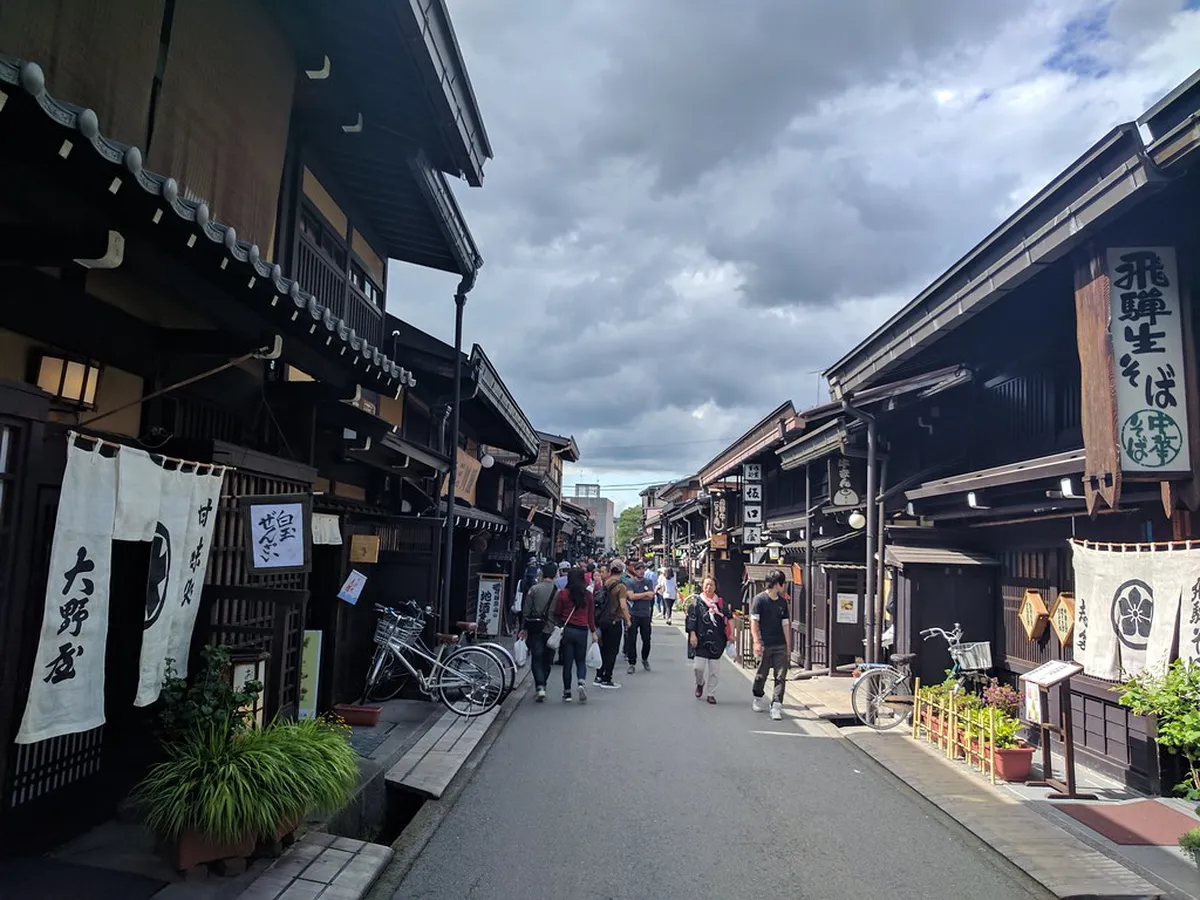
The Sanmachi Suji district consists of three main streets — Kamiichino-machi, Kaminino-machi, and Kamisanno-machi — that once housed wealthy merchants and sake brewers. During the 17th century, merchant families accumulated considerable wealth from the timber trade, and the high quality of their wooden architecture reflects it: the timber beams in these buildings are too large to source from any modern Japanese forest. Preservation laws passed in the latter half of the 20th century ensure the buildings maintain their original dark brown facades and distinctive 'koshi' latticed windows.
Each of the three streets has a different character, and understanding which does what saves time. Kamiichino-machi is the main artery, busiest with tourist foot traffic, sake breweries, and street food stalls — if you only have ninety minutes, this is the one to prioritize. Kaminino-machi runs parallel and is noticeably quieter, with fewer shops and more room to photograph the architecture without pedestrians cluttering your frame. Kamisanno-machi contains many of the historic merchant houses converted into museums and teahouses; this is where to go if you want to slow down and read about the families who lived here.
Small water canals flow along the streets, originally used for fire prevention and washing. Most shops open around 09:00 and close by 17:00, but the streets themselves are open around the clock. After 18:00, the lanterns come on, the crowds disappear entirely, and the district becomes a photographer's environment that none of the daytime photos do justice to.
Top Attractions and Historic Houses in the Old Town
Several merchant houses are open to the public as museums or heritage sites. The Yoshijima Heritage House (1-51 Oshin-machi; ¥500 entry) was built in 1907 for a family of sake brewers and moneylenders — after checking the shopfront, remove your shoes and explore the main rooms, then don't miss the garden at the rear. The scale of the interior beams is what makes it worth the ticket: structural timbers this size would be near-impossible to source legally in Japan today. Open 09:00–17:00 (Mar–Nov) and 09:00–16:30 (Dec–Feb), closed Tuesdays in winter.
The Kusakabe Folk Crafts Museum (1-52 Oshin-machi; ¥500 entry) is a short walk away and dates to 1879. Its displays of local lacquerware, ironwork, and weaving are informative, and staff typically serve a rice cracker and green tea after your tour of the house — a small but characteristically Hida touch. Open 09:00–16:30 (Mar–Nov), slightly shorter in winter; closed Tuesdays December to February.
You can join a Viator: Takayama Old Town Walking Tour to get context for these structures that a self-guided stroll won't provide. Guides can point out the family crests still displayed above doorways and explain the rice tax system that shaped which merchants built the most elaborate properties.
A Guide to Takayama's Historic Sake Breweries
Takayama is famous for its high-quality sake brewed with pure mountain water from the Hida highlands. Identifying a brewery is straightforward: look for the 'sugidama', a large cedar ball hanging above the entrance. A fresh green ball means the brewery has just released a new batch; a brown ball indicates aged sake. Most breweries along Kamiichino-machi display these prominently.
The coin-operated self-service tasting system used by several breweries is easy to navigate once you know the steps. On arrival, purchase a small ceramic 'ochoko' tasting cup at the register — typically ¥300 to ¥500 and yours to keep as a souvenir. Take the cup to the tasting machine, select a sake variety from the dispenser panel, insert coins (usually ¥100 to ¥200 per pour), and hold the cup under the nozzle. Staff are nearby to answer questions about flavour profiles: ask for 'karakuchi' (dry) or 'amakuchi' (sweet) to narrow down your options quickly. Most tasting rooms operate between 09:00 and 16:30 daily.
Breweries that offer guided flights and full tours of their brewing facilities tend to be booked ahead during spring cherry-blossom season (late April) and the autumn festival in October. For those visiting at those times, the Tour and Tasting at Takayama's oldest sake brewery is worth pre-booking. Drink responsibly: the narrow stone streets of the old town are uneven in places.
Must-Try Local Foods: Hida Beef and Street Snacks
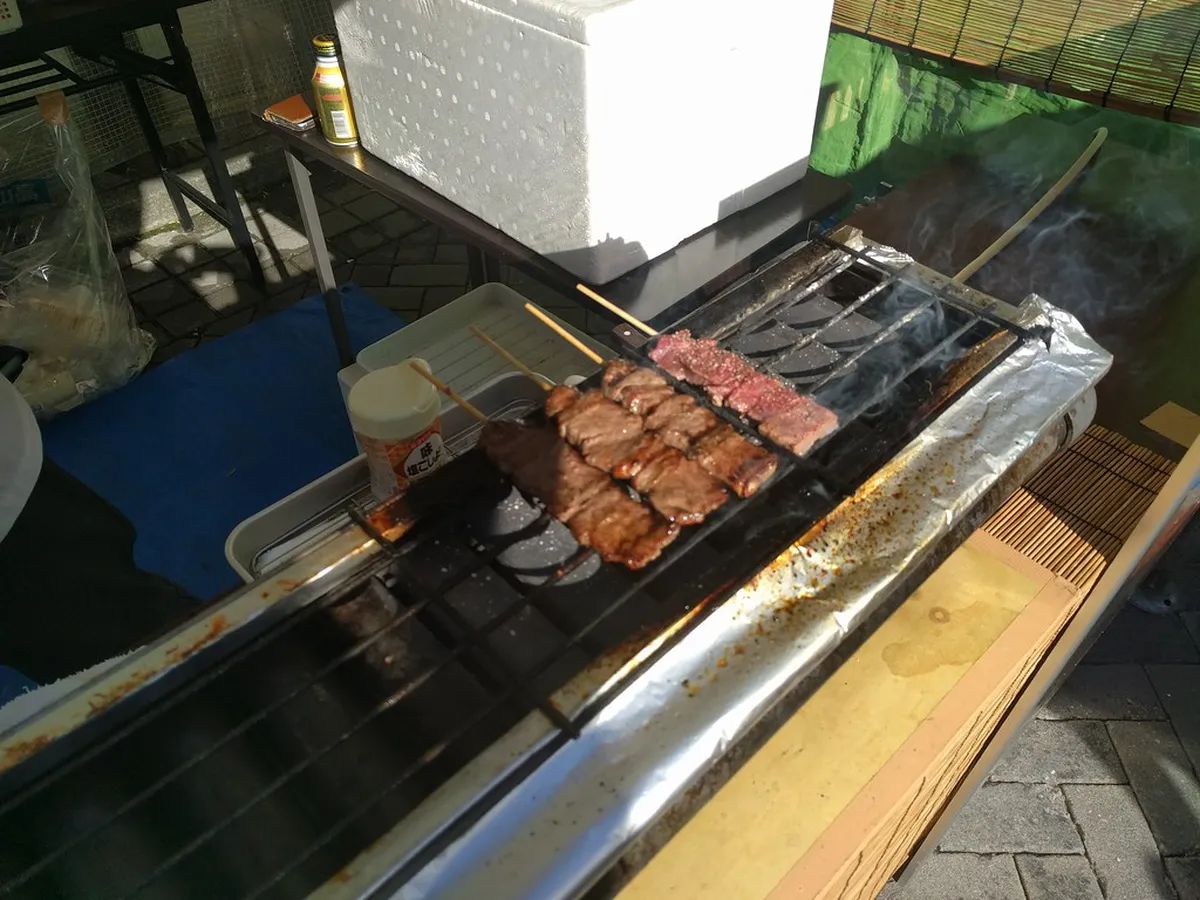
Hida beef is the dominant culinary attraction in the old town. For street eating, the most common format is Hida beef nigiri sushi: two or three slices of lightly seared Wagyu placed over a thin rice cracker, served warm. Stalls on Kamiichino-machi typically offer tiered pricing depending on the cut — the standard option runs ¥500 to ¥700 per serving, while premium cuts push to ¥1,000 or more. If you want a fuller meal rather than a snack, the sit-down steak houses and sukiyaki restaurants one block off the main street offer full Hida beef sets from around ¥3,000 upward.
Mitarashi dango is the other essential snack. Takayama's version uses a savory soy sauce glaze rather than the sweet version common in Tokyo, giving it a darker, slightly caramelised flavour. Look for stalls with a charcoal grill visible from the street. Also worth seeking out is Gohei Mochi, a regional specialty that most visitors overlook because it looks similar to dango but is distinctly different: roughly pounded rice cakes (you can feel the individual grains in the texture) coated in a sweet-savory soy sauce glaze and grilled over charcoal until the edges char lightly. The smoke adds a depth that makes it arguably the most interesting carbohydrate snack in the old town. You won't find it in Tokyo or Kyoto — it's a Hida specialty.
For drinks to accompany the food, look for the Miyagawa Morning Market area on the riverbank where vendors sell local produce and pickles that go well alongside any beef purchase. Soft-serve ice cream in matcha or charcoal-vanilla flavour is widely available on the main street and makes a good palate reset between brewery tastings.
Takayama Jinya: The Edo-Period Government Office
The Takayama Jinya served as the local government office of the Tokugawa Shogunate that ruled Japan from 1600 to 1868. The compound dates to 1615, with the current buildings rebuilt in 1816, and it is the only such administrative complex of its kind still standing in Japan. The Sanmachi Suji merchant district developed around this building — understanding the Jinya first gives you a better framework for everything else in the old town.
Inside, you can walk through the administrative rooms, a residential area for the government official who lived on-site, and the interrogation chambers. The large rice storehouse is now a museum explaining how rice was collected as tax and stored, measured, and redistributed across the Hida region. The scale of the granary underscores how significant the Tokugawa rice tax system was to the area's economy. Visitors must remove their shoes and carry them in a plastic bag during the tour — bags are provided at the entrance.
Check the Takayama Jinya - Official Site for current opening hours, which vary by season: 08:45–17:00 (Mar–Jul, Sep–Oct), 08:45–18:00 (Aug), and 08:45–16:30 (Nov–Feb). Closed December 29, 31, and January 1. The entry fee is ¥440 for adults; free for high school age and under as of 2026. Plan about one hour for the full complex.
Cultural Experiences: Rickshaw Rides and Performing Arts
Rickshaw rides are available throughout the Sanmachi Suji area and offer a comfortable alternative to walking if your group includes elderly visitors or young children. Pullers operate as knowledgeable guides, stopping at key buildings to explain architectural details and local history. Short courses (approximately fifteen minutes) typically start at ¥4,000 for two passengers. Booking on the spot is usually possible, but during the Takayama Spring Festival (April 14–15) and Autumn Festival (October 9–10), demand spikes significantly.
The Dekonaru-za performance is a one-hour traditional drumming and performing arts show featuring lion dances, flute music, and Hida regional folk traditions. The time commitment is real — commit to the full hour or skip it, as partial attendance misses the context of why the performances are structured the way they are. Travellers with a genuine interest in regional folk arts find it genuinely rare; those after a quick cultural tick tend to lose patience.
Kimono rental shops operate throughout the old town and are a practical option for visitors wanting to engage fully with the aesthetic environment. Rental typically costs ¥3,000 to ¥5,000 for a few hours and includes dressing assistance. Wearing a kimono while riding a rickshaw through Kaminino-machi is the combination that produces the photographs most people associate with Takayama Old Town.
Morning Markets and Local Craft Shopping
The morning markets are a staple of daily life in Takayama and run from approximately 07:00 to noon. The Jinya-mae Morning Market operates in front of Takayama Jinya, while the Miyagawa Morning Market runs along the Miyagawa River near the Sakurayama Hachimangu Shrine district. Local farmers sell fresh vegetables, pickles, handmade crafts, and local produce at both locations. Arriving before 08:00 means smaller crowds and more engagement with the vendors themselves.
Look for 'Sarubobo' dolls — the faceless red human-shaped charms unique to the Hida region. The facelessness is intentional: blank features allow the doll's meaning to adapt to whoever receives it, and the red color was traditionally believed to ward off illness. Modern versions come in multiple colors, each representing a different type of fortune. They are the region's most distinctive souvenir and considerably more interesting than the generic Japanese temple goods found at most tourist markets.
For higher-value crafts, the shops along Kamisanno-machi stock 'Ichii Itto-bori' yew-wood carvings, a technique developed in the Hida region where a single knife is used to produce remarkably detailed figures. Handmade wooden chopsticks with engraved designs are another practical souvenir available throughout Kamiichino-machi at shops ranging from budget-friendly to artisan-grade.
Practical Visitor Tips: Access, Timing, and Logistics
The Old Town is a flat ten-to-twelve-minute walk east from the main JR Takayama Station. Most travelers arrive via the JR Hida Limited Express from Nagoya (approximately two and a half hours) or from Toyama on the other side of the alps. The station has a tourist information desk with English-language maps and staff who can help with timing around local festivals. You can find transport details on the Takayama city guide.
Before 09:00 the morning markets are active and the streets are quiet enough to photograph architecture properly. After 17:00 the lanterns come on and crowds disappear entirely — the best window for atmospheric photography that costs nothing extra.
Timing your visit by time of day makes a significant difference. Before 09:00, the morning markets are active and the streets are quiet enough to photograph the architecture properly. From 10:00 to 14:00 is the busiest window, especially on weekends and during the spring and autumn festival periods. After 17:00, the shops close but the streets remain open — the lanterns glow, crowds vanish, and the district's visual character is completely different from the daytime experience. Night walking costs nothing and requires no planning; simply stay in the area for dinner and walk back through the old town afterward. Consult the Official Takayama Tourism Website for festival-specific crowd forecasts and updated maps.
Trash cans are scarce throughout the old town as part of the preservation framework — carry a small bag for wrappers. Public restrooms inside the district are limited; use facilities at Takayama Jinya or the tourist information centre near the station before heading in.
Wear comfortable shoes — the streets are paved with stone and historic wooden planking, and the combination can be slippery after rain. Public restrooms inside the preserved district are limited; use the facilities at Takayama Jinya or the tourist information center near the station before heading in. Trash cans are scarce throughout the old town as part of the preservation framework — carry a small bag for wrappers and food containers.
Seasonal Activities: From Snow Sports to Summer Canyoning
Summer visitors (July to September) can combine a morning in the old town with an afternoon of shower climbing in the Hida mountains. This activity involves ascending active waterfalls and swimming through gorges in the mountain rivers directly east of the city. Water temperatures stay low even in July, making it a genuine escape from summer heat rather than a warm-weather novelty. It is the highest-adrenaline option available within day-trip range of Sanmachi Suji for travelers who have already done the standard walking circuit.
Winter (January to March) brings the Subzero Forest illumination at Akigami Hot Spring, roughly forty-five minutes by car from Takayama. Frozen trees are lit with colored lights in a forest setting that is visually unlike anything else in central Japan during this period. A car is necessary as public bus service to the site is limited — rental is available at Takayama Station. The Hida Folk Village is particularly atmospheric in snow, with the thatched roofs accumulating significant drifts that reinforce the historical setting.
The famous Takayama Spring Festival (April 14–15) and Autumn Festival (October 9–10) are among the most significant matsuri in Japan, featuring eleven ornate floats pulled through the old town, some equipped with automated marionette performances. Accommodation in Takayama books out months in advance for both festival weekends; book early or plan to day-trip from a nearby city.
Beyond the Old Town: Day Trips to Shirakawa-go and Beyond
A trip to Shirakawa-go is the most logical extension of a Takayama visit. This UNESCO World Heritage site features over one hundred traditional gassho-zukuri thatched-roof farmhouses built at steep angles to handle the region's heavy snowfall. Buses depart from the Takayama Bus Terminal regularly and the journey takes approximately fifty minutes. Several farmhouses operate as guesthouses, making an overnight stay possible for those who want to experience the village at dawn and dusk when day-trippers have left.
The Takayama Festival Floats Hall (178 Sakura-machi; ¥820 entry) is a five-minute walk from the northern edge of Sanmachi Suji. It houses several of the festival floats year-round and includes video footage of the floats in action during the matsuri — a practical alternative for visitors who cannot time their trip around the April and October festival dates. Open 08:30–17:00 (Mar–Nov) and 09:00–16:30 (Dec–Feb).
The Higashiyama Walking Course connects Sakurayama Hachimangu Shrine southward through several small temples and shrines along the base of the eastern hills. The path is flat, well-signed in English and Japanese, and free. On a clear day, the steps of Hakusan-jinja Shrine on this route offer a partial view of the Japan Alps to the east. Allow ninety minutes to walk the full course at a relaxed pace.
Frequently Asked Questions
How much time should I spend in Takayama Old Town?
Most visitors find that four to six hours is enough to see the main sights. This allows time for a sake tasting, a visit to Takayama Jinya, and a leisurely lunch. If you enjoy museums, consider staying a full day. Find more details on the Takayama guide page.
Is there an entry fee for Sanmachi Suji?
Walking through the streets of Sanmachi Suji is completely free for all visitors. However, individual attractions like historic houses, museums, and the Takayama Jinya require paid tickets. Most of these sites cost between 400 and 1,000 yen per person.
When do the shops in Takayama Old Town open and close?
Most shops and sake breweries open around 9:00 AM and close by 5:00 PM. The morning markets start earlier, usually around 7:00 AM or 8:00 AM depending on the season. Restaurants may stay open later, but the streets become very quiet after sunset.
Can I visit Takayama Old Town as a day trip from Nagoya?
Yes, it is possible to visit as a day trip using the Hida Limited Express train. The journey takes about two and a half hours each way. However, staying overnight allows you to experience the peaceful evening atmosphere and early morning markets without rushing.
Takayama Old Town offers a rare glimpse into Japan's well-preserved merchant history. From the savory Hida beef and char-grilled Gohei Mochi to the refined sake breweries and the quiet lantern-lit streets after dark, the district engages all your senses across different hours of the day. Plan your visit carefully to balance the busy markets with quiet architectural walks and an evening stroll through the empty streets.
Whether you visit in the snowy winter or the lush summer, Sanmachi Suji remains a highlight of any Gifu or Japan Alps itinerary. The combination of traditional crafts, mountain access, and intact Edo-period streets creates a travel experience that feels genuinely rare in 2026. Start your journey today to discover the timeless character of this historic mountain town.
For more Takayama trip planning, see our Takayama itinerary, Takayama old town guide.
Official sources: For the latest details, see the official tourism site and Wikipedia.