Japan Activity logo
Japan Activity

Shirakawa-go (Ogimachi Village) Visitor Guide: 2026 Travel Manual

Plan your trip with our Shirakawa-go (Ogimachi Village) visitor guide. Includes transport tips, Gassho-zukuri history, best viewpoints, and where to stay.

14 min readBy Kenji Tanaka
Share this article:
Shirakawa-go (Ogimachi Village) Visitor Guide: 2026 Travel Manual
On this page

Shirakawa-go (Ogimachi Village) Visitor Guide

Welcome to the heart of the Japanese Alps where history remains perfectly preserved. This Shirakawa-go (Ogimachi Village) visitor guide helps you explore a UNESCO World Heritage Site that earned its status in 1995. Nestled in the mountainous northwest of Gifu Prefecture, Ogimachi is the largest of the three villages grouped under the Shirakawa-go and Gokayama designation. You will find massive thatched roofs standing against heavy winter snows in one of Japan's most visually striking rural landscapes.

The Shogawa River Valley creates a dramatic backdrop for these unique structures. Around 700 residents still live here, making Ogimachi a functioning community, not a museum replica. Walking through the village in the early morning — before the first buses arrive — feels like stepping into a far quieter era. This guide covers transport, what to see, where to eat, where to stay, and how to time your visit in 2026.

Sponsored

What is Gassho-zukuri Architecture and History?

Rows of steep-pitched gassho-zukuri thatched farmhouses in Shirakawa-go UNESCO World Heritage village in Japan
Photo: JapanDave via Flickr (CC)

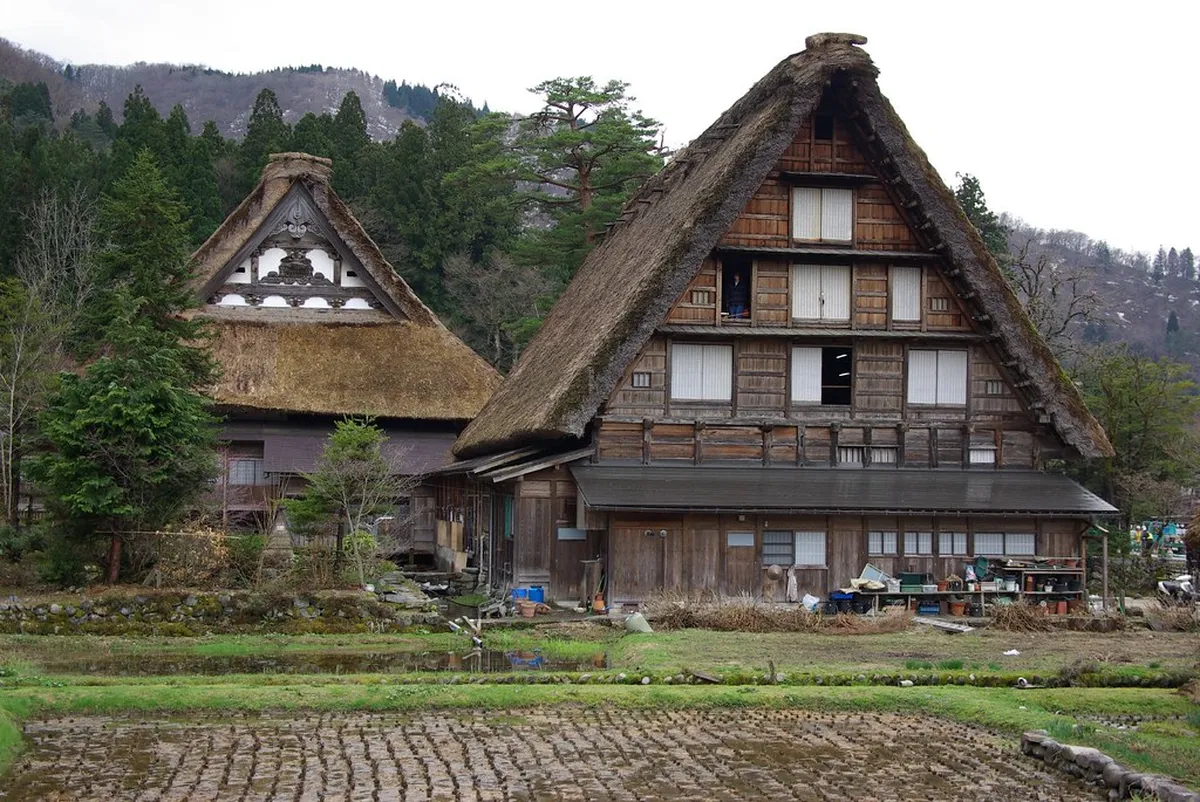
The term Gassho-zukuri translates to "constructed like hands in prayer." These roofs feature a steep 60-degree pitch designed specifically to shed the region's extreme snowfall, which can exceed two metres in a single winter. Local families built these homes without a single metal nail or screw — sturdy wooden beams and straw ropes hold the entire structure together. The design is both beautiful and fiercely practical.

Historically, the upper floors served a critical economic purpose. Farmers used the large attic spaces for silkworm cultivation during winter months. The heat rising from the first-floor hearth kept the silkworms warm and productive. This clever use of vertical space allowed entire communities to remain self-sufficient through harsh Alpine winters and is one of the main reasons these villages earned UNESCO listing as examples of human ingenuity in harmony with a demanding environment.

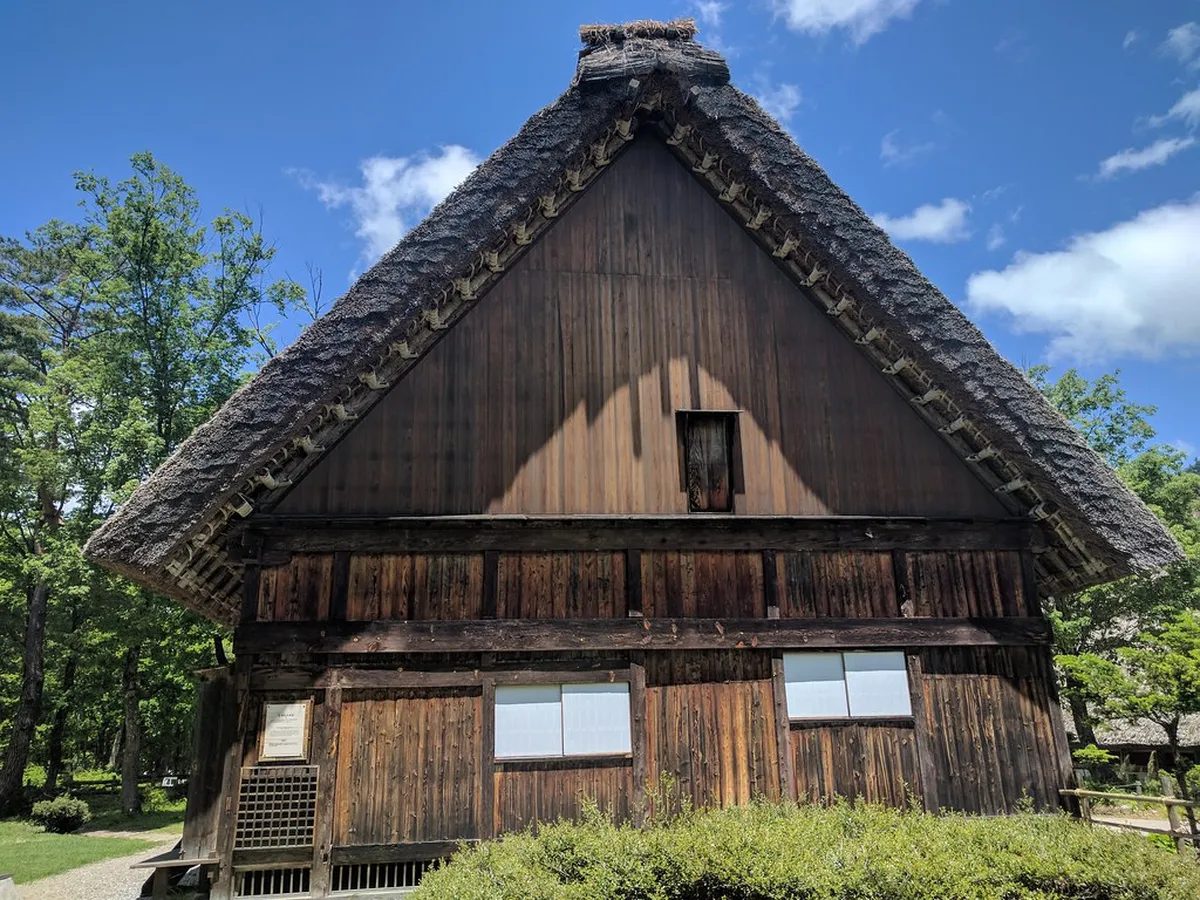
Preserving the thatch requires a massive collective effort every few decades. Entire villages gather to replace the thick roofing in a tradition called Yui — mutual help that remains a living part of local identity. You can see historical tools and learn the full story at the Shirakawa-go Gassho-Zukuri Minka-en open-air museum, which has relocated and preserved a dozen farmhouses outside the main village.

How Do You Get to Shirakawa-go?

Sponsored

The easiest approach for most visitors is the direct Nohi Bus from Takayama. Buses depart from the Nohi Bus Center in front of Takayama Station and reach Ogimachi in roughly 50 minutes. The one-way fare is around 2,600 JPY as of 2026; a round-trip ticket saves a small amount. Book in advance during autumn foliage season and on winter light-up weekends — buses sell out. Direct services also run from Kanazawa (about 75 minutes) and from Nagoya (about 2.5 hours via highway bus).

Arriving by train requires a connection. From Tokyo the fastest route is the Hokuriku Shinkansen to Toyama (about 2 hours), then the JR Limited Express Hida to Takayama (about 1.5 hours), then the Nohi Bus. The Tokaido Shinkansen to Nagoya followed by the Limited Express Hida is a slightly longer alternative. From Osaka, take the Tokaido Shinkansen to Nagoya, then the Limited Express Hida. There is no direct train to Shirakawa-go itself — the final leg is always by bus.

RouteTravel timeOne-way fare (approx.)Notes
Nohi Bus from Takayama~50 min¥2,600Most popular; book ahead in peak season
Nohi Bus from Kanazawa~75 min~¥1,850Direct highway service
Highway bus from Nagoya~2.5 hrs~¥3,800Longest option; useful from central Japan
By car (from Takayama)~40 minToll + parking ~¥1,000Snow tyres/chains required Dec–Mar

Driving offers the most flexibility, particularly if you want to combine the trip with Gokayama's smaller villages. Parking is available at the Seseragi Park lot just across the Deai Bridge. Budget around 1,000 JPY for the day. Winter driving requires snow tyres or chains — these are not optional in this region. During the scheduled light-up events, private cars must pre-book a parking reservation or they will be turned away at the entrance road.

What to See in Ogimachi Village: Must-See Attractions

Visitors walking through the historic Ogimachi village of Shirakawa-go past traditional thatched gassho-zukuri homes in Japan
Photo: Valosha via Flickr (CC)

The Wada House is the largest and most historically significant farmhouse in Ogimachi, designated a National Important Cultural Property. During the Edo Period the Wada family served as village head and traded silk and gunpowder. The second and third floors are open to the public from 09:00 to 17:00 daily. Entry costs 300 JPY for adults and 150 JPY for children, and the surrounding garden provides some of the best close-up photography of the thatched roof in the village.

The Nagase House is the tallest gassho-zukuri farmhouse in Ogimachi, standing five full floors. All floors are accessible to visitors between 09:00 and 17:00 daily (admission 300 JPY adults, 150 JPY children). The Kanda House is fully open to the public as well, offering a rare chance to inspect all four floors of an intact working farmhouse layout.

Shirakawa Hachimangu Shrine sits at the southern edge of the village and is free to enter. Founded between 708 and 715, the shrine hosts the Doburoku Festival on 14 and 15 October each year — a harvest celebration at which visitors are ceremonially served doburoku, an unfiltered local sake. The shrine also draws anime fans because its architecture was directly modelled in the series Higurashi no Naku Koro ni. Crossing the Deai Bridge at the village entrance is mandatory for every visitor — the suspension bridge spans the clear Sho River and frames a wide-angle shot of the valley that has become one of Japan's most photographed rural scenes.

Best Things to Do in Shirakawa-go Beyond the Main Path

Sponsored

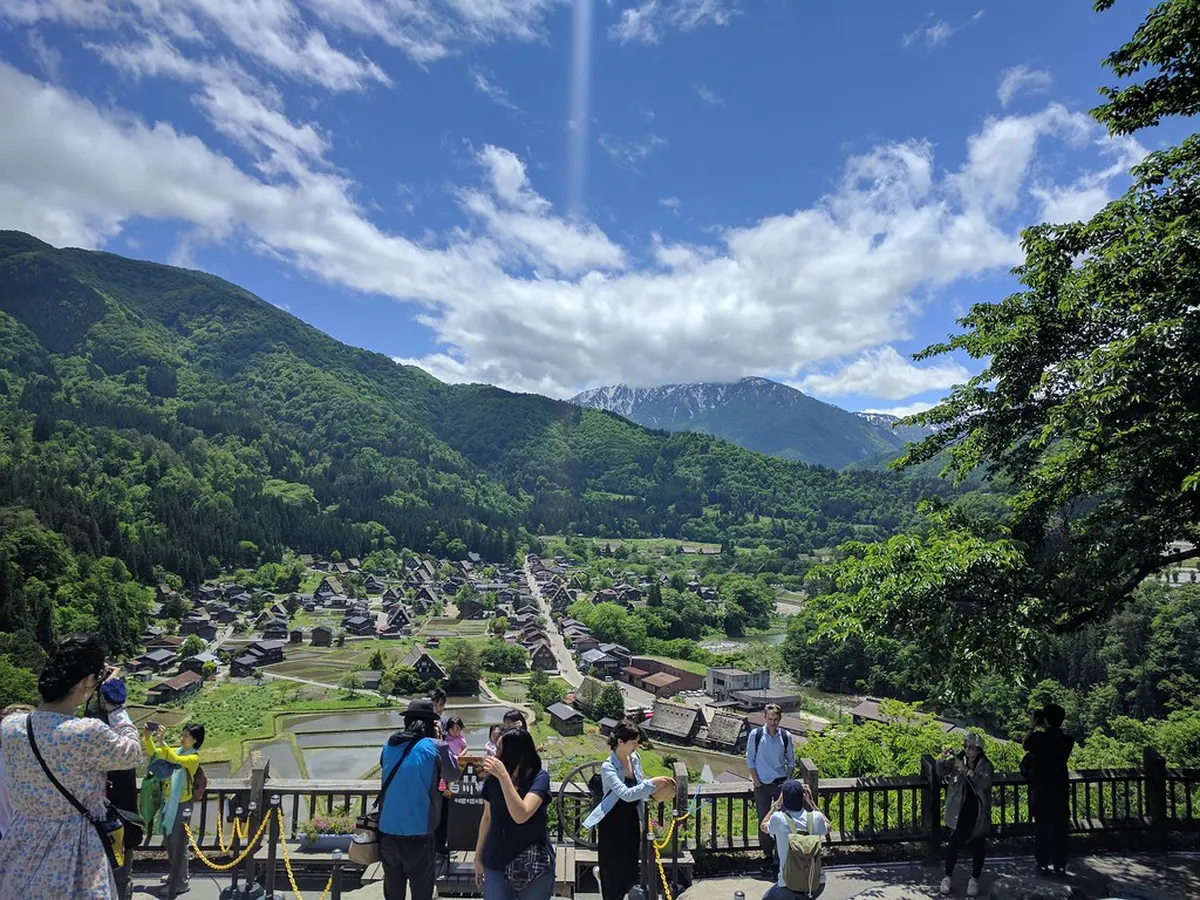
The Shiroyama Tenshukaku Observatory sits on the former site of Ogimachi Castle, roughly 20 minutes on foot from the village centre or a 10-minute ride on the circulating shuttle bus. From the top you get an unobstructed panoramic view over the entire thatched village with the Alps rising behind it — the classic postcard image of Shirakawa-go. For photography, the best light arrives in the early morning when mist rises from the rice paddies below. The path up can be icy and slippery in winter; wear appropriate footwear.

Myozen-ji Temple is the largest temple in the village and is often overlooked by visitors rushing to the main farmhouses. The main hall, kitchen, and bell tower are all built in the gassho-zukuri style, making this one of the few places where the architecture was applied to a religious complex rather than a private home. Designated an Important Cultural Property, the temple's attached museum covers local worship history. Opening hours run 08:30 to 17:00 from April to November and 09:00 to 16:00 from December to March; admission is 300 JPY for adults and 100 JPY for children.

The Gassho-Zukuri Minka-en open-air museum, located just west of the main village area, has relocated twelve traditional farmhouses from across the valley onto a single open site. It allows you to walk through interiors that have been fully cleared for public access and is noticeably less crowded than the village itself. The on-site collection includes tools, textiles, and silkworm equipment that bring the agricultural history of the valley to life.

Enjoying Local Food in Shirakawa-go

The main Shirakawa Kaido street is the best place to eat your way through the village. Stalls along the street serve Hida beef skewers and Hida beef croquettes — crumbed and fried beef mixed with mashed potato — which are the signature street foods of the region. Most stalls open from mid-morning and sell out before late afternoon, so aim to eat by 13:00 if you want a reliable selection.

Gohei mochi is the other essential local snack. Pounded rice on a skewer is coated with a salty-sweet sauce made from miso, soy sauce, and crushed walnuts, then grilled over charcoal. The texture is chewy and the flavour is deeply savoury — exactly the kind of simple, warming food that suits a mountain village. Pick one up from any of the farmhouse stalls along the main street and eat it on the spot.

For a sit-down meal, many farmhouses operate small restaurants that serve set menus built around Hida beef, mountain vegetables, and locally foraged ingredients. Overnight guests at minshuku have dinner and breakfast included in their room rate, and these meals — eaten around an irori hearth — are often the highlight of a stay. Doburoku sake, the unfiltered rice wine associated with the Hachimangu Shrine festival, is occasionally available at village shops as a bottled souvenir.

Ogimachi vs Gokayama: Which Village to Choose?

Ogimachi is by far the most accessible and the most visited of the three UNESCO villages. It has the largest number of gassho-zukuri houses, the most restaurants and shops, and the most frequent bus connections. If you have one day and want to see the full range of what this architectural tradition looks like at scale, Ogimachi is the right choice.

Suganuma and Ainokura (the two Gokayama villages) offer a quieter alternative. Suganuma has only nine farmhouses and can be covered in an hour. Ainokura is larger — around twenty farmhouses — and its remote position means large tour groups rarely appear. Both are essentially free of the 11:00–15:00 bus-tour rush that peaks in Ogimachi. If you have a car and want genuine isolation, a half-day loop covering Ainokura in the morning and Ogimachi in the late afternoon gives you the best of both. Admission to both Gokayama villages is free; parking costs around 500 JPY.

The honest trade-off is infrastructure. Gokayama has almost no English signage and the bus connections are infrequent. Ogimachi has bilingual signs, a tourist information centre, and buses running every hour or so from Takayama. First-time visitors without a car are better served by Ogimachi; return visitors and photographers seeking empty lanes should head to Ainokura.

Seasonal Guide: When to Visit Shirakawa-go

Snow-covered gassho-zukuri farmhouses in Shirakawa-go blanketed by winter snowfall in Japan
Photo: Trey Ratcliff via Flickr (CC)

January and February deliver the iconic snow-covered scene: thick white thatch, frozen paddies, and mountain silence. The Winter Light-up events — held on selected Saturday evenings between January and mid-February — illuminate the farmhouses after dark and attract enormous crowds. Attendance is managed by lottery for parking reservations. If you miss the lottery, a day visit on a weekday in early January still offers deep snow without the evening crowds. Check the official Shirakawa-go website for the exact 2026 light-up dates.

Spring (late April through May) brings lush green rice paddies and cherry blossoms, with far fewer visitors than winter or autumn. The walking weather is mild and the landscape turns bright against the thatched roofs. Summer is the least visited season — useful if you want empty lanes and do not need snow — though temperatures in the valley can be warm in July and August. Autumn (mid-October through November) rivals winter for popularity; the mountain slopes surrounding the valley turn vivid red and gold, and the Doburoku Festival at Hachimangu Shrine (14–15 October) adds a cultural event to the visit.

Whatever month you choose, the worst time of day is between 11:00 and 15:00 when the bulk of day-trip buses arrive simultaneously. Arriving before 09:00 or staying past 16:00 transforms the experience. Overnight guests in particular get the village entirely to themselves from roughly 17:00 onwards.

Good to know

Arriving before 09:00 or staying past 16:00 dramatically reduces crowds — the 11:00–15:00 window is when the bulk of day-trip buses arrive simultaneously. Overnight guests at a minshuku get the village largely to themselves after 17:00.

Where Should You Stay When Visiting Shirakawa-go?

Staying overnight in a minshuku is the best way to experience local life. These family-run inns provide traditional futon bedding and home-cooked seasonal meals centred on Hida beef and locally foraged mountain vegetables. All minshuku in Ogimachi include both dinner and breakfast in the room rate — no restaurants operate in the village after the day-trippers leave, so self-catering is not an option.

Booking a room can be challenging. Many owners have limited English and some properties still only accept reservations by phone or through Japanese-only booking portals. The Shirakawa-go Official Website has an English-language reservation system that covers most village accommodation; this is the most reliable starting point for international visitors. Book at least three to four months in advance for peak dates — winter light-up weekends and autumn leaf season fill months ahead.

If the village is fully booked, consider basing yourself in Takayama, which has a wide range of hotels and ryokan at every price point. The 50-minute bus makes a day trip entirely practical, and Takayama's own historic streets offer evening dining and sake breweries that Ogimachi cannot match. Some visitors also find that staying in Kanazawa and taking the direct bus gives a useful geographic split if their itinerary runs east–west.

Essential Shirakawa-go Travel Tips

Ogimachi is a living village where around 700 residents still reside. Stay on clearly marked public paths at all times. Do not peer into private windows or enter gardens without invitation. Many of the farmhouses you walk past are private homes, not open attractions — even if they look photogenic from the street. Treating the village as a real community rather than a theme park ensures it stays open for future visitors.

The village has very few public rubbish bins to preserve its visual character. Carry a small bag to collect your own waste and dispose of it at your accommodation or on the bus. This rule is enforced more strictly in recent years following UNESCO site management guidelines.

  • Arrive before 09:00 or stay after 16:00 to avoid the peak bus-tour rush (11:00–15:00).
  • Buy Nohi Bus tickets in advance through the Nohi Bus website or at Takayama Station; the bus sells out on busy weekends.
  • Wear non-slip footwear in winter — the path to the Shiroyama Observatory becomes very icy.
  • The shuttle bus within the village (about 100 JPY per ride) saves 20 minutes of uphill walking to the observatory.
  • Winter Light-up parking must be reserved in advance; latecomers are turned away at the access road regardless of available space.
Heads up

For the Winter Light-up events (selected Saturday evenings January through mid-February), parking is managed by a lottery reservation system — latecomers are turned away at the access road. Check the official Shirakawa-go site for exact 2026 light-up dates and lottery deadlines well in advance.

  • Entry to the village itself is free; budget 300–400 JPY per farmhouse interior you wish to enter.

Visiting Ogimachi is a highlight of any trip through central Japan. Whether you come for the snow-covered light-up in January, the autumn colours of October, or simply the quiet charm of a preserved mountain village on an ordinary weekday, Shirakawa-go delivers. Plan your transport early, respect the residents, and give yourself at least a full morning — ideally an overnight stay — to see past the postcard and into what daily life in the Japanese Alps actually looks like. For a seamless itinerary, pair this visit with the historic districts of Takayama Old Town, just 50 minutes away by bus.

Frequently Asked Questions

How much time do you need in Shirakawa-go?

Most visitors find that 3 to 4 hours is sufficient to see the main village highlights. If you plan to hike to the observatory and visit multiple houses, allow for a full day. Overnight stays are recommended for those seeking a deeper cultural connection to the region.

Is Shirakawa-go worth a day trip from Takayama?

Yes, it is highly recommended as a day trip. The bus ride from Takayama is short and very scenic. You can easily see the Wada House and the main viewpoint before returning to the city for dinner.

What is the best month to visit Shirakawa-go?

January and February offer the iconic snow-covered landscapes that many travelers desire. However, May provides lush green rice paddies and pleasant walking weather. October is also popular for the vibrant autumn colors that transform the surrounding mountain slopes.

For more Takayama trip planning, see our Takayama itinerary, things to do in Takayama, Shirakawa-go day trip from Takayama.

Official sources: For the latest details, see the official Shirakawa-go site and Wikipedia.