The Higashiyama Walking Course is a peaceful trail through the historic temple district on the eastern edge of Takayama. The route winds past more than a dozen temples, old cemeteries, and forested hillsides before climbing up to Shiroyama Park on the ruins of the old castle. Most visitors spend two to three hours here and leave having seen a side of the city that the busy old town simply cannot offer. It is one of the most rewarding free activities in all of Gifu Prefecture in 2026.
One practical note before you set out: different sources quote the course length as either 3.5 km or 5.5 km. The shorter figure applies to the temple district section alone; the longer figure includes the full Shiroyama Park loop, which adds significant uphill walking. Plan your time accordingly, and download the official trail map from the JNTO PDF before you go so you can decide which sections to include.
Must-See Higashiyama Attractions
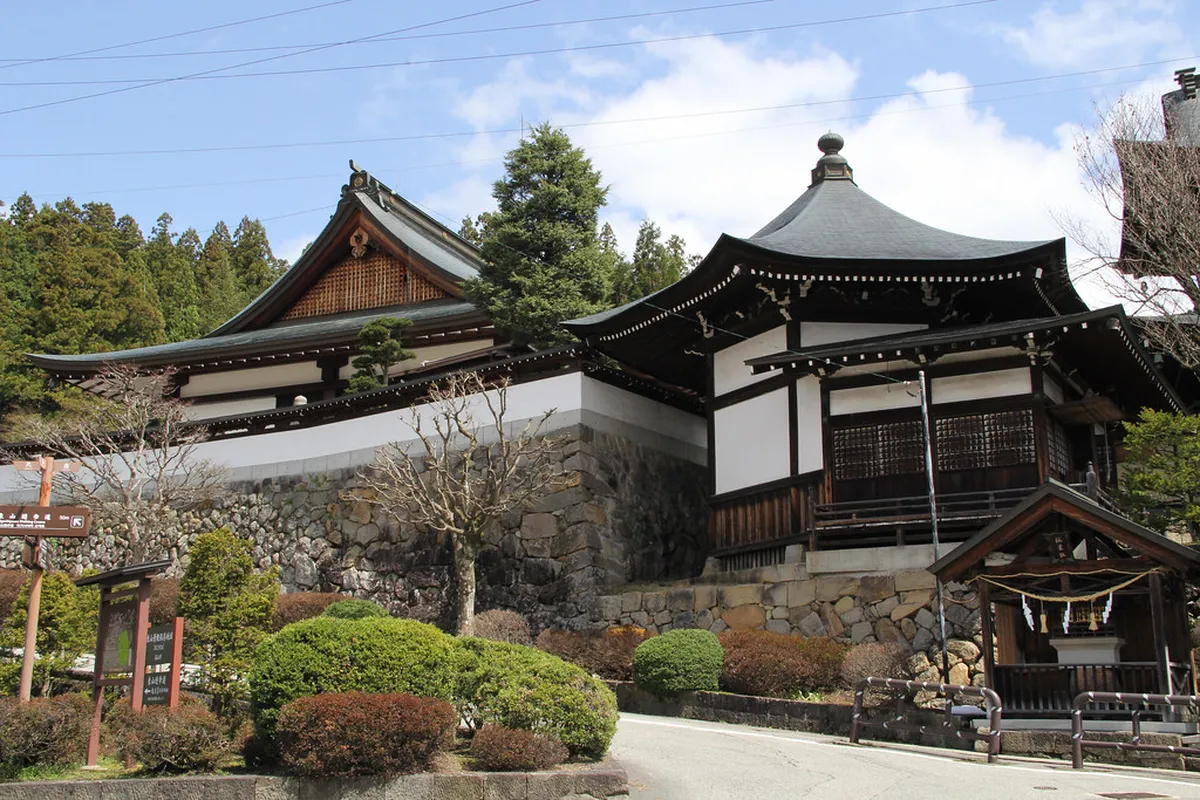
Kyusho-ji Temple is often the first major stop walkers reach, and it sets the tone for the entire course. The wooden gate and stone lantern paths reflect the precision craftsmanship of Hida carpenters, who were famous across feudal Japan for their work on shrines and castles. Entry to the grounds is free and the gardens are quietly maintained year-round. Plan five to ten minutes here before continuing east.
Daizun-ji Temple is another anchor point midway through the course. It holds the graves of the parents of Tesshu Yamaoka, one of the last great samurai of the Meiji era. The connection to that historical figure draws martial arts practitioners and history enthusiasts who make this temple a deliberate pilgrimage stop. Nearby, Zenko-ji Temple houses vivid Buddhist scroll paintings depicting the afterlife — a genuinely rare artwork that most visitors are not expecting.
Further along, Daioji Temple deserves attention because of its oldest belfry in the Hida region, built in 1689. The main hall was rebuilt in 1807 by a skilled local carpenter after a typhoon collapse. Look at the joinery closely — it was assembled without metal nails in the traditional Hida style. This level of structural detail separates it from the dozen other temple stops on the route.
Temples and Buddhist Culture on the Course
What makes Higashiyama distinctive is the sheer concentration of religious sites from different Buddhist sects along a single 5.5-kilometer path. Kanamori Nagachika, the first lord of the Takayama domain, relocated many temples to this eastern district in the late 16th century to defend the castle town from both physical and spiritual threats. That deliberate urban planning is why you encounter so many different architectural styles within such a short walking distance.
Zenko-ji Temple contains some of the most striking Buddhist artwork on the course: painted scrolls illustrating the realms souls may inhabit after death. The imagery is detailed, vivid, and frankly unusual — this kind of open display of afterlife doctrine was used historically to educate a largely illiterate public. Most visitors pause longer here than at any other temple on the route. The atmosphere inside is quiet and the paintings are genuinely old.
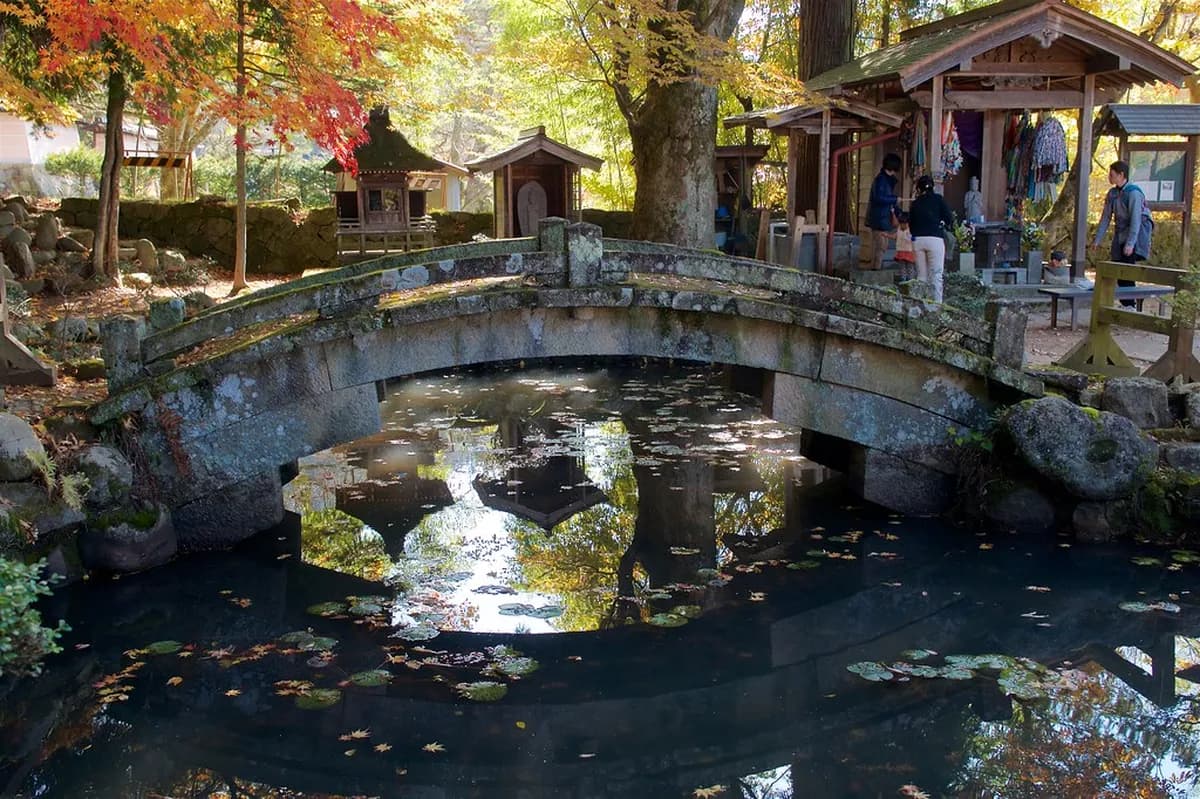
The cemeteries woven between the temples add another layer of texture. Stone markers, Jizo statues, and moss-covered lanterns line narrow paths through the groves. These areas are actively maintained by local families and feel lived-in rather than purely touristic. Walking through them gives a more honest picture of how Buddhist practice continues in a small Japanese mountain city today. Maintain a respectful pace and avoid moving any stones or offerings.
Tesshu Yamaoka and the Samurai Connection
The graves of the parents of Tesshu Yamaoka at Daizun-ji Temple are a draw for anyone interested in Japanese martial history. Tesshu was a legendary swordsman, calligrapher, and Zen Buddhist who played a critical role in the bloodless surrender of Edo Castle during the Meiji Restoration of 1868. His personal philosophy — that the sword and the brush were one practice — made him one of the most admired figures of the transitional era between feudal Japan and the modern state.
The gravesite is modest by design. Simple stone markers sit under tall trees in a corner of the cemetery, reflecting the Zen humility Tesshu practiced throughout his life. This is an active religious site, so approach it quietly and do not rearrange any offerings or decorations. For those who study kendo or Japanese calligraphy, this is one of the few places in Japan where you can pay direct respects to his family lineage in a natural, unhurried setting.
Parks, Gardens, and Shiroyama Park
Shiroyama Park occupies the hill where Takayama Castle once stood. The castle itself was demolished in 1695 on orders from the Tokugawa shogunate — the stone foundations and earthworks remain, giving the park an open, historic feel. Around 1,000 cherry trees were planted across the hillside in the decades following the castle's removal, making it the city's most popular hanami (blossom viewing) spot each spring.
The park sits at the highest point of the walking course, so the climb from the temple district requires some effort. The reward is a clear view of the Japanese Alps on days when the mountain air is crisp. The park paths are wider and less shaded than the temple section below, so it feels like a completely different environment despite being a continuous trail. If you are walking with children or older travelers, this is the section to plan rest stops for — benches are placed at the main viewpoints.
The temple grounds on the lower route also have small gardens with seasonal moss, stone basins, and shaped shrubs. These spaces are designed for quiet reflection rather than active exploration, and they contrast nicely with the open park above. Together, the gardens and the park provide a full range of outdoor experiences within a single morning walk.
Autumn Colors and Seasonal Timing
Late October through early November is the finest time to walk the Higashiyama course. The maples, ginkgos, and other deciduous trees along the trail turn red and gold, and Tenshoji Temple — which doubles as a working youth hostel — becomes one of the most photographed spots in Takayama during this period. The combination of vermilion foliage against the dark wood of the temple gate is the kind of scene that appears on regional tourism posters. Arriving before 09:00 means you walk through fallen leaves before any tour groups arrive.
Spring is the second peak season. Cherry blossoms in Shiroyama Park typically reach full bloom in mid-April, though this shifts slightly year to year. Check the Hida Takayama Official English website for current bloom forecasts and any special events. The snow-capped Alps are often still visible in the background during April, providing a contrast of seasons that is hard to find anywhere else in Japan.
Winter walking is a niche option but genuinely rewarding for experienced hikers. Fresh snow settles overnight and the trail is entirely empty early in the morning. The temples take on an austere, silent quality that feels nothing like the warmer months. Dress in layers, wear waterproof boots, and plan to cover only the temple section — the Shiroyama Park climb becomes slippery in icy conditions and is best skipped unless you have traction devices.
Family-Friendly and Budget-Friendly Options
The Higashiyama Walking Course is entirely free to access and most temple grounds charge nothing for entry to their outer areas. This makes it one of the highest-value activities in Takayama for families traveling on a budget. Combine it with a visit to the Miyagawa Morning Market for a full half-day out that costs nothing beyond food purchases.
Children can manage the temple district section without difficulty. The flat stone paths and wide gravel walkways are easier for young children than Takayama's narrow old town streets. The Shiroyama Park section involves steeper uphill paths that may need some encouragement for smaller kids, but the open summit area is worth the effort — there is space to run around and the views hold everyone's attention. Bring snacks and water because there are no shops once you enter the temple zone proper.
For travelers who prefer a guided experience, the Happy Plus tour desk runs a 70-minute guided walk through the course at 9,000 yen per person. The guide covers the Buddhist and samurai history in depth and identifies specific artworks inside temples that self-guided walkers often miss. Private tours are available on request. Contact the Happy Plus Desk in central Takayama to check availability and book.
Bear Safety and the Bear Bell
Bear warning signs are posted at the Shiroyama Park entry points for good reason — Japanese black bears have been sighted here. Attach a small bear bell (sold in Takayama's old town for a few hundred yen) before entering the park section, and avoid the uphill climb in icy winter conditions without traction devices.
Bear warning signs appear clearly at the entry points to Shiroyama Park, and they are not decorative. Japanese black bears have been sighted in the park on a handful of occasions. The risk is low, but the park service takes it seriously enough to post permanent warnings. The recommended precaution is a small bear bell attached to your bag or walking pole — the constant tinkling noise announces your presence to wildlife in the dense brush and prevents surprise encounters.
Bear bells are sold at souvenir shops throughout Takayama's old town district for a few hundred yen. They also double as an audio souvenir of the trip. Hikers who enter the Shiroyama Park section in early morning or late afternoon — when bear activity is highest — should be especially mindful of this advice. Making general noise by talking or clapping also works, but a dedicated bell frees your hands and maintains constant sound.
Separately, you may also encounter Japanese serow in the park. These are stocky, goat-antelope animals with thick fur coats that can be mistaken at first glance for bears. Serow are not dangerous and will typically freeze and then retreat when they notice a human. If you see one, observe from a distance and avoid approaching. They are a protected species and a genuine wildlife highlight of the walk.
Museums, Art, and Culture Near the Course
The temple district itself functions as an open-air museum of traditional Japanese religious architecture. Thatched roofs, dark timber frames, and unpainted wood surfaces are characteristic of the Hida style, shaped by centuries of heavy snow and a cold alpine climate. You do not need a guidebook to appreciate the craftsmanship — just look at how the rooflines meet the main hall structures and how drainage was built into the stone pathways beneath your feet.
For a complementary indoor experience, the Hida Takayama Museum of Art is a short distance from the main trail. It holds European art nouveau glass and furniture alongside Japanese collection pieces, providing an unexpected contrast after a morning of Buddhist temples. Combining the two activities in a single day gives a layered view of how Takayama has absorbed and preserved both local and international culture across different periods.
How to Plan a Smooth Higashiyama Day
Start the walk early. By 08:00 the temple district is almost empty, the light is good for photography, and the air is noticeably cooler than midday. Most organized tour groups arrive mid-morning, so an early start puts you ahead of the busiest period. The course signage uses multiple languages and is reliable, but having the PDF map on your phone makes it faster to identify individual temples by name.
Start the walk before 08:00 to have the temple district to yourself. Tour groups from organized tours typically arrive mid-morning. The course is free to access and open 24 hours — only individual temple interiors have their own daylight-hours schedules.
The conventional direction is to begin near Sakurayama Hachimangu Shrine in the north and walk south through the temple district, then climb east into Shiroyama Park before descending back toward the city center. This sequence means your most demanding uphill section comes in the middle when your energy is still good, and you finish with a gentle downhill back to restaurants and cafes. Allow a minimum of two hours for the temple section alone; add another 45 to 60 minutes if you plan to do the full Shiroyama Park loop.
Wear shoes with grip — several temple paths use irregular stone paving and the forest sections of the park become muddy after rain. There are no lockers or bag-drop facilities along the route, so pack light. A small towel, water bottle, and cash for any optional temple donations are all you need. Tenshoji Temple at the southern end of the course offers basic lodging as a youth hostel for budget travelers who want to base themselves within walking distance of the trail for multiple mornings.
Frequently Asked Questions
Why bring a bell on the Higashiyama walking course?
Travelers often carry small bells to alert local bears of their presence while walking through the forested sections of Shiroyama Park. While sightings are rare, the sound helps prevent surprising the animals in the dense brush. You can find more safety tips for the area at Takayama travel centers.
How much time should you plan for the Higashiyama walking course?
Most visitors should set aside approximately two to three hours to complete the entire 3.5-kilometer loop at a comfortable pace. This allows enough time to explore several temple grounds and enjoy the viewpoints in Shiroyama Park. Faster walkers can finish in 90 minutes if they skip the detailed temple interiors.
Is the Higashiyama walking course suitable for first-time visitors?
Yes, it is an excellent choice for first-time visitors who want to see the cultural side of Takayama beyond the main shopping streets. The trail is well-marked and provides a great overview of the city's history and religious architecture. It is a low-stress activity that offers high rewards for minimal effort.
The Higashiyama Walking Course is the most accessible way to understand Takayama's historical depth beyond the famous old town. The temples are free, the trail is well-marked, and the combination of forested paths, castle ruins, and Buddhist artwork is genuinely varied across its 5.5 kilometers. Whether you come in spring for the cherry blossoms, autumn for the foliage, or winter for the solitude, this is a walk that rewards anyone who takes it at a measured pace. Pack water, attach a bear bell for Shiroyama Park, and plan your start for early morning to have the trail largely to yourself.
For more Takayama trip planning, see our Takayama itinerary, things to do in Takayama, 3-day Takayama itinerary.
Official sources: For the latest details, see the official tourism site and Wikipedia.