Heian Shrine Kyoto: A Complete Guide to Heian Jingu & Gardens
Discover Heian Shrine in Kyoto. Our guide covers the giant torii gate, the Shinen Garden's cherry blossoms, Jidai Matsuri tips, and how to reach the Okazaki district.
On this page
Last updated October 2026: this guide to Heian Shrine Kyoto covers access, timing, the free courtyard and the paid garden. Heian Jingu dates to 1895, so you are visiting a 19th-century imperial tribute, not an ancient relic. Plan a 30-minute stop for the courtyard or 60 to 90 minutes if you add the garden.
Heian Shrine Kyoto: What Makes Heian Jingu Different
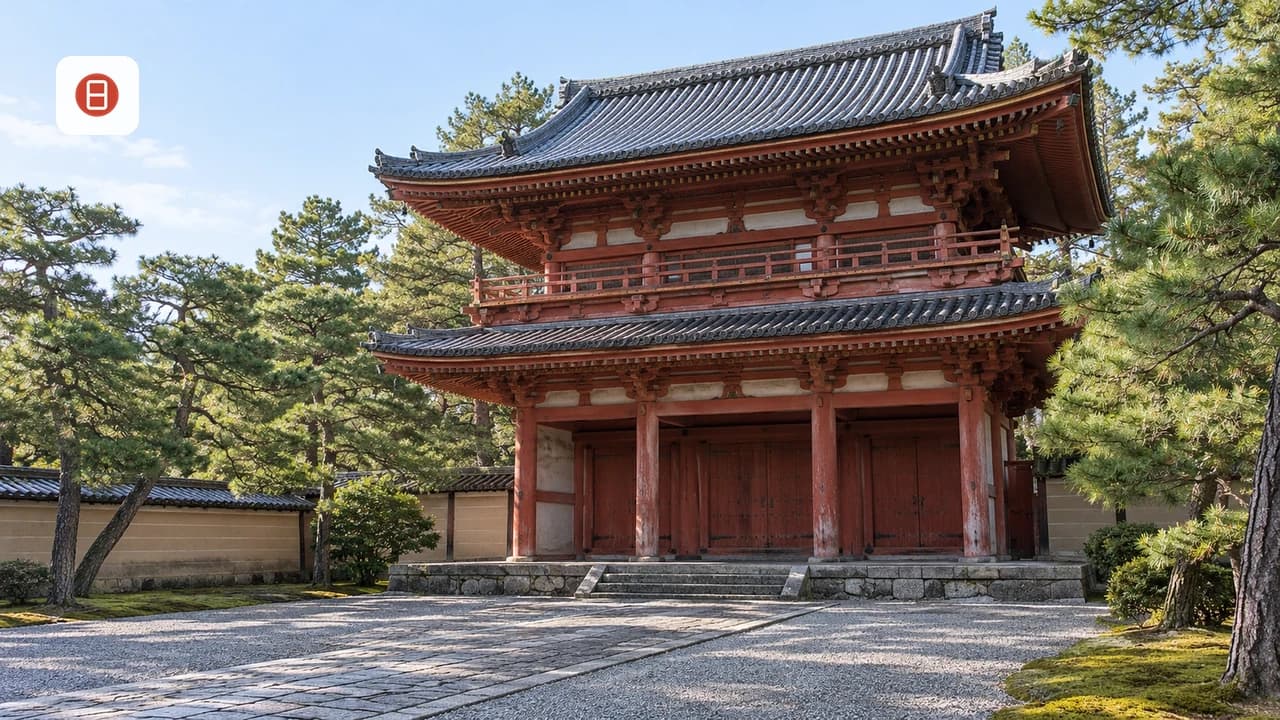
Heian Jingu was built in 1895 for the 1100th anniversary of Kyoto's founding as Heian-kyo. It honors Emperor Kanmu and, later, Emperor Komei. That history matters because it explains the look. Buildings here are bold vermilion with dark green roofs, set around a wide courtyard of white gravel.
Compare that with the tight lanes and wooden frontages of Gion. Heian Jingu feels open, formal and almost stage-like. Its main halls follow the layout of the original Heian court. They were rebuilt at about 5/8 scale, so you walk through a compact version of imperial architecture.
Entry to the shrine precinct is free. You pay only for the garden behind the halls. Treat the two as separate visits that happen to share a gate. For an overview of what else sits near this shrine, see our wider Kyoto sightseeing plan. Visitor details and seasonal notices are on the official Heian Jingu English page.
- Built: 1895, for the 1100th anniversary of Heian-kyo
- Enshrined: Emperor Kanmu and Emperor Komei
- Scale: main halls rebuilt at roughly 5/8 of the original palace
- Cost: free precinct, paid Shinen Garden
Getting to Heian Shrine from Kyoto Station
You have two sensible routes from Kyoto Station. Each suits a different kind of day.
City bus takes about 20 minutes, depending on traffic. It is direct and scenic. Get off at the Kyoto Kaikan Museum of Art stop, which is roughly a 5-minute walk from the shrine. Buses can crawl during cherry blossom season and festival days, so the 20-minute estimate stretches then.
Subway is the steadier option. Ride the Tozai Line to Higashiyama Station and walk about 10 minutes. You reach the shrine through the Okazaki district, and the giant torii gate becomes your landmark. Check current fares and transfer details before you travel, since this guide does not list them.
If you are choosing where to sleep, Higashiyama and Okazaki sit close together. Our guide on where to base yourself in Kyoto compares the options. For lodging picks, see Kyoto hotels worth booking.
| Route | Journey | Final walk | Best for |
|---|---|---|---|
| City bus from Kyoto Station | About 20 minutes, traffic dependent | About 5 minutes from Kyoto Kaikan Museum of Art stop | Direct ride with luggage-free day plans |
| Tozai Line to Higashiyama Station | Varies by transfer | About 10 minutes | Reliable timing in peak season |
Planning Your Visit: Time Needed and Best Season
Allow about 30 minutes for the courtyard, halls and gate photos. Add the Shinen Garden and you need 60 to 90 minutes. Photographers who want to sit by the pond can stretch that to two hours.
Arrive early for the best light. Morning gravel and vermilion pillars photograph cleanly before tour groups arrive. Garden viewing hours were listed as 8:30 a.m. to 5:30 p.m. in a recent public listing. Confirm current hours and any seasonal changes on the official site before you go.
Season shapes the garden more than the courtyard. Weeping cherry trees (benishidare) bloom here later than the trees along the Philosopher's Path. Mid-April is the window to aim for. Irises appear around the pond in early summer, and autumn brings foliage color. Our broader Japan itinerary planning page helps you fit these seasons into a longer trip.
Architecture Highlights: Torii, Otenmon and Daigokuden
Start outside the gate. The great torii stands about 24 meters (roughly 79 feet) high. It anchors the Okazaki museum district and works as a wayfinding marker from several streets. If you can see it, you are close.
Inside, Otenmon Gate opens onto the main courtyard. Daigokuden, the main hall, faces you across open gravel. This layout echoes the Heian court, but at reduced size. Stand at the center line and look at the hall's roof, then compare it with the open space around you. That ratio is the point of the design.
Two towers flank the courtyard: Soryuro, the Blue Dragon tower, and Byakkoro, the White Tiger tower. Both are worth a slow look, since they frame the hall from either side.
Some inner areas restrict photography. Follow posted signs and shrine staff directions. Do not assume the courtyard rules apply to the sanctum.
- Great torii: about 24 meters high, a landmark for Okazaki
- Otenmon Gate: main entry to the courtyard
- Daigokuden: the principal hall, rebuilt at about 5/8 scale
- Soryuro and Byakkoro: Blue Dragon and White Tiger towers
Shinen Garden: Is the ¥600 Entry Fee Worth It?
Yes, for most visitors. Public listings give adult garden admission at ¥600 and children at ¥300. Confirm current prices on the official site, since fees can change. The garden covers roughly 33,000 square meters, so ¥600 buys a lot of walking space.
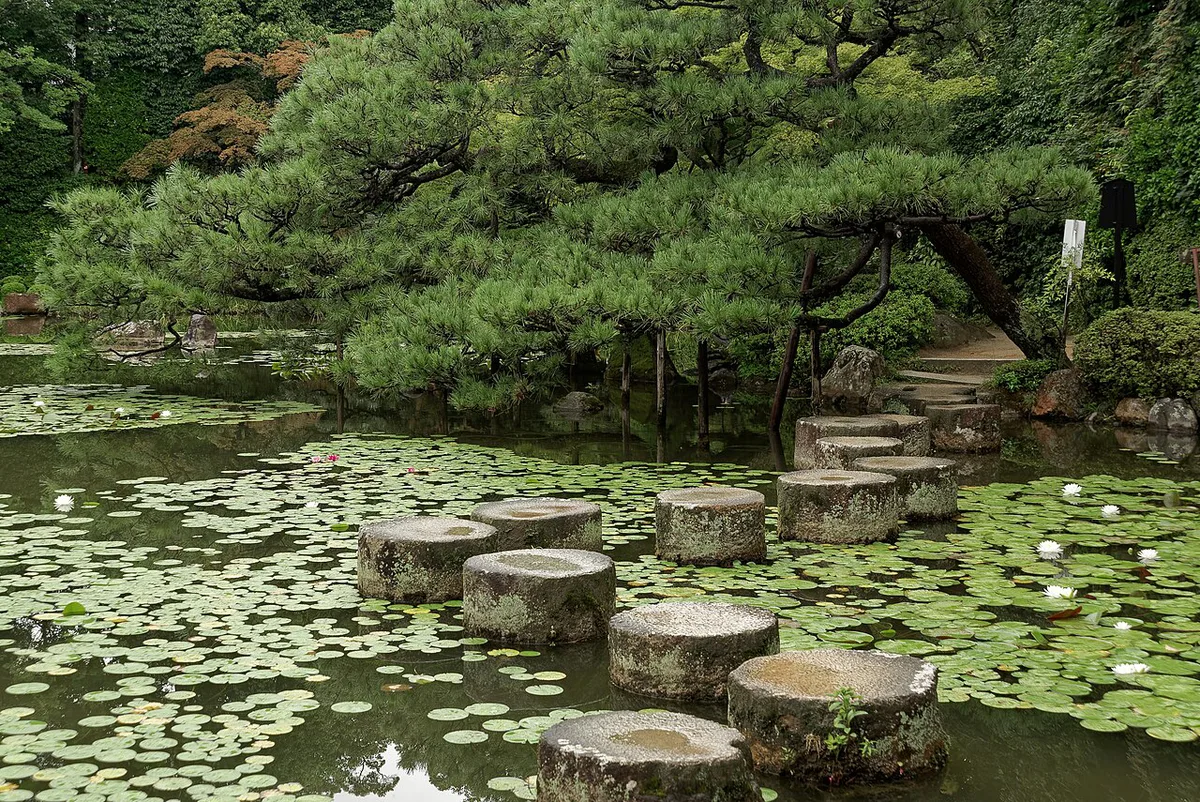
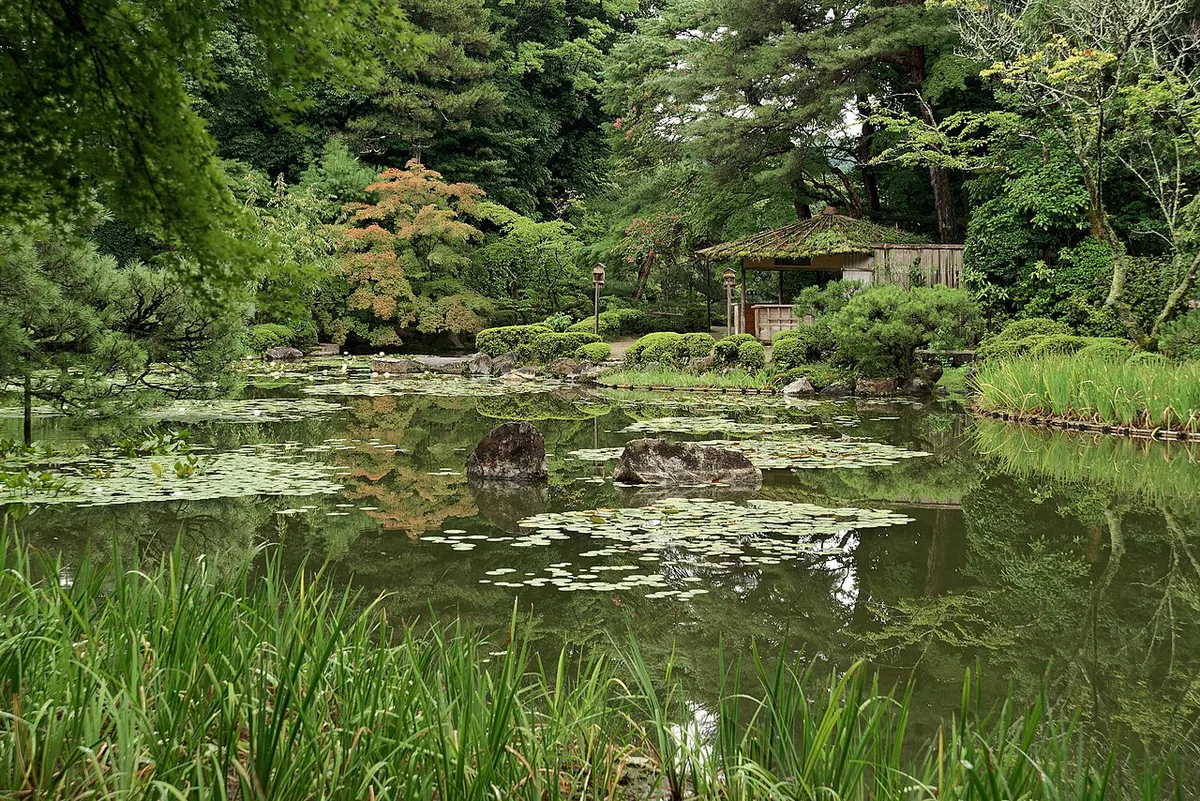
Ogawa Jihei VII designed it in the Meiji era. It has four sections: East, Middle, West and South. Water links them. Paths wind around Seiho-ike Pond, and the covered Taihei-kaku bridge crosses it. A good route runs east to south, ending near the pond.
This garden feels looser and more water-focused than a dry Zen garden. Ryoan-ji is about raked gravel and fixed sightlines. Heian's garden asks you to circulate and watch seasons change. If you prefer a still, symbolic space, see our guide to Daitoku-ji's Zen sub-temples. Daitoku-ji's own background is on the Rinzai head temple page.
Skip the garden only if you are short on time. Many visitors find it the highlight of the stop.
Jidai Matsuri and New Year at Heian Jingu
Jidai Matsuri, the Festival of the Ages, takes place every year on October 22. A costume parade presents different eras of Kyoto history. Heian Jingu is closely tied to the event. Plan to arrive early, choose a viewing spot where you can step back, and carry cash for small vendors.
On October 22 the festival crowds slow the city bus, so take the Tozai Line and walk about 10 minutes from Higashiyama Station.
October 22 is a fixed date, so book transport and lodging well ahead if you want to be in Kyoto for it. Check the shrine's official page for the current schedule and route details.
New Year is the other major moment. Hatsumode, the first shrine visit of the year, draws large crowds to Kyoto's best-known shrines, and Heian Jingu is among them. Expect queues and slow movement if you go. For a different shrine atmosphere with its own annual rhythm, compare it with Shimogamo Shrine. Its own visitor information page lists current events.
Pairing Heian Shrine with the Okazaki District
Okazaki rewards a half-day plan. Heian Jingu sits among museums, a zoo and a canal-side walk, so you can build a route without extra transit.
Nanzen-ji is about a 15-minute walk away, so a 60 to 90 minute garden visit still leaves time for a half-day Okazaki plan.
Nanzen-ji Temple is about a 15-minute walk away. It makes a natural second stop if you want temple architecture after the shrine. The Kyoto City KYOCERA Museum of Art is nearby for a gallery break. Kyoto Zoo is close too, and it suits families with children.
A simple sequence works well. Visit the courtyard first, then the garden, then walk to Nanzen-ji. Leave museum time for a rainy afternoon.
- Heian Jingu courtyard: about 30 minutes
- Shinen Garden: add 30 to 60 minutes
- Nanzen-ji Temple: about 15 minutes on foot from the shrine
- Kyoto City KYOCERA Museum of Art: flexible indoor stop
- Kyoto Zoo: good for families
Mistakes to Avoid and Local Tips
Do not assume the courtyard is all there is. The paid garden is the main reason to stay longer. Skipping it saves ¥600 but removes the pond, the covered bridge and the seasonal planting.
Do not buy a garden ticket at the courtyard and expect it to cover everything. Garden tickets are separate from shrine entry, which is free. Look for the garden entrance and ticket point instead.
Do not photograph where signs prohibit it. Respect the inner sanctum rules and speak softly in prayer areas.
Do not rely on the bus during cherry blossom season or on October 22. Use the subway and walk from Higashiyama Station. If you want a quieter evening after sightseeing, Kyoto ryokan options make a good contrast to the open shrine grounds.
Frequently Asked Questions
Is Heian Shrine free to enter?
Yes, the main shrine precinct is free. Garden admission is separate. Public listings give adult entry at ¥600 and children at ¥300, so confirm current prices on the official site.
How long should I spend at Heian Shrine?
Plan about 30 minutes for the courtyard and halls. Add the Shinen Garden and you need 60 to 90 minutes. Photographers may want closer to two hours.
How do I get to Heian Shrine from Kyoto Station?
Take a city bus for about 20 minutes to the Kyoto Kaikan Museum of Art stop. Or ride the Tozai Line to Higashiyama Station and walk about 10 minutes. Subway is more reliable in busy seasons.
When is the best time to see cherry blossoms at Heian Shrine?
Aim for mid-April. Weeping cherry trees in the Shinen Garden bloom later than those along the Philosopher's Path. Bloom timing shifts each year, so check local reports before you go.
When is Jidai Matsuri?
Jidai Matsuri takes place every year on October 22. It is a costume parade tied to Heian Jingu. Confirm the current schedule on the shrine's official page.
Free: The Kyoto Essentials guide
Top things to do, where to stay, a perfect day plan, getting around, and the best time to go — a Kyoto mini-guide you can take offline.
You might also like


Continue reading
More guides you'll find useful