Okochi Sanso Garden Kyoto: Tickets, Route and Views (2026)
Plan Okochi Sanso Garden in Kyoto: ¥1,000 entry with matcha, 9:00-5:00 hours, how to find the gate, the garden circuit, viewpoints and nearby stops.
On this page
Last updated October 2026: Okochi Sanso Garden Kyoto is a 20,000 m² hillside estate built by the film actor Okochi Denjiro. It sits just beyond the Sagano Bamboo Grove, where most day-trippers turn around. This guide covers the ¥1,000 ticket, the gate, the garden circuit, the viewpoints and how to fit it into an Arashiyama day.
Why Okochi Sanso Garden Kyoto Suits a Quiet Arashiyama Morning
Arashiyama is busy all year. The bamboo path fills with people, and the temple lanes fill behind it. Okochi Sanso Villa sits higher on the slope of Mt. Ogura, and that height is the point. You climb away from the crowd and get a wide view in return.
This was the private estate of Okochi Denjiro, an actor famous for samurai roles in period dramas. He spent nearly 30 years shaping it. The garden now covers about 20,000 m². It is a stroll garden, so you follow a winding path instead of looking at one fixed scene.
In our editorial assessment, it offers one of the best view-to-crowd ratios in western Kyoto. That is a judgment, not a measured figure. It is also a good fit if you want a slower stop inside a wider Kyoto attractions plan.
Tickets, Opening Hours and What ¥1,000 Covers
Adult admission is ¥1,000, and students in middle and elementary school pay ¥500. Competitor guides list the same prices, so confirm the current fee on the official visitor information page before you go. Fees at Kyoto sites change, and 2026 is no exception.
The ticket includes a cup of matcha and a sweet. That inclusion matters, because ¥1,000 is more than many Kyoto temples charge. You are paying for the garden, the views and a seated tea break in one price.
Hours run from 9:00 to 5:00, and published sources list no closing days. Check the official page for any seasonal notice.
- Adults: ¥1,000, matcha and a sweet included
- Middle and elementary school students: ¥500
- Hours: 9:00 to 5:00, no regular closing days listed
- Villa interior: closed to visitors, garden and teahouse access only
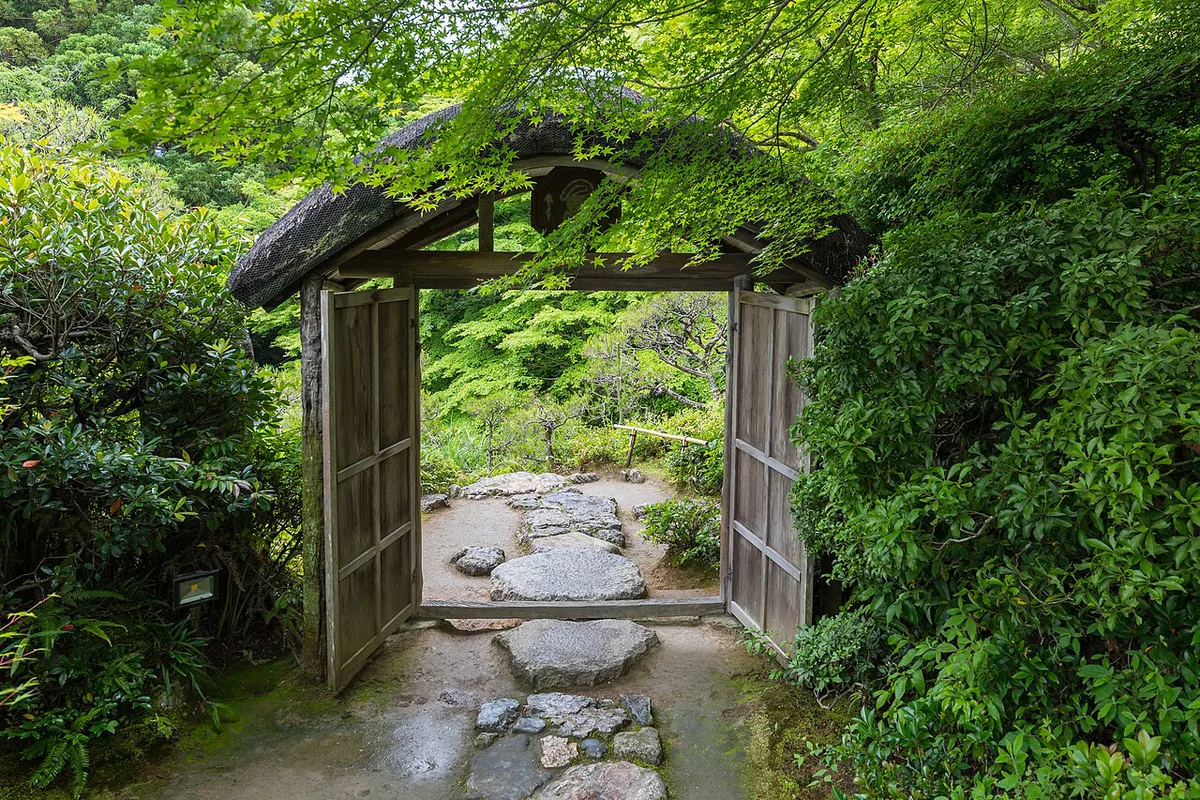
How to Reach Okochi Sanso and Find the Gate
Start at Arashiyama Station. From Kyoto Station, the JR Sagano Line takes about 15 minutes. From Kyoto Omiya Station, the Keifuku Arashiyama Line (Randen) takes about 20 minutes. Either way, the walk from Arashiyama Station to the villa is about 15 minutes.
The address is Tabuchiyama-cho, Saga Ogurayama, Ukyo Ward. The garden lies behind Tenryu-ji Temple, close to the Sagano Bamboo Grove.
Many visitors miss the entrance. Walk the bamboo path to its far end instead of turning back at the first photo stop. The ticket office and gate are there, and the uphill route begins just inside.
If you want an early start, consider basing yourself on the western side of town. Our guide to the 9 Best Areas to Stay in Kyoto Travel Guide (2026) compares your options. Our list of the 8 Best Areas and Hotels in Kyoto 2026 covers specific stays.
- Kyoto Station to Arashiyama Station: about 15 minutes by JR Sagano Line
- Kyoto Omiya Station to Arashiyama Station: about 20 minutes by Keifuku Arashiyama Line
- Arashiyama Station to the villa: about 15 minutes on foot
- Gate location: past the far end of the Sagano Bamboo Grove
Okochi Denjiro and the 30-Year Garden
Okochi Denjiro lived from 1898 to 1962. He was known for samurai roles in jidaigeki, the period dramas of the Showa era. Sources say he put half his movie earnings into this hillside, which had been waste land.
His work ran for nearly 30 years. The main buildings date to the 1930s and 1940s. After his death in 1962, his family opened the property to the public and still tends the grounds.
Four buildings have been Tangible Cultural Properties since 2003. Spotting them gives the walk a simple checklist.
- Daijokaku: the main house, which mixes shinden-zukuri, shoin-zukuri and sukiya-zukuri styles, and is closed to visitors
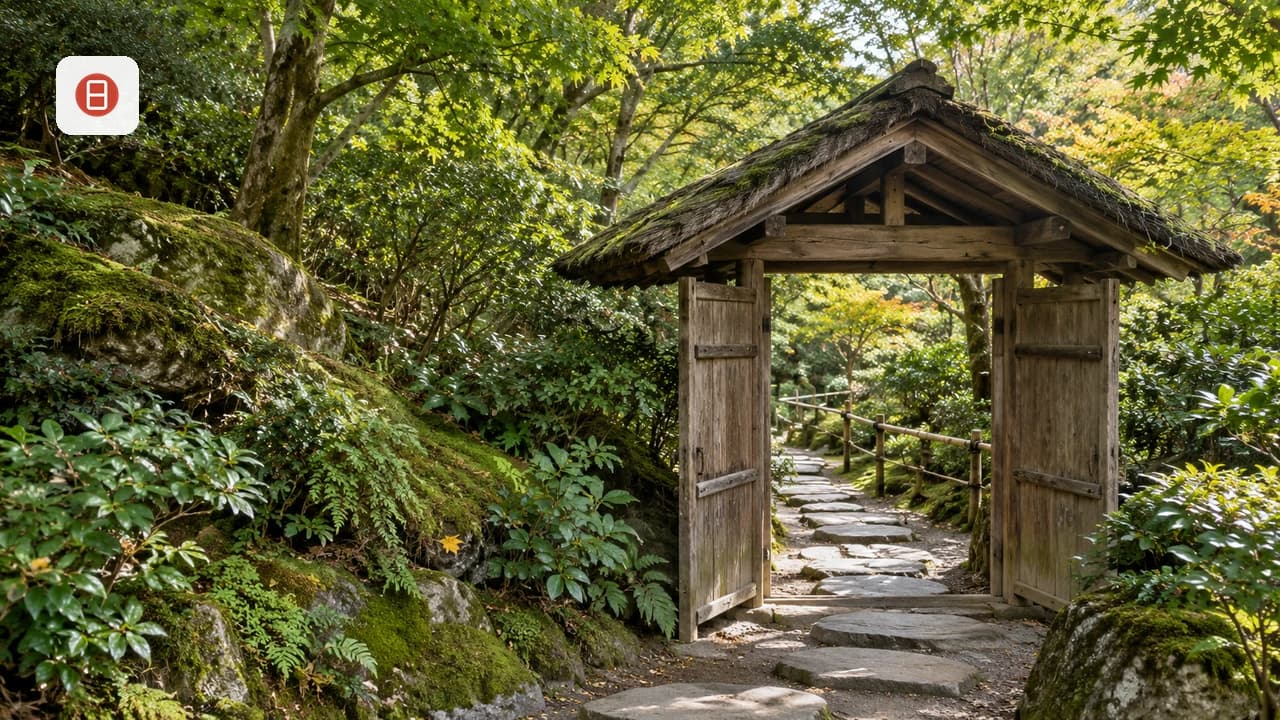
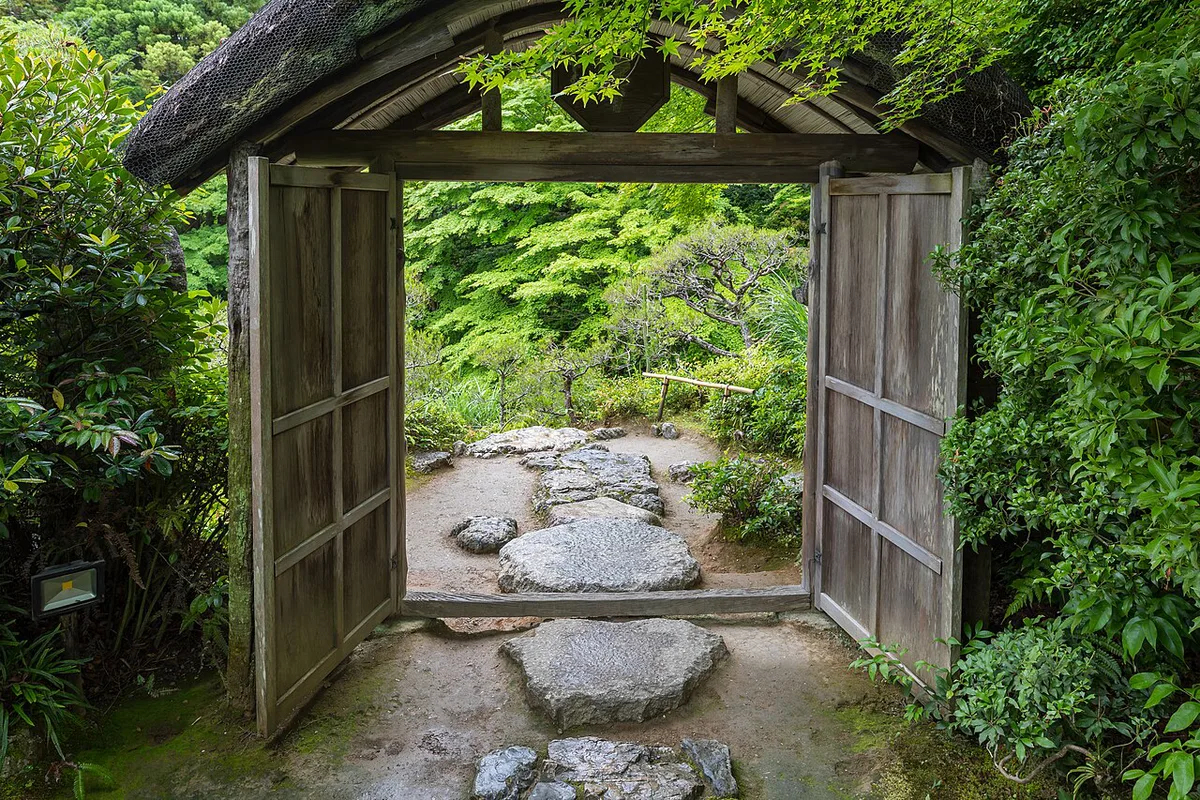
- Chumon: the middle gate, marking the line between the outer and inner garden, only 1.70 m wide
- Jibutsudo: a small Buddhist shrine with an irimoya-style roof, moved here from elsewhere and dating to the Meiji era
- Tekisuian: the teahouse, a natural place to pause
Walking the Garden Circuit
The route is a loop of narrow winding paths. Expect steps and slopes the whole way. Wear shoes with grip, especially after rain.
Take the first stretch slowly. Pass through the Chumon and think of it as the original host's threshold, where guests were invited in for tea. Then follow the path uphill past Jibutsudo.
The open-air museum is small but useful. It covers Denjiro's film career and life. Film fans should give it ten minutes. Everyone else will understand the man behind the garden after a quick look.
Myoko-an Hall was the home of Denjiro's wife, Takea. It was used for sutra copying and meditation. One guide says children under 15 are not allowed inside, so check the current rule at the gate.
The layout loops, so you rarely backtrack. Allow roughly an hour for the full circuit with photos, plus time for tea. That is an estimate, not an official figure.
Viewpoints and Photo Spots Above the Hozu River
Okochi Sanso uses borrowed scenery, or shakkei. The garden frames mountains and river beyond its own boundary. East and west views are the reason to climb.
The Chumon is only 1.70 m wide, so shoot it before other visitors crowd the frame.
The Arashikei Observation Deck looks over the mountains of Arashiyama and the Hozu River. Come here for a wide frame with water and ridgelines in one shot.
The City Viewpoint is the highest point in the garden. Its Moon Light Pavilion looks toward Kyoto, with Mt. Hiei on the skyline. On a clear day this is the best place to see how the city sits in its basin.
For photography, keep a few habits in mind. Shoot the Chumon gate before others arrive. Use the pavilion for a high-angle city view. Save the river view for a moment with softer light.
Season by Season: Cherry, Azalea, Maple and Pine
Denjiro planned the planting so each season had a lead role. Cherry trees carry spring. Azaleas follow in summer. Maples take over in autumn. Pines hold the winter scene.
Spring and autumn are the headline seasons. Autumn foliage here is often described as quieter than at Tenryu-ji, though that is a general comparison and not a measured one. Winter is the calm option, and snow is possible but never guaranteed.
If you visit in October or November 2026, go as close to 9:00 as you can. Early entry gives you the best chance of an empty path and softer light on the maples.
Matcha and Sweets at Tekisuian
Your ticket includes matcha and a seasonal sweet. Hand over the voucher or ticket portion as staff direct. Check on site which counter or seating area is serving tea that day.
The tea stop is not an extra. It is the reason the ¥1,000 price makes sense. Sit down and look out at the view for ten minutes.
It is also your best shelter when rain starts without warning. Do not rush through the circuit just to beat the weather. Wait it out with tea, then walk again.
Is Okochi Sanso Worth ¥1,000?
For most visitors who like gardens and views, yes. You get a long hillside route, two named viewpoints, a small museum and tea in one fee. If you only want a quick photo of the bamboo path, skip it.
It suits people who value calm over famous photo stops. It suits slow travelers and photographers who want height. It suits anyone who has already seen the bamboo grove and wants a quieter second act.
The table compares it with two other well-known stops. We have not supplied other sites' fees here, so check each official page for the current rate.
| Factor | Okochi Sanso | Tenryu-ji | Kinkaku-ji |
|---|---|---|---|
| Admission | ¥1,000 (adults) | Check current fee | Check current fee |
| Tea included | Matcha and a sweet | Check on site | Check on site |
| Crowd feel | Quieter hillside route | Busier Arashiyama stop | Check on site |
| Main draw | Hozu River and Mt. Hiei views | Temple and garden | Famous gold pavilion |
| Best for | Calm and elevated views | Temple visit near the bamboo path | A classic landmark stop |
Pairing Okochi Sanso with Nearby Stops
Plan a simple half-day route. Begin at Arashiyama Station and walk through the Sagano Bamboo Grove. Visit Tenryu-ji if you like, then finish at Okochi Sanso for tea and views.
Starting from Kyoto Omiya on the Randen takes about 20 minutes, while the JR line from Kyoto Station takes about 15 minutes.
Film history can extend the day. Okochi Denjiro's career pairs well with Toei Kyoto Studio Park, which our guide covers separately. The studio park is a different site, so check its hours and transport before you plan a same-day link.
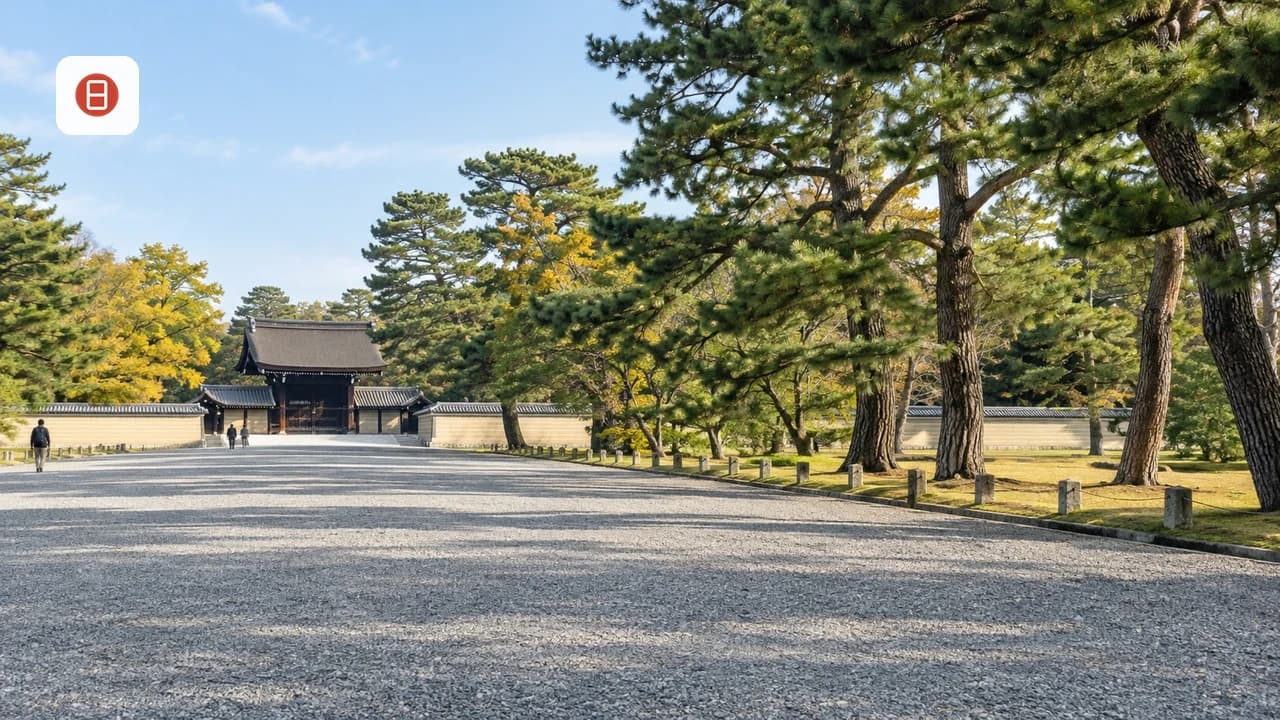
For a contrast in style, compare this private villa with an imperial one. Our guide to Kyoto Gyoen National Garden covers a large public park. The official Gyoen page lists current visitor details.
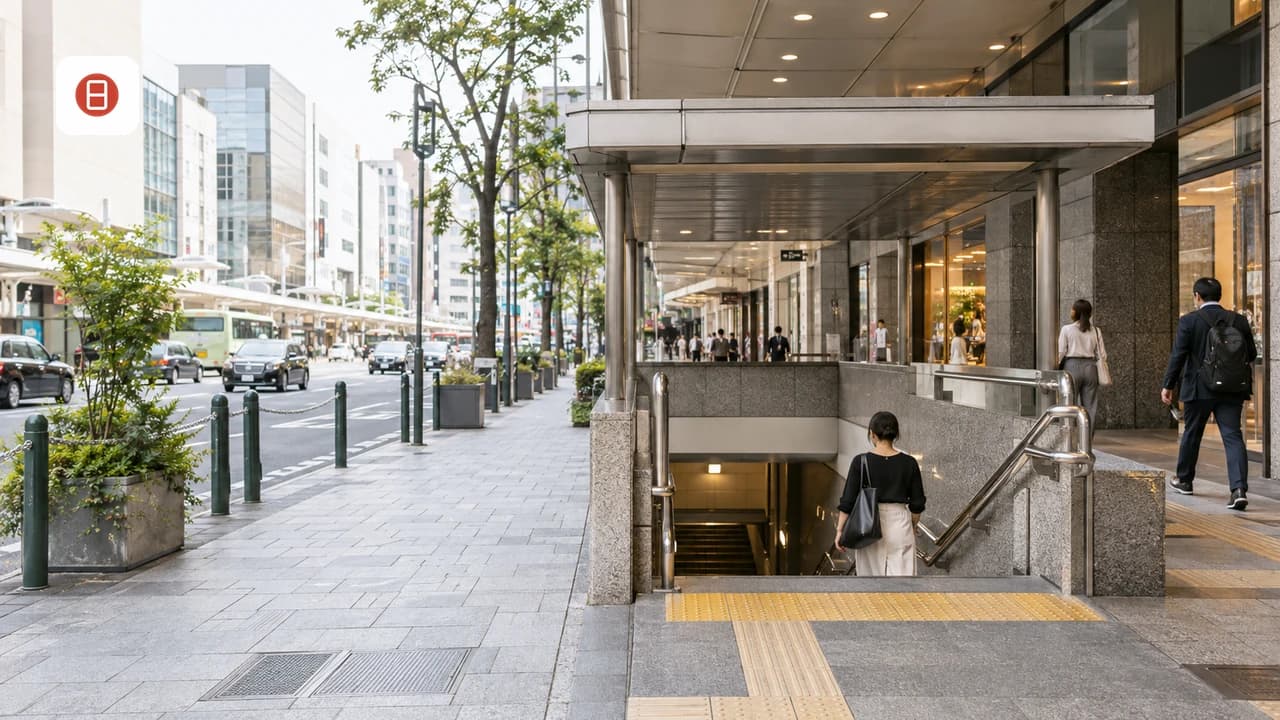
After dark, head back toward the center for dinner. Our Kawaramachi Station guide maps out the area, and the station information page has operator details. If this is your first trip, our Japan Travel Guide: Plan Your Trip with Expert Tips & Itineraries gives wider planning context.
Mistakes to Avoid at Okochi Sanso
Do not turn back at the bamboo grove. The gate lies past its far end, and many visitors never find it.
Do not skip the museum. It is small, but it explains the film star behind the estate.
Do not rush the tea. It is part of the ticket, and the teahouse is a good place to wait out a shower.
Do not expect step-free access. The paths are steep and narrow, and there are stairs. The garden is not suited to wheelchairs. Visitors with limited mobility should check with the official site first.
Do not plan on seeing inside the main house. Only the garden and teahouse are open.
Frequently Asked Questions
How much does Okochi Sanso Garden cost?
Adult admission is ¥1,000, and middle and elementary school students pay ¥500. Tickets include matcha and a sweet. Confirm the current fee on the official site before your visit.
What are the opening hours?
Published sources list 9:00 to 5:00 with no closing days. Check the official page for seasonal notices. Arrive close to opening for a quieter walk.
How do I get to Okochi Sanso from Kyoto Station?
Take the JR Sagano Line to Arashiyama Station, which takes about 15 minutes. From there, walk about 15 minutes. The gate is past the far end of the Sagano Bamboo Grove.
Can I go inside the villa?
No. Visitors can enter the garden and teahouse area only. The main house, Daijokaku, is closed to the public.
Is Okochi Sanso wheelchair accessible?
No. Paths are steep and narrow, with stairs along the circuit. Visitors with limited mobility should contact the official site before planning a visit.
How long should I allow for the visit?
Allow roughly an hour for the circuit, viewpoints and photos. Add time for matcha and the small museum. That is an editorial estimate, not an official figure.
Free: The Kyoto Essentials guide
Top things to do, where to stay, a perfect day plan, getting around, and the best time to go — a Kyoto mini-guide you can take offline.
You might also like
Continue reading
More guides you'll find useful