Getting Around Kyoto: Bus, Subway & Transport Tips (2026)
Kyoto buses, subway, trains or bike? See how each mode fits so you lose less time at bus stops and more inside the temples. Updated for 2026.
On this page
Navigating Kyoto's historic streets requires a smart mix of buses, trains, and occasionally a bicycle. The city offers a complex but efficient network that rewards travelers who understand how each mode fits together. This getting around kyoto subway bus transport guide 2026 breaks down exactly how to use the system so you lose less time standing at bus stops and more time inside the temples you came to see.
Kyoto is unusual among Japanese cities because its most famous landmarks are spread across a wide valley, many of them far from the two subway lines. Buses fill that gap, but bus congestion near popular shrines has become a real friction point in recent years. Knowing when to take the subway, when to board a bus, and when to simply walk saves both money and frustration. The sections below cover each transport mode in practical, honest terms for 2026 visitors.
IC Cards: Suica and ICOCA — the Essential First Step
Before you board a single bus or train in Kyoto, get an IC card. ICOCA is the Kansai-region card issued by JR West; Suica is the JR East equivalent. Either card works on every subway line, every city bus, the Hankyu and Keihan private railways, JR local trains, and most convenience store purchases in Japan. Tap in, tap out — no need to study fare tables or fumble for exact change.
Pick up ICOCA at any JR ticket machine inside Kyoto Station with a 500 yen deposit and a minimum 1,000 yen load. Suica cards purchased in Tokyo work identically. Top up at any station ticket machine or convenience store. In 2026 you can also add ICOCA to Apple Pay or a compatible Android wallet, which means your phone becomes your transit card and the physical card is optional.
Children under six travel free on both subway and city bus when accompanied by a fare-paying adult. Elementary school students (ages 6–11) pay the child fare, which is roughly half the adult price. The IC card automatically calculates the correct child fare when you tap — no separate ticket needed. Keep the card loaded with at least 500 yen as a buffer, because some buses are cash-only on outlying routes.
ICOCA and Suica cards work identically on all Kyoto transit. You can add ICOCA to Apple Pay or a compatible Android wallet in 2026, turning your phone into your transit card. Top up at any station ticket machine or convenience store.
Kyoto Subway Lines: Karasuma and Tozai
Kyoto has exactly two subway lines. The Karasuma Line (green) runs north-south from Kokusaikaikan in the north to Takeda in the south, passing through Kyoto Station and the central shopping district. The Tozai Line (red/orange) runs roughly east-west from Rokujizo in the southeast to Uzumasa Tenjingawa in the northwest, intersecting the Karasuma Line at Karasuma Oike Station. Together they form a cross-shaped network.
Key stations to memorize: Kyoto (southern hub), Karasuma Oike (downtown interchange), Shijo (shopping district), Gojo (access to Nishiki Market side streets), and Higashiyama (Tozai Line, closest subway stop to the Higashiyama temple walk). The subway runs approximately every 5–8 minutes during peak hours and every 10–15 minutes late evening. First trains start around 05:30; last trains finish around 23:30.
The subway is almost always faster than a bus for the routes it covers. A trip from Kyoto Station to Higashiyama on the Tozai Line takes about 10 minutes for 260 yen. The same journey by bus takes 20–40 minutes depending on traffic. Use the subway whenever your destination is within walking distance of a station; switch to buses only when you need to reach places like Kinkaku-ji or Arashiyama that the subway does not serve.
One practical quirk: the Tozai Line platforms at Kyoto Station are separate from the Karasuma Line platforms and require a short underground walk. Allow 5 extra minutes if you need to transfer between the two lines at this station.
Kyoto City Bus: Network, Fares, and Passes
City buses remain the only direct public transit link to many of Kyoto's most-visited shrines and temples. The flat-fare zone covers the core sightseeing area: any single ride within this zone costs 230 yen in 2026. Rides outside the flat-fare zone use a distance-based metered fare. Board from the rear door, take a ticket if you see a numbered ticket dispenser, and pay the driver at the front when you exit.
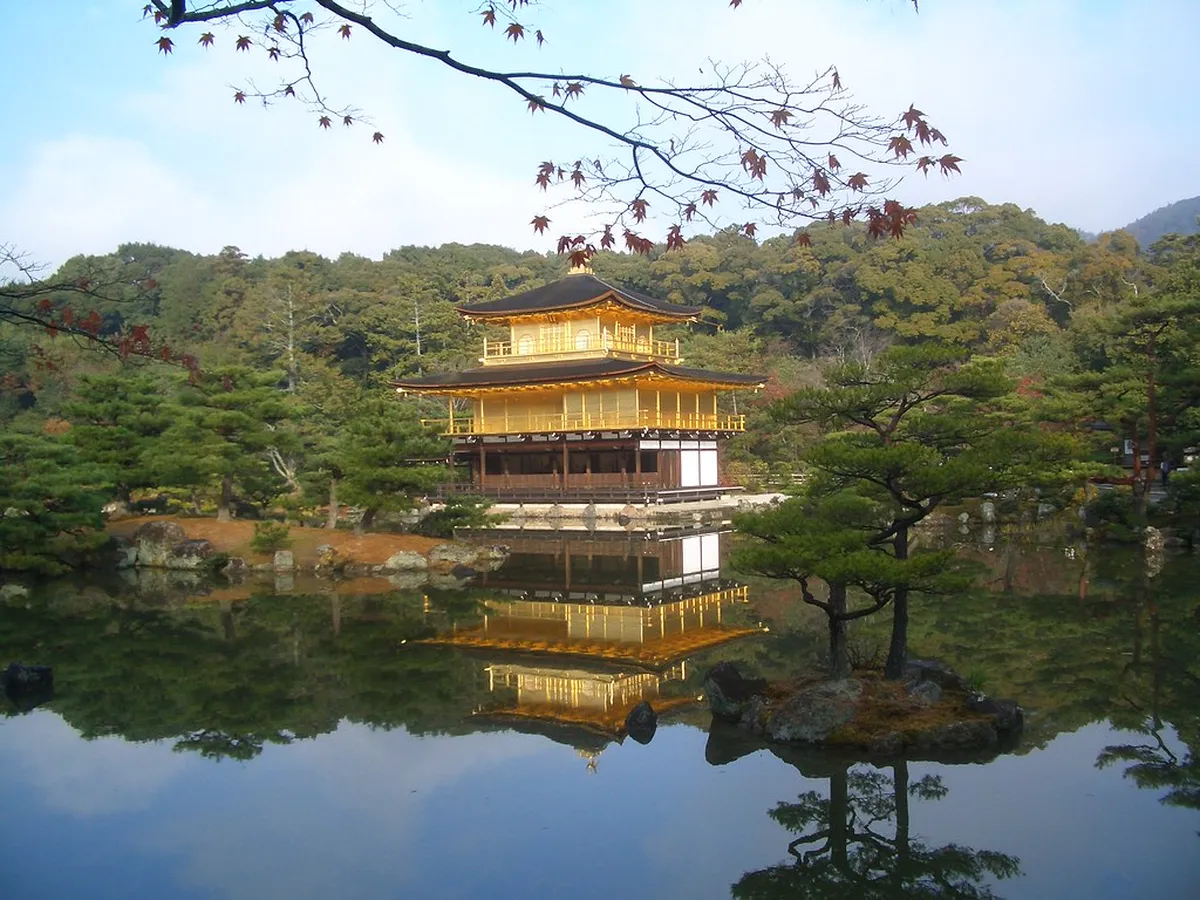
The most useful routes for tourists are 205 (circular, covers Kyoto Station → Kinkaku-ji → Daitoku-ji → Kitaoji), 100 (express, Kyoto Station → Gion → Kiyomizu-dera → Sanjusangendo), 101 (Kyoto Station → Kinkaku-ji via Nishio-ji), and 206 (Kyoto Station → Higashiyama → Gion → Kitaoji). The Raku Bus lines 101, 102, and 111 are tourist-express services that skip intermediate stops to reach popular sights faster. A downloadable Kyoto City Bus Travel Map shows the full network in English.
Day passes cut costs quickly if you take more than two city bus rides. The one-day bus pass costs 700 yen and covers unlimited city bus rides within the flat-fare zone. The combined one-day subway and bus pass costs 1,100 yen and covers both bus and subway. A two-day subway and bus pass is 1,700 yen. Buy these at Kyoto Station Bus Terminal, subway station ticket machines, or from convenience stores. If you plan to visit Arashiyama and Kinkaku-ji on the same day, a combined pass pays for itself in three or four rides.
| Pass Type | Cost (Yen) | Coverage | Best For |
|---|---|---|---|
| IC Card (ICOCA/Suica) | 500 deposit + 1,000+ load | All transit modes | Maximum flexibility |
| One-Day Bus Pass | 700 | City bus (flat-fare zone) | 3+ bus rides in one day |
| One-Day Subway + Bus Pass | 1,100 | Subway + city bus | Mixed transit, sightseeing days |
| Two-Day Subway + Bus Pass | 1,700 | Subway + city bus | Multi-day visits with temple hopping |
| Single Subway Ride | 260 | One subway trip | Point-to-point travel |
| Single Bus Ride | 230 | One city bus trip (flat-fare) | Single route within core zone |
Buses accept IC cards, exact coins, and 1,000 yen notes at the driver's change machine. The machine does not accept 5,000 or 10,000 yen notes, so always carry small bills when relying on the bus. Many stops now have digital displays showing the real-time position of the next two buses, which makes it much easier to decide whether to wait or walk to the nearest subway station instead.
Kyoto's 2026 Bus Congestion Reforms: What Changed This Year
Kyoto City has been openly managing a bus overcrowding crisis around its most popular landmarks for several years. By 2026, new access rules and supplementary shuttle services are in effect near Kinkaku-ji, Arashiyama, and the Gion/Higashiyama corridor. City buses on routes 101 and 205 near Kinkaku-ji no longer accept the one-day bus pass during peak hours (09:00–17:00 from mid-March to mid-December) — you must pay the 230 yen fare individually or use an IC card. This change aims to reduce pass-incentivized crowding on those corridors.
If you visit Kinkaku-ji between mid-March and mid-December during peak hours (09:00–17:00), your one-day bus pass will not be accepted on routes 101 and 205. Plan to pay 230 yen per ride or use an IC card instead.
The city has publicly discussed tiered tourist-surcharge pricing for high-demand routes. Check the Kyoto City Bus official site for any fare updates effective for your travel dates, as the fee structure may adjust seasonally. As a practical workaround, many experienced visitors now take the subway to Kitaoji Station (Karasuma Line) and walk 20 minutes south to Kinkaku-ji, completely bypassing the crowded bus corridor. This walk is flat, takes you through a quiet residential neighborhood, and is signposted in English and Japanese.
In Arashiyama, the Randen tram (Keifuku Electric Railroad) has become the recommended alternative to bus lines 28 and 93. Randen runs from Shijo Omiya in central Kyoto to Arashiyama, costs 250 yen with an IC card, and runs on its own dedicated track — meaning it never gets stuck in road traffic. From the Randen Arashiyama terminus, the bamboo grove is a 7-minute walk. This is now the most reliable way to reach Arashiyama during autumn foliage season (late October to mid-November), when road traffic near the bus terminal can add 45 minutes or more to a bus journey.
Private Rail Lines: Hankyu, Keihan, and Kintetsu
Kyoto has three private rail operators that complement the subway and JR lines. The Hankyu Kyoto Line runs from Kyoto-Kawaramachi Station (walking distance from Gion) southwest toward Osaka, with a stop at Katsura for Katsura Imperial Villa. The Keihan Main Line runs parallel to the east side of the city along the Kamo River, with stops at Gion-Shijo and Sanjo that are ideal for Higashiyama exploration. Kintetsu connects Kyoto Station south to Nara in about 35–45 minutes, making it the fastest and cheapest option for a Nara day trip.
All three private lines accept ICOCA and Suica. They are typically cheaper than JR for intra-Kansai travel. A Keihan ride from Kyoto to Osaka (Yodoyabashi) costs around 400 yen versus 560 yen on the JR Kyoto Line. If you are heading to Fushimi, Keihan stops at Fushimi-Momoyama for the sake district and Fushimi Inari Station for the shrine — both more convenient than the JR option if you are starting from central Kyoto.
The Keihan Uji Line branches off from Chushojima Station and reaches Uji in 20 minutes for about 260 yen. You can plan 15 Best Day Trips from Kyoto to Uji's Byodoin Temple or to Nara via the Kintetsu Line without needing a JR Pass at all. Private lines represent a significant cost saving over JR for anyone not holding a multi-day JR Pass.
Cycling in Kyoto: the Underrated Transport Option
Kyoto's central valley is almost entirely flat, which makes cycling one of the most practical ways to move between temples in the north and east of the city. Many travelers do not consider it, but a bicycle can easily cover the distance from Nishiki Market to Gion to Heian Shrine in a single morning without touching public transit. Bike rental shops cluster around Kyoto Station and near the Arashiyama riverside; rates typically run 1,000–1,500 yen for a full day for a basic city bike, or 1,500–2,500 yen for an electric-assist (e-bike).
The flat canal-side path along the Kamo River is fully off-road and connects the southern entertainment district to the northern Kamigamo Shrine area. The Philosophers' Path (Tetsugaku no Michi) is a stone-paved riverside trail perfectly suited to slow cycling between Nanzen-ji and Ginkaku-ji. Many local cycle rental operators also offer GPS-guided route cards in English that route you away from the tourist-bus corridors entirely. E-bike rental is especially worthwhile if you plan to visit Fushimi in the south and Kinkaku-ji in the north on the same day, covering ground that would require two or three bus rides.
Note that cycling on the Philosopher's Path is technically restricted during peak cherry blossom and autumn foliage dates due to pedestrian crowd density. Check the seasonal rules at your rental shop. Bicycles can be parked at designated cycle parks near major shrines for free or a nominal 100 yen fee; locking to temple fencing or bus-stop poles is prohibited and fines apply.
Taxis and Ride-Hailing in Kyoto
Taxis make financial sense for groups of three or four people, late-night travel after trains stop, or reaching a specific temple gate that buses do not serve closely enough. The base fare in Kyoto is 600 yen for the first 1.3 km, then approximately 80 yen per 270 meters. A taxi from Kyoto Station to Gion costs roughly 1,000–1,400 yen depending on traffic; the same journey costs 260 yen per person by subway. For a group of four, the per-person taxi cost is comparable to the subway.
Kyoto taxis can be hailed from the street, booked from a stand outside Kyoto Station (south and north exits), or called via apps including GO (DiDi-affiliated) and S.RIDE, both of which offer English-language interfaces. Most taxis in Kyoto accept IC cards and credit cards; driver quality is uniformly high and GPS navigation is standard. Evening rides after 23:00 incur a 20% night surcharge. If you miss the last subway around 23:30, a taxi back to central accommodation from Arashiyama runs approximately 3,000–4,500 yen.
Getting to Kyoto Station from the Airports
Kyoto has no airport. The two airports that serve the city are Kansai International Airport (KIX) and Osaka Itami Airport (ITM). From KIX, the Haruka Express train runs directly to Kyoto Station in 75 minutes for 1,880–2,890 yen (reserved). The MK Taxi shuttle and Yasaka Taxi limousine bus services also run door-to-door from KIX to Kyoto hotels for around 2,700–3,000 yen per person, which is competitive for solo travelers with heavy luggage. From Itami, limousine buses connect directly to Kyoto Station in about 55 minutes for 1,340 yen — faster than taking a local train via Osaka.
Visitors flying from Tokyo face a more nuanced choice. The Shinkansen from Tokyo Station to Kyoto Station takes 2 hours 15 minutes for 13,320–14,170 yen (standard fare) and delivers you directly to the city center. Flying to Itami and then busing to Kyoto adds transfers and totals similar travel time when you include check-in, security, and the airport-to-city leg. The Shinkansen wins on simplicity; flying wins on cost if you can find a sale fare under 8,000 yen on a low-cost carrier to Kansai or Itami.
Navigating Beyond Kyoto: Regional Connections
Kyoto Station is the massive central hub for all regional travel. It connects the city to Osaka, Nara, and the rest of Japan. You can easily plan 15 Best Day Trips from Kyoto using the JR lines. The station layout is logical but very large, so allow extra time.
Long-distance buses also depart from the south side of Kyoto Station. These are a budget-friendly way to reach cities like Nagoya or Hiroshima. Night buses can save you the cost of one night in a hotel. Always book your bus seats online to ensure you have a spot.
The JR Pass is worth considering for multi-city itineraries that include the Shinkansen. A 7-day JR Pass (about 50,000 yen as of 2026) covers unlimited Shinkansen and JR local trains across Japan. Compare it with your Kyoto-based train legs before buying. Within Kyoto itself, the JR Pass does not cover the subway or private rail lines, so you still need an IC card for daily sightseeing. Activate the JR Pass on your first Shinkansen day, not the day you arrive in Kyoto, to maximize its value.
Transport Strategies by Kyoto District
Northern Kyoto (Kinkaku-ji, Ryoan-ji, Nishino Miya): City bus is the primary option. Routes 205 and 101 serve this area from Kyoto Station. Remember that during peak season the one-day bus pass may not be accepted on route 205 near Kinkaku-ji (see the 2026 reform note above). The Kitaoji subway station walk (20 minutes south) is a useful off-peak alternative.
Eastern Kyoto (Higashiyama, Kiyomizu-dera, Gion): The Tozai subway to Higashiyama Station is the fastest and most reliable entry point. From there, walk south along the Higashiyama temple trail — this 2 km path links Chion-in, Shoren-in, Kodai-ji, and Kiyomizu-dera without needing another bus. Bus 100 and 206 are the alternatives but often run full during peak afternoons.
Western Kyoto (Arashiyama, bamboo grove): Take the JR Sagano Line from Kyoto Station to Saga-Arashiyama for the most direct access (17 minutes, 240 yen). The Randen tram from Shijo Omiya is slower but more scenic and less crowded. Bus lines 28 and 93 are the slowest option and should be avoided during foliage season.
Central Kyoto (Nishiki Market, Kawaramachi, Pontocho): Easiest area to reach. Karasuma or Shijo subway stations put you within 5–10 minutes walk. The top Kyoto highlights in the central district need no bus at all — the subway and your own feet are sufficient.
Practical Planning Tips for 2026
Google Maps and the Navitime Japan app both provide real-time routing across all Kyoto transit modes, including private rail lines. Set your navigation language to English in Google Maps before you leave home — map labels and transit directions display in English while station name announcements on trains still play in Japanese. The Kyoto City Bus official app shows live bus positions on a map, which is invaluable for deciding whether to wait or walk.
Timing matters significantly. Arrive at popular sights by 08:00 or 08:30 and you travel on light buses; by 10:00 the tourist buses are standing-room and the roads are blocked. Autumn (mid-October to mid-November) and spring cherry blossom season (late March to mid-April) see the worst congestion. During these peaks, the subway handles crowds far better than buses — add a subway leg even if it means a longer walk at the other end.
Keep a printed or downloaded backup of your routes. Station Wi-Fi is good, but there are underground sections on both subway lines where your connection drops. Downloading offline maps for Kyoto on Google Maps before you leave your accommodation costs nothing and saves real stress when you are standing at a bus stop trying to remember which route number you need. Check our Best Time to Visit Kyoto: Monthly & Seasonal Guide guide to match your transport strategy to the season.
For a stay of three days or fewer, the combination of IC card for subway and buses plus one day of cycling covers virtually every major site without the overhead of decoding complex pass options. For five or more days, add a combined subway-bus two-day pass for your most temple-dense days and use your IC card for the rest. Staying in accommodation near a well-connected neighborhood reduces transit time meaningfully — proximity to a subway station matters more in Kyoto than in most cities because buses are so prone to delays.
For more on transport, see our Kyoto bus & subway pass guide and Kansai Airport to Kyoto transfer guide.
Frequently Asked Questions
Which Kyoto transport options fit first-time visitors?
First-time visitors should use a combination of the subway and the city bus. The subway is the easiest to navigate for long distances. Buses are necessary for reaching specific temples like the Golden Pavilion. Using an IC card makes the entire process seamless. Check this 10 Best Kyoto Neighborhoods to Stay: 2026 Area Guide for more area tips.
Is the Kyoto subway or bus better for sightseeing?
The subway is better for speed and avoiding traffic jams. However, it only has two lines and does not reach many famous shrines. The bus network is much more extensive and drops you closer to major gates. Most travelers find that using both is the most efficient strategy for a full day.
How much time should you plan for getting around Kyoto?
Plan for at least 30 to 45 minutes when moving between major districts. Traffic can double these times during the cherry blossom or autumn seasons. Always leave early in the morning to beat the largest crowds at the bus stops. Checking live transit apps will give you the most accurate daily estimates.
Are taxis worth it for getting around Kyoto?
Taxis are worth the cost for groups of three or four people. They provide door-to-door service and can save a lot of uphill walking. Taxis are also a great backup if you miss the last bus or train at night. Most drivers in Kyoto are very professional and use GPS for accuracy.
Mastering Kyoto's transport system is the key to a successful 2026 trip. An IC card unlocks every mode — subway, city bus, private rail, and most taxis — without requiring separate tickets or exact change. Pair that with the subway for speed and the bus for shrine access, and most itineraries fall into place naturally.
The city is actively reforming how tourists access its most crowded corridors. Checking for the latest bus pass restrictions before you travel, and building in the subway-plus-walk alternative to Kinkaku-ji, will save you real time on peak days. Use our Kyoto travel itinerary guide to map your transport choices around specific site opening times and beat the crowds that make the buses feel overwhelming.
Free: The Kyoto Essentials guide
Top things to do, where to stay, a perfect day plan, getting around, and the best time to go — a Kyoto mini-guide you can take offline.
You might also like


Continue reading
More guides you'll find useful