

Nagoya Kishimen Guide 2026: Flat Noodles, Broth Styles, and Where to Eat
A 2026 Nagoya kishimen guide covering flat noodle basics, broth styles, station platform stands, and respected shops in Osu Kannon and Sakae.
On this page
Last updated August 2026, this Nagoya kishimen guide breaks down the flat wheat noodle that anchors Aichi Prefecture's local food identity. You'll learn what separates kishimen from standard udon, plus where to eat it, from Shinkansen platform stands to neighborhood shopfronts. Expect broth notes, topping standards, ordering steps for the vending machine, and the seasonal swing from chilled summer bowls to miso-laced winter ones.
Kishimen at a Glance
Before the full breakdown, here's the shorthand version for a quick-meal decision between trains or during a lunch break.
- Noodle: broad, flat wheat noodle with a springy mochi-mochi bite
- Broth: tamari-based soy sauce, often deepened with katsuobushi (dried bonito)
- Standard toppings: aburaage (fried tofu), kamaboko (fish cake), spinach or komatsuna
- Where: Nagoya Station Shinkansen platform stands, plus sit-down shops in Osu Kannon and Sakae
- How to order: cash-first ticket vending machine at most platform counters
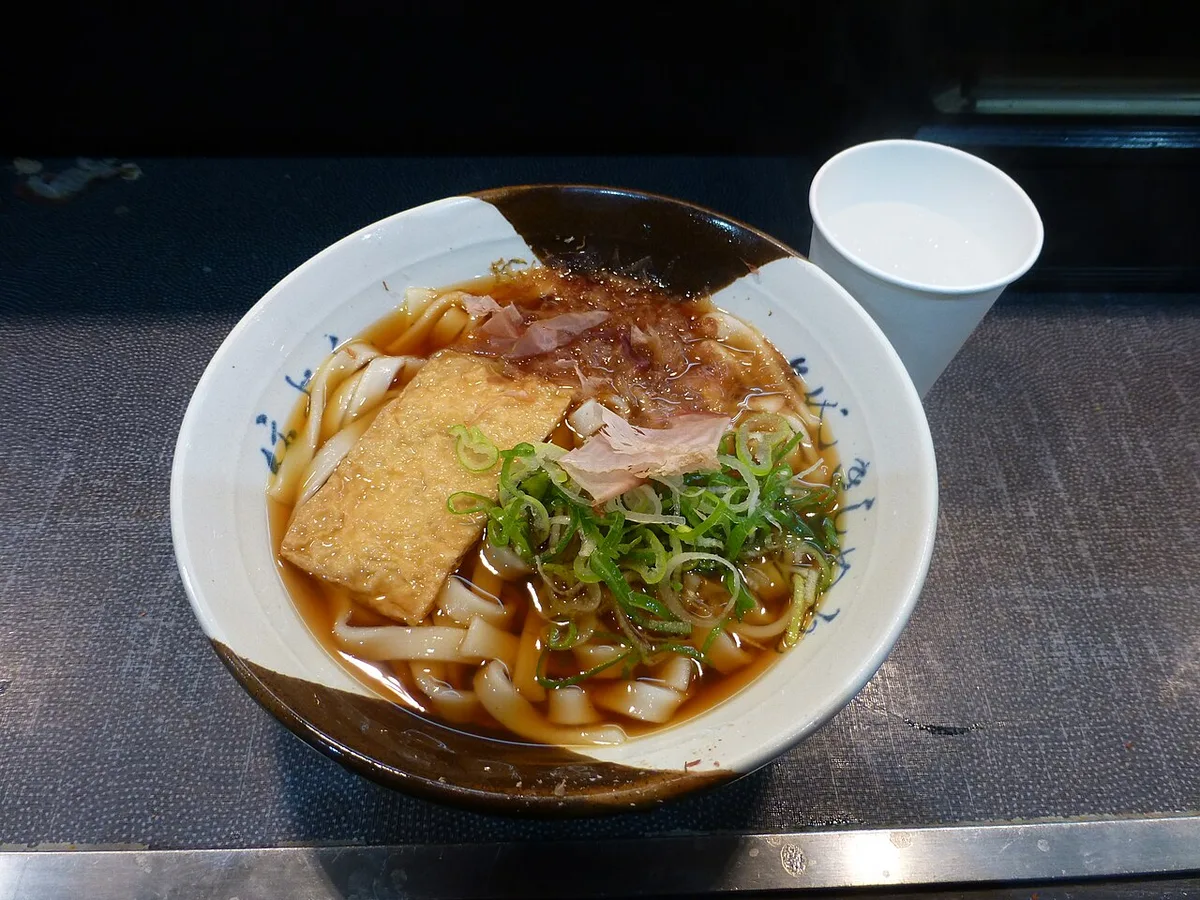
Nagoya Kishimen Guide: What Makes This Flat Noodle Different
Kishimen is a broad, flat wheat noodle native to Nagoya and the wider Aichi Prefecture region. Cut wider and thinner than standard udon, it has a springy, mochi-mochi texture that clings to broth rather than sliding off it. That flat cross-section also cooks fast, which matters for shops trying to turn tables during a lunch rush. Aichi's kitchens generally follow a wider-and-thinner convention for kishimen. No single, universally cited legal width defines kishimen, so treat any specific figure you see elsewhere as a general guideline rather than a confirmed regulation. Home cooks in the region make kishimen too, not just restaurants, often with a simpler broth and fewer toppings than a shop version. One popular explanation for the name ties it to the flat piece used in shogi, Japan's chess-like board game. Another links it to the historical Kishu region, though neither origin story is confirmed as definitive. Nagoya-meshi, the umbrella term for the city's signature local dishes, treats kishimen as one of its anchor entries alongside miso-based and fried specialties. This guide sits inside the broader 21 Best Dishes and Travel Tips for Nagoya (2026). It pairs well with other Nagoya-meshi local dishes worth tracking down on the same trip.
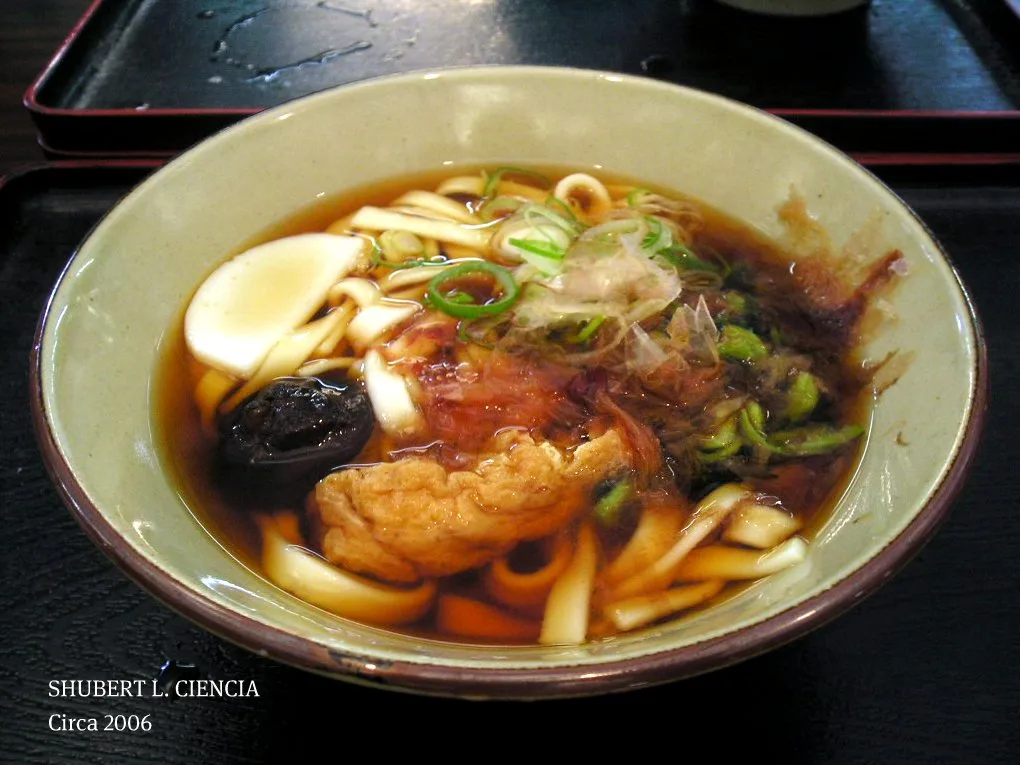
Anatomy of a Traditional Bowl: Broth, Noodles, and Toppings
Nagoya's kishimen broth typically starts with tamari, a soy sauce that reads darker and rounder than the lighter shoyu used in Tokyo-style dashi. Katsuobushi, dried bonito shavings, either simmer into the stock for depth or get dusted on top as a garnish. Shops build the bowl around a small set of standard toppings, and most kitchens don't stray far from them. Negi, thinly sliced green onion, and a shake of shichimi togarashi are common table condiments for adjusting the seasoning to taste. Kishimen carries the same everyday status in Nagoya that soba holds in Tokyo, showing up on lunch menus well beyond dedicated noodle specialists. A single bowl functions as a complete lunch, not usually paired with rice, which keeps the meal light compared to a katsu set. A few sit-down restaurants add chicken, mitsuba herb, or a raw egg for a richer finish, but the combination below is the baseline most visitors will recognize.
- Aburaage: thin sheets of sweet fried tofu, simmered in the broth's seasoning
- Kamaboko: pink-and-white fish cake, sliced thin and layered across the noodles
- Spinach or komatsuna: a handful of blanched greens for color and bite
- Katsuobushi: dried bonito shavings, stirred into the broth or dusted on top
Where to Eat Kishimen: Station Platforms to Neighborhood Shops
Nagoya Station's Shinkansen platforms host some of the city's most recognized kishimen counters, built for travelers eating between trains. Sumiyoshi, the best-known of these standing shops, serves bowls directly on the platform instead of in a separate dining room. Most Nagoya Station vendors, including these platform counters, now accept IC cards such as Suica and Pasmo. It's still worth confirming at the register, since standing-counter policies can shift faster than a guide can track. There's no seating at these stands, so plan to eat standing at a narrow counter and move on within a few minutes. Ordering runs cash-first at most of these counters, with a ticket machine that shows photos even when the buttons are labeled only in Japanese.
Standing counters at Nagoya Station become queuing corridors during the 12:00 to 13:00 salaryman rush; without seating, the crowd transforms the experience from quick meal to constrained wait. Off-peak visits reward both speed and comfort.
Traditional sit-down kishimen shops cluster in Osu Kannon and Sakae, two districts built around a temple market and a shopping core rather than train schedules. These restaurants hold onto regional variations, including miso-based versions, that the platform stands rarely offer. Service moves slower here, with table seating and a printed or wall-mounted menu instead of a vending machine. Many of the respected neighborhood shops are small, family-run operations with handwritten menus and no English signage, which rewards pointing at a photo or asking staff for a recommendation. Expect a short wait during the lunch peak at the better-known addresses, since seating tends to be limited. Ask locally for a current favorite beyond the station, since neighborhood loyalties shift over time and this guide can't track every opening or closure. Pairing a bowl with sightseeing is easy, since both districts sit close to 20 Best Nagoya Attractions worth building a half-day around. For a shortlist beyond kishimen specialists, cross-check 17 Best Restaurants and Food Experiences in Nagoya 2026 before settling on one neighborhood.
| Format | Typical Location | Best For | Trade-off |
|---|---|---|---|
| Station platform stand | Nagoya Station Shinkansen platforms (e.g., Sumiyoshi) | A fast bowl between trains | No seating, limited menu |
| Traditional sit-down shop | Osu Kannon, Sakae | Regional variations like miso-kishimen | Slower service, more walking |
Seasonal Kishimen: Koro-Kishimen in Summer, Miso-Kishimen in Winter
Summer menus swap the hot broth for koro-kishimen, a chilled version served with cold noodles and a dipping-style sauce. It's a common lunch order during Nagoya's humid summer months, when a steaming bowl feels like too much. Some shops serve it kake-style, with the noodles sitting in cold broth instead of alongside a dipping cup. Winter brings miso-kishimen, which folds the noodles into a red miso broth instead of the tamari-soy base. That red miso is the same style behind Nagoya's miso katsu. The two dishes share a flavor base even though one is fried pork and the other is noodle soup. Ordering either version usually means pointing at a photo or a kanji label on the vending machine, since most platform stands skip English menus. Seasonal swaps are usually flagged with a paper poster near the entrance or a sticker on the vending machine, so watch for those cues even without reading kanji. Pairing either seasonal version with a side of inari sushi is common, since the sweet fried tofu pocket balances either broth style.
How to Order: Vending Machines, Sides, and Etiquette
Most kishimen counters, especially the station platform stands, run on a ticket vending machine instead of table service. Feed in cash, pick a button, and a paper ticket prints out for the counter staff. Hand over the ticket, and the bowl usually arrives within a minute or two, since the noodles are pre-portioned. Common add-ons include a piece of tempura or a side of inari sushi, both ordered from the same machine as separate buttons. Sit-down restaurants in Osu Kannon and Sakae more often take a spoken order at the counter or table, so the machine-only routine mostly applies to station stands. At standing counters, plan to eat within a few minutes and step aside once finished, since there's no seating to hold a spot. Some machines take only cash, so carry coins and small bills before joining the line at a busy counter. Bus your own tray or bowl to the return counter when you're done, since most stands run on self-service cleanup. Picture buttons on newer machines make the process manageable even without reading Japanese, though older machines may be text-only.
Costs, Timing, and Access Around Nagoya Station and Sakae
Platform stands price a basic bowl below what a multi-item restaurant set costs, since you're paying for noodles and broth rather than a full table setting. Sit-down shops in Osu Kannon or Sakae add side dishes and seating to that base price, which shows up in a higher set-meal total. Menu boards and vending machine buttons show current pricing at each shop, and checking there beats relying on an older online listing. Timing matters as much as price at the busiest counters. Aim outside the 12:00 to 13:00 salaryman lunch rush, when platform stands and nearby restaurants both see their longest lines. Nagoya Station and Sakae anchor most kishimen options, and both sit close enough to city sightseeing that a bowl fits into a half-day loop. Both hubs connect easily to the rest of the city, which is why most kishimen itineraries start at one and end at the other. An evening extension is easy too, since Sakae carries most of the Nagoya Nightlife Guide 2026: Best Bars, Clubs & Izakayas scene within walking distance of its restaurants. Restaurants are more likely than platform stands to take credit cards, though carrying cash as backup is smart at any counter. These districts also work as a base for reaching other Nagoya-meshi stops within the same afternoon.
Kishimen vs. Nagoya's Other Signature Dishes
Kishimen reads as comfort food, which sets it apart from spicier options like Nagoya Taiwan ramen a few blocks over. Taiwan ramen leans on chili and garlic, while kishimen stays close to a mild soy-and-bonito base suited to a quick weekday lunch. Nagoya's hitsumabushi eel sits at the other end of the spectrum, reserved more for a sit-down meal than a between-trains stop. Evening food follows a different pattern, with Nagoya's tebasaki chicken wings showing up on izakaya menus rather than lunch counters. Morning eating in Nagoya runs on a separate track too, built around ogura toast and morning cafes rather than noodle shops. An izakaya and local drinks stop rounds out the evening once the noodle counters have closed for the day. For a wider survey of what's cooking between meals, a walk through Nagoya street food fills in the rest of the picture. Treating kishimen as one stop in a broader Nagoya-meshi crawl, rather than a single destination meal, makes it easier to fit in Taiwan ramen, hitsumabushi, or tebasaki on the same trip.
Accessing Kishimen Stands on Nagoya Station Platforms
A platform kishimen stop works best when you already have time built into a train journey. Shops such as Sumiyoshi sit inside the station’s rail area, so access depends on the location of the specific counter and the ticket gates you have passed through.
If you are transferring between Shinkansen services, check the departure board before ordering. A bowl is quick, but queues can form before busy departures. Keep your train ticket or IC card ready when moving between station areas.
Travelers who are not taking a train may find an underground or concourse noodle shop more practical. Those locations offer a similar introduction to kishimen without requiring a platform detour.
- Allow extra time before departure, especially around lunch.
- Confirm the platform number after buying your ticket.
- Choose a seated station restaurant if you have luggage or a longer stop.
Frequently Asked Questions
Is kishimen just flat udon?
Not exactly. Kishimen uses a similar wheat dough to udon, but it's rolled and cut into a wide, flat ribbon instead of a round or square strand. That shape changes the texture and how the noodle holds broth, so most Nagoya cooks treat it as a distinct dish rather than a shape variant of udon.
Where is the best kishimen in Nagoya Station?
Nagoya Station covers both the Shinkansen platform stands, including Sumiyoshi, and the underground shopping malls beneath the station building. Platform counters win on speed and atmosphere for a between-trains meal. The underground mall shops tend to offer more seating and a slightly wider menu, which suits a longer stop.
Can I find kishimen outside of Nagoya?
Kishimen is closely tied to Nagoya and the Aichi Prefecture region, so it's uncommon on menus elsewhere in Japan. A handful of Tokyo restaurants that specialize in regional Japanese noodles carry it, but it isn't standard at a typical udon shop outside Aichi.
Is kishimen vegetarian-friendly?
Usually not without asking first. Traditional kishimen broth relies on katsuobushi, dried bonito, for its depth, which makes the base fish-derived even when the toppings look plant-based. Confirm with the shop or restaurant if a vegetarian broth is what you're after, since substitutions aren't standard.
When is the best time to eat kishimen in Nagoya to avoid crowds?
Aim outside the 12:00 to 13:00 window, when the salaryman lunch rush fills both platform stands and neighborhood restaurants. Arriving right when a shop opens, or after 13:30, usually means a shorter wait, especially at the standing counters near Nagoya Station.
Do Nagoya kishimen shops take reservations?
Most don't, especially the station platform stands and smaller neighborhood shops that run on a first-come, first-served counter. Larger sit-down restaurants in Sakae may take a phone reservation for bigger groups, but walking in works for most kishimen meals.
Free: The Nagoya Essentials guide
Top things to do, where to stay, a perfect day plan, getting around, and the best time to go — a Nagoya mini-guide you can take offline.
You might also like

Continue reading
More guides you'll find useful


