Vegetarian and Vegan Food in Dazaifu: Restaurants, Ramen, and Street Snacks
Vegetarian and vegan food in Dazaifu: where to eat tofu kaiseki, vegan ramen, and Umegae Mochi, plus how to avoid fish-based dashi.
On this page
Last updated July 2026, this guide breaks down vegetarian and vegan food in Dazaifu for travelers planning a day trip from Fukuoka. Dazaifu's Zen temple Komyozenji and Tendai temple Kanzeonji give the town a contemplative reputation, though that alone does not guarantee plant-based meals near the shrine. A handful of named restaurants and one iconic street snack make it realistic to eat well as a vegetarian or vegan, provided you book ahead.
Finding Vegetarian and Vegan Food in Dazaifu: The Short Answer
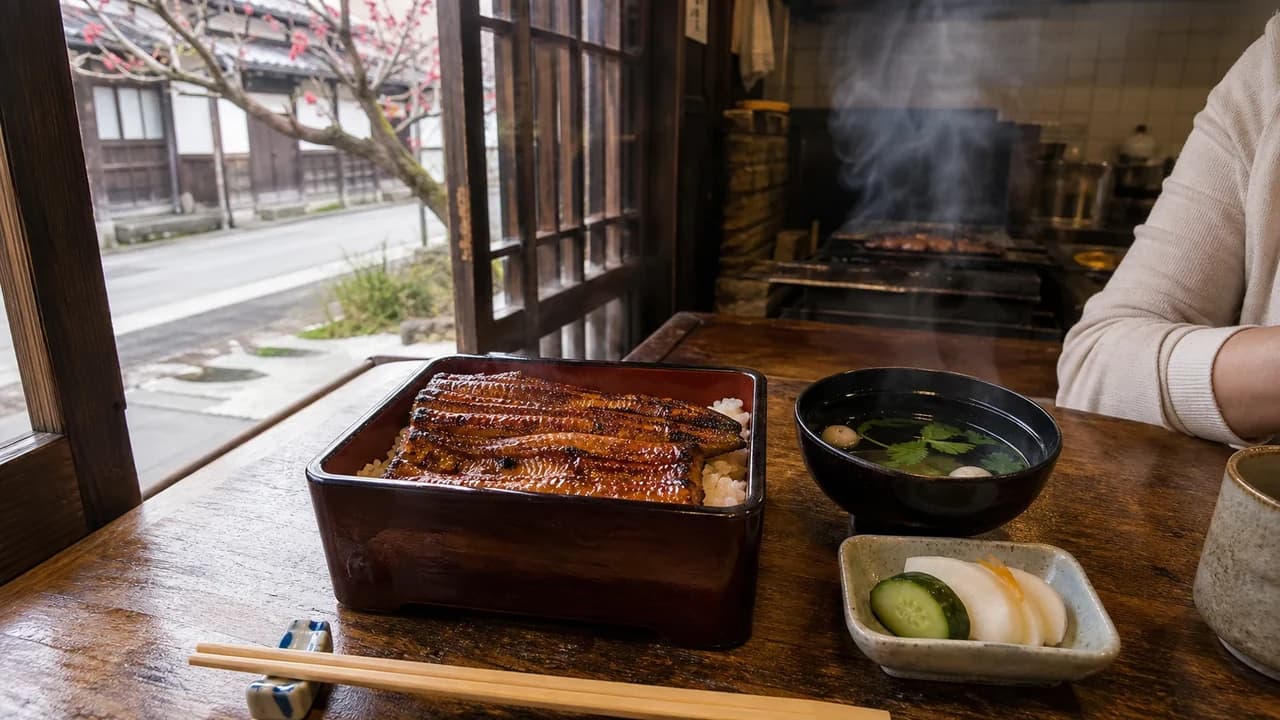
Dazaifu is manageable for vegetarians and vegans, but success depends on choosing specific places rather than wandering into any restaurant near Dazaifu Tenmangu. Two sit-down restaurants anchor the high end. Umenohana Dazaifu Besso Shizenan serves tofu kaiseki, and Sushi Shima offers a vegan ramen lunch set. Omotesando's street stalls add an easy plant-based option through Umegae Mochi, the town's signature sweet. No single walk-in restaurant guarantees a full vegan course meal without a reservation, so planning matters more here than in a larger city. For the wider dining landscape beyond this list, see the Dazaifu's overall food scene guide. A sit-down restaurant roundup for Dazaifu is a useful cross-check for travelers in your group who are not vegetarian. Some local specialties are fish-based by definition, and the Dazaifu's eel restaurant guide is a reminder of that.
Most Dazaifu restaurants close between 5:00 PM and 6:00 PM, and Sushi Shima's vegan ramen set operates only at lunch, making advance reservations and early planning essential for a full meal.
| Place | Best For | Booking | Typical Cost |
|---|---|---|---|
| Umenohana Dazaifu Besso Shizenan | Tofu and yuba kaiseki | Required, a day or two ahead advised | Premium tasting-menu pricing |
| Sushi Shima | Vegan tonkotsu-style ramen lunch set | Required, lunch service only | Moderate fixed-lunch pricing |
| Omotesando mochi shops | Umegae Mochi and quick snacks | None | Low, pay per piece |
| Starbucks Dazaifu Omotesando | Coffee break with soy milk | None | Low, standard cafe pricing |
Why a Temple Town Doesn't Guarantee a Vegetarian Meal
Dazaifu's Zen temple Komyozenji is known for its moss garden, and the Tendai temple Kanzeonji sits nearby among the Tofuro ruins. Both anchor the town's reputation for Buddhist heritage, and it is easy to assume that heritage carries into widespread vegetarian temple cuisine. In practice, most restaurants near the shrine serve conventional Japanese menus built around dashi made from bonito flakes or dried sardines. That stock turns up in miso soup, simmered vegetable dishes, and some noodle broths that otherwise look plant-based. Visitors who want to see the temples themselves can read the Komyozenji's moss garden guide before or after a meal stop. The Kanzeonji and Tofuro ruins guide covers the historical context in more depth.
Umenohana Dazaifu Besso Shizenan: Tofu and Yuba Kaiseki
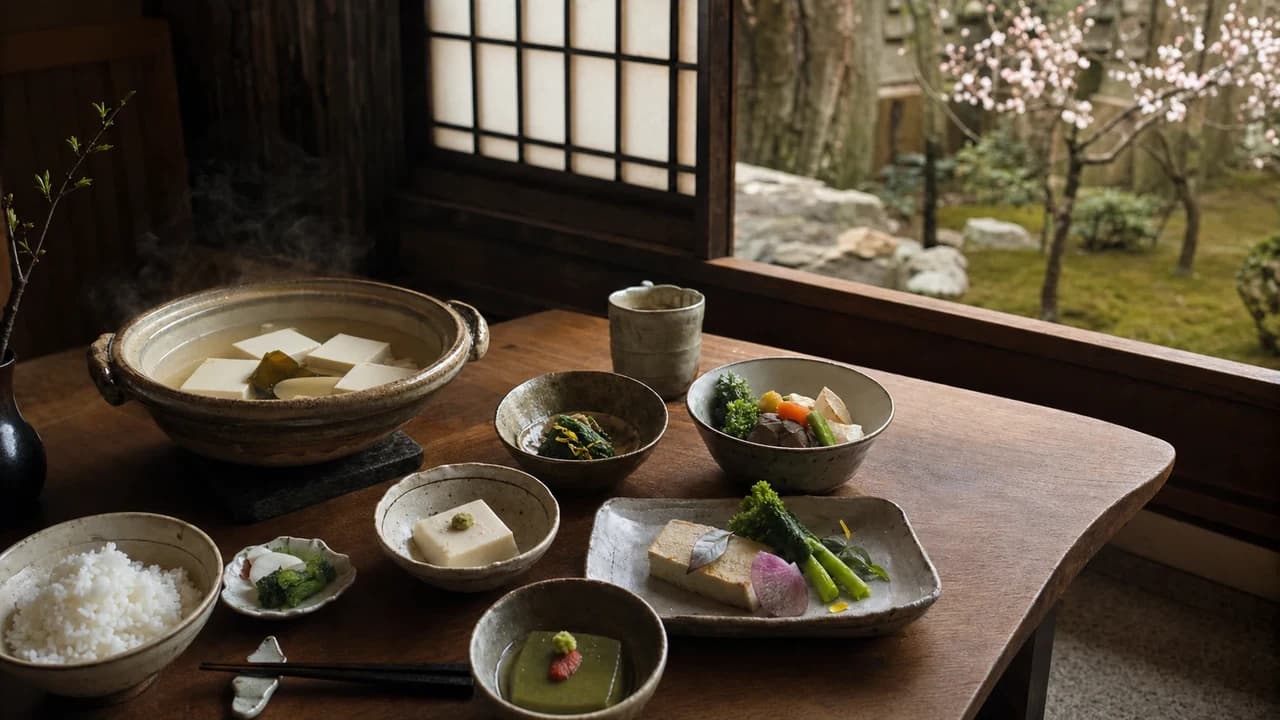
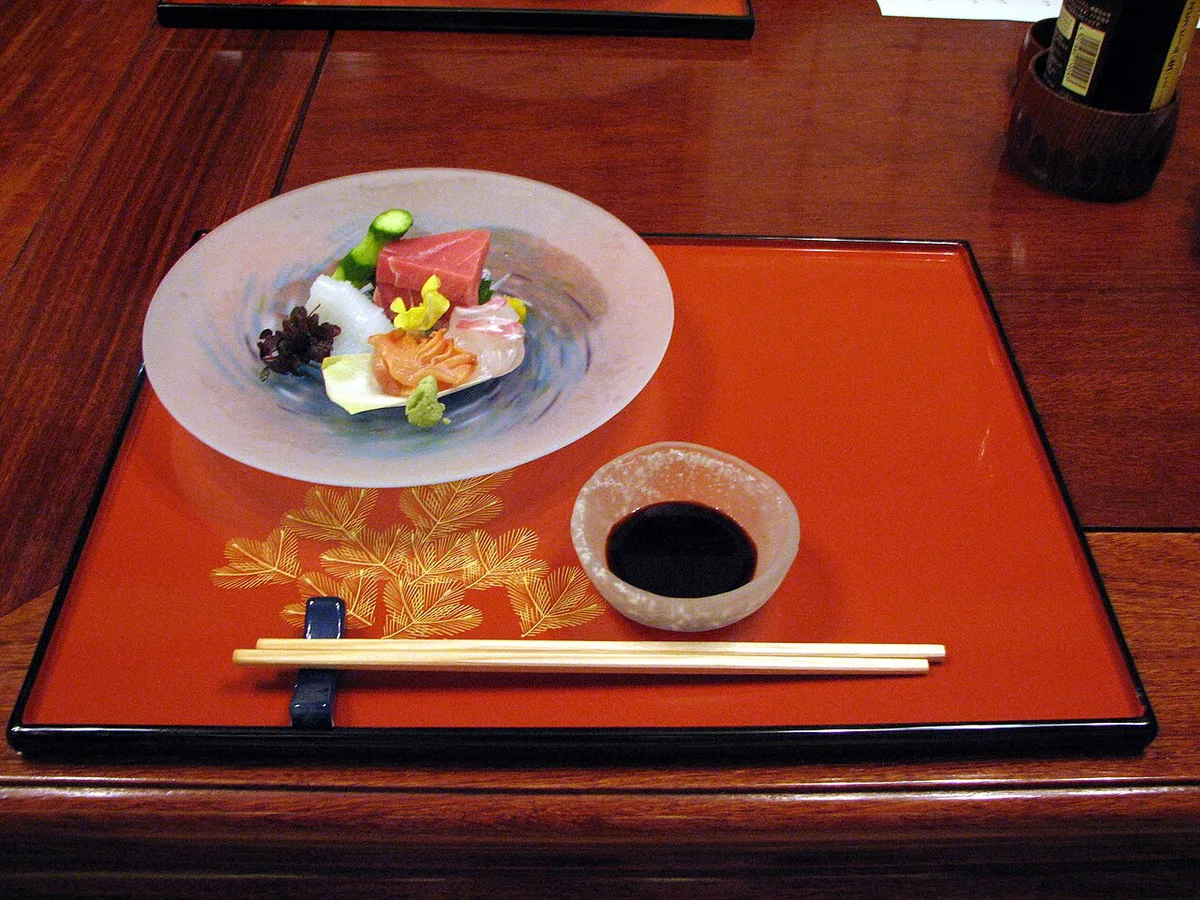
Umenohana Dazaifu Besso Shizenan sits in a traditional Japanese house and builds its menu around yuba, the delicate tofu skin prized in Kyoto-style cooking. The vegan kaiseki course opens with a yuba tofu otsukuri, essentially a plant-based take on sashimi. Later courses include a yuba and avocado salad with a Chinese-style dressing, plus yudofu simmered in a kombu-based broth. Diners can add mabo-an, a spicy soy-meat sauce, to freshly prepared tofu, or try vegetable tempura finished with curry salt. Private dining rooms overlook a garden that changes with the seasons. This runs as a premium tasting-menu experience, well above a casual lunch, and Umenohana's own site is the most reliable place to check current course pricing before booking. Reservations are required for the vegan menu, and while same-day bookings have been accepted in the past, booking a day or two ahead is the more reliable approach. Confirm the current reservation window directly with the restaurant before your visit, since policies can shift.
Sushi Shima: Vegan Tonkotsu Ramen at Lunch
Sushi Shima built its reputation on sushi, but its kitchen also produces a vegan version of Fukuoka's signature tonkotsu ramen. Its broth swaps pork bone stock for a combination of makombu kelp from Hokkaido, dried shiitake from Oita, and soy milk. That combination aims for the same richness as the original without any animal products. A vegan lunch set pairs the ramen with vegetable hosomaki rolls, inari sushi, two seasonal side dishes, and a dessert. This set has been offered as a lunch-only special, so check current availability before building an itinerary around it. Reservations are required, and the proprietress has lived abroad and speaks English, which makes booking and explaining dietary needs more straightforward for international visitors.
Omotesando Street Food: Umegae Mochi, Starbucks, and Other Quick Options
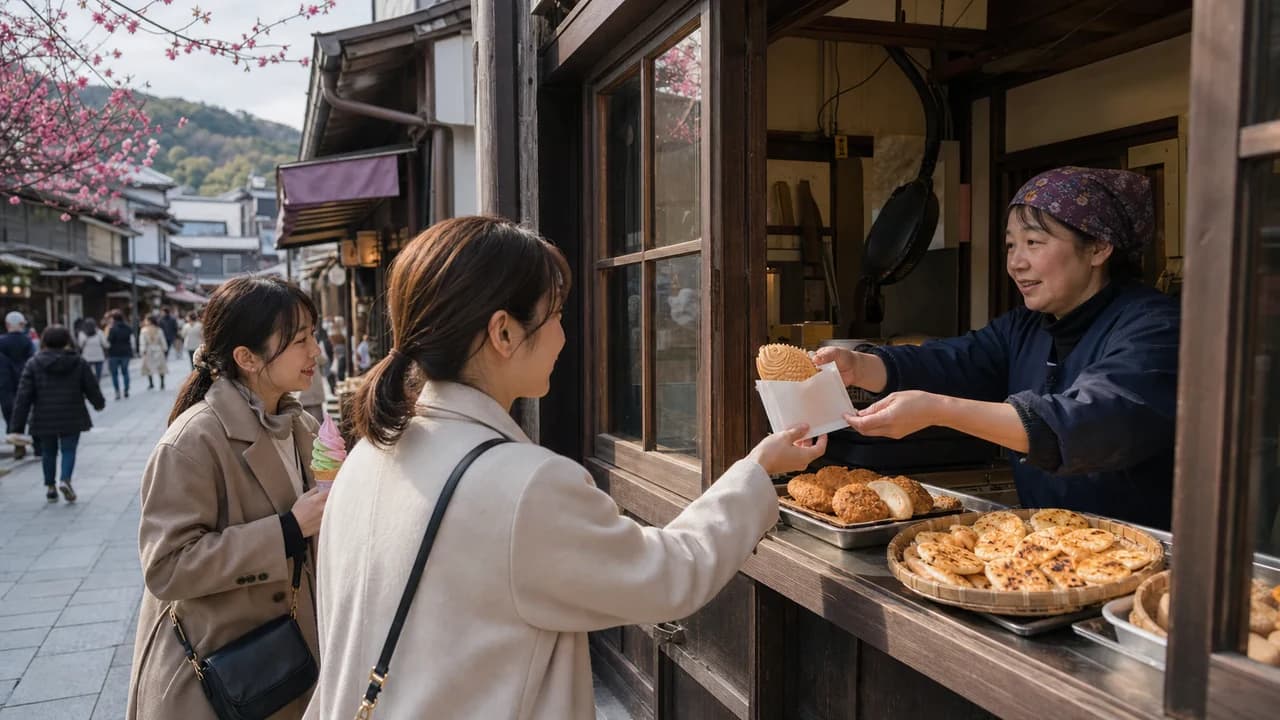
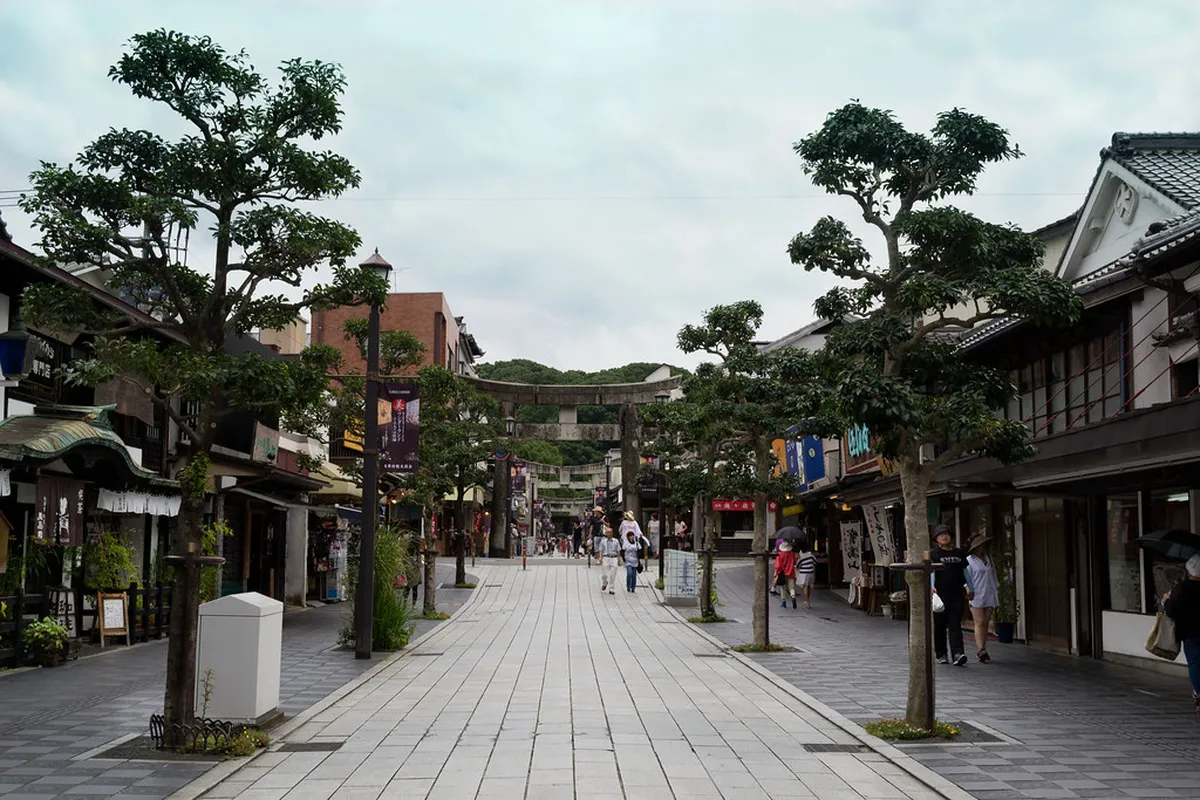
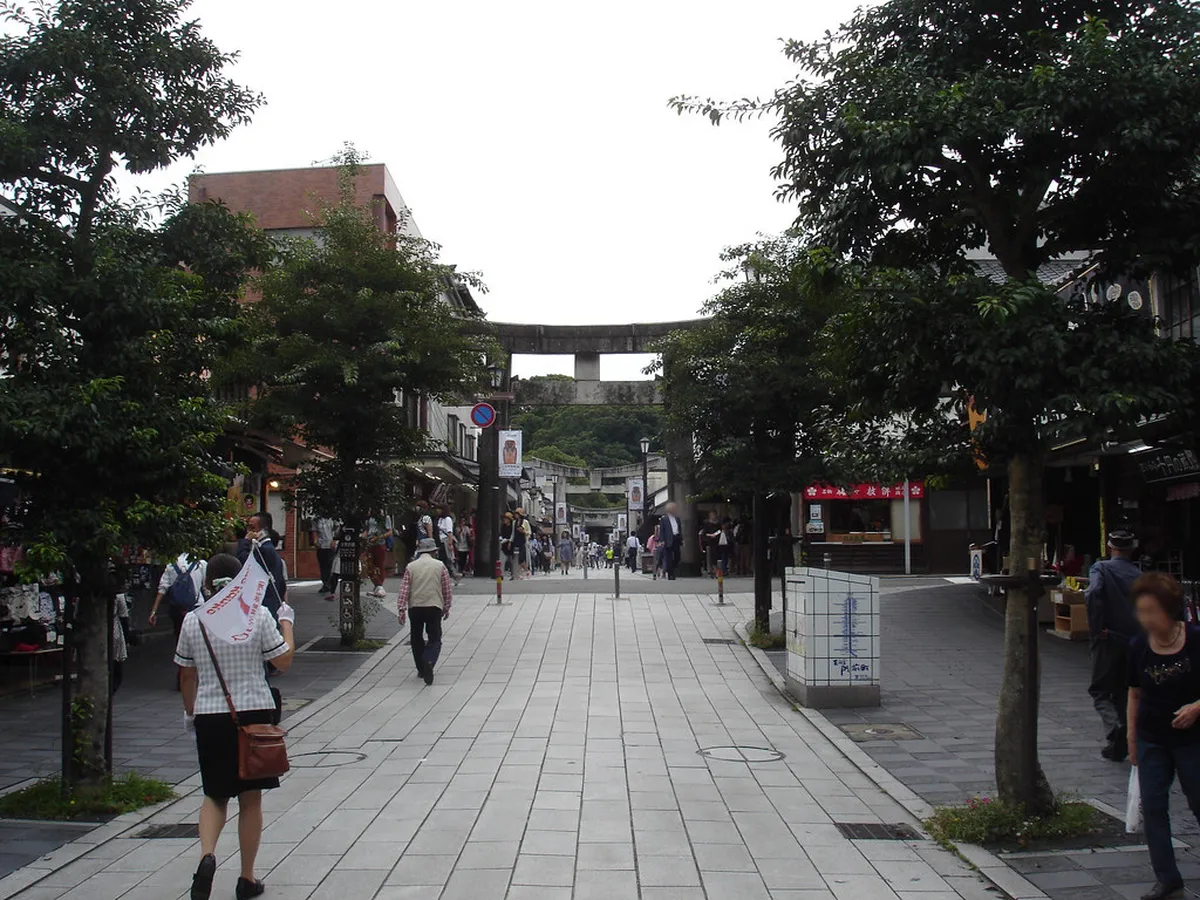
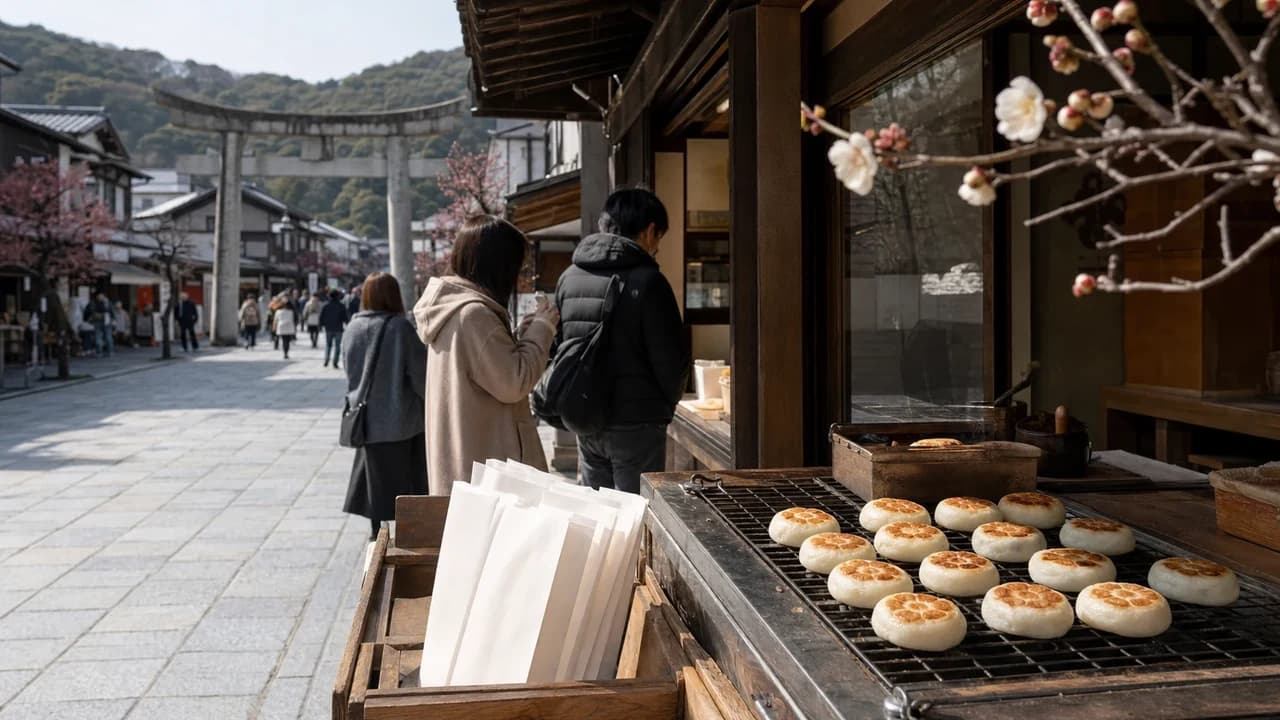
Omotesando, the shopping street leading up to the shrine, is the easiest place to eat as a vegetarian or vegan without a reservation. Umegae Mochi, the grilled rice cake stamped with a plum blossom design, is made from rice, sweet red bean paste, and sugar, which keeps it vegan by default. Shops along the street sell them hot off the grill. The Omotesando shopping street guide covers where to find the best versions and how the shops differ. Recipes rarely change, though an occasional seasonal batch could use an egg wash, so ask if avoiding all animal products matters to you. For a coffee break, Starbucks Dazaifu Omotesando occupies a building designed by architect Kengo Kuma and offers soy milk as a dairy alternative. The Kengo Kuma-designed Starbucks guide has more on the building itself. A restaurant called Plant-based Cafe NICE has drawn attention in Fukuoka's vegan dining scene for chickpea patty burgers and soy milk-based ice cream. It appears to sit outside Dazaifu proper, so confirm its current distance and hours before planning a special trip.
The Dashi Survival Guide: Confirming Ingredients in Japanese
Dashi is the savory stock behind much of Japanese cooking, and it is usually made from bonito flakes, dried sardines, or a mix of the two. A dish labeled vegetable-based on a menu can still be simmered in a bonito dashi, which makes a direct question worth asking at the counter. A useful survival phrase is Kore wa dashi ni katsuobushi ka niboshi wo tsukatte imasu ka, which asks whether the stock uses bonito flakes or dried sardines. Staff at sit-down restaurants like Umenohana and Sushi Shima are used to dietary questions and can usually confirm ingredients quickly. At smaller stalls, showing a written note that states bejitarian or vegan in Japanese, along with niku, sakana, dashi nashi de, meaning without meat, fish, or dashi, is a reliable backup when a spoken exchange gets complicated.
Timing, Transport, and Reservations for a Dazaifu Food Day
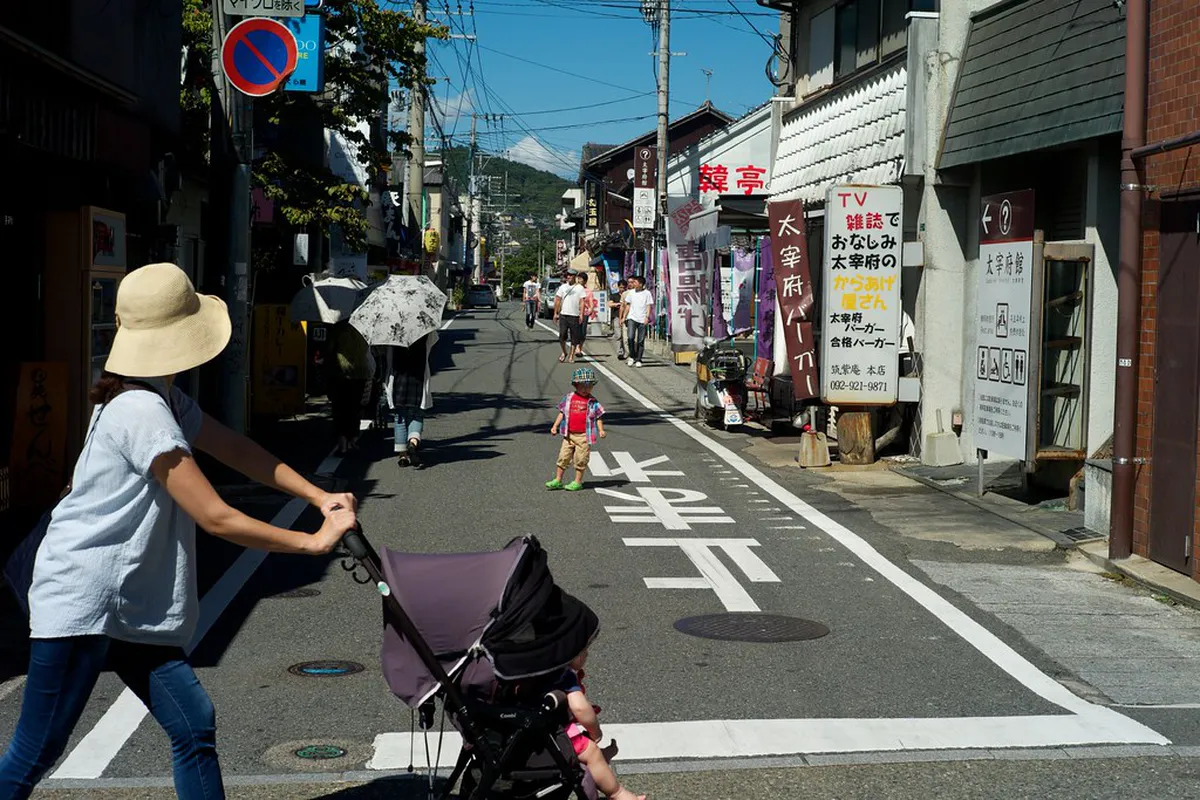
Most restaurants around Dazaifu Tenmangu wind down once shrine crowds thin, and many close somewhere between 5:00 PM and 6:00 PM. Booking early in the day, or reserving a lunch slot at Sushi Shima, avoids the risk of arriving after last orders. Dazaifu is reached from central Fukuoka on the Nishitetsu line, which keeps a food-focused day trip simple to plan around train times. The Nishitetsu vs JR transport comparison breaks down the route options in detail. For a broader logistics rundown covering the shrine visit itself, the day-trip planning logistics guide is worth reading first. Souvenir shops on Omotesando tend to stay open later than restaurants, so schedule the meal stop before browsing rather than after. Dietary planning often means extra time at each stop, so allow more buffer than a typical sightseeing-only visit.
A Half-Day Vegetarian and Vegan Itinerary in Dazaifu
A half-day plan keeps the food logistics simple while still covering Dazaifu's main sights. Start at the shrine, break for a reserved lunch, then finish with a museum stop and a mochi snack. Travelers visiting during plum or cherry blossom season should build in extra time, since shrine crowds peak and restaurant queues lengthen. The plum and blossom season timing guide has specifics on those dates. For sights beyond this itinerary, the more things to do nearby guide lists additional stops. The Dazaifu attractions roundup covers the town's landmarks in one place. Coffee-focused travelers can check the Dazaifu's cafe roundup guide. Anyone planning non-vegetarian snacks for the rest of the group should see the street snacks guide for Dazaifu.
- Morning: Visit the shrine first. The Dazaifu Tenmangu visitor guide maps out the route through the grounds.
- Midday: Confirm the lunch reservation at Sushi Shima before you arrive, since walk-ins are not guaranteed a seat.
- Lunch: Eat the vegan ramen lunch set at Sushi Shima, timed to its lunch-only service window.
- Afternoon: Head to the Kyushu National Museum visit, then stop on Omotesando for a hot Umegae Mochi.
- Optional extension: Add a stop from the Fukuoka day-trip itinerary if time allows.
Muslim-Friendly Overlap and Other Dietary Notes
Vegan dishes and halal-friendly dishes often overlap in Japan, since both typically avoid pork and rely on similarly restricted broths, but the two labels are not identical. A vegan tofu kaiseki course, for example, will not automatically carry halal certification even though it contains no meat. Ordering a strictly vegan dish sidesteps pork by default, but mirin and sake are common in Japanese cooking, so ask separately about alcohol-based seasonings if that matters for halal needs. Fukuoka Prefecture's tourism authority has previously published a joint vegan and Muslim-friendly dining resource covering the wider prefecture, though its current availability should be checked directly rather than assumed. Travelers with halal-specific requirements should confirm certification with each restaurant rather than relying on a vegan label alone.
Frequently Asked Questions
Is Dazaifu good for vegetarians and vegans?
Dazaifu works well for vegetarians and vegans who plan ahead, thanks to tofu-focused kaiseki at Umenohana, a vegan ramen set at Sushi Shima, and naturally vegan Umegae Mochi on Omotesando. Walk-in options are limited, so reserve sit-down meals before you arrive.
Does Umegae Mochi contain any animal products?
Umegae Mochi is made from rice, sweet red bean paste, and sugar, which keeps the standard recipe vegan. Rare seasonal versions could use an egg wash, so ask at the counter if that matters to you.
Do I need a reservation to eat vegan in Dazaifu?
Yes, for the two main sit-down options. Umenohana's vegan kaiseki menu needs advance booking, ideally a day or two ahead, and Sushi Shima's vegan ramen lunch set also requires a reservation. Street food like Umegae Mochi and a Starbucks coffee need no booking at all.
What is dashi, and why does it matter for vegans in Japan?
Dashi is a savory stock usually made from bonito flakes, dried sardines, or both. It shows up in miso soup and many vegetable dishes that look plant-based on the surface. Asking staff directly whether a dish uses dashi is the most reliable way to confirm it is vegetarian.
How much time should I plan for a vegan-focused day trip to Dazaifu?
Half a day covers the shrine, a reserved lunch, and one museum or shopping stop comfortably. A full day allows more buffer for dietary questions at each stop and a slower pace around Omotesando.
Free guide: Japan's Hidden Gems
12 under-the-radar places beyond Tokyo & Kyoto — with the best season to visit each and a local tip you won't find in the guidebooks.
You might also like
Continue reading
More guides you'll find useful