
Japan Spring Festivals 2026: Dates, Regions & Planning Guide
Plan the 2026 Japan spring festivals season: Aoi Matsuri, Sanja Matsuri, Golden Week clashes, and regional picks with confirmed dates, temperatures, and price swings.
On this page
Last updated September 2026, this guide maps the japan spring festivals calendar from Nara's fire rite in early March through Golden Week's dragon boat races in Okinawa. Cherry blossoms draw the crowds, but these matsuri carry an older purpose: prayers to local kami for a strong harvest before summer's heat and storms arrive. Use the confirmed 2026 dates, regional picks, and Golden Week logistics below to build an itinerary around specific festivals rather than a single photo stop.
Why Spring Matsuri Differ From Summer and Autumn Festivals
Rice planting anchors Japan's agricultural calendar, and spring matsuri exist to protect it. Shinto communities hold otaue-matsuri rice-planting rites and ask local kami for a strong harvest before summer's heat arrives. Summer festivals shift that prayer toward protection, asking for relief from pests, typhoons, and disease, a purpose that carries into events such as the Aomori Nebuta Festival in August. Autumn festivals then thank the kami for the harvest itself. Reading spring matsuri through this lens changes trip planning, since festivals built around Heian-period costumes or fire rites usually predate the sakura marketing built around them by centuries. A full year-round map sits at the festivals in Japan hub. Summer's calendar continues in the Japan summer festivals guide.
The 2026 Japan Spring Festivals Calendar at a Glance
Fifteen festivals anchor Japan's spring calendar between early March and late May 2026. The season breaks into three windows. Early March brings pre-bloom rites, led by Nara's Omizutori fire-and-water ceremony at Todai-ji. Late March through mid-April brings sakura-driven crowds across the country. Golden Week, from April 29 to May 5, brings the year's busiest rush. Hokkaido's canola fields close the season in late May. Broader Nara listings sit at the Nara festivals and events guide. The Japan National Tourism Organization also tracks many of these dates as festivals confirm them each year. Cross-check every date below against flight and hotel holds before locking a route.
| Festival | Region | 2026 Dates | Highlight |
|---|---|---|---|
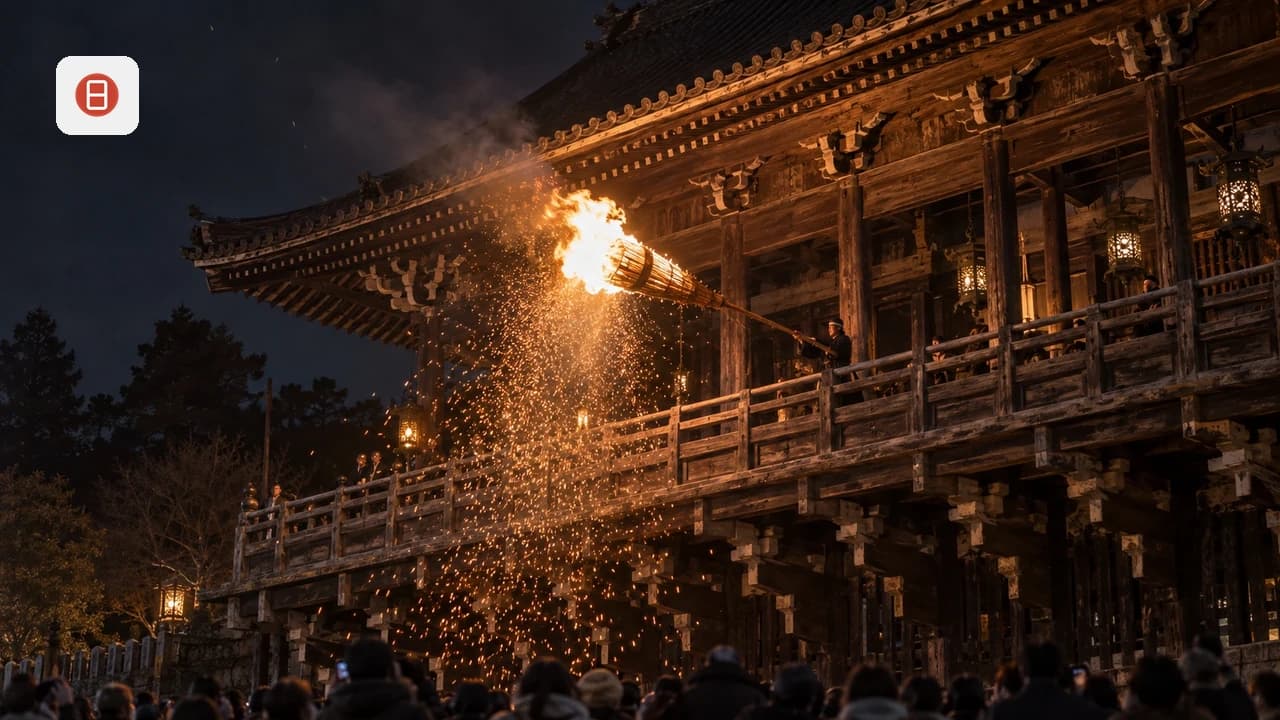
| Omizutori (Shuni-e) | Nara, Kansai | March 1–14 | Fire-and-water rite at Todai-ji |
| Beppu Hattou Onsen Matsuri | Beppu, Kyushu | April 1–5 | Free public hot springs |
| Takayama Spring Festival (Sanno Matsuri) | Takayama, Tokai | April 14–15 | Yatai floats with karakuri dolls |
| Ushibuka Haiya Festival | Amakusa, Kyushu | April 17–19 | Harbor parades |
| Hirosaki Cherry Blossom Festival | Hirosaki, Tohoku | April 17 – May 5 | 2,600 trees, night illumination |
| Tonami Tulip Fair | Tonami, Hokuriku | Late April – early May | 3 million tulips |
| Hakata Dontaku | Fukuoka, Kyushu | May 3–4 | Roughly 830-year parade tradition |
| Naha Hari | Naha, Okinawa | May 3–5 | Dragon boat races |
| Seihaku Festival | Nanao, Hokuriku | May 3–5 | Dekayama float, 12m high, 20 tons |
| Ikazaki Kite Battle Festival | Uchiko, Shikoku | May 5 | 400-year-old kite battles |
| Kanda Matsuri | Tokyo, Kanto | May 11–17 | Kage Matsuri (2026 is an even year) |
| Aoi Matsuri | Kyoto, Kansai | May 15 | 8km Heian-period procession |
| Sanja Matsuri | Tokyo, Kanto | May 15–17 | About 1.8 million visitors |
| Nikko Toshogu Grand Spring Festival | Nikko, Kanto | May 17–18 | Yabusame horseback archery |
| Takikawa Nanohana Festival | Takikawa, Hokkaido | Late May | Canola flower fields |
Early Spring vs. Peak Bloom vs. Golden Week: A Season Comparison for 2026
Spring in Japan splits into four practical windows rather than one long season. Daytime highs in Tokyo climb from about 13°C (55°F) in early March to roughly 23°C (73°F) by Golden Week, and lodging prices climb even faster. A Takayama guesthouse room that lists around ¥9,000 a night in early March can price past ¥25,000 for the same room during Golden Week. The table below matches each window to its temperatures, signature festivals, and rough cost pattern, so you can pick a window before booking flights.
Hirosaki's Cherry Blossom Festival (April 17 to May 5) extends beyond peak bloom's typical late March-mid-April window, offering spring flower viewing into May.

| Spring Window | Typical Tokyo Daytime Temp | Signature 2026 Festivals | Price & Crowd Level |
|---|---|---|---|
| Early Spring (Mar 1–20) | 13°C (55°F) | Omizutori | Lower rates outside Nara |
| Cherry Blossom Peak (late Mar–mid Apr) | 19°C (66°F) | Takayama Spring Festival, Hirosaki Cherry Blossom Festival | Book lodging 2–3 months ahead |
| Golden Week (Apr 29–May 5) | 23°C (73°F) | Hakata Dontaku, Naha Hari, Seihaku Festival, Ikazaki Kite Battle Festival | Peak rates; Takayama rooms can nearly triple |
| Late Spring (May 11–31) | 21°C (70°F) | Kanda Matsuri, Aoi Matsuri, Sanja Matsuri, Takikawa Nanohana Festival | Crowds ease outside Tokyo and Kyoto |
Tokyo's Sanja Matsuri and the Kanda Matsuri Even-Year Cycle
Asakusa carries the strongest Edo-era atmosphere of any Tokyo matsuri during Sanja Matsuri. Held over three days from May 15 to 17, 2026, the festival parades neighborhood mikoshi through Asakusa before they converge along Nakamise Street. Local estimates put attendance at about 1.8 million visitors across the weekend. Arrive at Asakusa Shrine before mid-morning to see the mikoshi lifted, not just the crowd around it. Kanda Matsuri runs May 11 to 17, 2026, at Kanda Myojin Shrine near Ochanomizu Station, and its scale follows a strict two-year cycle. Odd-numbered years bring the full-scale Honmatsuri procession; 2026 falls on an even year, so expect the smaller Kage Matsuri, with food stalls and Noh performances instead of the grand parade. For more Kanto listings across both events, check the Tokyo events guide. Tokyo's festival calendar continues into summer at the Summer Festivals in Tokyo: A Month-by-Month 2026 Guide.
Kyoto's Aoi Matsuri and the City's Three Great Festivals
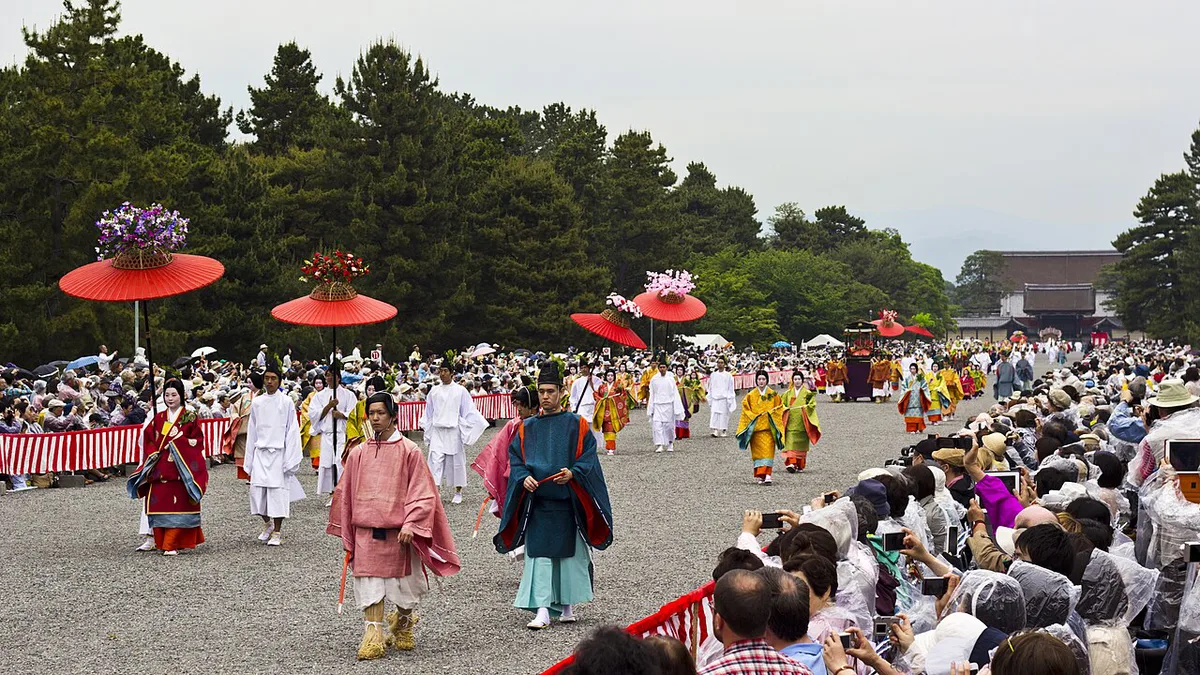
Aoi Matsuri unfolds on May 15, 2026, with a procession that moves along an 8-kilometer route between Shimogamo Shrine and Kamigamo Shrine. Participants dress in Heian-period court costume, so the effect reads more like a moving history exhibit than a street party. Alongside Gion Matsuri and Jidai Matsuri, it forms Kyoto's set of three major festivals, each built around imperial-era pageantry rather than crowd-pulling floats. Gion Matsuri runs through July; the Gion Matsuri guide covers its float schedule. Jidai Matsuri follows every October 22, and the Jidai Matsuri guide covers that procession in full. Same-city spring listings beyond Aoi Matsuri sit at the Kyoto festivals and events guide.
Takayama's Sanno Matsuri: Yatai Floats and Karakuri Dolls
Takayama's Sanno Matsuri runs every April 14 and 15 at Hie Shrine, opening the city's two-festival year. Several ornately carved yatai floats parade through the old town, some fitted with karakuri, mechanical dolls that perform short scripted routines using wooden gears rather than motors. Evening processions add paper lanterns to each float, which is the detail most worth timing a visit around. The autumn counterpart swaps florals for maple color and adds more floats to the lineup, covered in the Takayama Autumn Festival guide. Broader city listings sit at the Takayama festivals and events guide.
Regional Spring Festivals Worth the Detour
Beyond the capital circuit, several regional festivals reward a longer detour. Hirosaki's cherry blossom festival runs April 17 to May 5, 2026, framing 2,600 trees, some over 300 years old, against Hirosaki Castle; illuminated night viewing draws crowds after dark. Broader Aomori listings sit at the Aomori festivals and events guide. Tonami's Tulip Fair fills a Toyama park with about 3 million tulips over roughly two weeks in late April into early May. It includes a four-meter tulip corridor called the Flower Otani. Otabi Festival, a short trip from Kanazawa in Komatsu, pairs eight illuminated floats with children's kabuki performances on the second weekend of May. Its floats date back more than 300 years. Kanazawa's own spring calendar continues at the Kanazawa festivals and events guide. Its early-summer follow-up is the Hyakumangoku Festival itinerary. Seihaku Festival in Nanao, Ishikawa, runs May 3 to 5 around Dekayama. The float measures 12 meters high and weighs 20 tons, often cited as the largest built for any Japanese matsuri. Beppu Hattou Onsen Matsuri opens the city's hot springs to the public for free from April 1 to 5, alongside portable-shrine parades through Beppu's shopping streets. Kashima Festival off Hojo, Ehime, restages 12th-century seafaring rituals across two days in late April, including a boat-borne dance called Kaineri Odori. Ikazaki Kite Battle Festival turns the Oda River in Uchiko, Ehime, into a 400-year-old kite-fighting contest every May 5. Takikawa Nanohana Festival closes the season in late May with canola fields northeast of Sapporo. It's reachable by rail from the Sapporo events guide's home base. Daytime highs there stay closer to 18°C (64°F), noticeably cooler than Honshu on the same date.
- For photography: Hirosaki's night illumination and the Flower Otani corridor at Tonami's Tulip Fair.
- For families: Takikawa Nanohana Festival's open fields and Ikazaki Kite Battle Festival's riverside viewing.
- For history: Nikko Toshogu's Yabusame horseback archery and Otabi Festival's 300-year-old floats.
Golden Week Festivals and the Crowd-and-Cost Trade-off
Golden Week runs April 29 to May 5, 2026, and it collides with several major festivals at once. Hakata Dontaku fills Fukuoka's streets on May 3 and 4 with a parade tracing roughly 830 years of local history. Naha Hari runs the same window in Okinawa, where crews from Naha, Kume, and Tomari race traditional boats offshore over three days. Seihaku Festival's Dekayama floats and Ikazaki Kite Battle Festival's river contest both land on May 3 to 5. Travelers chasing every event have to pick one region instead. Golden Week also pushes lodging to its highest point of the spring. That Takayama guesthouse room near ¥9,000 in early March can list past ¥25,000 for the same May dates. Reserved Shinkansen seats on core routes sell out days in advance. Fukuoka's festival calendar continues into summer at the Fukuoka festivals and events guide. Its July counterpart is the Hakata Gion Yamakasa Festival. Naha's other spring listings sit at the Okinawa festivals and events guide.
Planning Logistics: Trains, Ryokan Bookings, and Crowd Timing
A national or regional JR Pass covers most routes in this guide, including Shinkansen legs to Kyoto, Takayama's nearest stations, and Kyushu's Hakata terminal. Reserved seats on peak Golden Week trains still need booking well ahead of travel. Ryokan and guesthouse rooms in Takayama and Kyoto typically sell out six or more months before Golden Week and the peak cherry blossom weeks. Lock accommodation before flights when either city anchors the trip. Shrine grounds and parade routes fill fastest in the hour before a festival's official start time. Photography from tripods or elevated positions is often restricted near moving floats and mikoshi, out of safety for the crews carrying them. Cross-check flight and rail pricing against the best time to visit Japan guide before settling on exact travel dates. Confirm current entry and photography rules through the Japan National Tourism Organization's official site.
Sanja Matsuri draws 1.8 million visitors across three days; arriving early hours before start time helps you see the actual procession through Asakusa.
Common Mistakes to Avoid When Booking a Spring Festival Trip
Underestimating Golden Week transit times is the most common error. The week from April 29 to May 5 concentrates much of the country's domestic travel into a single window, and reserved Shinkansen cars can sell out days ahead. A second mistake is missing the Kanda Matsuri's two-year cycle. Traveling to Tokyo in 2026 expecting the grand Honmatsuri means arriving for the smaller Kage Matsuri instead, since Honmatsuri only returns in odd-numbered years. A third mistake is treating every shrine procession like a public park. Many spring matsuri involve sacred objects or reenacted court ritual, so follow posted photography rules and stay clear of the roped procession path even when the crowd looks thin. Building a realistic day-by-day plan for the wider trip starts at the Japan Travel Guide: Plan Your Trip with Expert Tips & Itineraries. General matsuri etiquette that applies across every festival in this piece is covered in the Japan Matsuri Guide 2026: Best Festivals, Dates & Planning Tips.
Kawazu Cherry Blossom Festival: An Early Izu Alternative
Kawazu Cherry Blossom Festival is the strongest choice for travelers arriving before Tokyo and Kyoto reach peak bloom. Kawazu-zakura is an early-flowering variety with deep pink petals. It usually blooms from February into early March, although the exact festival period follows the flowers.
The main viewing area follows the Kawazu River near Kawazu Station on the Izu Peninsula. About 850 trees line a roughly four-kilometer riverside stretch, with food stalls and evening illumination during the festival period. The original Kawazu-zakura tree was discovered locally in the 1950s.
Take the limited-express Odoriko from Tokyo toward Kawazu, or connect through Atami. Reserve seats for weekends, when day-trippers make the small station crowded. Arrive early for the riverside walk, then continue to nearby Kawazu Nanadaru waterfalls or an Izu onsen stay. Check the official bloom report before committing to non-refundable accommodation.
Frequently Asked Questions
Which Japan spring festivals work best for first-time visitors?
Sanja Matsuri in Tokyo and Aoi Matsuri in Kyoto sit inside major cities with existing rail access, adding minimal extra logistics to a first Japan itinerary. Sanja Matsuri runs May 15 to 17, 2026, in Asakusa. Aoi Matsuri's 8-kilometer procession happens on May 15 between Shimogamo and Kamigamo shrines. Travelers with extra time can add Hirosaki Cherry Blossom Festival, whose illuminated 2,600 trees run through May 5.
How much time should you set aside for the Takayama Spring Festival?
Plan on a half day for the festival itself, since the yatai floats and karakuri performances run within a few blocks of Hie Shrine on April 14 and 15. Add a full extra day if the trip also covers Takayama's old town or a comparison visit to the autumn festival.
Are spring festivals in Japan free to attend?
Street processions and parade viewing are free at nearly every festival in this guide, including Sanja Matsuri, Aoi Matsuri, and Hakata Dontaku. Some add-ons cost extra, such as reserved seating near a shrine's main stage or a donation expected at a specific ritual. Check each festival's official page for the current year's seating or entry policy before travel.
Is visiting Japan during Golden Week worth it for the festivals?
Golden Week concentrates several major events into one week. Hakata Dontaku, Naha Hari, Seihaku Festival, and Ikazaki Kite Battle Festival all land between April 29 and May 5, 2026. That density comes with a trade-off: transport and lodging both peak. A Takayama guesthouse room that runs about ¥9,000 in March can price past ¥25,000 for the same May dates. Golden Week works best for travelers focused on one region rather than covering the whole country in a single week.
What does the Kanda Matsuri's 'Kage Matsuri' year mean for 2026 visitors?
Kanda Matsuri alternates scale by year. Odd-numbered years hold the full Honmatsuri procession, and even-numbered years hold the smaller Kage Matsuri. 2026 is an even year, so expect food stalls, Noh performances, and shrine visits at Kanda Myojin rather than a large-scale parade. The next full Honmatsuri returns in 2027.
When do cherry blossoms overlap with Japan's spring matsuri?
Cherry blossoms typically peak in Tokyo and Kyoto from late March through early April, overlapping with the Takayama Spring Festival on April 14 and 15. Hirosaki's festival then extends the season into early May with its own bloom. Kawazu's early-blooming variety in Shizuoka can flower as early as February, well ahead of the main season. Because bloom dates shift year to year, check a current forecast before locking festival dates.
Free guide: Japan's Hidden Gems
12 under-the-radar places beyond Tokyo & Kyoto — with the best season to visit each and a local tip you won't find in the guidebooks.
You might also like


Continue reading
More guides you'll find useful


