Nagasaki Events Calendar: Festivals Month by Month (2026 Guide)
Plan around Nagasaki's festival year: Lantern Festival dates, Kunchi booking windows, Shoro Nagashi, and Huis Ten Bosch illuminations for 2026.
On this page
Last updated September 2026, this Nagasaki events calendar organizes the prefecture's festival year by season and by location. Nagasaki City events and the separate Sasebo and Huis Ten Bosch corridor run on different calendars, so planning both takes an extra travel day. Three events anchor the year: the Nagasaki Lantern Festival in winter, the Shoro Nagashi spirit boat procession in August, and Nagasaki Kunchi in October.
The Nagasaki Events Calendar at a Glance
Nagasaki's festival calendar mixes fixed dates with lunar-calendar events that shift year to year. Crowd levels below reflect editorial assessment based on venue size and typical turnout, not official visitor counts. Events with the highest crowd levels also tend to offer the strongest photo opportunities, since dense lantern displays and parade routes create the most visual density. Pair any of these dates with sightseeing using the Nagasaki attractions guide to fill non-event days. This guide sits alongside the broader Nagasaki festival planning guide, which covers booking strategy across the full year.
| Season | Month | Event | Location | Crowd Level |
|---|---|---|---|---|
| Winter | Jan-Feb | Nagasaki Lantern Festival | Shinchi Chinatown, Nagasaki City | High |
| Winter | Dec | Huis Ten Bosch Kingdom of Light | Huis Ten Bosch, Sasebo | Medium |
| Spring | Mar | Tateyama Park Cherry Blossoms | Tateyama Park, Nagasaki City | Medium |
| Spring | Apr | Nagasaki Tall Ships Festival | Nagasaki Seaside Park | Medium |
| Spring | Apr-May | Hasami Porcelain Festival | Hasami Town | Medium |
| Summer | Jul | Nagasaki Port Festival & Peiron | Nagasaki Port / Matsugae Pier | High |
| Summer | Aug 15 | Shoro Nagashi | Nagasaki City streets | High |
| Autumn | Oct 7-9 | Nagasaki Kunchi | Suwa Shrine and city center | High |
| Autumn | Oct-Nov | Yosakoi Sasebo Festival | Sasebo | Medium |
Winter: Lantern Festival and Huis Ten Bosch Illuminations (December-February)
Nagasaki's winter calendar opens with the year's biggest event, the Nagasaki Lantern Festival. Roughly 15,000 lanterns fill Shinchi Chinatown, Chuo Park, and the Kanko-dori Arcade for the Lunar New Year. 2026 dates run February 6 through February 23, an 18-day stretch, with lighting hours from 5:00 PM to 10:00 PM most nights. Shinchi Chinatown gets the densest lantern coverage and the Emperor's Parade route, while Minato Park offers clearer sightlines for photos. The Lantern Festival logistics guide covers parade times and crowd patterns by night of the week. Confirm current dates on the official prefecture tourism site, since the festival follows the lunar calendar and shifts every year.
Huis Ten Bosch runs its Kingdom of Light illumination through the winter season in Sasebo, about 1.5 hours from Nagasaki City by train. December 31 adds a Countdown Fireworks event on top of the regular illumination. Advance tickets for the most recent countdown were priced at ¥7,900. Check the Huis Ten Bosch official English site for the current year's countdown pricing before booking. A standard evening visit costs less and skips the countdown crowd while still covering the full illumination grounds. The Kingdom of Light guide breaks down ticket tiers and the best photo spots inside the park.
For a lower-crowd winter option, the Nomozaki Daffodil Festival runs January 31 through February 15, overlapping the tail end of the Lantern Festival. It draws a fraction of the Chinatown crowds and works as a half-day add-on for nature-focused travelers already based in Nagasaki City. Near Sasebo, the Kujukushima Oyster Festival runs through the winter months from roughly 10:00 AM to 4:00 PM, pairing well with an off-peak Huis Ten Bosch day.
Spring: Sails, Sakura, and Porcelain (March-May)
Spring opens with two competing cherry blossom parks in Nagasaki City. Tateyama Park holds roughly 700 cherry trees and peaks between March 27 and April 5 in a typical year. Kazagashira Park is smaller, with about 350 Someiyoshino trees lit by paper lanterns during its own festival window, plus a Ryoma Sakamoto statue and city views. Both parks are free to enter, and the free things to do guide lists opening hours for each.
Late April brings the Nagasaki Tall Ships Festival to Nagasaki Seaside Park. Large sailing ships from multiple countries dock in the harbor, and crews run sail drills that unfurl and stow canvas for a scheduled photo window. Evening illuminations light the ships after dark, drawing a steady but not overwhelming crowd compared to the Lantern Festival.
Golden Week overlaps with the Hasami Porcelain Festival, held April 29 through May 5 in Hasami Town, a tradition running more than 60 years. Arrive early on opening morning before the largest crowds, since popular kilns sell through their best pieces fast. Ask vendors about shipping options when buying more than a small set, since porcelain rarely survives checked luggage.
Nagushiyama Azalea Festival runs every April in the Sasebo area, with roughly 100,000 azaleas planted on slopes overlooking the Kujukushima Islands. It sits closer to Huis Ten Bosch than to central Nagasaki, so pair it with a Sasebo-based day rather than a city-center itinerary.
Summer: Dragon Boats and the Spirit Boat Procession (June-August)
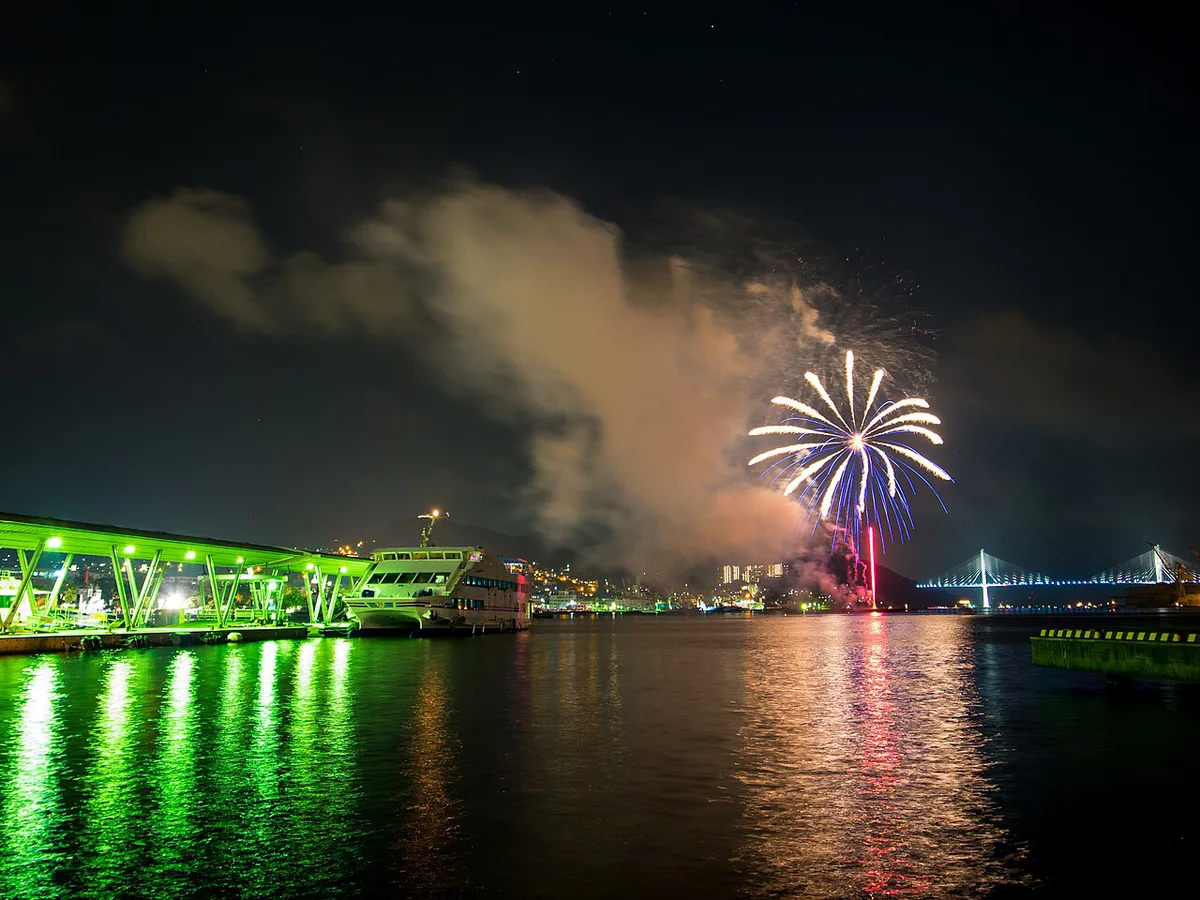
Nagasaki Peiron dragon boat racing traces back to Chinese tradition, with the first race documented in Nagasaki around 1655. Teams compete a round-trip course off Matsugae Pier, and the sport now runs alongside the Nagasaki Port Festival in late July. 2026's Port Festival is scheduled for July 25 and 26, with fireworks over Nagasaki Port on both evenings. Waterfront viewing spots fill up fast, so arrive at least an hour before the fireworks start.
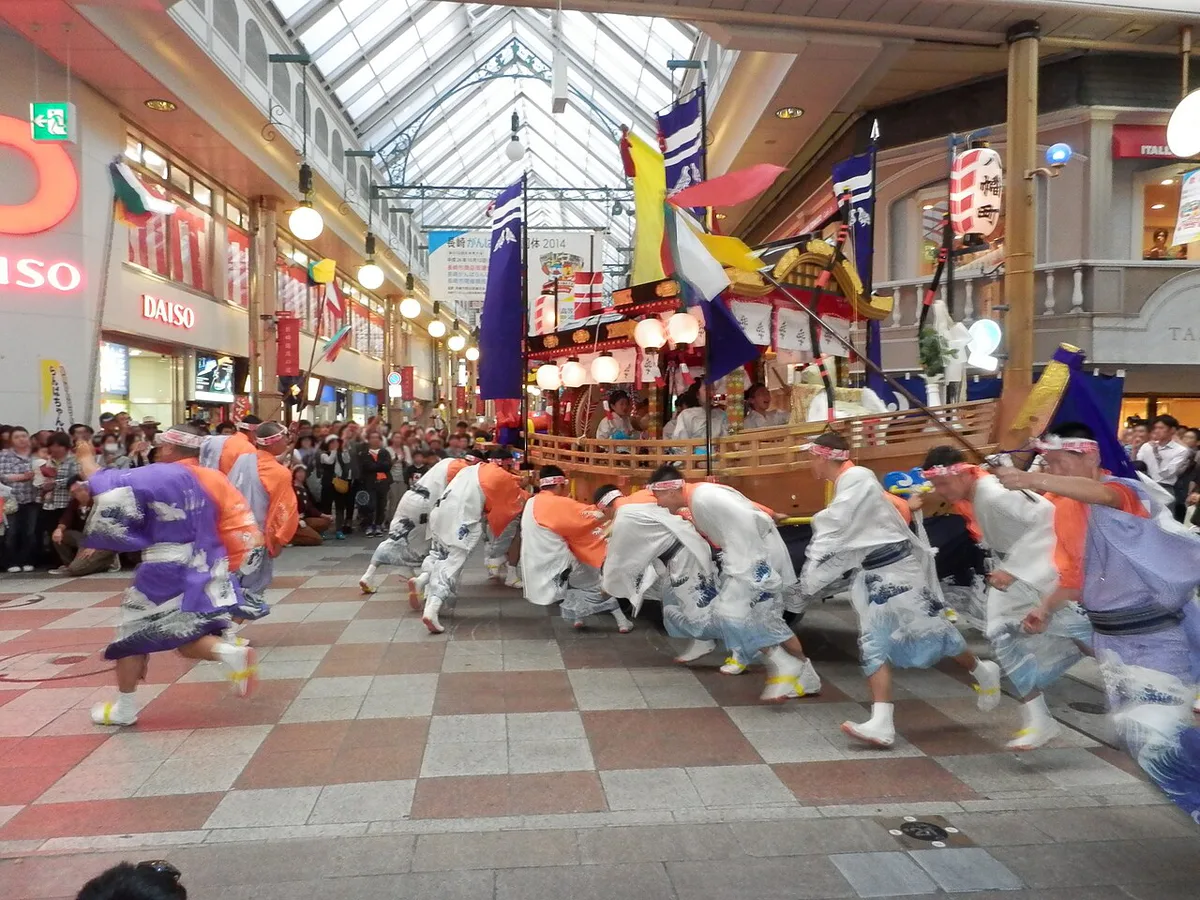
Shoro Nagashi falls on August 15 every year and is not a celebration in the usual sense. Families build handmade boats to carry the spirits of relatives who died in the past year. They walk them through Nagasaki City streets toward the harbor between 6:00 PM and 11:00 PM. Firecrackers and gongs accompany the procession the entire route, and the volume surprises most first-time visitors. Bring earplugs if noise sensitivity is a concern, and expect road closures along the procession route. The Shoro Nagashi guide maps the main procession routes and explains the mourning customs behind the event.
August 9 marks the Nagasaki Peace Memorial Ceremony, a solemn observance rather than a festival. Visitors are welcome to attend respectfully, but this is not a photography or entertainment event, and treating it as one is discouraged.
Autumn: Nagasaki Kunchi and the Grand Finale (September-November)
Nagasaki's autumn calendar opens quietly in September, then builds to its highest-profile week in October. Confucius Festival takes place the last Saturday of September at Confucius Shrine, with a lion dance and ceremonial offerings marking Confucius's birth.
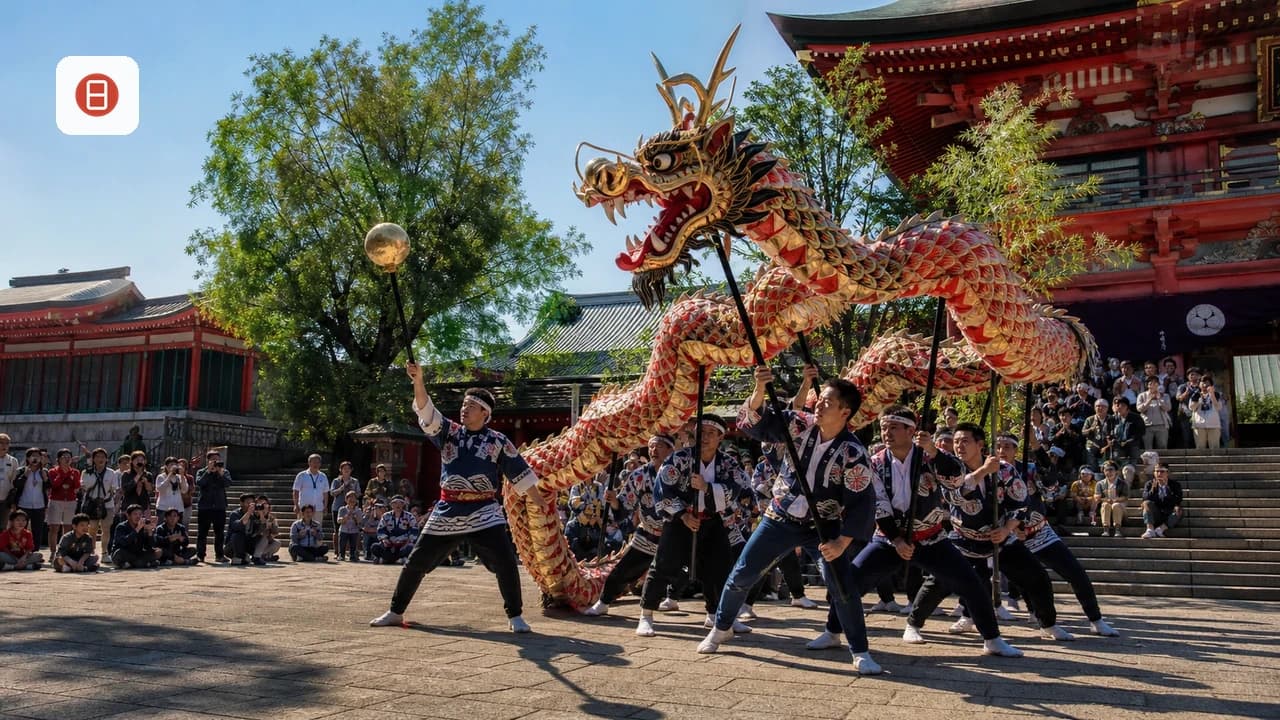
Kunchi (October 7 through 9) brings festive dragon dances and kasaboko umbrella performances at Suwa Shrine. Summer's August 15 Shoro Nagashi is the stark opposite—a mourning ceremony with firecrackers and gongs, requiring hearing protection.
Nagasaki Kunchi is the highest-profile event on the calendar, running October 7 through 9 at Suwa Shrine and around Nagasaki City. It dates back to 1634, and its dragon dances and kasaboko umbrella performances are designated an important intangible folk cultural property of Japan. Watching is free along the Niwasaki-mawari garden-showing route, where troupes perform short routines outside local businesses and homes. Paid bleacher seating at Suwa Shrine and other main venues costs extra but guarantees an unobstructed view of full-length performances. Book accommodation for Kunchi at least six months ahead, since hotel rooms in central Nagasaki routinely sell out well before festival dates are even confirmed. The Kunchi festival guide covers paid seating options and how to reserve them. Confirm exact seating and reservation details via Nagasaki City Tourism's official listings.
Takengei follows on October 14 and 15 at Wakamiya Inari Shrine, where fox-masked performers balance and tumble on tall bamboo poles. It draws a fraction of Kunchi's crowd and works well as a quieter add-on for travelers staying through mid-October.
Rural Nagasaki adds two more autumn events worth planning around. Doya Tanada Rice Terrace Festival, usually the second Sunday of October, lights roughly 2,600 lanterns along terraced rice paddies in the Hirado and Matsuura area. Yosakoi Sasebo Festival brings large-scale choreographed dance teams to Sasebo in mid-to-late October. Sasebo Kunchi runs separately November 1 through 3 at Kameyama Hachiman-gu, distinct from the Nagasaki City Kunchi despite the shared name.
For a slower November, Umegae Sake Brewery holds an open warehouse event early in the month. Glover Garden runs a night illumination spanning mid-October through late March, so shoulder-season visitors still have an evening option outside festival dates.
- Confucius Festival — last Saturday of September, Confucius Shrine
- Nagasaki Kunchi — October 7-9, Suwa Shrine and city center
- Takengei — October 14-15, Wakamiya Inari Shrine
- Doya Tanada Rice Terrace Festival — second Sunday of October, roughly 2,600 lanterns
- Sasebo Kunchi — November 1-3, Kameyama Hachiman-gu
Nagasaki City vs Sasebo and Huis Ten Bosch: Base and Transit Logistics
Nagasaki City and the Sasebo/Huis Ten Bosch area run on separate event calendars and sit roughly 1.5 hours apart by train. Treat them as two different trip segments rather than a single day out. Basing near Nagasaki Station works best for the Lantern Festival, Kunchi, Shoro Nagashi, and the Port Festival, since the Nagasaki Tram network reaches most central venues directly. Station-area neighborhoods and Chinatown-adjacent options both work for festival access; compare them in the where to stay guide.
Plan arrival well before festival days, since the roughly 35-minute taxi transfer from Nagasaki Airport into city center can extend significantly during peak travel times around Lantern Festival and Kunchi.
Huis Ten Bosch events call for a Sasebo-based night or two instead of a day trip squeezed around city plans. Sasebo has its own hotel inventory near the Huis Ten Bosch entrance, separate from Nagasaki City options. Year-round ticket options beyond the illumination season are covered in the Huis Ten Bosch planning guide. Train and flight routes into the region, including the roughly 35-minute taxi transfer from Nagasaki Airport, are covered in the getting to Nagasaki guide.
During the Lantern Festival and Kunchi, expect the Nagasaki Tram network to run near capacity during evening hours around Chinatown and Suwa Shrine. Walking between nearby venues often beats waiting for a packed tram on peak festival evenings. A sample multi-day plan that accounts for tram delays during major festivals appears in the Nagasaki itinerary guide.
Booking Windows and Mistakes to Avoid
Arriving during Kunchi or the Lantern Festival without a restaurant reservation is the single biggest planning mistake travelers make. Both events pack central Nagasaki restaurants solid for the full run, and walk-in tables become scarce by early evening. Book dinner reservations for festival nights as early as accommodation, not as an afterthought.
Booking windows vary sharply across the calendar. Kunchi needs the earliest lead time at six-plus months. Lantern Festival rooms in Shinchi Chinatown are limited, so that window fills quickly as dates approach. Spring cherry blossom weekends and the Hasami Porcelain Festival during Golden Week both benefit from booking a month ahead. Golden Week travel compounds with festival demand nationwide. Weather and crowd patterns by month appear in the best time to visit guide, useful for weighing which event to build a trip around. Nagasaki Walks, a volunteer local-guide group, keeps its own running festival list for hyper-local context.
Travelers extending beyond Nagasaki can pair a festival trip with events elsewhere in Kyushu. Neighboring festival dates to the north appear in the Kumamoto events calendar. Further south, the Kagoshima events calendar does the same for a longer regional loop.
Festival Foods to Look For
Nagasaki’s festival calendar also reflects the city’s Chinese and port-trade history. Food stalls are common around major evening events, but the best choice depends on the festival and venue. Bring cash, as temporary stalls and small local vendors may not accept cards.
- Lantern Festival: Try kakuni manju, a steamed bun filled with braised pork, or goma dango sesame dumplings around Shinchi Chinatown.
- Port Festival and Kunchi: Look for hatoshi, Nagasaki-style fried shrimp toast, alongside standard matsuri snacks such as yakisoba and grilled skewers.
- Kujukushima Oyster Festival: Winter visitors can eat locally harvested oysters near Sasebo. Wear casual clothes, since outdoor grilling areas can be smoky.
For Lantern Festival dinner, reserve a Chinatown restaurant instead of relying on stalls. Popular tables fill early, and festival crowds make a spontaneous evening meal difficult.
Frequently Asked Questions
When is the Nagasaki Lantern Festival in 2026?
2026 Nagasaki Lantern Festival dates run February 6 through February 23, an 18-day event centered on Shinchi Chinatown. Lighting hours run 5:00 PM to 10:00 PM most nights. Confirm exact dates each year, since the festival follows the lunar calendar and shifts annually.
How far ahead should you book for Nagasaki Kunchi?
Book accommodation at least six months ahead for Nagasaki Kunchi, held October 7 through 9. Hotel rooms in central Nagasaki sell out well before that window even opens in some years. Restaurant reservations deserve the same early lead time as lodging.
Is Huis Ten Bosch part of Nagasaki City?
No. Huis Ten Bosch sits in Sasebo, roughly 1.5 hours from central Nagasaki by train. Treat Huis Ten Bosch events like the Kingdom of Light illumination as a separate trip segment rather than a same-day add-on to city festivals.
What is Shoro Nagashi, and is it safe for children?
Shoro Nagashi is a mourning ceremony on August 15, not a celebration. Families walk handmade boats through Nagasaki City streets between 6:00 PM and 11:00 PM to firecrackers and gongs. Noise levels are intense and sustained, so bring hearing protection for children or anyone sensitive to loud, sudden sound.
What is the quietest month to visit Nagasaki for festivals?
June and November carry the fewest major festivals on the calendar. November still offers the Umegae Sake Brewery open warehouse event and the Glover Garden night illumination, which runs mid-October through late March. Use a quiet month to focus on sightseeing without festival-driven crowds or hotel premiums.
Which Nagasaki festival offers the best photo opportunities?
Nagasaki Lantern Festival delivers the most concentrated photo opportunities, with 15,000 lanterns and night parades through Shinchi Chinatown. Nagasaki Tall Ships Festival is a strong second choice, since illuminated ships and daytime sail drills both photograph well. Kunchi rewards photographers who secure paid seating at Suwa Shrine, since Niwasaki-mawari street viewing often means shooting over a crowd.
Free: The Nagasaki Essentials guide
Top things to do, where to stay, a perfect day plan, getting around, and the best time to go — a Nagasaki mini-guide you can take offline.
You might also like


Continue reading
More guides you'll find useful