6 Best Restaurants in Shirakawa-go: Ogimachi Village Dining Guide
Where to eat in Shirakawa-go's Ogimachi village: 6 best restaurants for Hida beef, hoba miso, and street snacks, plus dinner timing rules for 2026.
On this page
Last updated July 2026, this guide narrows down the best restaurants in Shirakawa-go to the handful worth building a meal around inside Ogimachi village. Most kitchens here close by mid-afternoon once the day-trip buses pull out, so timing decides more than taste. The list below separates sit-down gassho-zukuri dining rooms from street stalls, with the full Shirakawa-go food guide for the wider picture.
Read This Before You Eat in Shirakawa-go
Ogimachi runs on a day-trip clock, and that clock decides every meal. Most kitchens stop serving by 4:00 PM or 5:00 PM once tour buses pull out. Dinner in the historic core is mostly reserved for overnight guests. Lunch gets crowded between 12:00 PM and 1:30 PM as bus groups arrive together. Planning meal timing alongside transport matters more than picking a specific restaurant. Build the day around both constraints using the Shirakawa-go itinerary guide. Visitors coming from Takayama get the shortest ride and the widest lunch window, per the route from Takayama. A longer ride from Nagoya means less flexibility, so check bus timing on the route from Nagoya before setting a lunch reservation. Tokyo-based travelers face a similar squeeze across a longer, multi-leg trip covered on the route from Tokyo. Day-trippers based in Kanazawa should confirm bus return times on the Kanazawa day trip guide before locking in a table. Confirm current hours directly, since the official Shirakawa-go tourism site covers seasonal changes for this UNESCO World Heritage village.
- The 4:00 PM shutdown
- Most restaurants in Ogimachi close once the day-trip buses leave, so dinner is effectively reserved for overnight guests.
- Peak lunch hours
- Seating tightens between 12:00 PM and 1:30 PM as tour groups arrive together.
- Cash is king
- Many stalls and small restaurants don't take credit cards, so carry yen before you arrive.
- Walk-in only
- Most sit-down restaurants skip reservations, so build in a buffer for a short wait at midday.
- Village entry fee
- Entering Ogimachi costs ¥300 for adults and ¥150 for children, collected before you cross into the historic core.
The 6 Best Restaurants in Shirakawa-go's Ogimachi Village
The main strip of restaurants and stalls runs along a single path through the village. It connects Deai-mon Suspension Bridge to the cluster of three iconic gassho-zukuri houses at the center. Most of the following options sit within a few minutes' walk of each other. Expect a sit-down lunch set to cost more than a street snack. Both tend to run higher than equivalent meals in central Takayama, since Ogimachi's kitchens serve a captive day-trip crowd with little competition.
Most listed sit-down restaurants and stalls stay open until 4:00 PM or 5:00 PM, but Hida beef—the signature item worth timing around—often sells out by 2:00 PM, leaving afternoon arrivals with gohei mochi and vegetable sides.
- Irori
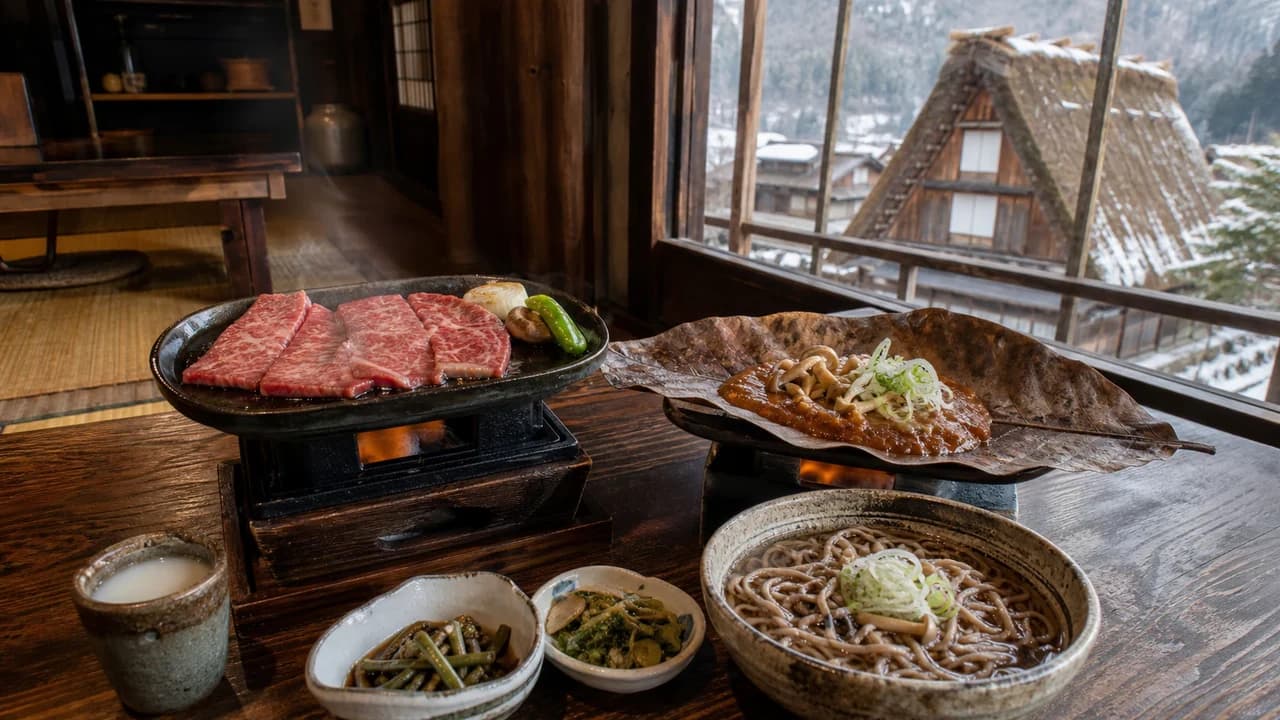
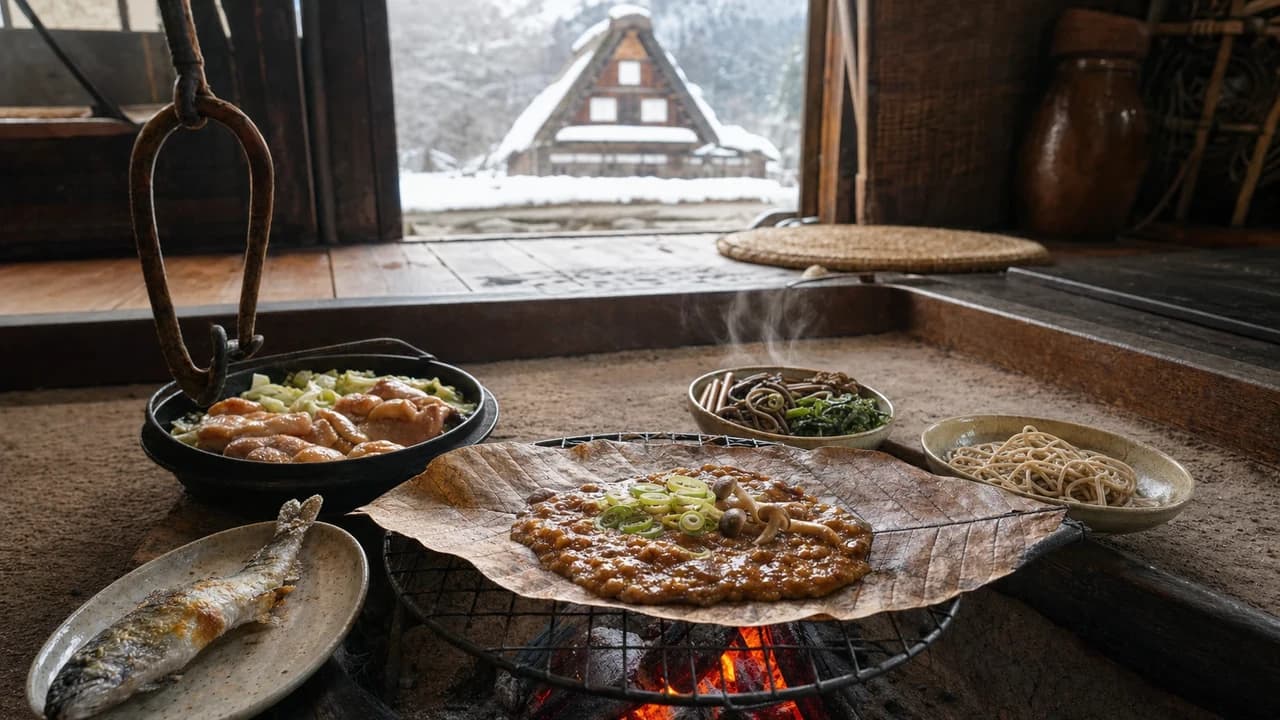
- This gassho-zukuri dining room centers on a sunken irori hearth, the open fire pit that gives it its name.
- Hoba miso, grilled on a magnolia leaf, headlines the menu alongside local mountain vegetables. The hoba miso and keichan guide covers what else typically appears.
- It operates as a lunch-only sit-down spot, so arrive before the early-afternoon rush thins out the seating.
- Hakusui-en
- Hida beef set meals anchor the menu at this farmhouse dining room, one of the more structured sit-down options in the village.
- Seasonal bear soup appears on colder-month menus, a dish tied to the surrounding mountains rather than a year-round item.
- Local doburoku sake pairs well with the beef when the restaurant has it pouring.
- Kita-no-Sho
- Tables here face the Sho-gawa river near Deai-mon Suspension Bridge, so ask for river-side seating when it's open.
- The pace suits a slower lunch between walks through the village rather than a rushed bite before the bus back.
- It also works well for a mid-afternoon coffee or tea stop, if you're pacing a day trip around bus timing rather than a single sit-down meal.
- Hida beef bun and skewer stalls
- Street-level stalls near the village center sell Hida beef buns and grilled skewers, the fastest way to taste the region's namesake beef without a sit-down check.
- Beef and potato croquettes, plus small Hida wagyu sushi assortments, turn up at the same stalls. The Hida beef in Shirakawa-go guide breaks down cuts and where to find them.
- Popular items sell out early, so lunchtime is the safer window, not late afternoon.
- Gohei mochi stalls near Deai-mon Suspension Bridge
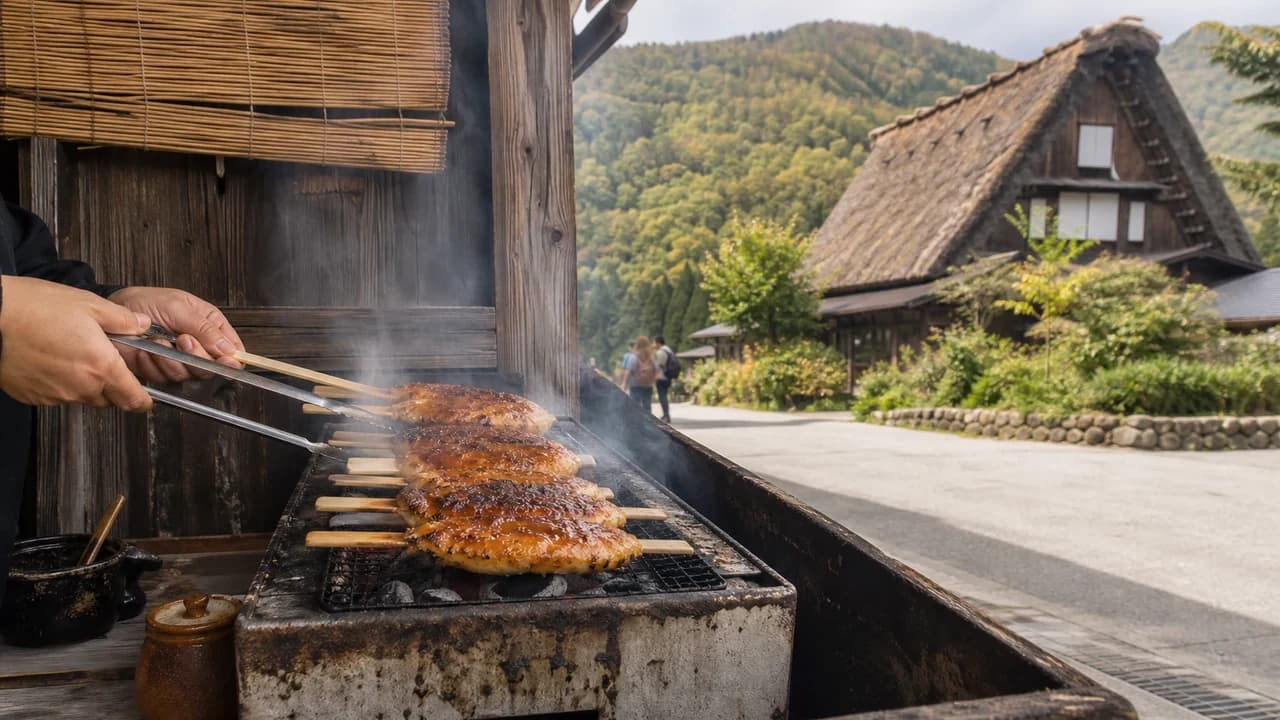
- Gohei mochi, a flattened rice cake on a skewer brushed with sweet-savory miso and grilled over charcoal, sells from stalls clustered near the bridge into Ogimachi.
- It travels well, making it a practical snack to eat while crossing in or out of the village.
- The Shirakawa-go food stalls guide rounds up the fuller lineup of stalls and snacks along this stretch.
- Ochi-udo
- Coffee and zenzai, a warm red bean soup with mochi, are the draw at this farmhouse cafe, set in a quieter corner than the main street stalls.
- It's one of the more workable stops for travelers avoiding Hida beef and fish-based dashi, though the village overall stays difficult for strict vegetarians.
- Zenzai here pairs with the same gohei mochi found at the street stalls, so it's a slower version of the same flavors.
The Minshuku Dinner: Shirakawa-go's Best Meal Isn't a Restaurant
Private dinners at a minshuku often outshine anything sold in Ogimachi's restaurants. Overnight guests eat a home-cooked meal built around Hida beef, hoba miso, and river fish, served inside the farmhouse where they're staying. Booking a stay with half-board, meaning both breakfast and dinner included, is the most reliable way to eat a full dinner inside the historic village. Book minshuku dinners well ahead during peak seasons, since farmhouse capacity is limited and fills before walk-up restaurant tables would. Expect it to run longer and more elaborate than daytime restaurant meals, since it's cooked for a small group rather than a rotating lunch crowd. The Shirakawa-go farmhouse stay guide covers how to book a gassho-zukuri stay and what a half-board dinner typically includes.
While day-trippers restricted to restaurants closing by 4:00 PM or 5:00 PM get rushed meals, overnight minshuku guests enjoy home-cooked dinners with Hida beef, hoba miso, and river fish on their farmhouse's own schedule.
Mistakes That Ruin a Shirakawa-go Meal
A handful of timing mistakes account for most disappointing meals in Ogimachi. Pair whichever meal you land on with the village's other Ogimachi attractions, since most sit within a short walk of the food stalls. Season also shifts what's realistic to plan: spring and autumn weekends bring the heaviest lunch crowds, while other seasons run calmer on weekdays. The best time to visit guide covers how weather and crowds change month to month.
- Waiting until early afternoon to eat
- Popular Hida beef items often sell out by around 2:00 PM, so treat lunch as an 11:30 AM to 1:00 PM window, not a 2:00 PM plan.
- Expecting a convenience store in the historic core
- Ogimachi has no konbini, so stock up before entering or plan meals around the stalls and restaurants above.
- Ignoring last-order times
- Many kitchens stop taking orders about 30 minutes before they close, even when the door is still technically open.
- Visiting the winter light-up without a dinner plan
- Evening light-up events draw crowds but don't extend restaurant hours; the winter light-up guide explains what to expect before counting on eating late.
- Skipping cash entirely
- ATMs are limited inside the historic core, so withdraw yen in Takayama or Kanazawa before the day trip rather than relying on cards.
Vegetarian and Vegan Options in a Hida Beef Town
Menus across Shirakawa-go lean hard on Hida beef and fish-based dashi, so vegetarian and vegan travelers face real limits. Ochi-udo is the most workable stop, since its coffee and zenzai menu doesn't depend on meat or fish stock. Beyond that, expect to build a meal around mountain vegetable sides rather than a dedicated vegetarian entree. Gohei mochi comes closer to vegetarian-friendly than most other options, though its miso glaze may still rely on a dashi base depending on the stall. Ask staff whether a dish's stock is fish-based before ordering, since menus rarely mark this explicitly.
Seasonal Dining Notes: Winter Light-Up vs Summer Access
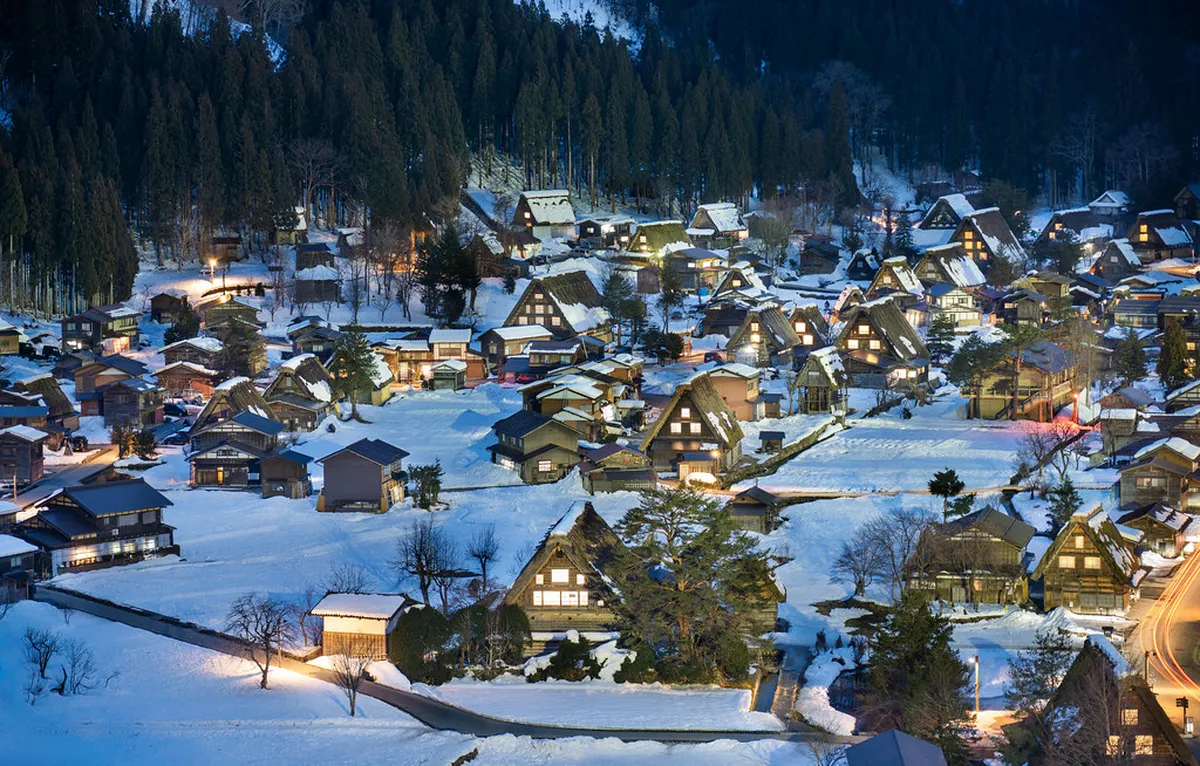
Winter light-up evenings draw crowds for the illuminated gassho-zukuri houses, not for extended restaurant hours, so treat the event as a photography plan rather than a dinner plan. Snow-season access can also run slower than summer, which shortens the realistic lunch window before the return bus. Summer day trips give the most predictable restaurant hours, since roads and bus schedules aren't weather-dependent the way they can be in winter.
Dining in Takayama If You're Heading Back for Dinner
Travelers returning to Takayama after a Shirakawa-go day trip have far more dinner options waiting there. Takayama's restaurant scene serves the same Hida beef as steak, skewers, and sushi, with longer hours than anything in Ogimachi. Both towns draw on the same Hida beef supply chain, so quality differences come down mostly to hours and menu variety rather than the meat itself. That extra time makes Takayama a more realistic spot for a relaxed, multi-course dinner than anything available in Ogimachi after dark. The Hida beef in Takayama guide rounds up where to eat once you're back in town. For a longer Japan Alps route beyond Shirakawa-go, the Japan Alps attractions guide covers what else sits along the way.
How to Find Ogimachi’s Food Street from the Bus Terminal
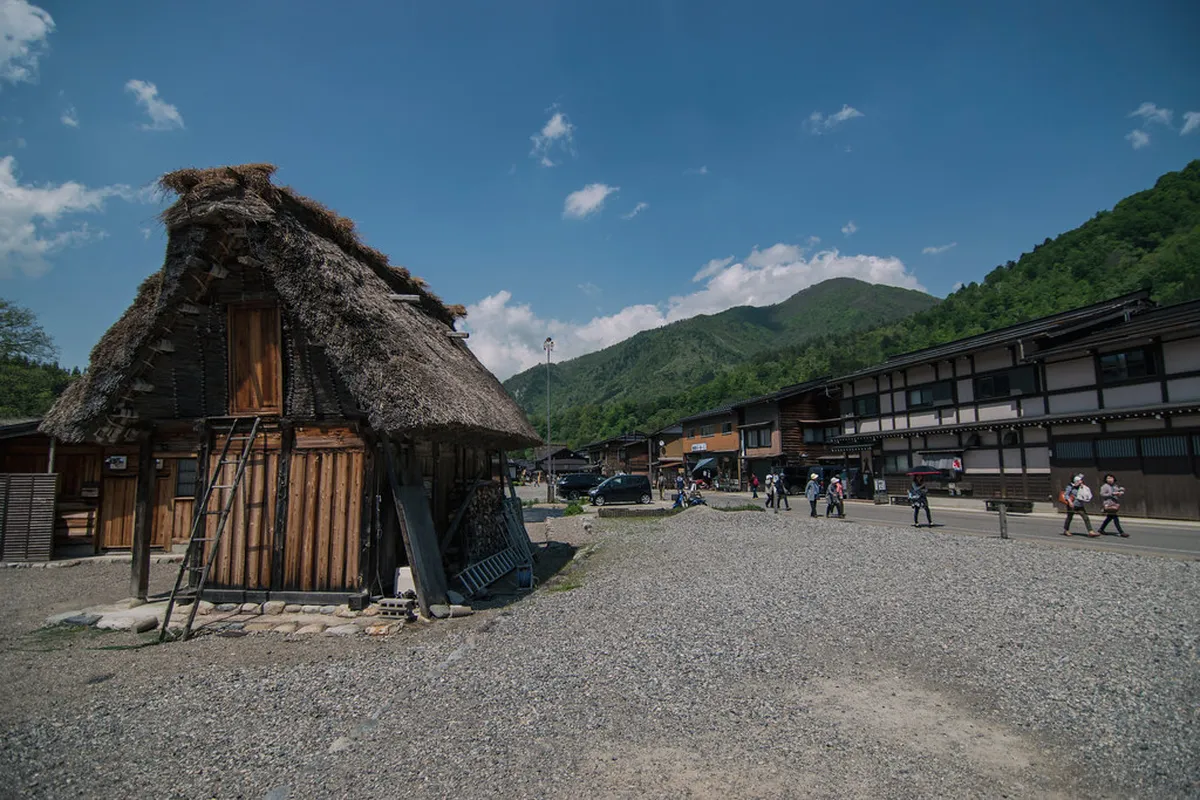
Ogimachi does not have an officially named food street. From Shirakawa-go Bus Terminal, walk into the historic village toward Wada House and follow the main village lanes south. Small restaurants, cafés, and Hida beef stalls appear along this corridor. Most are within roughly a ten-minute walk, although snow can slow the route.
Deai-mon Suspension Bridge is a different arrival point. It links the village with the Seseragi Park parking area across the Sho-gawa River. Visitors arriving by car usually cross the bridge, then encounter snack stalls and lunch options while continuing toward the central gassho-zukuri houses. Highway-bus passengers already arrive on the village side, so crossing the bridge is unnecessary.
Use Shirakawa-go Bus Terminal, Wada House, and Deai-mon Suspension Bridge as three practical landmarks. Check restaurants as you pass because kitchens are scattered rather than concentrated in one arcade. Returning later can mean a queue, an early last order, or a sold-out Hida beef item.
Check before you go: Confirm current restaurant and shop details in the Shirakawa-go Tourist Association directory, and verify seasonal access with the Japan National Tourism Organization.
Frequently Asked Questions
Can you get dinner in Shirakawa-go without staying overnight?
Not reliably. Most restaurants in Ogimachi close by 4:00 PM or 5:00 PM once the day-trip buses leave. Dinner is mostly reserved for guests with a half-board minshuku booking.
What's the best time to eat lunch in Shirakawa-go?
Aim for before 12:00 PM or after 1:30 PM to skip the peak bus-group rush. Don't wait past about 2:00 PM if you want Hida beef, since popular cuts often sell out by then.
Do restaurants in Shirakawa-go take credit cards?
Some sit-down restaurants do, but many street stalls and smaller shops are cash-only. Carry yen rather than counting on cards working everywhere.
Is there vegetarian food in Shirakawa-go?
It's limited. Ochi-udo's coffee and zenzai menu is one of the more workable stops, but most other menus lean on Hida beef and fish-based dashi.
Where is the food street in Ogimachi located?
Most stalls and restaurants line the path between Deai-mon Suspension Bridge and the cluster of three iconic gassho-zukuri houses at the village center.
Do you need a reservation for the sit-down restaurants?
Generally no. Most sit-down restaurants in Ogimachi operate walk-in only, so plan to arrive outside the 12:00 PM to 1:30 PM rush rather than trying to book ahead.
Is Shirakawa-go the same place as Shirakawa City in Fukushima?
No. This guide covers Ogimachi village in Gifu Prefecture, the UNESCO World Heritage hamlet. Shirakawa City in Fukushima is a different, unrelated place with its own restaurant listings.
How much time should you budget for a meal on a day trip?
Budget at least 45 minutes to an hour for a sit-down lunch, and build it around your return bus rather than the other way around.
What should you eat first if you only have time for one thing?
Prioritize a hot Hida beef item first, since stalls sell out of popular cuts earliest in the day. Gohei mochi travels well, so it's a safer choice to save for later in the visit.
Can large groups get a table without a reservation?
It's harder during peak lunch hours. Arrive right at opening or after 1:30 PM, since walk-in restaurants seat large groups on a first-come basis.
Free guide: Japan's Hidden Gems
12 under-the-radar places beyond Tokyo & Kyoto — with the best season to visit each and a local tip you won't find in the guidebooks.
You might also like


Continue reading
More guides you'll find useful