Shirakawa-go Food Stalls: Best Street Snacks & Timing Tips
Discover the best street food in Shirakawa-go, from Hida beef skewers to Gohei mochi. Includes prices, stall locations, and 2-hour vs. 4-hour food plans.
On this page
Last updated July 2026, this guide covers the Shirakawa-go food stalls and street snacks worth building a short visit around. Expect gohei mochi near the bus terminal and Hida beef bites on the path toward Shiroyama Viewpoint. Most visitors have two to four hours in the village, so each section sorts stops by location and by available time.
The Shirakawa-go Food Stalls and Street Snacks Strategy
Shirakawa-go rewards a snack-first plan more often than a sit-down lunch. Ogimachi, the village's historic core, is small enough to cross on foot in under an hour. Bus schedules and the climb to the viewpoint compete with restaurant queues for your time. If you have under three hours before your return bus, treat street snacks as the primary meal. Save a full sit-down meal for later in the trip. Ogimachi's restaurants work well when you have more time in the village. A dedicated Hida beef dinner works well later on the Takayama route. Street snacks generally cost ¥350 to ¥1,500 each, enough to try several dishes without one long restaurant wait. A sit-down bowl of udon elsewhere can run around ¥1,000, so the stalls are the cheaper way to sample multiple flavors. The Shirakawa-go food guide covers stalls and restaurants together for the fuller picture. Shirakawa-go is often one stop on a longer Japan Alps Travel Guide itinerary, so keep food choices quick if more villages are on the day's route.
- Under 3 hours: street snacks only, skip the restaurant wait
- 3-4 hours: one snack plus one quick sit-down dish
- 4+ hours: a full sit-down meal such as hoba miso or suttate
The Big Three Street Snacks to Try First
Three dishes show up on almost every recommendation list for the village. Gohei mochi, Hida beef bites, and doburoku soft serve each take only a few minutes to eat standing near the stall. Hida beef in Shirakawa-go comes as a croquette, a skewer, or, in winter, a steamed bun. The croquette is the cheapest and fastest option. A skewer costs more but delivers a fuller taste of the beef itself. Winter visitors often pick the steamed bun instead, useful for warming hands during a winter light-up visit. Doburoku soft serve takes its flavor from the village's own doburoku sake tradition. A non-alcoholic version is available for kids or anyone skipping alcohol. For a deeper look at regional flavors, the hoba miso and keichan guide covers related dishes in more depth.
The three main snacks cost ¥350 to ¥1,500 per item—inexpensive enough to sample multiple options before most stalls close between 4:00 PM and 5:00 PM.
| Snack | Where to Find It | Price | Hours |
|---|---|---|---|
| Gohei mochi | Zensuke | ¥350 | 9:30 AM–4:15 PM |
| Doburoku soft serve | Imafuji Shoten | ¥450 | 10:00 AM–5:00 PM |
| Hida beef croquette or skewer | Stalls along the main path | Check on-site | Varies by stall |
Where to Find Stalls Around Ogimachi
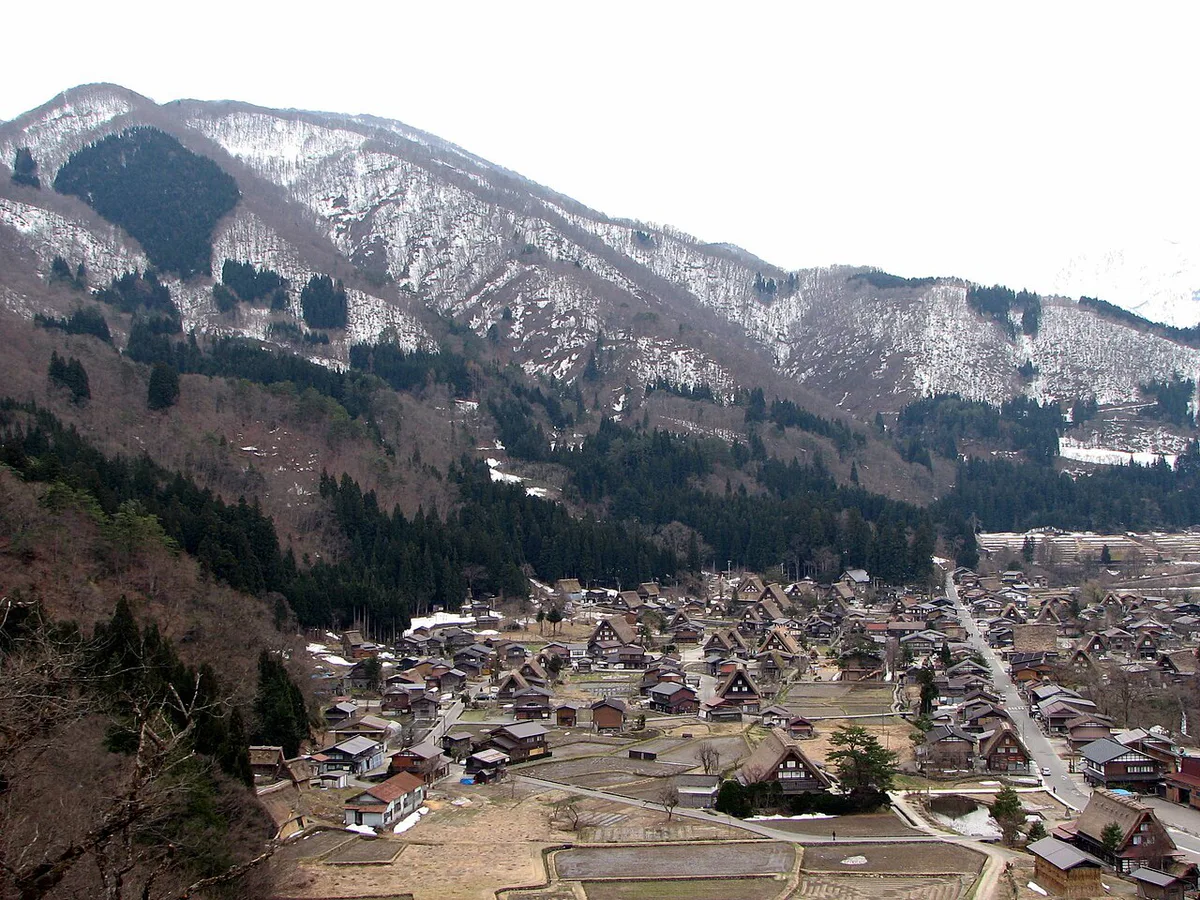
Food stalls cluster in three areas of the village. Near the bus terminal and the Wada House, small counters work well for a last bite before departure. Along the main walking path through the village center, Zensuke sells gohei mochi and other skewered snacks. Takoyaki Yui has sold dashi-flavored takoyaki near the core in the past. Confirm it is still operating before you plan a stop there. On the climb toward Shiroyama Viewpoint, Dokkorasyo sells Hida beef croquettes, skewers, and coffee next to the observatory. It's a useful stop for a hot drink with the view. Drivers arriving via the Shirakawago Road Station in Iijima may find Restaurant Minja there. Confirm its current operating status before relying on it for a meal. The official Shirakawa-go tourism site lists stalls such as Dokkorasyo and Takoyaki Yui among its eat-and-buy listings. Sightseeing stops to pair with these food areas are covered in the Shirakawa-go attractions guide.
- Bus terminal and Wada House: last-minute bites before departure
- Main village path: Zensuke and other skewer counters
- Shiroyama Viewpoint climb: Dokkorasyo for croquettes, skewers, and coffee
- Shirakawago Road Station in Iijima: Restaurant Minja for drivers, status unconfirmed
Sit-Down Alternatives When You Have More Time
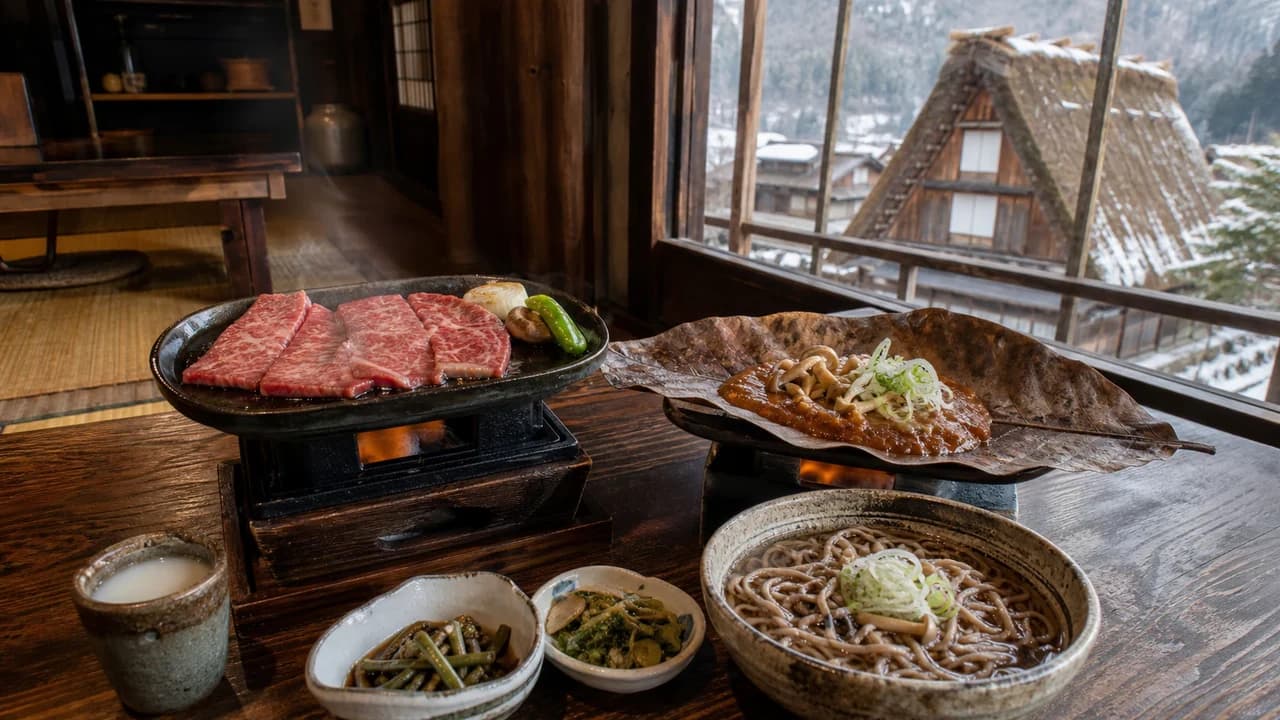
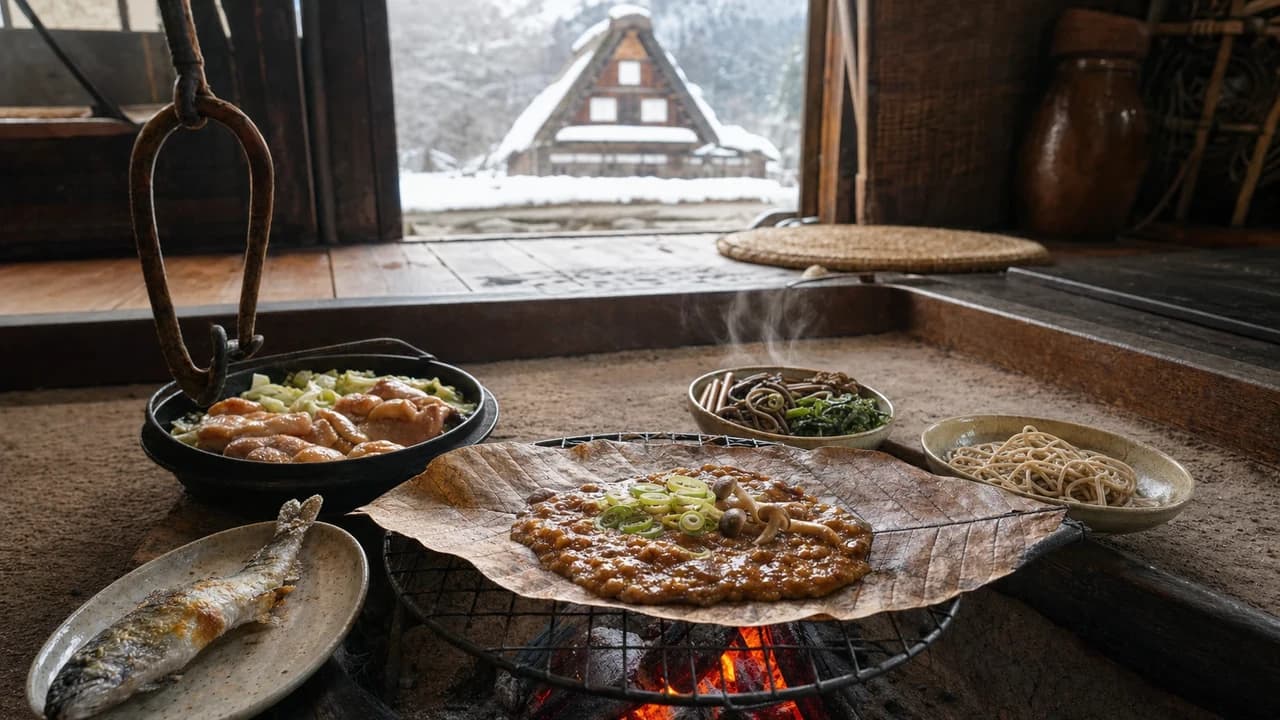
With four or more hours in the village, a sit-down meal becomes realistic. Hoba miso pairs grilled Hida beef with a savory miso paste, cooked over a magnolia leaf at the table. The hoba miso and keichan guide covers the dish and its Hida-region relative in more depth. Suttate, a soybean-based soup, is a regional specialty that's harder to find than hoba miso. It works best if you're not racing back to a bus. Both dishes cost more than a snack, and portions vary by restaurant. Check the current menu before you sit down. Restaurants in the village center are covered in the Ogimachi restaurants guide. Travelers staying overnight at a gassho farmhouse stay have the easiest path to a proper sit-down meal. Morning and evening hours avoid the midday stall crowds entirely.
The Takayama Trade-off: Snack Here or Save the Meal
Shirakawa-go is convenient for a Hida beef taste, but Takayama typically offers more restaurant variety and better value for a full meal. If you're continuing on the Takayama route, treat the village stalls as a taste test rather than the main event. Order one croquette or skewer here, then save a full plate for a restaurant once you reach Takayama. The Hida beef in Takayama guide breaks down specific restaurants and price ranges for that fuller meal. Day-trippers arriving from a Kanazawa day trip without a Takayama stop should lean more heavily on the village's own stalls. A return meal elsewhere isn't on their route. Visitors arriving from a Nagoya route face the same trade-off on a single-day itinerary. The same applies to a Tokyo day trip. Eat what you can at the stalls, and treat any later city stop as the main meal.
Opening Hours, Crowds, and the 2-Hour vs. 4-Hour Food Plan
Most food stalls in Shirakawa-go close between 4:00 PM and 5:00 PM. That's well before many restaurants elsewhere would wind down for the day. Arriving after 3:30 PM risks finding popular items sold out or counters already closing. The busiest window for both stalls and restaurants is midday, roughly 12:00 PM to 1:30 PM, when tour buses unload at once. Eating slightly earlier or later than that window cuts down on queue time. The table below matches available time in the village to a realistic food plan. For a full day-by-day breakdown beyond food, see the Shirakawa-go itinerary. Seasonal crowd patterns are covered separately in the best time to visit guide.
| Time in Village | Food Stops That Fit | Best Picks |
|---|---|---|
| 2 hours | 1 snack | Gohei mochi early, then a sweet or drink on the way back |
| 4 hours | 2-3 snacks plus 1 sit-down option | Gohei mochi, a Hida beef croquette or skewer, then hoba miso or suttate if timing allows |
Payment Reality Check: Cash vs. Card
Payment methods vary by stall in Shirakawa-go. Imafuji Shoten, home of the doburoku soft serve, accepts cards and QR payments alongside cash. Many smaller, family-run snack windows along the main path remain cash-only. Carrying a few thousand yen in small bills avoids missing out at a stall that won't take a card. This matters most for the cheaper ¥350 to ¥500 items, where a stall is less likely to have card equipment set up.
Trash Etiquette in the Village
Shirakawa-go is a UNESCO World Heritage village where residents live in the same houses tourists photograph. Public trash bins are scarce along the walking route. The expected practice, common across Japan, is to carry your own trash until you find a bin at a shop where you bought something, or back at the bus terminal. Do not leave wrappers, skewers, or cups on benches, fences, or windowsills near private homes. Eating while walking is also discouraged. Step to the side near the stall you bought from and finish there before moving on. Following both habits keeps the narrow paths clear and respects a village that's still someone's home.
Dietary Restrictions and What to Expect
Vegetarian travelers should check the gohei mochi glaze before ordering. The miso sauce at some stalls is built on a fish-based dashi stock. Much of the stall menu in Shirakawa-go centers on Hida beef, narrowing options further for anyone avoiding meat. Halal-certified food isn't a realistic expectation in a small heritage village like this one. Plan around packaged snacks, or bring supplemental food if certification is a hard requirement. Gluten-free travelers face a similar reality check. Batters, sauces, and skewer glazes are rarely labeled, and staff may not have detailed ingredient information on hand. Asking directly at the counter, in simple English or with a translation app, is the most reliable option available.
Mistakes to Avoid at the Food Stalls
A few planning mistakes account for most of the frustration visitors report about food in Shirakawa-go.
Arriving after 3:30 PM leaves little time before stalls close between 4:00 PM and 5:00 PM, and sit-down meals—which require 4+ hours—become unrealistic for day-trippers.
- Eating while walking through the village instead of standing near the stall
- Arriving after 3:30 PM expecting a full sit-down meal
- Skipping cash and assuming every stall takes a card
- Building the whole visit around one restaurant instead of the faster stalls
- Losing viewpoint time because a snack line ran long during the midday rush
What Gohei Mochi Tastes Like
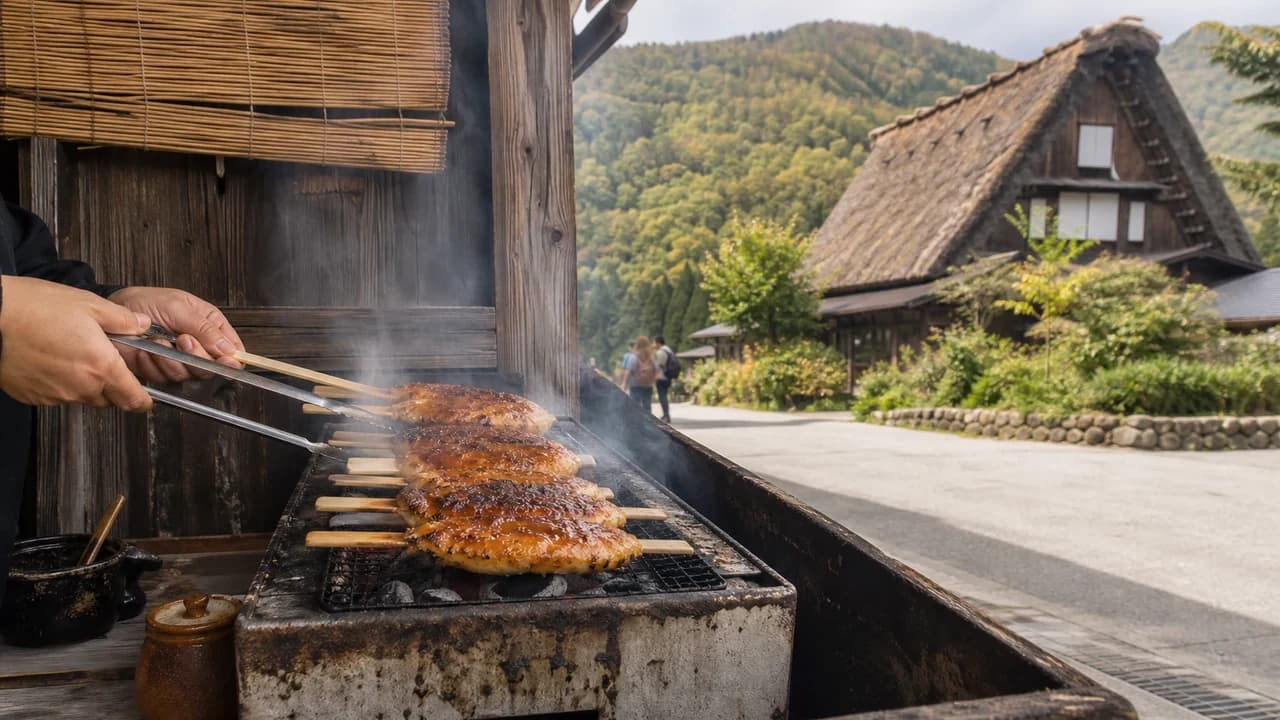
Gohei mochi is a Hida-region snack made from cooked rice that is mashed, shaped around a wooden skewer, and grilled. It differs from the smooth, stretchy mochi used in many Japanese sweets. The texture remains slightly grainy, with a crisp surface and a soft, chewy center.
The skewer is usually coated with a sweet-savory miso glaze before grilling. Recipes may include walnuts, sesame, or other local variations. Ask about ingredients if you have nut, soy, fish, or gluten restrictions. Some sauces may contain fish-based dashi, while soy sauce can contain wheat.
Zensuke, on the main path through Ogimachi, is a convenient place to try it between the bus terminal and Shiroyama Viewpoint. Eat the skewer beside the stall rather than while walking. Keep the wooden stick and any wrapper until the seller directs you to a bin, or carry them back to the bus terminal.
Check before you go: Confirm current restaurant and shop details in the Shirakawa-go Tourist Association directory, and verify seasonal access with the Japan National Tourism Organization.
Frequently Asked Questions
What is the best food to try in Shirakawa-go first?
Gohei mochi is the easiest first stop for most visitors. Zensuke sells it for ¥350, with hours from 9:30 AM to 4:15 PM. It's quick enough to finish near the stall before you continue toward the viewpoint.
Should you choose street snacks or a sit-down meal in Shirakawa-go?
Choose snacks if you have under three hours in the village. Save a sit-down dish for a visit of four hours or more. Hoba miso and suttate both take longer to prepare and eat than a stall snack.
What time do the Shirakawa-go food stalls close?
Most stalls close between 4:00 PM and 5:00 PM. Arriving after 3:30 PM risks finding popular items sold out. Plan food stops earlier in the visit rather than saving them for the end.
Can you pay by card at the Shirakawa-go food stalls?
It depends on the stall. Imafuji Shoten accepts cards and QR payments for its doburoku soft serve. Many smaller, family-run counters remain cash-only, so carry small bills as a backup.
Is it better to eat Hida beef in Shirakawa-go or save it for Takayama?
Shirakawa-go works well for a quick taste, such as a croquette or skewer. Takayama generally offers more restaurant variety and better value for a full Hida beef meal. The Hida beef in Takayama guide covers specific restaurants for that fuller meal.
Are there vegetarian options at the Shirakawa-go food stalls?
Options are limited. Much of the stall menu centers on Hida beef, and the miso glaze on gohei mochi can include fish-based dashi. Ask at the counter about the sauce before ordering if you're avoiding fish or meat.
Free guide: Japan's Hidden Gems
12 under-the-radar places beyond Tokyo & Kyoto — with the best season to visit each and a local tip you won't find in the guidebooks.
You might also like


Continue reading
More guides you'll find useful