What to Eat in Shirakawa-go: 8 Best Foods and Where to Find Them
A practical guide to what to eat in Shirakawa-go: Hida beef, gohei mochi, and hoba miso, plus where to eat and how to time it around the bus schedule.
On this page
Last updated July 2026. Figuring out what to eat in Shirakawa-go usually comes down to one choice: street snacks or a sit-down farmhouse meal. Most visitors get two to four hours in Ogimachi's UNESCO-listed village core, so this guide sorts the best Hida dishes by location and by the time each one takes.
Quick Answer: What to Eat in Shirakawa-go on a Short Visit
Ogimachi's UNESCO-listed gassho-zukuri farmhouses, some more than a century old, double as restaurants and inns serving mountain fare built for harsh winters. Most visitors reach Shirakawa-go by bus and get two to four hours before the return trip. That window shapes the food strategy more than personal taste does. With about two hours, stick to street snacks. Start with a Hida beef skewer or croquette, then add gohei mochi or a sweet on the way back. With about four hours, add one sit-down set, such as hoba miso or a soba lunch. Time that meal carefully to avoid the midday queue. Pair food planning with the village sights in the Shirakawa-go attractions guide. The Shirakawa-go itinerary guide shows where meals fit around the viewpoint and bus schedule.
Since visitors must reserve at least 25 minutes for the return bus terminal walk and most small vendors take cash only with few vegetarian options, quick snacks offer better time certainty than sit-down meals on rushed visits.
| Time in Ogimachi | Best Strategy | Priority Foods | What to Skip |
|---|---|---|---|
| About 2 hours | Snacks only, keep moving | Hida beef skewer or croquette, gohei mochi | A full sit-down lunch |
| About 4 hours | One snack plus one simple meal | Hoba miso or a soba set, plus a street snack | Multiple restaurant stops |
| Arriving 11:30 am-1:30 pm | Expect queues at every restaurant | A stall item first, then a table if time allows | Walking straight into a restaurant |
8 Must-Try Foods in Shirakawa-go (And Where to Find Them)
These eight dishes cover the range of Shirakawa-go's food scene, from fast standing snacks to a full farmhouse set meal. Locals call a signature regional dish a meibutsu, and several items below carry that label. Each entry notes where to look and how it fits a short visit. For a longer list of every stall along the walking route, see the Shirakawa-go food stalls and snacks guide.
- Hida Beef Skewers, Croquettes, and Sushi
- Hida beef is Gifu Prefecture's signature wagyu, served here grilled on a skewer, breaded into a croquette, or sliced over rice as sushi.
- Kondo Shoten, listed by the tourist association, sells the skewer and croquette as a quick standing snack near the village core.
- Treat it as a snack rather than a full meal. The Hida beef in Shirakawa-go guide compares every format with Takayama's sit-down version.
- Gohei Mochi
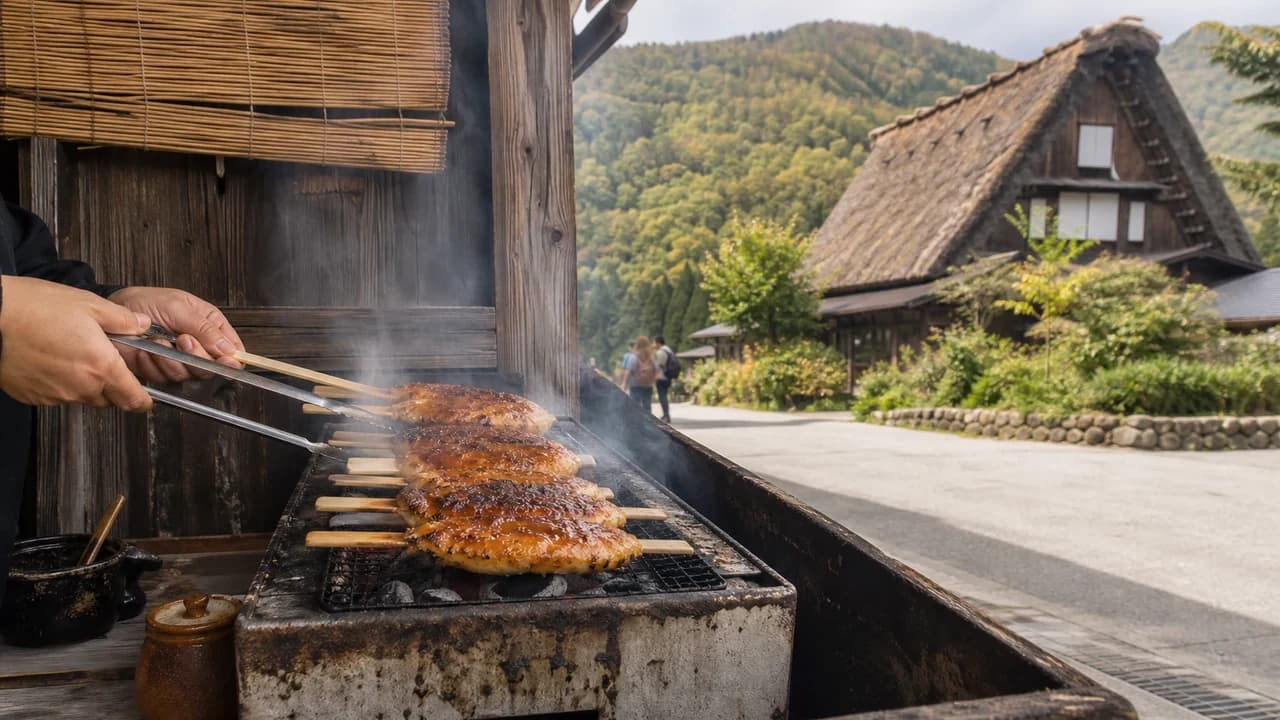
- Gohei mochi is grilled pounded rice on a skewer, coated in a sweet-salty miso glaze common across the wider Gifu mountain region.
- Oishi-bou, listed by the tourist association, sells gohei mochi along with other snack items near the main walking route.
- It travels well to a bench or the viewpoint, which makes it a strong first stop before the lunch crowd builds.
- Hoba Miso
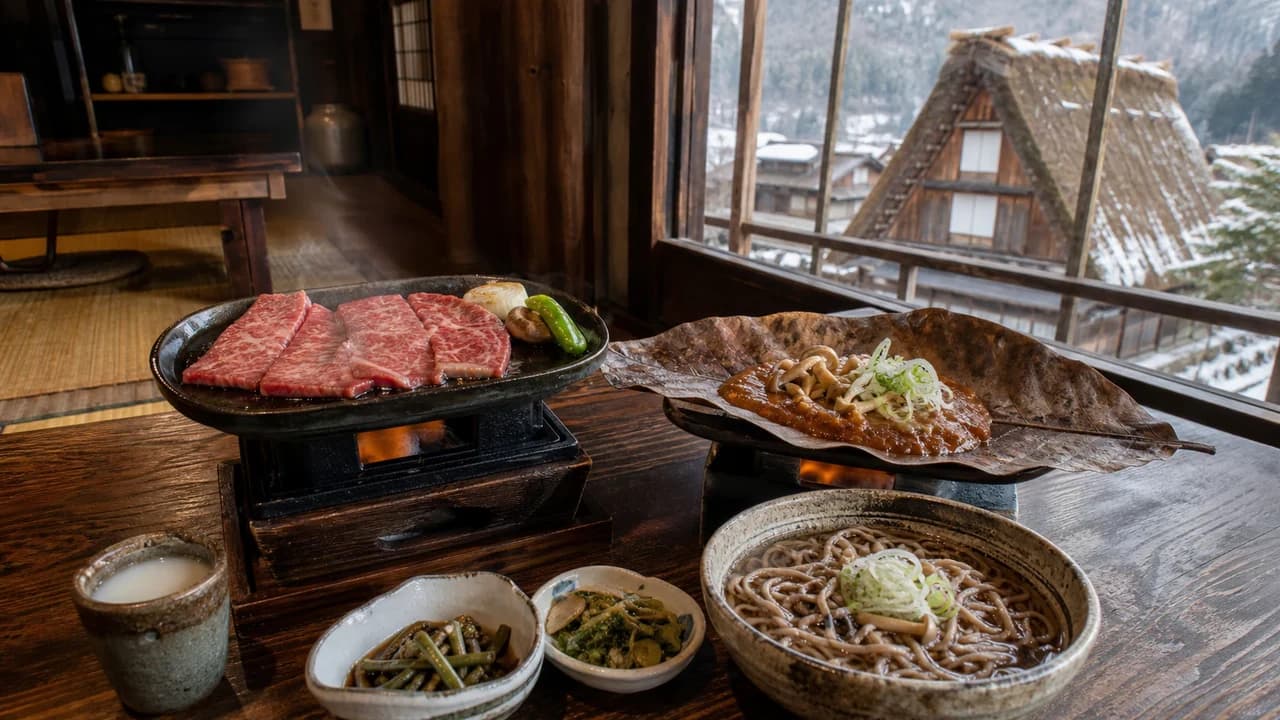
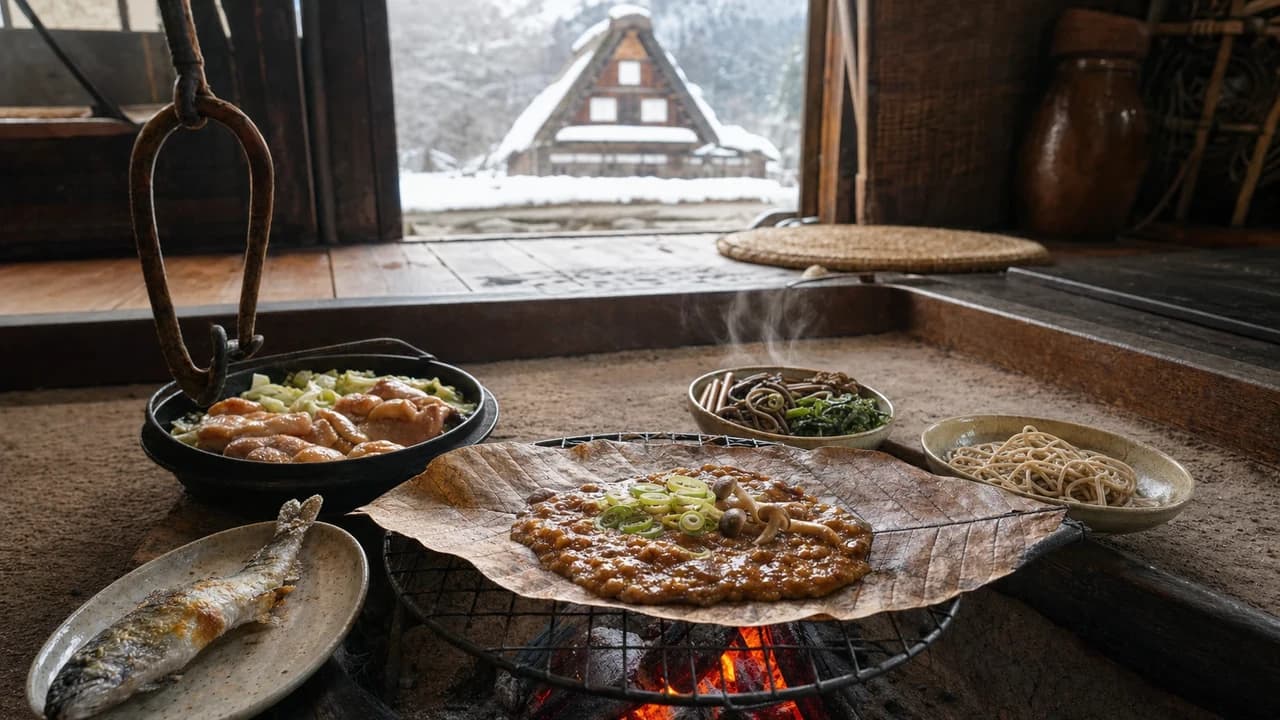
- Hoba miso is miso and local ingredients cooked over a dried magnolia leaf, the signature farmhouse dish of the Hida region.
- Shiraogi lists a Hida beef and magnolia-leaf barbecue set with charcoal-grilled river fish and soba, per the tourist association's shop listings.
- It needs table time, so it suits the four-hour plan better than a rushed stop. The hoba miso and keichan guide covers the full set-meal format.
- Suttate (Shirakawa-go Soybean Soup)
- Suttate is a regional soybean soup, built from stone-ground soybeans in a miso and soy-sauce style broth, and it is harder to find outside Shirakawa-go.
- Restaurant Gasshou serves suttate-style dishes alongside soba, Hida beef, and dango, sitting slightly outside the tightest village core.
- It reads as a meal rather than a snack, so plan for it on a longer, less rushed visit.
- Ayu River Fish and Handmade Soba
- Ayu is river fish, usually grilled whole with salt, and it appears on local-ingredient set menus alongside wild mountain vegetables.
- Soba Wakimoto makes its buckwheat noodles fresh and recommends a set paired with natural yam and graded Hida beef.
- Soba Dojo and Nomura Soba also serve handmade soba near the village core, useful backups if one kitchen is full.
- Ishi-dofu (Stone Tofu)
- Ishi-dofu is a firmer style of tofu, and Miyabe Tofu in nearby Hatotani makes it fresh each day and sells only what is made that day.
- It usually appears as a side dish inside set meals rather than as a standalone order.
- Pair it with local pickles if a restaurant offers them, a common combination on Hida-style menus.
- Keichan Chicken and Local Pub Fare
- Keichan is a Gifu-style grilled or fried chicken dish. Kichibee, near the Kanda and Nagase house, serves it with alcoholic drinks as an evening, pub-style stop.
- Proper dinner inside the village is mostly reserved for overnight guests staying in a farmhouse.
- The gassho farmhouse stay guide covers how that overnight meal works.
- Doburoku-Flavored Sweets and Water Pudding
- Doburoku is the village's unfiltered local sake. Several shops, including Kobikiya Kakinokiten, sell bean confectionery and sweets flavored with local ingredients like magnolia miso.
- Water pudding, a light dessert sold at souvenir stalls along the main walking route, works well as a second, cooler stop.
- Both suit the return leg of a walk, after the viewpoint. The doburoku sake in Shirakawa-go guide covers where to taste it properly.
Where to Eat: Seseragi Parking Lot vs. the Ogimachi Village Core
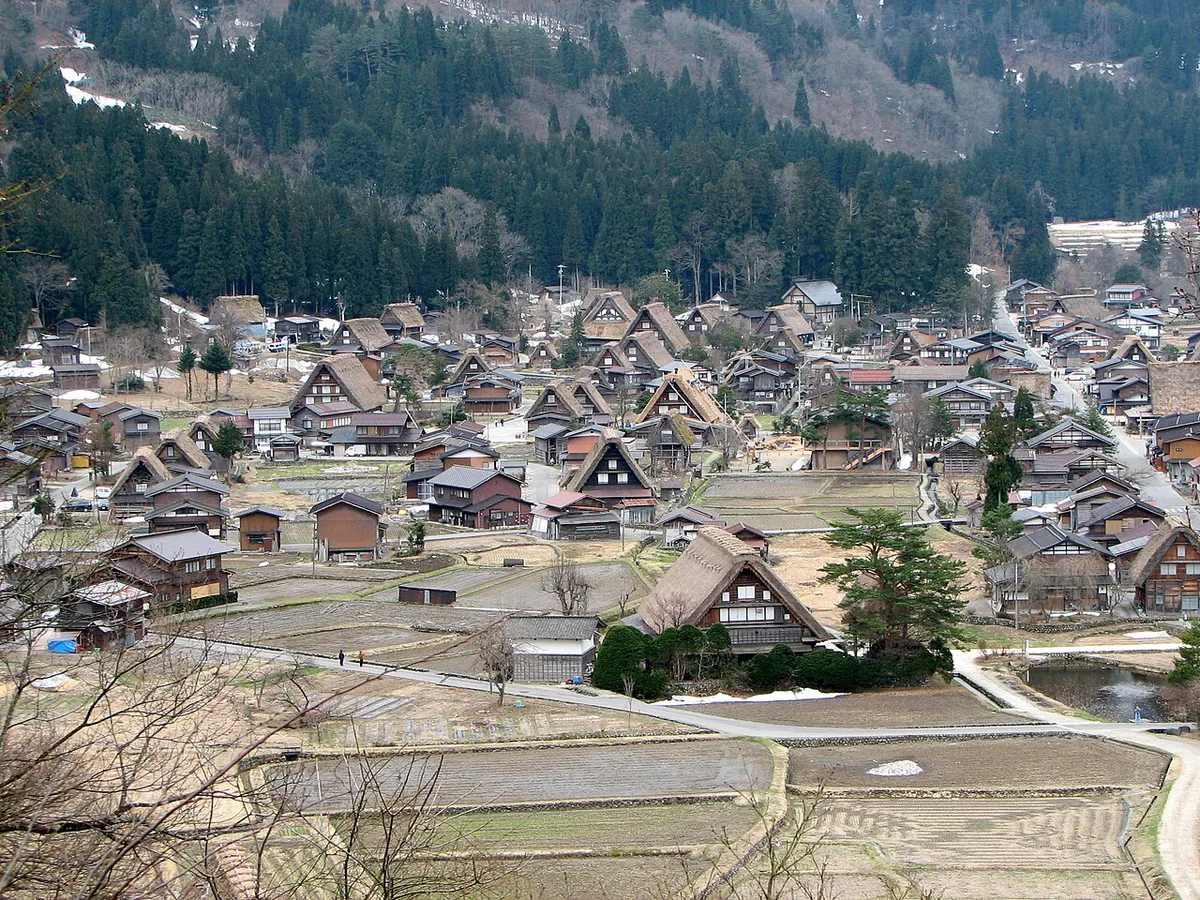
Restaurants and shops named here come from listings on the Shirakawa-go Tourist Association's official site. Hours and menus at small, family-run spots can shift without notice, so confirm on arrival if one stop matters. Irori Restaurant and the Kodaijin Shop souvenir stand sit close to the Seseragi parking lot and bus terminal, useful when a connection is tight. Ochiudo, Soba Dojo, Yoze Restaurant, and Tanakaya sit deeper inside the Ogimachi village core, closer to the main farmhouse cluster. Six sit-down options appear in the table below, ranging from quick soba counters to full farmhouse set meals. The Shirakawa-go restaurants in Ogimachi guide lists every sit-down option in one place.
| Restaurant | Signature Dish | Area | Wait-Time Risk |
|---|---|---|---|
| Irori Restaurant | Set meals, soba, tofu | Near the bus terminal | High at midday |
| Shiraogi | River fish and hoba miso barbecue set | Ogimachi core | Moderate |
| Ochiudo | Light lunch, cafe-style menu | Village core, former residence | Lower |
| Soba Wakimoto | Soba with natural yam and Hida beef | Ogimachi core | Moderate |
| Restaurant Gasshou | Suttate, soba, Hida beef, dango | Edge of the core | Lower |
| Yoze Restaurant | Set meals inside a hot spring ryokan | Village core | Lower, walk-ins welcome |
Hida Beef in Shirakawa-go vs. Takayama: Where to Eat It
Shirakawa-go's Hida beef is built for speed: a skewer, a croquette, or a few pieces of sushi eaten standing up near a stall. Takayama has a deeper Hida beef restaurant scene, with seated courses, tabletop grilling formats, and more menu variety. A sit-down Hida beef course in Takayama typically costs more and takes longer than a Shirakawa-go street snack, but it delivers a fuller meal. Travelers with only two to four hours in Shirakawa-go generally do better trying one quick Hida beef snack here and saving a proper sit-down course for Takayama. The Hida beef in Takayama guide lists specific restaurants for that longer meal.
Timing, Cash, and Etiquette for Eating in Shirakawa-go
Three practical details shape food logistics in Shirakawa-go more than the menu itself does. Seasonal crowds shift the lunch window earlier or later, so check the best time to visit Shirakawa-go guide before locking in a food plan. Stalls also tend to wind down or sell out of popular items as the afternoon goes on, so confirm current hours locally if a specific stall matters to the visit.
Most visitors have only two to four hours in the village, yet the peak restaurant window from 11:30 am to 1:30 pm coincides with typical day-tripper schedules, leaving little buffer for a sit-down meal without waiting.
- The Midday Lunch Peak
- Roughly 11:30 am to 1:30 pm is the highest-risk window for a sit-down meal, when bus tour groups arrive together.
- Eating a street snack before or after this window avoids most of the wait.
- Cash Is King
- Smaller stalls and family-run counters often have limited card acceptance.
- Carry enough yen in cash for snacks and a sit-down meal before entering the village.
- Carry Your Trash Out
- Shirakawa-go is a working village, and public trash bins are limited along the walking route.
- Plan to carry wrappers and containers out with you rather than looking for a bin.
Vegetarian, Vegan, and Gluten-Free Reality Check
Shirakawa-go is a small mountain village with a handful of kitchens, and dietary flexibility is limited. Most hoba miso and soba broths use fish-based dashi as a base, even when a dish looks vegetable-forward. Miso glazes, including the one on gohei mochi, and soy-based sauces often contain wheat, which matters for gluten-free travelers. Plain grilled items and rice-based snacks are generally safer, but confirm ingredients before ordering rather than assuming. Two of the sit-down spots covered above, Irori Restaurant and Shiraogi, are reasonable places to ask about substitutions before the 11:30 am rush. For the fullest list of stalls to check case by case, see the Shirakawa-go food stalls and snacks guide.
Beyond Ogimachi: Food in the Wider Hida Region
Shirakawa-go works well as one stop on a wider Hida and Japan Alps circuit, and food is one more reason to extend the trip. Four separate routes reach Shirakawa-go depending on the starting city, and food timing looks different on each one. Takayama has a deeper Hida beef dining scene with more seated restaurants, reachable via the Shirakawa-go from Takayama route. Coastal travelers can day-trip in on the Kanazawa to Shirakawa-go day trip. From the east, the Shirakawa-go from Tokyo route covers bus and rail options. From the south, check the Shirakawa-go from Nagoya route for transfer times. Winter visitors timing a trip around the illuminated farmhouses should read the Shirakawa-go winter light-up guide, since food stalls run shorter hours in the cold months. For other stops in the wider mountain region, the Japan Alps attractions guide maps out what pairs well with a Shirakawa-go visit.
A Two-Hour Snack Route from Seseragi Bus Terminal
For a two-hour stop, treat Seseragi-koen Parking Lot as both the start and the deadline. Cross Deai-bashi into Ogimachi, then choose one savory item and one rice-based or sweet snack. Eat beside the shop when requested, because eating while walking can create litter and congestion in the working village.
- First stop: check Kondo Shoten for a Hida beef skewer or croquette. Choose one format to avoid losing time at several beef stalls.
- Second stop: look for gohei mochi at Oishi-bou along the main village route. It is quicker than waiting for a soba or hoba miso set.
- Return leg: pick up a water pudding or local confection from a souvenir shop. Keep all packaging if the shop cannot accept it.
Turn back toward Deai-bashi with at least 25 minutes before the bus departure. This allows time to cross the bridge, reach the terminal, and locate the correct bay. If queues are long, skip the second snack rather than risking a reserved bus connection.
For trip-planning details, see Shirakawa-go - Wikivoyage.
Explore food in other cities
Check before you go: Confirm current restaurant and shop details in the Shirakawa-go Tourist Association directory, and verify seasonal access with the Japan National Tourism Organization.
Frequently Asked Questions
What should you eat first in Shirakawa-go?
Start with a fast savory snack, such as a Hida beef skewer, croquette, or gohei mochi. Buying something early avoids arriving at the same kitchens as the midday crowd.
Should you choose street snacks or a sit-down lunch?
Snacks work better for visits under about two hours, since they keep pace with a tight bus schedule. A sit-down set, such as hoba miso or soba, fits better with about four hours in the village.
What is suttate?
Suttate is a regional soybean soup made from stone-ground soybeans in a miso and soy-sauce style broth. Restaurant Gasshou serves it alongside soba, Hida beef, and dango near the edge of the village core.
Can you pay by card for food in Shirakawa-go?
Card acceptance is limited at smaller stalls and family-run counters. Carry enough cash in yen for snacks and any sit-down meal before entering the village.
Is it better to eat Hida beef in Shirakawa-go or Takayama?
Shirakawa-go suits a fast skewer, croquette, or sushi snack that fits a short village stop. Takayama has more seated restaurants and menu variety, better suited to a proper sit-down Hida beef course.
Is Shirakawa-go easy for vegetarians?
Not especially. Most hoba miso and soba broths use fish-based dashi even in vegetable-forward dishes, so confirm ingredients before ordering given the village's limited substitution options.
Explore Shirakawa-go Food
From Hida beef sizzling on a farmhouse grill to doburoku poured at an autumn shrine festival, here's how to eat your way through Japan's most photographed mountain village.
Signature Dishes
Where to Eat
Local Drink & Festival Food
Plan Your Visit
Free guide: Japan's Hidden Gems
12 under-the-radar places beyond Tokyo & Kyoto — with the best season to visit each and a local tip you won't find in the guidebooks.
You might also like


Continue reading
More guides you'll find useful