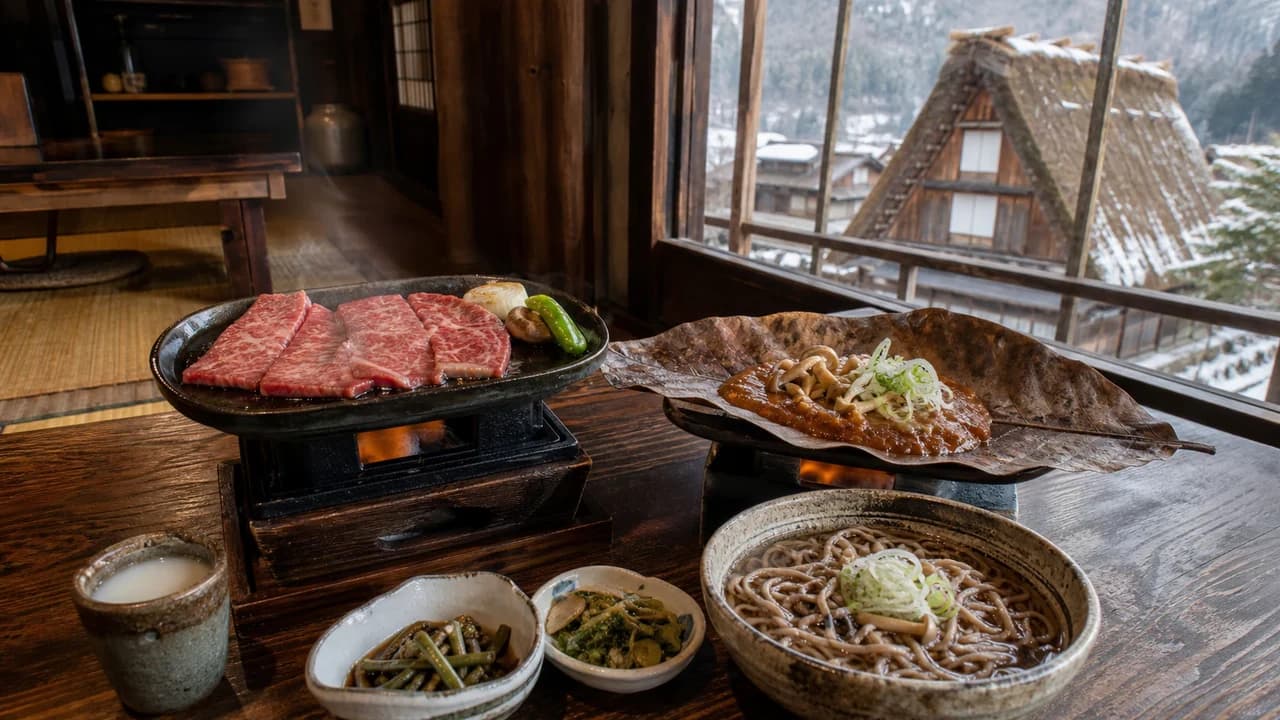
Hida Beef in Shirakawa-go: Where to Eat Gifu's Wagyu (2026 Guide)
Where to eat Hida beef in Shirakawa-go: Tenkara's BBQ, Ogimachi street stalls, Hoba Miso, 2026 prices, hours, and timing tips to beat early closures.
On this page
Last updated July 2026, Hida beef in Shirakawa-go is the top food question travelers search before visiting this Gifu Prefecture village of gassho-zukuri farmhouses. The marbled A5 wagyu appears as steak plates, grilled Hoba Miso, street skewers, buns, and sushi across Ogimachi and Hatogaya. This guide covers where to sit down, where to grab something quick, and how the format you pick changes price and wait time.
The Hida Beef Experience in Shirakawa-go
Yes, Ogimachi and the surrounding Hatogaya area both serve A5-grade Hida wagyu, the marbled beef raised in Gifu Prefecture's Hida region. Ogimachi is the UNESCO-listed cluster of gassho-zukuri farmhouses that most visitors mean when they say Shirakawa-go. Shirakawa Village, the wider municipality, stretches beyond Ogimachi and includes Hatogaya. Eating Hida beef inside the village trades the wider restaurant selection of Takayama's old town for a farmhouse setting, so portions and menus run smaller and simpler. For background on the full local menu beyond beef, the Shirakawa-go food guide covers noodles, river fish, and seasonal sides. The Shirakawa-go attractions guide maps out where the eateries sit relative to the main viewpoints.
Where to Eat Hida Beef in Ogimachi and Hatogaya
Tenkara is the name most visitors search for first. It specializes in Hida beef yakiniku, tabletop BBQ cooked at your seat, inside the Hatogaya area rather than central Ogimachi. Irori keeps the sit-down format but sits inside Ogimachi itself, closer to the main cluster of farmhouses. Kita-no-Sho, also in Ogimachi, is the village's reference point for Hoba Miso, beef grilled with vegetables on a magnolia leaf. For a fuller list of sit-down and casual options across the village center, the Ogimachi restaurants guide rounds up where else to sit down.
- Tenkara (Hatogaya): Hida beef yakiniku BBQ, about 20 minutes from the Shirakawa-go Bus Terminal via a short bus ride to Hatogaya plus a 7-minute walk.
- Tenkara hours, per the official Shirakawa-go tourism site: lunch 11:00-15:00, dinner 18:00-21:00, closed Tuesday nights.
- Tenkara payment: cash, credit card, and QR code all accepted, unusual for a small village restaurant.
- Irori (Ogimachi): sit-down Hida beef set menus in a traditional hearth-room farmhouse setting.
- Kita-no-Sho (Ogimachi): the go-to spot for a Hoba Miso beef plate.
Hida Beef Street Food: Skewers, Buns, Croquettes, and Sushi
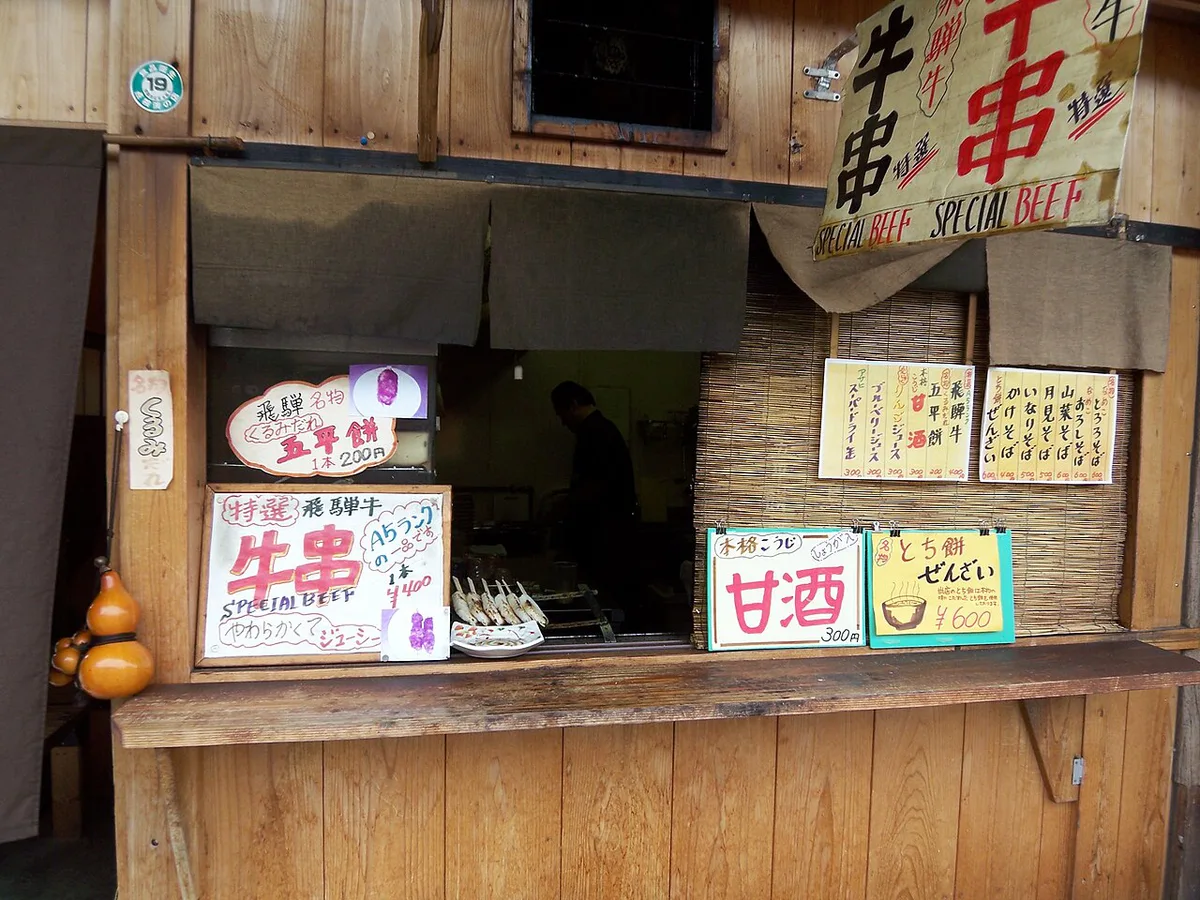
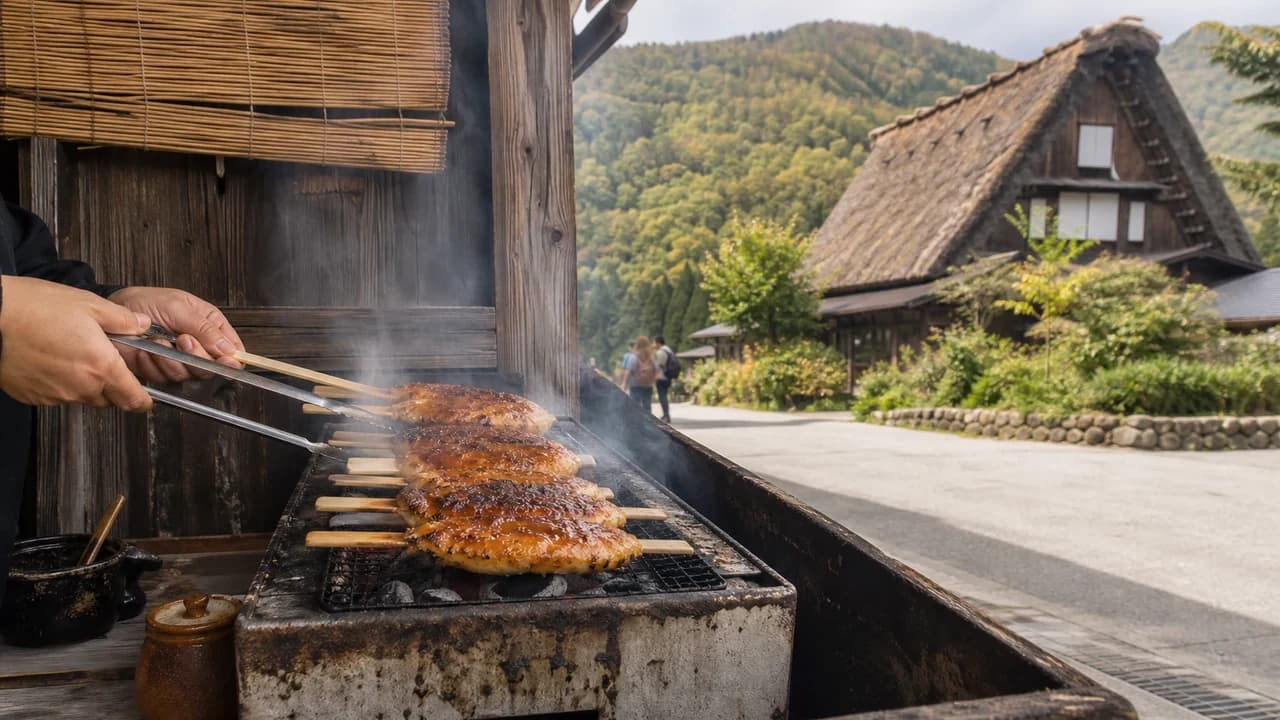
Zen is the name to know for Hida beef nikuman, steamed buns stuffed with beef and broth. Service there moves fast: the counter staff keep the line moving and do not pause for small talk. Have your order ready before reaching the window, since a queue often forms at midday. Skewers, known as kushiyaki, and Hida beef croquettes turn up at several stalls scattered along Ogimachi's main street, sold individually so you can mix formats as you walk. Street snacks across the village typically run ¥500 to ¥1,500 per item, well under a seated meal. Hida beef sushi is sold on the street too, usually a few seared or torched nigiri pieces per tray rather than raw fish. It is a lighter, cheaper way to taste the marbling than a full steak plate, though portions run smaller than a sushi-counter order. For more non-beef stall food to pair with a beef stop, such as Gohei Mochi, the Shirakawa-go food stalls guide covers what else is sold along the same street.
Local Specialties Beyond the Steak: Hoba Miso, Suttate-Nabe, and Stone Tofu
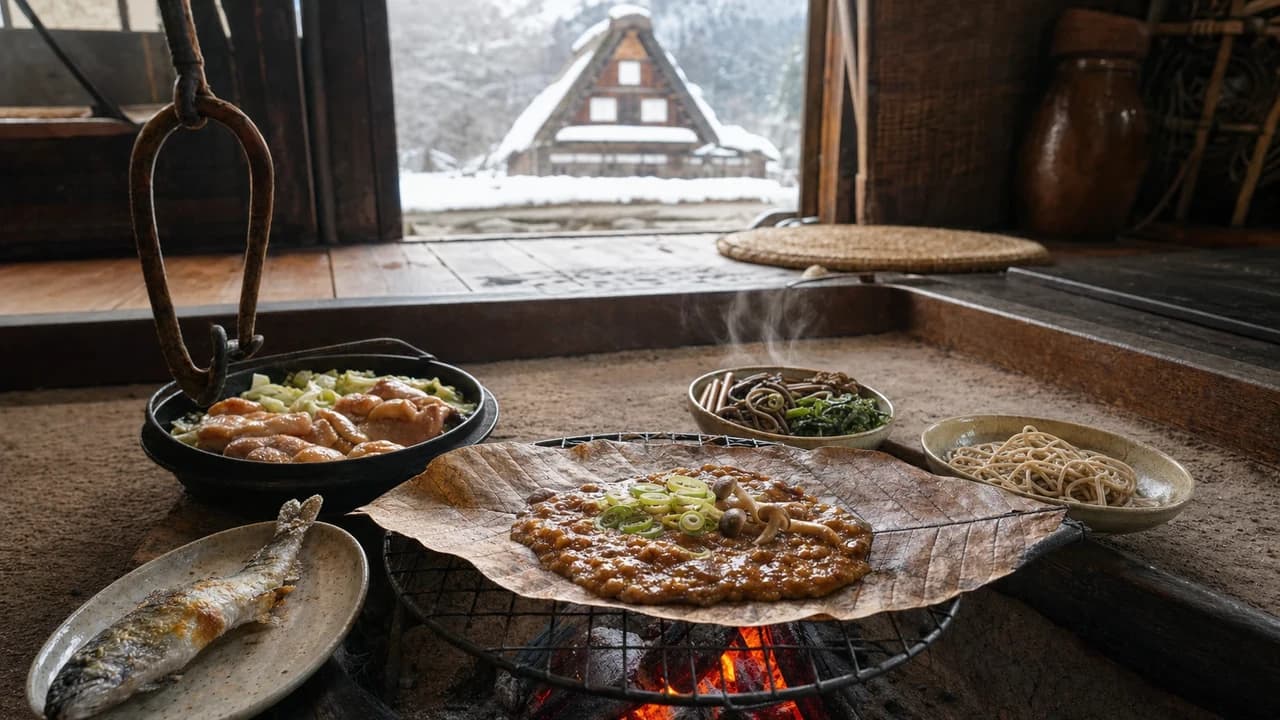
Hoba Miso is the dish locals point to when asked what makes Hida cuisine distinct. Sliced beef, mushrooms, and scallions cook in miso directly on a dried magnolia leaf set over a tabletop burner, and the leaf itself doubles as the serving dish. The Hoba Miso and Hida cuisine guide goes deeper into the technique and where else in the region to find it. Suttate-nabe is a local hot pot built on a pale, creamy soybean broth, often served with beef added, and it works as a warming option on a cold shoulder-season visit. Stone tofu, or ishi-dofu, is dense enough to hold together in a simmering pot instead of breaking apart, made with roughly double the soybean content of standard tofu. Order it sliced with wasabi and soy sauce as a cold side, a common pairing alongside a Hida beef set. Some restaurants also pour a local unfiltered rice brew alongside these dishes. The doburoku sake guide explains the style and where to try it.
Getting to Shirakawa-go and Timing Your Meal
Most travelers reach Shirakawa-go on a day trip, and where you start from shapes how much of the food scene fits in. The Shirakawa-go from Takayama guide covers the shortest approach, a route many visitors pair with a Hida beef stop in Takayama's old town first. Coming from Nagoya, the Shirakawa-go from Nagoya guide lays out the longer route from that Chubu hub. Day-trippers coming from the Kanazawa side should check the Kanazawa to Shirakawa-go day trip guide for bus timing before building a food stop into the schedule. Whichever route you take, timing matters as much as transit. Tour buses tend to unload between late morning and early afternoon, so arriving before 11:30 AM or after 1:30 PM cuts down on the wait at stalls and sit-down counters alike. A bigger risk is closing time: several village eateries wrap up service by mid-afternoon, well before typical Japanese dinner hours. Confirm same-day hours before committing to one restaurant, since a walk-in strategy only works if the doors are still open.
Arriving after 1:30 PM to avoid tour crowds still leaves only 90 minutes of lunch service at Tenkara before it closes at 15:00, then a 3-hour dinner gap until 18:00 evening service.
Where to Stay and When to Go for Hida Beef
Staying overnight changes the food calculus, since a farmhouse stay usually includes a home-cooked dinner built around local specialties. The gassho farmhouse stay guide explains what a typical overnight dinner includes and how to book one. Winter brings a different set of trade-offs, since many outdoor stalls close for the season. A sit-down Suttate-nabe or a Hoba Miso set becomes the more reliable option during the Light-Up illumination dates. The winter Light-Up guide covers those event dates and how crowded the village gets around them. Outside winter, the best time to visit guide compares shoulder-season crowd levels against the weather trade-offs. If Hida beef is one stop on a longer day, the Shirakawa-go itinerary guide slots a meal break in alongside the viewpoint hike and the farmhouse tour. Travelers building a wider Gifu and Nagano loop can check the Japan Alps attractions guide for what else sits along the same route.
Hida Beef in Shirakawa-go vs. Takayama: Is It Worth It?
Takayama's old town has more restaurants, longer open hours, and a deeper sushi-counter tradition for Hida beef than Shirakawa-go does. Shirakawa-go trades that range for atmosphere: a Hoba Miso set eaten with a gassho-zukuri roofline in view is not something the Takayama food streets replicate. Budget is not really the deciding factor between the two, since pricing sits in a similar band either way. As of 2026, a street snack such as a skewer or bun runs roughly ¥500 to ¥1,500 in both towns. A seated lunch set moves into the ¥3,000 to ¥5,000 range, and a full dinner service at a restaurant such as Tenkara runs ¥6,000 and up. Pair a Takayama sushi-counter stop with a Shirakawa-go steak or Hoba Miso dinner if the day trip allows both. The Hida beef in Takayama guide lays out the old-town options for the other half of that comparison.
| Format | Typical Price (2026) | Where to Find It |
|---|---|---|
| Street skewer, bun, or croquette | ¥500–¥1,500 | Ogimachi stalls, Zen |
| Seated lunch set | ¥3,000–¥5,000 | Irori, Kita-no-Sho |
| Dinner service | ¥6,000+ | Tenkara |
Check before you go: Confirm current restaurant and shop details in the Shirakawa-go Tourist Association directory, and verify seasonal access with the Japan National Tourism Organization.
Frequently Asked Questions
Can you eat Hida beef inside Shirakawa-go, or do you need to go to Takayama?
Sit-down spots such as Tenkara, Irori, and Kita-no-Sho all serve Hida beef inside the village. Street stalls in Ogimachi add skewers, buns, and sushi for a faster option.
How much does Hida beef cost in Shirakawa-go?
Street snacks such as skewers or buns run about ¥500 to ¥1,500. A seated lunch set costs ¥3,000 to ¥5,000, and dinner at a restaurant such as Tenkara runs ¥6,000 and up.
What time do Hida beef restaurants close in Shirakawa-go?
Many village eateries stop serving by mid-afternoon. Tenkara runs lunch from 11:00 to 15:00 and dinner from 18:00 to 21:00, and it closes entirely on Tuesday nights.
Do you need a reservation to eat Hida beef here?
Sit-down restaurants such as Tenkara take reservations, which helps around midday tour-group rushes. Street stalls and small counters in Ogimachi are walk-in only.
Can you pay by card, or is Shirakawa-go cash-only?
Tenkara accepts cash, credit card, and QR payment. Many smaller street stalls in Ogimachi remain cash-only, so carry yen for skewers, buns, and croquettes.
What is Hoba Miso, and how is it different from a Hida beef steak?
Hoba Miso is beef, mushrooms, and scallions grilled in miso on a dried magnolia leaf, a Gifu preparation rather than a plain grilled steak. It is the dish Kita-no-Sho is best known for.
Free guide: Japan's Hidden Gems
12 under-the-radar places beyond Tokyo & Kyoto — with the best season to visit each and a local tip you won't find in the guidebooks.
You might also like

Continue reading
More guides you'll find useful