Daigoji Temple Guide: Kyoto's Oldest Building & Mountain Hike
Explore Daigoji Temple, a UNESCO site in Kyoto. Plan your visit with tips on the Kami Daigo hike, Sanboin gardens, costs, and the best transit routes.
On this page
Last updated July 2026: Daigoji Temple ranks among Kyoto's most rewarding yet most overlooked UNESCO World Heritage sites. It sits in wooded hills southeast of the city center, away from the Higashiyama classics. The complex is home to a five-story pagoda dating to 951 AD, Kyoto's oldest verified building. Its working monastic grounds span a lower temple area and a forested mountain summit. Daigoji rewards travelers willing to trade a crowded morning at a headline sight for a quieter, more physically demanding day. This guide breaks down the split-site layout, admission tiers, and transit options needed to plan a visit that matches available time and stamina.
What Is Daigoji Temple? Kyoto's Mountainous World Heritage Site
Daigoji is the head temple of the Shingon Daigo-ha sect, founded in 874 by Shobo Rigen Daishi, a disciple of the monk Kukai. The imperial court elevated it to Imperial Temple rank a few decades later. From the middle of the 10th century the complex was already split into two distinct areas: Kami Daigo at the summit and Shimo Daigo at the base. Together, they span roughly 600 hectares. By the 12th century Daigoji had been recognized as the head temple of the Daigo branch of Shingon Buddhism, one of the most influential lineages in Japan. Its profile grew further in 1598, when Toyotomi Hideyoshi, Japan's Great Unifier, held the Daigo-no-Hanami cherry blossom viewing party here after planting more than 700 cherry trees. Daigoji joined the UNESCO World Heritage list in 1994 and is now recorded as holding more than 150,000 preserved cultural assets, including a documented 75,537 National Treasures and Important Cultural Properties.
Shimo Daigo: The Lower Grounds and Sanboin Gardens
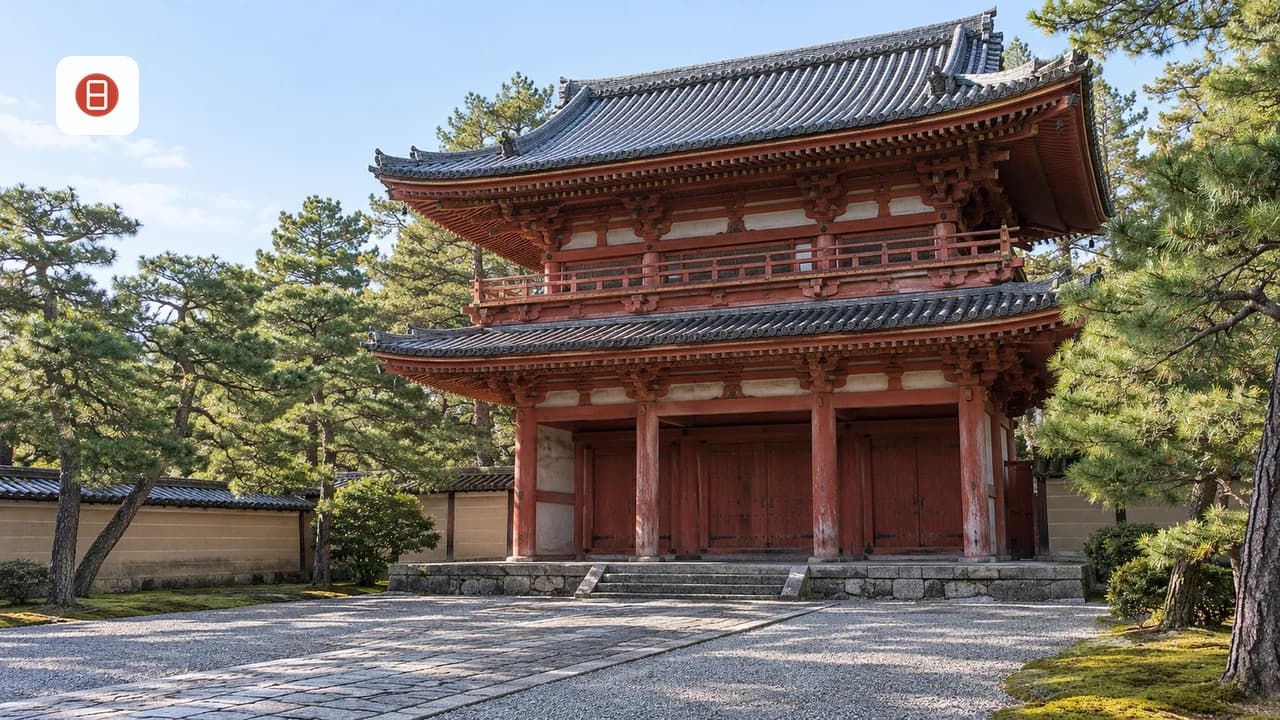
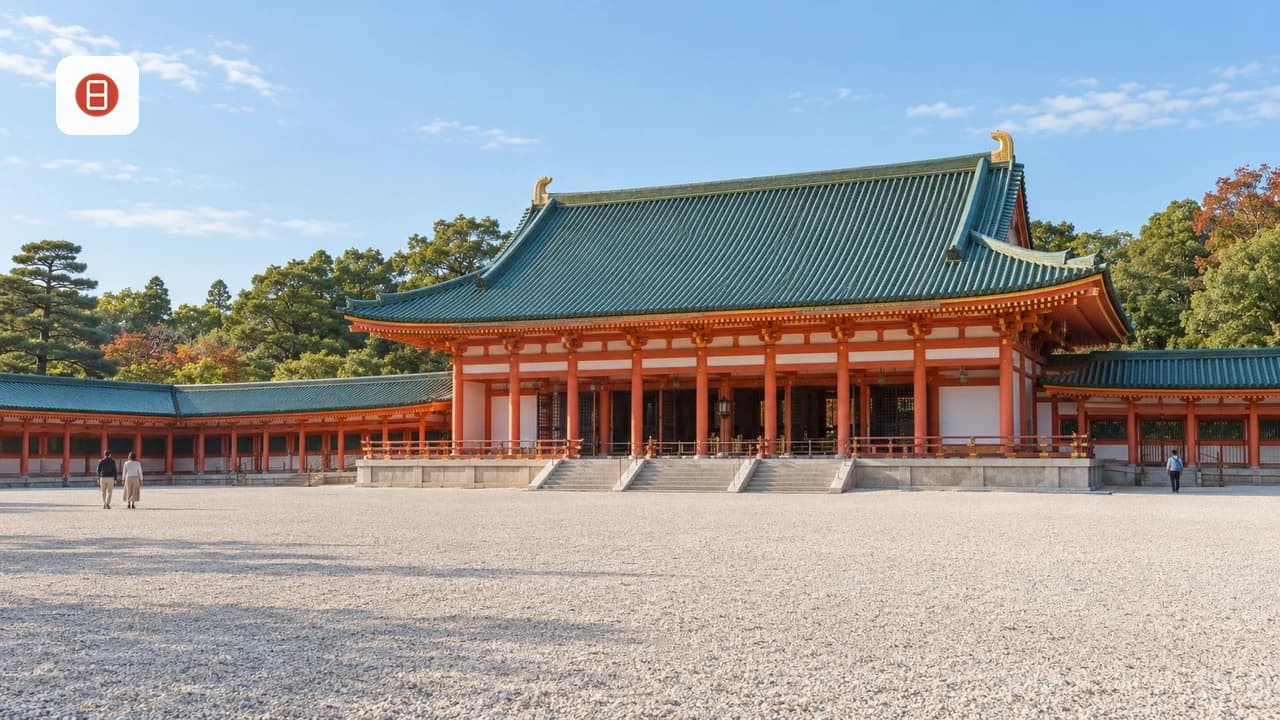
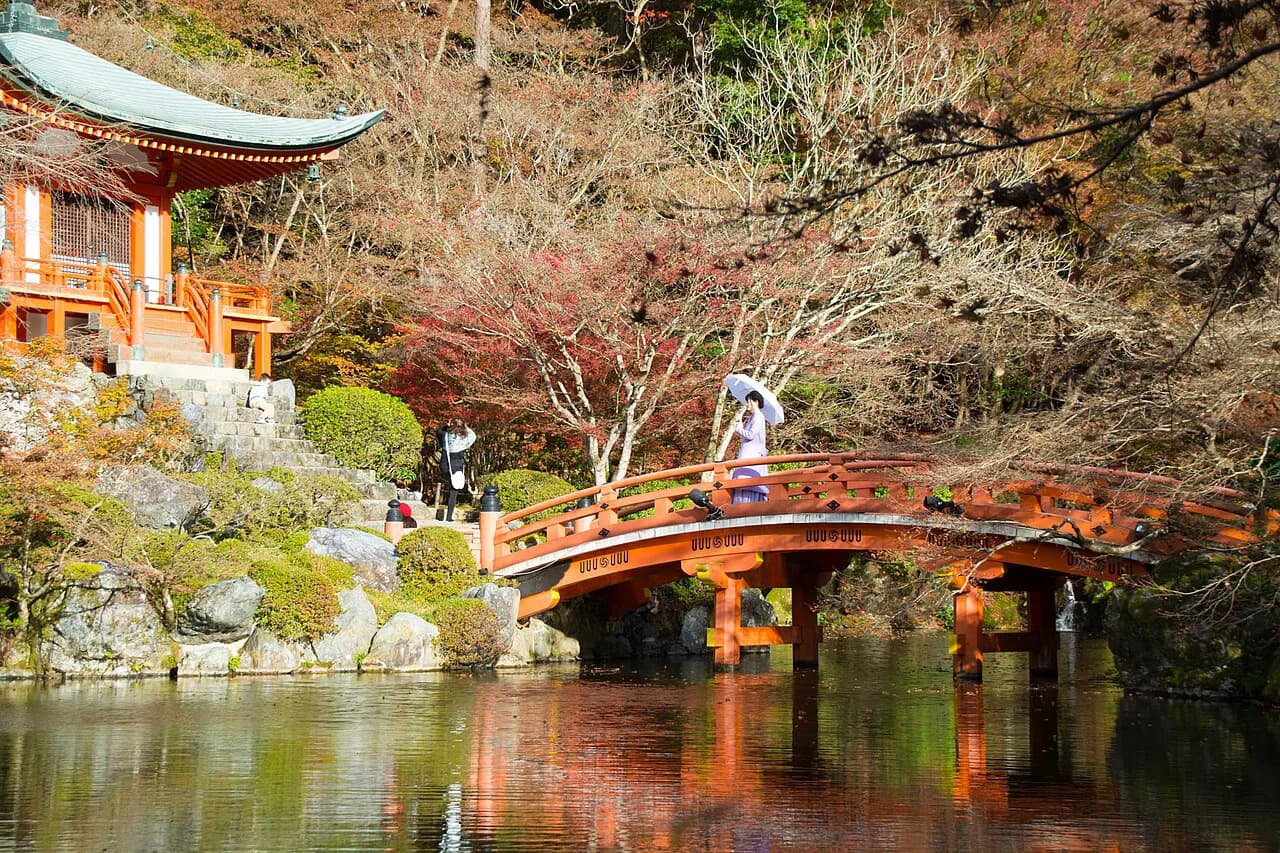
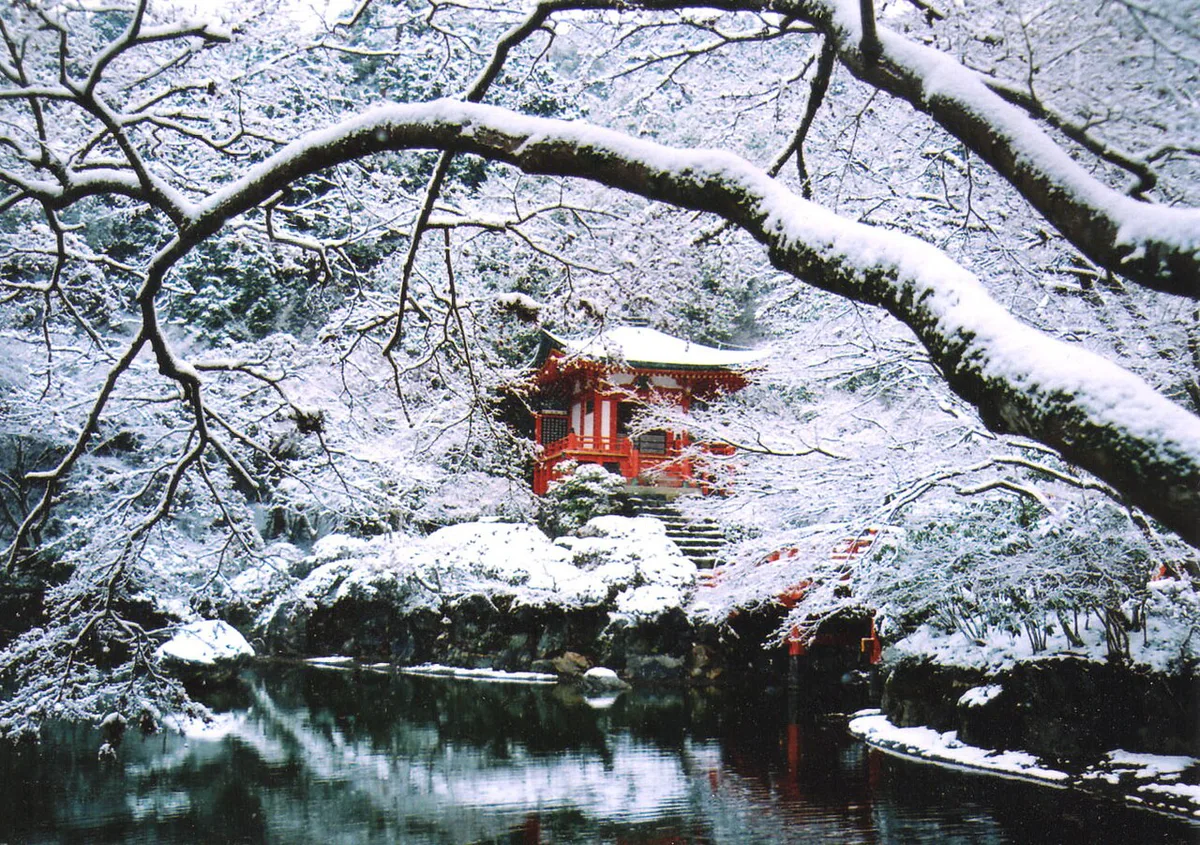
Most visitors start at Sanboin, the former residence of Daigoji's head priest, originally built in 1115. The current building and its landscape garden date to 1598, when the complex was reconstructed and expanded for Hideyoshi's blossom-viewing party, and it remains a showcase of extravagant Momoyama-period architecture. A short walk further into the grounds reaches Shimo Daigo proper, home to the Kondo Hall (the main hall, originally built in 926). This was relocated to its current site in 1599 and houses a seated statue of the Yakushi Buddha. Nearby stands the temple's five-storied pagoda, a 38-meter structure built in 951 that is Kyoto's oldest verified building. It is the only Daigoji structure to survive the fires that repeatedly damaged the complex over the centuries. At the back of the lower grounds, Bentendo Hall sits beside a pond and is widely considered Daigoji's most photographed building, especially when the surrounding maples turn color in late November.
- Sanboin: Momoyama-style residence and garden rebuilt for Hideyoshi's 1598 party
- Kondo Hall: main worship hall, originally built 926, relocated in 1599
- Five-Storied Pagoda: built 951, Kyoto's oldest verified building at 38 meters tall
- Bentendo Hall: pond-side hall, the temple's most photographed spot, peak color late November
Kami Daigo: The Upper Temple Hike
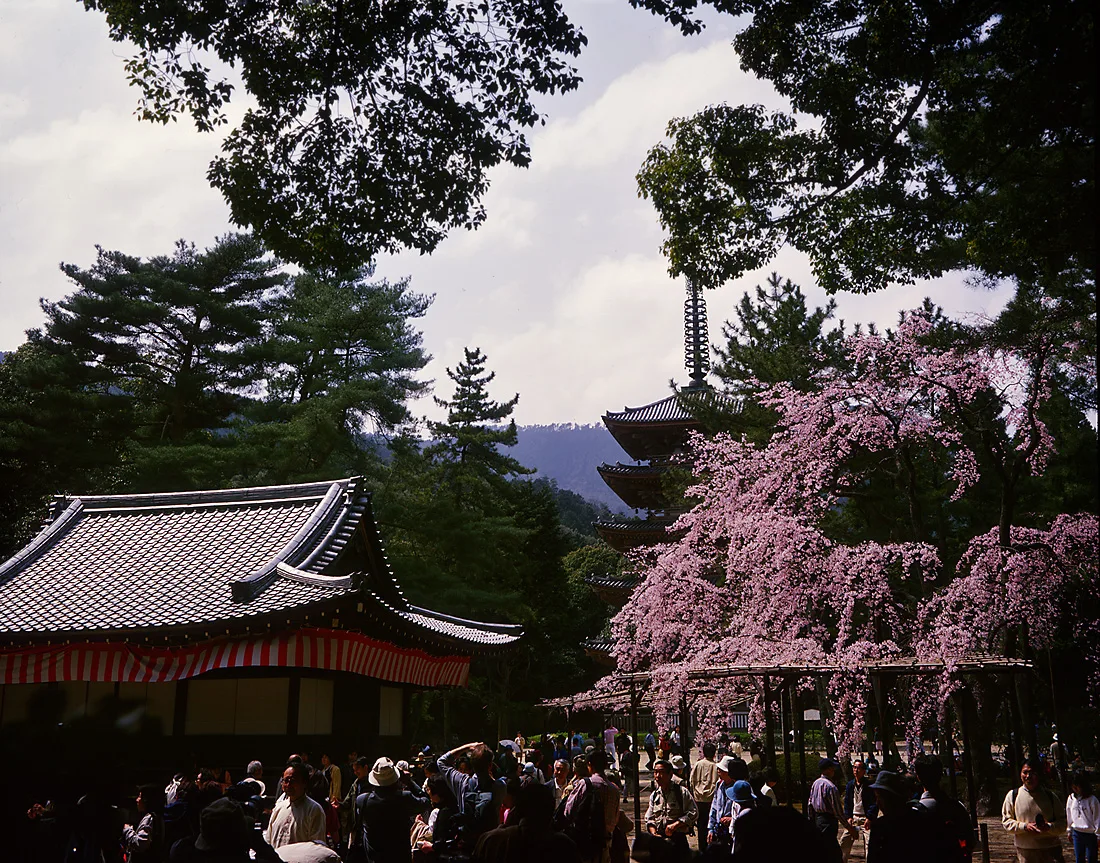
Behind Bentendo Hall, a trailhead leads up to Kami Daigo, Daigoji's original temple grounds near the mountain summit. The climb runs about one hour up a steep forested trail with no paved sections, so it demands sturdy footwear and a reasonable level of fitness. At the top, hikers are rewarded with additional wooden halls set along a quiet, forested mountainside and, on clear days, views stretching as far as Osaka. Weigh the trade-off before committing: the upper hike suits travelers who enjoy hiking or want a genuinely quiet corner of Kyoto away from crowds. At the same time, it is worth skipping for anyone on a tight schedule or with limited mobility. This is because entry to Kami Daigo closes well before the lower grounds and there is no shortcut back down. Anyone drawn to this kind of forested climb might also enjoy the Kurama to Kibune hiking trail north of the city. It is a comparable forest walk with a different set of shrine buildings along the way.
- Best for: hikers, photographers chasing quiet mountain views, solitude seekers
- Skip if: on a tight schedule, traveling with limited mobility, or short on time before closing
Reihokan Museum and Daigoji Temple's Seasonal Highlights
The Reihokan Museum, an elegant treasure house on the main lower grounds, rotates displays drawn from Daigoji's collection of more than 150,000 cultural assets, including statues, documents, and paintings. Its garden holds some of the temple's most impressive weeping cherry trees, which typically bloom in early April, while the pond around Bentendo Hall becomes the standout autumn-color scene in late November. Because bloom and foliage timing shift slightly year to year, travelers planning a 2026 visit around either season should build in a flexible day or two rather than fixing on a single date.
| Season | Highlight | Typical Peak |
|---|---|---|
| Spring | Weeping cherry trees, Reihokan Museum garden | Early April |
| Spring (party season) | 700+ cherry trees planted for Hideyoshi's 1598 Daigo-no-Hanami | Late March to early May |
| Autumn | Maple color around Bentendo Hall pond | Late November |
Daigoji Temple Admission Fees, Hours, and Getting There
Shimo Daigo (Sanboin, Reihokan, and the main Garan grounds) is open 9:00 to 17:00 in regular season, shortening to 16:30 from the day following the first Sunday in December through the last day of February. Last entry is always 30 minutes before closing. Kami Daigo keeps shorter hours, admitting visitors from 9:00 to 15:00 (until 14:00 in the same December-to-February window), and everyone must be back down at the base by 17:00. Admission is tiered: a two-site ticket covering Sanboin and Shimo Daigo costs 1,000 yen for adults (800 yen for groups of 20 or more) and 700 yen for ages 13-18 (600 yen group rate). At the same time, a one-site ticket is 600 yen for adults and 400 yen for ages 13-18. The Reihokan Museum is a separate 500 yen donation, and Kami Daigo carries its own 600 yen admission. During spring season, from March 20 through the last day of Golden Week, a three-site ticket covers Sanboin, Shimo Daigo, and the Reihokan grounds. It costs 1,500 yen for adults (1,300 yen group) and 1,000 yen for ages 13-18 (800 yen group). Two main routes reach the temple from central Kyoto.
Kami Daigo closes entry at 15:00 (14:00 Dec–Feb) with a steep one-hour hike needed to reach it and no shortcut back down. Start the mountain trail early if visiting both areas to avoid arriving too late.
| Route | Steps | Time | Cost |
|---|---|---|---|
| JR + Subway + Walk | JR Kyoto Station to Yamashina, then Tozai Subway to Daigo Station, then a 15-minute walk (or community bus 4) | About 25-30 minutes plus the walk | Roughly 440 yen (plus 210 yen if taking the community bus) |
| Yamashina + Keihan Bus | Keihan Bus 22 or 22A from Yamashina Station directly to Daigoji, departures every 20 minutes | 20 minutes from Yamashina | 220 yen |
| Direct Bus | Keihan Bus 301 from Kyoto Station (Hachijo side), one to two departures per hour | 30 minutes | 260 yen |
Planning Your Visit: Time Commitment and Nearby Pairings
Budget roughly 2 hours for the lower grounds alone, or 4 to 5 hours if adding the round-trip Kami Daigo hike. The most common mistake is arriving too late for the upper trail. Because Kami Daigo entry closes at 15:00 (14:00 in winter months) regardless of when the lower grounds close, travelers who linger at Sanboin or the Reihokan Museum first often miss the hike entirely. After Daigoji, travelers seeking a gentler, flatter walk can pair the day with the Philosopher's Path canal walk closer to central Kyoto. Those balancing a heritage-heavy itinerary might contrast Daigoji's mountain setting with the more central Kyoto Imperial Palace grounds. At the same time, families traveling with kids often prefer to split the day with something lighter like Toei Kyoto Studio Park. On a rainy day when the Kami Daigo trail is impractical, the indoor Kyoto Railway Museum is a reliable fallback that still fits into a Kyoto sightseeing loop.
Peak bloom dates (early April) and autumn colors (late November) shift yearly; plan flexibly rather than fixing on one date. A full 4–5-hour visit with Kami Daigo demands tackling the mountain trail first.
- Lower grounds only: about 2 hours
- Full visit with Kami Daigo hike: 4 to 5 hours
- Check Kami Daigo's earlier last-entry time before planning the day's order
Preservation and Prayer at Daigoji
Daigoji is best understood as a living temple, not just a collection of old buildings. Its cultural assets include Buddhist statues, ritual implements, painted screens, documents, and architecture connected to both Shimo Daigo and Kami Daigo, but only a small portion can be shown at one time. That is why the Reihokan Museum uses rotating exhibitions, while fragile objects and records are preserved out of public view.
The temple also frames preservation through inori, or prayer: the daily religious practice that keeps Daigoji functioning as the head temple of the Shingon Daigo-ha sect. For visitors, that means treating worship spaces differently from scenic photo stops. Keep voices low around Kondo Hall and Bentendo Hall, follow posted photography restrictions inside Sanboin and the Reihokan Museum, and avoid stepping onto moss, garden edges, or roped-off areas. These small choices help protect the same buildings, gardens, and ritual spaces that make Daigoji worth the trip.
For trip-planning details, see Daigo-ji - Wikipedia and Kyoto - Wikivoyage.
For the wider city context, see our complete Kyoto tourism attractions guide.
Frequently Asked Questions
How long does it take to visit Daigoji Temple?
Plan on about 2 hours for Shimo Daigo, the lower grounds with Sanboin, the Kondo Hall, the five-storied pagoda, and Bentendo Hall. Add the Kami Daigo mountain hike and the full visit stretches to 4 to 5 hours round trip.
Is the Kami Daigo hike worth doing?
It depends on schedule and mobility. The roughly one-hour steep forest climb rewards hikers and solitude seekers with quiet wooden halls and views toward Osaka on clear days. However, it is reasonable to skip if time is tight or the terrain is a concern. This is because there is no shortcut and entry closes well before the lower grounds do.
What is the entrance fee for Daigoji Temple?
A two-site ticket covering Sanboin and Shimo Daigo is 1,000 yen for adults and 700 yen for ages 13-18, or 600 yen and 400 yen respectively for a single site. The Reihokan Museum is a separate 500 yen donation, and Kami Daigo has its own 600 yen admission. A spring three-site ticket (late March through Golden Week) runs 1,500 yen for adults.
What's the best way to get to Daigoji Temple from Kyoto Station?
Either take a JR train to Yamashina, transfer to the Tozai Subway to Daigo Station, then walk 15 minutes or catch the community bus. Alternatively, take the direct Keihan Bus 301 from Kyoto Station's Hachijo side, a 30-minute ride for 260 yen with one to two departures an hour.
When is the best time to see Daigoji's cherry blossoms and autumn leaves?
The weeping cherry trees around the Reihokan Museum garden typically bloom in early April, while the maples around Bentendo Hall's pond peak in late November, making that spot the temple's most photographed autumn scene.
Free: The Kyoto Essentials guide
Top things to do, where to stay, a perfect day plan, getting around, and the best time to go — a Kyoto mini-guide you can take offline.
You might also like


Continue reading
More guides you'll find useful