Kuro Tamago: The Complete Guide to Hakone's Black Eggs
Kuro tamago are Hakone's black eggs, boiled in Owakudani's sulfur springs near the Hakone Ropeway. Here's what they cost, how they're made, and how to visit safely in 2026.
On this page
Last updated July 2026, kuro tamago remain Hakone's signature souvenir: black-shelled eggs boiled in the sulfurous hot springs of Owakudani. Locals say each one adds years to your life, though shops recommend eating no more than two or three at a sitting. This guide covers the science behind the shell, current pricing, and how to reach Owakudani by ropeway, Hakone Free Pass, or local bus.
What Are Kuro Tamago, Hakone's Black Eggs?
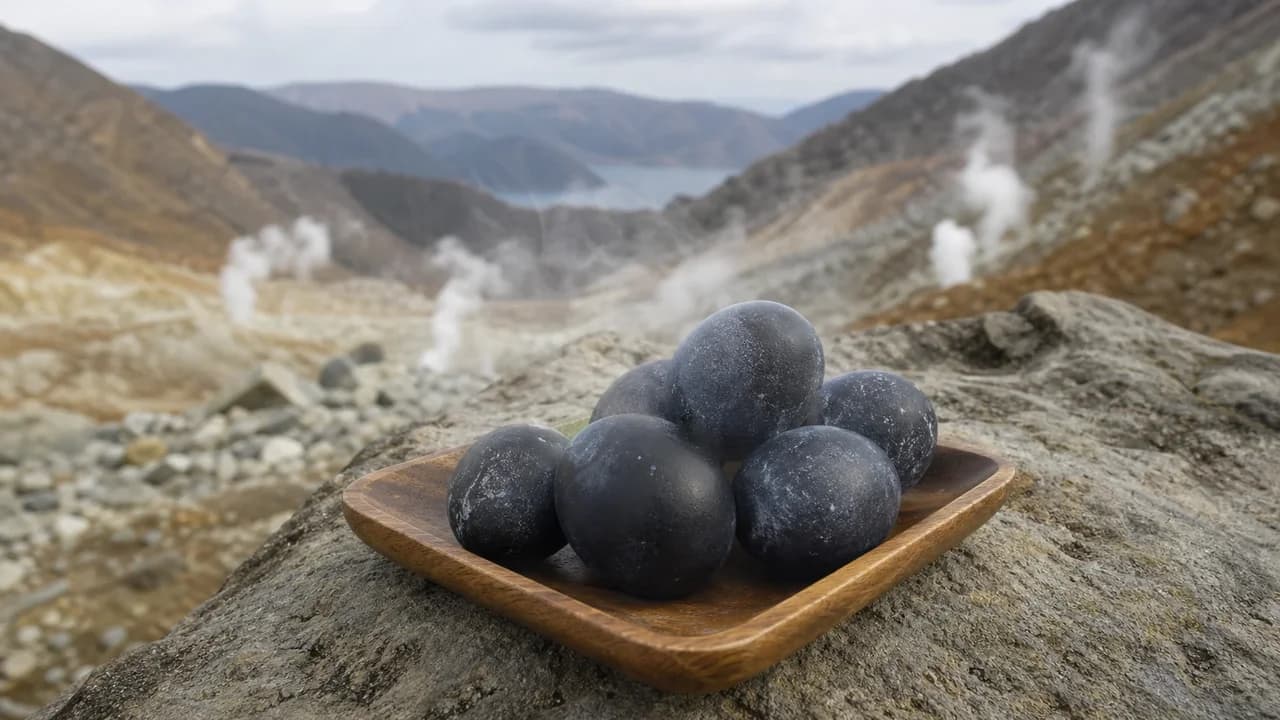
Kuro tamago translates to black egg, and the name is literal. Vendors at Owakudani take ordinary chicken eggs and boil them in mineral-rich spring water until the shells turn a deep, glossy black. Crack one open and the inside looks like any hard-boiled egg, with a white exterior and a standard yellow yolk. Flavor carries a faint mineral edge from the sulfur, but most travelers notice the smell more than any change in taste. Locals sell the eggs only near Owakudani itself, since the color comes from this one valley's specific mix of iron and sulfur in the spring water. You won't find the same product elsewhere in Hakone. Kuro tamago sit inside the wider Hakone food scene as a single, place-specific snack rather than a dish on menus across the region.
The location exclusivity isn't arbitrary—Owakudani formed roughly 3,000 years ago with a unique iron-sulfur mineral mix in its spring water, making it the only source where the shells turn black naturally.
- Location: Owakudani (Great Boiling Valley), Hakone
- Nearest station: Owakudani Station (OH63) on the Hakone Ropeway
- Typical price: about ¥500 for a bag of four eggs
- Typical visit length: 30 to 60 minutes
- Shop hours: posted as 9:00 am to 4:30 pm daily at Kurotamago House
Why the Shells Turn Black: The Science of Owakudani's Water
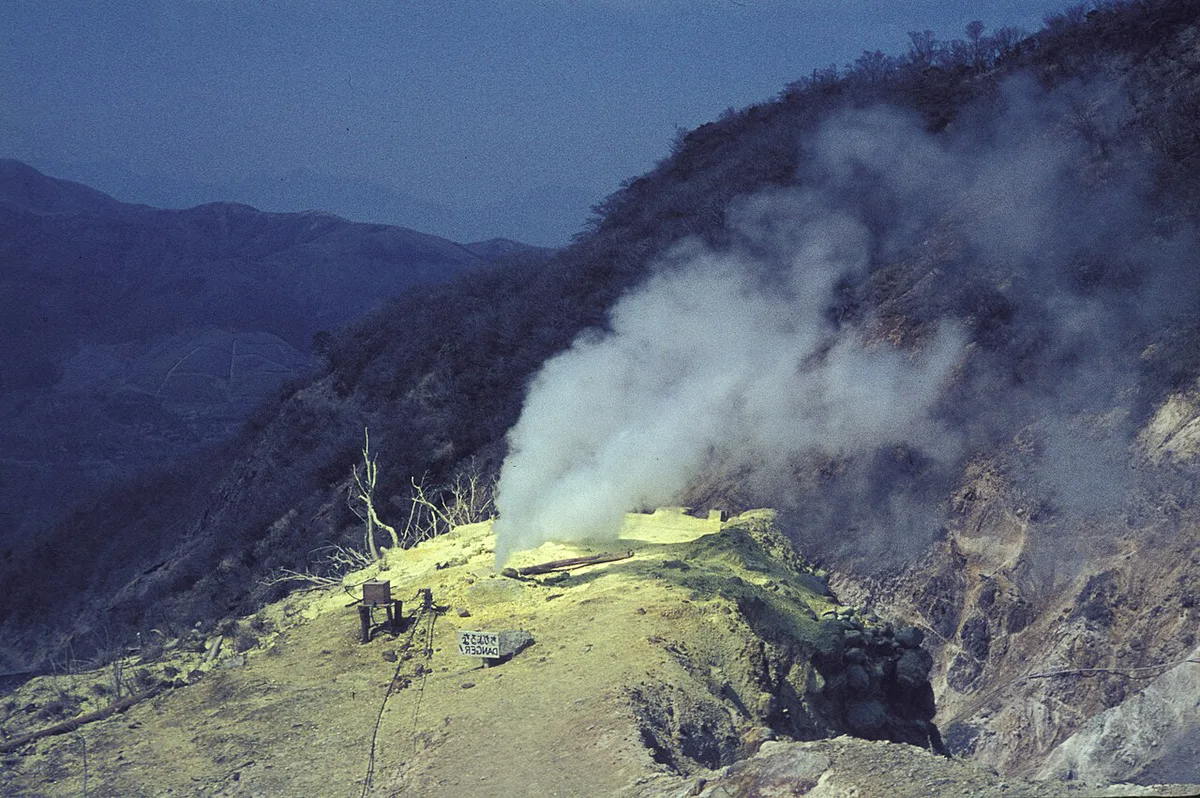
Owakudani, meaning Great Boiling Valley, formed roughly 3,000 years ago during Mount Hakone's last eruption. Its hot springs still vent sulfur gas today, which is what makes the eggs possible in the first place. The color comes from a straightforward chemical reaction, not dye or paint. Spring water at Owakudani carries dissolved iron along with hydrogen sulfide gas released by that ongoing volcanic activity. When a raw egg sits in the water, the iron reacts with the hydrogen sulfide and coats the shell in iron sulfide, turning it black. Producers boil the eggs in steel baskets for 60 minutes at roughly 80°C, then steam them for another 15 minutes at 100°C to finish cooking. That two-step process is why kuro tamago cook differently than a standard hard-boiled egg at home. It also explains why nobody replicates them outside Owakudani: the specific mineral balance of this valley's spring water is what turns the shell black. Pipes run down the mountainside from Owakudani, carrying the same hot spring water to nearby ryokans. That's part of why Hakone's onsen culture runs so deep in this particular valley.
The Seven-Year Legend Behind Kuro Tamago
Local legend claims eating one kuro tamago adds seven years to your life. Some versions cite five to seven years, but seven is the number most vendors and guides repeat near Owakudani. Seven is also considered a fortunate number in Japan generally, which likely helped the legend stick. Hakone Tourism Association accounts trace part of the belief to Enmei Jizo, a centuries-old statue near Owakudani linked to longevity and protection. According to local guides, the legend's benefit is said to max out after two eggs, so a bigger bag doesn't multiply the effect. Shopkeepers and longtime visitors still recommend moderation: eat one or two eggs, not a full bag in one sitting. Nobody claims scientific backing for the seven-year story, and even tourism officials treat it as folklore rather than fact. Treat it as a fun story to repeat, not a reason to eat a whole bag in one sitting.
Getting to Owakudani: Ropeway, Free Pass, and Bus Alternatives
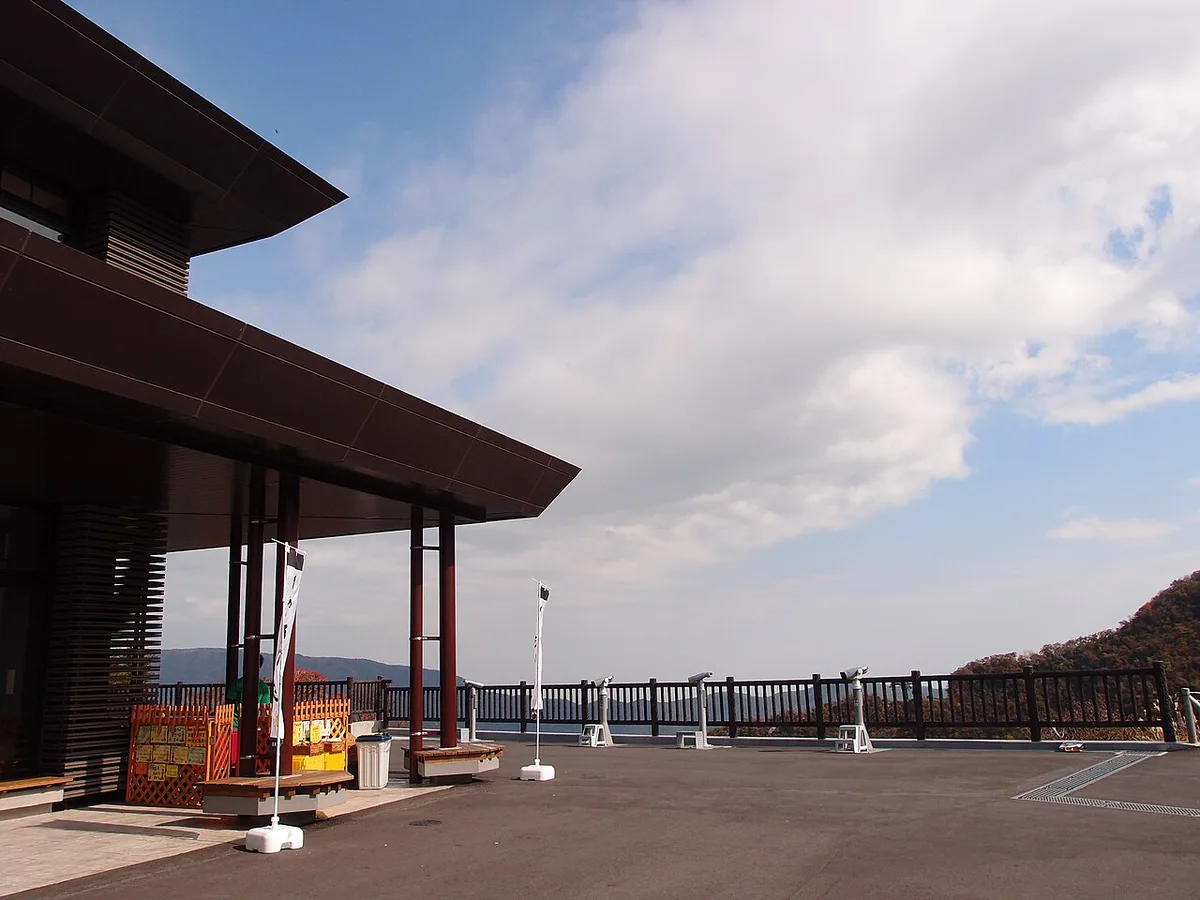
If you're starting from Tokyo, the Odakyu Romancecar runs from Shinjuku to Hakone-Yumoto Station in about 85 minutes. Owakudani sits partway along the Hakone loop route, the circuit most visitors follow through the region. Reaching it from Hakone-Yumoto takes three linked legs: a railway, a cable car, and the ropeway, detailed in the table below. The Hakone Ropeway leg crosses directly over active volcanic vents, with clear-day views toward Mount Fuji. Owakudani Station has a lookout deck and shop area right where the ropeway arrives, so you don't need to walk far to see the vents or reach Kurotamago House. Arriving on the first departures of the day tends to mean shorter lines at both the gondola and the egg shop. Buying each leg separately adds up fast across a full loop day. Most visitors instead use the Hakone Free Pass Guide: Prices, Inclusions, & Itineraries, which bundles the railway, cable car, and ropeway into one ticket for the loop. Check current pricing and validity on the official pass page before you buy. Travelers who prefer to skip the ropeway can reach Owakudani by bus from Hakone-Yumoto or Gora instead. Bus schedules shift with volcanic activity levels, so check current routes before you go.
| Route Leg | Mode | Approx. Time |
|---|---|---|
| Hakone-Yumoto Station to Gora Station | Hakone Tozan Railway | About 40 minutes |
| Gora Station to Sounzan Station | Hakone Tozan Cablecar | About 10 minutes |
| Sounzan Station to Owakudani Station (OH63) | Hakone Ropeway | About 10 minutes |
Where to Buy Kuro Tamago at Owakudani
Kuro tamago are sold at Kurotamago House, inside the Owakudani Kurotamagokan building on the second floor near the ropeway station. A bag of four eggs has typically run about ¥500. Prices can shift, so confirm the current rate in-store or via the shop's official listing before you go. Posted hours have run from 9:00 am to 4:30 pm daily. Treat that as a starting point, and check current hours locally since posted times can change. Beyond the eggs themselves, the shop stocks black-egg-themed souvenirs, including manju bean-jam buns and cookies molded to look like the eggs. Owakudani Nature Study Path, the trail that runs past the actual boiling vents, has been closed to unguided visitors since May 2015. Access now requires a pre-booked guided tour, run four times a day, and eggs are not sold at the boiling site itself, only at Kurotamago House. If you want more of Hakone's food scene beyond the eggs, the Hakone-Yumoto food street is a good follow-up stop back down the mountain. A bowl of 7 Best Soba Restaurants in Hakone: Yumoto to Lake Ashi (2026) is a solid way to round out the day.
Other Treats at Owakudani: Soft Serve and Local Snacks
Kuro tamago aren't the only snack at Owakudani. The visitor center and surrounding shops sell soft serve ice cream, often flavored with matcha and topped with a crisp wafer. Some stalls serve drinks and desserts with dry ice for a foggy, theatrical presentation, popular for photos against the volcanic backdrop. Black, egg-shaped stools are scattered around the viewing area, giving you somewhere to sit while you eat. None of this replaces a real meal, though. For an actual sit-down break later in the day, Hakone's best cafés are a better bet than the snack stalls at the ropeway station.
Safety Notes: Volcanic Gas, Closures, and the Smell
Expect an active volcanic valley here, not a scenic overlook with a distant view of one. Sulfur gas rises visibly from vents across the hillside, and the smell is strong, closer to rotten eggs than a faint whiff. Gas levels around Owakudani are tracked, and access has been restricted before when they rose, sometimes for extended periods. None of this makes a typical visit unsafe. It means paying attention to posted signage and current conditions rather than an old blog post or photo. If you manage a chronic respiratory or heart condition, consider a shorter stop: buy your eggs, take in the view from the station platform, and skip extended time directly among the vents. Most other travelers can plan a normal visit without special precautions.
Visitors with respiratory or heart conditions should plan a shorter stop than the typical 30 to 60 minutes and minimize exposure to sulfur gas—buy eggs at the station shop rather than exploring the vents.
- Respiratory conditions: sulfur fumes can be hard on asthma or other breathing issues. Move back toward the station building if the air feels too strong.
- Heart conditions: volcanic gas exposure is worth treating as a caution point if you have an existing heart condition.
- Ropeway and trail closures: high winds or elevated volcanic gas levels periodically shut the ropeway or restrict trail access. Check current status before you head up.
- The smell: expect a constant sulfur odor across the whole viewing area, not just near individual vents.
Planning Your Visit: Timing, Duration, and Nearby Stops
Morning visits generally mean thinner crowds around the ropeway station and shop, while afternoon brings more tour groups off the loop route. Most travelers spend 30 to 60 minutes at Owakudani, enough time for the ropeway views, a bag of eggs, and a short walk around the viewing area. Many visitors continue down to Togendai and board the Lake Ashi pirate ship cruise right after Owakudani. If you're routing the trip as a day trip from Tokyo, build Owakudani into the middle of the loop. That way you're not rushing the ropeway leg at the start or end of the day. For a longer stay, a full Hakone Itinerary: 2-Day Travel Plan + Map & Tips can space Owakudani across two days. Pair it with other 15 Best Hakone Attractions & Things To Do (2026 Guide) to fill out the rest of the loop. Consider a ryokan kaiseki dinner to close out the evening. Deciding Where To Stay In Hakone Travel Guide matters too, since a base near Gora or Hakone-Yumoto keeps the ropeway leg short on both ends. A hot spring soak is a natural way to end a full loop day that includes Owakudani and Lake Ashi.
For trip-planning details, see Owakudani - Wikipedia.
Frequently Asked Questions
What do kuro tamago taste like?
Despite the black shell, the inside looks and tastes like a normal hard-boiled egg. There's a faint mineral note from the sulfur, but most people notice the smell more than any change in flavor.
How much do kuro tamago cost at Owakudani?
A bag of four eggs has typically run about ¥500 at Kurotamago House. Prices can shift, so confirm the current rate in-store or on the shop's official listing before you go.
Can you still walk to the Owakudani boiling vents on your own?
Not since May 2015. The path now requires a pre-booked guided tour, run four times a day, rather than open access.
Is Owakudani safe to visit with the volcanic gas?
Most visits are routine, but anyone with asthma, other respiratory issues, or a heart condition should take the sulfur fumes seriously. Check current ropeway and gas-level status before you go, and step back toward the station building if the air feels too strong. Sensitivity to the smell alone doesn't mean skipping Owakudani, but plan a shorter stop if strong odors bother you.
Do you need the Hakone Free Pass to visit Owakudani?
It's not required, but it's usually the better value if you're covering the railway, cable car, and ropeway legs in one day. Check current pricing on the official pass page, since buying each leg separately adds up fast.
How long should you plan for a visit to Owakudani?
Most travelers spend 30 to 60 minutes at Owakudani for the ropeway views, the eggs, and a short walk around the viewing area. Build in extra time if the ropeway is running slower due to weather or crowd volume.
Can you see Mount Fuji from Owakudani?
On clear days, yes. The ropeway ride and the viewing area both offer glimpses of Mount Fuji, though clouds or haze can block the view entirely.
What does the name Owakudani mean?
Owakudani translates to Great Boiling Valley. Locals also call it Jigokudani, or Valley of Hell, for its volcanic vents and sulfur smell.
What's the best time of day to visit Owakudani?
Arrive in the morning if you want thinner crowds around the ropeway station and shop. Afternoons tend to bring more tour groups working through the loop route.
Free: The Hakone Essentials guide
Top things to do, where to stay, a perfect day plan, getting around, and the best time to go — a Hakone mini-guide you can take offline.
You might also like


Continue reading
More guides you'll find useful