
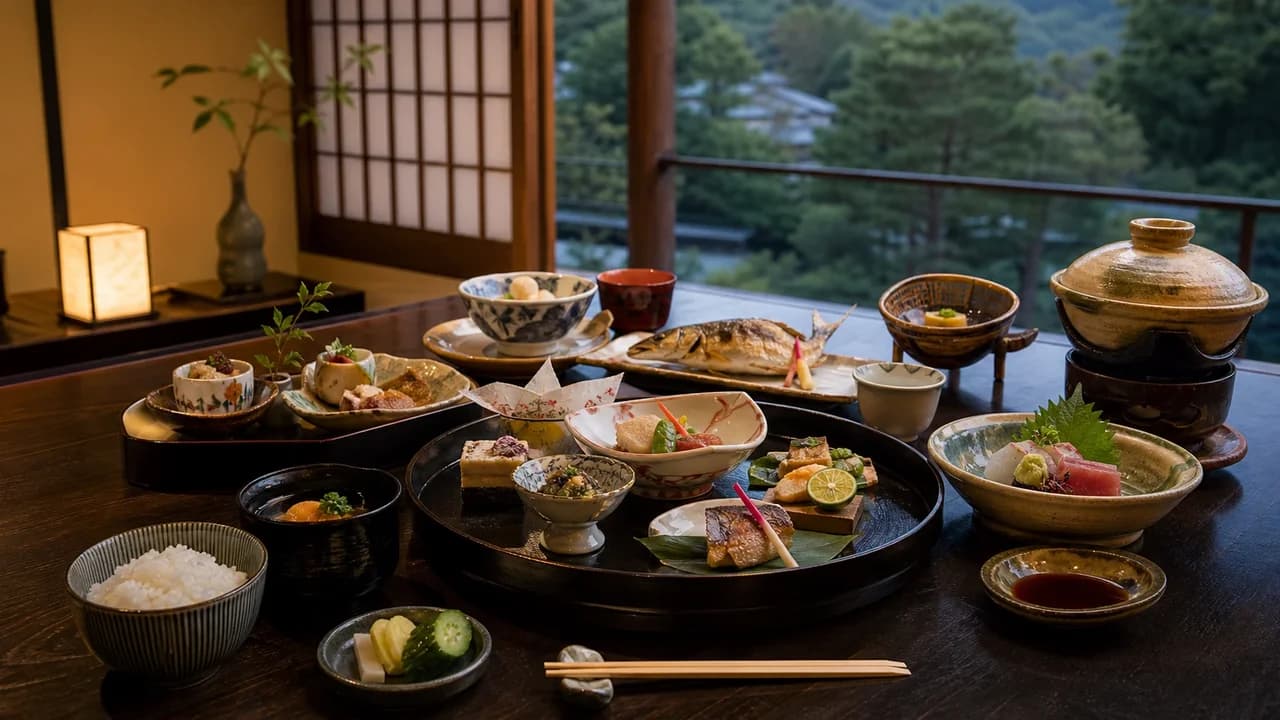
Kaiseki Dinner in Hakone Ryokans: Courses, Costs, and Booking Tips
Plan a kaiseki dinner at a Hakone ryokan: course order, seasonal menus, Gora Kadan and Youraku pricing, day-trip options, dietary limits, and 2026 booking timing.
On this page
Last updated July 2026, this guide covers what a kaiseki dinner hakone ryokan stay actually involves, from course order to cost. Hakone's onsen towns, including Gora, Kowakidani, and Sengokuhara, pair traditional ryokan kaiseki with a hot-spring stay, and several restaurants also serve non-guests directly. This guide covers which ryokans stand out for food, how day-trippers can book a kaiseki meal without a room, and what a course typically costs in 2026.
The Kaiseki Dinner at a Hakone Ryokan: What to Expect
Kaiseki ryori is Japan's multi-course seasonal dinner, built from small dishes served one at a time. It grew out of cha-kaiseki, the simpler meal once served before a tea ceremony, then expanded into a fuller formal style. At a Hakone ryokan, the format follows three core ideas: ingredients at peak freshness, true natural flavors, and cooking done mindfully for the specific guests being served. Most ryokans across Gora, Kowakidani, and Sengokuhara bundle the dinner into the overnight room rate rather than sell it as a standalone reservation. For a broader look at eating in the area beyond ryokan dining, see the Hakone food guide.
Kaiseki Course Order: From Sakizuke to Mizumono
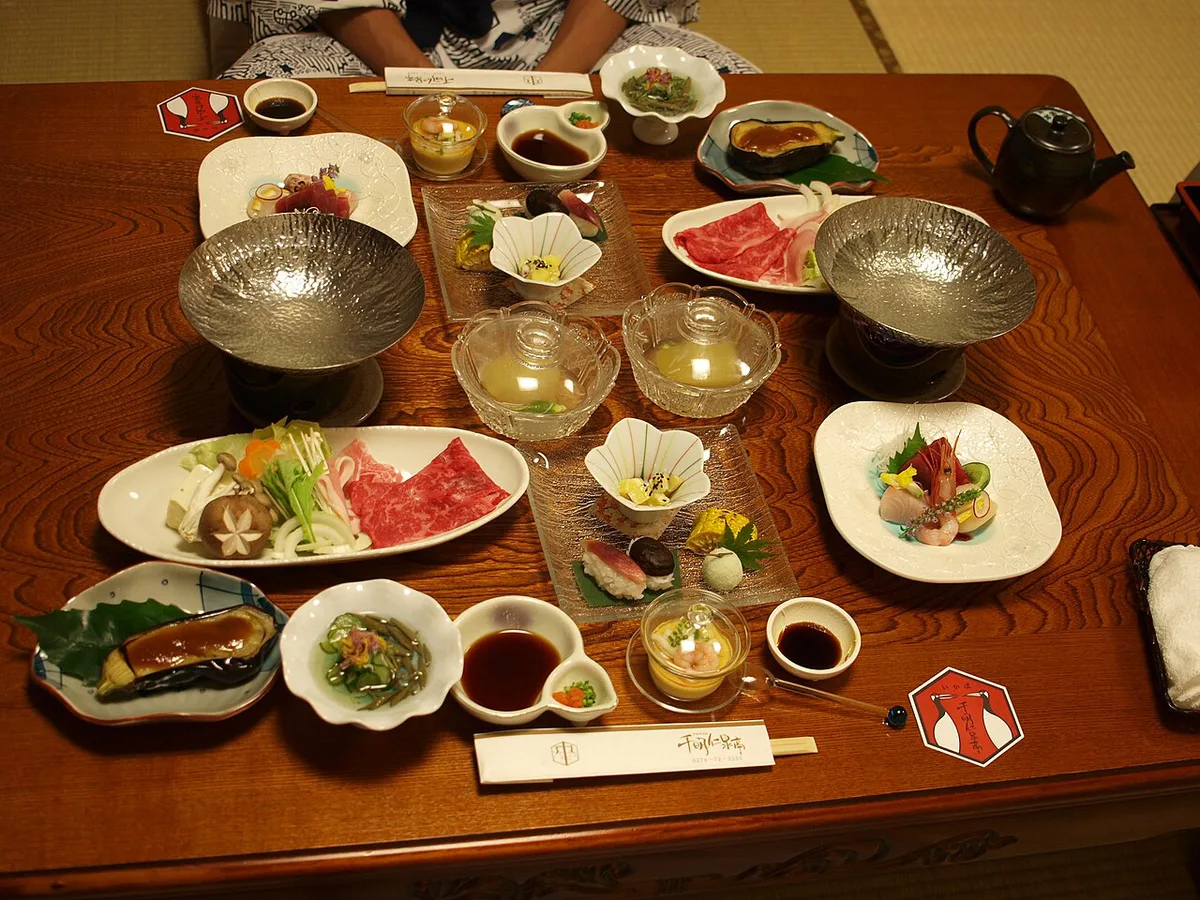
Course counts and order vary by ryokan and by chef, but most Hakone kaiseki dinners run between eight and eighteen small dishes. Gora Kadan's own menu spans an eight-dish lunch course up to nine-dish dinner courses, which fits that range in practice. The list below follows the general progression documented in ryokan kaiseki writing, though any specific inn may swap or skip dishes by season.
- Sakizuke: a small starting appetizer, sometimes a cup of regional sake or umeshu
- Hassun: the second course, setting the seasonal theme with one style of nigiri plus several side dishes
- Mukozuke (Otsukuri): a plate of sliced seasonal sashimi
- Suimono: the first lidded soup course of the meal
- Agemono: a fried course, often seasonal tempura with local vegetables
- Yakimono: a grilled main of fish or meat, plated on regional pottery
- Takiawase: vegetables simmered separately from meat, fish, or tofu, then plated together
- Sunomono: a vinegared palate-cleanser served midway through the courses
- Mushimono: a steamed dish, often chawanmushi egg custard with mushrooms and seafood
- Shiizakana: a heavier course, sometimes a hot-pot, signaling the meal is nearing its end
- Shokuji: the rice course, made up of gohan, konomono pickles, and tomewan miso soup
- Mizumono: the closing dessert, often seasonal fruit or a local sweet
Seasonality: Why the Same Ryokan Serves a Different Menu Each Month
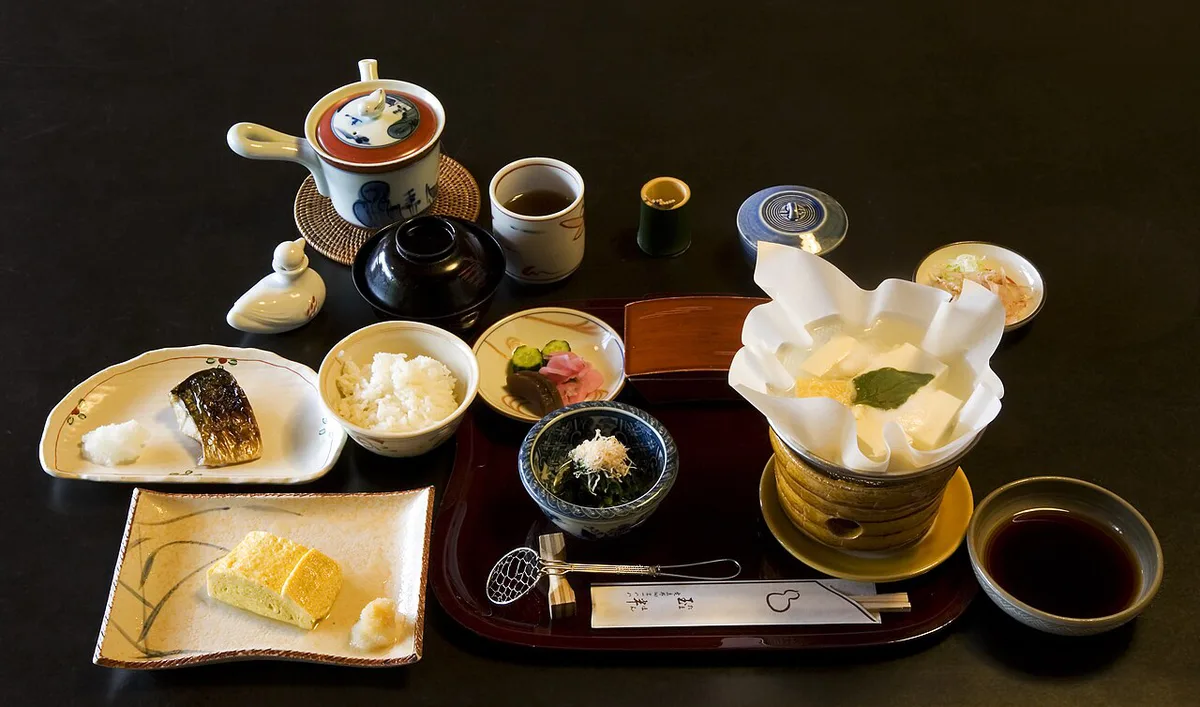
Kaiseki cooking follows shun, the idea of serving each ingredient at its single point of peak flavor. Spring menus lean on bamboo shoots and cherry blossom themes, while autumn brings mushrooms and chestnuts to the table. Gora Kadan changes its Kaiseki Kadan menu monthly, so a dish served in April will not repeat in October. Because seasonal menus shift often, confirm the current lineup directly with the ryokan before finalizing any reservation.
Ryokans Known for Food-First Kaiseki
Gora Kadan occupies the former Kan'in-no-miya Villa, built in the early 1900s for a branch of the imperial family. Its in-house restaurant, Kaiseki Kadan, serves the same seasonal courses to overnight guests and day visitors alike. Pax Yoshino and Hotel Okada sit in a more accessible price bracket for travelers who want a real kaiseki dinner without the top-tier room rate. Mikawaya Ryokan is another option, built around a more traditional atmosphere and service style. Menus at all of these properties change monthly, so treat any specific dish list as an example rather than a guarantee. Some properties pair the meal with a private soak, worth checking against the options in the Hakone onsen guide. For a broader comparison of where to stay across Hakone's onsen towns, see the where to stay in Hakone guide.
Gora Kadan's Shunsai vegetarian course costs ¥15,125 but still relies on dashi stock and excludes vegan, gluten-free, and halal accommodations. Vegetarian kaiseki has built-in limits despite being the only special diet option.
Kaiseki Without an Overnight Stay: Day-Trip Options
Staying overnight is not the only way to eat kaiseki in Hakone. Youraku, on the banks of the Hayakawa River near Yumoto Station, serves lunch and dinner kaiseki without requiring a room. Gora Kadan's restaurant, Kaiseki Kadan, also serves day visitors directly, with an eight-dish lunch course and several nine-dish dinner courses. This matters most for travelers on a day trip from Tokyo who still want a real kaiseki meal before heading back. Between a lunch reservation and the return train, a stop at one of the Hakone cafes works better than skipping straight into a heavy course meal. A bowl at a Hakone soba shop is another light option if dinner is still hours away.
| Factor | Day-trip kaiseki | Overnight ryokan kaiseki |
|---|---|---|
| Where to go | Youraku (Yumoto, by the Hayakawa River); Kaiseki Kadan at Gora Kadan | Gora Kadan, Pax Yoshino, Hotel Okada, Mikawaya Ryokan |
| Meals included | Lunch or dinner booked separately | Dinner and breakfast bundled into the room rate |
| Starting price | ¥8,470 for an 8-dish lunch course at Kaiseki Kadan | Bundled into the room rate; a la carte dinner courses run ¥12,100 to ¥29,645 at Gora Kadan |
| Reservation | Premium 9-dish courses require advance reservation | Usually arranged automatically with the room booking |
Costs, Timing, and the Half-Board Default
Most Hakone ryokans build dinner and breakfast into the nightly rate by default, a setup often called half-board. Some Western booking sites list a separate Room Only rate for the same property, so check the meal plan field before assuming dinner is included. Gora Kadan keeps strict hours for both meals. Missing that dinner window matters most on days that include the Hakone Ropeway. It also matters after a stop on the Lake Ashi pirate ship cruise, since both need enough buffer before the return trip. Build the return leg around the Hakone loop route so transit time back to the ryokan does not eat into the dinner window. A Hakone Free Pass Guide: Prices, Inclusions, & Itineraries covers the buses and railway most travelers use to get back to Gora or Yumoto before that cutoff. These are the restaurant's own published rates and include the standard 10% service charge and 10% tax.
| Course | Dishes | Price | Reservation |
|---|---|---|---|
| Suisen (lunch only) | 8 | ¥8,470 | Not required |
| Sakura | 9 | ¥12,100 | Not required |
| Shunsai (vegetarian) | 9 | ¥15,125 | Required |
| Tachibana | 9 | ¥18,150 | Required |
| Kiku | 9 | ¥29,645 | Required |
| Children's meal (under 12) | N/A | ¥3,630 | N/A |
- Lunch: 11:00-15:00, last order 13:30
- Dinner: 17:30-21:00, last order 19:00
Dietary Restrictions: Why Kaiseki Is Hard to Modify
Traditional kaiseki relies heavily on dashi, a stock made from bonito flakes or kelp that runs through soups, simmered dishes, and dipping sauces. That makes strict vegan, halal, or gluten-free versions difficult, since removing dashi changes the flavor base of nearly every course. Gora Kadan's Shunsai course is billed specifically as vegetarian, and the restaurant states plainly that vegan, gluten-free, and halal options are not available even within that course. Expect a similar constraint at most other Hakone ryokans, since a fixed seasonal menu gets planned and prepped as one unit rather than assembled per guest. If a restriction is non-negotiable, contact the ryokan directly at least 72 hours before the stay rather than mentioning it at check-in.
Common Mistakes to Avoid
A handful of avoidable mistakes account for most bad Hakone kaiseki experiences.
- Arriving after the dinner cutoff, since Gora Kadan's dinner service ends at 21:00 with last order at 19:00
- Reserving a food-focused ryokan at the last minute, since popular kaiseki properties fill up months ahead in peak seasons
- Filling up at the Hakone-Yumoto Street Food Guide: Best Bites & Shotengai Map before a nine-plus course dinner instead of treating it as a light stop
- Booking a Room Only rate through a Western OTA and finding out at check-in that dinner is not included
- Assuming any course can be modified for allergies, since a fixed set menu limits or rules out substitutions
Building Kaiseki Into a Hakone Itinerary
Treat the kaiseki dinner as the anchor for whichever base town fits the rest of the day. A Yumoto-based stay keeps transit short, since Youraku and the train station sit close together. That works well on a day that already includes a stop at Hakone black eggs. A Gora-based stay suits a slower day built around the 15 Best Hakone Attractions & Things To Do (2026 Guide) nearby, ending with dinner at Kaiseki Kadan. Either way, map the sightseeing stops into a full Hakone Itinerary: 2-Day Travel Plan + Map & Tips that ends near the ryokan before 17:30.
Dinner service begins at 17:30 with last order at 19:00, so plan the Hakone Ropeway and Lake Ashi cruise stops to finish early enough to return by 17:30. Dinner timing is your day's constraint.
How to Book the Correct Kaiseki Meal Plan
Compare the ryokan’s direct booking page with major hotel platforms before paying. The available meal plans may differ between English, Japanese, and third-party listings.
Japanese booking pages commonly label half-board as ichihaku nishoku (一泊二食), meaning one night with dinner and breakfast. Sudomari (素泊まり) means room only, while choshoku-tsuki (朝食付き) includes breakfast but no dinner.
At Gora Kadan, distinguish an overnight package from a separate table reservation at Kaiseki Kadan. Youraku bookings are restaurant reservations, so they do not include accommodation or ryokan breakfast.
Check these details before confirming:
- The exact number of dinners included for your party
- Whether children receive kaiseki or a separate children’s meal
- The required arrival time and final dinner seating
- Whether dietary requests received written approval
If an English page omits a meal option shown on the Japanese site, contact the property directly. Save the confirmation showing the plan name, guest count, meal time, and approved dietary arrangements.
For trip-planning details, see Kaiseki - Wikipedia.
Frequently Asked Questions
Do you need to stay overnight to have kaiseki in Hakone?
No overnight stay is required. Youraku near Yumoto Station and Kaiseki Kadan at Gora Kadan both serve kaiseki to day visitors. Reserve ahead regardless, especially for the premium nine-dish courses that require it.
How much does a kaiseki dinner cost at a Hakone ryokan?
At Gora Kadan, the lunch-only eight-dish Suisen course runs ¥8,470, and nine-dish dinner courses range from ¥12,100 for Sakura up to ¥29,645 for Kiku. These rates include the standard 10% service charge and 10% tax. Other ryokans price differently, so confirm the current menu before booking.
Is dinner included in a Hakone ryokan room rate?
Most Hakone ryokans bundle dinner and breakfast into the nightly rate by default. Some Western booking sites list a separate Room Only rate for the same property. Check the meal plan field carefully before booking.
Can Hakone ryokans accommodate vegan, halal, or gluten-free diets?
Rarely, and only with real limits. Dashi stock runs through most courses, and Gora Kadan states plainly that its vegetarian Shunsai course is not vegan, gluten-free, or halal. Contact the ryokan directly at least 72 hours ahead if a restriction is non-negotiable.
What time does kaiseki dinner start at a Hakone ryokan?
At Gora Kadan, dinner service runs 17:30 to 21:00 with last order at 19:00. Plan sightseeing, including any ropeway or Lake Ashi cruise stop, to finish well before that window closes.
Free: The Hakone Essentials guide
Top things to do, where to stay, a perfect day plan, getting around, and the best time to go — a Hakone mini-guide you can take offline.
You might also like


Continue reading
More guides you'll find useful


