

Miyajima Food Itinerary: A One-Day Street Food Crawl Timed to the Ferry
Follow this Miyajima food itinerary from century-old conger eel rice at Miyajima-guchi to grilled oysters and street food on Omotesando, timed to the 5 PM close.
On this page
Last updated July 2026: a Miyajima food itinerary works best when it's built around the ferry schedule and the island's early closing times, not just a list of dishes. Most food stalls and restaurants on Miyajima shut by 5:00 PM, which catches day-trippers who linger too long at the shrine before eating. This plan starts on the mainland at Miyajima-guchi, crosses by ferry, and moves through Omotesando Shopping Street, the shrine area, and an optional Momijidani Park stop, all timed so you eat well without backtracking.
Miyajima Food Itinerary at a Glance
A one-day Miyajima food itinerary works best when you treat the ferry schedule and the 5:00 PM stall closures as the two fixed points of the day. Most Omotesando Shopping Street vendors shut by 5:00 PM, so the crawl below runs from a pre-ferry meal on the mainland through the shopping street, the shrine area, and an optional Momijidani Park detour. The island's signature foods fall into three groups: grilled Hiroshima Bay oysters, anago-meshi (conger eel rice), and momiji manju, the maple-leaf-shaped cake sold both baked and fried.
- JR train, Hiroshima Station to Miyajima-guchi: about 30 minutes
- Walk, Miyajima-guchi Station to the ferry terminal: 5 to 6 minutes
- Ferry, Miyajima-guchi to Miyajima: about 10 minutes, running three to four times an hour
- Most Omotesando Shopping Street food stalls close by 5:00 PM
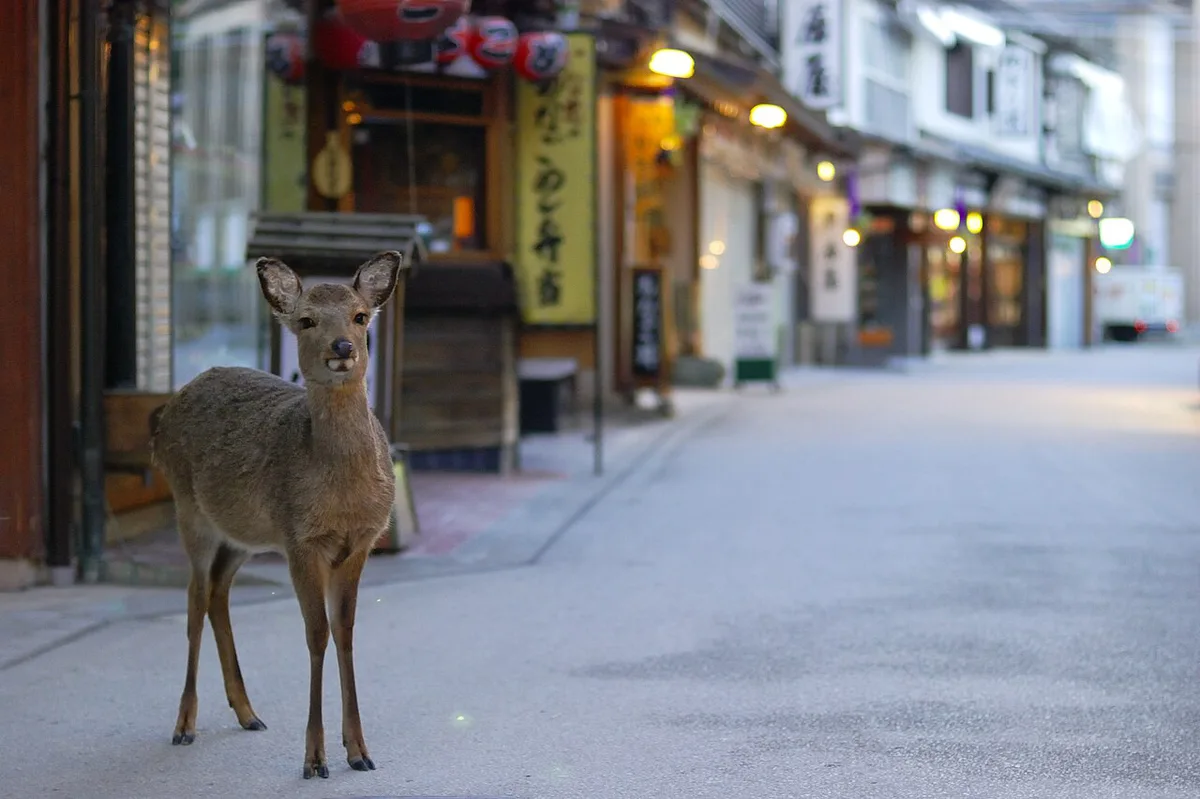
- Miyajima's deer go after food and paper alike, so keep snacks, maps, and tickets out of reach
Getting to Miyajima Before You Eat
The JR train from Hiroshima Station to Miyajima-guchi takes about 30 minutes and is the faster option. The Hiroshima Electric Railway tram also runs the route, but it cuts through central Hiroshima and stops more often, roughly doubling the travel time. From Miyajima-guchi Station, walk 5 to 6 minutes to the ferry terminal. Ferries to Miyajima take about 10 minutes and run three to four times an hour, so there's rarely a long wait. A dedicated day-trip guide from Hiroshima breaks down train, tram, and return-ferry timing in more detail.
Stop by Stop: The Full-Day Food Crawl
Follow these stops in order to avoid backtracking across the island and to hit each kitchen while it's actually open.
- Anago-meshi at Miyajima-guchi. Eat before boarding the ferry at Ueno, a conger eel rice counter near Miyajima-guchi Station that has served the dish since 1897.
- Ferry crossing to Miyajima. The 10-minute ride runs three to four times an hour; watch for oyster rafts anchored in the bay along the way.
- Omotesando Shopping Street snacks. Walk toward the shrine, stopping for oyster curry bread, nigiri-ten fish cake sticks, and fried momiji manju.
- Sit-down oyster lunch. Choose a lunch set at Yakigaki no Hiyashi or a la carte grilled oysters at Kaki Fuku Maru, timed to whichever tide suits the torii view you want.
- Coffee break at Itsuki Coffee. Rest with an iced coffee or a coffee jelly drink before continuing toward the shrine or Momijidani Park.
- Craft beer at Miyajima Brewery. Order a three-pour flight and take the third-floor seats for water views over the bay.
- Last stops before 5:00 PM. Grab a final momiji manju or fish cake stick on Omotesando, or head back to a ryokan if staying overnight.
The Pre-Ferry Ritual: Anago-Meshi at Miyajima-Guchi
Starting the day at Miyajima-guchi, on the mainland side of the crossing, means eating conger eel rice before the crowds reach the island. Anago-meshi in Miyajima covers the full lineup of counters, but Ueno is the one worth building a morning around. It has served grilled conger eel over rice since Miyajima Station opened in 1897, in small, medium, and large portions. Arrive before noon; the counter takes no reservations, and a lunchtime line is normal. Prices rose in September 2022 as conger eel became harder to source, so check the current menu when you arrive rather than budgeting from an old figure. If a table isn't essential, ask about a takeaway version, useful if you'd rather eat while riding the ferry over.
Though ferries run three to four times an hour with rarely a long wait, the real timing bottleneck is arriving at Ueno before noon, since the reservation-free counter has a lunchtime line.
Omotesando Street Food: What to Eat on the Walk to the Shrine
Once you're off the ferry, Omotesando Shopping Street is the spine of the crawl, running from the pier toward Itsukushima Shrine. Oyster curry bread is the stall food worth queuing for. It's a deep-fried dough ball with whole oysters folded into a mild curry filling, crunchy outside and steaming hot inside. Nigiri-ten, grilled fish cake on a stick, comes in several flavors and travels well if you're eating on the move. Momiji manju, the maple-leaf-shaped sponge cake, is sold both freshly baked with red bean, custard, or chocolate filling, and fried. At Hakataya, the fried version is called Miyajima Jakee and costs ¥180 a piece, ordered from a ticket machine. Let it cool for a moment, since the filling comes out very hot. For every filling and bakery on the street, the momiji manju guide breaks down the options further. A wider roundup of the island's kitchens lives at the Miyajima food hub.
Momiji manju at ¥180 from Hakataya works well for the Momijidani Park walk because it travels better than hot oyster curry bread and packs safely in your bag.
Lunch: Timing Oysters to the Tide
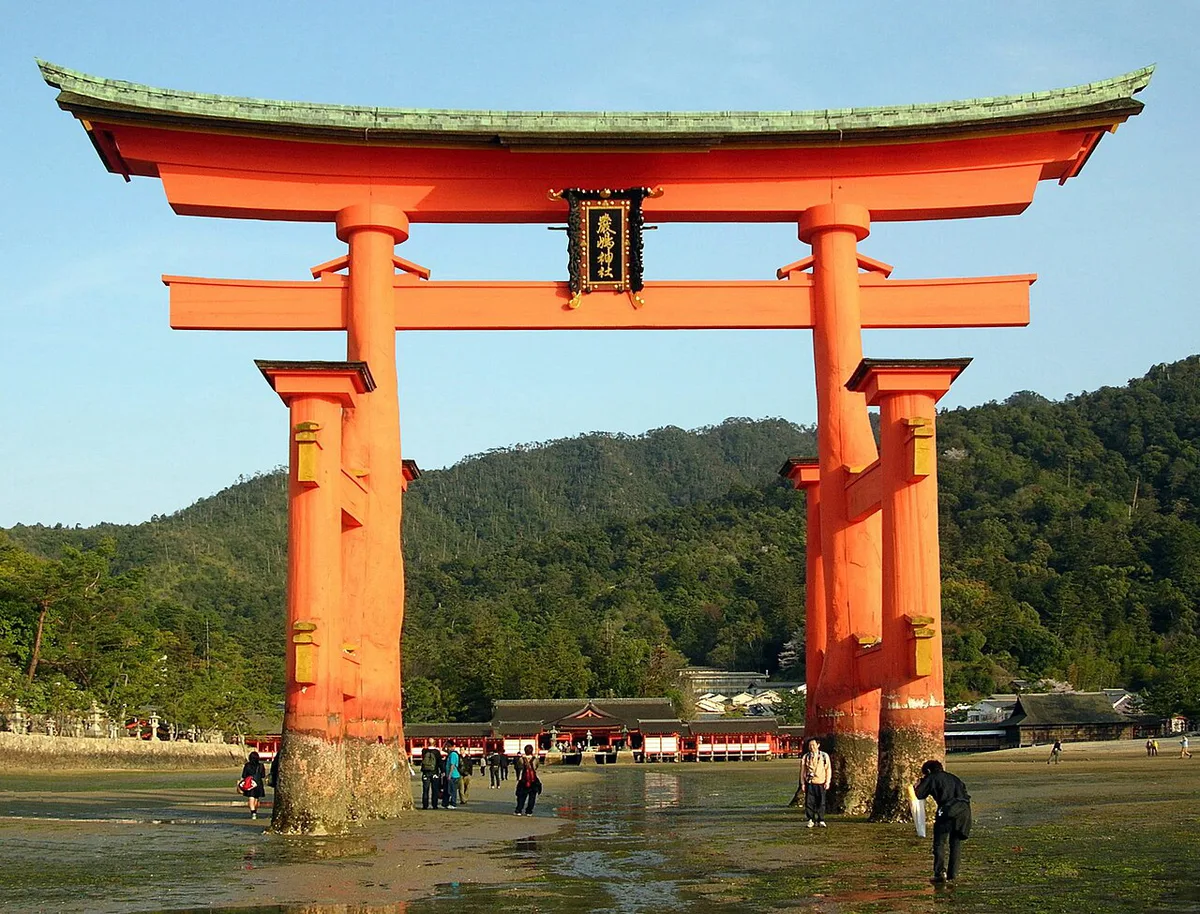
Hiroshima Bay's shallow, plankton-rich water is why Miyajima oysters get grown for three years instead of one, and lunch is the meal to build around. Aim for high tide if you want the floating-torii view while you eat, since the gate appears to float only when the water is up. At low tide, walk out onto the sand instead. A dedicated oysters guide covers timing in more depth, but two spots anchor most visits. Lines at Yakigaki no Hiyashi can wrap around the building at peak hours, so arrive before opening if you want to skip the wait. Kaki Fuku Maru seats only about six people at a time, so it works well as a faster, cheaper stop between sights. For more sit-down options beyond oysters, the island's best restaurants are listed separately.
- Yakigaki no Hiyashi lunch set (2 raw, 2 grilled, 3 fried oysters, plus rice, miso soup, and pickles): about ¥3,000
- Yakigaki no Hiyashi a la carte, three grilled oysters: about ¥1,200
- Kaki Fuku Maru grilled oyster, single piece: ¥200
- Kaki Fuku Maru grilled oyster with topping (garlic butter, cheese mayo, gratin, ajillo, or miso): ¥300
- Kaki Fuku Maru combo, 1 grilled plus 2 fried, or 3 fried: ¥500
Afternoon Coffee and Craft Beer
Mid-afternoon is the natural lull between lunch and the shrine or park, and Miyajima has two distinct ways to fill it. Itsuki Coffee roasts its own specialty-grade beans and serves an iced au lait with coffee jelly underneath, a dessert that's softer and lighter than typical coffee jelly. Cafes with a view covers seating options if you want a table facing the water. Miyajima Brewery is the other stop. Order a flight of three pours for ¥1,100, and take the third-floor seats for the best window views over the bay. Sake drinkers can build in a separate stop, since brewery and sake tastings are different experiences on the island; a sake brewery tasting guide covers that route on its own.
Fall Detour: Momijidani Park and Maple Treats
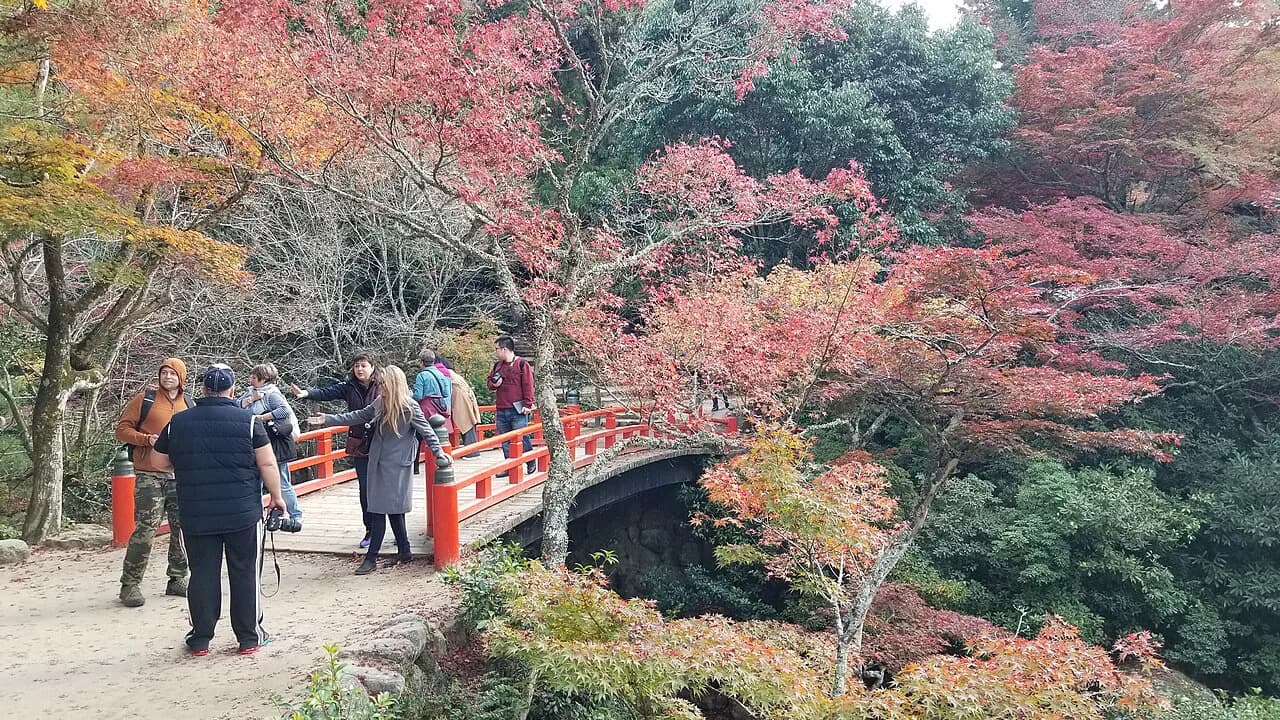
Momijidani Park is worth the detour in autumn, when its maple trees, known as momiji, turn red. An autumn foliage guide covers foliage timing and the park's trails in full. En route toward the park, Daisho-in Temple is worth a stop. It's a short walk from Itsukushima Shrine, with 500 statues lining its entrance steps, each carved with a different facial expression. A Daisho-in visitor guide details the layout. Pair the walk with a fried or baked momiji manju bought earlier on Omotesando, since the park itself has fewer food stalls than the main street. Miyajima's top attractions rounds out a combined sightseeing-and-eating day beyond just food.
After 5:00 PM: Day Trip vs Overnight Dinner
What you eat after 5:00 PM depends entirely on whether you're catching the last ferry back or staying the night. Day-trippers should treat the final hour before close as last call. Grab a final Miyajima Jakee or a fish cake stick on Omotesando, since almost every stall on the street shuts down by 5:00 PM. Overnight guests have two strong options instead. Many ryokans serve a multi-course kaiseki dinner built around seasonal, local ingredients, plated in a set sequence of small courses. Kurawanker, an okonomiyaki restaurant on Omotesando, cooks the layered pancake of cabbage, egg, bean sprouts, and noodles to order. Its griddle runs the length of the room, with oyster or scallop toppings both available. A dedicated ryokan and hotel guide covers which properties include a kaiseki dinner. A separate complete island guide ties this food day into the rest of a longer Miyajima stay.
Budget Planning and Dietary Options
A Miyajima food day scales from a street-food-only budget to a full sit-down gourmet one, depending on which stops you pick from the crawl above. The oyster-and-eel-heavy menu on the island makes vegetarian, vegan, and halal dining limited by default, so it helps to plan ahead rather than search on the spot. A dedicated dietary options guide lists which kitchens can accommodate those restrictions. If your visit lines up with the island's oyster festival, costs shift again, since festival stalls and pricing differ from the regular Omotesando lineup. An oyster festival budget guide breaks down what to expect that weekend.
| Item | Where to get it | Price |
|---|---|---|
| Grilled oyster, single piece | Kaki Fuku Maru | ¥200 |
| Grilled oyster with topping | Kaki Fuku Maru | ¥300 |
| Grilled + fried oyster combo | Kaki Fuku Maru | ¥500 |
| Fried momiji manju (Miyajima Jakee) | Hakataya | ¥180 |
| Craft beer flight, 3 pours | Miyajima Brewery | ¥1,100 |
| A la carte grilled oysters, 3 pieces | Yakigaki no Hiyashi | ¥1,200 |
| Oyster lunch set | Yakigaki no Hiyashi | ¥3,000 |
Before Mount Misen: Stock Up on Water and Snacks
Finish the main food crawl before leaving Omotesando for Mount Misen. Food choices become limited after you enter Momijidani Park, and the ropeway does not reach the summit.
Buy water and a durable snack near Omotesando Shopping Street before walking to Momijidani Station. A boxed momiji manju or wrapped nigiri-ten travels better than hot oysters or curry bread. Keep every package secured inside your bag because Miyajima deer may grab food and paper.
The Miyajima Ropeway runs from Momijidani Station through Kayatani to Shishiiwa Station. Shishiiwa Observatory provides broad views over the Seto Inland Sea. Reaching Mount Misen’s summit still requires a hilly walk from the upper station, so allow time before your return ferry.
Do not postpone lunch until after the mountain. Eat oysters or anago-meshi first, then treat Mount Misen as the final sightseeing block. Return to Omotesando before 5:00 PM if you want another snack or souvenir cakes.
Further reading: Miyajima on Wikivoyage · Miyajima on Wikipedia
Frequently Asked Questions
What time should you start a Miyajima food crawl?
Start on the mainland side, at Miyajima-guchi, so you can eat anago-meshi before the ferry crowds build. Aim to be on Miyajima itself by late morning, since most Omotesando food stalls close by 5:00 PM.
Should you eat conger eel rice before or after crossing to Miyajima?
Before. Ueno, near Miyajima-guchi Station, takes no reservations and often has a line by lunchtime, so eating there first avoids a wasted trip back to the mainland later in the day.
How much do Miyajima oysters cost?
Kaki Fuku Maru charges ¥200 for a single grilled oyster and up to ¥500 for a combo. Yakigaki no Hiyashi's lunch set runs about ¥3,000 for a mix of raw, grilled, and fried oysters with rice and miso soup.
What if you're staying overnight instead of doing a day trip?
Plan dinner before the 5:00 PM stall closures cut off options. Many ryokans serve a multi-course kaiseki dinner, and Kurawanker on Omotesando keeps cooking okonomiyaki to order for guests staying the night.
Are there vegetarian or halal food options on Miyajima?
Options exist but take planning, since the island's signature dishes are built around oysters and conger eel. Check the dedicated dietary guide before you go so you're not searching on the spot.
Do the Miyajima deer cause problems around food?
Yes. Deer on the island go after food, wrappers, maps, and paper tickets, so keep anything edible or paper-based out of reach while you're eating on the street.
Free guide: Japan's Hidden Gems
12 under-the-radar places beyond Tokyo & Kyoto — with the best season to visit each and a local tip you won't find in the guidebooks.
You might also like


Continue reading
More guides you'll find useful


