Sakurajima Day Trip Itinerary: Complete 2026 Guide
Complete Sakurajima day trip itinerary for 2026. Hour-by-hour schedule from Kagoshima ferry to lava fields, Yunohira Observatory, foot bath, and return — with 2026 fares and transport times.
On this page
- Ferry: Kagoshima Port → Sakurajima Port — 15 min, ¥250 adult, runs every 10–15 min from 6 am
- Bus: Island View Bus day pass ¥500 — covers Yunohira Observatory, Arimura Lava Lookout, visitor center
- Must-do: Yunohira Observatory (free, 373 m, 360° views), Nagisa Park foot bath (free, 100 m long)
- Best time: 8 am–4 pm for light, crowds, and full bus schedule
- Budget: ~¥2,000–¥3,500 per person all in (ferry + bus + lunch)
Sakurajima is one of the world's most continuously active volcanoes, rising 1,117 metres from Kinko Bay just 15 minutes by ferry from central Kagoshima. On a clear day you can watch ash plumes drift from the crater while standing on a lava field that extended the island's coastline during the massive 1914 eruption. That geological drama — combined with free entry to nearly every attraction — makes a Sakurajima day trip one of the highest-value excursions in all of Kyushu.
This guide walks you through an hour-by-hour itinerary tuned for 2026, with current ferry fares, bus schedules, observatory opening hours, and insider tips for getting the best views even on hazy days. Whether you have four hours or a full day, you will leave with photographs and memories that justify the short crossing.
For the broader Kagoshima context — Shiroyama viewpoint, Tenmonkan arcade, and day-trip extensions to Chiran and Ibusuki — see our full Kagoshima attractions guide. For ferry-specific logistics and ash-survival tips (what to wear, eye protection, wind-direction reading), read our companion piece on how to visit Sakurajima: ferry guide and ash survival.
Quick Facts for 2026
- Ferry fare (2026): ¥250 adults / ¥130 children (ages 1 through elementary school) — one way; round trip ¥500
- Ferry frequency: Every 10–15 min (6 am–8 pm); every 30 min (8–10 pm); hourly (10 pm–6 am)
- Crossing time: 15 minutes Kagoshima Port to Sakurajima Port
- Island View Bus day pass: ¥500 adults — unlimited hops on the 1-hour loop, departing every 30 min
- CUTE Pass (recommended): ¥1,200 — covers city tram, city bus, Island View Bus, and ferry; sold at the ferry terminal
- Visitor Center hours: 9 am–5 pm daily (free admission)
- Yunohira Observatory: Open all hours, free admission
- Nagisa Park foot bath: Open all hours, free; bring your own towel
- Emergency alert level (2026): Level 3 (approach to crater restricted within 2 km); all tourist observatories remain open
The CUTE Pass (¥1,200) covers round-trip ferry, unlimited Island View Bus, and all Kagoshima city trams and buses for one day — it pays for itself as soon as you use the ferry and the bus.
8:00 am — Morning Ferry from Kagoshima Port
Aim to board the 8:00 am or 8:15 am ferry from Kagoshima Port (a short tram ride or walk from most city hotels). Morning light is ideal for photos of Sakurajima from the upper deck, and you will beat the tour groups that arrive mid-morning. The 15-minute crossing costs ¥250 per adult — exact change speeds up boarding, but IC cards are accepted.
On board, resist the temptation to stay inside: the open-air stern deck offers the clearest view of the volcano and Kinko Bay. On days with eruption activity, you may already see a dark ash column rising as you approach — that is completely normal and the ferry continues to run unless the alert level escalates beyond Level 3.
Before you leave Kagoshima, consider picking up the CUTE Pass (¥1,200) at the ferry terminal. It covers one round-trip ferry crossing, unlimited rides on the Island View Bus, and all city trams and buses for the day — saving money if you also plan to use public transport back in the city.
Full ferry logistics, wind-direction reading, and what to pack for ash days are covered in our dedicated Sakurajima ferry guide and ash survival article.
8:30 am — Sakurajima Visitor Center & First Look
From the ferry terminal, the Sakurajima Visitor Center is a 10-minute walk (or one bus stop on the Island View Bus). Opening at 9:00 am, it functions as a mini volcano museum with free admission. Inside you will find:
- A high-definition film about past eruptions and the island's geology
- Interactive real-time sensor data showing current seismic and eruption activity
- Scale models of the 1914 Taisho eruption that tripled the island's land area and connected it to the Osumi Peninsula
- Volcanic ash handicrafts in the gift shop — one of the most unique souvenir categories in Kyushu
Spend 20–30 minutes here, pick up a bus schedule flyer, and check which observatories are currently open. Then board the Island View Bus for the main loop.
Sakurajima Island View Bus: Loop Order and Ticket Options
The Island View Bus is the backbone of this itinerary, so it helps to know how the loop works before you board. It is a one-hour circuit that departs every 30 minutes and links the island's main viewpoints. A single ride costs less than the day pass only if you stop once, so most visitors buy the ¥500 day pass or use the CUTE Pass.
- Order of stops: The stops this guide uses are the Visitor Center near the port, Yunohira Observatory, Arimura Lava Observatory, Nagisa Park and Karasujima. The bus runs a loop, so you can hop on in either direction. Check the flyer from the visitor center for the exact stop sequence on the day.
- Hop-on, hop-off: The day pass allows unlimited boardings. A bus every 30 minutes means a 30-45 minute stay at each viewpoint fits the timetable neatly.
- Last bus: Confirm the final departure at the visitor center. Aim to be back at the port at least 30 minutes before you want to catch your ferry.
- Ash days: Buses keep running when the observatories are open. If one stop is closed after an eruption, the visitor center staff can tell you which stops are currently served.
If you want a longer plan that also covers the rest of the city, our Kagoshima itinerary with Sakurajima volcano tours shows how the island fits into a multi-day trip.
9:30 am — Yunohira Observatory: Best View on the Island
Yunohira Observatory sits at 373 metres on the northern slope of Sakurajima — the highest point accessible to the public. Take the Island View Bus from the terminal (about 25 minutes, ¥500 day pass or covered by CUTE Pass) and alight at the Yunohira stop. Entry is free.
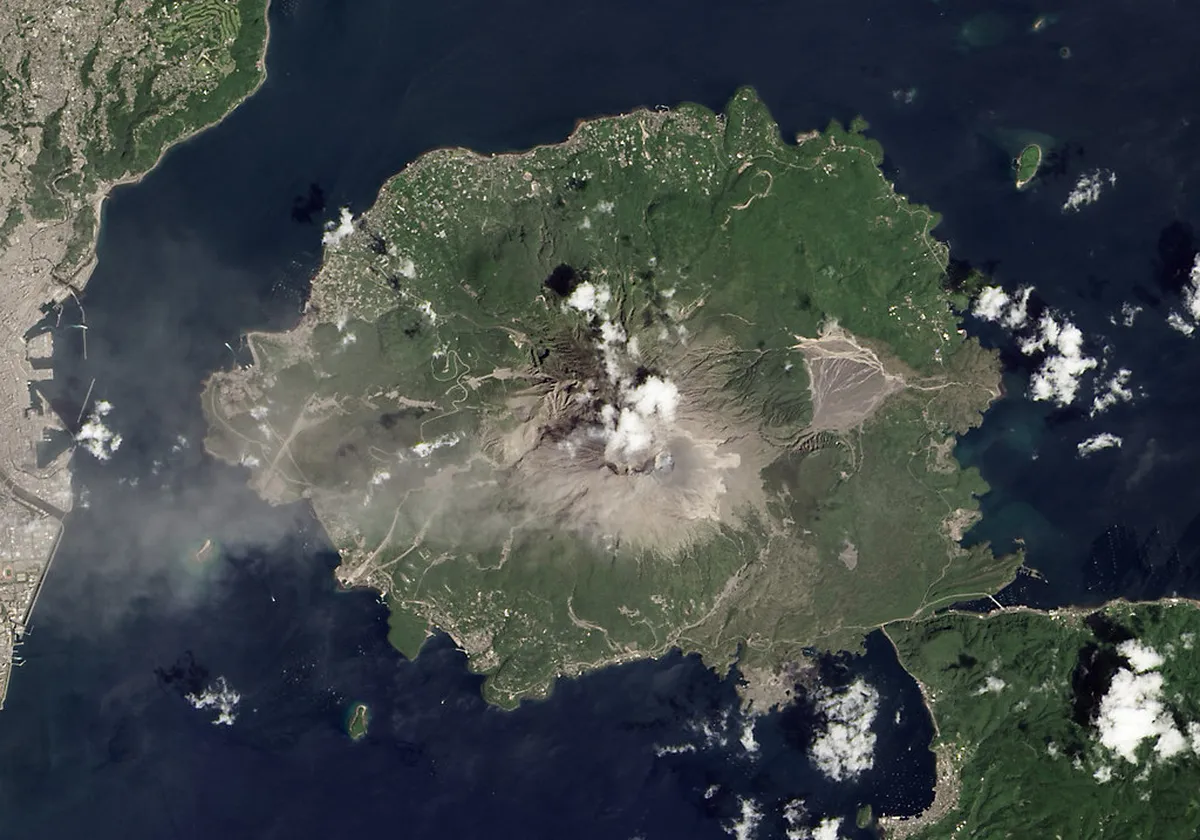
From the viewing platform you get a true 360-degree panorama:
- North: The Kirishima mountain range stretching across the horizon
- South: Mount Kaimon, sometimes called "Satsuma Fuji," rising from the tip of the peninsula
- East: The rugged craters of Kitadake and active Minamidake, visibly steaming on most days
- West: Kinko Bay and the Kagoshima city skyline — exactly the view you came for
Allow 30–45 minutes. Look for the heart-shaped stones embedded in the retaining wall — a local good-luck tradition. If clouds obscure the crater, visit in the morning (before thermals build) or check the weather cam at the visitor center before making the trip up.
11:00 am — Arimura Lava Lookout & Taisho Lava Field
Back on the Island View Bus, ride to the Arimura Lava Observatory on the southern coast. This stop puts you at the edge of the Taisho Lava Field — the vast black expanse created by the 1914 eruption that poured 3 billion cubic metres of lava into Kinko Bay. A 1-kilometre walking trail winds through the jagged volcanic rock, which has been slowly colonised by black pine trees over the past century.
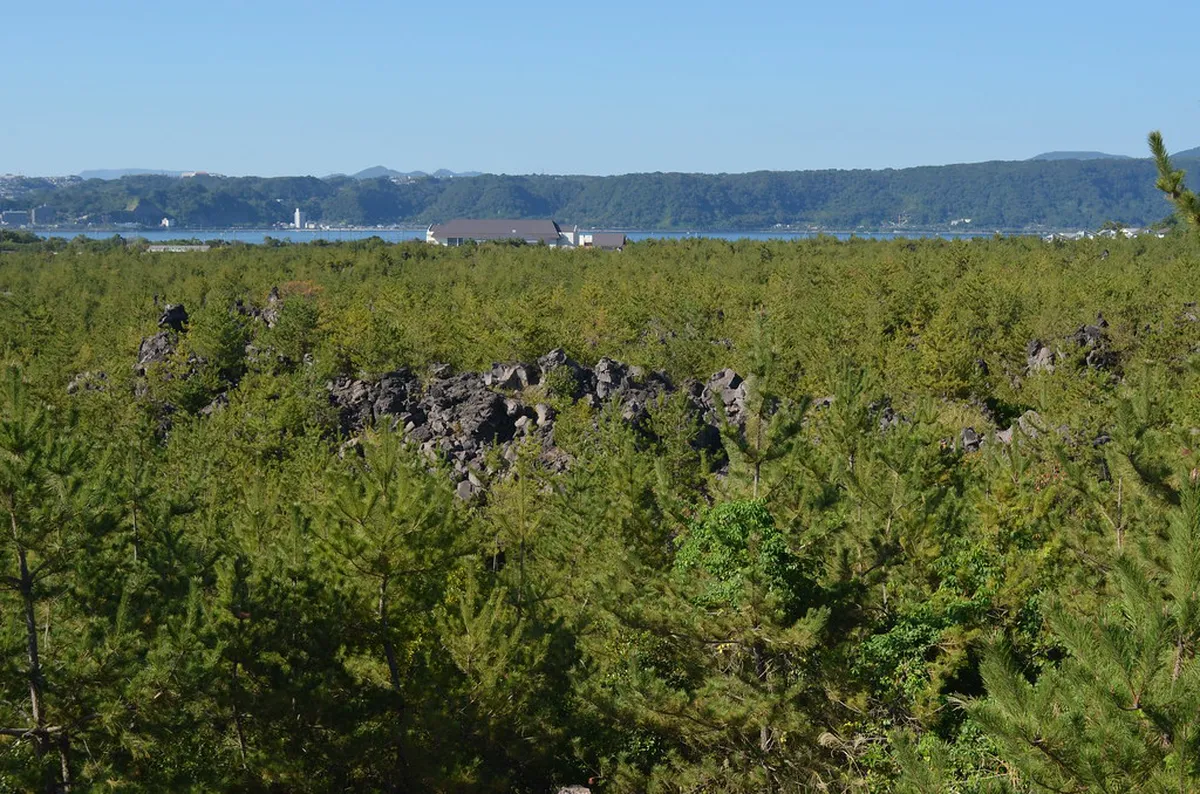
Key things to notice on this section:
- The contrast between raw black lava and the patches of green that have taken root in crevices — a real-time lesson in ecological succession
- The buried torii gate (top now at eye level) — preserved where the 1914 flow engulfed an entire shrine
- Clear-day views across to Kagoshima's waterfront, excellent for a midday photo with the city in the background
Budget 30–45 minutes here. It is free and one of the most photogenic sections of the island.
12:00 pm — Lunch: Eat on the Island or Wait for Kagoshima
Dining options on Sakurajima are limited but memorable. Around the ferry terminal you will find a small cluster of restaurants and a Lawson convenience store. The local specialty is Sakurajima daikon — a giant white radish grown in the volcanic soil that ranks as the largest radish variety in the world. Look for daikon dishes (pickled, miso-braised, or raw) at any sit-down restaurant near the port.
If you prefer a fuller meal, wait until you return to Kagoshima. The city's restaurant district around Tenmonkan offers Kurobuta (black pork) tonkatsu and regional sweet-potato shochu at prices that beat the island's limited options. Either way, budget ¥800–¥1,500 for a satisfying lunch.
For Kagoshima's full food scene — including where to find the best Kurobuta and the famous Shirokuma shaved ice — see our Kagoshima attractions itinerary and transport guide.
1:30 pm — Nagisa Lava Trail & Japan's Longest Free Foot Bath
Return toward the ferry terminal and take the flat Nagisa Lava Trail — a 3-kilometre walking path that cuts through the 1914 lava field right along the shoreline. The path runs between Sakurajima Lava Seaside Park and Karasujima Observatory and is one of the most dramatic coastal walks in Kyushu. Expect dramatic black rock formations, seabirds, and sweeping bay views at every turn.
The trail ends near Nagisa Park, home to the longest free outdoor foot bath in Japan: a 100-metre stone channel filled with naturally heated volcanic spring water. Rules are simple — remove shoes, roll up trousers, and soak for as long as you like. The water temperature is perfectly calibrated for tired legs after a morning of walking.
This whole stretch — trail plus soak — takes about 60–90 minutes at a relaxed pace. Bring a small towel; none are provided on-site.
3:00 pm — Optional Extras Before the Return Ferry
If you have energy left, three additional stops are worth considering before heading back:
- Karasujima Observatory: A quick viewpoint with benches and good angles toward Minamidake crater — 5 minutes on the bus from Nagisa Park.
- Magma Onsen (hot spring bath): A small indoor onsen near the ferry terminal using genuine volcanic geothermal water. Entry fee applies; good alternative if the outdoor foot bath is crowded.
- Sakurajima Lava Seaside Park: A grassy coastal park at the trailhead of the Nagisa path — pleasant for a final rest before the ferry, with picnic areas and a children's play zone.
Most visitors are back at the terminal by 3:30–4:00 pm. The ferry runs continuously so there is no need to rush — you will not miss the last boat.
Short Version: A 4-Hour Sakurajima Itinerary
If you only have a morning, or you are fitting Sakurajima between other plans in the city, you can still see the headline sights. This compressed plan cuts the lava trail walk and the optional extras, and it keeps the ferry and bus timings from the schedule above. Treat the times as approximate, since they depend on bus waits.
| Time | Stop | Notes |
|---|---|---|
| 9:00 am | Ferry from Kagoshima Port | ¥250, 15 minutes |
| 9:20 am | Visitor Center | Opens at 9:00 am; allow 20 minutes |
| 9:50 am | Island View Bus to Yunohira Observatory | About 25 minutes by bus; 30 minutes at the platform |
| 11:00 am | Arimura Lava Lookout | 30 minutes on the Taisho lava trail |
| 11:45 am | Nagisa Park foot bath | 20-30 minute soak, towel needed |
| 12:45 pm | Return ferry | ¥250, back in Kagoshima by about 1:00 pm |
Because you skip the island lunch, eat when you return. Our guide to Kagoshima culture, shochu and Sakurajima has ideas for what to try in the city afterwards.
Budget for the short version: about ¥1,000 for ferry and bus, or ¥1,200 with the CUTE Pass if you also ride city trams afterwards.
4:00 pm — Return Ferry & Evening in Kagoshima
Take any afternoon ferry back to Kagoshima Port (15 min, ¥250 or covered by CUTE Pass). The setting sun behind Sakurajima from the return deck makes for one of the most dramatic photos of the day — face west as you pull away from the island.
Back in Kagoshima, the evening is yours. Options include:
- Shiroyama Park Lookout for the golden-hour panorama of Sakurajima across the city
- Tenmonkan for Kurobuta pork tonkatsu and local shochu tasting
- A soak in one of the city's onsen hotels if you saved the foot bath for later
For a full multi-day Kagoshima plan, including Chiran Samurai District and Ibusuki sand baths, see our Kagoshima 3-day itinerary.
Key Facts & Atomic Data for Sakurajima
These are the numbers most commonly searched by travellers planning a Sakurajima day trip in 2026:
| Transport / Pass | Cost (Adult) | Journey Time | Notes |
|---|---|---|---|
| Ferry (one way) | ¥250 | 15 min | Runs every 10–15 min, 6 am–8 pm |
| Island View Bus day pass | ¥500 | 60 min loop | Departs every 30 min from terminal |
| CUTE Pass (all-in-one) | ¥1,200 | — | Ferry (round trip) + bus + city trams |
| Taxi from Kagoshima city | ~¥3,000–¥4,000 | ~30 min | Includes ferry wait; useful after last bus |
- Ferry frequency: Every 10–15 minutes during the day (6 am–8 pm); last hourly ferry departs at approximately 11 pm
- Ferry fare (2026): ¥250 adult / ¥130 child one way; round trip ¥500
- Crossing time: 15 minutes (Kagoshima Port to Sakurajima Port)
- Island View Bus day pass: ¥500; loop takes 60 minutes; departs every 30 minutes
- CUTE Pass: ¥1,200 — includes ferry (round trip), Island View Bus, city tram, city bus
- Yunohira Observatory elevation: 373 metres; open 24 hours; free admission
- Visitor Center hours: 9:00 am–5:00 pm daily; free admission
- Nagisa foot bath length: 100 metres; open 24 hours; free; towel not provided
- Arimura Lava Trail length: 1 kilometre loop; open 24 hours; free
- Nagisa Lava Trail length: 3 kilometres; open 24 hours; free
- Distance from Kagoshima to Sakurajima: approximately 4 kilometres across Kinko Bay
- Current alert level (2026): Level 3 — crater exclusion zone within 2 km of summit; all visitor observatories open
- Annual eruption count: Sakurajima averages hundreds of small eruptions per year — minor ash falls are normal and safe for day visitors
What to Pack for a Sakurajima Day Trip
Packing smart dramatically improves a Sakurajima visit. The volcano produces fine ash that settles silently on clothes, camera lenses, and open food. Here is the essential checklist:
- Small towel — for the Nagisa foot bath (100 m, heated by geothermal spring)
- Sunscreen and hat — the lava fields offer very little shade at midday
- Dust mask or N95 — for days with active ash emission; available at pharmacies near Kagoshima-Chuo Station
- IC card (Suica/ICOCA) — accepted on the ferry and Island View Bus; faster than cash
- Closed-toe shoes — the lava trail surfaces are uneven
- Camera with lens cloth — ash is abrasive; keep lens caps on when not shooting
- Light rain jacket — weather on the island changes quickly; ash mixed with rain creates a grey paste on fabric
For a complete ash-day packing list and what to do if the alert level rises during your visit, see our Sakurajima ash survival guide.
Sakurajima operates at alert Level 3 in 2026 — the crater area within 2 km of the summit is off-limits. Minor ash falls are routine and safe; carry a dust mask and keep camera lens caps on during active eruption activity.
Frequently Asked Questions
How long is the ferry from Kagoshima to Sakurajima?
The Sakurajima Ferry takes 15 minutes from Kagoshima Port to Sakurajima Port. In 2026 the adult fare is ¥250 one way (¥130 for children of elementary school age and below). Ferries run every 10–15 minutes during the day from around 6:00 am, so there is no need to book in advance — simply walk on board. The ferry operates 24 hours a day, 365 days a year.
How many hours do you need for a Sakurajima day trip?
Allow at least 4 hours on the island for a comfortable experience covering the Visitor Center, Yunohira Observatory, Arimura Lava Lookout, Nagisa Lava Trail, and the foot bath. A full 6–7 hour day lets you add optional onsen stops and a leisurely lunch without rushing. The ferry runs all day so you can return whenever suits you.
Is it safe to visit Sakurajima in 2026?
Yes. Sakurajima operates under Japan Meteorological Agency alert levels. In 2026 the island is at Level 3, which restricts access within 2 kilometres of the crater summit but leaves all tourist viewpoints — including Yunohira Observatory and the lava trails — fully open. Small eruptions (ash plumes) are routine and do not affect ferry or bus operations. Locals live on the island year-round. On high-ash days, wear a dust mask and keep cameras covered.
What is the best way to get around Sakurajima?
The Sakurajima Island View Bus (¥500 day pass) is the most convenient option. It loops the island in 60 minutes with departures every 30 minutes from the ferry terminal, stopping at the Visitor Center, Yunohira Observatory, Arimura Lava Observatory, and Nagisa Park. The CUTE Pass (¥1,200) combines the bus with the ferry and Kagoshima city transport for the best value. Rental bicycles near the terminal are a good alternative for the coastal sections, though some climbs are steep.
What is the CUTE Pass and is it worth buying?
The CUTE Pass costs ¥1,200 per adult and covers: one round-trip Sakurajima ferry crossing (¥500 value), unlimited Island View Bus rides (¥500 value), and unlimited Kagoshima city trams and buses for the day. If you use the ferry and the Island View Bus, the pass pays for itself. It is sold at Kagoshima Port ferry terminal and at major city hotels. Buy it before boarding your first ferry.
What is the Nagisa Park foot bath and is it free?
The Nagisa Park foot bath in Sakurajima is one of the longest outdoor foot baths in Japan — 100 metres of stone channels filled with natural volcanic hot spring water. It is completely free and open around the clock. You simply remove your shoes, roll up your trousers, and soak while looking out over Kinko Bay. Bring a small towel; there are none provided on-site. It is a 10-minute walk from the ferry terminal along the coastal lava path.
Can I visit Sakurajima without a car?
Absolutely. The Island View Bus covers all the major attractions without a car. From the Kagoshima side, city trams run directly to Kagoshima Port (Water Front stop) from the main station area. Once on the island, the bus loop brings you to every key viewpoint. Cars can be transported on the ferry if you prefer more flexibility, but it is unnecessary for a standard day trip.
A Sakurajima day trip rewards visitors with a rare experience that few active volcanic destinations can match: easy access, free attractions, and genuine geological drama within 15 minutes of a major city. Whether you spend four hours or a full day, the combination of panoramic observatories, lava field walks, and a hot spring foot bath with ocean views makes this one of the most complete half-day excursions in all of Kyushu.
Use this itinerary as your base and adjust pace to your energy. The ferry never stops running, the Island View Bus loops reliably every 30 minutes, and every major attraction is free. For the bigger Kagoshima picture — where to stay, how to reach Chiran and Ibusuki, and which shochu to order at dinner — start with our Kagoshima 3-day itinerary and the broader Kagoshima attractions and transport guide. Safe travels in 2026.
Free: The Kagoshima Essentials guide
Top things to do, where to stay, a perfect day plan, getting around, and the best time to go — a Kagoshima mini-guide you can take offline.
You might also like


Continue reading
More guides you'll find useful