
Nagasaki Itinerary for First-Timers in 2026
Complete Nagasaki itinerary for 2026 — 2-day plan covering Peace Park, Dejima, Glover Garden & Mt. Inasa night view, plus 1-day express, 3-day extension, budget breakdown in yen, and day trips to Hashima Island & Unzen Onsen.
On this page
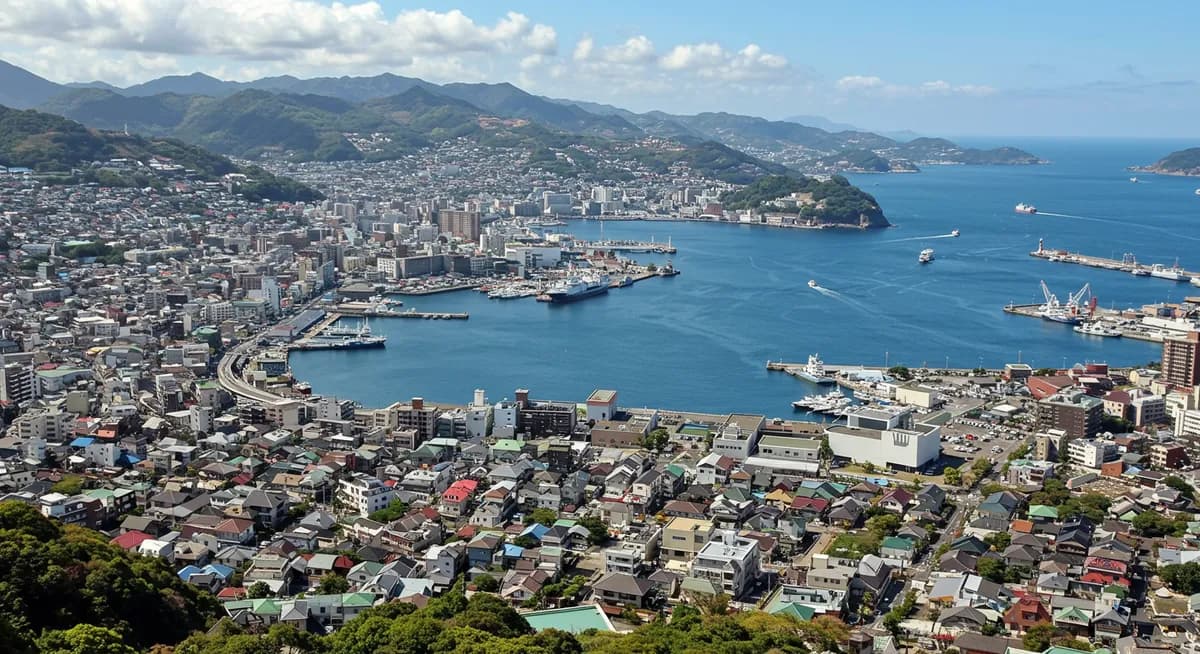
Nagasaki was named one of the New York Times' best places to visit in 2026 — and it deserves every bit of that recognition. Rebuilt from the ashes of 1945, this port city on Kyushu's western coast layers atomic-age history with Dutch colonial architecture, a living Chinatown, thermal springs, and what many consider one of Japan's three great million-dollar night views. This guide gives you everything you need: a complete 2-day Nagasaki itinerary as the default, a 1-day express version for tight schedules, a 3-day extension covering Unzen and Huis Ten Bosch, 2026 transport and admission prices, and day-trip combinations. For a full rundown of what to see, start at Nagasaki Attractions: Top 20 in 2026.
Quick-Answer Summary
2-Day Nagasaki At a Glance
Day 1: Atomic Bomb Museum + Peace Park (morning) → Dejima (afternoon) → Mt. Inasa night view (evening). Day 2: Glover Garden + Oura Cathedral (morning) → Dejima Wharf & Chinatown lunch (midday) → Nagasaki Ropeway sunset + Shianbashi nightlife (evening). Tram day pass: 600 yen. Budget per person per day: 8,000–15,000 yen including accommodation.
1-Day Express Summary
Peace Park (9 AM) → Atomic Bomb Museum (1.5 hrs) → tram to Glover Garden (12 PM) → Oura Cathedral → Dejima (3 PM) → Mt. Inasa ropeway at sunset. Skip Huis Ten Bosch, Chinatown, and Gunkanjima for a full day. See the full Nagasaki 1-day itinerary if that's your timeframe.
3-Day Extension Summary
Add Day 3 choosing between Huis Ten Bosch (Dutch theme park, 90 min from Nagasaki by train) or a morning soak at Unzen Onsen (100 min by bus) combined with Shimabara Castle. Full day-by-day breakdown in the Nagasaki 3-day itinerary.
How to Get to Nagasaki in 2026
By Train — Nishikyushu Shinkansen
The Nishikyushu Shinkansen (opened 2022) connects Takeo-Onsen to Nagasaki in just 23 minutes. From Fukuoka (Hakata), take the Kamome limited express to Takeo-Onsen, transfer to the shinkansen — total journey time is about 1 hour 30 minutes. The full fare from Hakata is approximately 4,800 yen unreserved. JR Pass holders should note that the Nishikyushu Shinkansen section requires a separate seat reservation. If you are travelling between Fukuoka and Nagasaki specifically, see our Nagasaki Day Trip From Fukuoka: 1-Day Itinerary Guide guide for the latest schedules and tips.
JR Kyushu Pass 2026 Prices
The JR Kyushu Rail Pass covers the Kamome express and most Kyushu limited-express trains — useful if Nagasaki is part of a wider Kyushu loop. 2026 prices (approximate, as of April 2026 revision):
- Northern Kyushu 3-day pass: ¥10,000 adult (covers Fukuoka, Nagasaki, Saga, Kumamoto, Oita)
- Northern Kyushu 5-day pass: ¥14,000 adult
- All Kyushu 3-day pass: ¥22,000 adult
- All Kyushu 5-day pass: ¥27,000 adult
Passes must be purchased outside Japan or at major JR stations with a foreign passport. Check the official JR Kyushu page for the most current pricing before booking.
By Air
Nagasaki Airport (NGS) receives direct domestic flights from Tokyo Haneda, Osaka Itami, and Nagoya. International connections are limited — most visitors fly into Fukuoka (FUK) and connect by train. Airport limousine bus to Nagasaki Station takes about 45 minutes and costs 900 yen.
By Ferry
Nagasaki is connected by ferry to the Goto Islands and Kumamoto (via the Shimabara Peninsula). The Kumamoto–Shimabara ferry (Kyushu Shosen) is scenic and takes about 30 minutes; pair it with Unzen Onsen for a loop route.
Getting Around Nagasaki
Tram — Your Primary Tool
Nagasaki's four tram lines cover virtually every attraction a tourist needs. A single ride costs a flat 150 yen regardless of distance. The 1-day tram pass costs 600 yen and is available at Nagasaki Station and major hotels — it pays off after just four rides, which is easy to hit on Day 1. Trams run approximately every 5–8 minutes from 6:00 to 23:00. IC cards (Suica, Icoca) are accepted.
Key stops for this itinerary:
- Matsuyamamachi — Peace Park and Atomic Bomb Museum
- Ourakaikandori — Glover Garden, Oura Cathedral, Dejima
- Tsukimachi — Chinatown, Hamano-machi shopping arcade
- Nagasaki Station Mae — JR trains, airport bus
On Foot
The southern cluster (Glover Garden, Oura Cathedral, Dejima Wharf, Chinatown) is compact and walkable in about 2 hours. Expect some uphill walking at Glover Garden — escalators are provided at the lower entrance.
Taxis and Ride Apps
Taxis are metered and readily available near Nagasaki Station. DiDi operates in Nagasaki and is easier than hailing street taxis for non-Japanese speakers.
2-Day Nagasaki Itinerary (Recommended)
Two days is the sweet spot for first-time visitors: you can cover all the headline attractions without rushing, eat properly, and catch the famous Mt. Inasa night view on a clear evening. This itinerary is structured around the tram network so you never need a taxi for core sights.
Day 1: History, Dutch Heritage, and a Million-Dollar Night View
Morning (9:00–12:00) — Atomic Bomb Museum and Peace Park
Start at the Nagasaki Atomic Bomb Museum (9:00 AM opening, admission 200 yen). Budget a full two hours — the exhibits are among the most affecting in Japan and deserve your attention. The museum traces the history from the Manhattan Project through the August 9, 1945 detonation, the immediate aftermath, and the decades of reconstruction. Personal belongings, scaled models, and survivor testimonies make the impact visceral rather than academic.
Walk five minutes north to Nagasaki Peace Park. The centerpiece is the 10-metre Peace Statue — right arm pointing to the sky (threat of nuclear weapons), left arm extended horizontally (peace), eyes closed in prayer for victims. Circle the park to see the fountain, the Bell of Nagasaki, and the international peace sculptures donated by countries worldwide. Nearby, the Nagasaki National Peace Memorial Hall (free entry) offers a quieter, more personal space for reflection.
Tram from Matsuyamamachi to Tsukimachi for lunch (150 yen, ~10 min).
Midday (12:00–14:00) — Lunch in Chinatown and Hamanomachi
Shinchi Chinatown is one of Japan's three oldest Chinatowns and the best place to eat the dish Nagasaki invented: champon, a thick noodle soup with pork, seafood, and vegetables in a milky broth. Expect to pay 900–1,300 yen for a bowl at a sit-down restaurant. Sara udon (crispy noodles with the same toppings) is the other local must-try. Lunch crowds thin out by 13:30 if you want a quieter table.
Afternoon (14:00–17:00) — Dejima
Walk five minutes from Chinatown to Dejima (admission 510 yen). This fan-shaped artificial island was the sole point of contact between Japan and the outside world for over 200 years during the Edo-period sakoku (closed-country) policy — Dutch merchants of the VOC were permitted to trade here while all other foreigners were excluded. The reconstructed buildings, warehouses, and garden have been painstakingly restored using period records. The scale model in the main building helps you understand what the original island looked like before land reclamation merged it with the city. For a broader look at Nagasaki's landmarks connected to this era, see our Nagasaki landmarks guide.
Evening (17:30–21:00) — Mt. Inasa Night View
Take tram line 3 from Tsukimachi to Takaramachi, then a short taxi ride (about 600–700 yen) or the No. 3 or No. 4 bus to the Mt. Inasa ropeway base station. The Nagasaki Ropeway (admission 1,250 yen return) ascends 333 metres in 5 minutes. At the summit, the panoramic view sweeps over Nagasaki's harbour, the Urakami River valley, the port, and the surrounding islands — often ranked alongside Sapporo and Kobe as one of Japan's three great night views. On a clear night the city lights shimmer in the water below. Go up around sunset (18:30–19:00 in summer) to catch the golden hour before dark.
Return to the city by ropeway and end the evening in Shianbashi, Nagasaki's izakaya district, a five-minute walk from the Shianbashi tram stop. Expect to spend 2,500–4,000 yen per person for dinner with drinks. More on the area in our Nagasaki Nightlife 2026: Best Bars, Izakayas & Where Locals Go After Dark guide.
Day 2: Gardens, Colonial Architecture, and the Southern Quarter
Morning (9:00–12:00) — Glover Garden and Oura Cathedral
Take the tram to Ourakaikandori and walk uphill (or use the moving walkway escalators) to Glover Garden (admission 620 yen, open 8:00 AM). This open-air hillside museum preserves nine Western-style stone residences built by foreign merchants in the late 19th century — Scottish merchant Thomas Glover's house is the centrepiece and was a model for Puccini's Madama Butterfly. The garden terraces frame a postcard view of Nagasaki Harbour; arrive early to beat tour groups. Allow 90 minutes.
Walk five minutes downhill to Oura Cathedral (admission 1,000 yen), Japan's only Gothic church designated a National Treasure and part of the "Hidden Christian Sites of the Nagasaki Region" UNESCO World Heritage inscription. Built in 1864, it survived the atomic bombing largely intact due to its position on the far side of the Urakami hills.
Midday (12:00–14:00) — Dejima Wharf and Waterfront Lunch
Walk to Dejima Wharf (the modern waterfront complex, separate from the historic Dejima island). Several restaurants here face the harbour — good for seafood sets at 1,200–2,000 yen. On clear days you can see the outline of the Goto Islands in the distance. If you visited Dejima historic site on Day 1, this area lets you see how the original island's geography compares to the current shoreline after centuries of land reclamation.
Afternoon (14:00–17:30) — Spectacles Bridge and Urakami Cathedral
Walk or tram to Megane-bashi (Spectacles Bridge), Nagasaki's most photographed bridge, built in 1634 by a Chinese Zen monk — the double arches reflect in the Nakashima River to form the "spectacles" shape. The surrounding Nakashima River Park is pleasant for a stroll.
Take the tram north to Matsuyamamachi to visit Urakami Cathedral (Immaculate Conception Cathedral), rebuilt in 1925 and destroyed by the atomic bomb, then rebuilt again in 1959. The twin red-brick towers have become a symbol of Nagasaki's resilience. The original cathedral's melted rosary beads and damaged statues are displayed as silent witnesses in the Peace Park area.
Evening — Sunset and Farewell Dinner
Return to the city centre for a final dinner. Hamanomachi Arcade is a covered shopping street with dozens of restaurants — try kakuni manju (braised pork belly stuffed in steamed buns, a Nagasaki specialty with Chinese roots) from a street stall. If you want a sit-down meal with a view, the upper floors of Canal City Nagasaki near Dejima Wharf have harbour-facing restaurants. Budget 1,500–3,500 yen for dinner.
Got 1 Day? Here's the Express Version
A single day in Nagasaki is tight but doable if you prioritise ruthlessly. The sequence below covers the three non-negotiable experiences — Peace Park, Glover Garden, and Mt. Inasa — using the tram throughout.
- 9:00 — Nagasaki Peace Park (45 min, free)
- 10:00 — Atomic Bomb Museum (90 min, 200 yen)
- 11:45 — Tram to Ourakaikandori
- 12:15 — Oura Cathedral (30 min, 1,000 yen)
- 12:50 — Glover Garden (90 min, 620 yen)
- 14:30 — Walk to Dejima historic site (60 min, 510 yen)
- 15:45 — Chinatown — champon noodle lunch/early dinner
- 17:30 — Mt. Inasa Ropeway for sunset + night view (1,250 yen return)
Buy the 600-yen tram day pass at Nagasaki Station first thing. Skip Huis Ten Bosch, Gunkanjima, and Unzen — they each require half a day or more. For the full 1-day plan with exact tram stop instructions, see our dedicated Nagasaki 1-day itinerary.
Got 3 Days? Add Unzen + Huis Ten Bosch
With a third day you have two strong options depending on your preference:
Option A — Unzen Onsen and Shimabara (Nature + Onsen)
Take the direct bus from Nagasaki Station to Unzen Onsen (100 minutes, approximately 1,850 yen one-way). Unzen sits inside Unzen-Amakusa National Park, Japan's first national park, at 700 metres elevation. The jigoku (hells) — steaming volcanic vents with sulphur pools — are a 10-minute walk from the bus stop and free to view. Several onsen facilities are open to day visitors for 500–800 yen; the communal ashiyu (foot baths) along the main street are free. Combine with a late-morning visit to Shimabara Castle by continuing on the Shimatetsu bus (45 min) — the reconstructed tenshu has samurai-era exhibits and a moat with koi. Return to Nagasaki by early evening. Full details in the Unzen Onsen guide.
Option B — Huis Ten Bosch (Dutch Theme Park + Evening Illuminations)
From Nagasaki Station, take the JR Seaside Liner to Huis Ten Bosch Station (approximately 90 minutes, 1,870 yen one-way, or covered by JR Kyushu Pass). Huis Ten Bosch is a full-scale recreation of a Dutch town in Sasebo — canals, windmills, cobbled streets, and replica architecture including a 100-metre replica of Utrecht's Dom Tower. The park's famous illumination show starts at dusk and is genuinely spectacular: over 13 million LED lights transform the grounds into what looks like a scene from a Dutch winter market. Daytime admission starts at around 3,000 yen; evening-only tickets can be cheaper. Plan 6–8 hours for a full visit. The full write-up is in our Huis Ten Bosch Theme Park Guide: 10 Essential Planning Tips.
For the complete day-by-day breakdown with timing and costs, see the Nagasaki 3-day itinerary.
Day-Trip Combinations from Nagasaki
Hashima Island (Gunkanjima) — The Abandoned Battleship
Hashima Island — nicknamed Gunkanjima (Battleship Island) because its silhouette resembles an Imperial battleship — was a coal-mining community that housed 5,000 people at peak density in the 1960s, making it one of the most densely populated places on earth. Abandoned in 1974, it became a UNESCO World Heritage Site in 2015. Today you can visit on a licensed boat tour from Nagasaki Port.
- Departure point: Nagasaki Port Terminal (near Ohato tram stop) or Tokiwa Terminal (near Ourakaikandori tram stop)
- Duration: approximately 3 hours total (about 50 minutes on the island, weather permitting)
- Price: 3,600–4,200 yen per adult (tour fee) + 300 yen island landing fee
- Note: Landing is subject to sea conditions — some tours offer a "circumnavigation only" option in rough weather. Book in advance, especially on weekends. Tours are suspended January 5–31, 2026 for ship maintenance.
More planning info in our Hashima Island tour guide.
Huis Ten Bosch as a Day Trip
Reachable in 90 minutes by JR from Nagasaki Station, Huis Ten Bosch works well as a standalone day trip — leave Nagasaki by 9:30 AM, spend the day (including illuminations), and return by 21:00. See the section above for pricing.
Fukuoka ↔ Nagasaki (One Direction)
Many travellers combine Nagasaki with Fukuoka as a Kyushu rail loop: arrive by shinkansen from Tokyo into Hakata, spend 2 days in Nagasaki, then loop back through Kumamoto and Beppu to Fukuoka. Full logistics in the Nagasaki Day Trip From Fukuoka: 1-Day Itinerary Guide guide and the Nagasaki to Fukuoka Transport Guide: 4 Best Ways to Travel.
Budget Breakdown (2026 Prices in Yen)
Transport
| Item | Price (yen) |
|---|---|
| Tram single ride | 150 |
| Tram 1-day pass | 600 |
| Nagasaki Ropeway (Mt. Inasa, return) | 1,250 |
| Fukuoka (Hakata) to Nagasaki by train | ~4,800 unreserved |
| JR Kyushu Northern Pass 3-day | ~10,000 |
| Airport limousine bus | 900 |
| Nagasaki to Huis Ten Bosch (JR, one-way) | 1,870 |
| Nagasaki to Unzen Onsen (bus, one-way) | 1,850 |
Attractions Admission
| Attraction | Admission (yen) |
|---|---|
| Nagasaki Atomic Bomb Museum | 200 |
| Nagasaki Peace Park | Free |
| National Peace Memorial Hall | Free |
| Dejima Historic Site | 510 |
| Glover Garden | 620 |
| Oura Cathedral | 1,000 |
| Hashima Island boat tour | 3,600–4,200 + 300 landing fee |
| Huis Ten Bosch (day admission) | from ~3,000 |
| Unzen Onsen day bath | 500–800 |
Food and Lodging
| Category | Budget range (yen/person) |
|---|---|
| Champon noodles (lunch) | 900–1,300 |
| Mid-range restaurant dinner | 1,500–3,000 |
| Izakaya evening (food + drinks) | 2,500–4,500 |
| Budget hostel/guesthouse (per night) | 3,000–5,500 |
| Business hotel (per night) | 8,000–14,000 |
| Waterfront hotel with harbour view (per night) | 15,000–28,000 |
Two-day total estimate (mid-range traveller): 25,000–45,000 yen per person, including two nights' accommodation, all transport, admissions, and meals — roughly ¥12,500–¥22,500 per day.
Where to Stay in Nagasaki
City Centre (Near Nagasaki Station)
Staying near Nagasaki Station gives you direct tram access to all attractions and is the easiest base for day trips requiring the JR network (Huis Ten Bosch, Fukuoka). Business hotels in this area cluster around ¥8,000–¥14,000 per night. The ANA Crowne Plaza Nagasaki Gloverhill and Hotel Monterey Nagasaki offer mid-to-upper range options with easy transport links.
Dejima Wharf Area
Waterfront hotels here command a premium but offer harbour views and a more relaxed atmosphere. The area is walkable to Glover Garden, Chinatown, and Dejima historic site, making Day 2 essentially car-free. Suited to travellers who prefer ambience over transport convenience.
Hamanomachi Arcade Area
The covered shopping street and its surrounding blocks have mid-range hotels at good value (¥7,000–¥12,000/night) and easy access to Chinatown, izakayas, and the tram network. Good choice if your evenings include dining and nightlife rather than day trips.
Onsen Resorts Near Nagasaki
Several ryokan with private hot springs operate in the hills above the city and in the Unzen area. These require a taxi or rental car for sightseeing but offer a different pace. If a relaxing onsen night is part of your agenda, Unzen's ryokan options (¥15,000–¥35,000/night including dinner) are exceptional — consider booking one night there as part of a 3-day itinerary.
When to Visit Nagasaki
Spring (late March–April): Cherry blossoms peak around late March to early April. Glover Garden's sakura trees are particularly photogenic above the harbour. Peak crowds and prices apply. Book accommodation 2–3 months ahead.
Autumn (October–November): The best overall season — comfortable temperatures (16–22°C), autumn foliage in the hills, fewer crowds than spring. Mt. Inasa views are clearest on dry autumn nights. Ideal for first-time visitors.
Summer (July–August): Hot and humid (30–33°C), occasional typhoon risk in August–September. Compensated by summer festivals and fireworks. The Nagasaki Peace Ceremony on August 9 is one of the most moving events in Japan.
Winter (December–February): The Nagasaki Lantern Festival (February, timed to Chinese New Year) transforms Chinatown and the surrounding streets with 15,000 lanterns — one of the biggest lantern festivals in Japan. Accommodation prices are lower in January than almost any other month.
Nagasaki with Kids
The atomic bomb sites are appropriate for older children and teenagers who can engage with the historical context, but may be distressing for younger children. Huis Ten Bosch, by contrast, is excellent for all ages — interactive exhibits, boat rides, carnival games, and the evening light show are crowd-pleasers. The tram network is pram-friendly with wide doors and flat floors. For a curated family agenda, see 12 Best Things to Do in Nagasaki with Kids.
Key Takeaways: Nagasaki Itinerary 2026
- Default plan: 2 days covers Peace Park, Dejima, Glover Garden, Oura Cathedral, Chinatown, and Mt. Inasa night view comfortably.
- Transport: Buy the 600-yen tram day pass at Nagasaki Station — it covers every attraction on the core itinerary.
- Mt. Inasa timing: Go up around sunset on a clear day; check the weather forecast the morning of and adjust your schedule if rain is forecast.
- Gunkanjima booking: Reserve the Hashima Island boat tour at least a week ahead in peak season; tours are suspended in January for maintenance.
- 3-day choice: Unzen Onsen for a nature/onsen experience; Huis Ten Bosch for family fun or evening illuminations.
- Food priority: Champon noodles and kakuni manju are Nagasaki-specific dishes you won't find in the same form anywhere else in Japan. Budget time in Chinatown on both days if you want to try more variety.
- Peace Memorial timing: The Atomic Bomb Museum and Peace Park are most meaningful if visited first — they contextualise everything else you see in the city, from Urakami Cathedral to Dejima's closed-Japan era, as part of the same long narrative of isolation, catastrophe, and resilience.
Nagasaki rewards slow travel more than almost any city in Japan. Its layers — Dutch colonial history, Chinese cultural exchange, Catholic martyrdom, nuclear devastation, and determined reconstruction — are best absorbed when you have time to sit in the Peace Park, eat champon without rushing, and watch the city lights spread out below you from Mt. Inasa. Two days gives you that. Three days lets you breathe. Use this itinerary as a framework and adapt it to the pace that suits you.
 Kagoshima Culture GuideFebruary 17, 2025
 Matsumoto Nights: Nightlife GuideFebruary 17, 2025
 20 Best Naha Attractions & Things To Do 2026February 17, 2025