10 Best Restaurants in Beppu Travel Guide (2026)
Discover the 10 best restaurants in Beppu for 2026. From geothermal steam cooking to Bungo beef, plan your culinary trip with our expert dining guide.
On this page
Beppu is the only city in Japan where the ground cooks your lunch. The city sits on the largest concentration of hot spring vents in the world, and local chefs have spent generations learning to use that heat. This guide covers the best restaurants in Beppu across every budget — from 700-yen toriten lunch sets to multi-course kappo dinners — along with the local dishes you must try and which neighborhoods to find them in.
We last updated this guide in June 2026. Prices are listed in JPY. Most restaurants listed below are cash-first, so carry 5,000–10,000 JPY when dining around Kannawa or the Ekimae district.
Beppu's Local Food: The Four Dishes Every Visitor Should Try
Before booking a table, know what makes Beppu's food scene different from every other hot spring town in Japan. Four dishes define the local identity, and the best restaurants here specialize in at least one of them.
Toriten is chicken tempura unique to Oita Prefecture. The chicken is marinated in soy sauce, sake, and grated ginger, then coated in a thin, light batter and fried crisp. It arrives at the table with a dipping sauce of ponzu and Japanese mustard, or sometimes a kabosu-based citrus sauce — kabosu is a small green citrus native to Oita that adds a clean, sharp acid. This combination is what separates Oita-style toriten from standard chicken karaage found everywhere in Japan.
Jigoku Mushi means "hell steaming." Restaurants in the Kannawa district pipe natural geothermal steam — measured at 98°C — directly into sealed wooden boxes where your food sits. Vegetables, shellfish, tofu, and eggs all take on a subtly mineral sweetness that normal steaming cannot replicate. The experience of cooking this way is unique to Beppu. Read more about the technique in our guide to unique hell-steamed food in Beppu.
Beppu Reimen is a cold noodle dish that deserves its own section below. Bungo Wagyu is the prefecture's high-grade beef, raised on Oita's forested hillsides with careful attention to marbling. At a quality yakiniku restaurant, a plate of A5 Bungo beef costs roughly 3,000–6,000 JPY and is worth every yen.
Toriten: Beppu's Signature Chicken Tempura and Where to Eat It
The origin of toriten is contested. Oita City's official website credits a restaurant in Oita City, but Beppu's own Toyoken, founded in 1926, makes a compelling counter-claim. Most food historians now place Toyoken at the center of the dish's popularization, and a meal here is as close to a pilgrimage as Beppu food gets.
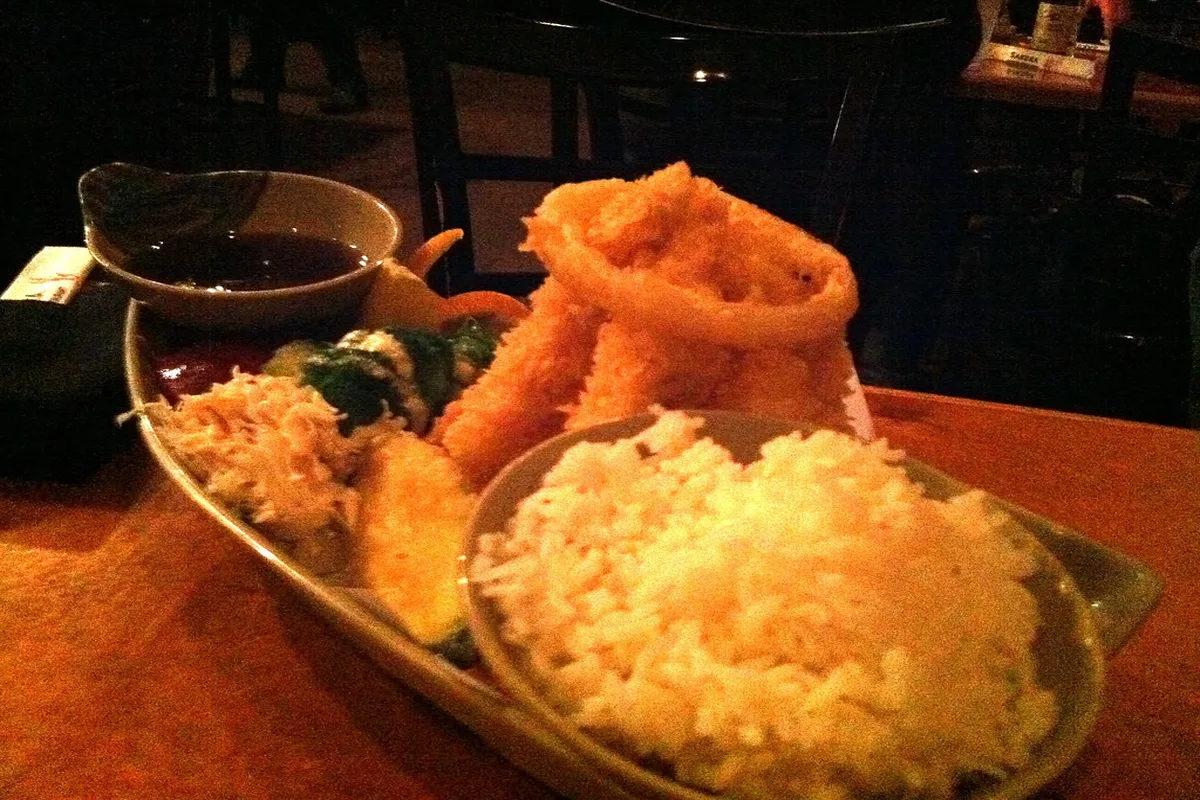
Toyoken's main restaurant is in the Ishigaki district, roughly 15 minutes by bus from Beppu Station (Kamegawa-bound buses from stop No. 5). A full toriten teishoku set — chicken tempura, rice, miso soup, pickles — costs around 1,500–2,000 JPY at lunch and 2,000–2,800 JPY at dinner. The mustard-kabosu dipping sauce is the house recipe and has not changed in decades. Arrive before 11:30 or after 14:00 on weekdays to avoid a queue.
Toyotsune, located near Beppu Station, is the other toriten institution most visitors encounter first. It is more convenient and more crowded. The jumbo shrimp tempura (ebi tempura) is the headline dish here, though the toriten set is equally reliable. Budget 1,200–2,500 JPY. Lines form by noon on weekends; a 30–40 minute wait at peak is normal. If the queue looks long, head to Toyoken instead — the bus ride is worth the shorter wait.
For a modern take, Otto e Sette Oita in the Kannawa area merges Italian cooking with local steam methods. The chef uses geothermal steam to finish pasta dishes that incorporate toriten-style chicken alongside local Bungo Channel seafood. Lunch sets run 2,800–4,500 JPY; dinner courses start at 6,000 JPY. Reserve at least a week ahead for weekends.
Toriten is unique to Oita Prefecture and finished with kabosu citrus dipping sauce, a sharp-acid green citrus native to Oita. Arrive at Toyoken before 11:30 AM or after 2 PM on weekdays to avoid queues.
Jigoku Mushi: The Steam-Cooking Experience in Kannawa
The Kannawa district is Beppu's most atmospheric neighborhood for food. White steam rises from street vents, the air smells faintly mineral, and at least three restaurants allow you to cook using that steam directly. This is not a tourist gimmick — locals have been preparing food this way for centuries. See the full how-to in our guide to cooking with steam in Beppu.
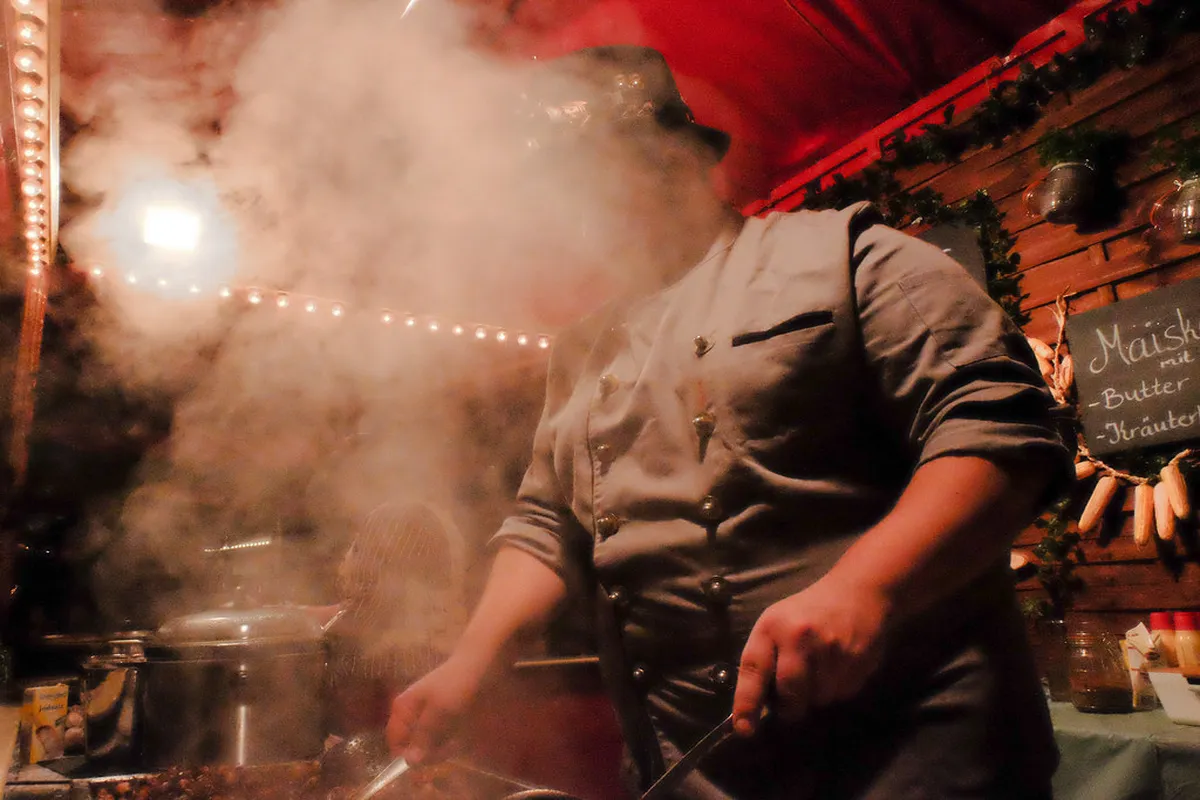
Jigokumushi Kobo Kannawa is the most accessible entry point. You buy a set of raw ingredients — corn, eggs, sweet potato, clams, or chicken — and a staff member shows you how to load the steamer. Sets cost 2,000–4,000 JPY depending on what you choose. Shellfish sets are the most popular. The steamer takes 15–30 minutes depending on the item, so order a drink and wait. The facility opens at 09:00 and closes at 17:00 (last order 15:30). It closes on Wednesdays. Arrive before 10:00 on weekends — steamer slots fill up.
Okamotoya in the Myoban district is famous for its jigoku-mushi pudding (purin). The custard is steamed directly over the geothermal vents, which gives it a texture slightly denser and a flavour more complex than standard chilled custard. A single pudding costs around 500–700 JPY. The shop is open from 08:30 to 18:00 and the Myoban area itself — about 20 minutes by bus from central Beppu — is quieter and less visited than Kannawa, making it a good stop if you want to escape the main tourist circuit.
If you want a full multi-course experience built around steam cooking, Beppu Hirokado offers seasonal kappo cuisine where geothermal steam is used at multiple courses. Dinner costs 15,000–25,000 JPY per person and requires an advance reservation — ideally three to four weeks ahead for weekends. The restaurant uses ingredients from both the Bungo Channel and local farms in Oita Prefecture.
Beppu Reimen: The Cold Noodle Dish with a Coal-Mining History
Beppu Reimen is the local specialty that most first-time visitors overlook, yet it is arguably the dish most representative of the city's layered history. Cold noodles arrived in Beppu after World War II, brought by Korean workers who had come to Kyushu to work in the coal and steel industries. The dish was adapted over decades using local ingredients, and what emerged is distinct from the cold noodles served in other Japanese cities.
Where Morioka reimen (the version most commonly known outside Japan) uses a clear, sweet broth, Beppu's version relies on a deeper beef-based broth served just above fridge temperature. The chewy noodles have a pleasant resistance. Kimchi, cucumber, and a soft-boiled egg are standard toppings. A squeeze of kabosu citrus — the Oita-native fruit — is added at the table and lifts the whole bowl. This local citrus touch is what no other reimen region does.
Ikkyu no Namida ("Ikkyu's Tears") near the city center is the most-recommended specialist. A bowl costs 1,000–1,500 JPY. The name refers to the legend of a monk named Ikkyu who cried at the sight of great beauty — locals joke that the spicy version of the broth triggers the same response. Order the regular broth on your first visit; ask for karashi (mustard) on the side rather than mixed in. After a long soak at one of Beppu's public bathhouses, a cold bowl of reimen is exactly what your body wants.
Bungo Wagyu and Bungo Channel Seafood: Where to Eat Them
Oita Prefecture produces two protein sources that command national recognition: Bungo Wagyu beef and the wild-caught fish from the Bungo Channel. The channel between Oita and Shikoku runs fast and cold, producing Seki Aji (horse mackerel) and Seki Saba (mackerel) caught using traditional pole-and-line methods. The flesh is firmer and cleaner-tasting than farm-raised equivalents.
For Bungo Wagyu, the Kitahama district has the densest cluster of yakiniku restaurants. Yakiniku Korea Garden in Kitahama is a reliable mid-range option; A4 and A5 cuts cost 3,000–8,000 JPY per plate, and the staff can explain the grading. Book ahead for Friday and Saturday evenings. If budget is less of a concern, the seasonal menus at Beppu Hirokado feature Bungo beef as a course component alongside the steam-cooked seafood.
For fresh Bungo Channel fish, look for daily-catch specials at izakayas near the Beppu fish market (Beppu-shi Chuo Ichiba, a short walk from Kitahama). The market itself closes to the public for trading by 09:00, but the surrounding lunch spots serve the morning's haul from around 11:30. Sashimi sets here run 1,500–2,500 JPY and often include whatever the boats brought in that morning — hairtail, amberjack, or sea bream depending on the season. Find more guidance in our guide to hidden Beppu izakayas.
Most restaurants in Beppu are cash-first — carry 5,000–10,000 JPY when dining around Kannawa or the Ekimae district. ATMs are at the Japan Post office near Beppu Station and inside convenience stores.
Beppu Restaurants by Neighborhood: Kannawa, Kitahama, and Ekimae
Knowing which district to eat in saves significant time. Beppu is a long city that stretches from the coast up into the hills, and the culinary character changes sharply between neighborhoods. For a full orientation on what each area offers beyond food, see our Beppu attractions guide.
Kannawa (15–20 minutes by bus from Beppu Station, route 26 or 5) is the steam-cooking district. Go here for jigoku mushi restaurants, geothermal puddings, and atmospheric lane-side cafes. Restaurants tend to close early — most kitchens stop by 16:30 or 17:00, so this is a lunch or early-afternoon zone. Toyoken is not in Kannawa but is on the same bus route.
Kitahama is the city's central entertainment area, roughly 10 minutes on foot from Beppu Station. This is where to find izakayas, yakiniku restaurants, and late-night ramen. The district becomes genuinely lively after 19:00. Yakitori specialists like Tosaka open at 17:30 and run until midnight, serving grilled chicken skewers and cold Oita craft beer. Budget 3,000–6,000 JPY for an evening here including drinks.
Ekimae (the station area) is the most convenient zone for quick meals before or after transport. Toyotsune is here. You will also find the widest range of price points, from convenience-store soba to sit-down teishoku sets. This area is less interesting for serious dining but practical if you are catching a bus or the Sonic limited express back to Fukuoka. Avoid the tourist-trap ramen stalls directly in front of the station gates — they are overpriced by local standards.
| Neighborhood | Best For | Distance from Beppu Station | Best Time to Visit |
|---|---|---|---|
| Kannawa | Jigoku mushi, steam cooking, geothermal pudding | 15–20 min by bus (route 26 or 5) | Lunch or early afternoon (closes by 17:00) |
| Kitahama | Yakiniku, izakayas, yakitori, nightlife | 10 min on foot | Evening after 19:00, liveliest spot |
| Ekimae | Quick meals, convenience, widest price range | Immediate area | Before/after transport, any time |
Beppu Izakayas and Yakitori: Evening Dining Done Right
An evening at a Beppu izakaya is one of the city's genuine pleasures. These are relaxed, pub-style restaurants where you order small dishes across a long meal — grilled skewers, cold tofu, pickled vegetables, sashimi — alongside local beer or shochu. The city's shochu culture is less famous than Kagoshima's but equally serious: Oita produces barley-based mugi shochu with a lighter, cleaner flavor than sweet-potato varieties.
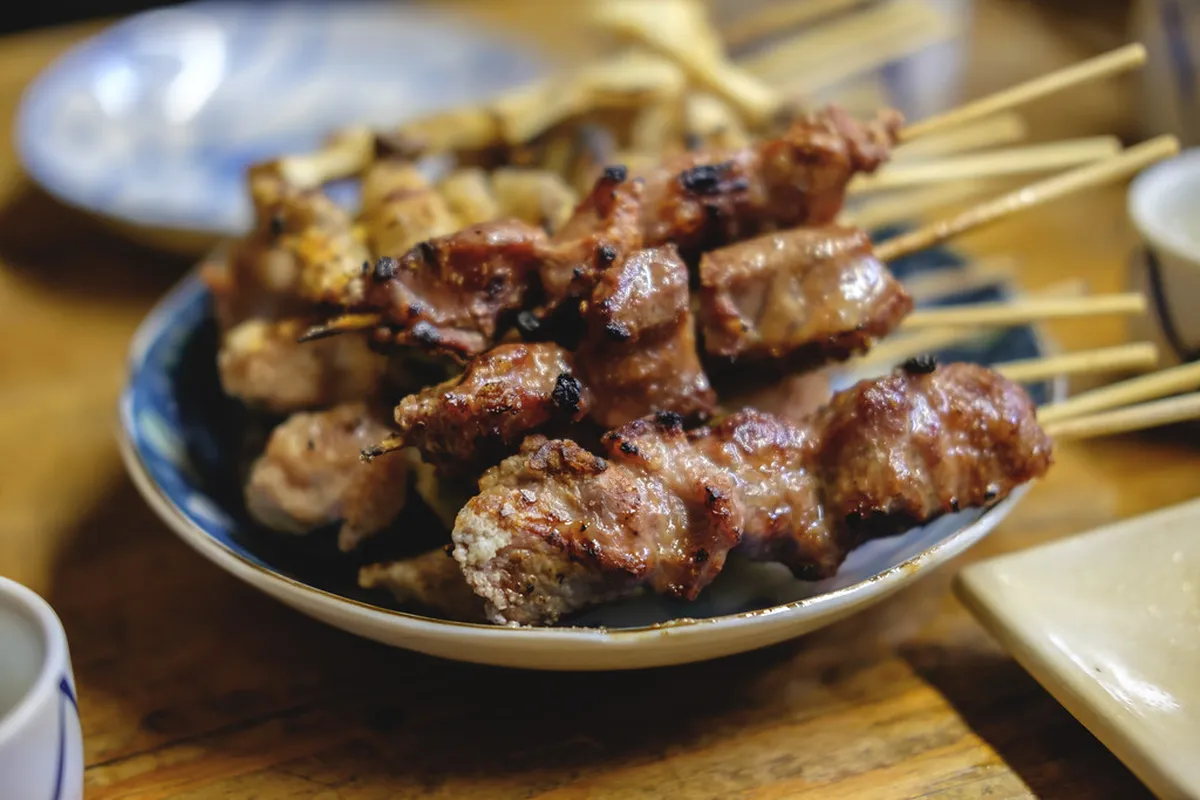
Tosaka in Kitahama is the benchmark yakitori spot. The chicken is sourced locally, the skewers are grilled over binchotan charcoal, and the menu is short but precise. Arrive at opening time (17:30) to get a counter seat. A full evening with drinks costs 3,000–6,000 JPY per person. The staff speak limited English but are patient with menus.
For a more adventurous evening, look for the small izakayas on the backstreets one block west of Kitahama's main entertainment strip. These family-run spots rarely have English signage, but many have picture menus or plastic food displays. A good approach: walk past a few, check the customer-to-staff ratio inside, and pick the one that looks most lively after 20:00. The food quality at these smaller spots is often superior to the more tourist-visible restaurants on the main road. For a systematic approach to finding the best ones, our hidden Beppu izakayas guide walks through the process neighborhood by neighborhood.
Mugi Shochu: Oita's Barley Spirit and Where to Try It in Beppu
Oita Prefecture is Japan's leading production region for mugi (barley) shochu, and the connection matters for anyone eating in Beppu. Iichiko, one of the country's best-known shochu brands, is distilled just down the coast in Usuki; Nikaido, a smaller but highly regarded label, comes from the same town. Both show up on drinks menus across Beppu's izakaya district, usually poured oyuwari (mixed with hot water) or rock (over ice).
Shochu's mild, low-congener profile is why it pairs naturally with Beppu's food: a hot-water pour cuts through the richness of Bungo Wagyu at a yakiniku counter like Yakiniku Korea Garden in Kitahama, while a cold rock pour balances the citrus-forward broth at a reimen specialist like Ikkyu no Namida. At Beppu Hirokado, the kappo tasting menu often includes a shochu pairing alongside the geothermal-steamed courses, so mention it when booking if you want to sample several labels in one sitting.
To taste mugi shochu before committing to a bottle, ask any izakaya for a kikizake (tasting) set — most pour three small measures for 800–1,200 JPY. For background on how the spirit is made, see Wikipedia's shochu overview. A standard bottle to take home costs 1,200–2,500 JPY at any supermarket or the duty-free counter at Oita Airport.
Fine Dining in Beppu: Special Occasion Restaurants
Beppu has two categories of high-end dining. The first is the refined kappo tradition — Japanese-style multi-course meals where each dish reflects the season. The second is a newer wave of chef-driven restaurants that blend geothermal cooking with European technique.
Beppu Hirokado represents the kappo tradition at its most accomplished. Seasonal menus change monthly and can include steamed abalone, Bungo Channel sashimi, and Bungo Wagyu in a single dinner. The restaurant seats roughly twelve people and the atmosphere is quiet, unhurried, and formal without being rigid. Dinner costs 15,000–25,000 JPY per person. Book three to four weeks in advance; the restaurant's own website (beppu-hirokado.jp) is the clearest booking channel.
Otto e Sette Oita in the Kannawa hills takes a different approach. The chef trained in Italy before returning to Oita and now uses geothermal steam to cook pasta, risotto, and protein in ways that produce textures impossible with gas or induction. Courses feature local seafood from the Bungo Channel and vegetables from Oita farms. The setting — a converted space with views across the Kannawa steam fields — makes this the more visually memorable dinner of the two. Lunch starts at 2,800 JPY; dinner courses from 6,000 JPY. Weekend reservations fill three to five weeks ahead in peak seasons (March–May and October–November).
Budget Guide: What to Spend at Each Price Level
Beppu is more affordable than Kyoto or Tokyo, but prices vary widely between the tourist-facing restaurants near the hells and the everyday spots used by residents. Here is a practical breakdown for 2026.
- Under 1,000 JPY: Convenience stores (Lawson and 7-Eleven near Beppu Station stock legitimate hot meals), standing ramen bars, and small udon shops in the market district. Not the priority on a short trip, but useful for a quick morning meal before bus travel.
- 1,000–2,500 JPY: This range covers most lunch sets at toriten specialists (Toyoken, Toyotsune), reimen bowls at Ikkyu no Namida, jigoku mushi ingredient sets at Jigokumushi Kobo Kannawa, and fish-market sashimi teishoku. This is the everyday eating tier and the best value in the city.
- 2,500–6,000 JPY: Mid-range izakaya evenings at Tosaka, lower-grade Bungo yakiniku, and introductory kaiseki sets at smaller ryotei around the Kannawa and Myoban areas. Represents two to three dishes plus drinks.
- 6,000–25,000 JPY: Otto e Sette Oita dinner courses, multi-grade yakiniku at Korea Garden, and full kappo meals at Beppu Hirokado. Reserve in advance for all of these.
Most restaurants in the 1,000–6,000 JPY range are cash-only or prefer cash. ATMs are available at the Japan Post office near Beppu Station and inside the convenience stores. Card acceptance is improving at the higher-end restaurants but cannot be assumed — confirm when booking.
Practical Tips for Eating in Beppu
Kannawa restaurants close early. Most steam-cooking facilities and the surrounding food stalls wind down by 17:00. Plan your Kannawa visit as a lunch activity, not dinner. The area feels significantly different in the late morning — steam is more visible in cooler morning air, and queues are shorter before noon.
The Beppu Station area is where you want to be for evening meals. Kitahama izakayas open from 17:00–17:30 and most do not take reservations for parties under four. Showing up solo or as a couple means you can almost always get a counter seat even at popular spots. Solo diners are warmly welcomed at Beppu izakayas — the counter culture here is genuine, not performative.
For dietary restrictions: vegetable-only jigoku mushi sets are available at Jigokumushi Kobo Kannawa (specify yasai-only when ordering). High-end restaurants like Otto e Sette and Hirokado can accommodate most restrictions with 48 hours of advance notice. Halal options are limited — a few cafes near Ritsumeikan Asia Pacific University (APU) in the Beppu hillside area serve halal-friendly meals, and Google Maps reviews in Japanese often flag this specifically.
Lastly, the old rule about eating after your onsen soak holds in Beppu. A bowl of reimen after Hyotan Onsen, toriten after the Kannawa bathhouses, or yakitori and shochu after an evening at Takegawara — these sequences make practical sense because the walk between bath and restaurant is short, and the salt loss from a hot soak makes food taste better anyway.
Explore Beppu Food and Dining
Use these guides to compare local dishes, dining areas and practical food experiences in Beppu.
- Beppu attractions hub: tickets, hours & maps
- Beppu Reimen Guide
- Beppu Toriten Guide
- How to Cook with Steam in Beppu
- How to Try Jigoku Mushi Cooking in Beppu
- 9 Top Jigoku Mushi Steam Restaurants in Beppu Japan
- 10 Best Unique Hell Steamed Food in Beppu
- How to Find Hidden Beppu Izakayas
- How to Visit Beppu Craft Beer Bars
- Best Bars in Beppu Kitahama
- Cheap Drinks and Happy Hours in Beppu
- Beppu Nightlife 2026
- Beppu Kitahama Nightlife Walking Route Guide
Explore best restaurants in other cities
Vegetarian and Allergy-Friendly Dining Options in Beppu
Traditional Beppu cuisine leans heavily on meat, seafood, and dashi made from bonito or pork bones, so vegetarian and vegan travelers need to plan ahead. The easiest entry point is jigoku mushi: at Jigokumushi Kobo Kannawa you choose your own ingredients before steaming, and a set built entirely from corn, sweet potato, and eggs (2,000–2,500 JPY) contains no meat, fish, or animal broth. Ask staff for a vegetable-only set (yasai settoo) to avoid any shellfish cross-selection in the steamer.
Toriten and Beppu Reimen are both built around animal protein — chicken tempura and a beef-based broth respectively — so neither adapts well for vegetarians. Otto e Sette Oita in Kannawa is the most flexible option for a full sit-down meal: the kitchen will swap a pasta dish's protein for local vegetables on request, though this works best if you call ahead rather than ask on arrival.
For allergies, carry a printed allergy card — many Beppu hotel front desks keep Japanese-language templates on hand — since English menus are inconsistent outside the larger restaurants near Ekimae. Convenience stores near Beppu Station (Lawson, FamilyMart, and 7-Eleven all have branches there) print full allergen lists on packaged onigiri and bento, which makes them a reliable fallback for shellfish or dairy allergies when a restaurant menu is unclear.
Frequently Asked Questions
What is the best time of year for foodies to visit Beppu?
Autumn and winter are ideal because the fresh seasonal seafood from the Bungo Channel is at its peak. Cooler weather also makes the hot geothermal steam cooking more enjoyable for visitors.
How many days should I spend eating through Beppu?
A three-day stay allows you to explore both the Kannawa steam culture and the Kitahama nightlife. This timeframe ensures you can try all the local staples without feeling rushed.
Are restaurants in Beppu expensive?
Beppu offers a wide range of prices, from casual 1,000 JPY noodle bowls to 25,000 JPY fine dining. Most local specialties like toriten are very affordable for budget-conscious travelers.
Beppu rewards visitors who eat deliberately. The four core dishes — toriten, jigoku mushi, reimen, and Bungo beef — each tell a different story about the city's geography, history, and agricultural identity. Working through them across two or three days, district by district, is the most satisfying way to understand the place beyond its famous hot springs.
Book the fine-dining spots weeks ahead if you plan to visit in 2026 peak seasons. Carry cash. Eat early in Kannawa and late in Kitahama. And try the kabosu on everything. For more practical logistics on navigating the city, check our essential Beppu travel tips guide.
Free: The Beppu Essentials guide
Top things to do, where to stay, a perfect day plan, getting around, and the best time to go — a Beppu mini-guide you can take offline.
You might also like


Continue reading
More guides you'll find useful