Budget Accommodation In Beppu Travel Guide
Plan budget accommodation in beppu with top picks, neighborhood context, timing tips, and practical booking advice for a smoother trip.
On this page
Budget Accommodation In Beppu
Beppu sits at the top of the affordable onsen-city list for good reason. Accommodation prices run noticeably lower than in Kyoto or Tokyo, and even mid-range guesthouses here often include communal hot spring access that elsewhere would cost an extra ¥1,500 per night. The hard part is knowing which category of property fits your trip — and which neighborhood puts you closest to what you actually want to do.
This guide focuses entirely on lodging. It covers the four main budget accommodation types available in Beppu in 2026, breaks down the price bands you can realistically expect, compares the two main areas where budget travelers cluster (around Beppu Station and around Kannawa), and gives you practical booking advice so you don't overpay or land in a room with no onsen access. For a broader look at all price tiers, see our full where to stay in Beppu guide.
The Four Budget Accommodation Types in Beppu
Beppu has four distinct categories that budget travelers use: hostels, guesthouses and minshuku, business hotels, and budget ryokan. Each hits a different price band and offers a different level of onsen access. Understanding the differences before you book avoids the most common disappointment — paying guesthouse prices but expecting ryokan amenities.
Hostels are the cheapest entry point, typically ¥2,500–¥3,500 per night for a dorm bed. Beppu has a small but solid hostel scene, mostly concentrated near Beppu Station. Most do not have their own onsen, but many hand out discounted passes to nearby public bathhouses. A private room in a hostel runs ¥5,500–¥7,500 for one or two people, which is often the best value in the city for solo travelers who want privacy.
Guesthouses and minshuku (small family-run inns) run ¥4,500–¥8,000 per person per night, often including breakfast. These are the sweet spot for budget travelers who want a more local experience. Many are owner-operated by families who have lived in Beppu for generations, and the hosts tend to be a reliable source of tips that no website lists. Some have a small communal onsen bath on-site; others are within a five-minute walk of a public bath.
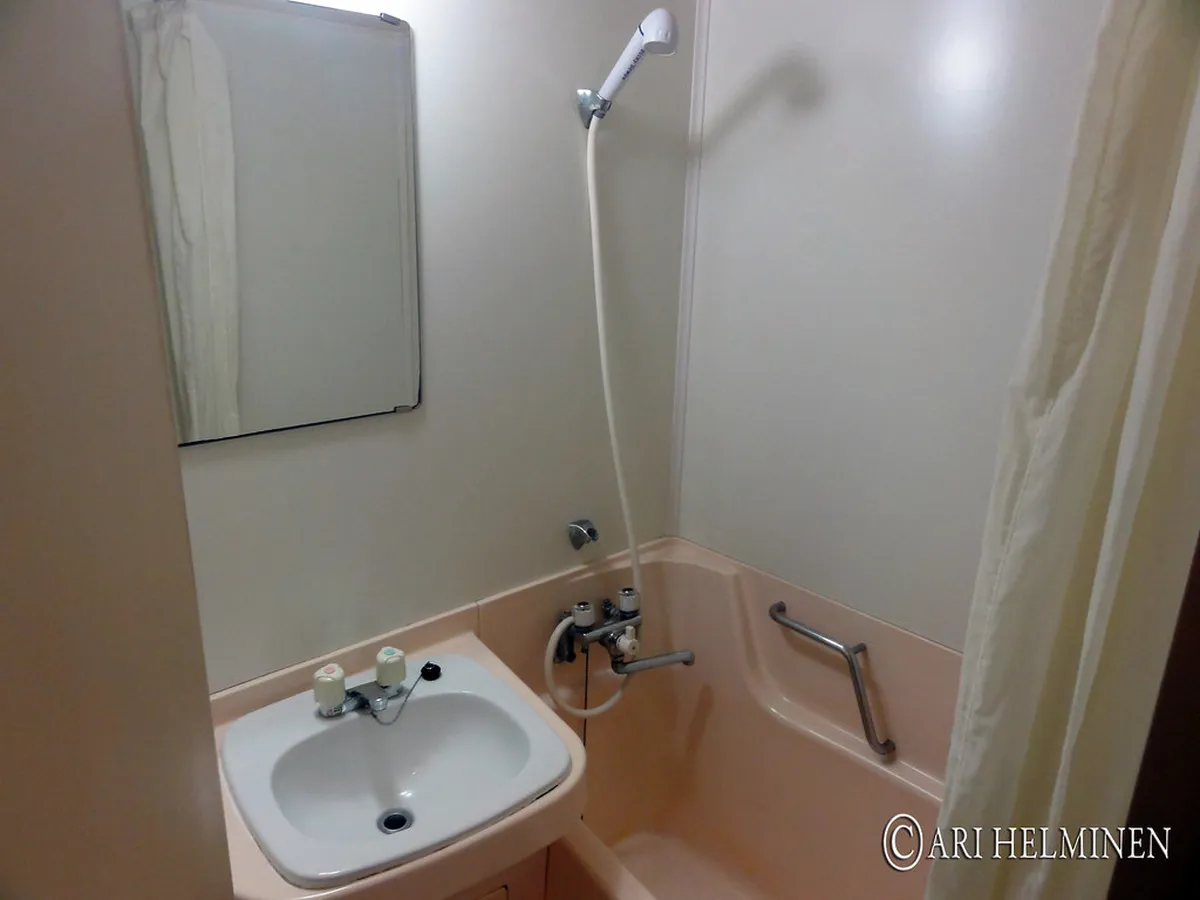
Budget business hotels charge ¥6,000–¥10,000 per room per night (not per person). Chains like Dormy Inn, Super Hotel, and Vessel Hotel Campana operate in Beppu, and several of these have rooftop or basement onsen fed by actual geothermal water. The rooms are small and functional, but the onsen access is real. These suit couples or anyone who values a private en-suite bathroom alongside communal hot spring access.
Budget ryokan sit at the top of the budget tier, typically ¥8,000–¥14,000 per person including dinner and breakfast. At this price, you get tatami rooms, yukata robes, and communal baths with naturally flowing onsen water. True budget ryokan do exist in Beppu — they are just harder to find than on Booking.com. Searching Japan's official travel resources and Japanese-language sites like Jalan or Rakuten Travel often surfaces smaller, cheaper ryokan that don't have English listings. For reviewed options, see our best ryokan in Beppu guide.
Beppu Station Area vs Kannawa: Which Is Better for Budget Stays?
Where you stay in Beppu changes the character of your trip significantly. The city is larger than it looks on a map, and the two main budget accommodation clusters — the Beppu Station district and the Kannawa district — each suit a different type of traveler.
The Beppu Station area (within 10 minutes' walk of the station) has the highest concentration of hostels and business hotels. It is the practical choice if you're arriving by Sonic Express from Hakata, doing a day trip, or planning to visit multiple onsen using the Beppu onsen pass. Supermarkets, convenience stores, and the tourist information center are all walkable. The tradeoff is atmosphere — this part of the city is flat, commercial, and doesn't feel particularly special at street level.
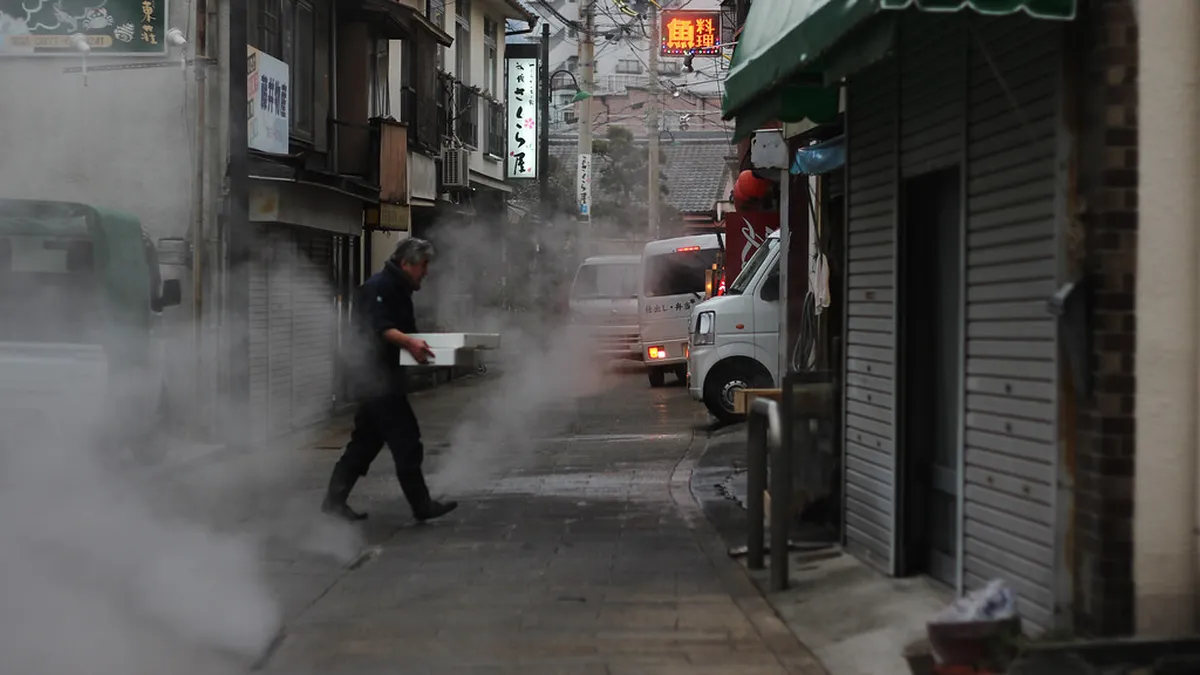
The Kannawa district is the one that looks like the Beppu you imagined. Steam rises from vents in the pavement, wooden bathhouses sit on narrow lanes, and the air smells faintly of sulfur. Kannawa is 20–25 minutes by bus from Beppu Station (bus number 26 or 36, approximately ¥330 one-way). Minshuku and small ryokan here tend to be family-run, and because the district is less convenient than the station area, prices at comparable properties are often 10–20% lower. Budget travelers willing to rely on buses rather than walking distance to the station often get better value here.
A third option worth knowing: the Hamawaki and Kannawa-adjacent districts on the lower slopes of Mount Tsurumi have a handful of guesthouses that are genuinely off the tourist trail. They are close enough to Kannawa by bus but attract almost no international visitors, which keeps prices low. English-speaking hosts are rarer here, but the onsen access — often through neighborhood public baths — is excellent.
What You Actually Get for the Money
One of the most common mistakes budget travelers make in Beppu is comparing nightly rates without factoring in what's included. A ¥7,000 ryokan rate that includes dinner and breakfast can be cheaper in total than a ¥5,500 business hotel rate once you add two restaurant meals. Here is how the tiers look when you account for everything.
At the ¥2,500–¥4,500 dorm/hostel level, expect a clean bunk, shared bathroom, free Wi-Fi, and a coin locker. Breakfast is rarely included. You will need to budget ¥600–¥1,200 per onsen visit separately unless the hostel has its own bath. Some hostels offer a one-time free entry to a partner bathhouse — ask when you check in.
At the ¥5,500–¥9,000 guesthouse and budget business hotel level, many properties include communal onsen access in the room rate. If a business hotel advertises a "natural onsen bath" (天然温泉), that is geothermal water piped directly from Beppu's springs — not a heated tap-water pool. This distinction matters. Breakfast options at business hotels are usually a buffet add-on for ¥700–¥1,000; guesthouses often include a Japanese or Western breakfast in the rate.
At the ¥8,000–¥14,000 budget ryokan level, the two-meal inclusion (dinner and breakfast) is standard. The meals at this tier in Beppu often feature local ingredients: oita wagyu, sea bream from Beppu Bay, and seasonal vegetables. The communal baths are fed by onsen water and are typically open from early morning until late at night. You are paying for an experience, not just a bed. For properties at this tier that focus on the onsen experience, our the best onsen hotels roundup covers more options.
| Type | Nightly price | What you get |
|---|---|---|
| Hostel dorm | ¥2,500–¥3,500 | Clean bunk, shared bathroom, free Wi-Fi, coin locker; breakfast rarely included; onsen access ¥600–¥1,200 extra |
| Hostel private room | ¥5,500–¥7,500 | Private room, shared bathroom facilities, free Wi-Fi; best value for solo travelers |
| Guesthouse / minshuku | ¥4,500–¥8,000 | Room (per person), often with breakfast; many include communal onsen or nearby public bath access; local host knowledge |
| Business hotel | ¥6,000–¥10,000 | Private en-suite, natural onsen (geothermal) at many; breakfast buffet ¥700–¥1,000 extra; charge per room |
| Budget ryokan | ¥8,000–¥14,000 | Tatami room, yukata, dinner and breakfast included, communal onsen with geothermal water (per person) |
Onsen Access on a Budget: What to Expect
The onsen situation in Beppu is more democratic than in most onsen towns. The city operates a network of public neighborhood baths (市営温泉, shi-ei onsen) that charge ¥100–¥220 per entry. These are not tourist attractions — they are where local residents bathe, and they are fed by real geothermal water. There are around 100 of these public baths in Beppu, which means that even if your accommodation has no onsen at all, you are almost always within a 10-minute walk of one.
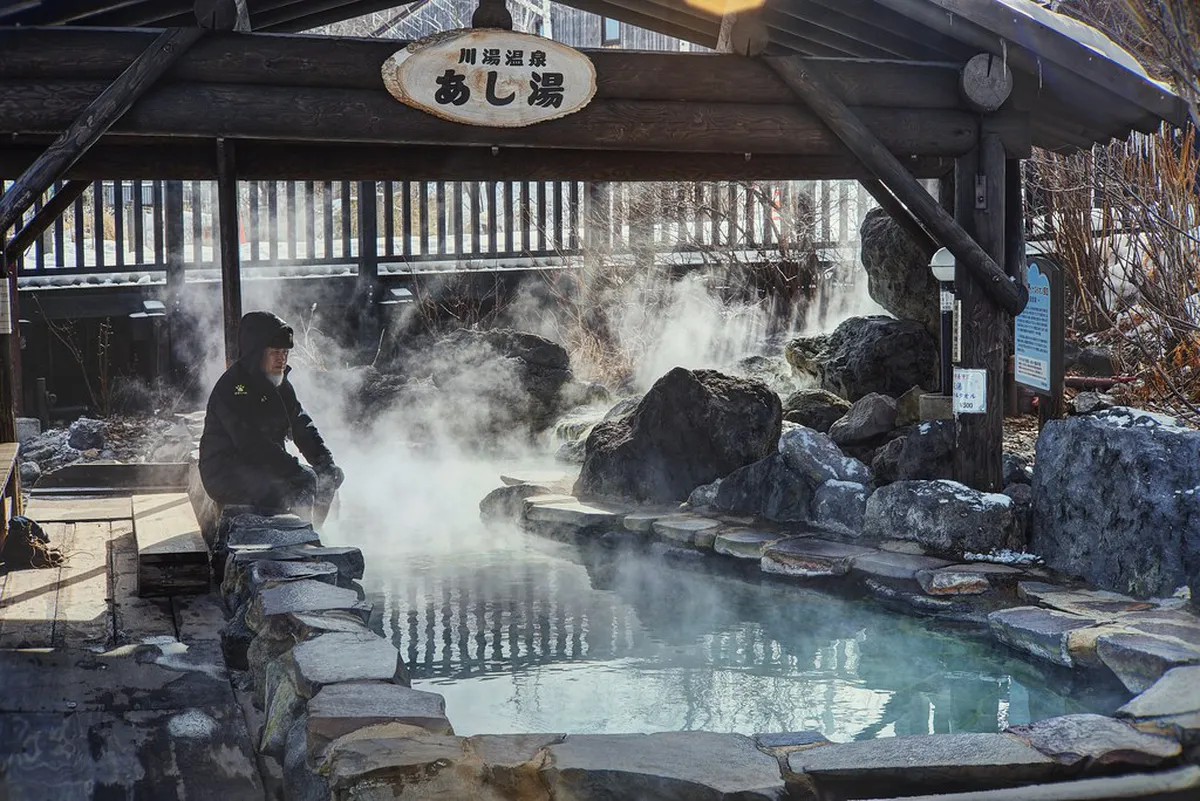
The tradeoff at public baths is that facilities are minimal. Expect a tiled room, a shared tub, and a wooden shelf for your toiletries. Soap and shampoo are not usually provided (bring your own small set), and towels typically cost ¥50 extra or are not available. Tattoos are not permitted at most public baths — this is enforced, not just policy on paper. For travelers with tattoos, private facilities at a ryokan or a private-bath rental (kashikiri buro) are the practical alternatives. Our guide to cheap public hot springs lists the best neighborhood baths with opening hours and exact prices.
Budget properties that DO have their own communal onsen typically use one of Beppu's eight types of spring water. Kannawa-area properties tend to draw from white sulfur springs or iron-bearing springs. Station-area business hotels more commonly use sodium bicarbonate springs, which are good for skin but less dramatically visual. Neither is better — they are just different, and knowing the water type at your property lets you compare intelligently.
The Free and Near-Free Onsen That Most Budget Guides Miss
Beppu has a detail that almost no English-language accommodation guide mentions: the city maintains several free foot-bath (足湯, ashiyu) stations that are fed by actual geothermal water, not heated tap water. There is a large and well-maintained ashiyu directly outside Beppu Station, open during daytime hours. There are others dotted around the Kannawa district and along the Beppu Bay waterfront. These are not a substitute for a full onsen soak, but they are a genuinely useful option if you arrive late, if your accommodation's bath is closed, or if you just want a 15-minute recovery after walking the Hells circuit.
A second thing most guides skip: many family-run guesthouses in the Kannawa and Myoban districts will quietly tell guests about the very small neighborhood-only bathhouses that charge ¥100 and have no signage in English. These spots require a host's recommendation to find — they are not listed on Google Maps in English — but they are among the most authentic onsen experiences in the city. Staying in a family guesthouse rather than a hostel or business hotel is the most reliable way to get this kind of local knowledge. Ask your host on arrival whether there is a neighborhood bath nearby that locals actually use.
Budget travelers who stay three or more nights should also look at the Beppu onsen pass. The pass gives unlimited entry to multiple public and semi-public baths for a flat daily or multi-day rate, which can cut onsen costs significantly if you plan to bathe more than once per day — something most visitors to Beppu end up doing.
Beppu's public bathhouses charge just ¥100–¥220 per visit and are fed by real geothermal water. With around 100 public baths across the city, you're never more than 10 minutes' walk from an onsen soak, even if your accommodation has no bath at all. This makes budget lodging much more valuable than it sounds — you still get authentic hot-spring access. Read our essential Beppu travel tips for more guidance on maximizing your budget while in the city.
Booking Tips: When to Book and Where
Beppu has two distinct peak seasons where budget accommodation prices spike and availability tightens. The first is Golden Week (late April to early May) and the second is mid-August (Obon, roughly 13–16 August). During these windows, prices at even basic guesthouses can double, and rooms within 1–2 km of Beppu Station sell out weeks in advance. Book at least six weeks ahead for Golden Week and three weeks ahead for standard weekends in spring and autumn.
Booking timing is critical for budget-conscious travelers: plan 6 weeks in advance for Golden Week and 3 weeks for spring/autumn weekends. Outside peak season, direct email to smaller guesthouses often nets 10–20% better rates than OTA platforms, and the Beppu Tourism Association website lists properties that don't advertise internationally at all.
Outside peak season, Beppu has good availability and prices are negotiable if you contact smaller guesthouses directly by email. Many small minshuku are not listed on Booking.com or Agoda at all, or they list only a fraction of their rooms. Emailing directly in simple English — or using Google Translate to compose a basic Japanese inquiry — often turns up a better rate than any OTA. The Beppu Tourism Association website (beppu-navi.jp) maintains a list of registered accommodations including small properties that don't advertise internationally.
For hostels and budget business hotels, Booking.com and Hostelworld both have solid coverage of Beppu, and the flexible cancellation options make them lower-risk for trip planning. For ryokan and minshuku, Jalan (jalan.net) and Rakuten Travel list the widest selection including many properties with no English-language presence. Google Translate handles these sites adequately if you are patient.
One practical detail: many of Beppu's smaller guesthouses and ryokan have a 21:00 or 22:00 check-in curfew with no reception after that hour. If you're arriving on a late Sonic Express from Hakata, confirm your arrival time with the property before booking. Properties near Beppu Station are generally more flexible on late arrivals than those in Kannawa.
Specific Tips for Families and Solo Travelers
Solo travelers get the best value from Beppu's hostel private rooms and guesthouses, where per-person rates are not penalized the way they are at ryokan (which charge per person, so a solo traveler pays the same as one half of a couple). Hostels and business hotels charge per room, making them significantly cheaper for one person. The city's strong bus network means a hostel near Beppu Station is a genuinely convenient base — you can reach Kannawa and the Hells in under 30 minutes without a car.
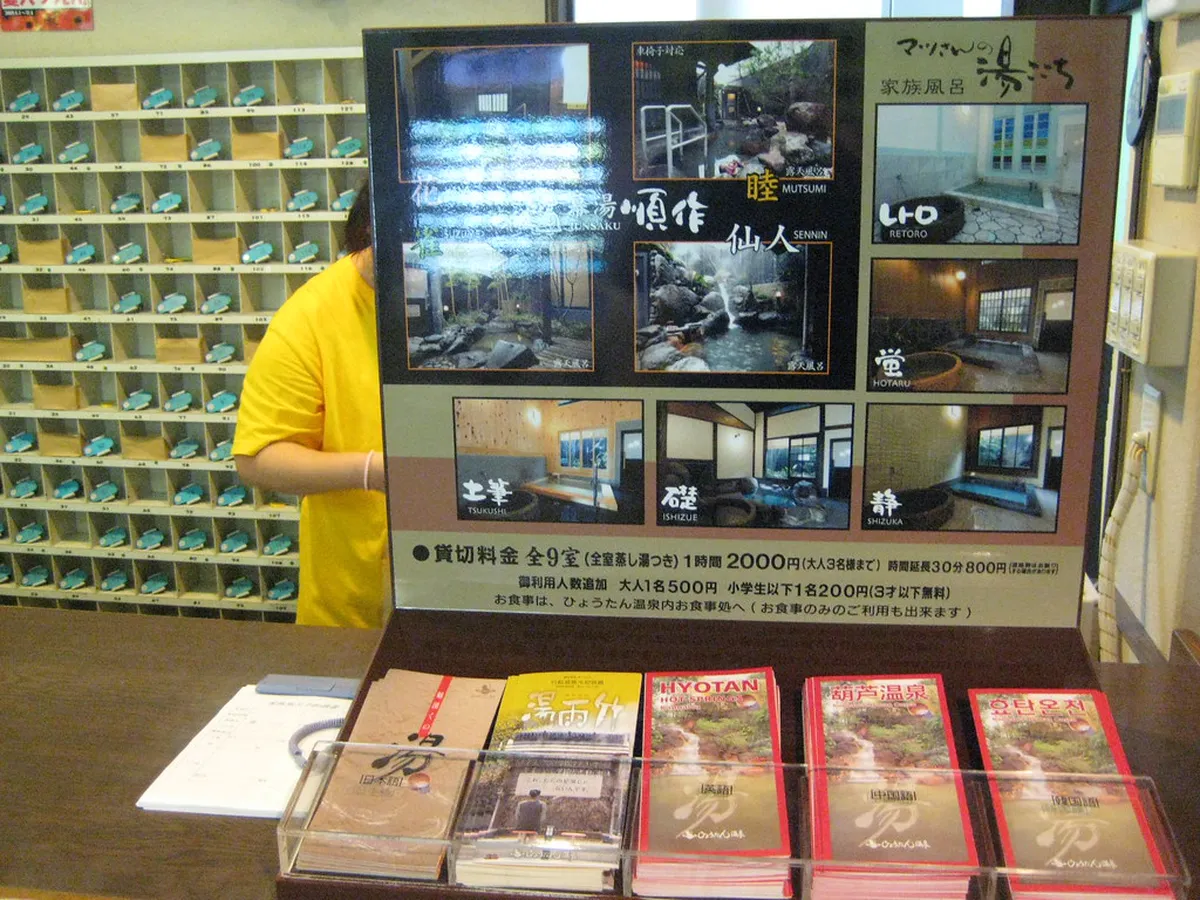
Families traveling with children should note that many public onsen in Beppu do not admit children under a certain age (often under 6 or under 10), and rules vary by bathhouse. Family-run guesthouses and ryokan with kashikiri (private) baths are the practical solution — you rent the whole bath by the hour and there is no minimum age. When searching for family-friendly options, filter specifically for "family bath" (家族風呂) availability. This is a searchable field on Jalan and Rakuten Travel. The Beppu with kids guide covers onsen etiquette and age rules in more detail.
What to Check Before You Book
Four things consistently separate a satisfying budget stay in Beppu from a disappointing one. First, confirm whether the onsen at the property uses actual geothermal water (天然温泉) or heated tap water. The listing should say explicitly. If it doesn't say, assume it doesn't use natural spring water. Second, check the bath opening hours — some communal baths at budget guesthouses are only open in two windows per day (typically 06:00–10:00 and 15:00–23:00), and if you arrive after the evening window you may not bathe until morning.
Third, check the cancellation policy carefully. Japanese guesthouses often charge a cancellation fee of 20–50% if you cancel within a week of arrival — stricter than typical European accommodation policies. Fourth, look at the most recent reviews specifically for cleanliness. In Beppu's older guesthouses and budget ryokan, facilities can be dated even when the staff and onsen are excellent. A three-year-old review rating is not reliable — filter for reviews from 2025 or 2026 before making a decision.
Frequently Asked Questions
What is a Ryokan and an Onsen?
A ryokan is a traditional Japanese inn, offering a unique cultural lodging experience. It typically features tatami mat rooms, futon beds, and often includes traditional meals. An onsen refers to a Japanese hot spring bath, known for its therapeutic minerals. Many ryokan have their own onsen facilities for guests.
Which budget accommodation in Beppu options fit first-time visitors?
First-time visitors to Beppu seeking budget accommodation should consider guesthouses or hostels near Beppu Station. These locations offer easy access to transportation and major attractions. Look for places with good reviews and communal spaces to meet other travelers. Consider options that provide simple breakfast services.
How much time should you plan for budget accommodation in Beppu?
For budget accommodation in Beppu, planning 2-3 nights allows ample time to explore the city's main attractions. This duration lets you enjoy various onsen and local sights without rushing. It also provides flexibility for day trips if desired. Many budget accommodations offer weekly rates for longer stays.
What should travelers avoid when planning budget accommodation in Beppu?
Travelers should avoid booking budget accommodation without checking recent reviews for cleanliness and location. Also, do not assume all budget options include onsen access; confirm amenities beforehand. Avoid peak holiday seasons if possible, as prices can surge. Always read cancellation policies carefully.
Is budget accommodation in Beppu worth including on a short itinerary?
Yes, budget accommodation in Beppu is definitely worth including on a short itinerary. Many affordable options provide comfortable stays close to key attractions. This allows you to save money on lodging and allocate more to experiences. A short, well-planned budget trip can be very rewarding.
Beppu is one of the most affordable onsen destinations in Japan in 2026, and the budget accommodation scene here is more varied than it appears at first search. The key decisions are category (hostel vs guesthouse vs business hotel vs budget ryokan), neighborhood (Beppu Station vs Kannawa), and what's included in the nightly rate. Get those three right and you'll have a comfortable, genuinely memorable stay without the premium price tag of Hakone or Kinosaki.
Confirm onsen water type before booking, build in buffer for late check-in curfews, and book directly with smaller properties when you can. Beppu's public bath network means you will always have onsen access even if your accommodation's facilities are limited — use it. The city's budget accommodation tier is strong enough that you can stay three nights, bathe multiple times daily, and eat well, all for what a single night at a mid-range Tokyo hotel costs. Check out the full Beppu attractions guide to plan what you'll do between relaxing soaks.
You might also like


Continue reading
More guides you'll find useful