Beppu Weather By Month: Seasonal Travel Guide
Plan your trip with our Beppu weather by month guide. Find average temperatures, rainfall, and expert packing tips for every season in Japan's onsen capital.
On this page
Beppu sits on the eastern coast of Kyushu, squeezed between Beppu Bay and the volcanic peaks of Tsurumi-dake (1,375 m). That geography gives the city a humid subtropical climate with genuinely distinct seasons — and it also means every month feels a little different depending on whether you are at the waterfront or up in the Kannawa steam district. If you want the short answer, late October through mid-November and late March through mid-April are consistently the most comfortable months for visiting. For the full picture, keep reading.
Understanding Beppu's monthly weather is especially important for hot-spring planning. The contrast between cold air and hot water that makes an onsen feel truly restorative only exists in certain months. Equally, typhoon season in August and September can disrupt outdoor plans with little warning, and the Tsuyu rainy front in June can turn a sightseeing day into a soggy slog. This guide breaks down every month with real temperature and rainfall data, what to wear, and what each season means for your onsen experience. For a broader overview of timing, see our best time to visit Beppu guide.
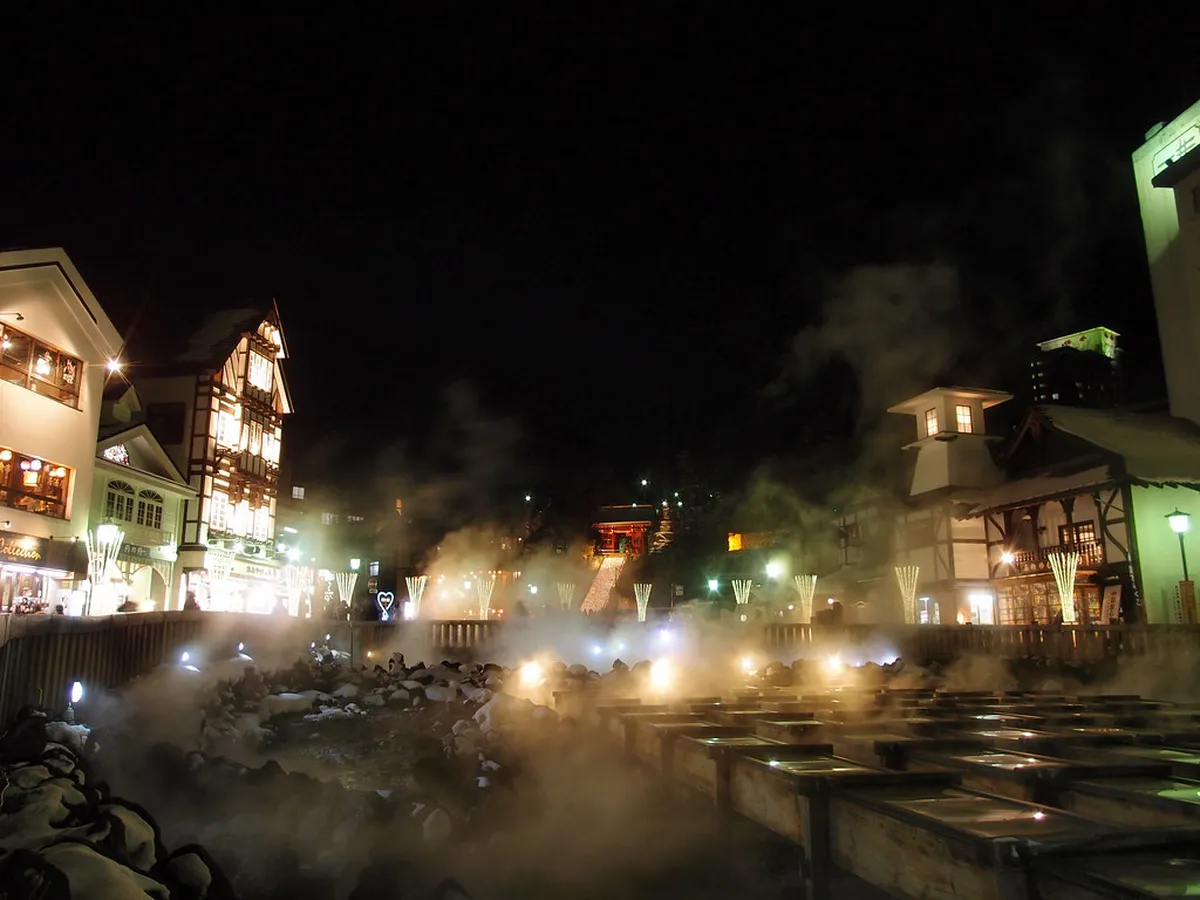
January mornings are arguably the most visually dramatic time of the year at Beppu's onsen. The combination of cold dry air and volcanic heat creates thick steam columns rising from Kannawa — photographers specifically travel for this spectacle, and crowds are at their lowest. Ryokan rates drop significantly in January, and you can book the best rooms at short notice.
Beppu Climate: What to Expect Year-Round
Beppu's annual average temperature sits around 16–17°C. Summers are hot and very humid, winters are mild by Japanese standards but noticeably cool, and the transition seasons in spring and autumn are short. Rainfall is spread across the year but peaks sharply in June and September. The city receives roughly 1,600–1,800 mm of precipitation annually — higher than Tokyo, and much of it arrives in intense bursts rather than gentle drizzle.
The mountain districts (Kannawa, Myoban, Shibaseki) run 2–4°C cooler than the coastal center at any time of year. If you are visiting multiple onsen areas in a single day, pack a layer you can remove easily. The coast also benefits from afternoon sea breezes that take the edge off summer heat, while the inland valleys trap warm humid air through late August.
One useful rule: Beppu has no real dry season. Even January, the driest month, sees around 60 mm of rain spread across roughly 8–10 rain days. A compact umbrella belongs in your bag every month. What varies is the intensity — prolonged heavy rain in June and September versus brief afternoon showers in autumn and winter.
January in Beppu
January is the coldest and driest month. Daytime highs average 9–11°C and overnight lows drop to around 3–5°C near the coast, slightly colder inland. Rainfall is minimal — typically 55–70 mm across the month — and you can expect a good number of clear, crisp days. Snow rarely falls in the downtown area, but the Tsurumi-dake and Yufu-dake peaks above the city often carry a light snow cap.
For onsen visitors, January mornings between around 07:00 and 09:00 are arguably the most visually dramatic time of the entire year. The combination of cold dry air and volcanic heat causes the steam columns at Kannawa to rise high and thick before dispersing. On clear mornings the whole hillside appears to be smouldering. This spectacle is genuinely underreported — most travel articles focus on autumn foliage, but the January steam scenery is something photographers specifically travel for. Crowds are at their lowest, ryokan rates drop significantly, and you can book the best rooms at short notice.
Wear thermal base layers, a mid-layer fleece, and a wind-resistant outer jacket. The walk between outdoor onsen facilities and changing areas feels biting in January. Pack warm socks and slip-on shoes that can handle quick transitions.
February in Beppu
February is almost as cold as January with daytime highs of 10–12°C and nights hovering around 3–5°C. Rainfall edges slightly higher — around 75–90 mm — but the month still delivers many clear and sunny days. The risk of frost overnight increases inland, particularly in Myoban where some of the most traditional open-air baths sit.
Plum blossoms begin opening in the second half of February, particularly at Beppu Park, giving the first taste of colour after the grey winter. The city is quiet, prices remain at their seasonal low, and the thermal steam effect is still strong on cold mornings. Indoor onsen and private-bath ryokans are the most popular activities this month — there is very little reason to spend a lot of time outdoors in February unless the weather cooperates.
Pack the same layers as January. February is a good month for a deep-soak itinerary that bounces between different onsen types — sand baths at Shoningahama, mud baths at Hoyoland, and the Jigoku circuit — without the crowds that pack them in spring.
March in Beppu
March marks the transition out of winter. Temperatures climb from around 12°C in early March to 17°C by the end of the month. Rainfall increases to around 100–120 mm, and the days alternate between genuine warmth and cool overcast spells. It can still feel genuinely cold on rainy days, particularly early in the month.
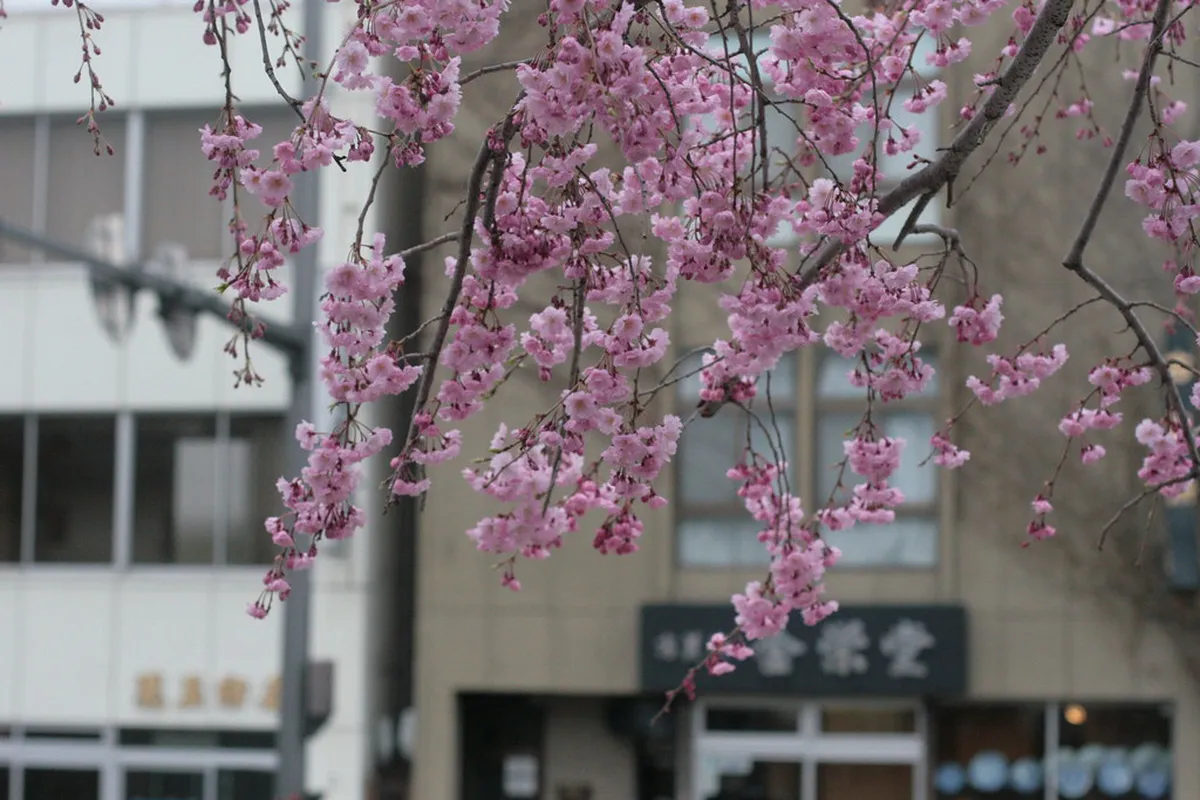
Cherry blossom trees typically begin to bud in mid-to-late March, with early-blooming varieties (Kawazu-zakura, sometimes Somei-yoshino) reaching peak in the final week. Beppu Park and Kijima Kogen Park are the main viewing spots. If cherry blossoms are your priority, aim for late March to early April — but check the Japan Meteorological Agency's annual forecast (usually published in February) for the specific year, as timing shifts by one to two weeks depending on winter temperatures.
Light layering works well in March: a long-sleeve base, light jacket, and something waterproof. Evenings still cool sharply, especially in the mountain districts. The onsen experience is excellent this month — warm enough outside to enjoy the walk between facilities, cold enough to make the hot water feel genuinely restorative.
April in Beppu
April is one of the two peak months for visiting Beppu. Daytime temperatures settle in the 16–21°C range, rainfall is moderate at around 110–130 mm, and the skies are often clear and blue. The air quality is excellent — warm enough for outdoor activities but not yet humid. Cherry blossoms at lower elevations peak in early April, and mountain-area blossoms (Tsurumi-dake hiking trails) follow one to two weeks later.
The first week of May (Golden Week, 29 April – 5 May) is technically the busiest and most expensive period of the Japanese travel calendar. Book accommodation at least two months ahead if your dates overlap with Golden Week. Prices spike noticeably for ryokans with private baths, and the Jigoku Meguri (Hells of Beppu) circuit gets crowded by 10:00. Arriving before 08:30 or after 15:30 avoids the worst of the queues.
Packing for April means light layers and a compact rain jacket. Evenings are still cool enough for a light sweater. This is also the ideal month for combining onsen visits with outdoor hikes — the trails around Tsurumi-dake and the Beppu Ropeway viewpoints are at their most scenic. See our top things to do in Beppu guide for the best spots to add to your April itinerary.
May in Beppu
May is warm and increasingly humid but not yet oppressive. Highs climb from around 20°C in early May to 25°C by month-end. Rainfall picks up to around 140–160 mm as the city moves toward the Tsuyu rainy season, but May itself is not as wet as June — showers tend to be afternoon events rather than all-day rain. The second half of May sees the first genuinely sticky humidity.
Golden Week crowds have dissipated by mid-May, leaving a sweet spot of pleasant weather and manageable visitor numbers. This is one of the best times to visit if your schedule allows. Open-air baths at the mountain-area onsen are at their most pleasant — warm enough to sit outside after your soak without immediately getting cold, with the surrounding greenery at its freshest.
Pack light, breathable fabrics and a reliable compact umbrella. Sun protection becomes necessary in May. A light waterproof layer is useful for the second half of the month. May is also the start of the sea-swimming season at Beppu beaches, though water temperatures are still below 20°C until June.
June in Beppu: Tsuyu Rainy Season
June is the wettest month in Beppu. The Tsuyu (plum rain) front typically stalls over Kyushu from late May or early June until mid-to-late July. Beppu receives roughly 280–330 mm of rain in June — nearly double May's total. Temperatures sit at 23–27°C, but the oppressive humidity (often above 80%) makes it feel hotter. Overcast days are the norm rather than the exception.
This is the least popular month for international visitors, and for good reason. Outdoor sightseeing becomes unpleasant. The upside: ryokan rates are lower than in spring or autumn, and the indoor onsen experience remains unaffected by rain. The Jigoku circuit and covered-walkway onsen facilities offer shelter. If budget is your primary driver and you can tolerate grey skies, June can still work — just plan for mostly indoor days.
Pack fast-drying clothes, a full-size umbrella (compact ones invert easily in Tsuyu downpours), and waterproof shoes. Sandals become impractical in heavy rain. Anti-humidity hair products are worth including if that matters to you. June is also when Beppu's famous hell-steamed food (jigoku-mushi) at the Jigoku Meguri becomes especially atmospheric — the grey misty backdrop amplifies the visual drama of the boiling pools.
July and August in Beppu: Peak Summer Heat
July marks the end of Tsuyu — usually in the third week of the month — followed immediately by intense summer heat. Highs average 29–31°C through late July and August, with humidity making it feel closer to 36–38°C on the hottest days. Rainfall in July drops from Tsuyu levels but remains significant; August averages around 180–200 mm. Sea temperatures reach 26–28°C, making the beaches genuinely enjoyable.
Typhoon season runs from late August through September. Beppu's position on the eastern Kyushu coast makes it moderately exposed to typhoon tracks that curve northeast from the Philippine Sea. A significant typhoon can close the Beppu Ropeway, disrupt ferry services, and flood low-lying coastal roads. Check the Japan Meteorological Agency (JMA) typhoon forecast when travelling August through September — JMA publishes 5-day track forecasts that give adequate lead time to adjust plans.
Summer festivals are a major draw. Beppu's bay-front fireworks events and the local Bon Odori dancing in mid-August draw large crowds. The Beppu International Jazz Festival typically runs in late August. Despite the heat, summer evenings around Kitahama are lively and worth experiencing. Visit the onsen in the early morning (before 08:00) or late evening (after 21:00) to avoid the peak heat and crowds. Our the best time for Beppu's hot springs guide covers the optimal bathing windows in detail.
Pack lightweight, moisture-wicking clothing in neutral colours. High-SPF sunscreen (SPF50+ PA+++) is essential from July through August. A cooling towel and a small handheld fan are practical additions. Keep bottled water on you at all times — heat exhaustion is a genuine risk for visitors not acclimatised to Kyushu summers.
Typhoon season runs from late August through September, with September being the month most likely to see a direct hit or significant near-miss. Rainfall in September averages 230–260 mm. Most facilities remain open unless a storm makes outdoor movement dangerous. Check the Japan Meteorological Agency (JMA) typhoon forecast at jma.go.jp when travelling during this period — JMA publishes 5-day track forecasts that give adequate lead time to adjust plans. Travel insurance covering weather disruptions is worth having for any August–September booking.
September in Beppu: Typhoon Season Peaks
September is statistically the month most likely to see a direct typhoon hit or a significant near-miss. Rainfall averages 230–260 mm — the second-highest monthly total after June — and temperatures remain hot, in the 26–29°C range through mid-month before starting a gradual decline. Humidity stays high. The typhoon risk is the primary reason September ranks as one of the harder months to plan around.
Typhoons typically give 48–72 hours of warning before arrival thanks to JMA forecasts. Most onsen facilities, the Jigoku Meguri, and ryokans remain open unless a storm makes outdoor movement dangerous, which typically lasts 12–24 hours. The Beppu Ropeway closes at wind speeds above 15 m/s. If your trip straddles a typhoon, the practical disruption is often one lost day — manageable if your itinerary is not too tight.
The second half of September is noticeably more pleasant than the first. Temperatures drop below 27°C and humidity begins retreating. This makes late September a reasonable window if you want a more affordable shoulder-season visit. Pack summer clothes for the first two weeks and add a light jacket for the final week. Travel insurance covering weather disruptions is worth having for any September booking.
What to Do If a Typhoon Hits During Your Beppu Trip
Typhoons approaching Kyushu are rarely a surprise. The Japan Meteorological Agency (JMA) typically issues track forecasts three to five days out and firms up direct-hit probability within 24–48 hours, so check the forecast each morning once a storm enters the East China Sea rather than waiting for an official warning. If a typhoon is projected to pass within roughly 100 km of Beppu, expect disruption on three fronts:
- Transport: JR Kyushu commonly suspends Sonic and Yufuin no Mori limited-express services to Beppu Station 12–24 hours ahead of landfall, and flights out of Oita Airport are among the first regional routes cancelled. Book refundable fares if traveling in August or September.
- Outdoor facilities: The Beppu Ropeway up Tsurumi-dake closes once sustained winds pass roughly 15 m/s, and open-air baths (rotenburo) at mountain ryokans often shut for safety even before the storm's worst hour arrives.
- Indoor alternatives: Sand bath facilities at Shoningahama and covered indoor onsen halls generally stay open through all but the most severe storms, making them the reliable fallback for a washed-out day.
Most typhoons clear Beppu within 12–18 hours, and the region reopens quickly — roads and rail are usually running again by the next morning. Travel insurance covering typhoon-related cancellations is worth the small cost if your visit falls in August or September.
October and November in Beppu: Best Season
October and November are the most consistently enjoyable months to visit Beppu. Temperatures cool from around 22°C in early October to 13–15°C by late November. Rainfall drops sharply — October averages around 90–110 mm and November around 70–80 mm — and the skies are often brilliant blue with low humidity. The combination of clear weather, comfortable walking temperatures, and spectacular autumn foliage makes this a peak domestic travel season across Japan.
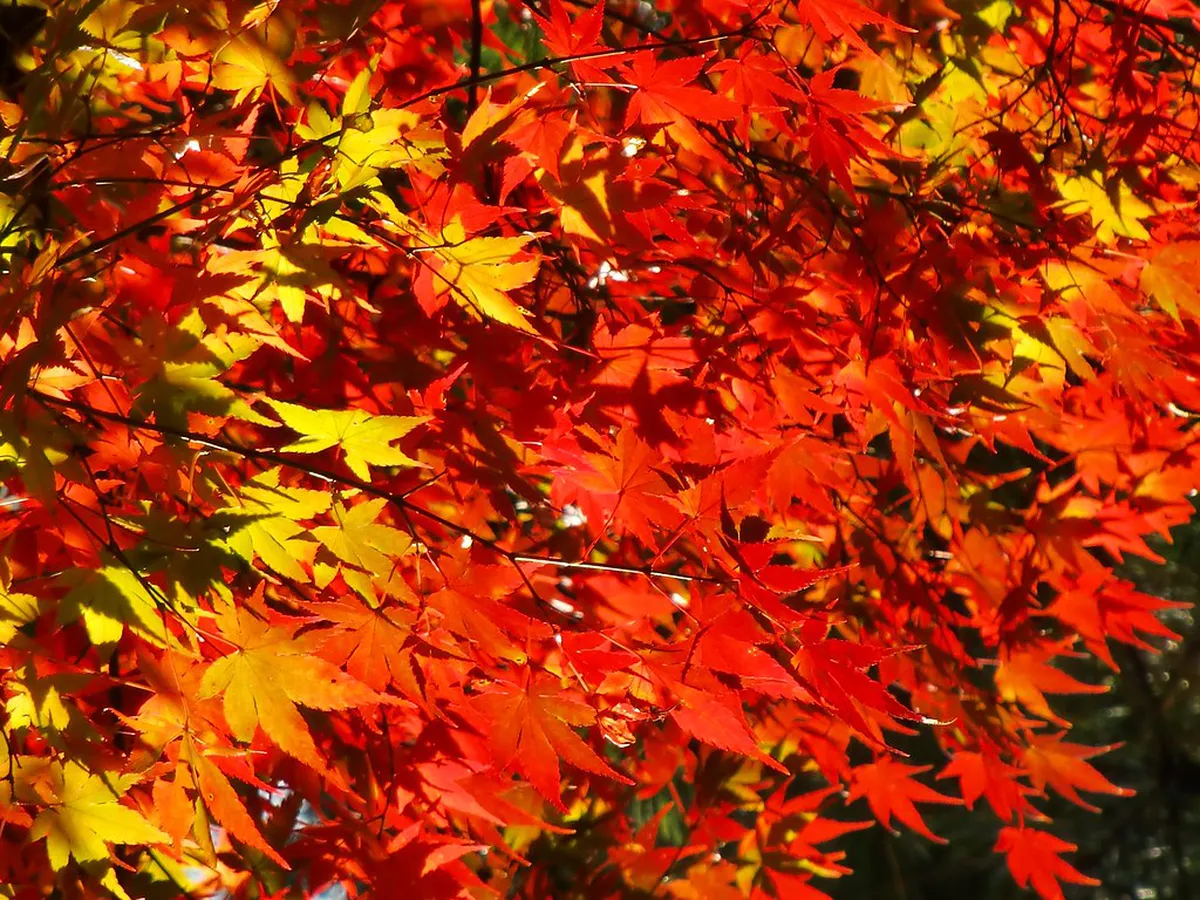
Autumn foliage in the mountain districts typically arrives in late October at higher elevations (Tsurumi-dake, Kijima Kogen) and reaches Kannawa and Beppu Park by early November. The Jigoku circuit's surrounding trees turn vivid red and orange, adding a seasonal backdrop to the already dramatic boiling pools. This is the best time of year to visit the Hells — manageable crowds in early October, beautiful colours in late October, and a noticeable drop in temperature that makes the long outdoor circuit comfortable. See our Beppu in winter for details on what to do once the temperature drops further in late November.
The onsen experience is superb in October and November. The air is cool enough to make the hot water feel deeply satisfying without the extreme contrast of midwinter. Open-air rooftop baths (rotenburo) are at their most enjoyable — soaking in near-40°C water while cool autumn air flows over you, surrounded by maples. Pack versatile layers: a t-shirt works at midday in October, but you will want a warm fleece and a jacket for evenings. November evenings drop sharply and a proper winter coat becomes necessary toward month-end.
December in Beppu
December is the beginning of the quiet winter season. Daytime highs average 12–14°C and evenings drop to 5–7°C. Rainfall is around 65–80 mm, with more clear and cold days than wet ones. The city starts thinning out after the autumn foliage crowds depart, and by mid-December the visitor numbers are well down.
The Christmas and New Year period (25 December – 3 January) is an exception: domestic Japanese travellers take Oshogatsu (New Year) breaks, and many ryokans fill up and charge premium rates between 30 December and 3 January. If you want a quiet winter visit, target 4 January onwards, when prices drop and the city returns to near-empty. New Year illuminations at the bay-front and occasional fireworks events add a festive element in the last week of December.
Packing for December requires a proper winter coat for evenings, warm mid-layers for day trips, and reliable waterproofing for rain. The daytime temperatures are mild enough that a heavy down parka is overkill until January, but a mid-weight insulated jacket plus fleece is the right combination. This is also the beginning of the best hot-spring season — the cold air starts delivering that Kannawa steam-column drama, and the outdoor baths feel genuinely luxurious.
Beppu Monthly Temperature and Rainfall at a Glance
The table below summarises average figures for each month. Temperature ranges show coastal daytime highs; mountain-district lows run 2–4°C cooler. Rainfall figures are long-term averages and individual years vary. Data is sourced from Japan Meteorological Agency historical records for Oita Prefecture.
| Month | Avg High (°C) | Avg Low (°C) | Rainfall (mm) | Rain Days | Notes |
|---|---|---|---|---|---|
| January | 9–11 | 3–5 | 55–70 | 8–10 | Coldest; dramatic morning steam; low crowds |
| February | 10–12 | 3–5 | 75–90 | 9–11 | Plum blossoms late Feb; still quiet |
| March | 12–17 | 6–9 | 100–120 | 11–13 | Cherry buds; warming rapidly |
| April | 16–21 | 10–13 | 110–130 | 11–13 | Cherry peak; Golden Week late April |
| May | 20–25 | 14–17 | 140–160 | 12–14 | Pre-Tsuyu sweet spot; light humidity |
| June | 23–27 | 18–21 | 280–330 | 16–18 | Tsuyu: wettest month; lower prices |
| July | 28–31 | 22–25 | 200–240 | 14–16 | Hot; Tsuyu ends mid-July; festivals |
| August | 29–32 | 23–26 | 180–200 | 12–14 | Peak heat; typhoon season starts |
| September | 26–29 | 20–23 | 230–260 | 13–15 | Typhoon peak; second-half more pleasant |
| October | 20–24 | 14–17 | 90–110 | 10–12 | Best weather; autumn foliage starts |
| November | 14–18 | 8–11 | 70–80 | 9–11 | Foliage peak; excellent onsen month |
| December | 11–14 | 5–7 | 65–80 | 8–10 | Quiet; steam drama returns; NYE crowds late |
How Beppu's Weather Compares to Fukuoka and Kyoto
Beppu's weather doesn't move in isolation — most itineraries pair it with at least one other region, and knowing how the climate differs helps with packing and timing. Beppu shares Kyushu's humid subtropical pattern with Fukuoka, including the same Tsuyu front arriving in early June and the same August–September typhoon window, since both cities sit on the same coastline and pick up storms from the same track. The difference is topography: Fukuoka's flat, built-up center holds heat overnight, while Beppu's mountain districts around Kannawa and Myoban cool 2–4°C below the coast after dark, so pack an extra layer for evening onsen visits even in midsummer.
Inland cities behave differently again. Kyoto sits in a basin that traps both summer heat and winter cold — its July–August afternoons regularly feel more oppressive than Beppu's, because Beppu gets a sea breeze off Beppu Bay that Kyoto's landlocked geography never receives. Kyoto also sees occasional light snow in January, something downtown Beppu rarely gets. If your trip combines Beppu with Kyoto or Osaka, expect the coastal stretch to feel comparatively mild and breezy, and the inland leg to run hotter by day and colder by night.
How the Weather Affects Your Onsen Experience
The onsen experience in Beppu changes substantially depending on the season — and not always in the way first-time visitors expect. The hottest months (July–August) are actually the least comfortable for soaking. Entering a 40–42°C bath when the outdoor air is already 32°C with 80% humidity is an unpleasant shock to the body. You cannot cool down after bathing because the outside air offers no relief. For this reason, summer onsen visits should happen in the early morning or late evening.
The most physically enjoyable soaking experience happens in October through early April, when air temperatures are low enough to provide genuine contrast with the hot water. The cold air cools your skin as you move between pools in a rotenburo, allowing you to soak longer and more comfortably. November through January is particularly prized by regular onsen visitors for exactly this reason. The outdoor baths at Myoban-yu and the rotenburo at Hyotan Onsen feel completely different in January versus July.
For a deep dive into timing your onsen visit, see our the best time for Beppu's hot springs guide, which covers session lengths, bathing etiquette by season, and the specific onsen facilities best suited to each time of year.
What to Pack for Beppu by Season
Packing for Beppu requires thinking about the onsen routine as much as general sightseeing. The repeated cycle of changing in and out of yukata (provided by ryokans) or personal clothes means you want easy layers rather than complicated outfits. A compact umbrella belongs in your bag every month of the year, not just during Tsuyu.
- Spring (March–May): Light jacket, long-sleeve base layer, comfortable walking shoes with grip for wet stone paths near onsen, compact umbrella, light waterproof for May.
- Summer (June–August): Moisture-wicking t-shirts, shorts or light trousers, sandals for casual walking (not for onsen paths), SPF50+ sunscreen, cooling towel, full-size umbrella for June.
- Autumn (October–November): Versatile layers — t-shirt plus fleece plus jacket — that you can add or remove across the day, warm socks for November evenings, sturdy umbrella.
- Winter (December–February): Insulated mid-weight jacket plus fleece underlayer, thermal socks, warm hat and gloves for evening outdoor walks between onsen, slip-on shoes for quick transitions in changing areas.
One Beppu-specific addition for any season: a small waterproof bag or dry-sack for your phone and valuables is useful when crossing the outdoor areas between onsen baths — unexpected steam gusts and splash zones are common around the Hells circuit.
Seasonal Closures and Crowd Calendar
Beppu operates year-round and the Jigoku Meguri (Hells) circuit never fully closes, but some seasonal limitations apply. Several mountain hiking trails above Tsurumi-dake close during heavy snow risk periods, typically mid-January through late February. The Beppu Ropeway suspends operations during high-wind events and occasionally for scheduled winter maintenance — check the official website before making it a fixed part of your itinerary in January or February.
Beach facilities (changing rooms, rental services, beach-side food stalls) operate only from roughly early July through late August. The sand bath at Shoningahama Beach is operated by the city and runs year-round, but check current opening hours as winter schedules differ from summer. Seasonal viewpoint bus services to the highlands around Kijima Kogen typically run on reduced schedules outside of foliage and cherry-blossom seasons.
Crowds peak in three windows: Golden Week (late April – early May), Obon (mid-August), and the autumn foliage season (late October – early November). Ryokan rates during these windows are 30–50% higher than shoulder-season rates. The city is quietest January through February (excluding New Year week) and mid-June through mid-July. Check our best time to visit Beppu guide for a full breakdown of the price and crowd calendar.
Frequently Asked Questions
What is the rainiest month in Beppu?
June is typically the rainiest month in Beppu. It marks the start of the Tsuyu rainy season. Expect frequent showers and high humidity during this time.
Does it snow in Beppu during winter?
Snow is rare in the downtown Beppu area. It occurs more often in the higher mountain districts. You might see light dustings in January or February.
When is the best time for cherry blossoms?
Late March to early April is the peak time. Beppu Park is a great spot for viewing. The weather is usually mild and pleasant then.
Beppu offers a genuinely different atmosphere every month. The month-by-month temperature and rainfall data above gives you the tools to match your travel style — whether that is cherry blossoms in April, the autumn foliage circuit in October, or the quietly dramatic winter steam mornings of January — to the conditions that make each experience work best. Once you've picked your month, use our how many days to spend in Beppu guide to plan your itinerary, then dive into the top things to do in Beppu page for specifics.
Free: The Beppu Essentials guide
Top things to do, where to stay, a perfect day plan, getting around, and the best time to go — a Beppu mini-guide you can take offline.
You might also like


Continue reading
More guides you'll find useful