Fukuoka Weather By Month Travel Guide
Plan fukuoka weather by month with top picks, neighborhood context, timing tips, and practical booking advice for a smoother trip.
On this page
Fukuoka sits on Kyushu's northern coast facing the Sea of Japan, giving it a humid subtropical climate that is noticeably milder than Tokyo in winter and wetter in early summer. Average annual rainfall tops 1,700 mm, most of it falling between June and September. Four seasons are distinct enough to matter for trip planning. Before booking, read the Best Time to Visit Fukuoka, Japan for the full decision framework.
This guide covers average temperatures, rainfall, sunshine hours, and humidity for each calendar month, then surfaces the key trade-offs so you can match your itinerary to the weather window that suits you best.
Monthly Temperature in Fukuoka
Daytime highs range from roughly 11°C (52°F) in January to 34°C (93°F) at the August peak. Nights stay above 25°C (77°F) from late July through August, meaning even evenings feel warm. Spring and autumn are the sweet spots: April highs sit around 21°C (70°F) while October highs average 24°C (75°F) with lows that are genuinely cool rather than oppressive.
The table below uses Japan Meteorological Agency reference figures averaged over recent years.
| Month | Avg High | Avg Low | Feel |
|---|---|---|---|
| January | 11°C / 52°F | 4°C / 39°F | Cold, windy |
| February | 13°C / 56°F | 5.5°C / 42°F | Cold, dry |
| March | 18°C / 65°F | 10°C / 50°F | Mild, variable |
| April | 21°C / 70°F | 13°C / 55°F | Warm, pleasant |
| May | 25°C / 77°F | 17°C / 62°F | Warm, pre-humid |
| June | 28°C / 83°F | 22°C / 71°F | Hot, wet |
| July | 33°C / 91°F | 26°C / 79°F | Very hot, humid |
| August | 34°C / 93°F | 27°C / 81°F | Hottest, sticky |
| September | 31°C / 88°F | 24°C / 75°F | Hot, typhoon risk |
| October | 24°C / 75°F | 16°C / 61°F | Mild, clear |
| November | 19.5°C / 67°F | 11°C / 52°F | Cool, crisp |
| December | 13.5°C / 56°F | 7°C / 45°F | Cold, dry |
Rainfall in Fukuoka
Fukuoka records about 1,741 mm (69 in) of rain per year, significantly more than Tokyo. June is the headline wet month with around 298 mm (12 in) and up to 18 rainy days — this is the Tsuyu rainy season. July can see even heavier downpours; recorded totals sometimes exceed 530 mm (21 in) in a single month during intense rainy-season years. The Japan Meteorological Agency publishes detailed precipitation forecasts if you need week-by-week accuracy. A compact umbrella or packable rain jacket is non-negotiable from late May through mid-July.
October is the statistical standout for dryness: the month averages only about 23 mm of rain and fewer than five rainy days. That figure is lower than any winter month, making mid-October through early November the driest window of the entire year for outdoor plans. August eases off after Tsuyu ends, but the typhoon corridor means September can deliver sudden, heavy deluges even in otherwise dry weeks.
Winter (December–February) is drier than you might expect: January averages roughly 73 mm over 20 days, but most of those are light drizzle rather than downpours. The drizzle is cold, though. Pack a windproof layer rather than relying on a thin rain poncho.
Sunshine Hours in Fukuoka
May wins for usable daylight: average sunshine reaches 6.8 hours per day, combined with pre-humid temperatures that still feel comfortable for walking. April is almost as good. January is the darkest month, offering only 3.4 daily hours of direct sun, and the grey overcast that accompanies the Sea of Japan winter makes the cold feel more penetrating.
June and July have long days but cloud cover during Tsuyu eats into sunshine hours significantly. You can still get bright mornings in June before clouds build by afternoon — schedule outdoor sightseeing for 09:00–11:30 during rainy season and retreat indoors by early afternoon. The Must-See Fukuoka Attractions includes several excellent indoor options at Fukuoka Tower and Canal City for rainy-day contingency plans.
October and November both offer above-average sunshine alongside low rainfall, reinforcing autumn as the most reliably sunny window for sightseeing. Expect around 5–6 hours of direct sun daily in those months.
Fukuoka Weather: January to June
January (10.7°C / 51°F high): The coldest month. Seasonal winds off the Sea of Japan make it feel sharper than the numbers suggest. Bring a down jacket, gloves, and a muffler. Snowfall is possible and more likely here than in Tokyo, though it rarely settles for long. Hatsumode crowds fill Kushida Shrine and Hakozaki Shrine on 1 January; the Tamaseseri Festival at Hakozaki Shrine follows on 3 January.
February (13.1°C / 55°F high): Still cold but the driest month after January. February is strawberry season — Fukuoka's Amaou brand is considered one of Japan's finest, and you will find it sold at markets and in desserts across the city. Setsubun bean-throwing ceremonies at Dazaifu Tenmangu Shrine on 3 February are worth attending. Light layers remain essential; a down jacket is still appropriate for evenings.
March (18.4°C / 65°F high): Winter retreats gradually. Cherry blossoms typically open in late March; peak viewing at Maizuru Park and Nishi Park usually falls in the last week of the month. Carry a light coat — mornings are still in the low 10s Celsius. The Kyokusui No En poetry festival at Dazaifu Tenmangu is held in early March with Heian-era costumes.
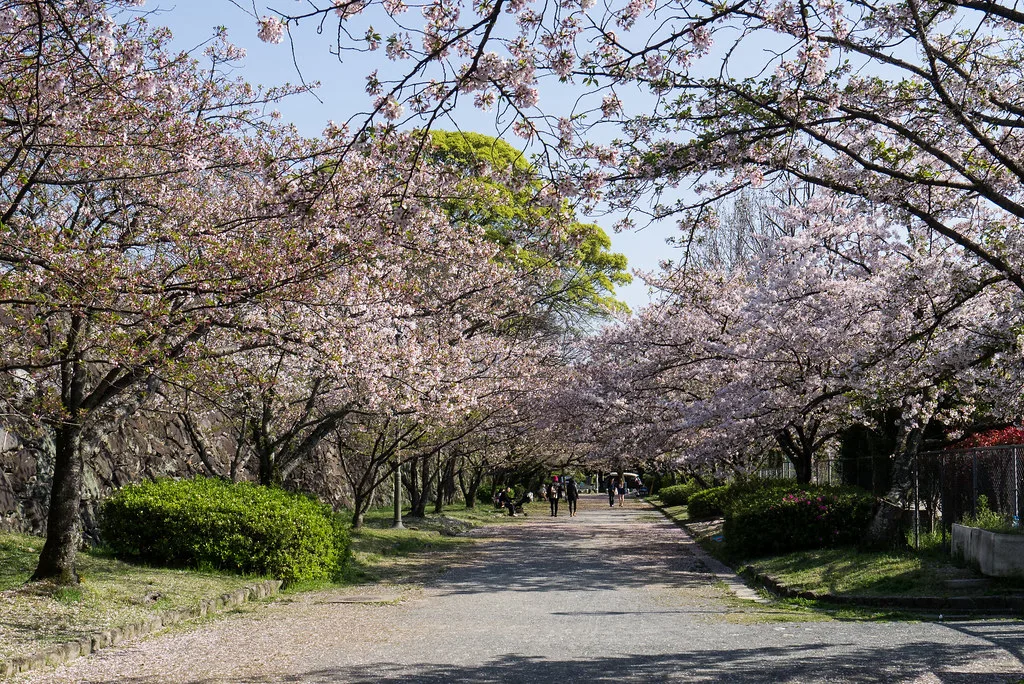
April (21°C / 70°F high): The most popular spring month. Early April continues cherry blossoms; mid-April transitions to azaleas at Nokonoshima Island and wisteria at Kawachi Wisteria Garden. Rainfall of 182 mm makes April the wettest spring month — have a back-up plan. Book hotels three to four weeks ahead, especially around Golden Week (late April into May).
May (24.5°C / 76°F high): Temperatures feel suddenly warm. The Hakata Dontaku Port Festival fills the streets on 3–4 May with costumed parades and taiko. By late May, humidity begins climbing toward Tsuyu levels. Long-sleeved shirts and a light cardigan handle the variable temperatures well.
June (28.3°C / 83°F high): Rainy season (Tsuyu) runs from early to mid-June through mid-July. Expect sticky heat and frequent showers. The upside: hydrangeas bloom at Hakozaki Shrine and Dazaifu Tenmangu, and the Tobata Shobu Matsuri iris festival (20,000 stalks) takes place at Yomiya Park. Keep a waterproof jacket on your person at all times.
Fukuoka Weather: July to December
July (32.9°C / 91°F high): The wettest month by total rainfall — sometimes over 500 mm. The Hakata Gion Yamakasa Festival is the year's signature event: one-tonne floats are raced through pre-dawn streets on 15 July, drawing massive crowds. Indoor air conditioning can be aggressively cold; carry a long-sleeved layer for museums and trains. Drink electrolytes if you plan extended outdoor time.
August (33.9°C / 93°F high): Peak heat. Nights stay above 27°C (80°F). The Nishinihon Ohori Fireworks Festival draws over 420,000 visitors with 6,000 bursts viewable from multiple city vantage points. Obon week (around 13–15 August) sees bon odori dances at Hakata Natsu Matsuri. Momochi Beach is swimmable and popular with locals. Sunscreen, hydration, and UV-protective clothing are essential.
September (30.7°C / 87°F high): Still hot in early September. Mid-month brings a noticeable cooling shift. Typhoon risk peaks August–September; check the Japan Meteorological Agency forecast the week before travel. The Hojoya Festival at Hakozaki Shrine (mid-September) is one of Japan's oldest harvest festivals, over 1,000 years old. Red spider lily (higanbana) fields bloom at Ataka Tanada.
October (24.3°C / 75°F high): The driest, clearest month in Fukuoka. With only about 23 mm of monthly rain, this is the single best weather window for outdoor dining at the yatai street food stalls: mild temperatures, almost zero rain, and post-typhoon air clarity. The Hakata Okunchi Festival (harvest parade, 1,200-year history) and the Nakasu Festival both run in October. Cosmos fields bloom on Nokonoshima Island.
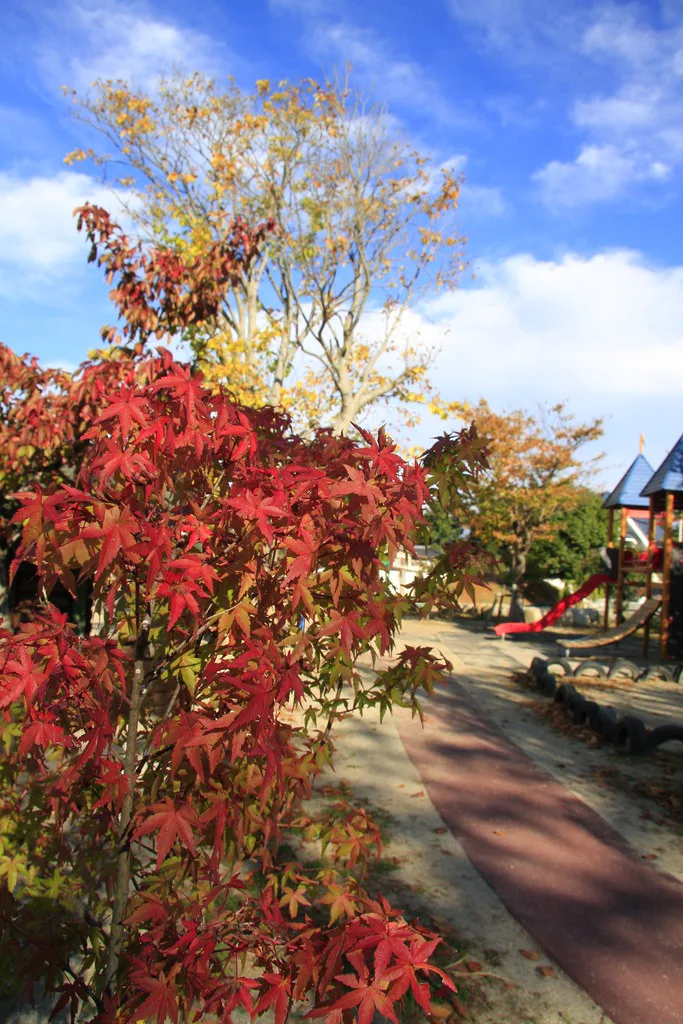
November (19.5°C / 67°F high): Autumn foliage colors peak at Yusentei Park, Katsuyama Park, and Kamado Shrine in early November. The 400-year-old maple trees at Raizan Sennyoji Daihioin Temple are a less-visited highlight. Rainfall stays low (about 52 mm). Bring a mid-weight jacket; evenings drop into the low 10s.
December (13.5°C / 56°F high): Cold returns, with a biting sea breeze. The Bayside Illumination in Hakata lights up the bay from November through late December with an atmospheric winter display. Lows reach 7°C (45°F). Pack a down jacket and thermal underlayers for outdoor evenings. Hotel rates are lower than spring and autumn peak weeks.
Typhoon Season: What to Expect and How to Prepare
Fukuoka's typhoon season runs primarily from August through late September, occasionally stretching into early October, and is distinct enough from the general rainfall patterns to warrant its own checklist. Typhoons approaching Kyushu from the East China Sea can ground flights at Fukuoka Airport (FUK), suspend Kyushu Shinkansen services between Hakata and points south, and cancel ferries to the Genkai Sea islands with as little as 24 hours' notice.
Most storms pass through within 24 to 48 hours, and airlines and JR Kyushu typically resume normal schedules quickly once wind advisories lift. The practical risk is timing: a typhoon landing on a travel day can strand you in Fukuoka an extra night or cause a missed onward connection to Kyoto or Osaka.
To plan around this:
- Book refundable or flexible-rate flights and hotels for any Fukuoka dates between mid-August and late September.
- Build at least one buffer day into itineraries that connect Fukuoka to another city by air or rail during this window.
- Check regional typhoon advisories two to three days out rather than relying on a single forecast.
- Keep a paper or offline copy of accommodation and rail bookings in case mobile data drops during a storm.
Unlike the Tsuyu rainy season in June, typhoons are short, intense, and localized rather than weeks of steady drizzle. Most visitors who build in a one-day buffer around late August and September experience no disruption at all.
Best Time to Visit Fukuoka
April, May, October, and November offer the most comfortable temperatures, ranging from 19°C to 25°C (66°F–77°F), with manageable rainfall and above-average sunshine. Fukuoka's climate data confirms these four months are the practical sweet spot for first-time visitors who want to walk outdoors without extreme heat or heavy rain disrupting their plans.
Late March is the optimal window if cherry blossoms are your priority. Exact bloom dates shift each year; the Japan tourism board and local forecasters publish sakura predictions in late January. Ohori Park and Nishi Park are the most accessible viewing spots within central Fukuoka. Book accommodation four to six weeks ahead during this period as demand peaks sharply.
Budget travelers should consider January or February. Hotel rates drop after New Year's (1–4 January) and remain low through mid-March. The city is noticeably quieter, popular restaurants have shorter queues, and Fukuoka's famed Hakata ramen tastes even better after a cold day of sightseeing. Plan your fukuoka travel budget around these months for meaningful savings on accommodation.
October earns a special mention as the under-rated best month for weather. The statistics back it up: lowest rainfall of the year, mild temperatures, long post-typhoon sunshine, and two major festivals. It consistently outperforms spring on pure weather metrics even if it draws less attention than cherry blossom season.
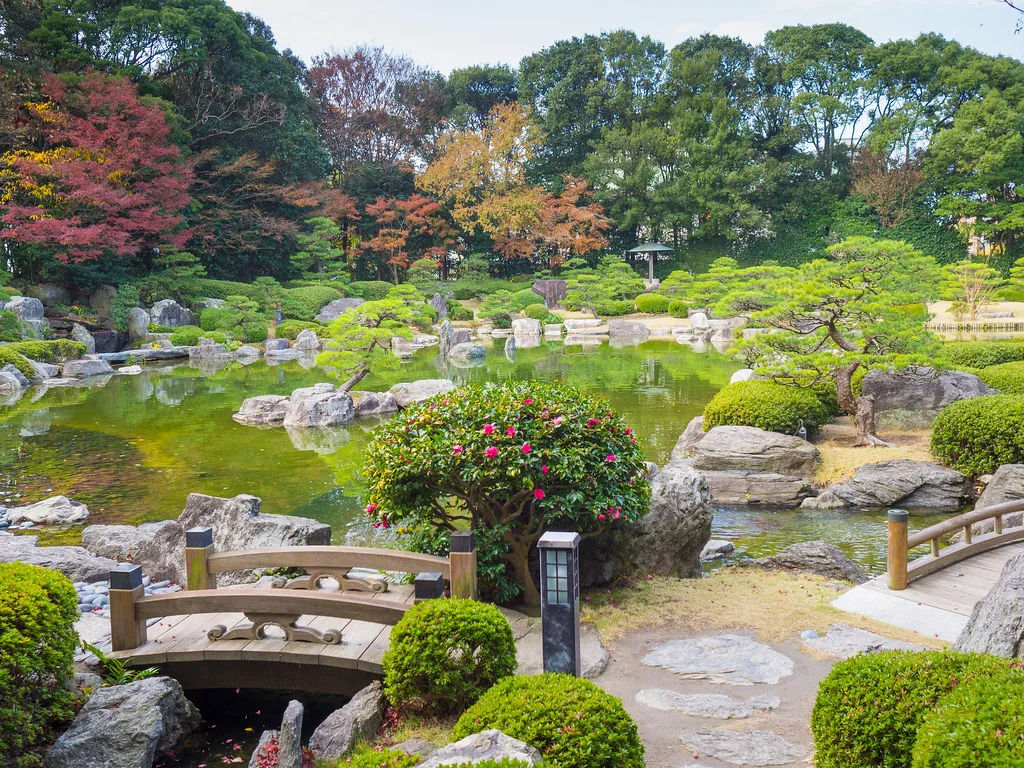
October is Fukuoka's driest month (only ~23 mm rain). It is the best window for the yatai open-air food stalls along Nakasu — mild evenings, no typhoon risk, and stalls are fully open. Arrive after 19:00 when the full row of stalls is set up; most accept cash only, so bring ¥2,000–¥3,000 per person.
How Fukuoka's Weather Compares to Tokyo, Osaka, and Okinawa
Fukuoka sits roughly 880 km southwest of Tokyo and 480 km southwest of Osaka, giving it a noticeably milder winter and an earlier start to summer humidity than either city. Travelers building a multi-city itinerary often underestimate how much this shifts packing and timing decisions.
| City | January Avg High | August Avg High | Winter Character |
|---|---|---|---|
| Fukuoka | 11°C / 52°F | 34°C / 93°F | Cold, windy, rare light snow |
| Tokyo | 10°C / 50°F | 31°C / 88°F | Cold, dry, occasional snow |
| Osaka | 9°C / 48°F | 33°C / 91°F | Cold, damp, light snow possible |
| Naha, Okinawa | 19°C / 66°F | 32°C / 90°F | Mild, no real winter |
The temperature gap narrows sharply in summer: Fukuoka's August heat is close to Osaka's and hotter than Tokyo's, so a Fukuoka-to-Tokyo summer itinerary brings little relief from the heat. Fukuoka's Tsuyu rainy season also tends to arrive three to five days earlier than Tokyo's, typically in the first week of June rather than the second, which matters for trips straddling both cities in early June.
For a Kyushu-to-Okinawa itinerary, expect a substantial jump in humidity and warmth at any time of year — Naha's coolest winter days are still warmer than Fukuoka's mild spring afternoons.
Humidity in Fukuoka by Month
Relative humidity stays elevated year-round in Fukuoka — the city's coastal position on a sheltered bay means it rarely drops below 63% even in the driest winter months. July peaks at around 76% relative humidity, making it the stickiest month. The combination of 33°C heat and 76% humidity produces a heat index well above the thermometer reading; this is when heat exhaustion becomes a real risk for visitors not accustomed to Japanese summers.
The Tsuyu rainy season (typically early June through mid-July) brings the sharpest rise in humidity. Moisture levels make the summer air feel heavy and clothing takes longer to dry. Quick-dry fabrics, a portable fan, and electrolyte tablets are practical preparations. Indoor attractions — the Fukuoka City Museum, Canal City shopping complex, and air-conditioned covered arcades in Tenjin — become welcome midday refuges.
Autumn sees a secondary rainy period called Akisame in September, but humidity falls quickly through October and November. Winter air is relatively dry, which makes the cold feel sharper on exposed skin but more tolerable for extended sightseeing than humid summer heat. Check the cherry blossom calendar for April humidity forecasts during sakura season when warm-wet days can accelerate petal drop.
What to Pack by Season
Packing correctly removes the biggest weather-related friction from a Fukuoka trip. Spring (March–May) needs layers: a light down or synthetic jacket for mornings, a breathable shirt for midday, and a collapsible umbrella for April showers. Good walking shoes handle the cobbled sections around Fukuoka Castle ruins and Ohori Park without trouble.
Summer (June–August) demands sun protection and moisture management above everything else. UV-protective long sleeves beat sunscreen alone for full-day outdoor plans. A quality compact umbrella doubles as a parasol — you will see locals using theirs for sun not just rain. Breathable linen or quick-dry synthetic fabrics outperform cotton, which stays damp against skin for hours in high humidity.
Autumn (September–November) is the most packing-forgiving season. Light layers that can be added or removed handle the swing from warm September afternoons to cool November evenings. A mid-weight jacket is sufficient through October; add a down layer for November evenings. Winter (December–February) needs a proper down jacket, thermal base layers, gloves, and a muffler — the sea wind amplifies chill significantly after dark.
- Spring: light jacket, collapsible umbrella, comfortable walking shoes for flower parks
- Summer: UV shirt, compact umbrella-parasol, quick-dry fabrics, electrolyte tablets
- Autumn: packable mid-layer, light waterproof for September typhoon risk
- Winter: down jacket, thermal underlayers, gloves, muffler for sea-wind evenings
For related Fukuoka planning, see our Fukuoka Neighborhoods Guide Where To Go Travel Guide and How Many Days in Fukuoka: 13 Essential Planning Tips guides.
Frequently Asked Questions
Does it snow in Fukuoka during the winter?
Snow is rare in Fukuoka and usually melts quickly. You might see light flurries in January or February. Significant accumulation almost never happens in the city center.
Is Fukuoka warmer than Tokyo throughout the year?
Fukuoka is generally slightly warmer than Tokyo due to its southern location. Summer humidity is often more intense here. Winter temperatures stay a few degrees higher on average.
When is the cheapest month to visit Fukuoka?
January is typically the cheapest month for travel to Fukuoka. Flight and hotel prices drop after the New Year holidays. You will find the fewest crowds at major attractions.
Fukuoka rewards visitors in every season, but the weather shapes which experiences are actually enjoyable versus endured. Spring and autumn deliver the best balance of comfortable temperatures and clear skies. October's near-zero rainfall makes it the statistical winner for outdoor plans. Summers are intense but festival-rich for those who prepare properly.
Match your timing to your priorities — cherry blossoms, festival energy, budget savings, or clear hiking weather — and Fukuoka will deliver. The climate data here gives you the numbers; the decision is yours.
Free: The Fukuoka Essentials guide
Top things to do, where to stay, a perfect day plan, getting around, and the best time to go — a Fukuoka mini-guide you can take offline.
You might also like


Continue reading
More guides you'll find useful