How Many Days in Fukuoka: 13 Essential Planning Tips
Discover how many days in Fukuoka you need with our 1, 2, and 3-day itineraries. Includes local food tips, neighborhood guides, and must-see shrines. Book your trip now!
On this page
I built this 3-day Fukuoka itinerary after my fourth visit to Kyushu's culinary capital to see the top Fukuoka Attractions in 2026. This guide is designed for first-timer visitors who want to see the best of Kyushu. The city feels much more relaxed than Tokyo or Osaka, making it a great entry point for Japan.
Last refreshed after my Autumn visit, this plan focuses on efficiency and local flavor. You can follow our 3 day itinerary map to find every stop mentioned in this guide. Fukuoka is a compact city where history and modern life blend together seamlessly.
Determining how many days in Fukuoka you need depends on your interest in food and shrines. We found that three days allow for a perfect mix of urban exploration and mountain retreats. The official Fukuoka tourism guide can help you plan additional attractions beyond what we cover here. Expect to eat some of the best ramen in the world while wandering through ancient temple grounds.
Is Fukuoka Worth Visiting?
Fukuoka is one of the most underrated cities in Japan, and most travelers who spend time here wish they had allocated more days. It is Japan's seventh-largest city and has a distinct identity that sets it apart from Tokyo and Osaka. The food scene is world-class, the shrines are genuinely ancient, and the pace of life is noticeably slower and more welcoming.
The city is also one of the most accessible in Asia. Fukuoka Airport sits just five minutes from Hakata Station by subway, making arrival and departure nearly painless. Direct flights connect Fukuoka to Seoul, Shanghai, and several other regional hubs, so it works well as both a standalone destination and a starting point for a wider Kyushu trip.
For short-haul travelers from elsewhere in Asia, Fukuoka punches well above its weight. You get ancient Shinto shrines, a Buddhist temple with a reclining Buddha, world-famous pork-bone ramen, and open-air food stalls — all within a compact city that takes about 25 minutes end-to-end on the subway. If you are debating whether to include it on your Japan itinerary, include it.
How Many Days in Fukuoka Should You Spend?
Two to three days is the right range for most first-time visitors. Two full days covers the Hakata historic core and the western side of the city around Ohori Park and Fukuoka Tower. Three days lets you add a proper day trip to Dazaifu Tenmangu Shrine and Nanzo-in Temple without feeling rushed.
If you only have one day, you can still experience the essential Fukuoka: a morning at Kushida Shrine, lunch at Canal City Hakata's Ramen Stadium, and an evening at the yatai stalls along Nakasu. It is not enough to see everything, but it is enough to understand why people return.
Travelers building a Kyushu road trip often use Fukuoka as their arrival or departure city and budget two days here. Those visiting Japan specifically for the food or wanting to do multiple day trips should aim for four days. A week is never wasted, but three days is the practical sweet spot for the vast majority of visitors in 2026.
1-Day Fukuoka Itinerary: Hakata and Gion
Start at Kushida Shrine by 09:00. The main courtyard is largely empty at that hour and you can spend a proper thirty minutes exploring the festival floats, the Chikara Ishi sumo stones, and the main hall. From there it is a five-minute walk to Tochoji Temple, home to the Great Buddha of Fukuoka and a striking five-story red pagoda.
By midday head to Canal City Hakata, a ten-minute walk from Tochoji. The Ramen Stadium on the fifth floor gathers eight distinct regional ramen styles under one roof, which makes it the most efficient single lunch stop in the city. The free water projection shows run every thirty minutes from 11:00 AM. Allow one hour for lunch and a browse.
Spend the afternoon exploring the Nakasu island backstreets and the small Seiryu Park at the tip of the island, where the Naka River splits in two and gives the park a curious boat-like feel. By 17:00 cross back toward Hakata Station for a short rest before dinner. Return to Nakasu at 19:00 when the yatai stalls light up and the riverfront fills with the smell of grilling chicken and simmering ramen broth.
- 09:00 — Kushida Shrine: free entry, open from 04:00 to 22:00
- 10:00 — Tochoji Temple: free entry, open 09:00 to 17:00
- 12:00 — Ramen Stadium, Canal City (5th floor): 800–1,200 yen per bowl
- 14:00 — Seiryu Park and Nakasu backstreets: free
- 19:00 — Nakasu yatai stalls: 600–1,200 yen per dish, open from 18:00
2-Day Fukuoka Itinerary: Western Fukuoka and Ohori Park
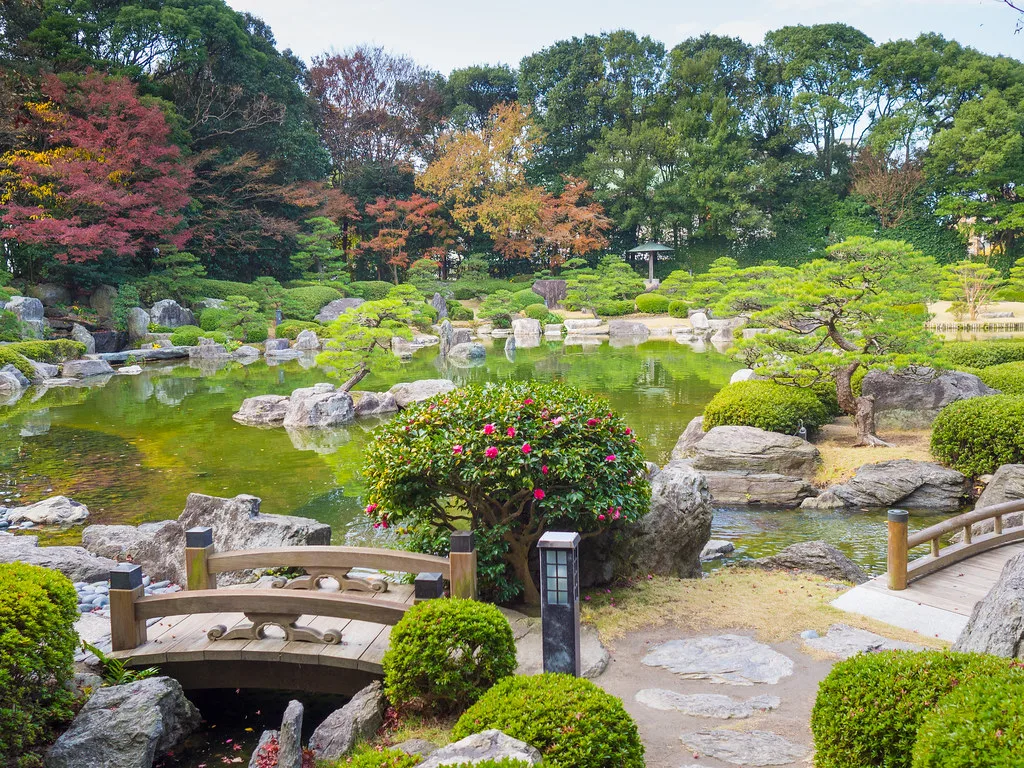
Your second day should focus on the western half of the city, which has a completely different character to Hakata. Begin with a morning walk at Ohori Park, a large landscaped lake park that is one of the most pleasant public spaces in Kyushu. The Fukuoka Castle ruins sit in the adjacent Maizuru Park and are free to explore. In early April the cherry blossoms here are extraordinary.
After the park, walk or take the subway two stops to Fukuoka Tower. The 234-metre tower costs around 800 yen for adults and offers 360-degree views over Hakata Bay and the city. If budget matters, consider Hakata Port Tower instead — it is entirely free, sits near the working harbor, and gives a dramatically different perspective looking out over the container ships and sea rather than the city skyline. Both are worth knowing about; read more in the tower comparison section below.
The afternoon is best spent in Tenjin. The ACROS Fukuoka building is covered in stepped gardens all the way to the roof and you can walk the terraced path for free. Tenjin Chikagai, the underground shopping arcade, runs for several city blocks beneath Watanabe-dori and is one of the best places to browse without fighting the weather. End the day with a Hakata tonkotsu ramen dinner at one of the independent shops around Tenjin station.
- 09:00 — Ohori Park and Castle Ruins: free, subway to Ohori-Koen station
- 11:00 — Fukuoka Tower or Hakata Port Tower: 800 yen / free
- 13:00 — Lunch near Momochi seaside park
- 15:00 — ACROS Fukuoka rooftop garden: free
- 16:00 — Tenjin Chikagai underground mall: free entry
- 19:00 — Tonkotsu ramen dinner in Tenjin
3-Day Fukuoka Itinerary: Dazaifu and Nanzo-in
Day three is for leaving the city. Start at Hakata Station by 09:00 and take the Nishitetsu Tenjin Omuta Line from Nishitetsu-Fukuoka (Tenjin) Station to Dazaifu Station. The journey takes about 40 minutes and costs around 420 yen. Dazaifu Tenmangu Shrine is a ten-minute walk from the station along a lane lined with shops selling Umegae Mochi, a grilled rice cake stuffed with red bean paste that is the mandatory snack for this stop.
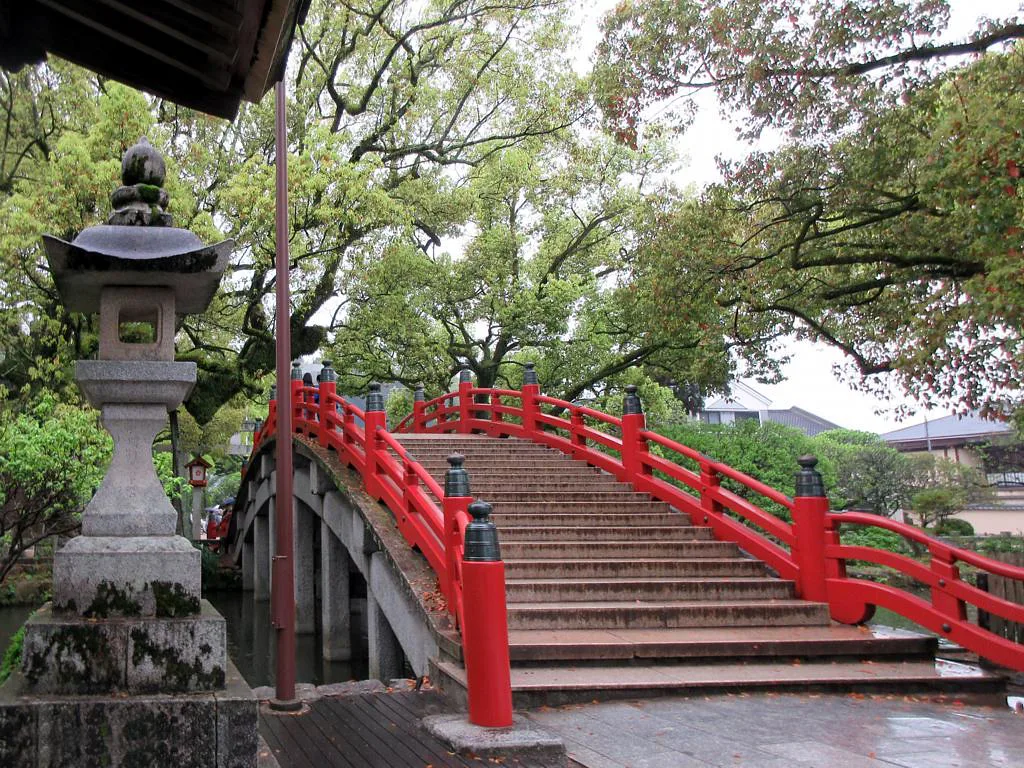
Allow 90 minutes at the shrine. The main hall is genuinely impressive and the grounds extend further than most visitors expect. Cross the three arched bridges representing the past, present, and future, and check whether the plum trees are blooming if you visit between late February and mid-March. From Dazaifu, take a bus back to Hakata Station rather than reversing the train journey, since the Nishitetsu bus (route labeled 都市高速 toward Hakata) drops you off in about 30 minutes and saves backtracking.
The afternoon belongs to Nanzo-in Temple. Take the JR Sasaguri Line from Hakata Station to Kidonanzoin-Mae Station, a 20-minute ride. Reclining Buddhas are extremely rare in Japan — most temples have standing or seated figures — and the one at Nanzo-in is one of the largest bronze reclining Buddhas in the world at 41 metres long. Entry is free and the grounds close at 17:00. The wooded hillside setting is peaceful enough to make the short journey feel very worthwhile. Finish with a farewell ramen dinner at the depachika food hall inside Hakata Station.
- 09:00 — Nishitetsu-Fukuoka (Tenjin) Station departure toward Dazaifu
- 09:45 — Dazaifu Tenmangu Shrine: free entry, buy Umegae Mochi on the approach lane
- 11:30 — Bus back to Hakata Station (route 都市高速, ~30 min, ~310 yen)
- 13:30 — JR Sasaguri Line from Hakata to Kidonanzoin-Mae (20 min, ~320 yen)
- 14:00 — Nanzo-in Temple: free entry, open until 17:00
- 17:00 — Return to Hakata for farewell ramen at the station depachika
Fukuoka Tower vs. Hakata Port Tower: Which One to Visit
Most visitors default to Fukuoka Tower without knowing a free alternative exists. Hakata Port Tower sits near the working harbor about 15 minutes by bus from Hakata Station and has no entry fee. The two towers give completely different views: Fukuoka Tower at 234 metres looks south and east over the city and mountains, while the Port Tower at 108 metres looks north over the container port, Genkai Sea, and on clear days toward the islands of the strait.
Fukuoka Tower is the better choice if you want the classic city panorama, especially at night when the half-mirror exterior lights up and the observation deck at 123 metres gives a good sense of the urban spread. Buy your tickets online via the Fukuoka Tower E-Tickets page to save a small amount on the walk-up price, which is 800 yen for adults. The tower is open daily from 09:30 to 22:00.
Hakata Port Tower is the better choice on a tight budget or if crowds put you off. Weekends at Fukuoka Tower can generate queues of 20 to 30 minutes. The Port Tower is rarely busy, the harbor industrial backdrop makes for distinctive photographs, and the surrounding area has a local fish market feel that is far less touristic than the Momochi seaside park around Fukuoka Tower. If you want both views, do the Port Tower first in the afternoon and Fukuoka Tower at dusk for the city lights.
Where to Stay in Fukuoka
Deciding Neighborhoods Where to Stay in Fukuoka usually comes down to Hakata versus Tenjin. Hakata is the best choice for those who plan on taking many day trips by train. The Shinkansen, the JR Sasaguri Line to Nanzo-in, and the long-distance Nishitetsu buses all depart from within five minutes of Hakata Station, which makes early departures and heavy luggage much easier to manage.
Tenjin is the heart of the city's fashion, nightlife, and underground shopping scene. Staying in Tenjin makes evenings more convenient, with a wider variety of independent restaurants, bars, and cafes within walking distance. The subway connection to Hakata takes four minutes on the Kuko Line, so you are not sacrificing transport access by choosing this district.
Nakasu is a small island between Hakata and Tenjin that offers great riverfront views and the most direct access to the yatai stalls. It is lively late into the night, which is a feature if you plan evening outings but a drawback if you want quiet mornings. Budget travelers should note that hotel prices in Nakasu tend to run slightly higher than comparable rooms in Hakata given the location premium.
A 2-day subway pass (¥1,000) covers the airport–Hakata–Tenjin corridor and the western Ohori-Koen loop — it pays for itself after just 3 rides. Pick one up at any ticket machine on arrival; IC cards (Suica/ICOCA) work everywhere the pass doesn't, including Nishitetsu trains to Dazaifu (¥420 each way).
Getting Around Fukuoka: Transport Guide
Fukuoka Airport is one of the best-positioned airports in Japan. The Kuko (Airport) Subway Line connects the international and domestic terminals to Hakata Station in 5 minutes and to Tenjin Station in 11 minutes. The single fare is 260 yen and the train runs every 4–6 minutes during the day. There is no need for a taxi or bus unless you have extreme amounts of luggage.
Within the city, the subway covers the three most useful corridors: the Kuko Line running east-west from the airport through Hakata and Tenjin, the Hakozaki Line branching north from Nakasukawabata, and the Nanakuma Line running south from Tenjin. A one-day subway pass costs 660 yen and pays for itself after three single rides. A two-day pass costs 1,000 yen and is well worth it if you are doing Day 2's western circuit.
For Dazaifu, use the Nishitetsu private rail network from Nishitetsu-Fukuoka (Tenjin) Station — not the JR or subway. For Nanzo-in, use the JR Sasaguri Line from Hakata Station. These two lines are not covered by the city subway pass, so budget separately for Day 3 transport: approximately 740 yen round trip for Dazaifu and 640 yen round trip for Nanzo-in. An IC card such as Suica or ICOCA works across all these networks and removes the need to buy individual tickets each time.
Fukuoka Food Scene: Yatai Stalls and Tonkotsu Ramen
No visit to this city is complete without trying the world-famous Hakata tonkotsu ramen. The rich pork bone broth is a local specialty that originated right here in Hakata. The noodles are thinner and straighter than most ramen styles in other Japanese cities, and the standard serving comes with chashu pork, spring onions, and a slab of fragrant nori. Most independent shops are open from 11:00 until very late, with many running until 02:00 or 03:00.
Beyond ramen, Fukuoka has two other hot pot dishes worth knowing. Motsunabe is a hearty stew of beef or pork offal with cabbage and chives in a soy-based broth, best ordered at a specialty restaurant in Tenjin on a cold evening. Mizutaki is a lighter chicken hot pot served with ponzu dipping sauce — more expensive than ramen, but lunch sets at specialist restaurants bring the cost down considerably.
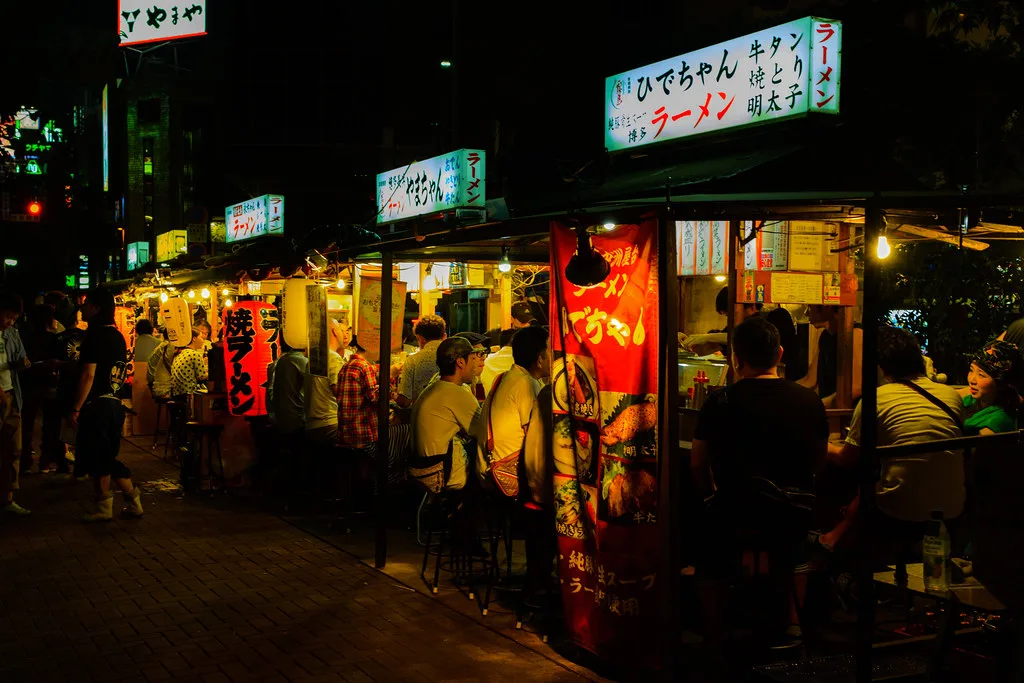
The yatai stalls are the most iconic part of the local dining culture. Most stalls open around 18:00 and stay busy until well past midnight. The highest concentration is along the Naka River in Nakasu, though smaller clusters exist near Tenjin and Nagahama. Arrive at opening time for the best seat selection. Each stall usually has a specialty ranging from grilled chicken skewers to oden, and pricing is generally affordable at 600 to 1,200 yen per dish. The atmosphere is informal — you sit at a low counter under a canvas awning, close to other guests, which is exactly the point.
Add an Extra Day: Day-Trip Add-Ons
If you have more time, consider following a 5-day Fukuoka itinerary for more depth. The Itoshima Peninsula is one of the best half-day escapes from the city. The Sakurai Futamigaura Shrine with its two connected rocks standing in the sea is widely photographed and best reached by bus from Hakata Bus Terminal in about 40 minutes. Fresh seafood restaurants along the coast are good for a late lunch on the way back.
Yanagawa offers a unique experience with its traditional canal boat tours. The town's waterways were built during the feudal era and you glide through them on a flat-bottomed boat while the boatman poles and sings. The train ride from Nishitetsu-Fukuoka (Tenjin) Station takes about 50 minutes. Yufuin is a further but very worthwhile option — a hot spring town two hours away by expressway bus that makes a satisfying full-day excursion.
Check our daily travel costs guide before booking day trips, as full-day excursions to Yufuin or Kumamoto can add 5,000 to 8,000 yen per person when you factor in transport and entry fees. Day tour packages that combine two destinations in a single bus circuit often deliver better value than doing the same two stops independently.
For related Fukuoka planning, see our Fukuoka 3 Day Itinerary Travel Guide and Fukuoka 2 Day Itinerary: The Ultimate Travel Guide guides.
Quick Tips Before You Go to Fukuoka
A few practical details make the itinerary above run more smoothly.
- Get an IC card: a SUGOCA or Nimoca card covers subway, JR, and bus fares across the city and can also be tapped at convenience stores. Buy one at any ticket machine in Hakata Station.
- Best months to visit: late March to May and October to November bring the mildest weather. July and August are hot and humid, and the plum trees at Dazaifu bloom from late February to mid-March.
- Store your luggage early: coin lockers at Hakata Station fill up by mid-morning. The basement level near the Chikushi exit usually has more availability, or use a same-day luggage forwarding counter if you are heading straight to Dazaifu.
- Stay connected: free Wi-Fi covers most of Hakata Station and Canal City, but a pocket Wi-Fi router or eSIM is worth arranging before arrival for the rest of the city.
- Carry cash: most yatai stalls and small ramen shops are cash-only, so keep enough yen on hand rather than relying on cards.
Beyond the Itinerary: More Ways to Experience Fukuoka
Once you have covered the shrines, ramen, and day trips above, a handful of lesser-known spots reward visitors who have already done Fukuoka once or want to fill an extra afternoon.
- See a SoftBank Hawks baseball game: home games run at Fukuoka PayPay Dome roughly March to October. Outfield seats start around 2,000 yen, and the retractable roof means games go ahead even in rain.
- Free rooftop view from Hakata Station: the rooftop garden atop JR Hakata City, known as Tsubame no Mori Hiroba, stays open into the evening and gives a free skyline view without paying either tower's entry fee.
- Get coffee at FUK Coffee: a small specialty coffee bar near Ohori Park pouring single-origin beans, a good stop before or after the morning lake walk.
- Get baked goods at Dacomecca: a bakery known for cream-filled buns; queues form before opening and popular items often sell out by midday.
- Ride the Rail Kitchen Chikugo train: a JR Kyushu dining train departing Hakata Station on selected days, running south through the Chikugo countryside with a multi-course lunch served on board. Reservations open about a month ahead and seats sell out quickly.
None of these need a full extra day on their own, but any one of them slots neatly into a fourth day or a slow morning before an evening flight.
Frequently Asked Questions
Is 2 days enough for Fukuoka?
Two days is enough to see the main city highlights like Kushida Shrine and Ohori Park. You will have time for two evening yatai visits. However, you will likely miss out on major day trips.
Is Fukuoka expensive for tourists?
Fukuoka is generally more affordable than Tokyo or Kyoto. Most shrines are free to enter. You can find excellent ramen for under 1,000 yen and affordable subway passes for daily travel.
What is the best month to visit Fukuoka?
April and October are the best months to visit. The weather is mild and perfect for walking. You can see cherry blossoms in early April or autumn colors in late October.
Fukuoka is a city that rewards those who take the time to explore its diverse neighborhoods. Whether you stay for one day or five, the food and culture will leave a lasting impression. I hope this itinerary helps you plan a memorable journey to the heart of Kyushu.
Remember to pack comfortable walking shoes and a big appetite for your trip. Safe travels as you discover the incredible shrines and street food of this coastal gem.
Free: The Fukuoka Essentials guide
Top things to do, where to stay, a perfect day plan, getting around, and the best time to go — a Fukuoka mini-guide you can take offline.
You might also like


Continue reading
More guides you'll find useful