
Nakamura Tōkichi Honten is one of Uji's oldest surviving tea merchants, established in 1854 on Byobugaura — the river-facing ridge that gave the city its centuries-old reputation as Japan's foremost matcha-producing region.
The honten (head shop) sits close to JR Uji Station on the approach toward Byōdō-in, placing it at the heart of the most-walked stretch in the city. It sells stone-ground Uji matcha and gyokuro sourced from local gardens, alongside tea accessories and gift tins that rank among the finest edible souvenirs in the wider Kyoto area.
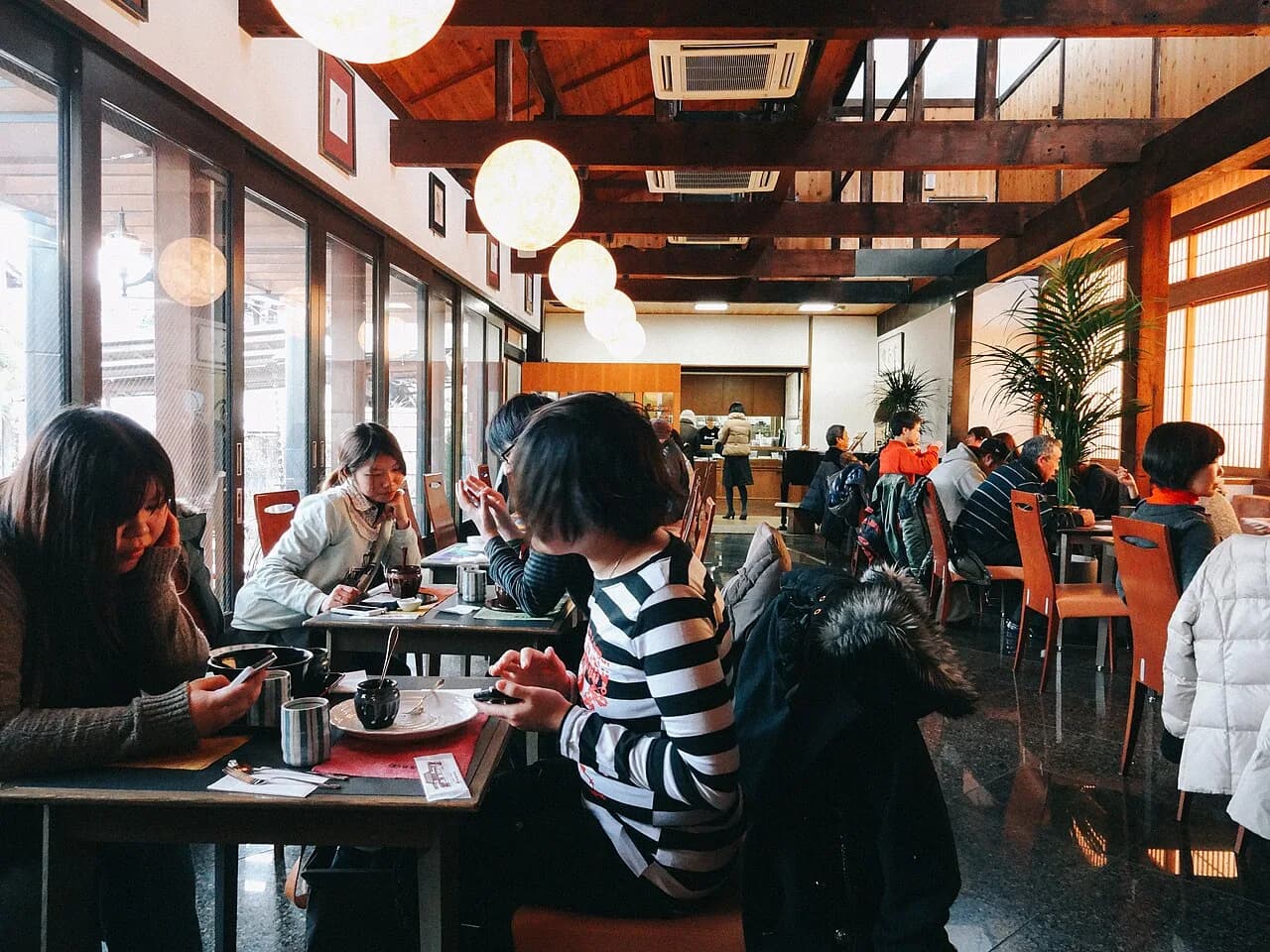
Attached to the shop is a café salon celebrated across the Kansai region for its nama-cha jelly (matcha jelly) parfait and matcha soba noodles. Demand is reliably high — a ticket-queue system manages waiting times at the café entrance, especially at weekends.
Entry to the shop itself is free. Café items are typically priced at ¥800–¥1,500 (2026 estimates). This guide covers what to see, what to order, and how to time your visit to make the most of a stop here.
Why Visit Nakamura Tokichi Honten? Uji's Premier Matcha Merchant
Uji is not simply a place where matcha is sold — it is where the best Japanese green tea has been cultivated and refined for over five centuries. Within that tradition, Nakamura Tōkichi Honten occupies a distinctive place: a working merchant house that has sourced, stone-ground, and sold Uji matcha continuously since the mid-19th century, with no gap for renovation or reinvention. Walking through the shop is less like visiting a heritage attraction and more like entering a trade that never stopped.
Unlike a ticketed attraction, there is no admission fee and no prescribed route. You are free to browse the retail floor at your own pace, examine the range of matcha grades, and spend as much or as little as you choose. This makes Nakamura Tōkichi a natural anchor on any visit to central Uji — combine it with the other sights covered in the things to do in Uji guide for a well-rounded half-day in the city.
The café/salon adds a second compelling reason to linger. The nama-cha jelly parfait — a layered assembly of matcha jelly, azuki bean paste, mochi, and soft-serve matcha ice cream — has developed a reputation well beyond Uji's borders, and the matcha soba is one of the few savoury applications of Uji tea that local insiders recommend without qualification.
Visitors wanting a grounding in the formal rituals of Japanese tea drinking will find the experience here richer if they read our Kyoto tea-ceremony how-to beforehand — Nakamura Tōkichi is a place to taste and buy the finest leaves, not a ceremonial setting.
History and Significance of Nakamura Tōkichi Honten
The honten was founded in 1854, during the closing decades of the Edo period, on the Byobugaura riverbank in central Uji. At the time, the tea gardens rising from the surrounding hillsides were already regarded as producing Japan's highest-grade matcha — a status held since the Muromachi period, when Uji's cultivars came under the patronage of the Ashikaga shogunate and were designated the preferred leaf for the tea ceremony.
What distinguished the Nakamura Tōkichi operation from its founding was a commitment to stone-ground processing. The hallmark of quality Uji matcha is slow grinding: shade-dried tencha leaf is powdered between granite millstones at roughly 30–40 grams per hour, preserving the vivid green colour and amino-acid complexity that high-speed milling destroys. The honten has maintained this standard across its 170-year history, and stone-ground matcha remains the centrepiece of its retail offer today.
Gyokuro — Japan's premium shaded whole-leaf tea — is the shop's other signature line. Grown under shade covers for three to four weeks before harvest to concentrate umami sweetness, Uji gyokuro is considered among the finest produced anywhere in Japan. Visitors wanting to understand how the honten fits into the broader landscape of tea producers and tasting rooms along the Ujigawa will find a thorough overview in the full Uji matcha & tea-house guide.
Getting to Nakamura Tōkichi Honten: Access and Transport
Nakamura Tōkichi Honten is located in central Uji City, Kyoto Prefecture, on the Byobugaura ridge close to the Ujigawa. The most convenient rail access is JR Uji Station (JR Nara Line), served by local and rapid trains from Kyoto Station approximately every 20 minutes — the journey takes around 17 minutes. From JR Uji Station, the honten is a short walk of roughly five to seven minutes heading south along the approach toward Byōdō-in.
Keihan Uji Station (Keihan Uji Line) is a second option for travellers coming from central Osaka or the Keihan Gion-Shijo corridor. From Keihan Uji Station, the honten is approximately a ten-minute walk across the Ujigawa. Both lines are straightforward to use with an IC card (Suica, ICOCA).
There is no dedicated car park at the honten. Visitors arriving by car will find coin-operated parking in the wider Byōdō-in precinct area nearby. The Byobugaura approach is compact and pedestrian-friendly, so parking at a perimeter lot and walking is the practical choice for most visitors.
Highlights of Nakamura Tōkichi Honten: What to See and Taste
The retail floor of the honten stocks an unusually broad selection of stone-ground Uji matcha grades, from everyday culinary powder to ceremonial-quality tins suited for gifting. Gyokuro is sold both loose and in prepackaged sets, and the shop also carries tea accessories — whisks, ceramic bowls, and strainers — sourced from established Kyoto makers. Staff are accustomed to advising overseas visitors on which grade fits their intended use, and English-language product labels are available throughout.
The café salon, entered separately from the main shop, is where queues form. Take a numbered ticket at the entrance and wait to be called — expect 20–40 minutes on weekends and national holidays, considerably less on weekday mornings. The nama-cha jelly parfait is the signature order: a tall glass layered with matcha jelly, sweetened azuki bean paste, mochi rice cake, and a swirl of soft-serve matcha ice cream. The matcha soba — cold buckwheat noodles with a matcha-infused dipping broth — is an excellent savoury option for those who prefer to save appetite for the street ahead.
The honten's immediate neighbourhood rewards a short detour. Byōdō-in, the UNESCO World Heritage temple whose Phoenix Hall graces the ten-yen coin, is a few minutes further along the same approach — combining the two makes a natural and efficient half-day Uji outing. Heading in the other direction, the Uji Bridge — one of Japan's oldest historic bridges — offers one of the finest views of the Ujigawa and the wooded slopes rising above the city.
Planning Your Visit: Hours, Access, and Tips
The retail shop is open approximately 10:00–17:30; the café/salon operates 10:00–17:00, with last orders taken around 16:30 (2026 estimated hours — confirm the current schedule at tokichi.jp/english before travelling). Entry to the shop is free at all times during opening hours.
Café items are priced at approximately ¥800–¥1,500 per order (2026 estimates). Budget at the higher end if ordering both a dessert parfait and a savoury bowl. The numbered ticket system is clearly signposted at the café entrance; collect a ticket and wait nearby or browse the retail floor while your number is called. Arriving at opening — 10:00 or shortly after on a weekday — gives the shortest queues of the day.
The shop floor and café are accessible from street level. The surrounding Byobugaura approach is flat and paved, consistent with the general accessibility of Uji's central pedestrian routes. Weekend afternoons during spring foliage and autumn colour season attract the largest crowds across the whole area — for those who prefer a quieter pace, a weekday morning visit is noticeably calmer. For a full overview of everything the city offers, the Uji attractions hub covers the main sites across both riverbanks.
Frequently Asked Questions
Is entry to Nakamura Tōkichi Honten free?
Yes, the retail shop is entirely free to enter and browse. You only spend money if you choose to purchase matcha, gyokuro, or other products. The café/salon is also open without a cover charge, but individual food and drink items — priced at approximately ¥800–¥1,500 each — are charged separately.
What are the opening hours of Nakamura Tōkichi Honten?
As of 2026, the retail shop is open approximately 10:00–17:30 and the café/salon operates 10:00–17:00, with last orders around 16:30. Hours can vary by season and on public holidays, so confirm the latest schedule at tokichi.jp/english before your visit.
What is the nama-cha jelly parfait?
The nama-cha jelly parfait (sometimes listed as maccha jelly parfait) is the café salon's signature dessert: a tall glass layered with matcha jelly, sweetened azuki bean paste, mochi rice cake, and soft-serve matcha ice cream. It is one of the most in-demand sweets in Uji and routinely draws queues, particularly on weekends and national holidays.
How long should I plan to spend at Nakamura Tōkichi Honten?
Allow 15–20 minutes to browse the retail shop at a relaxed pace. If you intend to eat at the café, add a 20–40 minute queue on busy days plus roughly 30 minutes to eat. A combined shop-and-café visit typically runs 60–90 minutes in total. Most visitors pair the honten with nearby Byōdō-in for a natural half-day Uji outing.
How do I get to Nakamura Tōkichi Honten from Kyoto?
Take the JR Nara Line from Kyoto Station to JR Uji Station (approximately 17 minutes on a rapid service). From the station, walk south for about five to seven minutes along the Byōdō-in approach road. Alternatively, the Keihan Uji Line to Keihan Uji Station involves roughly a ten-minute walk across the Ujigawa once you arrive.
Can I buy Uji matcha to take home from Nakamura Tōkichi Honten?
Yes. The retail floor stocks a wide range of stone-ground Uji matcha grades and gyokuro tins, including gift sets sized for travelling. Staff can advise on the right grade for your purpose — culinary use, whisking in a bowl at home, or gifting — and English-language labels are available on most products throughout the shop.
Nakamura Tōkichi Honten distils the essence of Uji into a single address: a working tea merchant that has sourced, stone-ground, and sold the city's best matcha for 170 years, with a café salon alongside that turns those same leaves into one of Kansai's most photographed desserts. The combination of free entry, genuine heritage, and a tangible product to take home makes it one of the most rewarding stops in Uji for any visitor with an interest in Japanese tea culture.
Whether you visit to browse the tins, queue for a parfait, or pass through en route to Byōdō-in, the honten rewards the detour. For a complete picture of what the city offers across both riverbanks, the Uji attractions hub covers all the main sites in one place.