
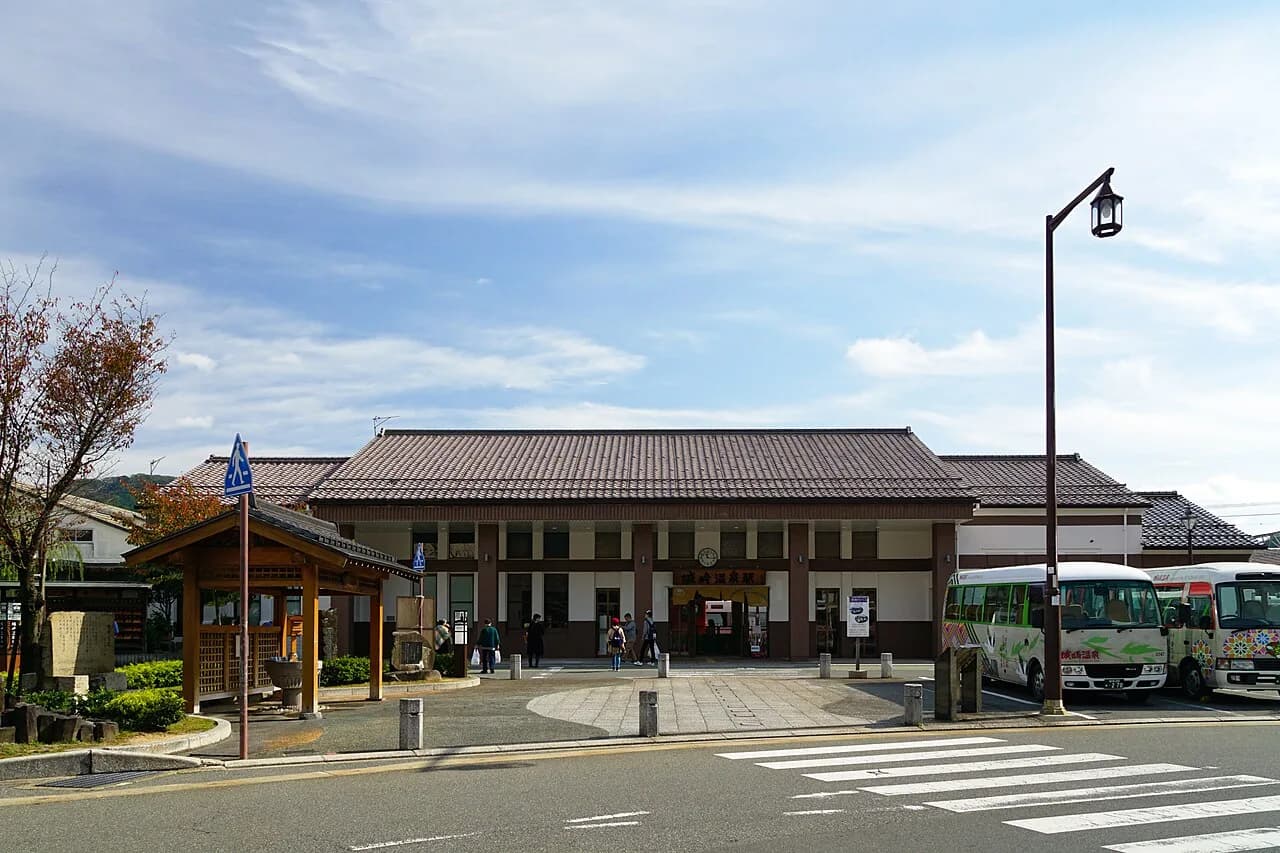
Step off the train at Kinosaki Onsen Station and the transformation from everyday Japan begins at once. The moment the Limited Express doors open, a faint mineral warmth drifts in from the surrounding hills, and the soft clatter of wooden geta sandals carries from the willow-lined street ahead. This modest terminus on the JR San'in Main Line is the sole rail gateway to Kinosaki Onsen — a spa town of seven public bathhouses and more than 1,300 years of healing tradition.
Unlike most Japanese transit stations, Kinosaki Onsen Station is itself a first experience. A free foot-bath (ashiyu) sits on the forecourt, and a staffed tourist information centre inside provides English-language maps, bathhouse schedules, and ryokan guidance — everything you need to orientate a visit in 2026. The grandest of the seven public bathhouses, Satono-yu, stands directly beside the station exit.
This guide covers the station's facilities, how to arrive from Kyoto and Osaka on services fully covered by the Japan Rail Pass, and what to expect on the short walk into the onsen district itself.
Why Visit Kinosaki Onsen Station? The Spa Town's Threshold
Kinosaki Onsen Station matters not because it is architecturally grand — it is, in fact, pleasingly modest — but because it marks the precise threshold between the modern rail network and one of Japan's most intact traditional onsen districts. Arriving here feels qualitatively different from arriving at most destinations: the town begins immediately, with no urban buffer zone to navigate.
The free ashiyu foot-bath on the station forecourt sets the tone immediately. Sitting beneath the eaves with your feet in warm mineral water while other passengers collect their overnight bags captures, in miniature, exactly what makes Kinosaki Onsen exceptional among Japan's spa resorts. It is an inclusive civic gesture — the bathing culture extended right to the platform exit.
The tourist information centre inside the station stocks the official bathhouse circuit map, current soto-yu opening schedules, and seasonal event information in English and Japanese. Consulting the centre before heading to your ryokan takes five minutes and can meaningfully improve how you structure the visit. For a full picture of activities beyond the bathhouses, our guide to things to do in Kinosaki Onsen covers the Ropeway, temple walks, morning markets, and the celebrated crab season from November onwards.
History and Significance of Kinosaki Onsen Station
Kinosaki Onsen's origins as a healing resort are traced to the 8th century, when the monk Dochi Shonin is said to have discovered the hot springs after observing a crane bathing its wounded leg in a thermal pool. For over a millennium the town grew as a refuge for the ailing and the spiritually seeking — long before the railway ever arrived. The extension of the JR San'in Main Line to the coast transformed the town's reach dramatically, connecting Kinosaki Onsen to Kyoto and Osaka within a few hours and opening the soto-yu circuit to day-trippers and short-stay visitors who could not previously make the journey.
The novelist Shiga Naoya convalesced in Kinosaki Onsen in 1907 after a railway accident in Tokyo — a biographical irony given that the station now delivers millions of visitors to the same mineral springs that restored him. His essay "At Kinosaki" (Kinosaki nite), written during that recovery, permanently linked the town's healing waters to Japan's literary imagination. The station, in a small but real sense, bookends that story: it is both the modern entry point to Kinosaki's ancient tradition and a reminder that the journey itself has always been part of the experience.
Getting to Kinosaki Onsen Station: Access and Transport
Kinosaki Onsen Station is the western terminus of the Limited Express 'Kinosaki', which departs Kyoto Station and travels via Fukuchiyama and the San'in coast, arriving in approximately 2 hours 20 minutes to 2 hours 40 minutes depending on the service. From Osaka (Osaka Station) and Kobe (Shin-Kobe or Sannomiya), the Limited Express 'Kounotori' connects via Fukuchiyama, with a journey time of approximately 2 hours 40 minutes. Both services run multiple times daily and are fully covered by the Japan Rail Pass, making Kinosaki Onsen one of the most accessible traditional onsen destinations for JR Pass holders on the San'in coast. For full routing options and timetable details, see our post on how to get to Kinosaki Onsen from Kyoto and Osaka.
The station has no subway access — it is a surface-level terminus with a modest forecourt. Taxis are available outside and most ryokan will arrange a complimentary pick-up if asked in advance. The willow-lined main street and the first bathhouse (Satono-yu) are within a 5-minute walk straight ahead of the ticket gates. If you are planning a Kinosaki day trip or overnight, the station's coin lockers and tourist information centre make it an efficient base for organising the day on arrival.
Highlights of Kinosaki Onsen Station: What to See and Do
The ashiyu foot-bath on the forecourt is the first highlight, quite literally under the station eaves. These free outdoor thermal baths are fed with the same mineral-rich water as the town's seven public bathhouses and require no ticket or reservation. Remove your shoes, perch on the low edge, and ease your feet into the warm, slightly sulphurous water. It is one of the most genuinely welcoming arrivals in Japanese tourism, and a natural place to check the bathhouse map while planning the day.
Satono-yu stands directly beside the station exit — its castle-tower architecture is immediately photogenic from the forecourt and makes a logical first stop for day visitors holding a bath pass. Guests staying at any registered ryokan in the town typically receive a soto-yu pass included in their accommodation fee, granting unlimited access to all seven bathhouses throughout their stay.
The main willow-lined canal street unfolds ahead from the station within a 5–15 minute flat walk. At the far end of town, the Kinosaki Onsen Ropeway ascends to Onsenji Temple and offers panoramic views of the rooftop cluster below and the Sea of Japan beyond — a 10–15 minute walk from the station. Inside the station building, coin lockers of various sizes handle luggage storage for day-trippers and overnight guests checking in later in the day.
Planning Your Visit: Hours, Access, and Tips
Kinosaki Onsen Station is open daily and free to access as a public transport facility — rail fares apply for arriving or departing by train. The staffed ticket window and the tourist information counter operate approximately 09:00–18:00 (2026 estimate; verify locally before your visit, as hours can vary seasonally). Outside these hours, the station forecourt, foot-bath, and coin lockers remain accessible.
If you are visiting without a ryokan accommodation package, a 1-day public-bath pass allowing unlimited access to all seven soto-yu bathhouses is sold nearby — confirm the current purchase point with the tourist information centre on arrival, as this can change. The individual bathhouses each have one closing day per week on a rotating schedule, so the map issued at the information centre is the most reliable guide for your specific visit date. For a complete Kinosaki itinerary built around the station as your start and end point, our Kinosaki day trip guide provides a structured walk-through of both a day visit and an overnight itinerary.
Frequently Asked Questions
How do I get to Kinosaki Onsen by train from Kyoto?
Take the Limited Express 'Kinosaki' from Kyoto Station direct to Kinosaki Onsen Station on the JR San'in Main Line. The journey takes approximately 2 hours 20 minutes to 2 hours 40 minutes depending on the specific service. The train runs multiple times daily and is fully covered by the Japan Rail Pass. No reservation is required with a JR Pass, though a reserved seat is recommended on busy weekends and holidays.
Is the Japan Rail Pass valid for trains to Kinosaki Onsen Station?
Yes. Both the Limited Express 'Kinosaki' from Kyoto and the Limited Express 'Kounotori' from Osaka and Kobe are JR-operated services and are fully covered by the Japan Rail Pass, including the Limited Express supplement. Kinosaki Onsen is one of the most convenient onsen destinations on the San'in coast for JR Pass holders.
Are there coin lockers at Kinosaki Onsen Station?
Yes, coin lockers of various sizes are available inside the station building. This is particularly useful for day-trippers who want to explore the town unburdened by luggage, or for overnight guests arriving before their ryokan's check-in time. Availability of large-size lockers can be limited on busy weekends, so arrive early if you are carrying large bags.
Is there a free foot-bath at Kinosaki Onsen Station?
Yes. A free ashiyu (foot-bath) fed with the same mineral-rich hot-spring water as the town's public bathhouses is located on the station forecourt. There is no charge and no time limit. It is a popular introduction to the soto-yu bathing culture of Kinosaki Onsen and a natural first stop while consulting your bathhouse map after arrival.
Where can I buy a Kinosaki Onsen all-bathhouse day pass?
A 1-day pass granting unlimited access to all seven public bathhouses (soto-yu) is sold at locations near the station — confirm the current sales point with the tourist information centre inside the station building on arrival, as this can change. Guests staying at a registered ryokan typically receive a pass as part of their accommodation package. Individual bathhouse admission is also available if you only plan to visit one or two.
How far is the ryokan district from the station?
The willow-lined canal street and most ryokan are a flat 5–15 minute walk straight ahead from the station exit. Satono-yu bathhouse stands immediately beside the station. Many ryokan offer a complimentary pick-up service from the station if arranged in advance — ask when booking. The entire town is compact and walkable with no hills between the station and the main onsen district.
Kinosaki Onsen Station is more than a transit stop — it is an orchestrated arrival. The forecourt foot-bath, the tourist information centre, the immediate sight of Satono-yu, and the willow-lined street stretching ahead conspire to signal, unmistakably, that you have reached somewhere set apart from the rest of Japan's modern rail network. Few stations in the country earn their place in a visitor's memory quite so quickly.
Whether you are arriving for a day trip on the Limited Express from Kyoto or settling in for two nights of ryokan bathing and local crab, the station is where the Kinosaki experience begins and ends. Use the information centre, soak your feet at the ashiyu, and let the rhythm of the town take over. For everything the station connects you to, start with the Kinosaki Onsen attractions hub and our full guide to things to do in Kinosaki Onsen.