Step back into the Edo period as you wander through the historic streets of Kanazawa's most famous warrior neighborhood. This nagamachi samurai district visitor guide provides everything you need to explore the preserved earthen walls, private residences, and canals that have stood largely unchanged for centuries.
The district sits at the foot of the former Kanazawa Castle, where middle and high-ranking samurai once lived with their families under the rule of the powerful Maeda clan. You can still see the original water canals that served the area while walking the narrow cobblestone lanes.
Visiting this area offers a unique look at the daily lives and architectural preferences of Japan's legendary warrior class. Exploring the various Kanazawa attractions helps you understand the deep history of this castle town.
What Is the Nagamachi Samurai District?
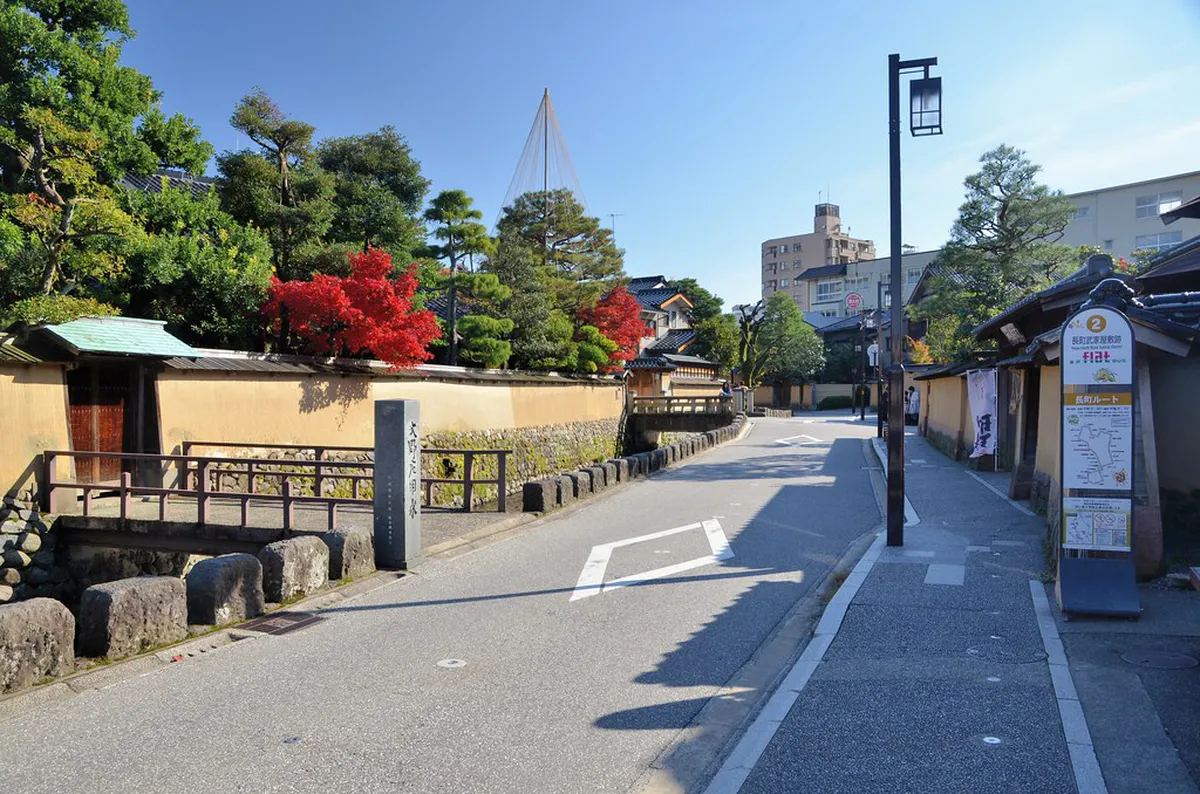
Nagamachi — meaning "long town" — is a historic district in central Kanazawa where samurai families resided during the Edo period (1603–1868). It sits just west of the old Kanazawa Castle and covers a compact area of cobbled streets, earthen walls, entrance gates, and a navigable canal system. Unlike many historic Japanese sites, most of what you see here is original or carefully restored rather than reconstructed from scratch.
The district housed the retainers of the Kaga Domain, the feudal territory governed by the Maeda clan. At its peak, Kanazawa was one of Japan's largest cities — comparable in population to Rome at the time — and the samurai presence was substantial. Nagamachi was specifically home to middle and upper-class warriors, which is why the residences here are notably grander than the simple ashigaru barracks found in other parts of the city.
Crucially, Nagamachi survived both the fires that repeatedly ravaged Edo-era Japanese cities and the destruction of World War II. This makes it one of the few places in Japan where you are genuinely walking among original feudal-era urban fabric, not just a heritage park reconstruction. The entire district is designated as a Traditional Environment Preservation Area under a 1989 Kanazawa city ordinance.
Must-See Nagamachi Attractions
The Nomura-ke Samurai Residence (Nomuraki) is the essential stop for any visitor. The house was home to the Nomura family, who served as samurai for eleven consecutive generations. Inside you will find fusuma screen paintings by artists exclusive to the Kaga Domain, traditional swords and armor, and a second-floor tea room where you can drink matcha while overlooking the garden below. The garden itself holds two Michelin Green Guide stars and was ranked third in Japan by the Journal of Japanese Gardening. Admission is 550 JPY for adults (400 JPY for high school students, 250 JPY for children). Opening hours are 08:30–17:30 from April to September and 08:30–16:30 from October to March. The site closes on December 26–27 and January 1–2.
The Kanazawa City Ashigaru Shiryokan (Ashigaru Museum) provides the essential counterpoint to the grand Nomura house. It preserves two relocated residences of ashigaru — low-ranking foot soldiers who occupied the social tier between samurai and commoners — and admission is free. The buildings were actually inhabited until the Heisei era, so they carry an authenticity that more museum-like venues cannot match. Hours are 09:30–17:00 daily with no regular closing days. Address: 1-9-3 Nagamachi.
The Takada Family House offers a free look at a mid-ranking samurai estate and is particularly useful for the contrast it provides. The Takada residence uses a nagaya-mon (long-house gate) rather than earthen walls, while the attached garden centers on a large pond designed in the chisen-kaiyu-shiki strolling style. Visiting both Nomura-ke and Takada in sequence lets you see concretely how social rank translated into residential scale and design. Hours are 09:30–17:00 daily. Address: 2-6-1 Nagamachi.
Sendake Garden at 1-4-22 Nagamachi completed major renovation works in April 2025, reopening with restored waterfalls and a suikinkutsu — a buried ceramic vessel that produces a bell-like resonance when water drips through it. The pond draws water from the Onosho irrigation canal, which has flowed through the district since the feudal era. The garden is open 09:30–17:00, closed on Mondays, and is one of the most recent additions to the district's public attractions.
| Site | Admission (Adult) | Hours | Free Entry? |
|---|---|---|---|
| Nomura-ke Samurai Residence | ¥550 | 08:30–17:30 (Apr–Sep); 08:30–16:30 (Oct–Mar) | No |
| Ashigaru Shiryokan (Foot-Soldier Museum) | Free | 09:30–17:00 daily | Yes |
| Takada Family House | Free | 09:30–17:00 daily | Yes |
| Sendake Garden | Free | 09:30–17:00 (closed Mon) | Yes |
| Shinise Kinenkan (Kanazawa Shinise Memorial Hall) | ¥100 | 09:30–17:00 daily (last entry 16:30) | No (students/children free) |
Museums, Art, and Culture in Nagamachi
The Shinise Kinenkan (Kanazawa Shinise Memorial Hall) occupies the restored premises of a merchant pharmacy that once served the samurai households of Nagamachi. Admission is 100 JPY for adults and free for students and children — one of the best-value cultural stops in the city. The building contains exhibits on traditional Kanazawa crafts and merchant life, a traditional tea room, and a small Japanese garden. English signage throughout makes it accessible without a guide. Hours are 09:30–17:00 daily (last entry 16:30). Address: 2-2-45 Nagamachi.
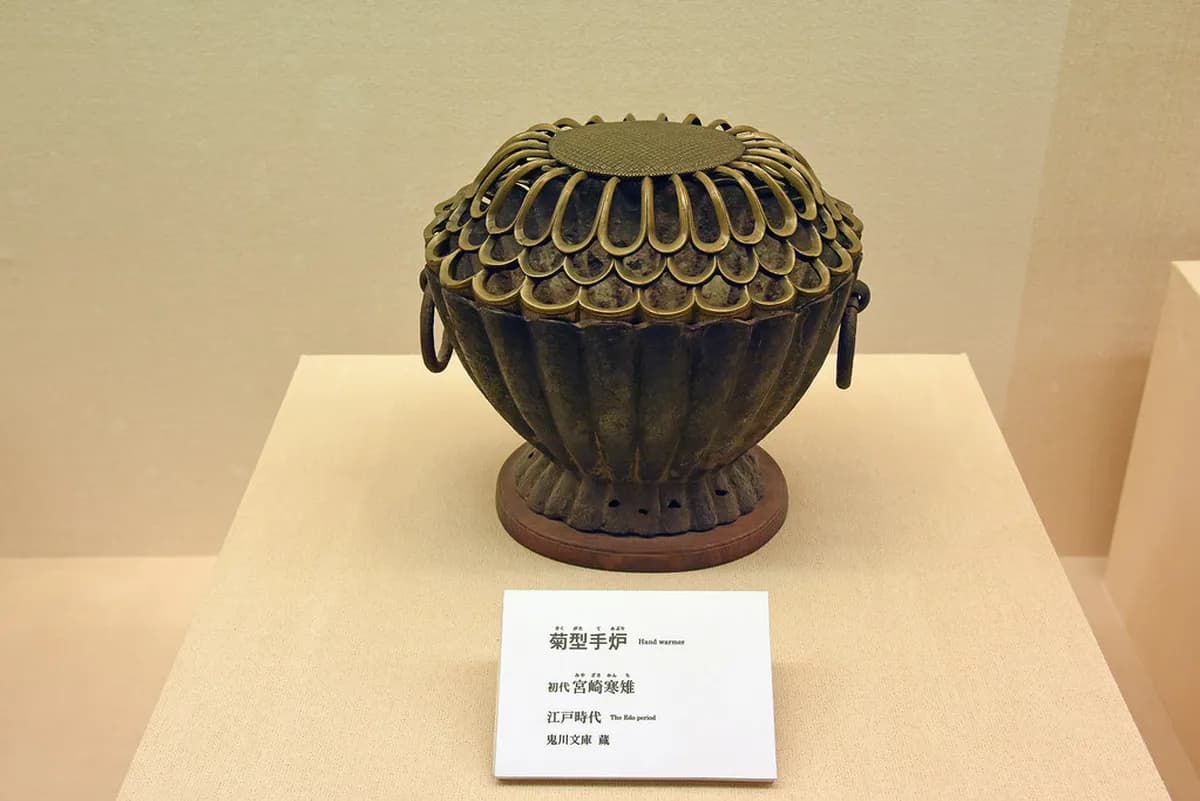
The Maeda Tosanokami-ke Shiryokan Museum stands at the entrance to the district and is an ideal first stop. It holds 9,000 historical artifacts passed down through the Maeda Tosanokami family, who governed Kanazawa as feudal lords for nearly 300 years. Free English audio guides are available at reception. Admission is 310 JPY for adults and 210 JPY for over-65s, with free entry for students and children. Open Tuesday to Sunday 09:30–17:00 (last entry 16:30). Address: 2-10-17 Katamachi.
The Nagamachi Yuzenkan (Kaga Yuzen Silk Center) demonstrates the silk-dyeing craft that is one of Kanazawa's most recognized traditional arts. You can watch artisans apply the complex floral patterns that define Kaga Yuzen, or try a hands-on dyeing experience for a small fee. The craft is closely tied to the patronage of the Kaga Domain samurai culture, making it a natural extension of the district's historical theme. Admission to view is 350 JPY.
The Earthen Walls, Canal Paths, and a Seasonal Winter Ritual
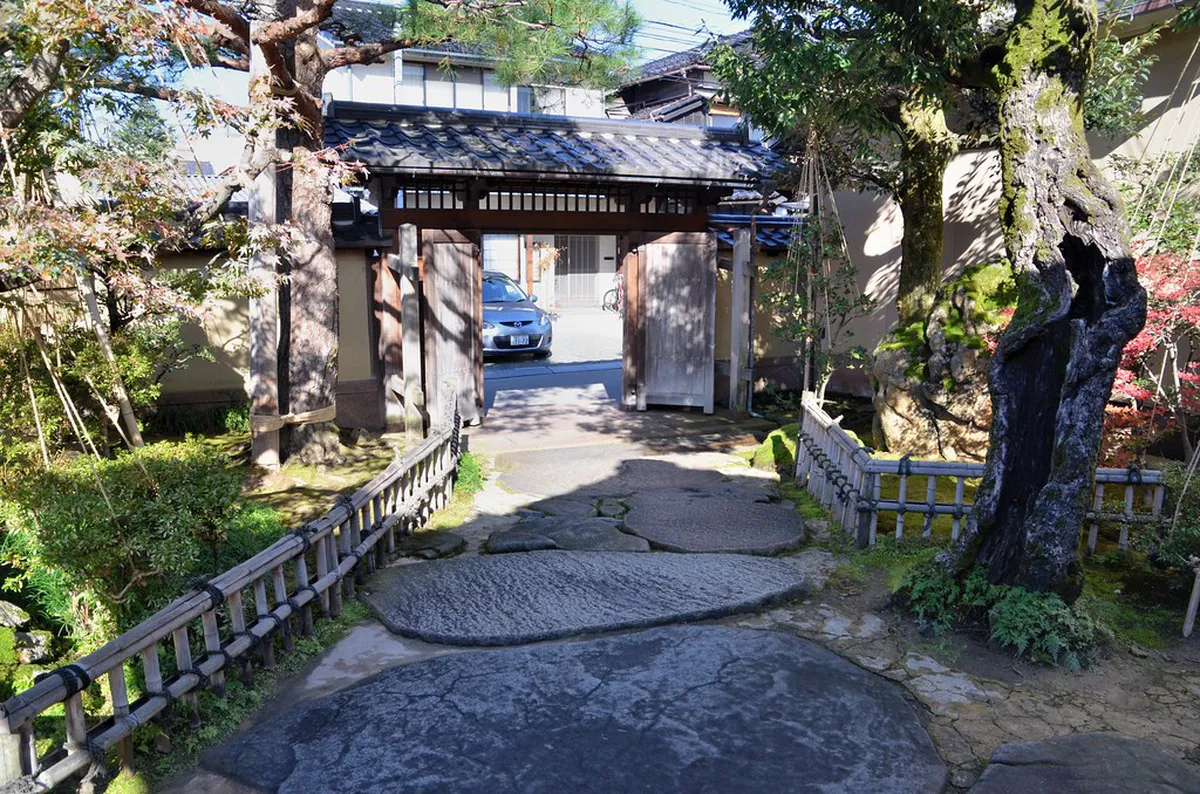
Walking the district itself is free and takes roughly 20 minutes end-to-end at an easy pace — more if you stop to photograph. The defining feature is the tsuchikabe: high earthen walls made of compacted soil mixed with lime, which formed the defensive perimeter of each samurai residence. These are not replicas. They are original Edo-period structures, and Kanazawa City designates their maintenance as a protected cultural activity.
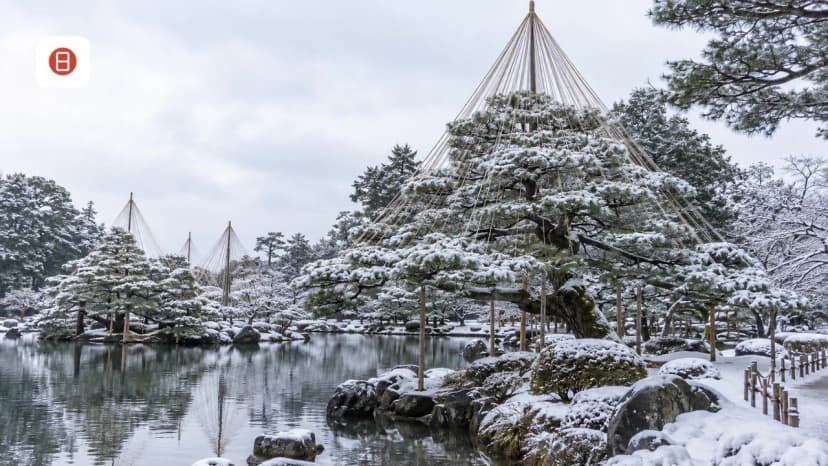
From around November through March, residents and the city council perform the komogake ritual: wrapping the earthen walls in thick straw matting to protect them from frost damage during the Hokuriku winter. The straw coverings go up in mid-November and come down in mid-March, and the sight of the thatched walls against snow makes winter one of the most visually distinctive times to visit. No other samurai district in Japan performs this on such a scale.
Sendake Garden is closed on Mondays, and Nomura-ke closes on December 26–27 and January 1–2. Check before visiting during national holidays or the New Year period to avoid finding gates shut.
The Onosho Canal runs through the heart of the district and is the oldest canal in Kanazawa. It was originally designed both for transport and fire suppression — a vital feature in a town of tightly packed wooden buildings. Today the canal path provides the most photogenic walking route, particularly in early morning before tour groups arrive. The nearby Sai River, which forms the western boundary of the district, offers a broader outdoor walk with views toward the surrounding mountains on clear days.
Family-Friendly and Budget-Friendly Options in Nagamachi
Exploring the winding alleys of Nagamachi is entirely free. You do not need to enter every paid residence to appreciate the historical atmosphere and architecture. The Ashigaru Shiryokan, Takada Family House, and Sendake Garden (when not closed for maintenance) are all free to enter, giving families a full 90-minute experience at zero cost beyond transport.
For a single paid stop, the Nomura-ke residence offers the most concentrated value: a garden, interior museum, tea ceremony room, and matcha service all within one 550 JPY ticket. The Shinise Kinenkan at 100 JPY is the next best value for adults. Children enter the Shinise Kinenkan, Takada House, and Ashigaru Museum for free, making the district genuinely accessible for families on any budget.
Kids often enjoy the interactive elements at the Yuzen Silk Center and the suikinkutsu water sounds at Sendake Garden. Local shops near the main canal sell affordable Kanazawa specialties — gold-leaf soft cream, sweet bean mochi, and roasted grain tea — that make the historical walk more engaging for younger travelers. If you get turned around, the district Rest Pavilion near the center of Nagamachi offers free volunteer guides called Maido-san who can orient you in English or Japanese.
The Ashigaru Shiryokan, Takada Family House, and Sendake Garden all offer free admission. A full 90-minute walk through Nagamachi — including three free sites — costs nothing beyond transport from the station.
How to Get to Nagamachi and Plan Your Visit
From Kanazawa Station (Kenrokuen Exit), board the Kanazawa Castle Town Loop Bus or a Hokuriku Railway Route Bus toward Korinbo. The ride takes about 10 minutes and costs around 220 JPY one-way. Get off at the Korinbo stop and walk five minutes south. Alternatively, the Kanazawa Flat Bus Nagamachi Route drops passengers directly at the Nagamachi Bukeyashiki-ato stop at the edge of the district. If you are coming from Tokyo in 2026, the Hokuriku Shinkansen reaches Kanazawa in roughly 2.5 hours from Tokyo Station.
Arrive before 09:00 to walk the main canal path before tour groups fill the narrow lanes. Most residences open between 08:30 and 09:30. A full visit covering Nomura-ke, Ashigaru Shiryokan, Takada House, and the canal walk takes two to three hours. Add 30–45 minutes for the Shinise Kinenkan or Maeda Tosanokami-ke Shiryokan if you have more time.
Consider combining your Nagamachi visit with a trip to the Higashi Chaya District, Kanazawa's most famous geisha area, which is about 20 minutes away by bus. While Nagamachi feels residential and stoic, the tea districts offer a more lively, commercial atmosphere. Planning both areas in one day gives you a complete picture of Kanazawa's social history — warrior culture in the morning, geisha culture in the afternoon.
Book a Tour of Nagamachi
Booking a guided walking tour enhances your understanding of the subtle architectural details that are easy to walk past unaware. Local guides can point out specific defensive features of the residences — the stepped gate designs, the dog-leg entrance paths — that were deliberate security measures. They also share local legends and stories about the Maeda clan that bring the silent stone walls to life.
English-speaking guides who specialize in the history of the Kaga Domain run half-day historical walking tours that include Nagamachi alongside Omicho Market, Kanazawa Castle Park, Kenrokuen Garden, and the Higashi Chaya District. You can find various Kanazawa activities that include Nagamachi as a primary stop on a full-day itinerary. Having a guide handle the route also frees you to focus entirely on the atmosphere rather than navigation.
Private tours are especially useful if you have specific interests like traditional gardens, samurai weaponry, or craft demonstrations at the Yuzen Silk Center. These personalized experiences allow you to set your own pace and ask detailed questions about Edo-period social hierarchy. Most operators allow online booking several weeks in advance and offer pickup near Kanazawa Station.
Other Historic Districts in Kanazawa and Beyond
Kanazawa's historical streetscapes extend well beyond Nagamachi. The Higashi Chaya District preserves the teahouse architecture of Kanazawa's most prominent entertainment zone; the original "Shima" teahouse building from 1820 is a National Important Cultural Property. Nishi Chaya District offers a quieter alternative to Higashi Chaya, with traditional degoshi lattice-work facades along a 100-meter stretch where geisha culture is still practiced today. Kazue Machi Chaya District beside the Asano River is the smallest of the three chaya areas and is said to come alive after dark, when lantern light and the sound of shamisen from working teahouses drift across the water. All three chaya districts are free to walk and complement Nagamachi naturally on a full-day cultural itinerary.
Outside Kanazawa, the best comparable samurai district is Kakunodate in Akita Prefecture, where six original bukeyashiki are open to the public and weeping cherry trees line the streets. Usuki in Oita Prefecture preserves the Nioza Historical Road, a paved samurai lane that has survived almost entirely intact including its original power-line-free streetscape. Kitsuki, also in Oita, sits between two samurai districts on either side of a central merchant town — an unusual urban layout found nowhere else in Japan.
Kanazawa: A City Where Tradition Lives and Breathes
Kanazawa is famous not only for its samurai history but also for incredible gourmet food and modern art. The city blends the old with the new deliberately — in 1989 it passed a city ordinance protecting traditional environments while simultaneously designating modern urban landscape creation zones. You can visit a 400-year-old residence in the morning and the 21st Century Museum of Contemporary Art in the afternoon, within a ten-minute walk of each other.
The preservation of Nagamachi reflects a city-wide philosophy of protecting cultural capital rather than replacing it with modern development. Local artisans continue practicing Kaga Yuzen silk dyeing, Kutani porcelain, gold-leaf craft, and lacquerware — all crafts that flourished under the patronage of the Maeda clan's samurai court. This living continuity is what separates Kanazawa from heritage sites that preserve only buildings while the surrounding culture has moved on.
Spending time in this district helps you appreciate the quiet discipline that defined the samurai way of life. It serves as a peaceful contrast to the neon lights and crowded stations found in larger Japanese cities. Make sure to include Nagamachi in your 2026 itinerary to experience the true character of Kanazawa.
Frequently Asked Questions
How much time should you plan for a Nagamachi Samurai District visit?
You should plan to spend about two to three hours exploring the district. This allows enough time to visit the Nomura-ke residence and walk the main canal paths. If you enjoy museums or traditional crafts, you might want to add an extra hour for the Yuzen Silk Center.
Is the Nagamachi Samurai District worth visiting in 2026?
Yes, it remains one of the best-preserved samurai neighborhoods in Japan and offers a peaceful historical experience. The district is less crowded than similar areas in Kyoto, making it ideal for 2026 travelers. You can find more details on Kanazawa activities to plan your full trip.
What are the opening hours for the samurai residences?
Most major sites like the Nomura-ke are open from 8:30 AM to 5:30 PM during the peak season. During winter months, some locations may close an hour earlier at 4:30 PM. Always check the official city website for the latest updates on holiday closures and special events.
The Nagamachi Samurai District offers an unparalleled window into the history and architecture of Japan's warrior class. From the stunning gardens of Nomura-ke to the simple authenticity of the Ashigaru Museum, every corner tells a story.
Planning your visit with this nagamachi samurai district visitor guide ensures you see the best highlights while avoiding the crowds. Whether you are a history buff or a casual traveler, this neighborhood will leave a lasting impression.
Take your time and enjoy the quiet atmosphere of the canals and narrow lanes. Kanazawa's commitment to preservation makes this district a must-see destination for anyone traveling through the Ishikawa region in 2026.
For authoritative information, refer to the Nagamachi Samurai District guide on Japan-Guide and Nagamachi Samurai District on Wikipedia.