Visiting the Nomura Family Samurai House offers a rare glimpse into the lifestyle of high-ranking warriors during the Edo period.
This historic residence sits within the atmospheric Nagamachi Samurai District, where mud walls and narrow lanes preserve old Kanazawa.
The house is the only building in Nagamachi that you can enter with a ticket — a compact, deeply focused experience built around an authentic home, garden, and artifact collection.
This nomura family samurai house visitor guide covers everything you need to plan a smooth and rewarding visit in 2026.
Overview: Why Visit the Nomura Family Samurai House?
The Nomura family served the powerful Maeda clan as senior retainers for eleven generations. Their ancestor, Nomura Denbei Nobusada, earned recognition as a loyal officer under Maeda Toshiie — the Kaga domain lord who shaped much of what Kanazawa became. Walking through the rooms reveals how high-ranking samurai balanced military duty with refined artistic taste and complex social rituals.
This residence stands as one of the few places in all of Japan where visitors can walk through an authentic, privately preserved samurai home that has never been handed over to a municipality. A descendant of the family made the deliberate choice to keep it intimate and accessible, which is why the collection feels personal rather than institutional.
The site delivers concentrated samurai culture in under an hour. It is consistently rated higher in visitor satisfaction per yen spent than many larger, more advertised stops on the standard Kanazawa circuit.
Historical Context: The Nomura Family and the Maeda Clan
The Maeda clan ruled the Kaga domain — the wealthiest domain in Japan outside the Tokugawa shogunate — for nearly three centuries during the Edo period. The Nomura family served as senior officials within that structure, managing land, collecting taxes on rice yields, and maintaining the military readiness expected of high-ranking retainers. Their position gave them access to treasures, letters, and artifacts from some of the most consequential figures in late-Sengoku and early-Edo history.
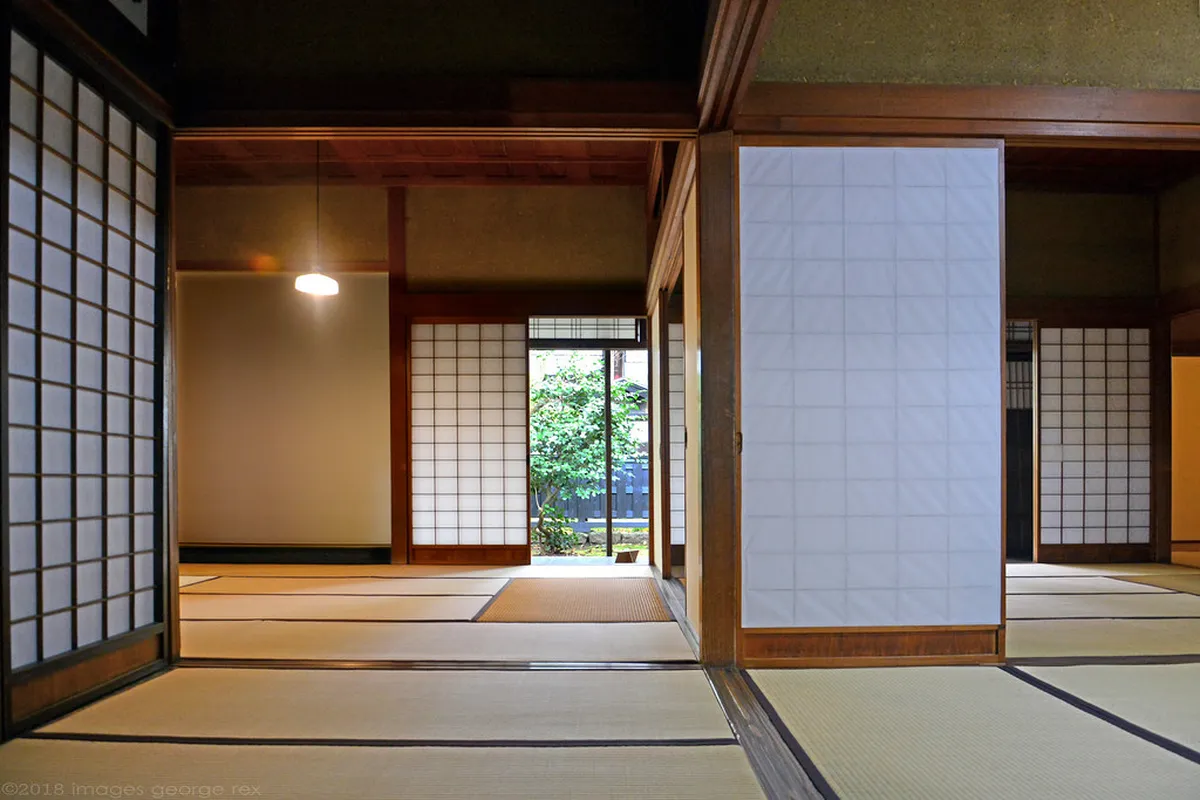
When the feudal system collapsed in the late nineteenth century, many samurai families sold their possessions and land to survive. The Nomura family held on to their swords, letters, and the physical structure of the home through several generations of hardship. A key turning point came when a wealthy shipowner named Kubo Hikobei intervened to save the property from ruin. He moved entire rooms — ceilings, fusuma panels, and structural elements — from his own mansion into the Nomura residence to restore what had deteriorated. That act of preservation is the reason the building's interiors today reflect a quality and completeness that a single family's resources could not have maintained alone.
The house you walk through in 2026 is therefore a layered artifact: part original samurai residence, part merchant-funded restoration, all carrying the weight of real people who lived and made consequential decisions here.
Essential Visitor Info: Opening Hours, Fees, and Access
The Nomura Samurai House is located at 1-3-32 Nagamachi, Kanazawa, Ishikawa 920-0865. The most reliable way to arrive from Kanazawa Station is the Kanazawa Loop Bus (left or right route — both pass Korinbo stop). From Korinbo, it is a five-minute walk through the Nagamachi canal streets to the entrance. The walk itself sets the tone: mud walls, water channels, and stone paths are the preamble to the residence.
- Opening Hours (2026)
- April to September: 08:30 to 17:30
- October to March: 08:30 to 16:30
- Last entry: 30 minutes before closing
- Closed: December 26–27 and January 1–2
- Admission Prices
- Adults: 550 yen
- High school students: 400 yen
- Junior high and elementary students: 250 yen
- Groups of 20 or more: 50 yen discount per person
- Matcha tea in the second-floor room: 300 yen additional
There is no need to book in advance for standard entry. The house accepts walk-ins during opening hours. Large bags and luggage cannot be brought inside, so leave oversized items at a coin locker at Kanazawa Station before heading to Nagamachi. Umbrellas are also not permitted indoors.
| Visitor Type | Admission | Notes |
|---|---|---|
| Adults | ¥550 | — |
| High school students | ¥400 | — |
| Junior high & elementary students | ¥250 | — |
| Groups of 20+ | ¥50 discount per person | Applied to standard price |
| Matcha tea (2F room) | +¥300 | Optional add-on, highly recommended |
No advance booking is needed — walk-ins are welcome during opening hours. Arrive before 10:00 to avoid tour group congestion in the narrow corridors and garden veranda. The best season for the garden is late October–early November when the maple trees turn deep red.
Entering the Residence: Shoes, Etiquette, and Quiet Viewing
You must remove your shoes at the entrance before stepping onto the historic floorboards. Lockers are provided at the entrance for your footwear. Wearing clean socks is strongly recommended — you will be walking on a combination of polished wood corridors and tatami mats throughout the tour.
The etiquette rules here are stricter than at a typical museum, and they are worth knowing in advance so they do not catch you off guard. No touching of artifacts, furniture, or screen doors. No food or drinks. No flash photography. No tripods indoors. Keep voices low — the staff enforce this politely but consistently. The rules exist because the materials are genuinely fragile: 400-year-old painted fusuma screens and cypress wood floors are not reproductions.
Walking slowly and deliberately has a practical benefit beyond courtesy. The floorboards in older Japanese homes often deliberately squeak — a security feature called uguisubari, or nightingale floors — and moving at a considered pace helps you notice architectural details you would otherwise miss. Spend time in doorways looking at the ranma (decorative transoms above the sliding doors) and the layering of gold-leaf paintings on the fusuma panels.
No flash photography, no tripods indoors, no touching of any artifacts or fusuma screens, and no food or drinks inside. Large bags must be left at a coin locker at Kanazawa Station — they cannot be stored at the entrance. The historic structure is not fully wheelchair accessible, and the stairs to the second-floor tea room require mobility.
Architectural Details: Exploring the 400-Year-Old Home
The interior showcases exquisite cypress wood ceilings, paulownia wood floorboards, and intricate carvings that signal the status of the former residents. The fusuma screen doors feature gold-leaf paintings and delicate landscape scenes executed in the Edo-period style. The ranma transoms — carved wooden panels fitted above the sliding doors — are among the most technically precise examples of Edo woodcraft still viewable in a residential setting.
The upper-level audience room is notable for its coffered ceiling, which required skilled craftsmen and expensive materials. The glazed shoji screens in that room are also original — glass was rare and expensive during the Edo period, and their survival intact is unusual. The room was used for receiving guests of high status, and the spatial hierarchy is legible in the materials: better wood, higher ceilings, and more elaborate decoration as you move toward rooms reserved for important visitors.
The Kubo Hikobei restoration added rooms from his own merchant mansion into this structure, which is why certain sections feel slightly grander than what the Nomura family's samurai stipend alone could have produced. Rather than diminishing the authenticity, this layering adds historical depth: you are seeing a conversation between samurai culture and the merchant class that ultimately outlasted it.
The Japanese Garden: A Masterpiece of Calm Structure
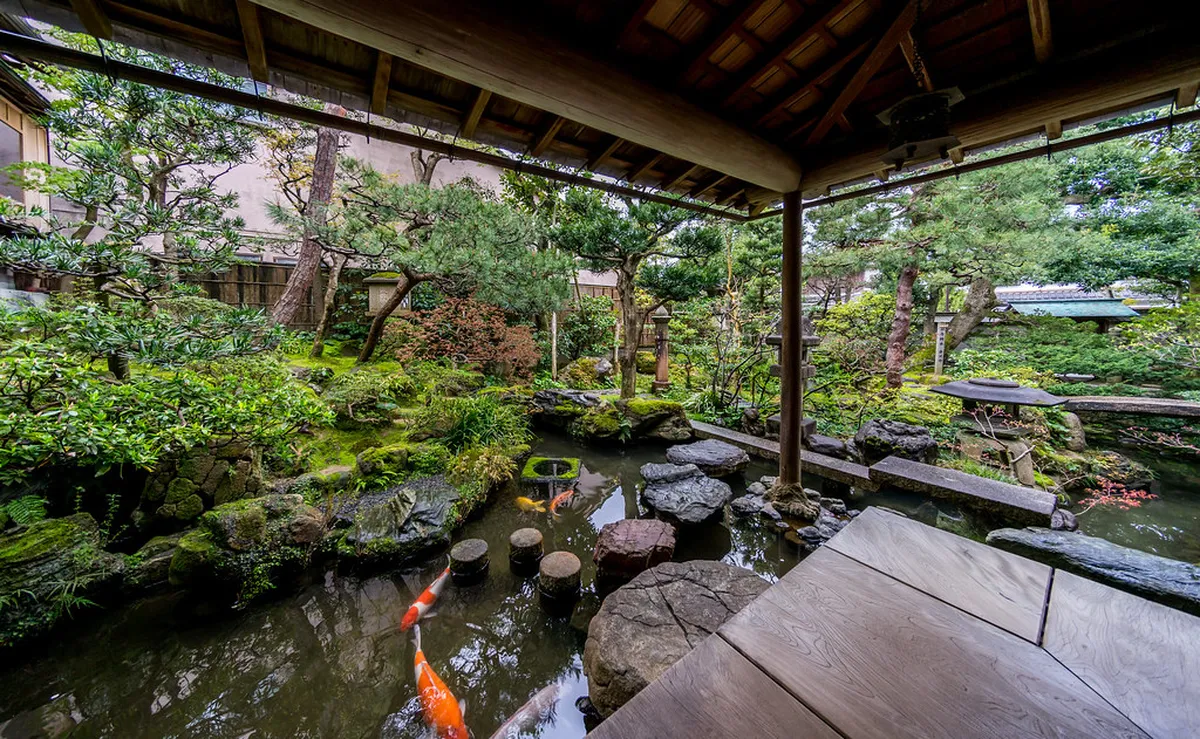
The garden has received a two-star rating from the Michelin Green Guide and has ranked among the top private gardens in Japan by specialized Japanese gardening publications. Its reputation is not based on size — the plot is compact — but on the precision of its composition. A clear stream enters from one side, feeds a koi pond positioned directly against the main veranda, and exits through carefully placed stones. Every element is scaled so the garden reads as larger than it is when viewed from the house.
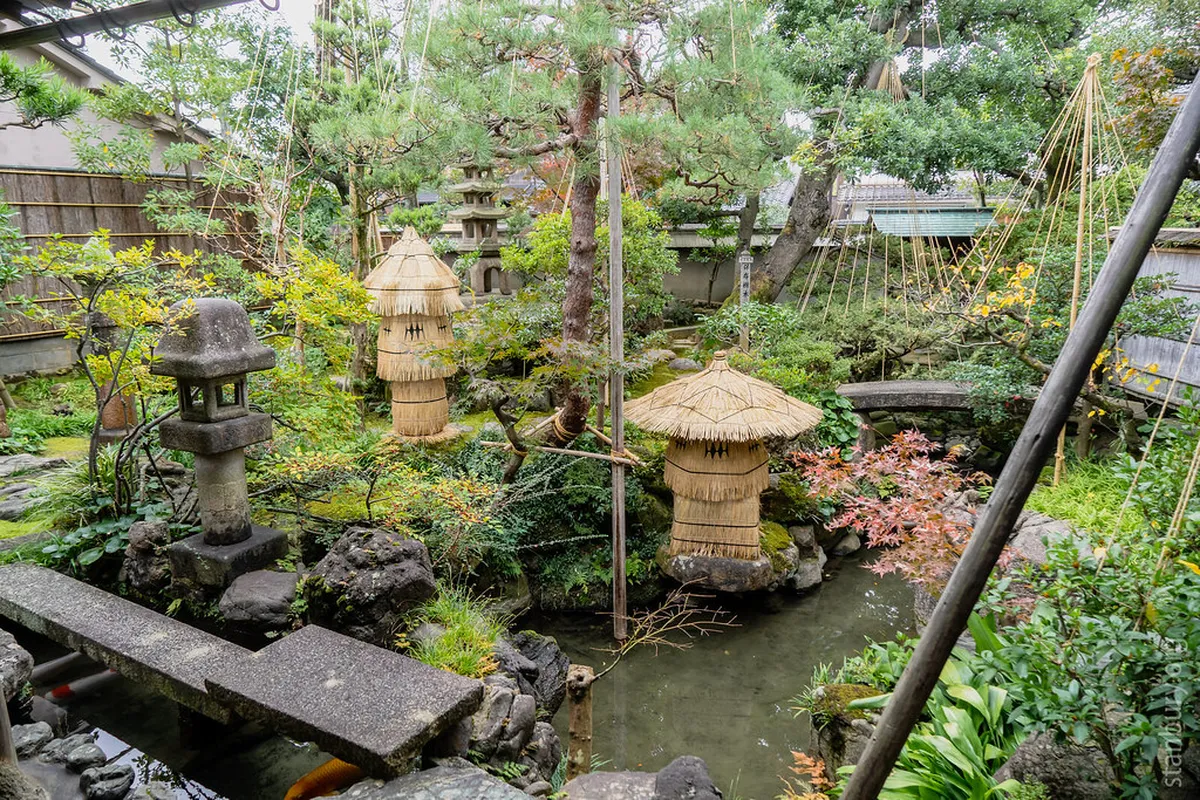
For photography, the best natural light falls on the garden between 09:00 and 11:00, when the angle catches the water surface and the stone lanterns without the high-contrast shadows of midday. Autumn is the premium season: the maple trees turn deep red and orange in late October and early November, and the garden's evergreen structure holds them in a frame that photographs exceptionally well from the veranda. Spring visits offer moss-green freshness and the clearest water in the koi pond after winter.
The garden is not separated from the house experience — it is visible from multiple interior positions, and the transition between sitting on the veranda and stepping into the garden is seamless. This integration is deliberate: in a samurai residence, the garden was not an ornamental afterthought but a functional part of daily life and status display.
Samurai Artifacts: What to See in the Onikawa Bunko
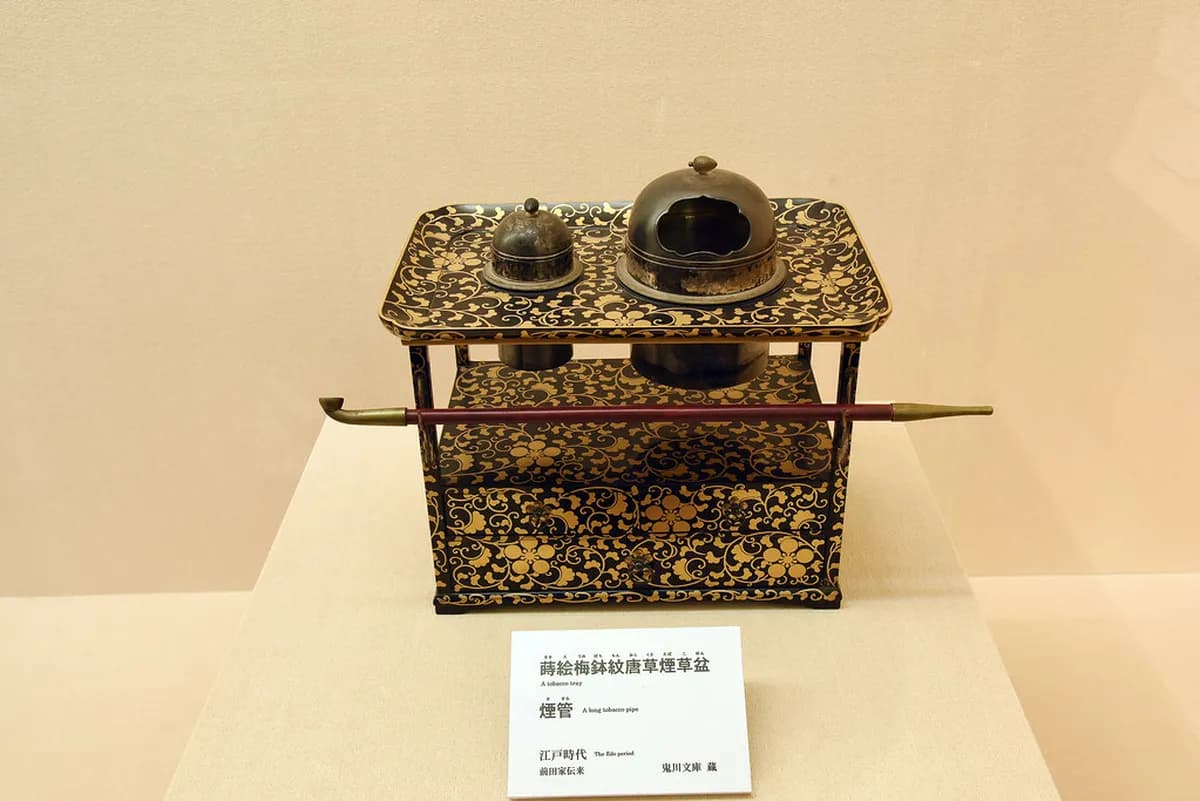
The Onikawa Bunko serves as the family's private archive room, displaying treasures that the Nomura family preserved through the collapse of the feudal system when most samurai households were selling off heirlooms to survive. The collection includes swords, a full suit of armor, ornate stirrups inlaid with silver wire, personal letters, and official documents from the Maeda lords.
Two items reward careful attention. The battle armor of the first Nomura patriarch is compact and functional — made to fit a man of roughly 155 to 160 centimeters, which was average for the period. Its stag-beetle helmet ornament (kuwagata) is notable: where high-ranking samurai typically had outward-splaying horns to signal authority, this one forms a closed circle, which local guides interpret as reflecting the pressure and uncertainty of a retainer fighting to prove his worth from a lower rank. The second item to seek out is the naginata — a long-handled curved blade traditionally used by samurai women for household defense. Every samurai home kept one, and this example illustrates an aspect of samurai domestic life that most visitors do not expect: women of samurai households were trained fighters, responsible for protecting the home when the men were at war.
The document collection includes a letter from a Sengoku-period warlord expressing gratitude to the Nomura ancestor for battle valor — understated in tone but significant as evidence of how the family earned their status. Official land grants from the Maeda lords are also on display, showing rice yields that defined the family's rank and income within the domain hierarchy.
The Second-Floor Tea Room: Matcha with a View
Paying an additional 300 yen allows you to climb to the second-floor tea room overlooking the garden. This is the single most recommended optional upgrade at this site. The elevated vantage gives you a top-down perspective on the garden layout — the stream path, the koi pond, and the stone arrangement — that is simply not visible from the ground-level veranda. The spatial design of the garden only becomes fully legible from this angle.
The tea is served in the traditional manner on tatami mats, and staff provide a brief orientation for visitors unfamiliar with the etiquette. The service is not elaborate or formal enough to feel intimidating. You receive a bowl of matcha and a small sweet, and you sit for as long as you like. After a morning of walking through Kanazawa, this pause is practically and atmospherically well-timed.
Budget an additional 20 minutes for the tea room on top of the standard 45 to 60-minute tour. The second floor is accessible via stairs but is not wheelchair accessible.
Planning Your Visit: Timing and Nagamachi Neighborhood Tips
Arrive before 10:00 to avoid tour group congestion. The residence is small, and when two or three groups arrive simultaneously, the narrow corridors and garden veranda feel crowded. Weekday mornings in late October and November offer the best combination of autumn foliage and low visitor numbers. Weekends in cherry blossom season (late March to mid-April) are the busiest period.
After finishing the tour, walk north along the Nagamachi canal paths toward Korinbo. The streets here — especially Daidai-machi — preserve the original mud-walled lane character of the samurai district and are worth 20 minutes on foot. The Omicho Market is a 10-minute walk east and makes a natural lunch stop with fresh seafood at reasonable prices.
For a half-day Kanazawa itinerary anchored on this part of Kanazawa, combine the Nomura House with a walk through Nagamachi, lunch at Omicho, and an afternoon at Kenrokuen Garden. The three sites form a coherent geographic and thematic loop without requiring any additional transit.
Is it Worth It? Price, Value, and Best-Fit Travelers
At 550 yen (roughly $3.55 at 2026 exchange rates), the Nomura House is one of the best-value cultural stops in Japan. For comparison, Kenrokuen Garden charges 320 yen for entry to a much larger space, but the Nomura House offers something Kenrokuen cannot: access to the interior of a genuine samurai home with its original artifacts still in place. The Takada Family residence nearby is only viewable from the outside at no charge — the Nomura House is the only property in Nagamachi that provides full interior access.
The visit is best suited for travelers who enjoy detail-focused, quiet cultural experiences. It is not a multi-hour attraction, and it deliberately avoids the crowded, interactive format of larger museums. If you move through spaces slowly and read architectural details carefully, the 45-to-60-minute visit will feel full. If you prefer hands-on exhibits or need accessibility accommodations, note that the historic structure is not fully wheelchair accessible and the stairs to the tea room require mobility.
The addition of 300 yen for matcha tea brings the total to 850 yen for the complete experience. At that price, it remains the most concentrated samurai-culture stop in Kanazawa relative to cost and time invested.
Frequently Asked Questions
What is the history of the Nomura Samurai House?
The house belonged to the Nomura family, who served as high-ranking officials for the Maeda clan. After the feudal era ended, the property was preserved and restored by a wealthy merchant. Today, it stands as a premier example of Edo-period architecture in the Kanazawa area.
How much is the entrance fee for Nomura House?
The standard admission fee for adults is 550 yen, while children can enter for a reduced price of 250 yen. If you wish to enjoy matcha tea in the upstairs room, there is an additional cost of 300 yen. These prices remain stable for the 2026 travel season.
Is the Nomura Samurai House wheelchair accessible?
Unfortunately, the house is not fully wheelchair accessible due to its historic nature and many steps. Visitors must remove their shoes and navigate narrow wooden corridors and steep stairs to the tea room. The garden view from the main veranda is accessible if you can manage small steps.
Do you have to take your shoes off at Nomura House?
Yes, all visitors must remove their shoes before entering the wooden interior of the residence. You will be provided with a locker to store your footwear during the tour. Wearing clean socks is recommended to ensure comfort while walking on the historic tatami and wood floors.
How long does it take to visit the Nomura Samurai House?
Most travelers spend between 45 and 60 minutes exploring the house, the museum wing, and the garden. If you choose to have tea on the second floor, you should budget an extra 20 minutes. This allows enough time to see the Kanazawa Castle later in the day.
The Nomura Family Samurai House remains an essential stop for anyone wanting to understand the soul of old Kanazawa.
From the award-winning garden to the authentic armor displays, every corner of the property tells a story of a bygone era.
Follow this nomura family samurai house visitor guide to ensure you capture every detail of this stunning historical site.
Be sure to explore the rest of the Kanazawa City Guide for more tips on making the most of your trip.
To deepen your understanding of Kanazawa's heritage, learn how to experience authentic Kanazawa samurai and geisha traditions across the city.
To verify current details, consult the Nomura Family Samurai House official site and Nomura Family Samurai House on Wikipedia.