The 21st Century Museum of Contemporary Art in Kanazawa stands as one of Japan's most visited art institutions, attracting over one million visitors every year. This guide covers everything you need for 2026: which artworks are free, how to secure a Swimming Pool reservation, exact bus stop numbers, and the practical details most visitors only learn on arrival. Exploring this vibrant city of Kanazawa is much easier when you understand how the museum's two zones actually work before you get there.
Overview and Concept of the 21st Century Museum
The museum opened in 2004 with a mission to create a space that feels like a public park. Unlike traditional galleries, it encourages visitors to touch, sit on, and interact with many of the works on display. The circular design means there is no hierarchy among galleries or entrances — anyone can walk in from any direction at any time. Local residents use the peripheral spaces daily, even when they have no intention of buying an exhibition ticket.
The concept of openness is made physical by floor-to-ceiling glass walls that surround the entire building. Natural light floods the interior corridors, and art pieces are scattered both inside and outside the glass, inviting curiosity from people simply passing by. This approach has made the museum one of the most important cultural institutions in Japan, not only for tourists but for the city's own creative identity. Kanazawa had already earned a reputation through Kenrokuen Garden and its samurai districts; this museum added a contemporary layer that draws a completely different kind of visitor.
The museum holds works created since 1980 that push the boundaries of traditional media and viewer participation. Exhibitions mix permanent installations with rotating temporary shows that change several times each year. Planning your visit around a major temporary exhibition can significantly change the experience, since the paid exhibition zone's content shifts while the free permanent works remain constant.
The Swimming Pool and Must-See Permanent Works
Leandro Erlich's "Swimming Pool" is the single most famous installation at the museum. The mechanism is simple but effective: just 10 centimetres of water sits on transparent glass above a "waterless" underground chamber. From the deck above, visitors appear to be standing underwater. From the chamber below, you look up through the water surface at the sky and the people peering down. The experience from underground is genuinely disorienting — the vertical perspective is unlike anything else in the museum.
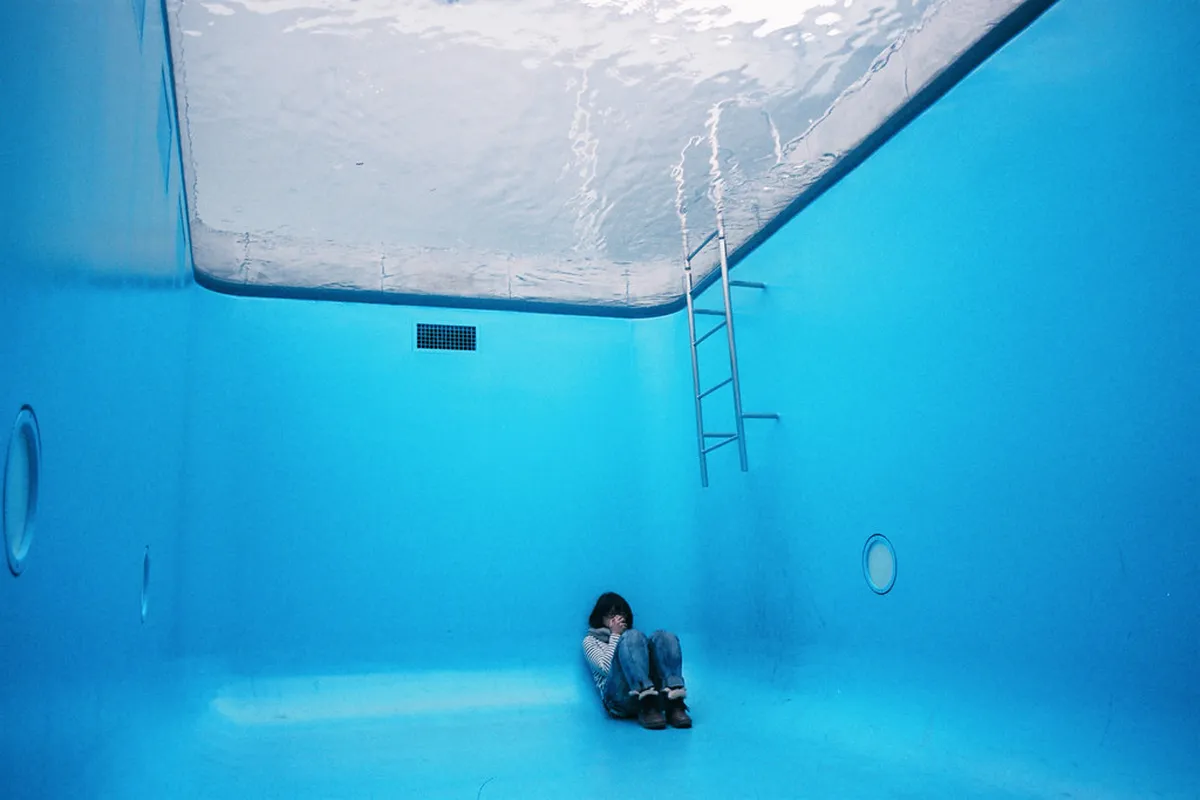
Entering the underground chamber requires an exhibition ticket and a timed reservation. Scan the QR code at the museum entrance to join the digital waiting list on the day of your visit. Slots fill up fast — often before noon on weekends. Arrive when the museum opens at 10:00 and check the reservation system immediately. If the first available slot is hours away, keep checking through the morning for cancellations. Viewing the pool from the deck above is free and requires no reservation.
Swimming Pool underground chamber slots fill before noon on weekends — scan the QR code immediately upon arrival at 10:00 opening. If your first available slot is hours away, check back periodically for cancellations. The Exhibition Zone is closed every Monday (or the following Tuesday if Monday is a national holiday).
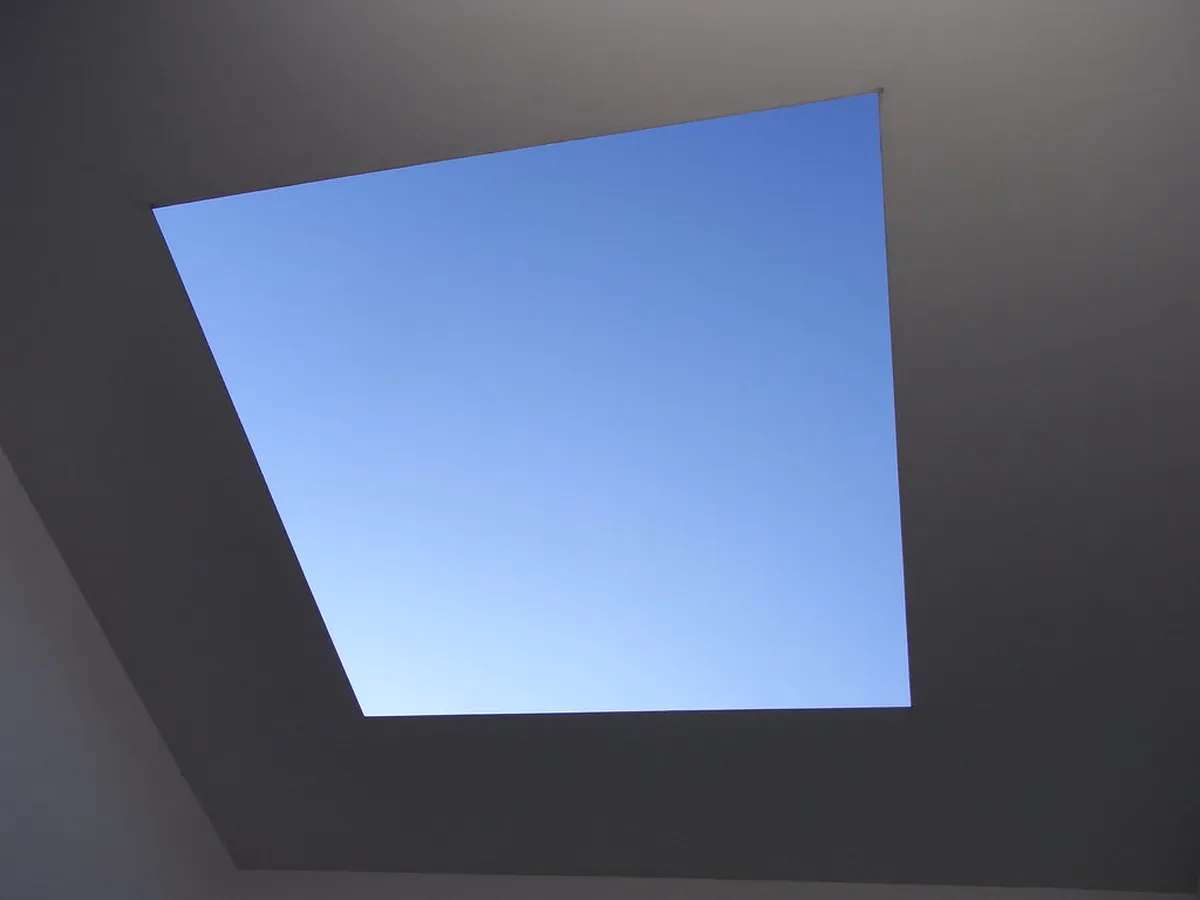
James Turrell's "Blue Planet Sky" is the second must-see permanent work and is located in the free Communication Zone. It is a square room open to the sky through a carefully framed aperture in the ceiling. The experience changes completely depending on the time of day and weather — bright midday light turns the opening a sharp white, while dusk shifts it toward deep blue. No competitor guide gives this work the attention it deserves, but repeat visitors often cite it as the more meditative of the two headline pieces.
Beyond these two works, "The Man Who Measures the Clouds" by Jan Fabre stands on the museum rooftop as a bronze silhouette. The figure was cast from the artist's own body and references a prisoner who, when denied his freedom to conduct research, said he would spend his time measuring clouds. "The Green Bridge" by Patrick Blanc covers an interior glass corridor wall with 100 plant species across a surface just 14 centimetres deep. Both works are accessible without a ticket and are often overlooked by first-time visitors focused on the Swimming Pool.
Architecture by SANAA: The Circular Glass Design
The architectural firm SANAA, founded by Kazuyo Sejima and Ryue Nishizawa, designed the building after winning the commission in 1999. SANAA has since received both the Pritzker Prize and the Royal Gold Medal from the Royal Institute of British Architects. Their vision here was to create a museum with no front and no back, where every side faces the city equally. This breaks down the institutional barrier that most museums project and is the reason the building feels more like a civic square than a gallery.
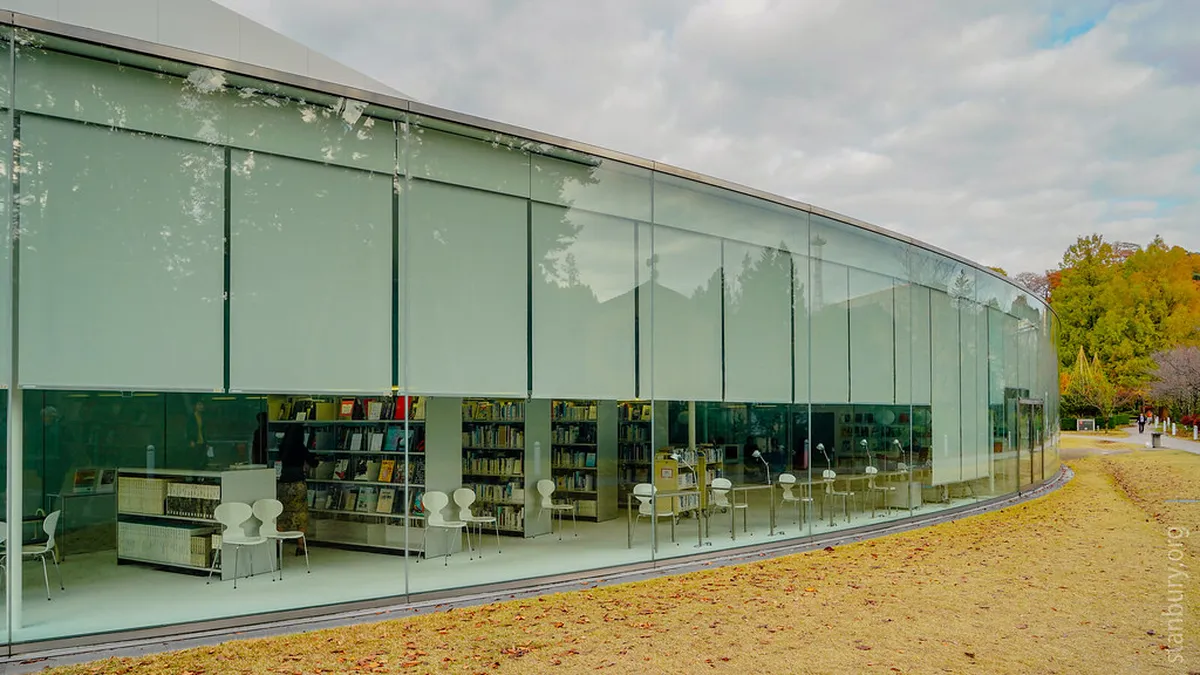
Inside the circle, the galleries are independent boxes of varying sizes and heights. Walking through the museum feels like navigating a small village rather than a single building. Glass corridors between the boxes offer constant views of the surrounding gardens and the city beyond. The design creates a transparency that is rare among high-profile art institutions anywhere in the world.
Photographers will find endless geometric patterns and reflections throughout the day. The building contrasts beautifully with the nearby D.T. Suzuki Museum, which offers a darker, more enclosed atmosphere. Architecture students visit specifically to study how SANAA handled the relationship between natural light, white space, and circulation. The building itself is considered one of the most significant works of 21st-century architecture in Japan.
Ticketing Guide: Free Zone vs. Exhibition Zone
The museum divides into two distinct areas. The Communication Zone (also called the Public Zone) is free and includes the surrounding gardens, the art library, the citizens' gallery, and several permanent installations. You can spend over an hour exploring this area without purchasing a ticket. James Turrell's "Blue Planet Sky," the SANAA "Rabbit Chairs," Florian Claar's speaking-tube installation "Klangfeld Nr. 3 fur Alarena," and the rooftop sculpture by Jan Fabre are all in this free zone. This makes the museum worth visiting even on a strict budget.
The Exhibition Zone requires a paid ticket and covers the temporary gallery rooms plus the interior of the Swimming Pool. Ticket prices for 2026 are typically around 1,400 JPY for adults, though they vary based on the scale of the current featured exhibition. University students pay a reduced rate and should carry a valid student ID. Children under school age enter free. You can buy tickets at the central information desk or at automated machines near the entrance.
- Communication Zone (free): outdoor sculptures, art library, citizens' gallery, Blue Planet Sky, Rabbit Chairs, Klangfeld Nr. 3, The Man Who Measures the Clouds (rooftop), The Green Bridge
- Exhibition Zone (paid, ~1,400 JPY adults): temporary exhibitions, Swimming Pool underground chamber, Color Activity House (varies by current programme)
- Discounts available for university students, seniors, and school groups — bring ID
- Children of school age and under enter the Exhibition Zone free of charge
The free Communication Zone (open daily 09:00–22:00) includes James Turrell's "Blue Planet Sky," the rooftop Jan Fabre sculpture, and the outdoor courtyard artworks — you can spend a full hour here without buying a ticket. James Turrell's room looks completely different at dusk versus midday, so timing your visit around late afternoon is worth it even on a free pass.
Practical Information: Hours, Closures, and Facilities
The museum is located at 1-2-1 Hirosaka, Kanazawa, Ishikawa 920-8509, Japan (Google Maps). The Communication Zone is open daily from 9:00 to 22:00, making it viable for a late evening walk when the city is quieter. The Exhibition Zone operates 10:00–18:00 Tuesday through Thursday and Sunday, and stays open until 20:00 on Fridays and Saturdays. The Exhibition Zone is closed every Monday; if Monday falls on a national holiday, it closes the following Tuesday instead. Always check the official calendar before visiting during a holiday week.
Photography rules vary between zones. You are generally allowed to take photos in the Communication Zone and of the permanent outdoor installations. Photography is prohibited inside most temporary Exhibition Zone rooms to protect the artists' copyright. Look for red-slash camera icons to identify restricted areas. The Swimming Pool interior is an exception — many visitors are allowed to photograph it from the underground chamber, but confirm the current rule at the ticket desk as it can change by exhibition.
Families will find practical facilities including a nursery room and a dedicated kids' studio for creative activities. The museum is fully wheelchair accessible with wide elevators and ramps throughout the circular layout. Coin lockers are available near the entrance to store bags while you walk the galleries. The on-site cafe Fusion21 serves meals and drinks in a space that reflects the museum's clean aesthetic. On rainy days, the indoor galleries and corridors provide excellent shelter while you explore contemporary art.
Getting There: Access from Kanazawa Station
The Kanazawa Loop Bus is the most convenient option for tourists. Board from platforms 3 or 8 at the East Exit (Kenrokuen Exit) of JR Kanazawa Station. Take the Right Loop (RL9) or the Left Loop (LL8) — both stop at "Hirosaka / 21st Century Museum" (広坂・21世紀美術館), which is immediately outside the museum entrance. The ride takes around 10 minutes and costs 200 JPY per journey. A one-day pass for 600 JPY covers unlimited loop bus rides and is worth buying if you plan to visit Kenrokuen and Higashi Chaya on the same day.
The Kenrokuen Shuttle bus also stops at the museum and runs frequently from the station. You can use the Get Transit Info (Google Maps) tool to check live schedules before you depart. Taxis from the station cost approximately 1,200 JPY and take around 5 minutes outside of peak traffic. Walking takes about 30 minutes and passes through the Korinbo shopping district, which is pleasant in good weather. City bicycles are also available for hire and the flat terrain around the museum makes cycling straightforward.
The Hirosaka Art Block: Extending Your Visit
One planning angle that no standard guide covers: the address directly next door to the museum — 1-1-52 Hirosaka — is home to KAMU KANAZAWA, a private contemporary art museum that opened in 2020. KAMU operates a "touring museum" model where visitors buy a ticket at its central space and then walk a printed map to six satellite art spaces scattered across the city. The centrepiece work is Leandro Erlich's "INFINITE STAIRCASE," a different commission from the same artist whose Swimming Pool you just visited. For visitors who connect strongly with Erlich's illusionist approach, seeing both works on the same day in the same neighbourhood offers a rare opportunity to compare two commissions by one artist across different scales and contexts.
KAMU is open 11:00–18:00, closed Mondays (open if Monday is a holiday). It sits roughly 150 metres from the 21st Century Museum's north entrance. Pairing both institutions adds 60–90 minutes to your day and requires no additional transport. This makes the Hirosaka block one of the densest contemporary art corridors in Japan outside Tokyo.
Combining Your Visit with Nearby Kanazawa Landmarks
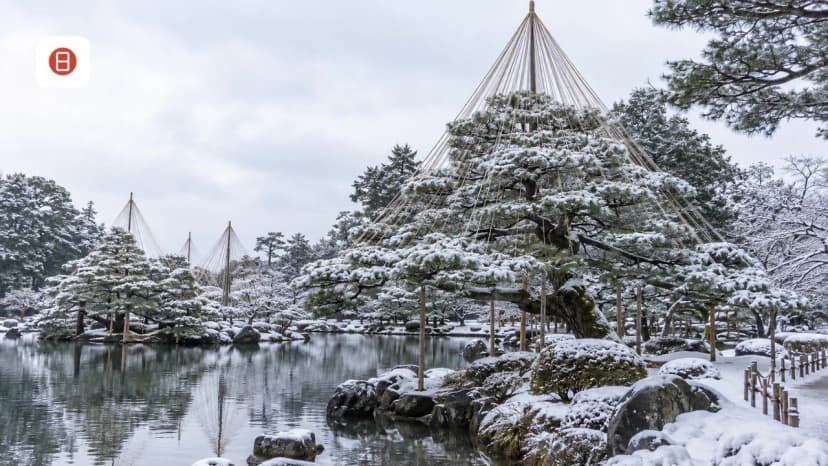
The museum sits within a five-minute walk of several other major Kanazawa attractions. The famous Kenrokuen Garden is directly adjacent — you can be standing among the cherry trees or snow-laden pine branches within minutes of leaving the museum exit. The contrast between the historic landscape garden and the glass circle of SANAA's building is one of the most visually striking juxtapositions in the city.
The historic Kanazawa Castle is across the street from the garden. Exploring the castle grounds gives context for the samurai history of Ishikawa Prefecture that shaped Kanazawa for three centuries. You can cover all three major sites — museum, garden, castle — in a single day without any additional transport if you start at the museum when it opens at 10:00. This central cluster of landmarks makes the Hirosaka area the natural hub of any Kanazawa sightseeing trip, and pairs naturally with a broader one-day Kanazawa itinerary.
For those interested in more art, the Ishikawa Prefectural Museum of Art is located nearby within the park. The Nagamachi Samurai District is also within walking distance and offers well-preserved earthen walls and historic townhouses. Planning a route that starts at the 21st Century Museum, moves through Kenrokuen, and ends in Nagamachi in the afternoon is a popular choice among repeat visitors. This area also has small craft shops and cafes where you can find Kanazawa lacquerware and gold-leaf products to take home.
Frequently Asked Questions
How do I get tickets for the Swimming Pool at the 21st Century Museum?
You must obtain a same-day digital reservation by scanning a QR code at the museum entrance. These slots are limited and often fill up by noon. It is best to arrive early and check the official Kanazawa travel guides for any recent updates to the booking system.
Is the 21st Century Museum of Contemporary Art free?
The Public Zone of the museum is completely free to enter and explore. This includes the outdoor sculptures, the library, and the peripheral glass corridors. However, you must purchase a ticket to enter the specific exhibition galleries or the interior of the Swimming Pool.
How much time do you need at the 21st Century Museum of Contemporary Art?
Most visitors spend between two and three hours exploring the full facility. This allows enough time to see the free public art and one or two of the paid exhibitions. If you plan to eat at the cafe or visit the library, you should budget for half a day.
Is the 21st Century Museum of Contemporary Art wheelchair accessible?
Yes, the museum was designed with accessibility in mind and features a flat, circular layout. There are wide elevators, accessible restrooms, and ramps that allow visitors with mobility aids to reach every gallery. The open design makes it one of the most accessible museums in Japan.
What is the 21st Century Museum of Contemporary Art closed on?
The museum is closed every Monday to the public. If a national holiday falls on a Monday, the museum remains open that day and closes on the following Tuesday instead. Always check the official calendar before visiting during a holiday week to confirm the schedule.
The 21st Century Museum of Contemporary Art is an essential stop for anyone visiting the Ishikawa region. Its unique blend of interactive art, free public access, and transparent architecture offers a refreshing experience unlike traditional sightseeing. After your museum visit, consider exploring the Higashi Chaya District for a taste of old Japan. Following this guide will ensure you make the most of your time at this world-class cultural institution in 2026. For comprehensive planning, review the full list of things to do in Kanazawa to maximize your cultural itinerary.
To verify current details, consult the 21st Century Museum of Contemporary Art official site and 21st Century Museum of Contemporary Art on Wikipedia.