Oyama Shrine stands as a unique spiritual site in the heart of Kanazawa, blending traditional Japanese aesthetics with surprising European architectural influences. This historic landmark honors Lord Maeda Toshiie, the founding father of the powerful Kaga Domain that once ruled this region. Visitors often find themselves captivated by the colorful stained glass windows that crown the unusual three-story main gatehouse known as the Shinmon. Among Kanazawa's many historical landmarks, Oyama Shrine stands out as a must-see. This 2026 visitor guide covers the history, architecture, practical access details, and insider tips for making the most of your time here.
What is Oyama Shrine?
Oyama Shrine, or Oyama Jinja in Japanese, is a Shinto shrine dedicated to Maeda Toshiie, the first lord of the Kaga Domain. The shrine was originally established in 1599 under the name Utatsu Hachimangu, but it was moved to its present location in 1873 and renamed Oyama Shrine. It is also dedicated to Omatsu-no-Kata, Lady Omatsu, Toshiie's wife, who was celebrated for her intelligence and diplomatic skill during his reign.
Today the shrine is one of the most recognized symbols in Kanazawa. Its blend of Shinto tradition with an unmistakably eclectic gate makes it unlike any other shrine in Japan. Entrance to the grounds is free, and the site is open daily from dawn until evening, making it accessible to visitors on any schedule.
The Shinmon Gate: Chinese- and Western-Influenced Kanazawa Symbol
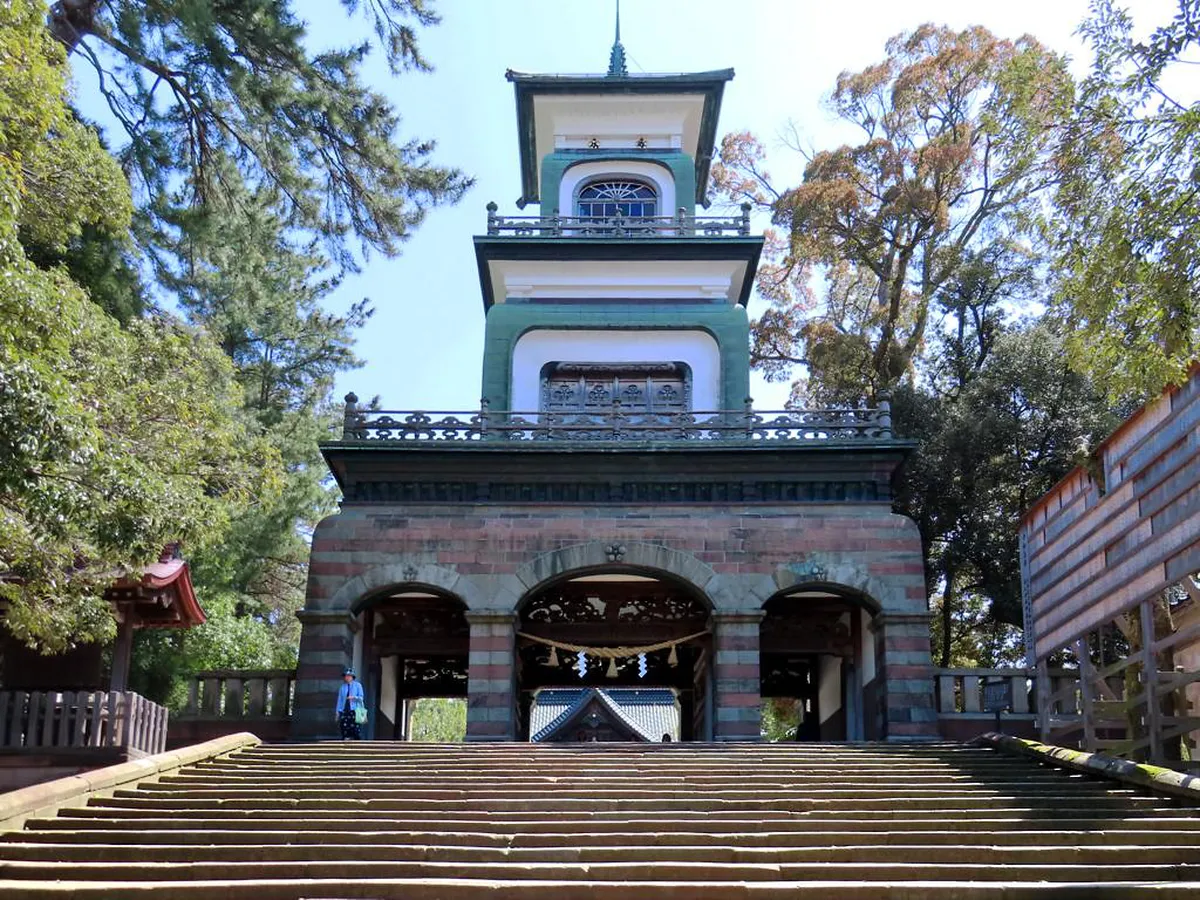
The Shinmon is the defining feature of the shrine and one of the most photographed structures in all of Kanazawa. Built in 1875 and designed with input from a Dutch architect, the gate fuses three distinct styles into one structure. The ground floor is solid stone and brick in a Western Romanesque manner, the middle level carries Chinese-style ornamental carvings, and the third tier is a Japanese-style wood and tile structure topped with Dutch stained glass panels in red and blue.
The stained glass at the top served a practical purpose: the illuminated windows once acted as a lighthouse beacon for ships arriving along the Ishikawa coast. This dual function as religious gate and maritime signal is unique in Japan and is a compelling talking point when you are standing in front of it. The inclusion of a Meiji-era lightning rod at the very apex was a forward-thinking safety measure that underscores just how experimental the design was for 1875 Japan.
For the best photographs, position yourself just inside the shrine grounds looking back at the gate in the late afternoon, when the sun hits the stained glass directly and the colors glow at their most vivid. At night, internal lighting illuminates the panels from behind, creating a softer effect worth seeing if you are passing through the area after dark.
Entrance to the shrine grounds and garden is completely free with no closing days. For the best shot of the stained glass Shinmon gate, arrive in late afternoon when the sun hits the panels directly. Evening visits after 18:00 offer illuminated glass and far fewer crowds.
Oyama Jinja Shrine Grounds and Garden
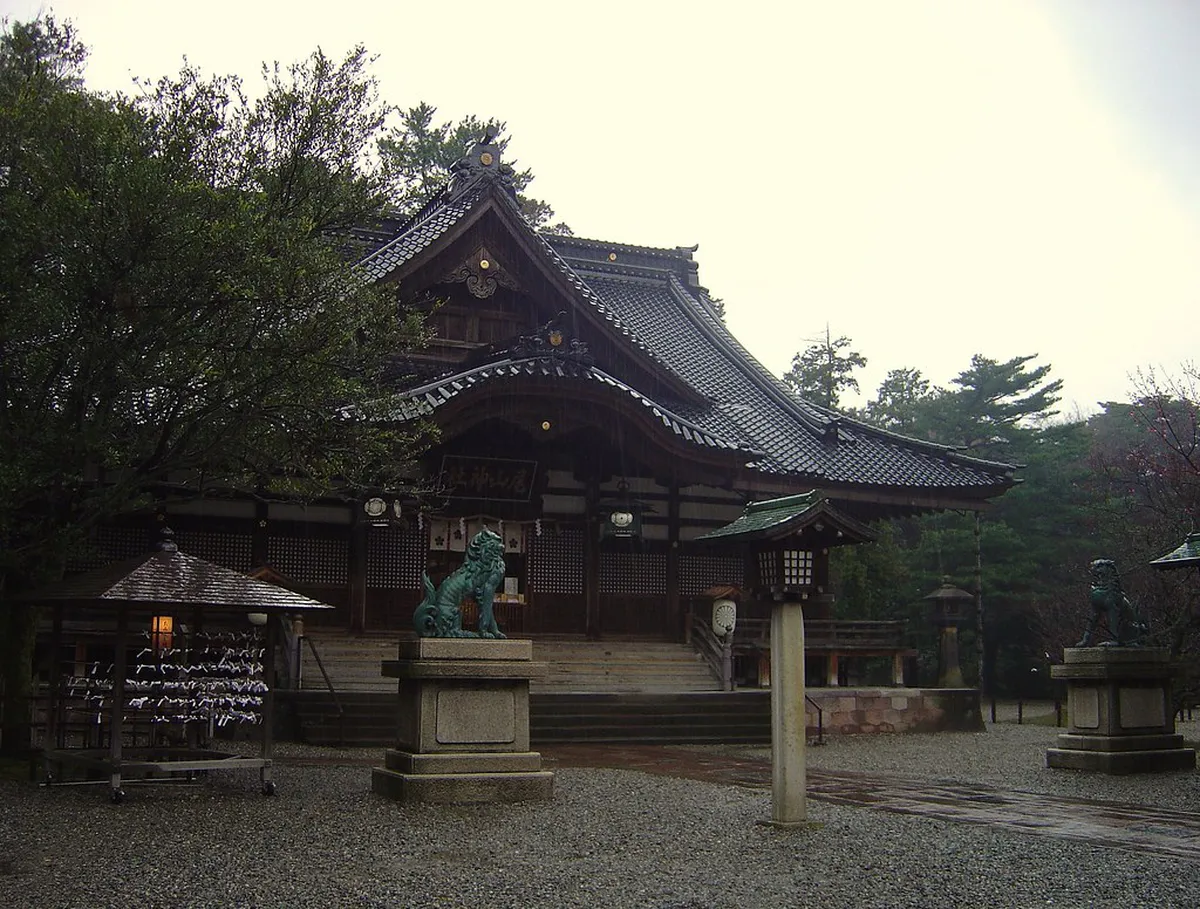
Beyond the gate, the inner grounds follow a more traditional Shinto layout. The Haiden, or prayer hall, is where worshippers come to pay respects to Lord Toshiie and Lady Omatsu. The architecture here is quieter and more classical than the gate — copper-tiled roofs, Maeda family crest (a plum blossom) embossed on structural elements, and delicate lattice screens on the shrine buildings.
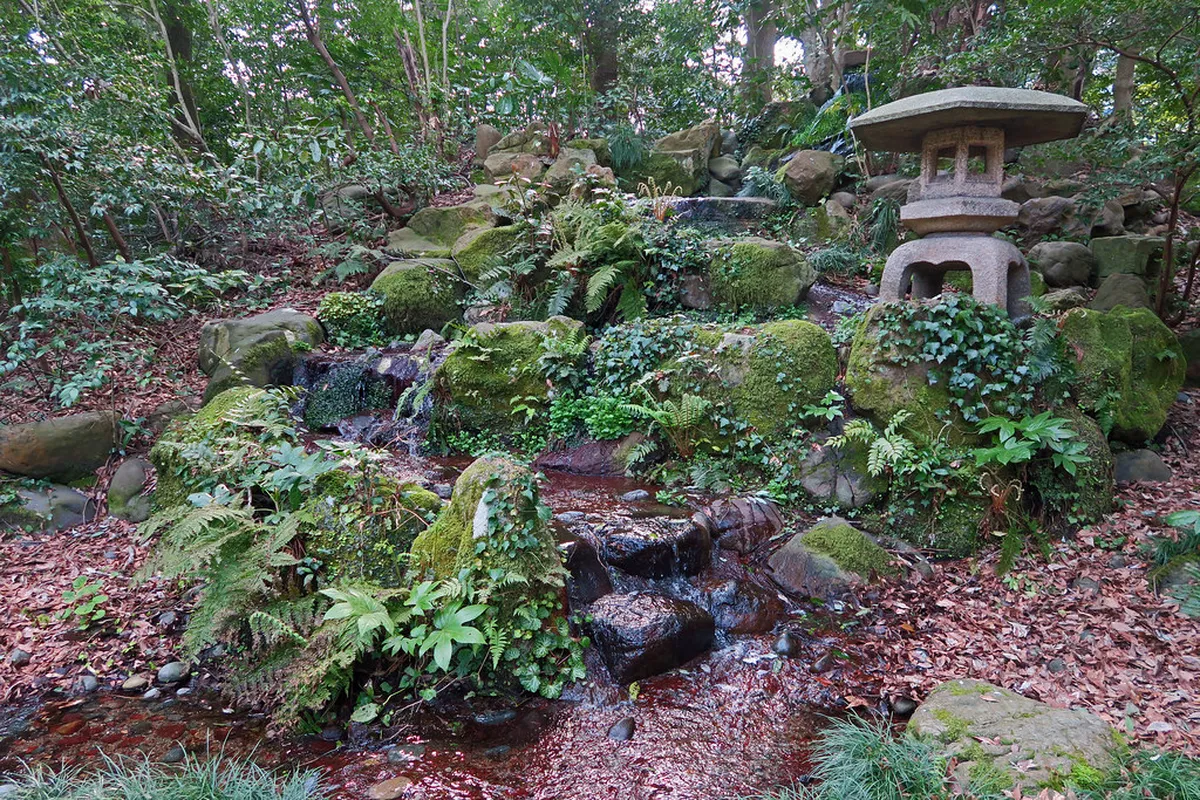
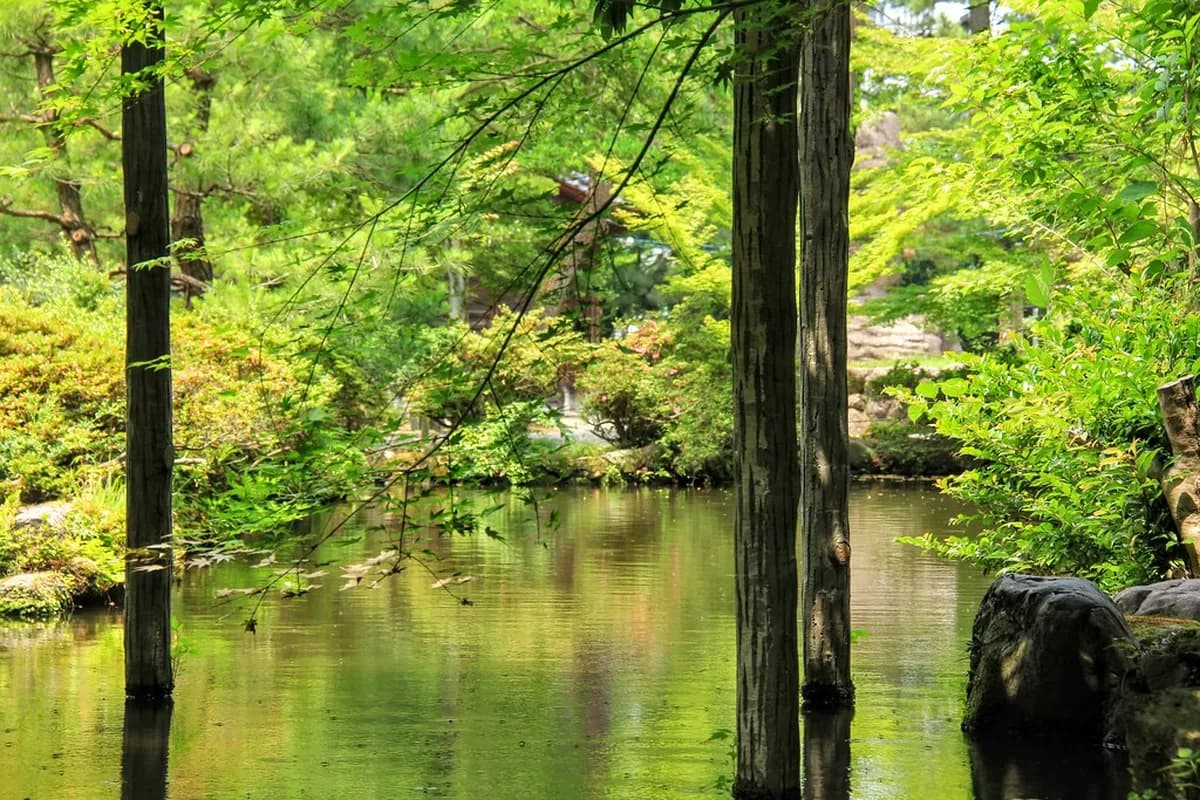
The strolling garden, the Shin-en, was originally designed by Kobori Enshu, the same landscape architect responsible for several famous Japanese gardens of the Edo period. A central pond shaped to resemble a koto, the ancient Japanese stringed instrument, anchors the garden. Stone lanterns, wooden bridges, and large mature trees frame the water on all sides. Colorful koi swim in the pond, and the benches along the paths invite you to sit and take in the seasonal scenery without rushing.
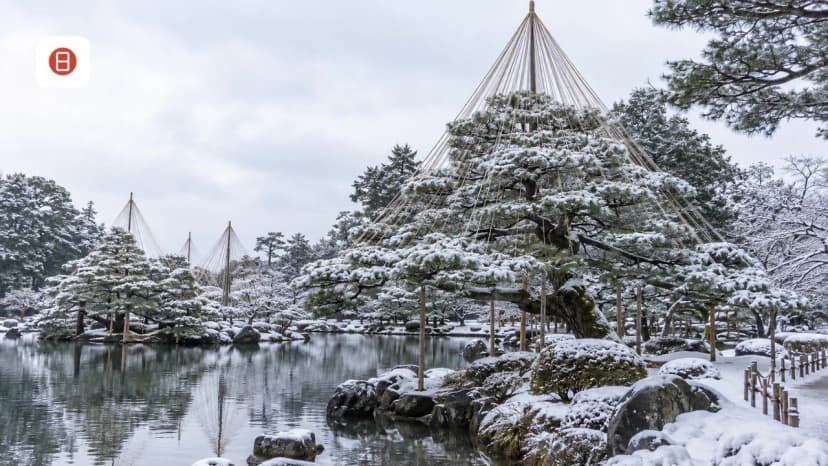
Spring brings cherry blossom petals across the water surface, and autumn turns the maples deep red and orange. Winter visits are quieter and more meditative, with the gate reflected in still water and fewer tourists in the frame. The garden is free to enter along with the rest of the grounds.
Lady Omatsu and the Marriage Prayer Rock
One detail that most visitors walk past without knowing: look for a large rock near the main hall with a carved relief depicting Lady Omatsu. She was known across the domain not only for her beauty but for her sharp political mind and the stability she brought to Toshiie's rule. Locals and Japanese tourists frequently pray at this rock specifically when hoping for a happy marriage or relationship blessing — a tradition that is genuinely practiced, not just a tourist footnote.
This makes Oyama Shrine a common destination for Japanese couples, particularly during New Year visits and the spring season. If you visit on a weekend morning in 2026, you may see small groups gathered around the rock, which adds a layer of living ritual to what might otherwise feel like a historical monument. It is one of the few details that distinguishes this shrine as a working community space rather than simply a sightseeing stop.
Access to Oyama Shrine from Kanazawa Station
The most straightforward route from Kanazawa Station is the Kanazawa Loop Bus. Board the loop bus from the East Exit of the station and ride to the Minami-cho bus stop. From there the shrine entrance is a three-minute walk. The loop bus runs frequently throughout the day and a single ride costs ¥200 in 2026. A day pass for the loop bus costs ¥600 and is well worth it if you are combining the shrine with visits to Kenrokuen, the castle, and the teahouse districts.
If you prefer to walk, the shrine is approximately 20 to 25 minutes on foot from the station through the Korinbo shopping area. The route is flat, clearly signposted, and passes several cafes and convenience stores if you need to pick up water or snacks before starting. Once you are at the shrine, Kanazawa Castle is directly adjacent via a pedestrian bridge at the rear of the grounds, making it easy to move between the two without retracing your steps.
The nearby Omicho Market is a ten-minute walk from the shrine and serves as an excellent pre- or post-visit stop for fresh seafood and a bowl of kaisendon. Most visitors combine the shrine, the castle park, and Omicho Market into a single half-day loop.
Must-See Highlights Inside the Shrine
Allow 30 to 40 minutes to cover the key points of the grounds. Start at the Shinmon gate and take time to inspect each of the three architectural layers before passing through. Inside, head directly to the main hall where the bronze statue of Maeda Toshiie on horseback stands — he is depicted in full samurai armor and the statue is larger than many visitors expect.
From the main hall, follow the path left into the Shin-en garden. The koto-shaped pond, the stone bridges, and the ancient trees are at their best in the early morning before tour groups arrive. Make a short stop at the shrine office on your way out if you want to collect a goshuin stamp or purchase an omamori charm — the Kaga-style designs are unique to this shrine and make a distinctive souvenir. The office operates during standard daytime hours; no fee is charged to enter the grounds regardless of whether you purchase anything.
Museums, Art, and Culture Near Oyama Shrine
The shrine sits within a dense cultural corridor. The DT Suzuki Museum is a short walk away and offers a contemplative Zen-architecture experience that pairs naturally with the reflective atmosphere of the shrine grounds. Traditional Kanazawa crafts — gold leaf, Kaga-yuzen silk dyeing, and lacquerware — are represented in small galleries within walking distance of the gate.
Understanding the Maeda family's patronage of the arts explains why Kanazawa developed into Japan's foremost center of traditional crafts outside Kyoto. The Kaga Domain under the Maedas invested heavily in cultural production as a way of projecting power without military provocation — a political strategy that left the city with one of the richest artistic inheritances in the country. That context transforms a visit to the shrine from a simple sightseeing stop into an entry point into a larger story about how culture, patronage, and power shaped this city. To see how this shrine fits into the broader range of things to do in Kanazawa, explore the city's cultural landscape more deeply.
Parks, Gardens, and Outdoor Spots Near Oyama
The pedestrian bridge at the rear of the shrine connects directly to the grounds of Kanazawa Castle, making the transition between the two sites seamless. The elevated walkway provides a view over the urban streetscape below and the tree canopy of the castle park beyond. Families often use this route to move between the quiet shrine atmosphere and the wide-open lawns of the castle grounds, which have more space for children to explore freely.
The Shin-en garden inside the shrine is best treated as a meditative pause between the gate and the main hall rather than a full garden circuit. It is smaller than Kenrokuen but far less crowded, and the koto pond is a genuinely calming spot even on busy weekends. Large stones that have stood for over a century frame the water, and the absence of admission barriers means you can return to the garden multiple times during a single visit without any friction.
Family-Friendly and Budget-Friendly Tips
Visiting this shrine costs nothing — there is no admission fee to enter the grounds, the garden, or the main hall area. Wide, flat paths make navigation easy for strollers and wheelchairs. The central location means you can walk here from other major sites, which reduces transport costs for families running a full-day itinerary. Clean public restrooms are available on-site.
For a low-cost meal, pick up ingredients or ready-to-eat food at the nearby Omicho Market before or after the shrine visit. Kids tend to be drawn to the koi pond in the garden and the architectural drama of the Shinmon gate — both are free and endlessly photogenic. The shrine is generally less crowded than the major ticket-required attractions, which means more space and a calmer pace for groups traveling with young children.
How to Plan a Smooth Oyama Shrine Day
The most efficient routing pairs Oyama Shrine with Kanazawa Castle immediately after, then continues to Kenrokuen Garden. This three-stop sequence covers the core of central Kanazawa in a single morning. If you add Omicho Market for lunch and the Nagamachi Samurai District in the afternoon, you have a full day without redundant backtracking. For a structured approach to your visit, check out our Kanazawa itinerary guide.
Arrive before 09:00 if photography is a priority. Tour groups typically arrive mid-morning and the narrow space in front of the Shinmon gate can become crowded between 10:00 and 12:00. Evening visits from around 18:00 onward give you the illuminated stained glass with minimal crowds and a cooler temperature in summer. Wear comfortable shoes — the shrine grounds are compact, but you will cover several kilometers if you continue to the castle and back to the station.
Check the weather before visiting in the rainy season (June to July). The garden paths can become slippery and some of the ornamental details on the gate are obscured under heavy cloud cover. The Kanazawa Tourist Information Guide lists seasonal events at the shrine, including summer festivals and autumn illuminations that are worth timing your visit around if your schedule is flexible.
During Kanazawa's rainy season (June–July), the garden paths can become slippery. Tour groups typically crowd the Shinmon gate between 10:00 and 12:00 — arrive before 09:00 or after 13:00 to have space to photograph the gate without crowds in the frame.
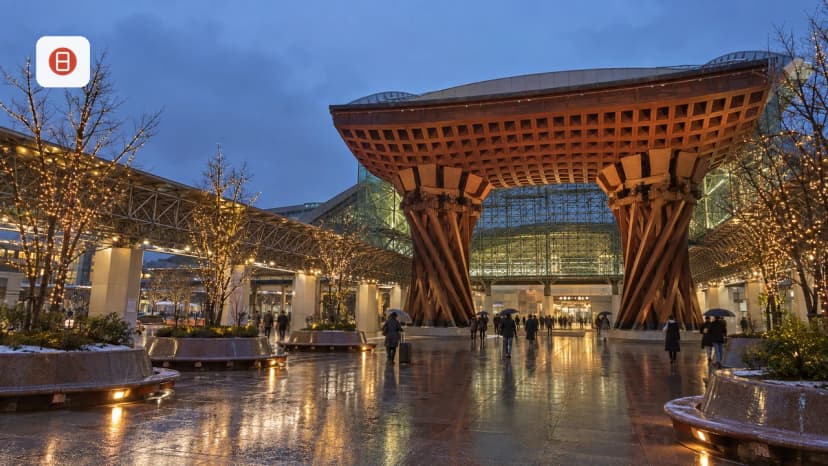
Kanazawa Station: Welcome Gate and Tsuzumi-mon
Most visitors arrive at Kanazawa Station, which is worth a few minutes of attention before heading into the city. The Tsuzumi-mon is a massive wooden gate at the station's East Exit, its twin pillars modeled on the drums used in traditional Noh theater performances. The Motenashi Dome, a glass canopy directly behind it, was designed to protect arriving travelers from the rain that is frequent in Ishikawa Prefecture — a functional structure that also serves as a photogenic welcome to the city.
The station tourist information center on the ground floor provides free city maps, Loop Bus timetables, and multilingual staff who can confirm the current bus schedule to Minami-cho for the shrine. Numerous shops near the gates sell local crafts and boxed lunches if you want to pick up provisions before starting your day. The station area is a convenient base for orienting yourself before the 20-to-25-minute walk or short bus ride to the shrine.
Getting to Kanazawa by Hokuriku Shinkansen
The Hokuriku Shinkansen has been the primary route from Tokyo to Kanazawa since it opened in March 2015. The Kagayaki limited express makes the journey in approximately two and a half hours; the Hakutaka service takes closer to three hours but stops at more intermediate stations. Both services are covered by the Japan Rail Pass. Seat reservations are strongly recommended during Golden Week, the Obon period in mid-August, and the New Year holidays, when trains fill quickly.
In 2026, the Shinkansen extension to Tsuruga further connects Kanazawa into the broader Hokuriku network, making day trips from Osaka or Kyoto via the Thunderbird limited express increasingly straightforward for travelers approaching from the west. Once you arrive at Kanazawa Station, the shrine is reachable in under 30 minutes by foot or under 15 minutes by Loop Bus, making it a realistic first stop of the day even on an arrival morning.
Where to Stay Near Oyama Shrine
Staying close to the shrine puts you within easy walking distance of the castle, Kenrokuen, the samurai district, and Omicho Market — essentially the entire central sightseeing loop. Machiya townhouse accommodations are a distinctive option in this part of Kanazawa. These are restored traditional Japanese townhouses that offer tatami rooms, inner courtyard gardens, and modern amenities within a historical shell.
Machiya properties in the area are privately managed and vary in size from one-bedroom configurations suitable for couples to larger units that work well for families or groups. Staying in one supports the ongoing preservation of the city's historic streetscape. Hosts frequently provide insider recommendations on quieter spots and local restaurants that do not appear in standard travel guides. For those who prefer conventional hotel accommodation, several business hotels and mid-range Western-style properties are available within a 15-minute walk of the shrine at various price points.
Frequently Asked Questions
What is the best time to visit Oyama Shrine?
Early morning or late afternoon is ideal to avoid crowds and capture the best light. The shrine is particularly beautiful during the cherry blossom season in spring or when the autumn leaves turn. Visiting at night allows you to see the stained glass windows glowing beautifully from the inside.
Is there an admission fee for Oyama Shrine?
No, there is no admission fee to enter the shrine grounds or the garden. This makes it a perfect stop for budget travelers looking for free cultural experiences. You may choose to bring some coins for traditional offerings or to purchase lucky charms from the shrine office.
How do I get to Oyama Shrine from the station?
You can take a local bus from the East Exit of the station and get off at the Minamicho or Oyama-jinja bus stop. The ride takes about ten minutes depending on traffic. If you prefer to walk, it is a straightforward twenty-minute stroll through the Kanazawa city guide center.
Can I visit the shrine and the castle on the same day?
Yes, they are located right next to each other and are connected by a convenient pedestrian bridge. Most visitors spend about forty minutes at the shrine before walking over to the castle grounds. This proximity makes it easy to see both major landmarks within a single morning or afternoon.
Oyama Shrine is a must-visit destination that perfectly captures the eclectic and artistic spirit of the city. From its one-of-a-kind Shinmon gate to the tranquil Shin-en garden, the site offers something for every type of traveler. Whether you are drawn by the samurai history of the Maeda family, the architectural oddity of stained glass on a Shinto gate, or the quiet ritual of Lady Omatsu's marriage rock, this shrine rewards careful attention. Include it in your Kanazawa itinerary for 2026 and pair it with the castle and Omicho Market for a full and memorable morning.
Browse all of the city's must-see sights in our Kanazawa attractions hub.
For the latest official information, see the Oyama Shrine official site and Oyama Shrine on Wikipedia.