The D.T. Suzuki Museum is a quiet, purpose-built space in the Honda-machi district of Kanazawa, dedicated to the philosopher who brought Zen Buddhism to the Western world. Completed in 2011 on the site where Daisetz Teitaro Suzuki grew up, the museum is as much an architectural experience as an exhibition. Yoshio Taniguchi's minimalist design — concrete walls, still water, and framed views of forest — gives physical form to the ideas Suzuki spent his life writing about. This guide covers the biography, architecture, gardens, practical details, and the transit route from Kanazawa Station.
Who Was D.T. Suzuki?
Daisetz Teitaro Suzuki was born in Kanazawa in 1870, just after the Meiji Restoration reshaped Japan. As a young man he spent four formative years studying Zen at Engaku-ji temple in Kamakura, living as a monk and practicing zazen meditation under Kosen Soen. That direct experience of Zen practice became the foundation for everything he wrote afterward. He later lectured at universities across Europe and North America, and was nominated for the Nobel Peace Prize in 1963.
Suzuki's core contribution was translating Zen philosophy into clear, accessible English prose at a time when Western audiences viewed Buddhism with deep scepticism. He deliberately emphasised its philosophical and psychological dimensions over ritual, making it approachable for non-practitioners. His essays are still referenced in psychology, philosophy, and arts education today. Figures including Alan Watts, John Cage, and the Beat Generation writers drew directly from his work.
The museum stands on the site where Suzuki grew up, giving it genuine biographical weight beyond architecture tourism. Walking through the nearby Nagamachi Samurai District provides a glimpse of the traditional Kanazawa that shaped his early years. Understanding who he was before you enter transforms the visit from a design excursion into something considerably more meaningful.
The Architecture of Zen: Taniguchi Yoshio's Design
Yoshio Taniguchi is best known internationally for his expansion of the Museum of Modern Art in New York, but many architectural critics consider the D.T. Suzuki Museum his most cohesive work. His approach here is deliberately restrained: three wings connected by long, quiet corridors, built from concrete, glass, and shallow water. The grey walls provide a neutral field that lets the surrounding forest appear vivid and alive by contrast. Large glass panels dissolve the boundary between interior and hillside, a direct architectural translation of the Zen idea that inside and outside are not separate.
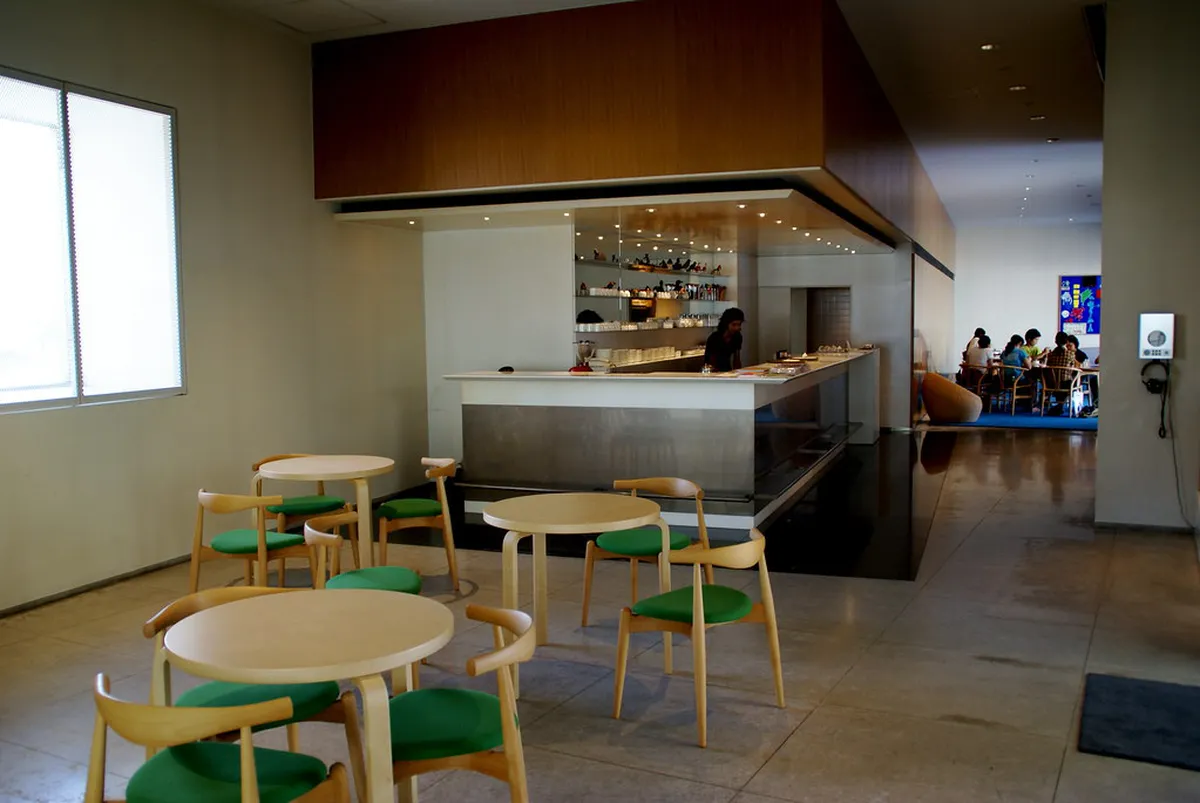
The design avoids decoration entirely. Natural light is the primary material — the way it falls across a concrete floor at 09:30 is completely different from how it reads at 15:00. Every window and opening is positioned to frame a specific view of sky, stone, or water. Taniguchi calculated these relationships carefully, so the building functions as a sequence of prepared moments rather than a neutral container for exhibits.
Architectural enthusiasts regularly cite the museum as one of the most successful examples of a building that communicates philosophical content through form alone, without signage or ornamentation. The building sits alongside the 21st Century Museum of Contemporary Art in making Kanazawa a genuine destination for contemporary architecture in Japan. Where the 21st Century Museum uses a circular glass form to project openness, the Suzuki Museum uses closed stone volumes and narrow openings to create hush and interiority.
Exploring the Three Wings and Three Gardens
The museum consists of the Vestibule Wing, the Exhibition Wing, and the Contemplative Wing, each serving a distinct purpose in the visitor's progression. The Vestibule Wing acts as a decompression zone between the street and the exhibits — a deliberate pause before the content begins. The Exhibition Wing holds Suzuki's writings, calligraphy, and personal artefacts, along with copies of his books available to read in a naturally lit room. The Contemplative Wing is the climax: a large, silent room open to the Water Mirror Garden through floor-to-ceiling glass.
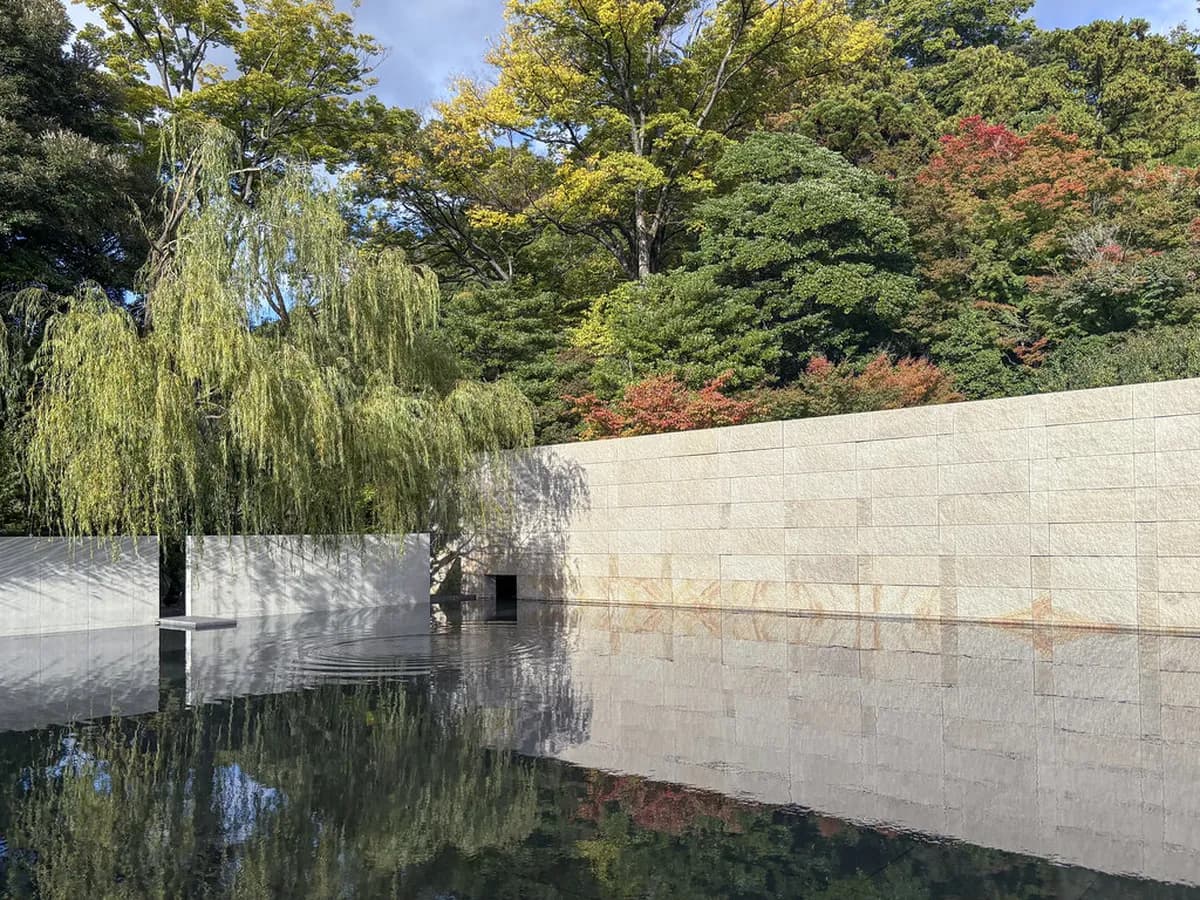
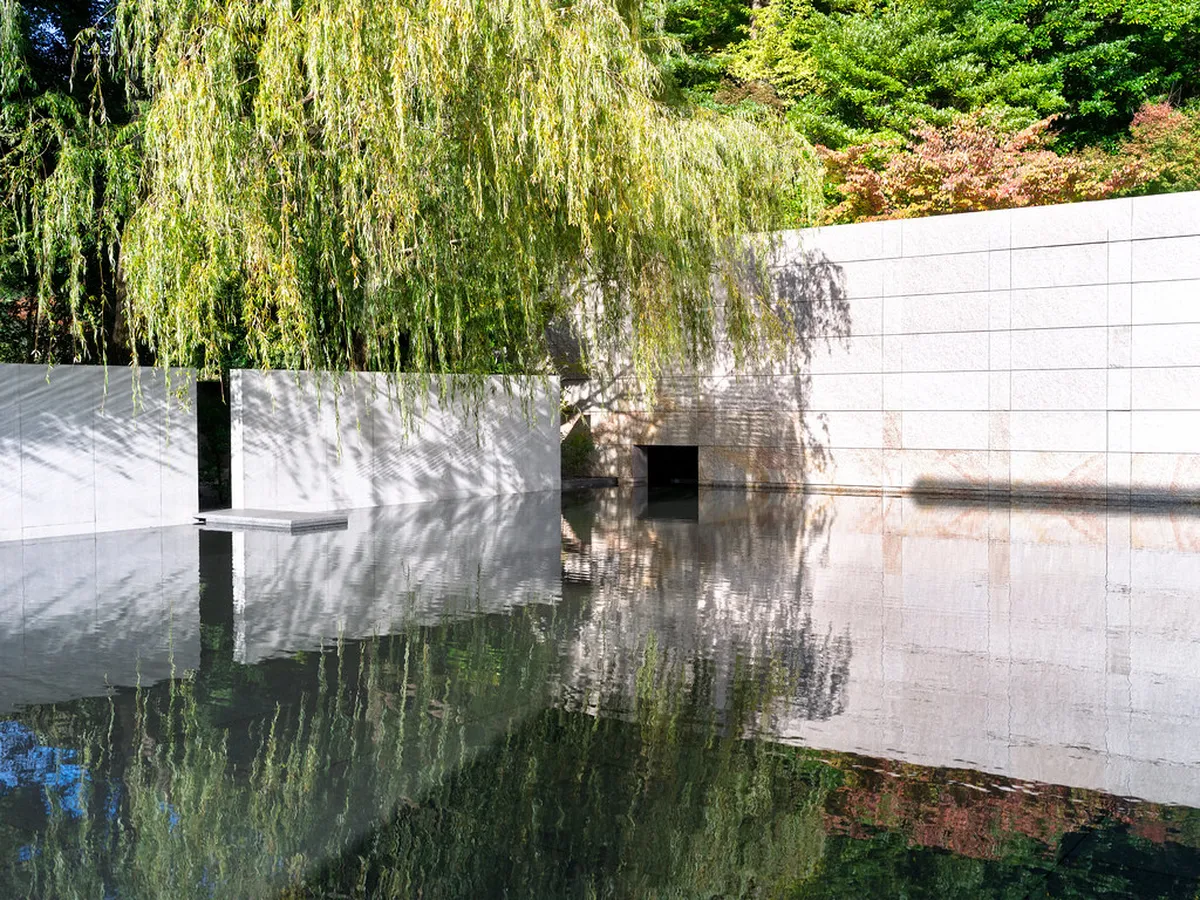
Three gardens complement the wings. The Roji Garden and the Vestibule Garden use stone and greenery to create a traditional atmosphere on either side of the entrance sequence. The Water Mirror Garden is the most iconic feature of the entire complex — a shallow reflective pool that mirrors the surrounding stone walls and sky, changing character throughout the day as cloud cover shifts.
When sitting in the Contemplative Space, maintain complete silence. The room is designed for stillness, not socialising. Sit facing the pool and let your eyes rest on the surface rather than the far wall — the intended experience is the framed view, not the architecture itself. Staff will politely ask groups to quieten if noise rises. Plan to spend at least fifteen to twenty minutes here; most visitors stay longer than they expect. Photographers should note that the interior of the Contemplative Wing prohibits photography, but the outdoor pool area and exterior of the building are fully open to cameras.
A public walking path just outside the entrance fence offers a free view of the Water Mirror Garden from a slightly elevated angle. This path connects to the Honda Gardens and the Kodatsuno Plateau, making a natural extension of the visit without any additional cost. The transition from the museum's structured stone gardens to the wilder hillside forest beyond is one of the more quietly memorable stretches in Kanazawa.
Photography inside the Contemplative Wing is prohibited. The Water Mirror Garden and building exterior are fully open to cameras. The gravel path to the poolside viewing platform is too narrow for most wheelchairs — accessible routes do not reach that specific viewpoint.
The Water Mirror Garden Through the Seasons
The Water Mirror Garden reads very differently depending on when you visit, and no competitor guide makes this distinction clearly enough to be useful. In summer, the surrounding trees are full and green, and the reflections in the pool include layers of foliage that soften the geometry of the concrete walls. The early morning light in July and August creates sharp, almost photographic reflections when the air is still. Arrive before 10:00 to catch the pool before midday haze diffuses the contrast.
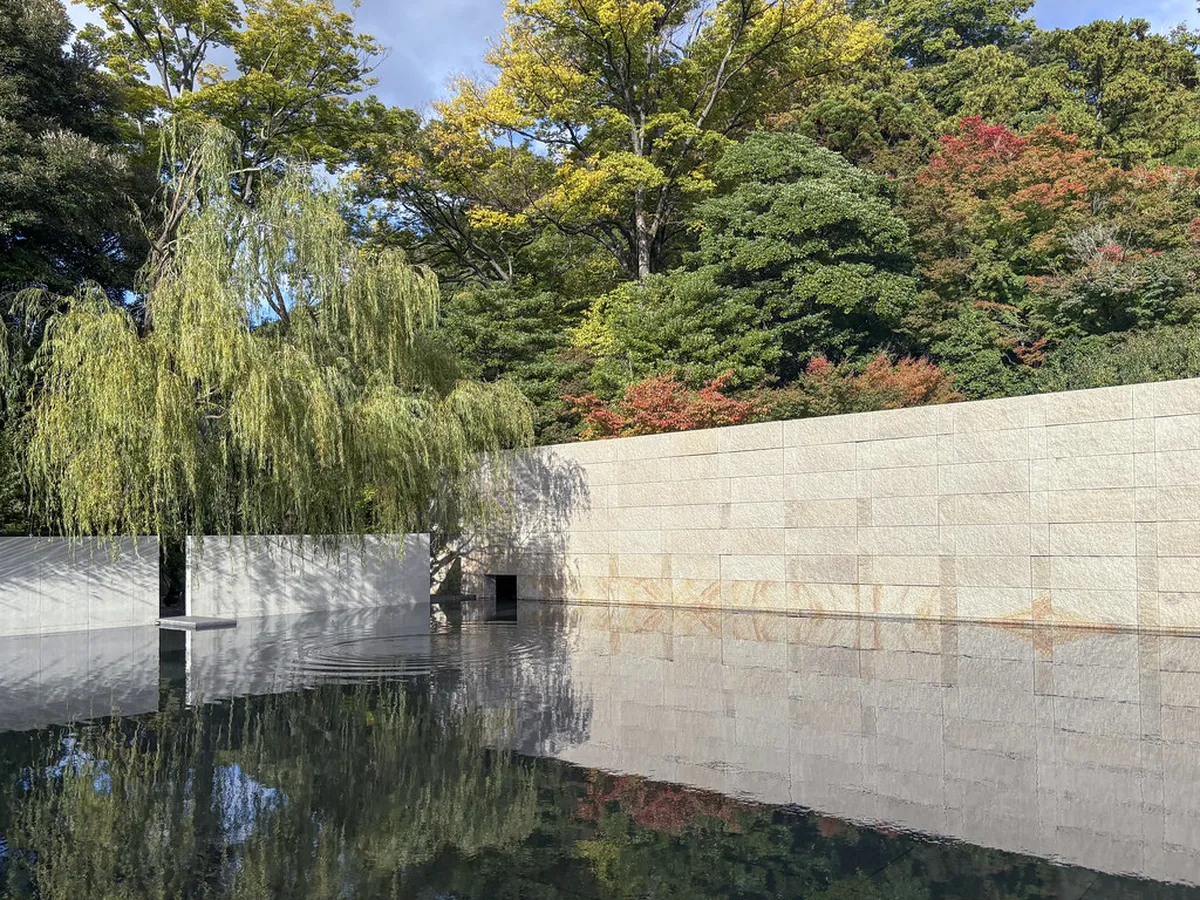
Winter is the most underrated season to visit. Kanazawa receives more snow than almost any major city in Japan — typically 50 to 80 centimetres of accumulation between December and February. When snow settles on the low stone walls surrounding the pool, the reflection shifts entirely: grey concrete disappears and the water mirrors white edges and pale sky instead. The Contemplative Wing is quieter in winter, often with very few other visitors, making the meditative experience considerably more accessible than in peak spring or autumn.
Cherry blossom season in late March brings larger crowds, but the brief window when petals drift across the pool surface is genuinely striking. Autumn maples in November provide warm red and orange tones in the reflections. For the sharpest water-mirror photographs, visit on a calm, overcast morning in any season — direct sunlight creates glare on the pool surface that defeats the reflection effect.
Practical Visitor Information: Hours and Fees
The museum is open from 09:30 to 17:00, with last entry at 16:30. It is closed on Mondays — if a Monday falls on a national holiday, the museum closes the following day instead. The New Year closure runs from 29 December through 3 January. Always verify the current schedule on the official museum website before traveling, particularly around Japanese national holidays in May and September.
- Adult admission: 310 JPY
- Seniors (65 and over): 210 JPY
- High school students and younger: free
- Opening hours: 09:30–17:00 (last entry 16:30)
- Closed: Mondays (or following day if Monday is a public holiday) and 29 December–3 January
A practical budget move that most visitors miss is the 1 Day Museum Passport. This pass bundles entry to the D.T. Suzuki Museum with Kurando Terashima's House, the Ishikawa Living Crafts Museum, the Ishikawa Prefectural Museum of Art, and the Ishikawa Prefectural Museum of History — at a combined price lower than buying each ticket separately. Note that the 21st Century Museum of Contemporary Art is not included in the passport, so budget for that separately. Ask for the passport at the Suzuki Museum ticket counter or at the tourist information desk inside Kanazawa Station. Most visitors spend 45 to 90 minutes at the museum; those who sit in the Contemplative Wing or photograph the garden at different light angles often stay closer to two hours.
The 1 Day Museum Passport bundles entry to the D.T. Suzuki Museum with four other Kanazawa museums at a combined price lower than buying separately. The 21st Century Museum of Contemporary Art is not included — budget for that separately. Ask for the passport at the Suzuki Museum ticket counter or at Kanazawa Station tourist information.
How to Get There: Transit and Accessibility
From JR Kanazawa Station, take the Kanazawa Loop Bus and alight at the Hondamachi bus stop. The specific stop numbers are LL7 on the Left Loop route and RL10 on the Right Loop route — both serve the same stop and both routes run frequently from the station's East Exit bus terminal. A single ride costs 210 JPY; an all-day pass costs 600 JPY and pays for itself if you visit three or more sites. The walk from the Hondamachi stop to the museum entrance takes approximately five minutes through a quiet residential street. The route is signed in Japanese and English. Following a Kanazawa itinerary that includes this museum as a core stop ensures you maximize your time in the city.
If you prefer to walk from the city centre, the museum is about ten minutes on foot from Kenrokuen Garden. This makes it a natural first or last stop on a morning that also takes in the garden and Kanazawa Castle. Comfortable shoes are essential — the most rewarding way to connect these sites is on foot, and the route between them is one of the city's most scenic stretches. Consult the official Kanazawa tourism board for current bus maps and timetables.
Accessibility is generally good but with specific constraints worth knowing in advance. The museum has ramps and an elevator serving the lower exhibition level. However, a rough gravel path leads to the small viewing platform that juts out over the Water Mirror Garden, and the doorway at the end of that path is too narrow for most wheelchairs. The sidewalk between the Hondamachi bus stop and the museum entrance is also uneven in places. Accessible toilets are available inside the building, and staff are present to assist visitors who need help navigating between levels. For rainy day alternatives or indoor options on days when outdoor exploration is limited, Kanazawa has excellent covered galleries and historic structures.
Nearby Attractions in Kanazawa
The D.T. Suzuki Museum sits within easy walking distance of several major cultural landmarks. These things to do in Kanazawa cluster beautifully within a morning's exploration. Kenrokuen Garden is roughly ten minutes on foot and offers a useful contrast: where the Suzuki Museum uses water as a mirror for philosophical reflection, Kenrokuen uses water as a design element in a grand aristocratic landscape. Visiting both in a single morning gives you two completely different Japanese relationships with nature. The historic Kanazawa Castle is immediately adjacent to Kenrokuen and free to enter at the park level.
For a sharp change of pace, the 21st Century Museum of Contemporary Art is a short walk from the museum district. Its circular glass building and participatory installations offer a vivid contrast to the meditative Suzuki space — visiting both on the same day reveals how one city can hold two radically different conversations about space and experience. Kanazawa is recognized as a UNESCO City of Crafts and Folk Art, and the neighborhood around the museum is one of the best places to engage with that identity: gold leaf workshops and Kutani pottery studios are within easy walking distance.
The Honda Gardens connect directly to the museum's rear walking path and extend the contemplative mood at no cost. This hillside green space is quieter than the famous parks in the city centre and provides a natural end to a morning at the museum. Take time to notice the seasonal foliage changes — the forest backdrop was preserved intentionally by the museum's designers so that the building reads as a quiet object within nature rather than an imposition on it.
Frequently Asked Questions
Who was D.T. Suzuki and why is he famous?
Daisetz Teitaro Suzuki was a Japanese philosopher who introduced Zen Buddhism to the Western world. He is famous for his English writings that made Eastern thought accessible to global audiences. His work influenced many modern thinkers and artists. You can learn more about his legacy in this Kanazawa city guide.
How much is the entrance fee for the D.T. Suzuki Museum?
The standard entrance fee for adults is 310 Yen as of 2026. Seniors over the age of sixty-five can enter for a reduced price of 210 Yen. Admission is typically free for students under the age of eighteen. Prices are subject to change, so verify on the official site.
How long does it take to visit the D.T. Suzuki Museum?
Most visitors spend about 45 to 60 minutes exploring the museum and gardens. If you enjoy quiet meditation or photography, you may want to stay longer in the Contemplative Wing. The site is small but encourages a very slow and deliberate pace of exploration.
Is the D.T. Suzuki Museum wheelchair accessible?
Yes, the museum is largely wheelchair accessible with ramps and elevators provided for visitors. However, some outdoor paths have gravel which can be difficult to navigate. A few interior doorways are also somewhat narrow. Staff are available to provide assistance when needed during your visit.
Can you take photos inside the D.T. Suzuki Museum?
Photography is generally allowed in the outdoor garden areas and the Water Mirror Garden. However, taking photos inside the exhibit rooms and the Learning Wing is strictly prohibited. Always look for signage or ask staff before using your camera in the indoor spaces.
The D.T. Suzuki Museum rewards visitors who arrive with some context and a willingness to slow down. The combination of Taniguchi's architecture, the reflective garden, and the biographical weight of Suzuki's birthplace creates an experience that most museums in Japan cannot replicate. Whether you come for the design, the philosophy, or simply a quiet hour away from the city's busier sites, the museum delivers. Explore our full Kanazawa travel guide to plan the rest of your time in this remarkable city.
For the latest official information, see the D.T. Suzuki Museum on Wikipedia.