
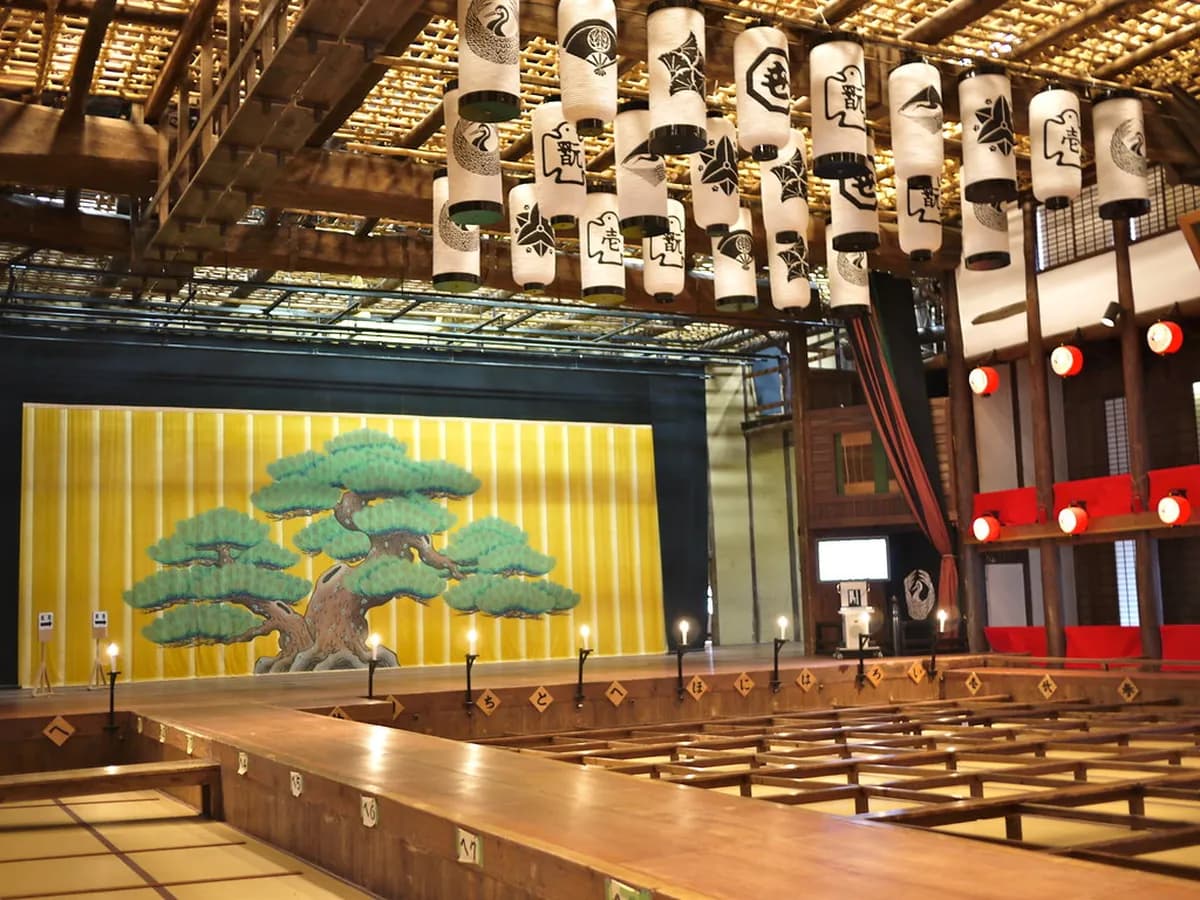
Kanamaru-za Kabuki Theater, also called the Konpira Grand Theatre, is the essential cultural stop in Kotohira for travelers who want to see how kabuki was staged before modern theaters. In 2026, the planning choice is simple: most visitors take a self-guided tour of the historic building, while live kabuki is limited to the April Shikoku Konpira Kabuki Oshibai season. This kanamaru-za kabuki theater visitor guide focuses on hours, tickets, access, what to inspect inside, and the common mistakes that can derail a short Kotohira visit.
Welcome to Kanamaru-za: Japan's Oldest Kabuki Theater
The Kanamaru-za Kabuki Theater stands near Kotohiragu Shrine in Kagawa Prefecture and is widely described as Japan's oldest surviving kabuki theater. The official cultural tourism page notes that the theater was built in 1835, while the Konpira Grand Theatre history records its 1836 opening. Either way, the draw for visitors is clear: this is not a replica stage, but a restored Edo-period playhouse where you can move through the seating, stage, dressing rooms, and under-stage machinery when no performance is running.
Kanamaru-za was originally known as Konpira Oshibai, a grand theater built for the busy shrine town around Kotohira. Temporary playhouses had served pilgrims before a permanent venue was approved. The building later fell out of regular use, was designated an Important Cultural Property, restored, and moved to its present protected site. Today it functions as both a historic attraction and the spring home of the Shikoku Konpira Kabuki Oshibai.
Planning Your Visit: Hours, Admission, and Best Times
Visiting Kanamaru-za requires some planning to ensure a smooth and enjoyable experience. The theater is generally open to visitors for self-guided tours. It operates daily from 9:00 AM to 5:00 PM, but note it closes when live performances are scheduled. Always check the official Kotohira Town facility page for current schedules before your visit. A typical visit for exploring the theater and learning about its features takes about 45 to 60 minutes. Allow extra time if you wish to linger and absorb the atmosphere.
Admission fees are quite reasonable, making it accessible for all types of travelers. Adults typically pay ¥500 / ~$3.50 for entry. Junior and senior high school students can enter for ¥300 / ~$2.00, and primary students for ¥200 / ~$1.50. These fees support the theater's ongoing preservation efforts. The best time to visit for a self-guided tour is during the morning hours on weekdays. This period usually sees fewer crowds, allowing for a more intimate exploration.
For 2026 planning, treat the official calendar as mandatory rather than optional. As of the July 2026 town notice, Kanamaru-za is listed as closed for an event on July 20, 2026 from 9:00 AM to 1:00 PM, and similar performance or maintenance closures can appear with limited notice. The most common visitor mistake is climbing the shrine first, arriving late, and finding either the last-entry window or a closure has already passed.
- Best time: Weekday mornings, especially outside the April kabuki season and major holiday periods.
- Time needed: Plan 45 to 60 minutes for a relaxed self-guided tour; add more time if you want to read displays, ask staff questions, or combine it with nearby sights.
- Payment: Bring cash for admission and small purchases. Historic attractions in smaller towns may not handle every card smoothly.
- Etiquette: Wear socks and easy-to-remove shoes because you may remove footwear before entering tatami areas.
- Last-entry habit: Aim to arrive before mid-afternoon, not close to closing time, so you can inspect the stage machinery without rushing.
How to Get There from Kotohira Station and Nearby Cities
Kanamaru-za is at 1241 Otsu in Kotohira, uphill from the station area and close enough to combine with the shrine approach. Most travelers arrive at either JR Kotohira Station or Kotoden Kotohira Station, then walk about 15 to 20 minutes. The route is manageable, but it is not a flat indoor transfer; expect local streets, short slopes, and the same weather exposure you will have around the shrine town.
- From Takamatsu: Take the Kotoden Kotohira Line from Takamatsu-Chikko to Kotoden Kotohira, or use JR services to JR Kotohira. The official Kotohira access information frames the rail trip from Takamatsu at about one hour.
- From Okayama: Use JR via the Seto-Ohashi and Dosan lines to Kotohira. This works well as a day trip if you start early, but avoid building the itinerary around the final admission hour.
- From Takamatsu Airport: Plan onward travel by bus, taxi, or rental car to Kotohira; the town access page lists the drive from the airport area at around 40 minutes.
- By car: The theater itself has no visitor parking. Use town or station parking, then walk; this is especially important during April performances.
What to Expect: Exploring the Theater and its Unique Features
Stepping into Kanamaru-za feels different from entering a museum because the building still reads as a working theater. The audience area has tatami seating and box-style divisions, while the stage extends into the seating area through the hanamichi walkway. The best first impression is from the seating floor: pause there before going backstage so the stage layout makes sense.
The main stage features a mawari-butai, or revolving stage, built for fast scene changes. Kanamaru-za also has seri trapdoors, under-stage passages, dressing rooms, musicians' spaces, and the naraku area beneath the floor. The official cultural tourism page emphasizes that many effects remain human-powered rather than motorized, which is the detail that makes the theater more than a historic shell.
Look for the hanamichi runway, the trap-like openings used for dramatic appearances, the revolving stage, the bamboo lattice above the seating, and the backstage rooms where actors prepared for performance. If staff are present, ask which areas are open that day before walking onto or behind the stage; access can vary with maintenance and performance preparation.
Experiencing the April Kabuki Festival (Shikoku Konpira Kabuki Oshibai)
The Shikoku Konpira Kabuki Oshibai, held annually in April, is the highlight of Kanamaru-za's calendar. This festival brings the theater to life with live kabuki performances. It is a rare opportunity to witness traditional kabuki in its original, historic setting. The atmosphere is electric, drawing theater enthusiasts from across Japan and beyond. Attending this festival offers a profoundly different experience compared to a self-guided tour. You will see the stage mechanisms in full, dynamic operation.
For 2026, the official Konpira Kabuki schedule listed performances from April 10 to April 26, with the oneri procession on April 9, a rest day on April 16, and two daily parts starting at 11:00 AM and 3:00 PM. Those dates have passed, but they are useful for understanding the usual pattern: ticketing opens well before spring, accommodation tightens early, and self-guided access is restricted around the performance setup and run.
Tickets for the April festival are highly coveted and sell out very quickly. They typically go on sale months in advance, usually around January or February. Securing a ticket requires diligence and quick action, often involving online lotteries or early booking through specific agencies. Prices vary significantly depending on seating, but expect to pay ¥10,000 / ~$70 to ¥20,000 / ~$140 or more per seat. Performances typically run for several hours, often with multiple acts and intermissions. There are usually one or two shows per day during the festival period.
During the festival, the town of Kotohira transforms with a festive atmosphere. Many attendees dress in traditional kimono, adding to the cultural immersion. While not mandatory, wearing a kimono can enhance your experience and is a wonderful way to participate. It reflects respect for the art form and its traditions. Be prepared for crowds and plan your transportation and accommodation well in advance. This ensures a smooth and memorable visit during this special time.
Regular Tour vs. April Performance: Which Visit Fits You?
| Visit type | Best for | Trade-off | Planning advice |
|---|---|---|---|
| Regular self-guided tour | Architecture, backstage access, flexible sightseeing | No live performance atmosphere | Go in the morning, bring cash, and confirm closures before leaving the station area. |
| April kabuki performance | Seeing the theater used as intended | Higher cost, sold-out dates, limited flexibility | Track the official ticket page months ahead and book lodging before tickets become scarce. |
| Kotohira day trip | Combining Kanamaru-za with the shrine, sake museum, and udon | Easy to underestimate walking time | Visit Kanamaru-za before the full shrine climb if theater access is your priority. |
How to Buy Tickets for Kanamaru-za Performances
For an ordinary self-guided visit, buy your admission ticket at the theater entrance. Advance booking is not usually necessary for standard daytime tours, but checking the day's opening status is more important than reserving ahead.
For the April festival, use the official ticket information for the current year. In 2026, ticket-only sales were scheduled through Shochiku channels from February 16, which shows how early serious planning begins. Do not rely on arriving in Kotohira and finding same-day performance seats.
If you are having a hard time finding a tour in English, keep the plan simple: tour the building independently, use the official English cultural tourism page before you arrive, and ask at local tourist information for any current guide availability. For live kabuki, prioritize a legitimate ticket source over a bundled tour unless the operator clearly confirms the seat, date, and performance part.
Beyond the Stage: Backstage Wonders and Manual Mechanisms
Kanamaru-za's designation as an Important Cultural Property extends beyond its facade and main stage. The theater's true marvels lie in its backstage operations. Unlike modern theaters, Kanamaru-za preserves human-powered stage effects that help explain why the building matters to theater history. Exploring these areas reveals the labor, timing, and coordination required to produce kabuki before motors and digital lighting.
The mawari-butai revolving stage is the feature most visitors remember. During performances, stagehands can rotate the stage for scene changes while the audience stays focused on the story. The seri trapdoors allow actors to appear and disappear through the floor, while the hanamichi lets performers enter through the audience rather than only from the main stage. These are not decorative details; they are the mechanics of kabuki drama.
Do not rush the under-stage area. Many visitors photograph the main auditorium and leave, missing the best interpretive value of the site. If you only have one question for staff, ask which mechanism they recommend seeing first that day. Access can shift, but the answer usually points you toward the most legible part of the theater's engineering.
Combining Your Visit: Nearby Attractions and Day Trips from Kotohira
A visit to Kanamaru-za can easily be combined with other sights in Kotohira, but order matters. If the theater is your priority, visit it before the full shrine climb. Kotohira is famously home to Kotohira-gu Konpira-san, and many travelers pair the theater with the Konpira 1368 Steps. Allow 2 to 3 hours for a comfortable round trip to the shrine's main hall, longer if you continue to the inner shrine.
For a compact half-day, start at Kanamaru-za, walk the shrine approach, eat Sanuki udon, then visit the Kinryo Sake Museum. This keeps the walking logical and avoids backtracking. If you want a slower cultural day, add Sayabashi Bridge and leave the full shrine climb for the morning.
For a full-day plan, arrive by train in the morning, tour Kanamaru-za, climb to Kotohira-gu, have udon after descending, then finish with the sake museum or bridge. For a two-day stay, add Zentsuji Temple or a Takamatsu side trip. The key is not to treat Kanamaru-za as a quick photo stop; its value is in the 45 to 60 minutes you spend inside understanding the stage.
Kanamaru-za Kabuki Theater FAQ
- Theater is closed on arrival: Check the official town page and festival schedule before leaving your hotel, especially in April and around one-off local events.
- You cannot find the building: Navigate to 1241 Otsu, Kotohira, and allow 15 to 20 minutes on foot from JR Kotohira or Kotoden Kotohira stations.
- You arrive too late: Build the visit before the shrine climb or before lunch, not as the final stop of the day.
- You miss festival tickets: Watch for sales in winter. The 2026 ticket information shows sales activity beginning in February, well before the April run.
- You are unsure about etiquette: Remove shoes where directed, keep voices low, avoid stepping into closed areas, and ask staff before touching stage mechanisms.
- You need food nearby: Use the shrine approach for udon shops and cafes rather than expecting a large restaurant cluster at the theater door.
Frequently Asked Questions
What is a Kabuki show?
Kabuki is a traditional Japanese theatrical art form known for its elaborate costumes, dramatic makeup, and stylized performances. It combines dance, music, and mime to tell historical or moral stories.
Is Kanamaru-za really Japan's oldest working Kabuki theatre?
Kanamaru-za is widely described as Japan's oldest surviving kabuki theater. It is not a daily performance venue, but it is still used for major productions during the spring Shikoku Konpira Kabuki Oshibai season.
What are the admission fees for Kanamaru-za?
Admission for a self-guided tour is ¥500 for adults, ¥300 for high school students and ¥200 for junior high and elementary children. Tickets for the annual April kabuki performances are sold separately and in advance.
When is it possible to visit Kanamaru-za?
Kanamaru-za is generally open for self-guided tours daily from 9:00 AM to 5:00 PM. However, it closes during actual kabuki performances, so checking the schedule is crucial.
How long should I plan for a visit to Kanamaru-za?
A typical self-guided tour of Kanamaru-za takes about 45 to 60 minutes. If you attend a performance, plan for several hours, including intermissions.
Where is the Kabuki theater from Kotohira Station?
The theater is at 1241 Otsu in Kotohira, about a 15 to 20 minute walk from JR Kotohira Station or Kotoden Kotohira Station. It sits off the broader shrine-town walking route rather than directly inside the station area.
How do I buy tickets for the April Kabuki festival in Kotohira?
Tickets for the April festival are highly competitive and usually go on sale in January or February. They are often sold through online lotteries or specific ticketing agencies.
How many shows per day run during the festival?
The 2026 official schedule listed two daily parts during the festival period, one starting at 11:00 AM and another at 3:00 PM, with a rest day during the run. Check the current year's official schedule before booking.
Do people wear kimono to the festival?
Many attendees choose to wear traditional kimono to the April Kabuki festival, adding to the cultural experience. While not required, it is a wonderful way to participate.
Having a hard time finding a tour?
A standard visit works well without a tour because the building itself is the main attraction. If English guidance is important, read the official cultural tourism page before arrival and ask local tourist information whether any guide support is available that day.
Kanamaru-za is worth prioritizing because it turns kabuki history into something you can physically understand: the walkway through the audience, the trapdoors, the revolving stage, the tatami seating, and the backstage rooms all make the performance tradition visible. For the smoothest 2026 visit, confirm the day's opening status, arrive before the shrine climb if theater access matters most, bring cash, and give yourself enough time to see the mechanisms rather than only the facade.
Planning the rest of your trip? See our things to do in Kotohira, Kanamaru-za guide, Tokushima region guide and Kotohira day-trip guide.