Hakozaki Shrine stands as a powerful symbol of protection and history in the heart of Fukuoka. Founded in 923, this ancient site ranks among the most significant spiritual locations in all of Japan, drawing worshippers and travelers who seek victory blessings, seasonal flowers, and one of Kyushu's largest festivals. Exploring the grounds offers a direct look into more than 1,100 years of Japanese heritage and spiritual practice.
Using this Fukuoka attractions guide ensures you see every essential detail during your trip. The shrine is free to enter and sits just a three-minute walk from a subway station built specifically to serve it. Whether you are a history enthusiast or a first-time visitor to Fukuoka, the grounds reward a leisurely two-hour exploration.
Hakozaki Shrine Opening Hours and Exceptions
Hakozaki Shrine's gates open at 6:00 and close at 19:00 every day, and the main grounds are free. The Shin-en Flower Garden and the June hydrangea garden keep their own shorter hours.
| Place | Regular hours | Exception dates | Hours on those dates | Why |
|---|---|---|---|---|
| Shrine grounds (gates) | 6:00–19:00 daily | None listed | — | Times may change depending on circumstances |
| Amulet counter | 8:30–17:30 | None listed | — | — |
| Goshuin (stamp) reception | 8:30–17:00 | None listed | — | — |
| Prayer (kigan) reception | 9:00–16:30 | Days with shrine rituals | May not be accepted | See the prayer reception calendar on the shrine website |
| Emperor Kameyama Statue Hall (Hoanden) | 9:00–16:00 daily | Event days | May change | Hours can vary with shrine events |
| Shin-en Flower Garden | 9:30–16:30, open January 1–December 10; closed Wednesdays (Thursday if Wednesday is a holiday) | December 11–31 | Closed | Outside the garden's open season |
| Shin-en Flower Garden | — | January, February, April, June and the Hojoya festival | Open every day, including Wednesdays | Peak flower and festival periods |
| Hydrangea Garden (Ajisai-en) | June 1–30 only, 9:30–17:00 (last entry 16:30), no closing days | July–May | Closed | Seasonal garden |
| Sen no Rikyu stone lantern | Not on public view | Hojoya festival (September) and Satsuki festival (May) | On view | Shown only during these two festivals |
| Whole shrine | — | Hojoya festival, September 12–18 each year | No separate gate hours published; about 500 stalls line the approach | Seven-day autumn festival; around one million visitors in total |
The Japanese homepage lists the amulet counter at 8:30–17:30, while the English grounds guide gives the shrine office as 8:30–17:00, so aim to arrive before 17:00 if you need a charm or stamp. Garden admission fees are not listed on the shrine website. Verified against the Hakozaki Shrine official site, its grounds guide and its 2026 Hojoya notice.
Hakozaki Shrine: One of Japan's Three Great Hachiman Shrines
Hakozaki Shrine is recognized as one of the Three Great Hachiman Shrines in Japan, alongside Usa Jingu in Oita and Iwashimizu Hachimangu in Kyoto Prefecture. These shrines are dedicated to Hachiman, the divine protector of Japan and patron deity of warriors, farmers, fishers, and merchants alike. Each location carries a distinct historical narrative, but Hakozaki holds a uniquely central role in how Hachiman worship spread across the country.
This shrine also holds the rank of Ichinomiya — the highest-ranking shrine in the old Chikuzen Province, the territory that now forms Fukuoka Prefecture. Its formal designation is Kanpei Taisha, a top-tier imperial rank, and it is currently listed as a Beppyo Jinja (special shrine) by the Association of Shinto Shrines. Walking through the grounds, you can feel the weight of this ancient spiritual authority that drew pilgrimages from daimyo and shoguns throughout the Edo period.
Usa Jingu in Oita is the birthplace of Hachiman worship — the original shrine where the deity first emerged from a freshwater pool in 571. Iwashimizu Hachimangu in Kyoto became the imperial capital's guardian shrine. Hakozaki occupies a third, equally vital role: it is sited at the birthplace of Emperor Ojin himself, the deified figure at the heart of Hachiman faith, making it the ancestral homeland of the entire tradition.
- Comparison of the Three Great Hachiman Shrines in 2026:
- Usa Jingu (Oita) — head of all 44,000+ Hachiman shrines; first shrine built where the deity emerged
- Iwashimizu Hachimangu (Kyoto) — imperial capital's guardian; on a forested mountain south of Kyoto
- Hakozaki (Fukuoka) — birthplace of Emperor Ojin; most responsible for spreading Hachiman worship nationwide
History and Significance: The "Surrender of Enemy Nations"
The shrine is famous for a large plaque on the Romon Gate that carries an extraordinary inscription: "Teki-Koku-Kou-Fuku," meaning the surrender of enemy nations. This phrase is attributed to Emperor Daigo and Emperor Kameyama, who offered prayers here during the Mongol invasions of the 13th century. The phrase does not celebrate conquest by force — its Buddhist meaning is closer to "quelling conflict through the power of virtue," which makes it a prayer for peace rather than war.
The Mongol invasions of 1274 and 1281 defined much of the shrine's historical identity. Both times, defenders believed that Hachiman sent divine typhoons — kamikaze — that destroyed much of the Mongol fleet in Hakata Bay, visible from the shrine's grounds today. Hakozaki itself was burned to the ground during the first invasion when Mongol forces briefly came ashore, then rebuilt and rebuilt again over the following centuries.
News of the "divine wind" spread rapidly across Japan, cementing Hachiman's reputation as the protector of the nation. This is why the powerful Minamoto clan of samurai adopted Hachiman as their patron deity, and why powerful warlords made pilgrimages here right through the Edo period. In 1587, Toyotomi Hideyoshi personally ordered the shrine rebuilt after it was damaged during the Sengoku civil wars — he camped at Hakozaki during his Kyushu campaign. The shrine buildings seen today largely date to reconstructions in the mid-16th century and the early Edo period under Kuroda clan patronage.
The Iconic Romon Gate and Ichi-no-Tori
The Romon Gate is a massive two-story vermilion structure that serves as the main entrance. Built in 1594 by Kobayakawa Takakage, the lord of Chikuzen Province, it is designated as a Nationally Important Cultural Property. Its vivid red lacquer stands in deliberate contrast to the unpainted cedar-bark roofs of the main hall behind it — the juxtaposition is striking even on a grey day.
Further toward the bay stands the Ichi-no-Tori, a stone torii gate approximately 10 meters tall, built in 1609 by Kuroda Nagamasa and also designated as a Nationally Important Cultural Property. Its thick stone pillars face directly across Hakata Bay toward the Asian mainland — the shrine was oriented this way deliberately, watching the sea route that brought both trade and, twice, invasion fleets. When approaching from the sea in the old days, this gate was the first landmark sailors would see.
Look near the inner gate for a large iron anchor resting on the ground. This artifact is believed to have been recovered from a sunken Mongolian warship from the 1274 or 1281 invasions. It is a tangible, physical link to the battles described on the plaque overhead. Also nearby are the foundation stones of a former five-storied pagoda — the Eikoin Pagoda — that once stood within the grounds before the shrine's many reconstructions.
One further artifact deserves attention: a stone lantern donated by tea master Sen no Rikyu in 1587, when Toyotomi Hideyoshi held a tea ceremony at Hakozaki during his Kyushu campaign. The lantern is designated as a Nationally Important Cultural Property and is a reminder that this shrine was not just a military power spot — it was also a place of cultural patronage at the highest level of Japanese society.
Deities and Spiritual Benefits
Three deities are enshrined at Hakozaki, collectively known as Hakozaki Okami. Emperor Ojin, the 15th emperor of Japan, is the primary deity — he is revered as the human manifestation of Hachiman and is associated with military victory, protection, and the divine wind that repelled the Mongols. He is thought to have lived from roughly 370 to 410 AD and was born here on the northern Kyushu coast.
Empress Jingu, his mother, is enshrined alongside him. She is celebrated as a shamaness who led a military expedition across the Korean Strait while pregnant with Ojin, guided by divine instruction. She is the deity most associated with safe childbirth and the protection of women at Hakozaki, and many visitors — particularly expectant mothers — come to pray specifically at the spots connected to her legend.
The third deity, Tamayorihime-no-Mikoto, is the mother of Emperor Jimmu (the legendary first emperor of Japan) and a goddess of the sea. Her presence gives Hakozaki its maritime safety blessings, which made the shrine especially important to the fishing communities and merchant sailors of Hakata Bay for centuries. For modern visitors, these three together cover a remarkably wide range of prayer intentions: victory in exams, sports, or business; protection from misfortune during unlucky years; safe childbirth; family health; and safe travel.
Two Major Festivals: Tamaseseri in January and Hojoya in September
The Tamaseseri Festival on January 3rd is one of Fukuoka's most dramatic spectacles. Men clad only in loincloths — regardless of winter temperatures — divide into two teams representing land (farmers) and sea (fishermen) and compete fiercely to seize an eight-kilogram sacred wooden ball. The team that ultimately claims the ball is believed to receive good fortune for the year: victory for the sea team predicts a bountiful fishing season; victory for the land team promises a rich harvest. The ritual dates to a legend in which Empress Jingu threw a jewel gifted by a dragon god into the sea, and fishermen raced to retrieve it.
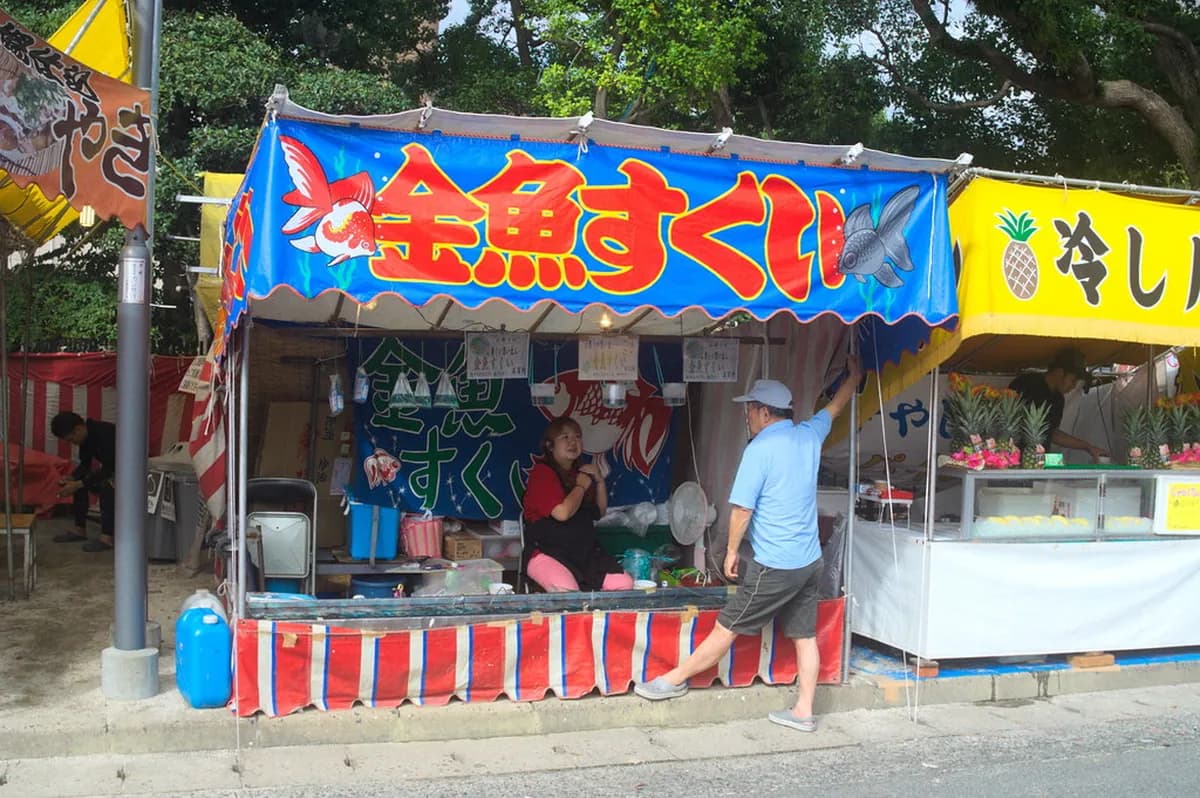
The Hojoya Festival runs from September 12 to 18 each year and is one of Hakata's three major festivals, drawing over one million visitors during its seven-day run. The festival's name derives from the Buddhist practice of releasing living creatures back into nature — a ritual of gratitude for life and a prayer for future prosperity. Roughly 500 vendor stalls line the approach to the shrine, creating one of the most atmospheric festival corridors in Kyushu.
A defining tradition of the Hojoya is fresh ginger sold with the leaves still attached. Buying ginger at the festival is said to bring good health and vitality for the coming year. You can also find glass toy instruments called chanpon, ceramic lucky charms called ohajiki, and the usual festival foods — grilled corn, takoyaki, and seasonal sweets. Arrive on a weekday evening if you want the atmosphere without shoulder-to-shoulder crowds.
A less-known event worth noting: on May 3rd each year, monks from Jotenji Temple in Hakata walk to Hakozaki for the Jotenji Issan Hosai-shiki ceremony — a Shinto-Buddhist syncretic ritual that has continued for over 700 years. The monks give thanks for the Mongol invasion prayers answered at this shrine, linking the Buddhist temple and the Shinto shrine in a tradition that predates the Meiji-era separation of the two faiths. It is one of the few such syncretic ceremonies still performed publicly in Japan and draws little tourist attention despite its historical weight.
The Holy Hakomatsu Pine: Where Myth Meets History
A sacred pine tree known as Hakomatsu stands protected by a red wooden fence near the main hall. Legend says that Empress Jingu buried the placenta of her son, Emperor Ojin, in a box at this spot after his birth on the Kyushu coast. The very name Hakozaki derives from this act — "hako" meaning box, "zaki" meaning peninsula — making the tree a literal etymology of the shrine and its neighborhood.
The current pine is a successor to the original, replanted over the centuries to maintain the site's spiritual significance. It remains one of the most revered natural features within the shrine complex. Many women visit this specific spot to pray for safe childbirth and the health of their children, connecting the living tree to the divine mother figure of Empress Jingu.
The story of the Hakomatsu is also what distinguishes Hakozaki from Usa Jingu in theological terms. While Usa is the birthplace of Hachiman worship, Hakozaki is the earthly birthplace of Emperor Ojin himself — and is said to be the protector of the imperial placenta. This gives it an intimacy and territorial rootedness in Fukuoka's identity that the other two great Hachiman shrines cannot claim.
Oshioi Beach: Purifying Sands and Bad Luck Banishing
Oshioi Beach is located a short walk from the shrine and plays a vital ritual role in the community's practice. The sand from this beach is believed to carry powerful purifying energy — locals use it to cleanse their homes and protect against misfortune and evil spirits. Participating in this ritual is one of the most distinctive ways to engage with a living Fukuoka tradition that most tourists skip entirely.
The ritual is straightforward. Walk to the shore with a small cloth bag or container. Collect a modest amount of fine sand while focusing on your intentions — clarity, health, protection from bad luck — for the year ahead. Bring the sand back to pray at the main hall, then take it home and sprinkle it around the entrance of your home or workplace. The practice is especially active during the New Year period and around major festival seasons, when locals from across Fukuoka make the same journey.
The beach itself offers a scenic view across Hakata Bay toward the Asian mainland — the same sight line that shrine priests watched for Mongol fleets in the 13th century. Taking a few minutes to stand at the shore before returning to the grounds puts the shrine's coastal orientation into physical perspective. The combination of sea breeze, historical vista, and ritual purpose makes Oshioi one of the most memorable stops in the entire complex.
The Gushing Stone: Touching Your Way to Good Fortune
The Wakidashi-ishi, or Gushing Stone, is one of Hakozaki's most visited power spots. Located north of the main hall, this stone is said to have gradually emerged from the ground of its own accord — the name implies that fortune will "gush forth" like a spring after you touch it. The shrine's own amulet shop sells luck-flowing charms specifically associated with it.
When you find the stone, place both hands on its smooth surface and hold a specific intention for a moment: a business goal, an exam, a sports competition, a health wish. The ritual is free, requires no prior knowledge, and takes about thirty seconds. Business owners and students facing difficult exams are the most frequent visitors. The stone is easy to locate along the main worship path and is accessible for visitors of all ages and mobility levels.
What distinguishes the Gushing Stone from similar power spots around Japan is its framing as a naturally emerging object — it suggests the divine energy rising from the ground itself rather than a relic brought from elsewhere. For visitors who are skeptical of shrine rituals in general, the tactile simplicity of this one tends to win people over. Bow respectfully before and after contact, as you would at any sacred site.
Seasonal Scenery: Hydrangea and Shin-en Flower Gardens
The shrine's Sacred Garden — roughly 5,000 square meters — transforms dramatically through the year. From January to April, winter peonies bloom in large numbers, each flower protected by a small straw cape that keeps off frost. The contrast of vibrant petals against rustic straw is a favorite subject for photographers, and the garden is quieter in these cooler months than during peak summer.
June draws the largest crowds, as thousands of hydrangeas fill the garden with blue, purple, and white blooms during the Hydrangea Festival. Cherry blossoms appear in April, cosmos in autumn, and lilies in spring — the calendar ensures there is always something in bloom. A small separate entrance fee applies during major bloom seasons, typically 300 to 500 yen, which goes toward garden maintenance.
Checking the Official Hakozaki Shrine Website or the shrine's Instagram account (@hakozakigu.official) before your visit is the most reliable way to confirm what is currently in bloom and whether the garden has any special events. The garden provides a quiet space for reflection away from the main worship areas, and it is worth budgeting an extra 30 minutes to walk through it slowly.
- Hakozaki Seasonal Bloom Calendar:
- January–April: Winter peonies in the Sacred Garden
- April: Cherry blossoms; Lily Festival begins
- June: Hydrangea Festival (peak bloom, most visitors)
- September–October: Cosmos; Hojoya Festival atmosphere
Victory and Success: Why Athletes Visit Hakozaki
Hakozaki Shrine has a well-established modern reputation as a victory power spot. Professional sports teams from across Fukuoka visit annually to pray for a winning season. The Fukuoka SoftBank Hawks baseball team and Avispa Fukuoka football club are among the most famous regular visitors. Large wooden votive plaques signed by players are displayed near the main hall, and it is not unusual to see athletes in team jerseys praying alongside ordinary visitors.
The connection between the shrine and competitive victory is theologically coherent — Hachiman has been the patron of martial success for over a thousand years, and the shrine's history of repelling the Mongols provides a concrete narrative of divine protection against overwhelming odds. Students facing university entrance exams, job hunters, and business owners seeking a strong quarter all come for the same reason: Hakozaki has the reputation of turning difficult situations in your favor.
The shrine offers a dedicated victory amulet (shobu omamori) that is particularly popular. It can be purchased at the amulet shop between 08:30 and 17:30. The same shop stocks exorcism amulets, safe-childbirth charms, traffic safety talismans, and academic success amulets, each priced between 500 and 1,500 yen.
Practical Info: Visiting Hours, Goshuin, and Amulets
The main shrine grounds are open from 06:00 to 19:00 daily — earlier than many shrines in Japan, which makes it a viable stop before a full day of sightseeing. There is no admission fee to enter the primary worship areas. Prayer requests are accepted from 09:00 to 16:30; amulet and charm sales run from 08:30 to 17:30. Budget one to two hours to see all the highlights at a relaxed pace, plus additional time if you plan to visit the Sacred Garden.
If you collect Goshuin stamps, the shrine office offers several beautiful designs. A standard stamp costs around 500 yen and is hand-drawn by priests on the spot. Limited-edition Goshuin are sometimes issued during major festivals, so check the shrine's social media if timing your visit around them. The shrine also sells original Goshuincho notebooks with Hakozaki-specific designs, which make a more distinctive souvenir than a generic book purchased elsewhere.
Hours can change during major festivals and the New Year period. The Official Hakozaki Shrine Website publishes a "Prayer Reception Calendar" with up-to-date schedules. Groups and corporations can arrange prayer ceremonies in advance by contacting the shrine office directly at 092-641-7431. Shinto wedding ceremonies are also available at the shrine by reservation — a rarely promoted option for visitors planning milestone events during a Japan trip.
How to Pray Correctly: Shinto Etiquette at Hakozaki Shrine
Hakozaki follows the same Shinto etiquette observed at Hachiman shrines nationwide, and knowing the sequence makes a visit feel far less rushed. Before stepping through the Ichi-no-Tori or Romon Gate, pause and bow slightly. Walk along the left or right side of the stone approach rather than straight down the center, which is traditionally reserved for the kami passing through.
Just inside the grounds, stop at the temizuya (water purification basin) to cleanse yourself before approaching the main hall:
- Fill the ladle with your right hand and rinse your left hand.
- Switch the ladle to your left hand and rinse your right hand.
- Pour a little water into your cupped left palm, rinse your mouth quietly, and spit discreetly beside the basin — never sip directly from the ladle.
- Rinse your left hand once more, then tip the ladle upright so remaining water runs down the handle to clean it for the next visitor.
At the haiden (worship hall), the standard pattern is two bows, two claps, a silent prayer, then one final bow (nirei nihakushu ichirei). A five-yen coin is the traditional offering, since go-en is a homophone for "good fortune" and "connection." Because Hakozaki's enshrined deities are specifically linked to victory, protection, and safe childbirth, many visitors use the silent prayer to state their intention clearly rather than simply bowing through the motions. This same etiquette applies at the smaller sub-shrines scattered around the grounds, including those tied to the Holy Pine and the Gushing Stone.
Where to Eat Nearby: Nagata Pain and Retro Cafes
After your visit, take a short walk to the famous Nagata Pain bakery. This local institution is housed in a charming retro building with a nostalgic atmosphere that suits the surrounding historic neighborhood. The bakery is known for its traditional Japanese breads and consistently friendly service. It is the most recommended food stop among regular Hakozaki visitors.
The signature item at Nagata Pain is their condensed milk bread — soft, chewy texture with a sweet creamy filling that has developed a loyal following across Fukuoka. They also offer savory options including curry bread and classic salt rolls. Prices are affordable, and the shop does brisk business with locals and visitors alike. Arriving before noon on weekends gives you the best selection.
The surrounding Hakozaki area is also home to several quiet, retro-style cafes serving hand-dripped coffee and simple lunch sets. Exploring the narrow streets between the shrine and the bay reveals a neighborhood that feels considerably less touristed than Hakata or Tenjin. Taking time to eat and drink locally is both a practical decision and a way to experience the everyday character of Fukuoka's Higashi Ward.
Access Guide: Getting to Hakozaki from Central Fukuoka
Reaching Hakozaki Shrine is straightforward via Fukuoka's efficient transit network. The fastest option is the Fukuoka City Subway Hakozaki Line to Hakozakimiya-mae Station — the station was built specifically to serve the shrine. From Exit 1, the torii gate is a three-minute walk. The journey from Hakata Station takes about 10 minutes; from Tenjin Station, around 15 minutes.
Alternatively, the JR Kagoshima Main Line stops at Hakozaki Station, an eight-minute walk from the shrine entrance. This route is convenient if you are coming from the northern JR network or prefer not to change to the subway. A Nishitetsu Bus stop called "Hakozaki" also sits about three minutes on foot from the shrine, served by multiple routes from both Hakata Station and Tenjin — useful if you are already on a bus route for another destination.
If you are driving, the Fukuoka Urban Expressway Hakozaki Interchange is approximately five minutes away. The shrine has around 100 parking spaces on the grounds, but these fill quickly during major festivals. For the Hojoya Festival in September in particular, public transit is strongly recommended. Address for navigation: 1-22-1 Hakozaki, Higashi-ku, Fukuoka 812-0053.
Combining Hakozaki with nearby sites makes for a full day. The Fukuoka City Museum is reachable via a short transit connection, and the Shofukuji Temple — Japan's oldest Zen temple, founded in 1195 — is a natural counterpart to Hakozaki's Shinto history. Both fit easily into a single day itinerary without backtracking.
Frequently Asked Questions
Is there an entrance fee for Hakozaki Shrine?
Entry to the main Hakozaki Shrine grounds is free for all visitors. However, the seasonal flower gardens, such as the Hydrangea and Peony gardens, usually require a small admission fee of 300 to 500 yen. Check the Official Hakozaki Shrine Website for current pricing.
When is the best time to visit Hakozaki Shrine?
The best time to visit is during the Hydrangea Festival in June or the Hojo-e Festival in September. June offers stunning floral views, while September provides a vibrant cultural experience with food stalls and rituals. Early mornings are best for avoiding crowds.
How do I get a Goshuin at Hakozaki Shrine?
You can receive a Goshuin stamp at the shrine's administration office, located near the main hall. Present your Goshuincho book and pay the standard fee, which is typically 500 yen. Goshuin are issued from 8:30 to 17:00 daily.
What other attractions are near Hakozaki Shrine?
Nearby attractions include the Nagata Pain bakery and several historic local streets. You can also take a short train ride to see the Gundam Park at LaLaport Fukuoka for a modern contrast to the ancient shrine.
Hakozaki Shrine is a must-visit destination for anyone seeking to understand the heart of Fukuoka. From its ancient Mongol invasion history and the "surrender of enemy nations" plaque to its modern role as a victory power spot for professional sports teams, it connects 1,100 years of Japanese history to the present day. The combination of seasonal gardens, living ritual traditions like the Oshioi sand practice, and two major festivals makes every visit to Hakozaki distinct. Include this historic shrine in your 2026 Fukuoka itinerary and allow at least two hours to experience it properly.
To complement your visit with other historical temples and shrines, explore our comprehensive guide to things to do in Fukuoka. If you're planning a longer trip to the region, our guide to Fukuoka's must-visit temples and shrines covers more sacred sites worth your time.
For official details, visit the Hakozaki Shrine on Wikipedia.