
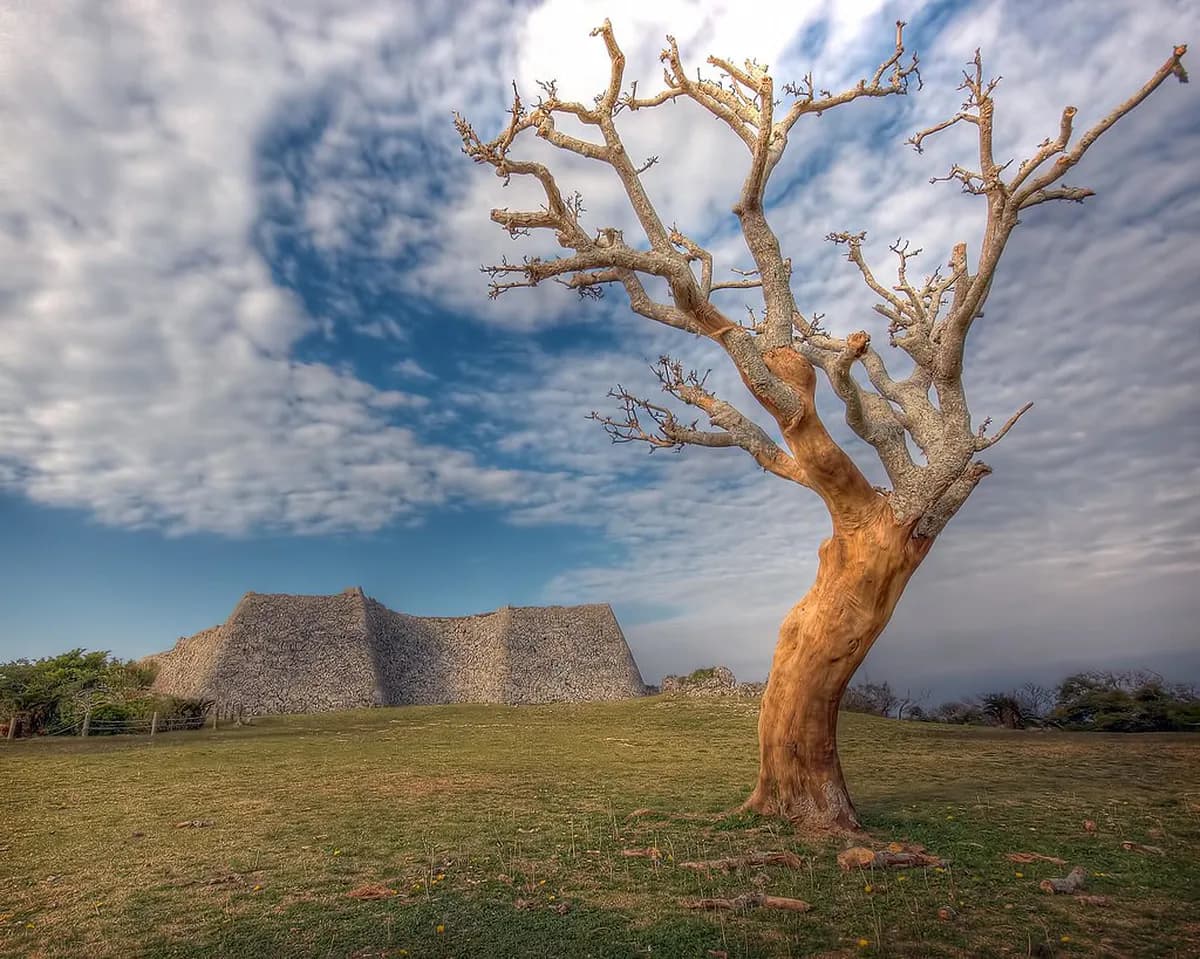
Nakagusuku Castle is a hilltop gusuku ruin in central Okinawa, not a Naha city attraction. For 2026 planning, treat it as an island-wide stop best reached by rental car, with enough time for uneven paths, coastal viewpoints, and the six stone-walled enclosures.
This Nakagusuku Castle visitor guide focuses on the practical decisions travelers search for before going: how to get there from Naha, how long to spend, what makes the ruins special, what to avoid, and how to pair the castle with nearby Okinawa attractions.
The site is part of the UNESCO-listed Gusuku Sites and Related Properties of the Kingdom of Ryukyu. It is especially rewarding if you want history without a museum-heavy visit: the main experience is walking the walls, reading the terrain, and seeing how Ryukyuan builders used the ridge itself as defense.
Why Visit Nakagusuku Castle? A UNESCO World Heritage Site
Nakagusuku Castle is worth visiting because it gives a clear, walkable look at Ryukyuan castle design. Many Okinawa castle sites are reconstructed, heavily damaged, or experienced mainly as viewpoints. Nakagusuku is different: much of the appeal comes from the surviving stone walls and the way each enclosure changes shape as you climb.
The ruins sit on a ridge with wide views over central Okinawa and Nakagusuku Bay. Those views are not just scenic; they explain why the location mattered. From the upper areas, it is easy to understand how the castle monitored movement across land and sea.
Visitors who enjoy Sefa Utaki, Cape Manzamo, or other culture-and-landscape stops usually find Nakagusuku Castle a strong fit. It is quiet, open-air, and more about atmosphere and observation than rides, shopping, or staged entertainment.
History of Nakagusuku Castle: Gosamaru's Legacy and Ryukyuan Power
Nakagusuku Castle is closely tied to Gosamaru, one of the Ryukyu Kingdom's best-known commanders. The castle developed over multiple phases, but Gosamaru is credited with strengthening key areas in the 15th century after being moved here to watch Amawari of Katsuren Castle.
The story ends in political tragedy. Gosamaru was accused of plotting against the throne, and Amawari attacked Nakagusuku Castle. Traditional accounts say Gosamaru remained loyal and chose death rather than resist the royal order. Whether read as loyalty, court intrigue, or regional power politics, the episode gives the site more weight than a simple scenic ruin.
Commodore Matthew Perry's expedition also visited the castle in 1853 and recorded impressions of its masonry. That outside account matters because it confirms how striking the stonework appeared before modern restoration and tourism reshaped the site.
For visitors, the useful takeaway is simple: walk the castle as a layered defensive site. The enclosures, wells, prayer spaces, and viewpoints were not decorative. They show how military planning, local worship, and royal politics overlapped in Ryukyuan Okinawa.
What Makes Nakagusuku Castle Special? Architectural Marvels & Panoramic Views
The signature feature is the stonework. Nakagusuku Castle lets you compare three masonry styles in one visit, which makes the ruins easier to understand even if you are not a castle expert.
- Nozurazumi: rough natural stones stacked with a rugged look. Watch for this older-feeling texture around the South Enclosure.
- Nunozumi: more regular blocks laid in horizontal rows. This style is easier to spot because the lines look orderly and layered.
- Aikatazumi: shaped stones fitted together in irregular polygon patterns. This is the most refined style and is often the most photogenic up close.
Look at the walls from both near and far. From close range, the masonry shows craft and repair history. From the viewpoints, the curves of the walls show how the castle follows the ridge instead of forcing a square layout onto the hill.
The views are part of the architecture. On a clear day, the open sightlines toward central Okinawa, Nakagusuku Bay, and the surrounding villages help explain why the site worked as both a fortress and a lookout.
Top Things to See at Nakagusuku Castle: Stone Walls, Enclosures & More
Start with the main approach and take the ruins slowly. Nakagusuku Castle rewards a simple walking route rather than rushing from sign to sign.
- Main gate and outer approach: pause here first to read the wall curves and get a sense of the slope.
- South Enclosure: compare the rougher stonework and imagine the earlier construction phases.
- First and Second Enclosures: look for cleaner horizontal courses and broad photo angles across the walls.
- Third and North Enclosures: spend extra time with the more advanced fitted stonework and the well area.
- Highest viewpoints: finish with the open coastal views, especially in the morning or late afternoon.
Most travelers should budget 1 to 1.5 hours for this route. Add more time if you want detailed photos, a slower historical walk, or a volunteer guide. Families should keep younger children close because the appeal of the site is also the challenge: open slopes, steps, and uneven stone paths.
Planning Your Visit: Admission Fees, Opening Hours & Rules
Use the Nakagusuku-jo Site Official Website before you go, especially around holidays, storms, maintenance, or special events. For this 2026 guide, the verified visitor details are preserved as follows.
| Item | Visitor information |
|---|---|
| Opening hours | 8:30-17:00 daily, extended to 18:00 from May through September. Entry gates close 30 minutes after the stated closing time. |
| Admission | Admission is ¥500 for adults, ¥300 for junior/high school students, and ¥200 for elementary children. Groups of 20+ get reduced rates; preschoolers with a guardian and disability-certificate holders enter free. |
| Time needed | About 1-1.5 hours for the six enclosures. The route has steep stone steps and little shade, so wear sturdy shoes and bring water. |
A note on contradictions: some travel summaries and event pages phrase gate timing differently. Do not rely on a shortened third-party version if it conflicts with the official site or posted notices at the entrance.
Visitor rules are straightforward but important. Stay on marked routes, do not climb the ancient walls, avoid restricted areas, carry out trash, and treat prayer sites with quiet respect. Drone use, commercial shoots, and event use may require permission, so do not assume they are allowed just because the grounds are open-air.
How to Get to Nakagusuku Castle: Access & Transportation Guide
The easiest way to reach Nakagusuku Castle from Naha is by rental car. Okinawa's public transport can work, but it is slower and requires more attention to final-mile access, especially if you are combining several attractions in one day.
| Transport | Best for | What to expect |
|---|---|---|
| Rental car | Most visitors, families, photographers, half-day itineraries | About 50 minutes by car from Naha Airport, or 15 minutes from the Kitanakagusuku IC, with free parking on site. |
| Bus plus walk or taxi | Budget travelers with flexible timing | Routes from Naha can reach the Nakagusuku area, but the last segment may involve a long walk, local shuttle, or short taxi ride. Check same-day schedules before committing. |
| Taxi from Naha | Travelers without a car who value convenience | Convenient but costly for a round trip. Ask your driver or hotel about return taxi availability before being dropped off. |
| Guided tour | Visitors who want context and transport handled | Useful if the tour combines Nakagusuku with other UNESCO or central Okinawa stops, but avoid third-party pages that do not clearly show inclusions. |
If you are staying in Naha, plan Nakagusuku Castle as a central Okinawa excursion rather than a quick city stop. A car also makes it easier to pair the castle with American Village, Okinawa World, or the east-coast sacred sites depending on your route.
Optimizing Your Nakagusuku Castle Experience: Itinerary & Tips
The best time to visit Nakagusuku Castle is early morning for cooler walking and clearer air, or late afternoon for softer light on the stone walls. Summer midday is the hardest slot because the grounds have little shade, and rain can make stone steps feel slick.
For a 1-hour visit, focus on the main gate, the central enclosures, the North Enclosure, and one viewpoint. For a 2-hour visit, slow down and compare the three masonry styles, read the history signs, and take photos from both inside and outside the curved walls.
Common mistakes are easy to avoid: arriving without water, assuming it is in Naha, wearing smooth-soled shoes, planning a tight bus connection, and treating the castle like a flat park. The ruins are manageable for most visitors, but they are still ruins, with slopes, stairs, and exposed walking areas.
Volunteer guided tours may be available through the official site or local management office. If history is the main reason for your visit, a guide can make Gosamaru's story, the masonry differences, and the sacred spaces much easier to understand.
Beyond the Castle: Nearby Attractions to Explore
Nakagusuku Castle works well as part of a half-day or full-day route across central and southern Okinawa. The best pairing depends on whether you want more history, scenery, family activities, or food.
- History route: Nakagusuku Castle in the morning, then another gusuku or sacred site in the afternoon.
- Family route: Nakagusuku Castle plus Okinawa World for cave walks, crafts, and cultural performances.
- Easy evening route: Nakagusuku Castle followed by American Village for dinner, shopping, and sunset views.
- Culture-and-scenery route: combine the castle with Sefa Utaki if you want to compare military, sacred, and natural landscapes.
Dining near the castle is more local and spread out than in Naha or Chatan, so do not assume you can walk out of the ruins and immediately find many English-friendly options. If you are traveling by car, choose lunch before arrival or plan your meal around the next stop.
Frequently Asked Questions
Is Nakagusuku Castle worth visiting?
Yes, Nakagusuku Castle is definitely worth visiting for its rich history, impressive architecture, and panoramic views. It is a UNESCO World Heritage site offering a deep dive into Ryukyuan culture. Plan at least 1-2 hours to explore its extensive grounds fully.
How much time should you plan for a Nakagusuku Castle visit?
Plan for approximately 1 to 2 hours to fully explore Nakagusuku Castle. A quick visit might take an hour, focusing on the main areas. An in-depth exploration, including all enclosures and viewpoints, can easily fill two hours. Allow extra time for photos and relaxation.
What are the best ways to get to Nakagusuku Castle from Naha?
From Naha, a rental car is the most practical option because Nakagusuku Castle is an island-wide Okinawa attraction, not a Naha city stop. Use the preserved access guidance: about 50 minutes by car from Naha Airport, or 15 minutes from the Kitanakagusuku IC, with free parking on site. Buses and taxis can work, but check same-day schedules, final-mile access, and return options before relying on them.
Are there guided tours available at Nakagusuku Castle?
Yes, volunteer guides are often available at Nakagusuku Castle to offer free tours. These guides provide valuable historical and architectural insights. Check the Nakagusuku-jo Site Official Website for current availability and reservation details. Guided tours can greatly enhance your understanding of the ruins.
What should travelers avoid when visiting Nakagusuku Castle?
Travelers should avoid climbing on the ancient stone walls or straying from marked paths to preserve the historical site. Do not litter and respect the sacred nature of the Gusuku. Also, avoid visiting during the hottest part of the day in summer without adequate hydration.
Nakagusuku Castle is one of Okinawa's strongest stops for travelers who want history, landscape, and a low-key outdoor visit in the same place. The site is compact enough for a short itinerary but detailed enough to reward a slower walk.
For the smoothest 2026 visit, drive from Naha or another Okinawa base, arrive early or late in the day, wear proper shoes, and use the walls themselves as your guide. The more closely you look at the masonry and the ridge, the more the castle's Ryukyuan story comes into focus.
For official details, visit the Nakagusuku Castle on Wikipedia.
Planning the rest of your trip? See our things to do in Okinawa guide and tips on renting a car in Okinawa, or read about renting a car in Okinawa.