How to Get to Kanazawa: 7 Routes, Tsuruga Transfer & Tips
Kyoto and Osaka trains now stop at Tsuruga, so you must change to the Shinkansen. Compare real door-to-door times from Tokyo, plus budget buses.
On this page
Kanazawa sits in Ishikawa Prefecture on the Sea of Japan coast, roughly 300 km northwest of Tokyo and 190 km northeast of Kyoto. The 2024 extension of the Hokuriku Shinkansen changed several key routes — most importantly, the direct Thunderbird from Kyoto and Osaka now terminates at Tsuruga, requiring a platform transfer onto the Shinkansen. This guide covers every realistic route, explains the Tsuruga transfer clearly, and compares real door-to-door times so you can pick the right option for your trip.
Once you arrive, the city is compact and easy to navigate. You can follow this 1 Day in Kanazawa: Perfect One-Day Itinerary to plan your days once you reach the station, and explore the best things to do in Kanazawa from there.
| From | Method | Travel Time | Approx. Cost (1-way) | JR Pass Valid? |
|---|---|---|---|---|
| Tokyo | Hokuriku Shinkansen (Kagayaki) | 2 hr 30 min | ¥14,120 | Yes |
| Kyoto | Thunderbird + Shinkansen (via Tsuruga) | ~2 hr | ¥7,710 | Yes |
| Osaka | Thunderbird + Shinkansen (via Tsuruga) | ~2 hr 20 min | ¥9,410 | Yes |
| Tokyo | Highway Bus (overnight) | 7.5–8.5 hr | ¥5,100–¥9,300 | No |
| Tokyo (Haneda) | Fly to Komatsu + bus | ~3 hr door-to-door | ¥18,000–¥26,000 | No |
From Tokyo to Kanazawa by Shinkansen
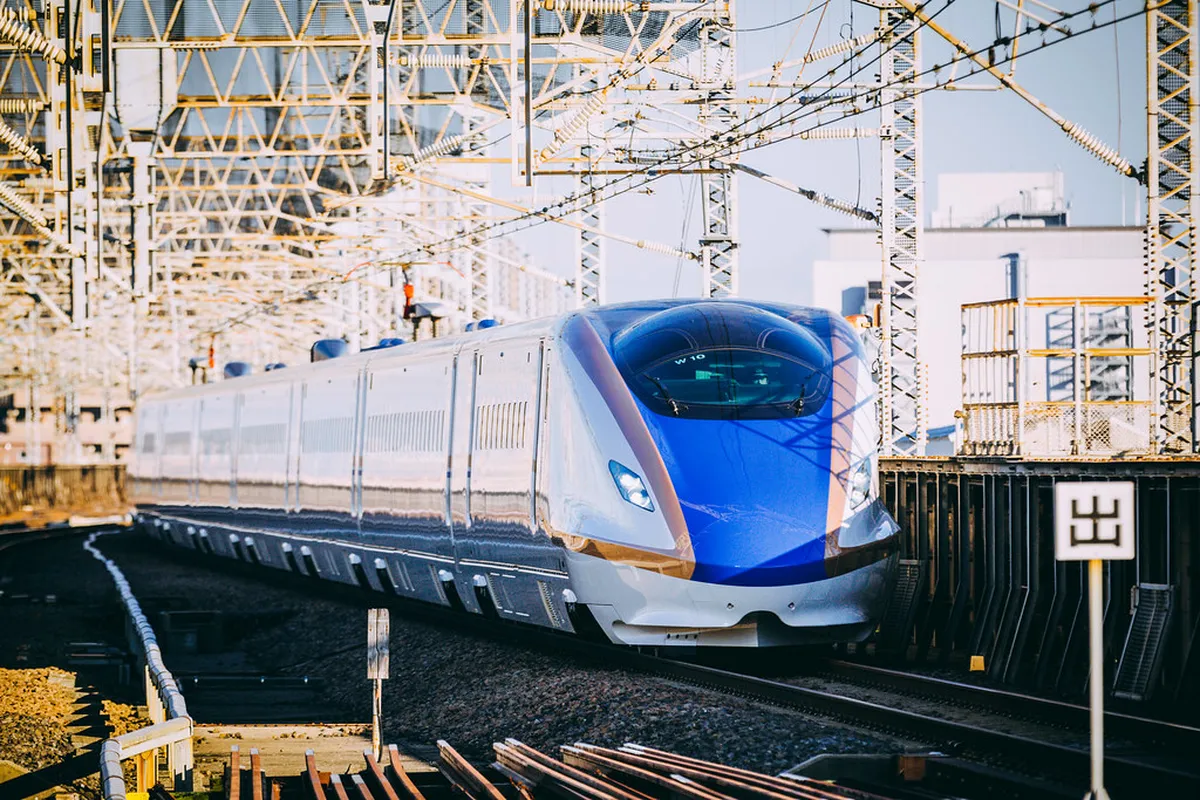
The Hokuriku Shinkansen runs direct from Tokyo Station (and Ueno Station) to Kanazawa Station on the E7 and W7 series trains. There are two service types: the Kagayaki is the express — it stops only at major stations and completes the journey in about 2 hours 30 minutes. Every seat on the Kagayaki is reserved, so you must book before you board. The Hakutaka is slightly slower at around 3 hours but offers non-reserved cars, which is useful if you are traveling at short notice or with a Japan Rail Pass and don't want to queue for a reservation.
The standard one-way fare from Tokyo to Kanazawa is ¥14,120 for an ordinary reserved seat. If you hold a Japan Rail Pass, the entire route is covered — just reserve your seat at a JR ticket office or machine before departure. During Golden Week (late April to early May), Obon (mid-August), and the cherry blossom season in late March and early April, trains fill up fast. Book reserved seats as far in advance as possible for those periods.
One practical tip: if you have oversized luggage (a suitcase larger than 160 cm in total dimensions), you are required to reserve an oversized baggage space when purchasing your ticket. This reservation is free and is made at the same time as your seat booking. Standard carry-on bags fit the overhead racks without any issue. Alternatively, use a Takkyubin (luggage delivery) service from your Tokyo hotel to your Kanazawa hotel — it costs ¥2,000–¥3,000 and the bag arrives the next day, freeing your hands for the journey.
From Kyoto and Osaka: The Tsuruga Transfer
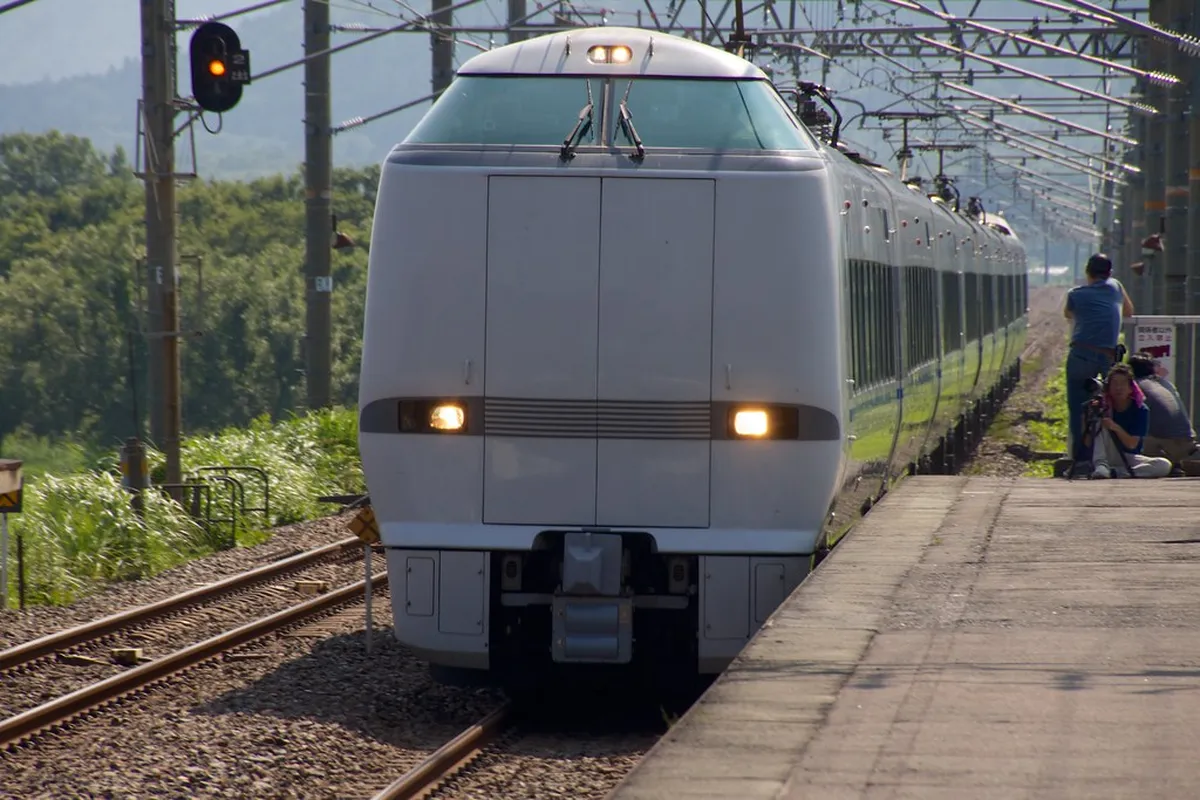
Since the March 2024 Hokuriku Shinkansen extension, there is no longer a direct limited express train between Kyoto or Osaka and Kanazawa. The old service ran non-stop; the new arrangement requires you to take the Thunderbird Limited Express to Tsuruga Station, then change to the Hokuriku Shinkansen for the final leg to Kanazawa. The total journey is still very manageable — about 2 hours from Kyoto and 2 hours 20 minutes from Osaka — and the connection is designed to be smooth.
From Kyoto, the Thunderbird takes approximately 53 minutes to reach Tsuruga. From Osaka (JR Osaka Station or Shin-Osaka), the same train takes about 80 minutes. At Tsuruga, the Shinkansen to Kanazawa takes a further 1 hour. The combined one-way fare is ¥7,710 from Kyoto and ¥9,410 from Osaka. Both routes are fully covered by the Japan Rail Pass.
The Tsuruga transfer itself is worth understanding before you arrive. The Thunderbird arrives on the conventional-rail side of the station; you walk through a connecting passage to reach the Shinkansen platforms on a different floor. Signs are in English and the route is well-marked, but the passage is longer than a typical same-platform transfer. Allow at least 8 minutes for the connection — most timetabled connections give you between 10 and 15 minutes, which is enough if you move with purpose. Do not stop to buy snacks or check your phone until you are through the gates. If you miss the connection, the next Shinkansen departs within 30 minutes on most timetables.
Travelers coming from western Japan should also look at the Hokuriku Arch Pass. This JR pass covers the Thunderbird, the Hokuriku Shinkansen between Tsuruga and Kanazawa (and onward to Toyama and Nagano), and several other lines in the region. It comes in 3-day and 5-day versions, priced at ¥19,000 and ¥25,000 respectively for foreign visitors. It is particularly good value if you plan a Kyoto–Kanazawa–Toyama loop or are adding the Noto Peninsula to your trip. You can check the current schedule using the JR West Official Timetable.
From Takayama and Shirakawa-go
If you are on the classic "Alpine Route" through central Japan, you will likely be coming from Takayama before reaching Kanazawa. The standard option is the Hida Limited Express from Takayama Station to Toyama Station, followed by the Hokuriku Shinkansen from Toyama to Kanazawa. The Hida takes about 1 hour 20 minutes; the Shinkansen leg to Kanazawa is only 18 minutes. Total journey time is roughly 2 hours with the transfer. Both segments are covered by the Japan Rail Pass.
A faster and more scenic alternative is the direct Nohi Bus between Takayama and Kanazawa. This highway bus runs along Route 156 through the Shirakawa-go UNESCO World Heritage villages — the thatched-roof gasshō-zukuri farmhouses are visible directly from your window. The bus takes about 2 hours and 15 minutes and costs approximately ¥3,900 one way. It departs from Takayama Bus Terminal and arrives at Kanazawa's West Exit bus terminal. This is the most efficient way to combine Shirakawa-go with your journey between the two cities without backtracking.
If you want to spend more time in Shirakawa-go rather than just glimpse it from a bus, the village is a convenient stop between the two cities. Buses stop at Shirakawa-go for connecting services; you can alight, explore for 2–3 hours, and catch a later bus to Kanazawa the same day. For a fuller visit, read the dedicated Kanazawa to Shirakawa-go day trip guide which covers bus timings and the best spots in the village.
Flying to Kanazawa via Komatsu Airport
Komatsu Airport (KMQ) is the nearest airport to Kanazawa, located about 30 km south of the city. JAL and ANA operate around 10 daily domestic flights between Tokyo Haneda (HND) and Komatsu, with the flight itself taking about 1 hour. There are also seasonal or less frequent services from Sapporo, Fukuoka, and Okinawa, making Komatsu a practical entry point if you are arriving from outside the main Honshu corridor.
From Komatsu Airport, the dedicated airport limousine bus runs to Kanazawa Station in about 40 minutes. Tickets cost ¥1,300 for adults and are purchased at vending machines in the arrivals hall. Buses depart roughly every 20–30 minutes timed to domestic flight arrivals. The total door-to-door time from central Tokyo (Haneda) — including check-in, the flight, baggage claim, and the bus — is realistically 3 hours or more. That is longer than taking the Shinkansen, and the cost is higher too, as cheap domestic fares are rarely available last-minute. Flying from Komatsu makes the most sense if you are already based near Haneda, have a tight connection to a flight onward, or are traveling from a city that does not have a convenient train link to the Hokuriku Shinkansen.
Traveling by Highway Bus
The highway bus is the cheapest way to reach Kanazawa from Tokyo, Kyoto, or Osaka. Willer Express is the most widely used operator for the Tokyo–Kanazawa route. Daytime buses depart from Shinjuku Expressway Bus Terminal (Busta Shinjuku) and take about 7.5–8.5 hours. Overnight buses leave in the late evening and arrive in the early morning, effectively saving you a night's accommodation. Fares range from ¥5,100 for a standard seat to ¥9,300 for a premium three-row seat with extra legroom. In Kanazawa, long-distance buses arrive and depart from the West Exit bus terminal adjacent to the station.
Bus seats vary considerably. Standard economy rows are four-across; premium options are three-across with a curtain for privacy and, on some services, individual footrests. Most buses include USB power outlets and free Wi-Fi. Not all buses have an onboard toilet — check before booking if this matters to you. Luggage is stored in the undercarriage hold; maximum bag dimensions vary by operator, but most accept a single bag up to 30 kg. Very large wheeled suitcases occasionally exceed size limits, so verify with the operator if you are traveling with oversized bags.
The Japan Rail Pass is not valid on private highway buses. If you hold a pass, the Shinkansen is the far better value. If you don't have a pass and are cost-conscious, buses can cut your transport costs by ¥5,000–¥9,000 compared to a Shinkansen ticket. Book online in advance — popular overnight departures on weekends and during peak season sell out a week or more ahead.
Getting Around Kanazawa from the Station
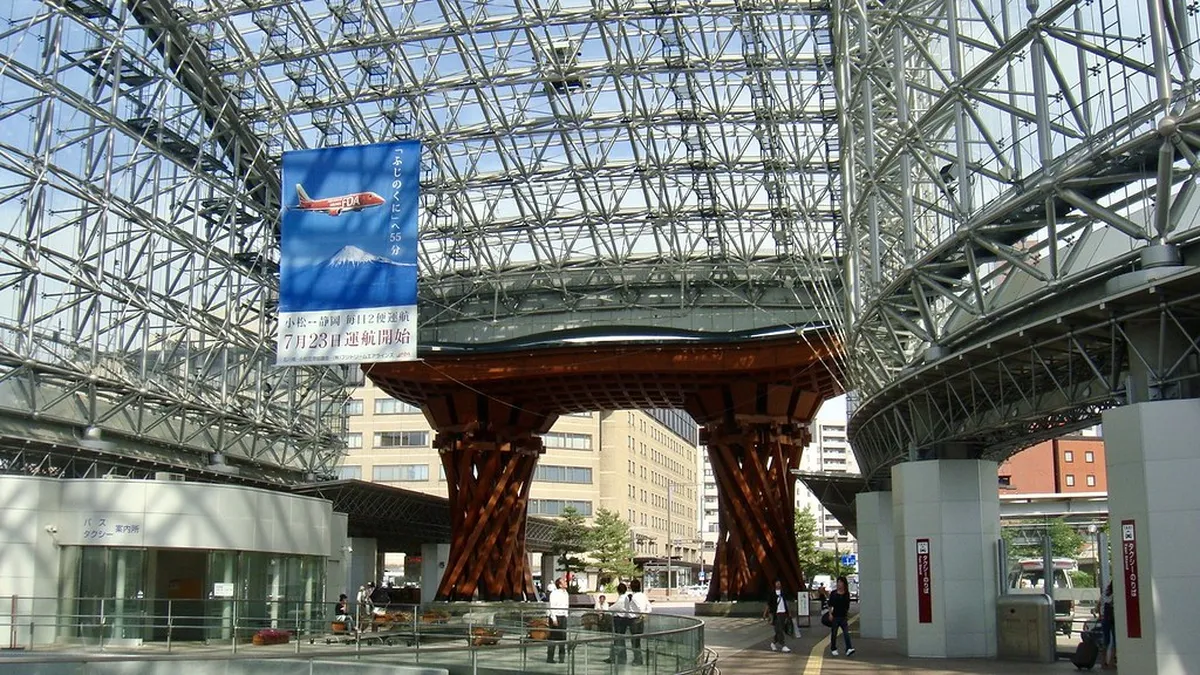
Kanazawa Station itself sits on the edge of the historic center. Most of the city's major attractions — Kenrokuen Garden, the Higashi Chaya geisha district, the Omicho Market, and Kanazawa Castle Park — are within 2–4 km of the station. You could walk to some of them in 20–30 minutes, but the most practical option for first-timers is the Kanazawa Loop Bus (also called Kanazawa Sightseeing Bus), which connects the station to the main sightseeing zones in a single circular route.
The Loop Bus runs clockwise and counter-clockwise, with major stops at Kenrokuen, Korinbo (the city center), Higashi Chaya, and the 21st Century Museum of Contemporary Art. A single ride costs ¥200; a one-day pass costs ¥600 and is sold at the tourist information office inside the station's East Exit. Buses run frequently — roughly every 15 minutes during peak hours. Both a Suica and a Pasmo IC card work on the Loop Bus, which lets you tap on and off without needing exact change. If you already have a Suica loaded on your iPhone or Android, you can use it directly on the bus without any additional setup.
For the Higashi Chaya district and Nishi Chaya in particular, the Loop Bus drops you close enough that most walks from the stop are under 5 minutes. Taxis are widely available outside the station's East Exit and at Korinbo. Rental bicycles are also available near the station for exploring at your own pace, though the hills around Kenrokuen are steep enough that a flat-route map is worth studying first.
Recommended Hotels and Where to Stay
The station area offers the widest range of accommodation and the most convenient access to trains and buses. Business hotels cluster around the East Exit — useful for early-morning departures and late arrivals. If you plan to take multiple day trips by train (to Shirakawa-go, Toyama, or the Noto Peninsula), staying within a 5-minute walk of the station saves real time over several days. See the full guide on Areas to Stay in Kanazawa: 2026 Planning Guide for neighborhood-level breakdowns.
The Korinbo and Katamachi areas place you closer to the city's restaurants and nightlife, with a 10–15 minute bus or taxi ride back to the station. The Higashi Chaya district has a handful of small boutique guesthouses and machiya (townhouse) stays for travelers who want to be inside the historic streets rather than near the transport hub. For a traditional inn experience, the Best Ryokan In Kanazawa Travel Guide guide covers properties that serve Kaga cuisine and include onsen baths — most are priced from ¥25,000 per person per night including two meals.
Book at least three months ahead for spring (late March to early May) and the autumn foliage season (mid-October to late November). Hotel Nikko Kanazawa, a 30-floor landmark next to the station, and APA Hotel Kanazawa-Chuo are both reliably available for last-minute booking outside peak periods. Most hotels offer luggage storage and some can arrange Takkyubin forwarding to your next destination.
Frequently Asked Questions
Is the Japan Rail Pass valid for the Tokyo to Kanazawa Shinkansen?
Yes, the Japan Rail Pass covers the entire Hokuriku Shinkansen route. You can use it on both the Kagayaki and Hakutaka trains. Make sure to book your reserved seats at a JR ticket office before boarding.
How do I get from Kyoto to Kanazawa after the 2024 Shinkansen extension?
You must take the Thunderbird Limited Express to Tsuruga Station first. From there, transfer to the Hokuriku Shinkansen for the final leg. The entire journey takes about two hours with a smooth transfer process.
What is the cheapest way to get to Kanazawa from Tokyo?
The highway bus is the most affordable option for budget-conscious travelers. Prices start around ¥5,000 / ~$34 for an eight-hour journey. Booking a night bus can also save you the cost of a hotel room.
Reaching Kanazawa is now faster and more convenient than ever for international tourists. Whether you choose the speed of the Shinkansen or the value of a bus, the journey is worth it. This historic city offers a unique blend of samurai culture and modern artistic flair.
I hope this guide helps you navigate the new 2024 rail routes with total confidence. Enjoy your time exploring the gardens and districts of this beautiful Japanese gem. Safe travels on your upcoming adventure to the heart of Ishikawa Prefecture.
Free: The Kanazawa Essentials guide
Top things to do, where to stay, a perfect day plan, getting around, and the best time to go — a Kanazawa mini-guide you can take offline.
You might also like

Continue reading
More guides you'll find useful