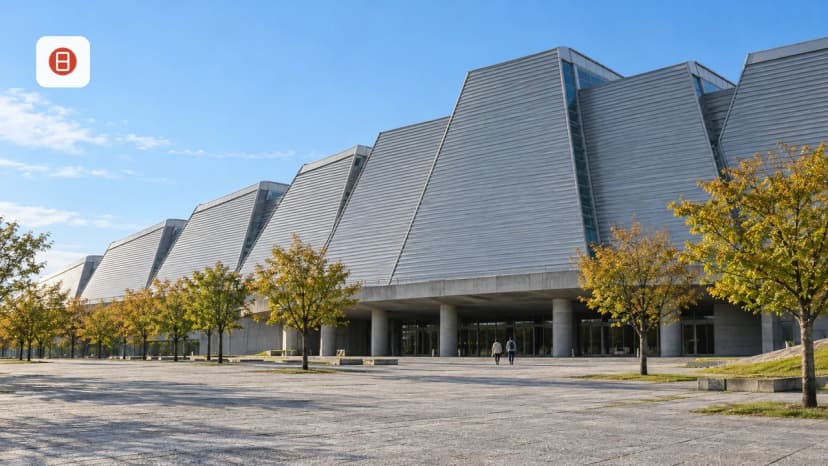
The Matsumoto City Timepiece Museum is one of Japan’s most distinctive specialty museums, home to more than a thousand clocks, watches, and timepieces spanning five centuries. More than a hundred are on display at any time, and the vast majority are kept in working order so visitors can actually hear them tick and chime. The building is impossible to miss: Japan’s largest working pendulum clock is embedded in the exterior facade, ticking away on the street corner in central Matsumoto.
This visitor guide covers everything you need to plan a smooth visit in 2026. You will find accurate entry prices, opening hours, transit directions, and a floor-by-floor breakdown of the exhibits. The museum sits a ten-minute walk from Matsumoto Station, making it easy to slot into a broader day of sightseeing in this mountain city.
Essential Visitor Information for 2026
The museum is open Tuesday through Sunday, 09:00–17:00, with last entry at 16:30. It is closed every Tuesday — not Monday, a common source of confusion — and is also shut during the year-end holiday period from 29 December through 3 January. Admission is ¥500 for adults (high school students and above) and ¥200 for children (junior high and under). Groups of 20 or more receive a reduced rate of ¥450 per adult and ¥180 per child.
| Visitor Type | Standard | Group (20+) | Closed |
|---|---|---|---|
| Adult (high school+) | ¥500 | ¥450 | Tuesdays + Dec 29–Jan 3 |
| Child (junior high and under) | ¥200 | ¥180 |
Arrive a few minutes before the hour on any floor — especially the second — to hear the chimes ring in sequence across the entire collection. At scheduled times, staff play 78-rpm records on hand-wound gramophones. Check the day's gramophone schedule at the entrance desk.
Plan for one to two hours inside, though clock enthusiasts often linger longer. The building at 1-21-15 Chuo, Matsumoto (postal code 390-0811) is a ten-minute walk from the East Exit of JR Matsumoto Station. You can also reach it via the Town Sneaker tourist bus — alight at the museum stop. There is no on-site parking, so visitors arriving by car should use the nearby public lots.
- Opening days: Tuesday – Sunday (closed Tuesdays if a national holiday falls on Tuesday, the following day is closed instead)
- Hours: 09:00–17:00 (last entry 16:30)
- Adult admission: ¥500 | Children: ¥200 | Group adult: ¥450
- Address: 1-21-15 Chuo, Matsumoto, Nagano 390-0811
- Transit: 10 min walk from Matsumoto Station East Exit; Town Sneaker bus stop at museum
The Core of the Museum: The Honda Collection
The museum exists because of Chikazo Honda (1896–1985), an engineer and lifelong timepiece collector. Honda began accumulating clocks and watches in his twenties, using his own engineering skills to restore them to working condition. By 1974, when he donated his private collection to the city of Matsumoto, it held 342 pieces sourced from Japan, Europe, and the United States, with the oldest items dating to the sixteenth century.
Honda did not simply walk away after the donation. Every year on Time Day — 6 June — he would return to the museum to check and repair his pieces until his death in 1985. He also spent years reconstructing a "rolling ball clock" from historical written records alone, a three-faced device where each face shows hours, minutes, or seconds as a ball takes exactly 15 seconds to travel the zigzag track. The museum keeps Honda’s practice alive: staff still wind the clocks by hand so the collection remains operational.
In 2002, the collection moved from a section of the Matsumoto Museum to its own purpose-built building, the current Matsumoto City Timepiece Museum. The total holdings now exceed a thousand items, though the displayed selection rotates. The Honda Collection remains the permanent backbone, and pieces from his original donation are on every floor.
Inside the Museum: Floor by Floor
The museum has two main floors of exhibits. The ground floor covers the broad history of timekeeping, from ancient Egyptian sundials through European pocket watches to twentieth-century quartz movements. A corner called the "Well of Time" uses animation to give a child-friendly summary of the floor’s content, watched over by a charming Italian clockmaker statue. There is also a video section focused on contemporary timekeeping technology.
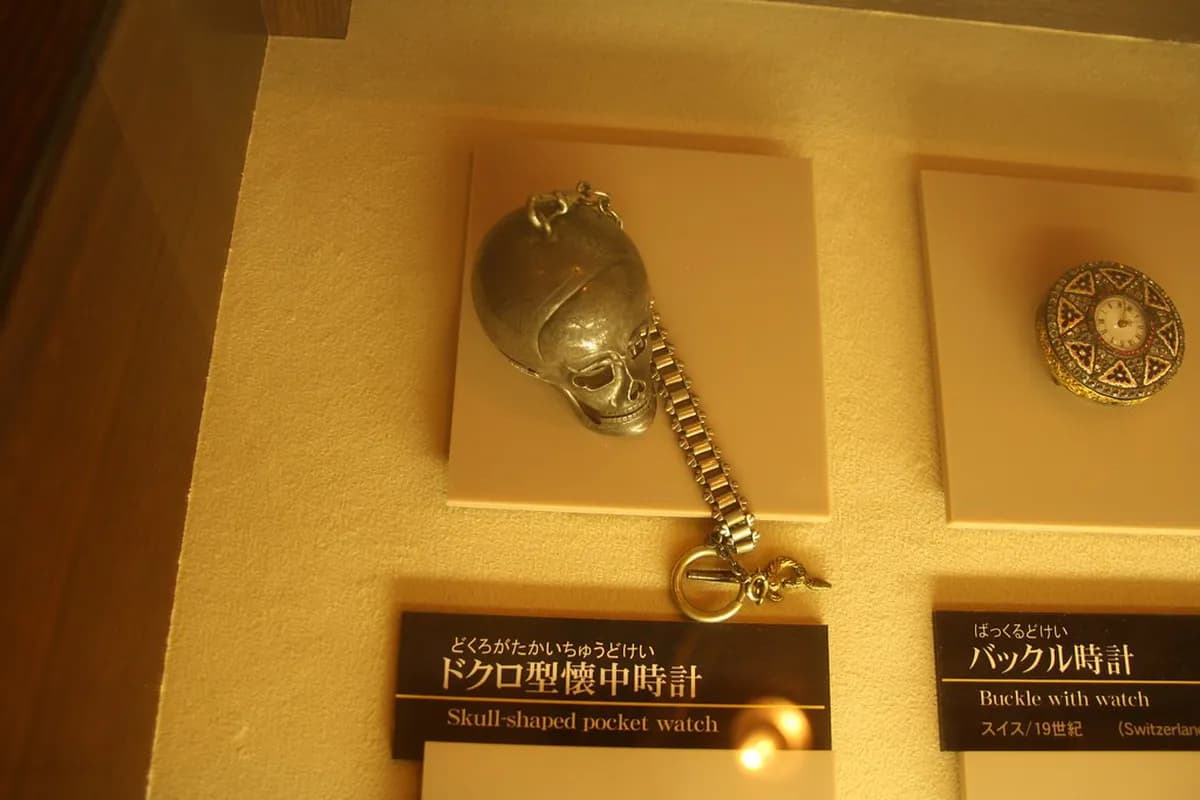
The second floor holds the bulk of the collection and is divided into three galleries: Japanese-style clocks, European and American clocks, and a dedicated gramophone room. These sections are connected by a corridor nicknamed "Grandfather Clock Road." The European and American gallery is the showstopper — expect jewel-encrusted clocks, skull-shaped pocket watches, cuckoo clocks, lamp clocks, frypan clocks, and pieces where the face itself acts as the pendulum. Since virtually all are in working order, timing your arrival on the hour lets you hear the chimes ring in sequence, just as they would have decades or centuries ago.
The gramophone room rewards patient visitors. At scheduled times during the day, a staff member winds the gramophones and plays 78-rpm records, known in Japan as "SP" records. Hearing a hand-wound gramophone fill a quiet room with Caruso is an experience that no digital exhibit can replicate. Check the day’s schedule at the entrance so you do not miss it.
How Japan Kept Time: The Edo-Period Clock System
One of the most instructive exhibits in the Japanese clock gallery is a working Edo-period (1603–1868) clock that illustrates a timekeeping method most international visitors have never encountered. Rather than dividing the day into 24 equal hours, the Japanese system split daylight into six equal sections and nighttime into six equal sections — meaning each "hour" was longer in summer and shorter in winter. The sections were numbered from nine down to four, going backwards, and each was also named after one of the twelve animals of the Chinese zodiac.
The practical consequence is that a Japanese clock from this era required a seasonal adjustment mechanism: the length of each interval had to be altered as the days grew longer or shorter. Several pieces in the museum incorporate exactly this mechanism, with movable hour markers that the owner repositioned every few weeks. No other timepiece collection in Nagano explains this system as clearly, and it is one of the strongest reasons to visit even if you have seen European clock museums before.
What Visitors Say: Museum Reviews
Reviewers consistently describe the atmosphere as soothing and oddly meditative. The layered ticking of hundreds of clocks creates a background sound unlike anything in a standard history museum. Many visitors report being surprised by how many items are actually running — they arrived expecting glass-case displays and found mechanical action on every shelf.
The staff receives strong praise for their care and knowledge. Because the clocks are wound by hand on a regular schedule, staff members are frequently visible among the exhibits, which creates an unusually engaged atmosphere. Language barriers are a real consideration for non-Japanese speakers: major items have English labels, but secondary descriptions are often Japanese-only. Picking up the English brochure at the entrance desk closes most of that gap.
The museum is generally considered very good value at ¥500 per adult. Reviewers who found it underwhelming tend to be travelers who visited without much interest in horology and did not arrive at the hour to hear the chimes. First-timers who time their arrival for on the hour — especially on the second floor — typically come away as converts.
Nearby Attractions in Matsumoto
The museum is perfectly situated for those who want to explore the local shopping scene afterward. A short walk will take you to the historic Nakamachi Street area. This street is lined with traditional white-walled kura storehouses, most now converted into boutiques and cafes selling local crafts, sake, and soba goods. It takes about 30 minutes to walk end to end at a leisurely pace.
Heading the other direction from the museum leads toward the central river area and Nawate Street, also known as Frog Street. This pedestrian path runs along the Metoba River and is lined with frog statues, craft stalls, and independent snack shops. It is an easy and relaxing detour before or after the museum.
The museum is also close to the historic center where Matsumoto Castle stands. The castle is about a fifteen-minute walk and is Japan’s oldest surviving five-story castle keep. Combining the timepiece museum in the morning with a castle visit in the afternoon makes for a well-balanced day without any need for transit. The two sites together account for roughly four to five hours of sightseeing.
Other Must-See Matsumoto Attractions
Matsumoto rewards visitors who explore beyond the castle. The Matsumoto City Museum of Art is a short walk from the station, known for large-scale outdoor installations and a permanent Yayoi Kusama collection. History and architecture fans should add the Former Kaichi School (built 1876) to their itinerary — its blend of Meiji-era Western and Japanese construction is the best surviving example of its type in the region.
For outdoor space, Matsumoto Alps Park sits on higher ground above the city with panoramic Northern Alps views. It includes walking trails, a small zoo, and open picnic areas — a natural break from indoor museum visits.
How to Plan a Full Day in Matsumoto
The city is compact and very walkable. A reliable approach for first-timers is to reach Matsumoto from Tokyo via the Azusa limited express train from Shinjuku — the journey takes about 2.5 hours and trains run hourly. From Matsumoto Station, virtually every major sight is within a 15-minute walk. Consulting a Matsumoto travel guide before you arrive helps you group nearby sites into a logical route.
Start the castle visit early when crowds are thinnest, then walk to the timepiece museum for late morning. Arrive at the museum a few minutes before the hour to catch the chimes. After lunch on Nakamachi Street, the afternoon is well suited to the City Museum of Art or a stroll down Nawate Street. The Town Sneaker tourist bus makes a loop of the main sites and is useful if you want to reach Alps Park without walking uphill.
The Timepiece Museum is closed on Tuesdays — the opposite of most Matsumoto attractions, which close Mondays. Plan a Wednesday-through-Sunday visit to keep both the museum and the art museum open on the same day.
One common mistake is visiting on a Tuesday without checking the museum’s closure schedule. The timepiece museum is closed Tuesdays, while most other Matsumoto attractions are closed Mondays. Planning a two-day itinerary cleanly sidesteps this conflict: day one for the castle area and Nawate Street, day two for the museum and the arts district. If you only have one day, arrive on a Wednesday through Sunday to keep all options open.
Family-Friendly and Budget-Friendly Options
The timepiece museum is a genuine hit with older children. The mechanical movements, visible gears, and chiming clocks hold attention in a way that static exhibits rarely do. The "Well of Time" animation on the ground floor is specifically designed for younger visitors. That said, the collection is fragile, so it works best for children who can walk around without touching. Toddlers and very young children may find the atmosphere too quiet for a long visit.
Entry costs for a family are low. Two adults and two children pay ¥1,400 combined, which is modest by Japanese museum standards. Combining the museum with the castle and the City Museum of Art keeps a full day of culture under ¥5,000 per adult if you eat at a local soba restaurant rather than a tourist-facing dining spot.
For affordable accommodation near the museum, the Matsumoto Castle hostel in the central district puts you within walking distance of every site mentioned in this guide. Budget travelers can also find reasonably priced business hotels within five minutes of the station.
Frequently Asked Questions
Is the Matsumoto Timepiece Museum suitable for children?
Yes, children often find the mechanical movements and chimes very engaging. The museum is quiet, so it is best for older children who can appreciate the delicate nature of the exhibits. There are several large clocks that are especially popular with younger visitors.
Can I take photos inside the museum galleries?
Photography is generally allowed in most areas of the museum for personal use. However, you should always look for signs that might restrict photos of specific rare items. Avoid using flash as it can disturb other visitors and potentially damage sensitive materials.
How do I get to the museum from the train station?
The museum is a pleasant 10-minute walk from the East Exit of Matsumoto Station. You can also take the 'Town Sneaker' bus and get off at the museum stop. Using a Matsumoto map makes the walk very straightforward and easy.
Are the exhibits explained in English for international visitors?
Most of the major exhibits feature English translations for the descriptions and historical context. This makes the museum very accessible for international travelers who do not speak Japanese. The staff can also provide basic assistance and brochures in several different languages.
The Matsumoto City Timepiece Museum is small by the standards of major city museums, but few places in Japan concentrate this much mechanical ingenuity and genuine history into a single building. Chikazo Honda spent most of his life making sure these clocks would still run for strangers to hear, and the museum staff have maintained that commitment for decades. If you arrive at the top of the hour on a weekday, you will have the second-floor galleries largely to yourself while every clock in the room begins to chime.
The museum is open Tuesday through Sunday, 09:00–17:00, admission ¥500 for adults. It is a ten-minute walk from Matsumoto Station and sits close to the castle, Nakamachi Street, and Nawate Street — making it easy to build a full day around without any special logistics. For 2026 visitors, it remains one of the most rewarding and undervisited stops in the Japanese Alps region.
For more Matsumoto planning, see our Matsumoto itinerary, things to do in Matsumoto, and Matsumoto food guide.
For official details, visit the Matsumoto Timepiece Museum official site, Matsumoto Timepiece Museum official site and Matsumoto Timepiece Museum official site.