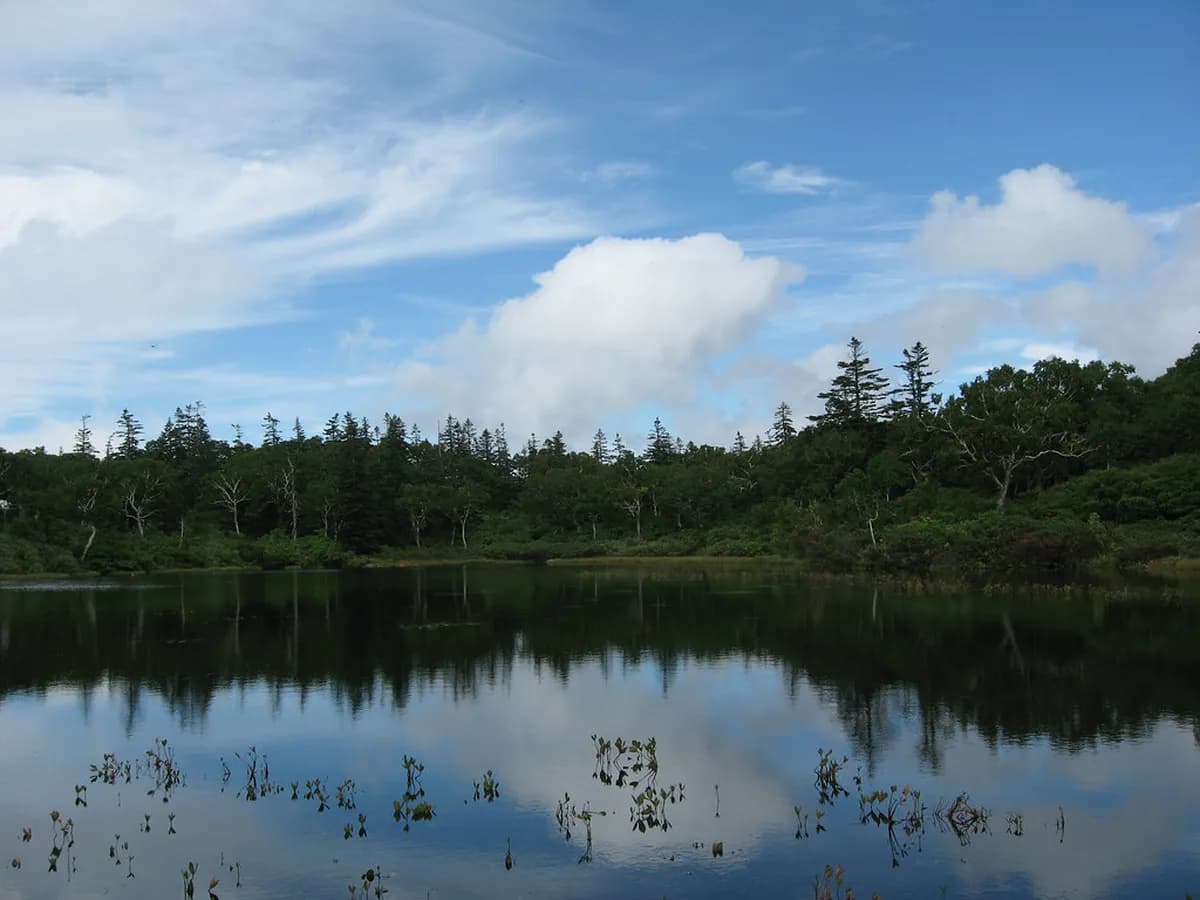
Shinsen-numa Marsh stands as one of the most beautiful high-altitude wetlands in the Niseko mountain range. Visitors often describe it as a mystical place where spruce trees reflect upside-down on still, characteristically blue water. The name itself hints at this atmosphere: "shinsen" combines the Japanese words for "mysterious" and "hermit," a nod to the mountain hermit said to have dwelt here. Planning your trip requires knowing the road closure window and which of the two trail loops suits your group — this Niseko travel guide covers both.
Essential Shinsen-numa Marsh Visitor Information
The marsh sits in Kyowa Town, a short drive from the main Niseko resort areas via the scenic Niseko Panorama Line (Route 66). The trailhead is clearly marked, with a large free parking lot accommodating around 80 cars. Entry to the natural area is free, though a voluntary 100-yen donation box near the signboard helps maintain the wooden boardwalks — most visitors contribute.
The Shinsen-numa rest house at the parking lot is more than just toilets. The cafe inside serves soba, udon noodles, onigiri, and Belgian waffles, making it a legitimate lunch stop rather than just a place to freshen up. If you are caught by sudden mountain rain, you can also rent a poncho at the cafe for a small fee with a refundable deposit. The rest house operates during the peak season from late spring through early autumn.
There are no shops or vending machines on the trail itself, so stock up before you leave the car. On the second floor of the rest house, a series of display panels introduces the natural environment of the marsh — worth a five-minute read before you start walking.
- Quick Facts for Visitors
- Entry fee: free (voluntary 100-yen donation)
- Parking: free, approx. 80 spaces
- Restrooms: at rest house / parking lot
- Cafe: soba, udon, waffles, ice cream (seasonal hours)
- Poncho rental: available at cafe (refundable deposit)
Best Time to Visit for Seasonal Scenery
Timing your visit correctly is the key to seeing the marsh in its most vibrant state. Late June is the best window for alpine flowers — the area surrounding the boardwalk is sometimes called the Niseko Flower Fields when Ezo daylilies and cotton grass are in full bloom. The fresh green of early summer activities season creates a stunning contrast against the blue mountain sky. Check the Nisekoareaguide.com site for specific opening and blooming updates each year.
Autumn brings a completely different atmosphere as the leaves change to brilliant reds and golds. Mid-October is typically the peak window for viewing the famous autumn foliage in this region. The high altitude means the leaves change significantly earlier than in the lower Niseko valleys, so early October can already offer striking colors depending on that year's temperatures. The reflection of the colorful trees on the still water makes for some of the most photographed scenery in Hokkaido.
Winter access is not possible because the Niseko Panorama Line closes due to heavy snow. The road typically shuts in late October and does not reopen until late April. Always verify the exact road status before attempting to drive toward the marsh in the shoulder seasons — the closure dates shift year to year based on snowfall.
The Niseko Panorama Line (Route 66) closes from approximately late October to late April due to snowpack. Confirm the road is open before making a special trip — closure dates shift year to year. Never step off the boardwalks: foot traffic permanently compacts the fragile high-moor root mats.
Navigating the Shinsen-numa Boardwalk Trails
The main trail to the marsh consists of well-maintained wooden boardwalks that protect the delicate ecosystem below. Walking from the rest house to the marsh takes approximately 20 to 30 minutes at a steady pace. Signboards are posted throughout, so there is no risk of getting lost even without a guide. The total boardwalk network covers around 1,388 meters of maintained wooden walkway.
You will pass through a dense forest of wetland spruce before the view breaks open and the plateau wetland materializes around you. The sound of birdsong replaces the wind through the trees once you reach the open marsh. Watch your step on the wooden planks, which can become slippery after rain or where moss has grown over older sections. Sturdy shoes with grip are recommended even though the path is largely flat.
Once at the marsh, the boardwalk forms a loop around the main body of water, with several viewing platforms overlooking the mirror-like pond. For visitors with extra time and energy, a side trail adds another 15 minutes to reach Naganuma Lake — on a clear day, the longer view from there is worth the extra steps. Plan at least 60 to 90 minutes total for the walk, photography, and the optional extension. A spot along the trail offers a direct sightline to Mt. Chinsenpuri, and mountain paths continue from there to the summit for experienced hikers.
Wildlife and Flora Highlights
The marsh is home to a variety of rare alpine plants that thrive in the cool mountain climate. Look for the white flowers of bog bean in early summer, and the yellow-orange blooms of Ezo daylilies through late June. Among the many Niseko attractions, the Niseko Annupuri area shares much of this unique high-altitude vegetation. Educational signs along the boardwalk identify the different species at each stage of the walk.
Birdwatchers will find plenty to observe. Ducks and wading birds feed in the shallow margins of the pond, and migratory songbirds pass through during the spring and autumn transitions. The quiet environment makes it much easier to spot wildlife if you move slowly and keep noise low. Early morning visits, before the midday groups arrive, produce the best wildlife encounters.
The surrounding forest is managed as part of the national forest system to protect local biodiversity. You can learn more about these conservation efforts from the rinya.maff.Go.jp resources. Avoid stepping off the boardwalks under any circumstances — the fragile root mats of a high-moor marsh compact permanently under foot traffic, and recovery takes decades.
Family-Friendly Trekking and Accessibility
Families with children will find the boardwalk trail to be a safe and engaging outdoor activity. The short distance and largely flat terrain ensure that even young children can complete the walk without difficulty. Many parents bring a backpack carrier for very small children rather than a stroller, as the boardwalk slats can be narrow in sections.
There are two main route options offering different levels of challenge. The primary boardwalk path is 735 meters long and avoids steep elevation changes — the best choice for anyone traveling with seniors, young children, or those using walking aids. The alternative step path covers 635 meters but involves a more taxing series of stairs. Both loops return to the same rest house, so groups can split and reunite.
| Route | Distance | Difficulty | Notes |
|---|---|---|---|
| Boardwalk path | 735 m | Very easy, fully accessible | Suitable for mobility aids, strollers, all ages |
| Step path | 635 m | Moderate incline | Stairs; not suitable for mobility aids |
| Optional Naganuma Lake extension | +15 min | Easy | Adds longer views on clear days |
| Total boardwalk network | 1,388 m | – | All wooden walkway; slippery after rain |
| Admission | Free (¥100 voluntary donation) | Parking also free (~80 spaces) | |
The rest house cafe serves soba, udon, onigiri, and Belgian waffles — a legitimate lunch stop. If rain catches you on the trail, poncho rental is available at the cafe for a small, refundable deposit.
The marsh serves as an excellent outdoor classroom for children learning about wetland ecology. Kids tend to be captivated by the small insects, frogs, and ducks that live in and around the shallow pools. Keep children on the boardwalk at all times — this protects both the marsh ecosystem and the children themselves from uneven ground.
- Trail Path Comparison
- Boardwalk path: 735 meters, very easy, fully accessible
- Step path: 635 meters, moderate incline, not suitable for mobility aids
How to Plan a Smooth Shinsen-numa Day Trip
A successful Niseko itinerary starts with checking the weather forecast for the Niseko mountain range. Mountain weather changes rapidly, often dropping 5–8°C colder than the town areas below. Pack a light waterproof layer and dress in breathable layers rather than a single heavy jacket. Arriving before 09:00 means you will have the marsh largely to yourself before the midday rush.
Driving the Niseko Panorama Line (Route 66) is a highlight in itself. This winding road connects the coastal town of Iwanai with the mountain resort areas including Grand Hirafu, and on clear days offers panoramic views of the Sea of Japan and the Shakotan Peninsula. There are no gas stations along the mountain pass, so fill your tank in Niseko town or Iwanai before the climb. Mobile phone reception is unreliable in sections of the forest, so download an offline map in advance.
The drive from JR Niseko Station to the Shinsen-numa rest house takes approximately 30 minutes. There is no direct public transport to the marsh — a rental car or hire vehicle is effectively required. Booking a car well in advance is essential in peak summer and autumn weekends, when Niseko-area rental fleets run out quickly.
- Road Trip Checklist
- Fuel: fill tank before the Panorama Line
- Layers: waterproof shell plus mid-layer
- Maps: download offline before entering the pass
- Water and snacks: no vending machines on trail
- Road status: check closure dates before shoulder-season visits
Shinsennuma Marsh vs. Onuma Marsh
Many visitors wonder which marsh to prioritize when time is limited. Shinsen-numa is the more famous of the two — it has the wide-open plateau views, the iconic mirror-like pond, and the well-maintained boardwalk that works for all fitness levels. Onuma Marsh, accessible by a 2-hour walk from Goshiki Onsen, offers a more enclosed forest experience with a different plant community and far fewer visitors.
The trail at Shinsen-numa is generally better maintained and easier for casual walkers to navigate. Onuma feels more rugged and rewards those seeking true solitude. For the most iconic photographs and the most logistically straightforward half-day, Shinsen-numa is the stronger choice. If you are already spending time at Goshiki Onsen and have the stamina for a two-hour walk, Onuma makes a compelling extension rather than a substitute.
Both locations are easy to combine in a single full day if you start early. Visit Shinsen-numa first while the morning light reflects on the pond, then drive to Goshiki Onsen for lunch and a soak, and walk to Onuma in the afternoon if energy allows.
- Marsh Comparison
- Shinsen-numa: open plateau, iconic pond reflections, easy boardwalk
- Onuma: forest-enclosed, more rugged, 2 hours from Goshiki on foot
Nearby Stop: Goshiki Onsen and Nisekonupuri
After finishing your walk at the marsh, consider stopping at the nearby Niseko Goshiki Onsen. This hot spring is famous for its sulfur-rich water and rustic mountain atmosphere. The entry fee is 800 yen for adults, making it an affordable luxury after a morning of walking. A half-hour drive from the main Niseko resort areas, Goshiki is nestled in the mountains surrounded by dense forest and greenery.
More adventurous hikers can attempt the summit trail of Mt. Nisekonupuri from the same area. The climb takes about 1.5 hours and rewards you with sweeping views of the entire Niseko mountain range. Ensure you have proper footwear if you plan to add this climb — the terrain is significantly more demanding than the marsh boardwalk.
The area around Goshiki is also close to Niseko Konbu Onsen for those who want to compare different mineral compositions. Each onsen in the Niseko region has its own character. Check operating hours before you go, as they can change during the off-season.
Exploring Fukidashi Park and Kyogoku
On your way back toward Niseko, a stop at Fukidashi Park in Kyogoku is about 20 minutes from Grand Hirafu and is well worth the detour. This park is famous for its natural spring water flowing directly from Mt. Yotei, which visitors can fill bottles with for free. The park features a small lake, pleasant walking paths, and a playground, with the peak of Mt. Yotei framing photographs from the right vantage point.
The local food scene in Kyogoku is a genuine highlight. Meisui Udon Nonosan on Route 276 is a well-known udon restaurant that uses the local spring water — no visit to Kyogoku is considered complete without a bowl. For something sweet, Kyogoku Purin Cafe Mocha in the center of the park serves locally-roasted coffee and a creamy custard pudding made famous in the region. Both spots are typically open for lunch and can get busy on weekends.
Climbing the observation deck stairs in the park offers a spectacular view over the surrounding farmland. It serves as a useful leg-stretch before the final drive back to Niseko or onward toward Sapporo. The combination of the free spring water, local noodles, and the Mt. Yotei view makes Fukidashi a satisfying conclusion to a Panorama Line road trip.
Where to Stay Near Shinsen-numa Marsh
Shinsen-numa has no lodging at the trailhead, so you need a base elsewhere in the Niseko area. The road to the marsh closes from late October to late April, so this advice applies to the open summer and early autumn season. Every base below is a drive away, and none is a walk.
Choosing a base
- Annupuri and Goshiki Onsen area: This is the closest option, on the same mountain road system as the marsh. It suits travelers who want an onsen soak after the boardwalk and a quiet evening. Restaurants are limited, so plan dinner in advance.
- Niseko Village and Grand Hirafu: These have the widest choice of hotels, condos, and restaurants, and they work well if you are combining the marsh with rafting, cycling, or other summer activities. Expect a drive of roughly 30 to 40 minutes to the trailhead, depending on where you start.
- Kutchan town: This is usually the cheaper choice. It has supermarkets, a train station, and small guesthouses. It is a practical base if you are traveling on a budget or without a rental car.
- Iwanai, on the Sea of Japan side: This is a quieter coastal base at the other end of the Niseko Panorama Line. It is useful if you want to drive the full scenic route in one direction and return by the same road.
Booking tips
Summer is the high season for the marsh. Late June flowers and mid-October foliage both draw crowds, and rooms near the resort areas fill up early in those windows. Book well ahead for weekends and for the Obon holiday period in mid-August.
Since the rest house cafe is the only food source near the trail and the road has no gas stations, buy your food and fuel at your base before you set out. To beat the midday crowds, aim to reach the car park before 09:00. This is easiest if you sleep in Annupuri or Niseko Village rather than Kutchan or Iwanai.
Without a car, check ahead that your lodging can arrange transport. Public transport does not reach the trailhead, so a taxi or rental car is the realistic way to get there.
Frequently Asked Questions
When does the Niseko Panorama Line close for winter?
The Niseko Panorama Line typically closes in late October and reopens in late April. These dates change based on snowfall levels each year. You should check local road reports on Tripadvisor.com or official town websites before your trip.
Is Shinsen-numa Marsh accessible for children?
Yes, the marsh is very accessible for children thanks to the flat wooden boardwalks. The 20-minute walk is manageable for most young kids. Parents should supervise children closely to ensure they stay on the marked paths at all times.
What is the best month for autumn foliage at Shinsen-numa?
Mid-October is generally the best time to see the peak autumn foliage at the marsh. The high altitude means the leaves change earlier than in the lower Niseko valleys. Early October can also offer beautiful colors depending on the temperature.
Do I need hiking boots for the Shinsen-numa boardwalk?
While you do not strictly need heavy hiking boots, sturdy footwear with good grip is highly recommended. The wooden boardwalks can become very slippery when wet or covered in moss. Comfortable sneakers are usually sufficient for the main boardwalk loop.
Shinsen-numa Marsh offers a unique opportunity to experience the quiet beauty of Hokkaido's high-altitude wetlands. Whether you visit for the summer flowers or the autumn leaves, the scenery is sure to impress. Combining this walk with a visit to Mount Yotei or a local onsen makes for a complete day in 2026. Respect the natural environment so that future travelers can continue to enjoy this mystical marsh.
To verify current details, consult the Shinsen-numa Marsh official site and Shinsen-numa Marsh on Wikipedia.