How Many Days In Kumamoto? (The Complete 1-3 Day Guide)
Plan your Kumamoto trip with our 1, 2, and 3-day itineraries. Discover how many days you need for Kumamoto Castle, Mt. Aso, and local hidden gems.
On this page
Most visitors to Kumamoto need between one and three days, depending on whether they want to cover just the city or venture out to Mt. Aso's caldera. One full day is enough for the castle, Suizenji Garden, and the downtown arcades. Two days lets you breathe and explore the neighborhoods properly. Three days opens up the entire Aso volcanic region and some of the best drives in Kyushu.
Kumamoto sits in the heart of Kyushu and is 40 minutes by Shinkansen from Hakata Station in Fukuoka, making it one of the most accessible mid-size cities in the region. The city suffered major earthquake damage in 2016, but as of 2026 the reconstruction has transformed the castle precinct into one of the most interesting heritage sites in Japan. This guide is built around the practical decisions most first-time visitors face.
Is Kumamoto Worth Visiting?
Yes — and it is underrated compared to Kyoto or Nagasaki. Kumamoto Castle is one of only a handful of original-scale castle complexes still standing in Japan, and the post-earthquake reconstruction has added a dimension that no other castle offers: you can walk the elevated viewing corridor directly over collapsed stone walls still waiting for restoration. That is a living archaeology experience you will not find elsewhere.

The elevated walkway over the collapsed stone walls is temporary infrastructure designed not to anchor into the ground—the walls are National Treasures that cannot be altered. This unique accessibility window may not last forever, making a visit sooner rather than later worthwhile.
Beyond the castle, the city has a genuinely local food culture. Basashi (horse sashimi), karashi renkon (lotus root with spicy mustard miso), and Kumamoto ramen are distinct from what you find in Fukuoka or Kagoshima. The downtown shopping arcades — Kamitori and Shimotori — are dense with restaurants that feel like they exist for residents, not tourists.
The surrounding prefecture pushes the city from "worth a stop" into "worth a detour." Mt. Aso is one of the largest active calderas on Earth. Kurokawa Onsen and the Amakusa Islands are within a half-day's reach. If you enjoy the mix of urban culture and raw nature, Kumamoto delivers both better than most cities in Japan. Check our Is Kumamoto Worth Visiting? A Guide to Japan's Land of Fire guide for a deeper breakdown.
How Many Days Should Your Itinerary Last?
| Duration | Focus | Who It Suits |
|---|---|---|
| 1 day | Castle, Josaien, Suizenji Garden | Fukuoka day-trippers; see highlights only |
| 2 days | Castle, neighborhoods, food scene, Reigando Cave | First-time visitors; experience the city properly |
| 3 days | Everything above + Mt. Aso, Milk Road, caldera viewpoints | Nature lovers, volcanic geography enthusiasts, road-trip planners |
One day works if you are based in Fukuoka and treating Kumamoto as a day trip. You can cover the castle (allow three to four hours including the museum), Josaien shopping area, and Suizenji Garden by tram before catching a Shinkansen back in the evening. It is a full day but not rushed if you start at 09:00.
Two days is the sweet spot for most first-time visitors who are sleeping in Kumamoto. The extra night lets you eat properly in the Shinshigai arcade, walk Kaminoura Dori at your own pace, and visit Reigando Cave (the meditation site of swordsman Miyamoto Musashi) without cutting anything short. You leave having actually experienced the city rather than checked it off.
Three days makes sense if you want to reach Mt. Aso. A car is strongly recommended for day three — the train-and-bus combination from Kumamoto Station to the crater takes around two hours each way, which eats heavily into your time at the top. With a rental car from the station, you can drive the Milk Road (Route 57 and Prefectural Route 339) to the Daikanbo viewpoint and be at the caldera rim in about 75 minutes. See the detailed breakdown in the sections below.
Day-trippers from Fukuoka: the Shinkansen runs frequently and the last return from Kumamoto Station is after 22:00, so there is no pressure to leave early. You could realistically eat dinner in the arcades before heading back.
Getting To and Around Kumamoto
The easiest route from Fukuoka is the Kyushu Shinkansen from Hakata Station. The Sakura and Mizuho services take 33–40 minutes and run multiple times per hour. A reserved seat one-way costs around ¥4,000–¥5,000. The All Kyushu Rail Pass and Northern Kyushu Pass both cover this route and are worth calculating if you are doing a multi-city trip. Note that Kumamoto falls inside both the Northern and Southern Kyushu pass zones, which gives you unusual flexibility.
Once in the city, the tram (路面電車) handles the main sightseeing corridor: Kumamoto Station → castle area → downtown → Suizenji Garden. The flat fare is ¥170 per ride when you pay with cash. If you have a Suica, ICOCA, or any other IC card, tap in when you board at the front door and tap out when you exit — no fumbling for coins, and the card deducts the correct fare automatically. A one-day tram pass costs ¥500 and covers unlimited rides; it only saves money if you are making three or more tram trips in a single day, so it is most useful on a one-day intensive visit, less so when you are spending half the day at the castle or driving to Aso.
The Shiromegurin Castle Loop Bus (¥160 per ride) is a useful alternative if you are staying near the station and want a direct link to the castle without changing to the tram. For everything outside the city — Aso, Amakusa, Kurokawa Onsen — a rental car is the right answer. Several major rental agencies operate from Kumamoto Station's east exit. Book in advance, especially during Golden Week and late March cherry blossom season. Kumamoto is notorious among Japanese drivers for its confusing street layout, so download offline maps before you set off.
The Kyushu Shinkansen runs frequently with multiple trains per hour—no need to stress about train times. More importantly, the last return train from Kumamoto to Fukuoka departs after 22:00, so day-trippers have plenty of flexibility to eat a proper dinner in the downtown arcades before heading back.
1-Day Kumamoto Itinerary: City Highlights
Start at Kumamoto Castle at 09:00 sharp. The grounds open at 09:00 and the keep museum runs until 17:00 (last entry 16:30). Adult admission is ¥800, or buy a combo ticket with the Wakuwakuza Museum next to Josaien for a small saving. Before entering, walk across the street to Kumamoto City Hall and take the elevator to the 14th floor for a free aerial view — the perspective of the elevated walkway snaking over collapsed stone walls is striking and sets up the visit well.
After the castle (allow two to three hours for the keep museum and elevated walkway), head to Sakuranobaba Josaien for lunch. This reproduction Edo-era merchant town sits at the foot of the castle and has around 30 shops and restaurants. Ginnan, the buffet at the rear, focuses on Kumamoto specialties and is reasonably priced. Try the ikinari dango (steamed sweet potato wrapped in mochi) from one of the snack stalls — it is one of the city's most distinctive local sweets.
In the afternoon, take the tram to Suizenji Jojuen Garden (get off at the Suizenji Koen stop, not Shin-Suizenji Station). Adult entry is ¥400. The garden reproduces the 53 stations of the Tokaido road in miniature landscape form, with a central pond, a Mount Fuji-shaped hill, and a historic teahouse. Arriving by 14:00 gives you enough time for a leisurely walk and a matcha set at the Kokindenju-no-ma teahouse before heading back downtown. Spend the evening in the Shimotori arcade for dinner — the street running one block east of Kamitori, called Kaminoura Dori, has some of the best local izakayas in the city.
2-Day Kumamoto Itinerary: Castle and Neighborhoods
Follow the 1-day plan above for your first day, spending the evening properly in the downtown arcades rather than rushing back to a station. On the morning of day two, start with breakfast at Mister Donut on Shimotori (6-6 Shinshigai, opens early) — the mochi donuts with seasonal glazes are a genuine local habit worth picking up. From there, take the tram back to Suizenji if you did not linger on day one, or skip straight to Reigando Cave.
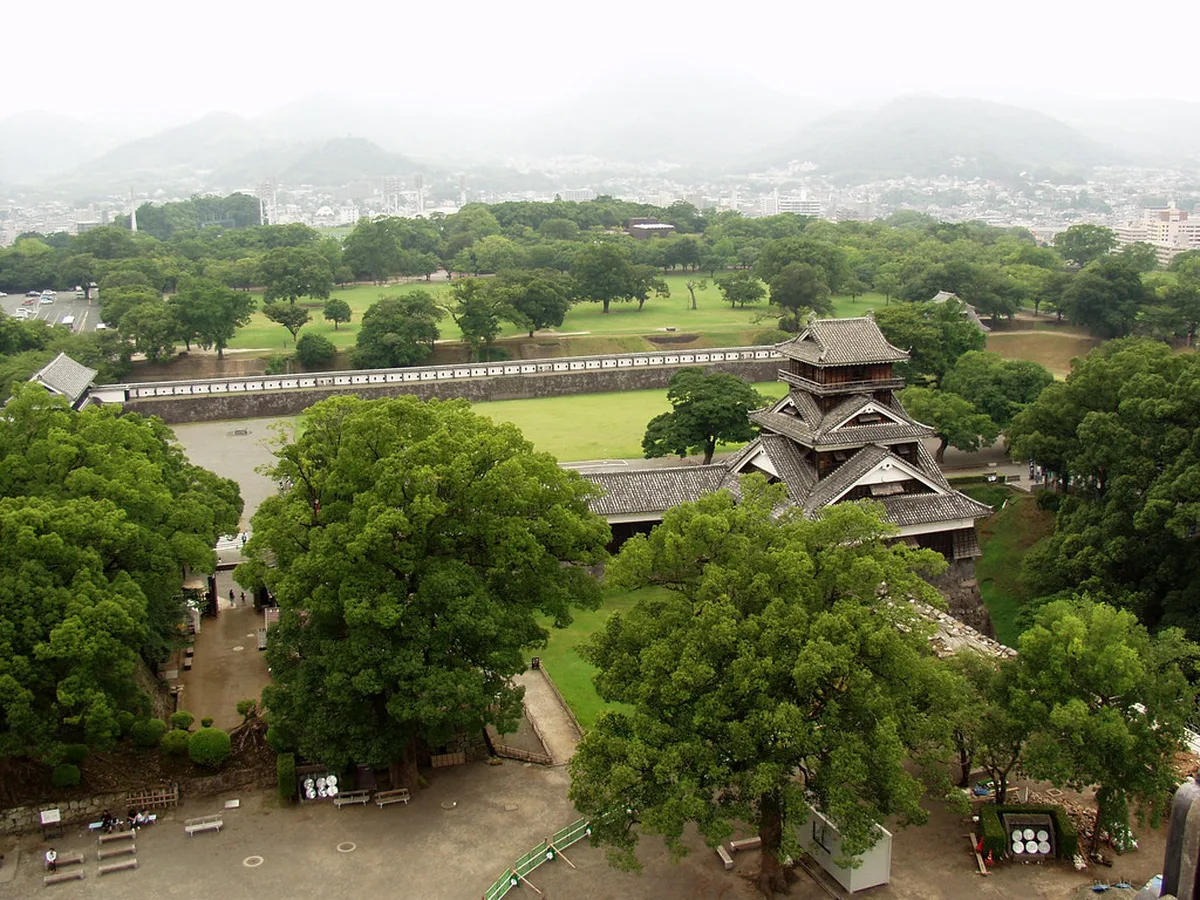
Reigando is a cave in the hills west of the city where the swordsman Miyamoto Musashi spent his final years and wrote "The Book of Five Rings." It is about 30 minutes by bus from Kumamoto Station (take the Sanchiku bus toward Iwato). The approach through a cedar forest is atmospheric, and the cave itself is small but quietly powerful. Most visitors spend about an hour here including the walk up.
Return to the city by early afternoon and walk the Kumamoto Foods and Dining Tips highlights: the Shimotori arcade for karashi renkon at Ikkoryu or ikinari dango from the stalls, and Kumamon Square on the ground floor of Tsuruya Department Store for character merchandise and scheduled meet-up events. In the evening, book a table in advance at Yokobachi on Kamitoricho — one of the best izakayas in the city, with excellent basashi and a menu available in English via QR code. Arrive by 18:00 or reserve ahead, as it fills up.
3-Day Kumamoto Itinerary: Mt. Aso and Beyond
Day three is the Aso caldera. Pick up your rental car from Kumamoto Station's east exit by 08:30. Drive east on National Route 57 toward Aso City, then turn north onto Prefectural Route 339 — the section locals call the Milk Road. This plateau road runs along the rim of the ancient outer caldera at around 700–800 meters altitude, through grasslands that look nothing else in Japan. Stop at the Daikanbo viewpoint (parking free, signed from the road) for the best panorama of the caldera interior: five peaks, nested craters, and on clear days a smoke column from Nakadake. For detailed visitor information, check the Kumamoto tourism guide. The Daikanbo viewpoint is about 90 minutes from Kumamoto Station by car.
From Daikanbo, descend into the caldera toward Aso-Nishidrive and the Kusasenri prairie — a flat volcanic meadow with a pond and grazing cattle that sits at 1,000 meters. The Nakadake crater itself is accessed from the Aso Volcano Museum car park. As of 2026 the crater approach is subject to volcanic activity closures (Level 1 is open access, Level 2 and above restricts or closes the rim path). Check the Japan Meteorological Agency volcanic alert level before departure. The Mt. Aso day trip from Kumamoto guide covers current access details.
On the way back, stop at one of the ASO MILK shops on the plateau for their soft-serve ice cream — the milk from Aso dairy farms is notably richer than standard Japanese soft serve and worth the detour. Return the car by 18:00 and use the evening for a final ramen dinner in the downtown arcades. Kumamoto ramen uses a lighter pork broth than Fukuoka's tonkotsu, often with fried garlic chips (mayu) and wood ear mushrooms — distinctive enough to seek out specifically.
Best Time to Visit Kumamoto and How It Changes Your Plan
The season you travel in affects how many days you need, mostly because of Mt. Aso and the castle grounds.
- Late March to early April: Cherry blossom season around Kumamoto Castle. Crowds and rental car demand both peak, so book the car early. A 2-day stay is easier to enjoy than a rushed 1-day trip.
- May and early June: Mild weather and green grassland on the Aso plateau. This is probably the best window for the 3-day plan.
- Mid-June to mid-July: Rainy season. Low cloud can hide the caldera from Daikanbo, so keep day three flexible. If Aso is clouded in, swap it for Reigando or more time in the arcades.
- August to September: Hot, humid and typhoon-prone. Plan the castle and Suizenji Garden for the morning and use the covered arcades in the afternoon.
- November: Autumn colour and cooler air, which suits walking the castle precinct and Suizenji Garden.
- December to February: The city is mild and quiet. Aso can be cold, and snow or ice on mountain roads is possible, so check conditions before driving the Milk Road.
If your dates fall in rainy season or typhoon season, choose the 2-day plan and treat Aso as a bonus rather than the main reason for the trip.
Kumamoto Castle Reconstruction: What You Can Actually See in 2026
Many travel guides still use pre-2020 information about the castle, which creates wrong expectations. Here is the current picture. The main and minor keeps were repaired and reopened in 2021 as a six-floor museum with English-language interpretation accessible via the free Kumamoto Castle Official App. The top floor has a 360-degree observation deck. The Honmaru Goten Palace, which was badly damaged in the 2016 quakes, has undergone phased restoration work; check the castle's official site for current room access before visiting.
The elevated walkway remains in place and is the most visually striking part of the visit. It passes directly over the collapsed stone walls — some sections of wall are still in their post-earthquake state, numbered and tagged for exact repositioning. The walkway is temporary infrastructure designed not to anchor into the ground (because the walls are designated National Treasures and cannot be altered), so it sits on surface concrete blocks. This is unusual enough that it is worth understanding before you arrive rather than being confused by it on the day.
The complete restoration of all walls and turrets is expected to take several more decades, so each year brings incremental changes. Uto Yagura, one of the few original wooden structures to survive 1877 (when most of the castle burned), is still closed to visitors. Areas near the northern exit around Kato Shrine, however, are fully accessible and offer some of the best photographic angles of the keeps. Arrive at 09:00 to photograph the keeps before tour groups arrive.
Where to Stay in Kumamoto
The choice comes down to Kumamoto Station versus downtown Shinshigai, and it matters more here than in most Japanese cities because the two areas are genuinely separate — about 10 minutes by tram and no easy walk. Staying at the station is convenient for early Shinkansen departures and car rental pick-up, but it leaves you commuting to dinner every evening. Staying downtown puts you in the middle of the action for food, drinks, and the castle approach, but requires a tram or taxi to the station with luggage.
The Candeo Hotels Kumamoto Shinshigai is the standout option for travelers who want the downtown location. The hotel sits at 8-7 Shinshigai, inside the arcade district. The Sky Spa on an upper floor is an open-air rooftop bath with city views — particularly useful after a long day at the castle or a full day driving the Aso roads. On a clear evening you can see the top of Kumamoto Castle from the higher floors. Rooms are unusually large by Japanese standards (the corner twin rooms are notably spacious), and the in-house laundry system allows you to check machine availability from your room TV.
For travelers prioritizing station convenience, the Mitsui Garden Hotel Kumamoto and Hotel Wing International are both solid mid-range options at around ¥10,000–¥18,000 per night. Book at least four to six weeks ahead for cherry blossom season (late March to early April) and Golden Week. Availability tightens sharply during these periods.
One practical note: if you are carrying large luggage and arriving by Shinkansen, consider the luggage shipping (takuhaibin) service. Your hotel front desk can arrange door-to-door shipping to your next destination for around ¥2,000–¥2,500 per bag, with next-day delivery. This makes the tram ride with heavy bags unnecessary and is widely used by domestic travelers — worth knowing before you struggle on a packed tram at 08:30.
Kumamoto Specialties: What to Eat
Basashi is the most talked-about local dish — raw horse meat served as sashimi, typically with grated ginger and soy sauce. The texture is leaner and milder than beef, closer to tuna in consistency. It is widely available in the izakayas of Kaminoura Dori and Kamitori. Yokobachi on Kamitoricho is one of the better-known spots and takes reservations. If you are hesitant, a small order alongside other izakaya dishes is the low-risk way to try it. Learn more about Kumamoto's cultural heritage and its culinary traditions.
Karashi renkon is fried lotus root with a spicy mustard miso filling — a distinctly local preparation and one of Kumamoto's most recognizable food exports. Ikinari dango, steamed rounds of mochi wrapped around a slice of sweet potato, are the standard castle-area snack and sold at multiple stalls near Josaien. For ramen, Kumamoto's version uses a pork-and-chicken broth lighter than Hakata tonkotsu, finished with mayu (blackened garlic oil) and often spiked with sesame. It is worth trying at least one bowl specifically rather than defaulting to Fukuoka-style ramen.
The Kamitori and Shimotori arcades cover most food categories from lunch through late night. Shimotori is denser and more commercial; Kamitori runs slightly quieter with more character-driven shops. The street running one block east of Kamitori — Kaminoura Dori — is where residents actually eat, with specialty coffee shops, boutique wine bars, and family-run izakayas occupying renovated old houses. It is more rewarding than the main arcade strip if you have time to wander.
Practical Tips: Luggage and Car Rentals
Luggage storage is available at Kumamoto Station through standard coin lockers (¥400–¥700 per day depending on size). If you are day-tripping from Fukuoka with a rolling bag, store it at the station and travel the city light. For multi-city trips, the luggage shipping counters at major hotels and convenience stores are the better solution — a medium suitcase ships to your next hotel for around ¥2,000–¥2,500 and arrives the following day. This is particularly useful if your next stop after Kumamoto is a smaller town with no large lockers.

Car rentals at Kumamoto Station: Toyota Rent-a-Car, Nippon Rent-a-Car, and Times Car have counters at or near the east exit. An international driving permit is required for most foreign license holders. Japan drives on the left, and Kumamoto specifically has a reputation for confusing one-way systems in the city center — use navigation from the moment you leave the car park. For the Mt. Aso day trip, a compact car is sufficient on all roads including Route 339 and the Milk Road; the mountain roads are paved and well-maintained but narrow in places.
One tip specific to the Aso drive that most guides omit: fuel up in Kumamoto City before heading out. The plateau road has limited options, and the stations near the Aso crater operate shorter hours than city stations. Starting with a full tank eliminates any anxiety about the return leg, especially if you plan to take the scenic loop via Daikanbo and come back through Nishihara rather than retracing the same road.
Combining Kumamoto With Fukuoka, Beppu and the Rest of Kyushu
Many travelers add Kumamoto to a longer Kyushu loop instead of visiting it alone. These pairings work well with the 1–3 day plans above.
- Fukuoka + Kumamoto (3–4 days total): Base in Fukuoka for the city and nightlife, then spend one full day or two nights in Kumamoto. The 33–40 minute Shinkansen makes this the simplest combination. See our guide on how many days to spend in Fukuoka to split your time.
- Kumamoto + Beppu via Aso (4–5 days total): Drive from Kumamoto across the Aso caldera and continue to Beppu's hot spring district. This is the best choice if you want a scenic route instead of a Shinkansen shuttle. Our Beppu itinerary guide covers the onsen side of the trip.
- Kumamoto + Kagoshima (4–5 days total): Take the Shinkansen south, about 45 minutes, to add Sakurajima volcano and Kagoshima's food scene.
On a multi-city trip, shorten Kumamoto to two days and keep Aso only if you will have a rental car. Carry luggage forward or send it ahead, and book your car for the specific days you need it, not the whole stay.
The Bottom Line: How Long to Spend in Kumamoto
One day: viable as a Fukuoka day trip. Cover the castle, Josaien, and Suizenji Garden. You will see the highlights but miss the food scene and the neighborhoods.
Two days: the right call for most first-time visitors. You see the city properly, eat well in the evening arcades, and leave with a real sense of what Kumamoto is rather than just its postcard version.
Three days: justified only if you plan to drive to Mt. Aso. Without the caldera, there is not quite enough in the city itself to fill a third full day for most travelers. With the caldera, Daikanbo, and the Milk Road, three days feels exactly right and unhurried.
Budget roughly ¥5,000–¥8,000 per day for food and local transport within the city, plus ¥6,000–¥10,000 for a rental car on the Aso day (fuel and parking included). Accommodation ranges from ¥8,000 to ¥20,000 per night depending on hotel and season. The Kumamoto Castle reconstruction guide and the Suizenji Garden Guide: 7 Essential Things to See and Do page have current hours and pricing details updated for 2026.
Frequently Asked Questions
Is Kumamoto worth visiting?
Yes, Kumamoto is absolutely worth visiting for its historic castle and unique food scene. You will enjoy the blend of modern city life and stunning volcanic nature. It serves as the perfect gateway to exploring central Kyushu.
How many days do you need for Kumamoto Castle?
You need about three to four hours to fully explore the castle grounds and interior. This allows time to walk the elevated path and visit the museum. Arriving at 9:00 AM helps you avoid the largest crowds.
Can you do a day trip to Kumamoto from Fukuoka?
A day trip from Fukuoka is very easy via the Shinkansen train. The ride takes only 40 minutes, allowing you to see the main city highlights. You can return to Fukuoka by evening for dinner.
Kumamoto is a destination that rewards those who stay for more than a day. While the castle is the main draw, the surrounding nature is equally impressive. I hope this guide helps you decide how many days in Kumamoto you need. Enjoy your journey through one of Japan's most resilient and beautiful cities.
Planning the rest of your trip? See our Kumamoto attractions hub for the complete Kumamoto overview.
For more Kumamoto planning, see our How to Get to Kumamoto: The Complete Transport Guide and Best Time to Visit Kumamoto: 11 Essential Planning Tips guides.
Free: The Kumamoto Essentials guide
Top things to do, where to stay, a perfect day plan, getting around, and the best time to go — a Kumamoto mini-guide you can take offline.
You might also like


Continue reading
More guides you'll find useful